





Key takeaways:
- Establish a secure digital health ecosystem for effortless access to users, health practitioners, and authenticated medical information.
- Your main objective should be to ensure data accuracy and instant synchronization so that accurate health records and results of lab tests and vaccinations are delivered.
- Build a scalable solution able to cope with millions of users while utilizing speed, safety, and performance.
- Apply modern verification methods for the protection of user identity and assured access to sensitive health services.
The healthcare domain is adapting digital innovations at a rapid rate, and applications like Alhosn show how technology can change the way patients and customers receive healthcare services.
They are characterized by protected medical information, vaccination information, the schedule of patients, notifications in real time, and easy contact with healthcare workers.
All these innovations are creating difficulties in the market since more and more authorities, healthcare organizations, and hospitals are making an effort to invest in mobile health applications.
This means that the need for secure, full-featured, and convenient applications in healthcare is increasing. If you plan to build an Alhosn like app, it is important to know how it works and how to comply with all requirements and possibilities.
UAE’s Market Statistics of Healthcare Applications
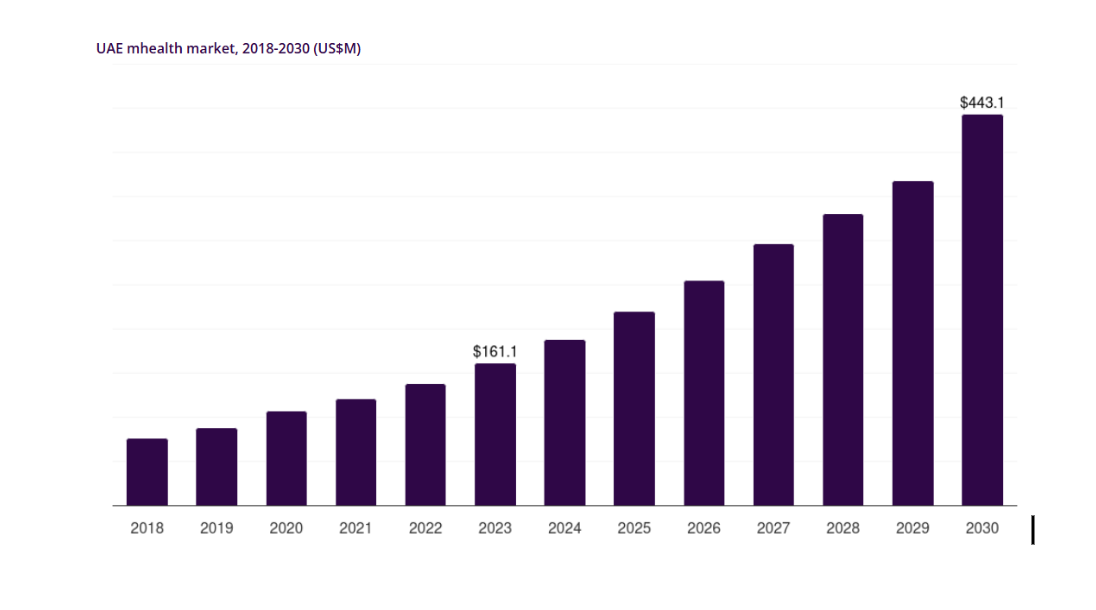
- The mhealth market in the UAE has brought in a revenue of USD 161.1 million in the year 2026 and is anticipated to reach USD 443.1 million by the end of the year 2030.
- According to Grand View Research, the market in the UAE will grow at a CAGR of 15.6% during the years 2026-2030.
- In terms of revenue, the mhealth market size of the UAE was 0.3% globally in 2026.
- The U.S. will hold the highest share among countries in terms of revenue in the global mhealth market by 2030.
- In the Middle East & Africa region, the South Africa mhealth market will register maximum revenue by 2030.
Answer a few quick questions and our experts will share a tailored project estimate.
What is Alhosn?
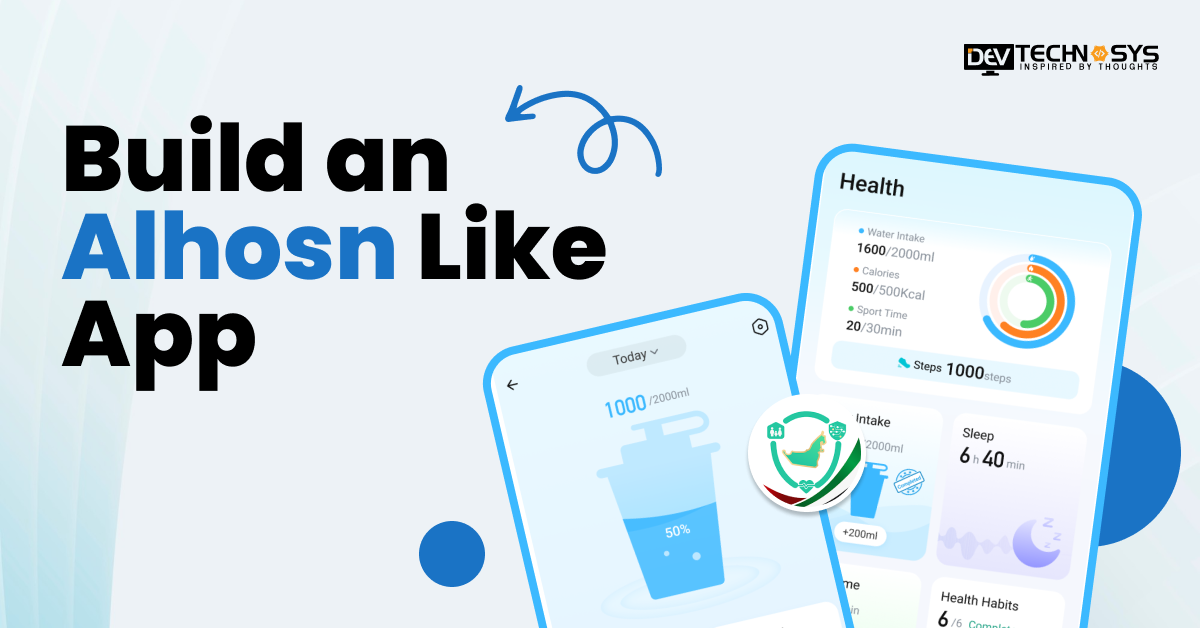
Alhosn is the official digital health platform of the UAE that provides access to the personal health information of users in a secure manner. The app has been developed for the purpose of public health services and allows users to see their vaccination history, COVID-19 test results, digital health certificate, and other medical records management.
The app also allows for verification of the information and provides various services to health care professionals and public health authorities.
How Does the Alhosn App Work?
The Alhosn app creates a safe link between users and authenticated health information, such as vaccinations and test results. The app helps in validating identities, delivers updates regarding health status in real time, creates digital health credentials, and permits verifications based on QR codes for easier access to health services.
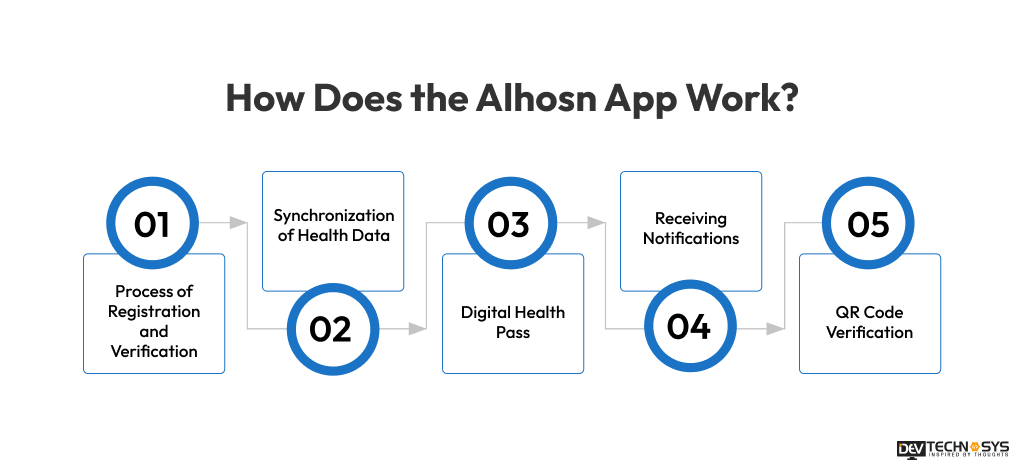
1. Process of Registration and Verification
Users make use of their UAE Pass, Emirates ID, or passport to register themselves and verify their identity to access their health information in a safe manner.
2. Synchronization of Health Data
Vaccination records, results of COVID-19 tests, and users’ health status are automatically synchronized by the application without any kind of assistance from the users.
3. Digital Health Pass
Users get a pass with colors that indicate their vaccination status, which tests are valid, and whether it can be used in certain public areas.
4. Receiving Notifications
The application immediately notifies users regarding new COVID-19 tests, vaccination reminders, health status changes, etc.
5. QR Code Verification
Users use their QR code in order to go through the verification process quickly.
Why Businesses Want to Invest in Healthcare App Development in UAE?
The UAE healthcare landscape is continuously changing. With the support of the government in the implementation of digital transformation, an increase in telemedicine services offered, and many people wanting more options regarding health-related services, business investment in healthcare software development services can yield considerable profits.
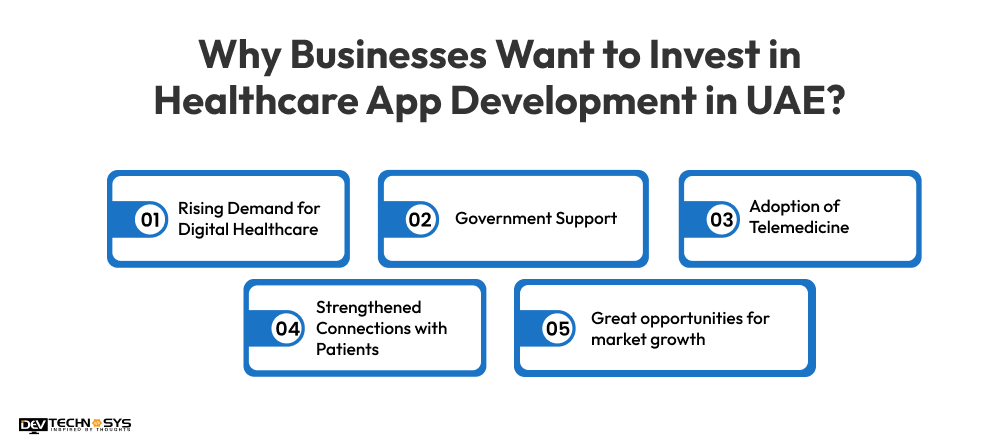
1. Rising Demand for Digital Healthcare
In the UAE, the growth of digital healthcare services has accelerated due to rising smartphone usage and government initiatives for digital transformation. Companies can take advantage of the increasing demand by creating healthcare applications allowing patients to access medical consultations, record prescriptions, and health services efficiently.
2. Government Support
The Government of the UAE is eager to promote innovations in health care through smart health projects as well as investments in digital infrastructure. Such a favorable environment allows companies to launch secure applications meeting their requirements.
3. Adoption of Telemedicine
Patients prefer consultations performed online due to the speed and convenience it provides. Invest to build healthcare software through applications enables companies to implement distance monitoring and scheduling services, thus attracting new clients and increasing profits.
4. Strengthened Connections with Patients
Health applications assist companies in establishing closer relationships with patients through personalized health tracking, medication reminders, instant notifications, and secure communication. With enhanced interaction, one can enjoy patient satisfaction, develop loyalty in the long term, and provide better delivery of patient-centered care.
5. Great opportunities for market growth
The healthcare technology market in the UAE is still developing as entities, including hospitals, clinics, insurers, and startups, invest in digital solutions. Participants can obtain a competitive advantage in the area by implementing the designed health applications offered to make it possible to cover the current needs of patients, thus achieving sustainable business development.
8 Key Steps to Build a Healthcare App Like Alhosn
To develop a healthcare app like Alhosn, a systematic approach must be taken that brings together thorough architecture, laws and regulations, sophisticated security features, and a focus on users’ needs. Thought must go into the establishment of the technical framework, building up a strong infrastructure, integration of healthcare APIs, conducting thorough testing, and making certain that continuous improvement is achieved.
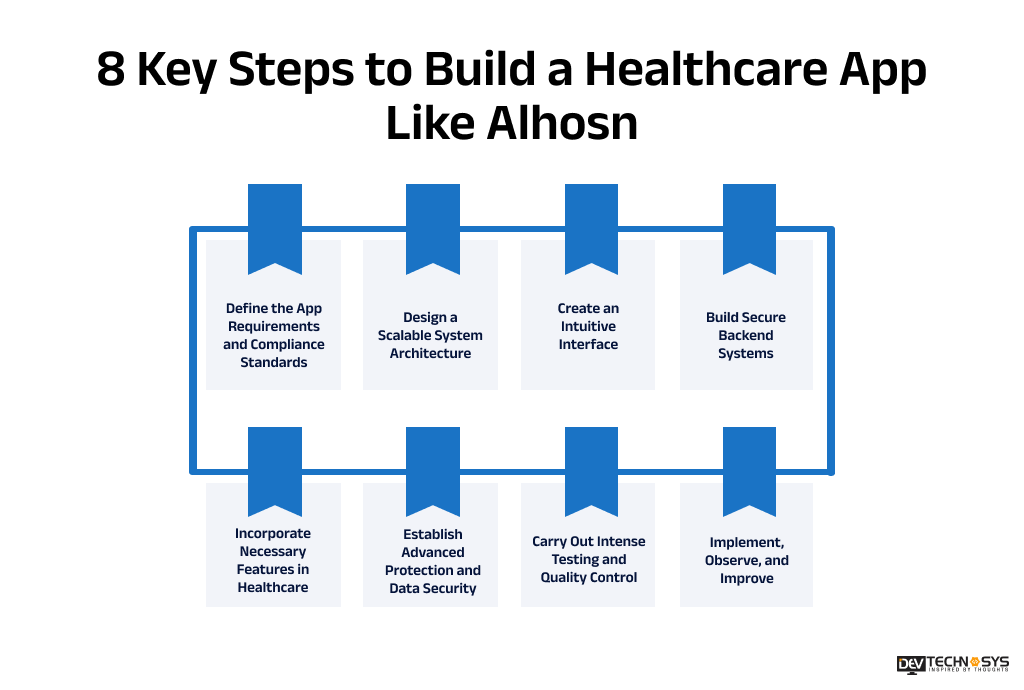
1. Define the App Requirements and Compliance Standards
Begin by pinpointing what the application aims to achieve by determining its intended audience and its basic purpose and chief use cases. Hire dedicated developers to prepare a detailed product requirements file (PRD) as well as workflow definitions.
Do all these preliminary steps to ensure compliance with all health and medical regulations, data privacy regulations, HIPAA/GDPR equivalents, UAE healthcare regulations, and security regulations.
2. Design a Scalable System Architecture
Create a microservices-based architecture that runs in the cloud and provides your project with scalability. Use technologies such as RESTful APIs, GraphQL, Docker, Kubernetes, an API gateway, load balancer, and replication technologies that will support your system when user traffic increases.
3. Create an Intuitive Interface
Create interfaces that are centered around the user and provide an easy process of interaction with the application. Hire mobile app developers in Middle East to set up interactive wireframes and accurately designed prototypes. Use navigation flows and support different languages to ensure compliance with accessibility standards.
4. Build Secure Backend Systems
Set up a backend that supports the needs of the application using scalable frameworks. Integrate with relational and NoSQL databases, make use of OAuth 2.0 authentication, implement access control based on user roles, and secure APIs.
5. Incorporate Necessary Features in Healthcare
Use systems like EHR in healthcare industry, telemedicine, appointment management, e-prescriptions, vaccination management, medical analysis, payment systems, push notifications, geolocation services, and GDP. Use AI to establish the necessary features.
6. Establish Advanced Protection and Data Security
Safeguard confidential patient data through the use of AES-256 encryption, TLS protocols, biometric and multi-factor authentication (MFA), tokenization, intrusion detection systems, vulnerability tests, and penetration tests. As well as secure key management procedures to maintain privacy, integrity, and regulatory compliance.

7. Carry Out Intense Testing and Quality Control
In the Android app development process, perform functional, integration, regression, performance, usability, compatibility, and security tests. Use automated testing frameworks, CI/CD processes, API tests, and stress tests to ensure that the application is consistent, dependable, complex, and meets compliance standards.
8. Implement, Observe, and Improve
Use DevOps principles to install the application with automated CI/CD cycles on cloud computing platforms. Control performance with APM, log analytics, crash lists, and other monitoring tools. Implement regular updates and patches and introduce innovations relying on analytic data.
10 Must-Have Features to Integrate in Healthcare App Like Alhosn
In order to be successful, it is important that healthcare applications such as Alhosn can provide advanced functionalities. While also ensure end-user satisfaction. Importantly, features include optimized login, electronic health records, telehealth, appointment booking system, AI-based support, alerts, wearable device integration, secure payment systems, and analytics.
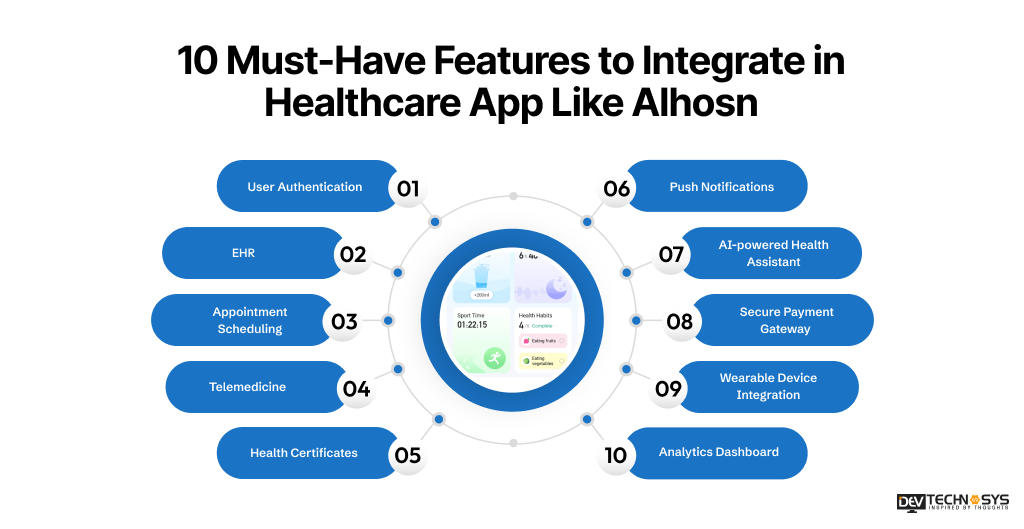
1. User Authentication
To ensure the security of identity and information, user identity can be verified by making use of biometrics, implementing methods that rely on multiple factors, and applying role-based access control.
2. EHR
EHR enables users to have online access to their medical history, medications, laboratory tests, and vaccination information.
3. Appointment Scheduling
Users can know the current availability of doctors to schedule appointments, send alerts and reminders, and synchronize the calendar according to their health needs.
4. Telemedicine
Telemedicine is also helpful in conducting video consultations, sending messages, providing prescriptions, and offering health services to the users.
5. Health Certificates
Software like Kareo provides users with an option to generate health certificates, vaccination records, and other documents certifying their medical condition.
6. Push Notifications
Send notifications about appointments, including reminders, test results, updated vaccination status, and other alerts immediately.
7. AI-powered Health Assistant
Alhosn clone apps provide symptom analysis, personalized advice, chatbot help, and enhanced guidance thanks to AI technologies.

8. Secure Payment Gateway
Alhosn alternatives enable encrypted payment processing for consultations, services, claims, and subscription plans.
9. Wearable Device Integration
Monitor personal vital signs as well as health conditions with the use of wearables. It also monitors daily activities, real-time health metrics, and more.
10. Analytics Dashboard
This will provide health service providers with real-time insights and metrics about patients and care delivery operations, thus assisting them in making clinical decisions.
How Much Does it Cost to Build an Alhosn Like App?
In general terms, the cost to develop an Alhosn like app is expected to vary anywhere from $30,000 to $150,000, which would depend on several different GDP factors, for example, the complexity of the application, the number of features, the technology stack, and the size of development teams.
The healthcare software development cost associated with the basic version, which comes with standard healthcare tracking and health authentication features, is on the lower side. Meanwhile, the complex version with AI and telemedicine features, which offers synchronized information and enterprise-grade security, costs significantly more than the basic version.
Healthcare App Type |
Estimated Development Cost |
Timeline |
| Basic Healthcare App | $30,000 – $50,000 | 2-4 months |
| Medium-Level Healthcare App | $50,000 – $100,000 | 4-6 months |
| Advanced Healthcare App (Like Alhosn) | $100,000 – $150,000+ | 6+ months |
What Factors Affect the Healthcare App Development Cost?
The cost to build an Alhosn like app is influenced by the requirements of the project, level of difficulty, and compliance considerations. Some additional factors affecting the pricing of the app include choice of platform, level of protection, inclusion of third-party services, scalability, and maintenance of the app.
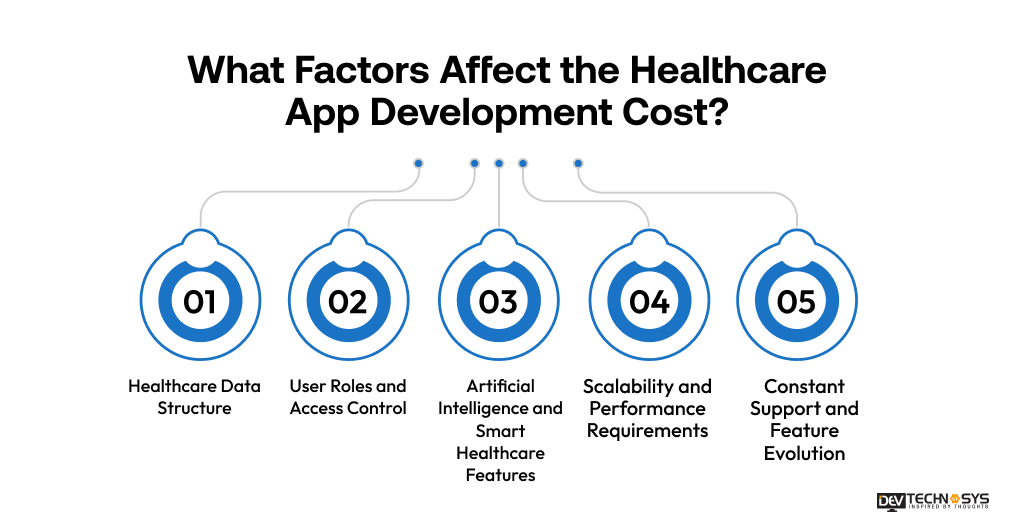
1. Healthcare Data Structure
The construction of a healthcare application entails having a capable backend that can deal with the processing of medical records, prescriptions, diagnostic reports, and healthcare data. The development of database design, cloud storage, data synchronization, and backup systems brings implications such as an increase in the complexity of medical app development and its direct impact on the budget of the project.
2. User Roles and Access Control
The users of a healthcare app may include a patient, doctor, admin, lab, and pharmacy. The work required to develop custom dashboards, secure communication, and access rights for all kinds of users will take a lot of time. Thus, the overall healthcare mobile app development cost will go up as well.
3. Artificial Intelligence and Smart Healthcare Features
The addition of features related to Artificial Intelligence, such as symptom checking, predictive analytics, health recommendations, medical image processing, or chatbot support, requires having machine learning models, quality datasets, and continuous optimization of systems. These smart features increase development costs significantly and increase the level of maintenance costs in the future.
4. Scalability and Performance Requirements
Healthcare applications must cater to a constantly increasing user base without sacrificing reliability or speed. To build the necessary scalable architecture in the cloud, ensure load balancing, develop good APIs and operating systems, manage real-time synchronization, and prepare for disasters, one has to utilize advanced engineering.
This means that the costs of infrastructure planning will contribute greatly to the total Alhosn app development cost.
5. Constant Support and Feature Evolution
Healthcare technology changes according to the requirements of regulations, users, and medicine. This means that constant investments into software updates, security modifications, operating systems compatibility, releasing new features, developing analytics, monitoring performance, etc. should be made. The post-deployment maintenance services can raise the overall mobile app maintenance cost.
Factor |
Estimated Cost Impact |
How It Affects Development Cost |
| Healthcare Data Structure | 20-25% | Secure storage, encryption, and management of medical records increase backend development costs. |
| User Roles and Access Control | 15-20% | Multiple user dashboards and role-based permissions require additional development and testing. |
| Artificial Intelligence and Smart Healthcare Features | 20-30% | AI-powered features such as chatbots, predictions, and automation significantly increase development complexity. |
| Scalability and Performance Requirements | 15-20% | Supporting growing users and real-time performance requires robust cloud infrastructure and optimization. |
| Constant Support and Feature Evolution | 10-15% | Ongoing maintenance, security updates, bug fixes, and feature enhancements contribute to long-term costs. |
Healthcare App Security & Compliance Requirements
Security and compliance of healthcare apps are essential in protecting the sensitive data of patients and ensuring trust among users. AI in healthcare industry standards and provide a secure, reliable, and privacy-centered digital health passport service by applying advanced encryption, secure authentication, compliance systems, API security protocols, and continuous monitoring.
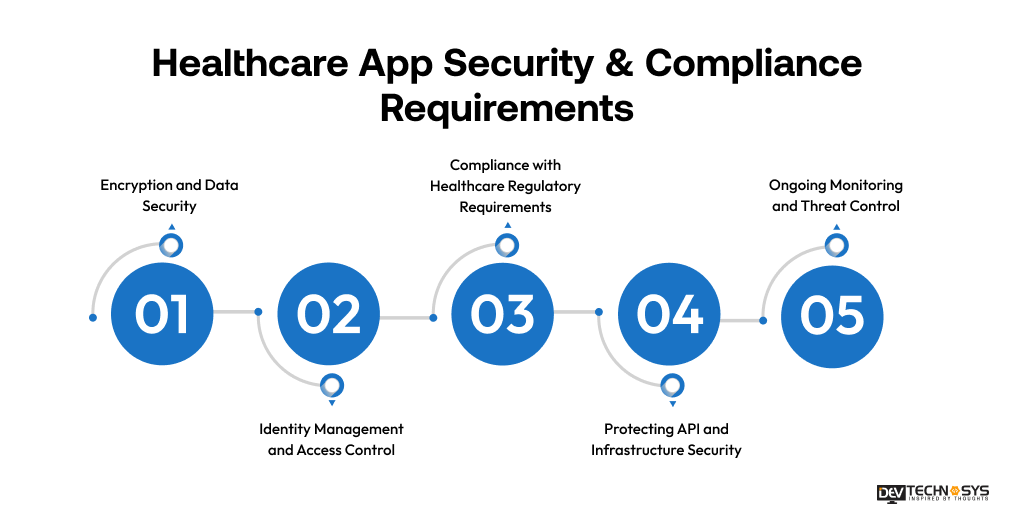
1. Encryption and Data Security
DHA compliant apps should make use of state-of-the-art cryptography solutions like AES 256 encryption technology for data storage and TLS 1.3 protocols for data transmission. While being backed by secure API communication, encrypted databases, hardware security modules (HSM), as well as cryptographic key management systems, sensitive data is kept safe from hackers and unauthorized intrusions.
2. Identity Management and Access Control
Identity management (IDM) solutions based on OAuth 2.0, OpenID Connect, JWT authentication, biometric identification, as well as multi-factor authentication (MFA) must be in place. Role-based access control (RBAC) along with attribute-based access control (ABAC) will allow users and staff alike to access required information while keeping sensitive data confidential.
3. Compliance with Healthcare Regulatory Requirements
Healthcare software development solutions must be compliant with local and international regulations, for instance, HIPAA, GDPR, UAE Medical Data Protection Regulations, or HL7 FHIR interoperability standards. Compliance audits should be held on a regular basis, consent management should be implemented, and protection techniques for electronic health records (EHR) should be applied.
4. Protecting API and Infrastructure Security
The infrastructure must be protected from the backend by using tools such as API gateways, intrusion detection systems (IDS), intrusion protection systems (IPS), web application firewalls (WAF), as well as through continuous progress monitoring. Among other things, secure coding methods as well as API rate limiting should be employed, and penetration tests should be conducted alongside the implementation of DevSecOps.
5. Ongoing Monitoring and Threat Control
Utilize security information and event management (SIEM) systems, real-time log monitoring, anomaly detection, automated threat intelligence, and endpoint protection tools. Regular security evaluations, vulnerability analysis, incident response plans, catastrophe recovery methods, and automated compliance reporting. Ensure that applications continue to function properly and protect important healthcare data.
Tech Stacks Used to Build an Alhosn Like App
To create an Alhosn like app, it demands a robust technology stack that guarantees scalability, interoperability, security, and efficiency. From front-end development frameworks, back-end architecture, cloud platforms, database technologies, API technologies, artificial intelligence tools, and security tools.
Technology Area |
Purpose |
Technologies Used |
Key Benefits |
| Mobile App Development | Build patient and healthcare provider applications | Flutter, React Native, Swift, Kotlin | Cross-platform support and seamless user experience |
| Backend Development | Manage APIs, business logic, and application operations | Node.js, Java, Python, .NET | Scalable, secure, and high-performance backend infrastructure |
| Database Management | Store and manage healthcare records and user data | MySQL, PostgreSQL, MongoDB | Reliable storage, fast access, and data consistency |
| Cloud Infrastructure | Host applications and manage healthcare workloads | AWS, Microsoft Azure, Google Cloud | Scalability, availability, and secure cloud deployment |
| API Integration | Connect healthcare systems and external platforms | REST API, GraphQL, HL7 FHIR | Seamless interoperability and healthcare data exchange |
| Security & Authentication | Protect sensitive patient information | OAuth, JWT, MFA, Biometric Authentication | Enhanced privacy and secure user access |
| Telemedicine Integration | Support online consultations and remote care | WebRTC, Twilio, Video SDKs | Real-time communication and virtual healthcare delivery |
| Wearable Device Integration | Track patient health records from devices | Apple HealthKit, Google Fit, IoT APIs | Continuous health monitoring and data collection |
| DevOps & Testing | Manage deployment, monitoring, and quality assurance | Docker, Kubernetes, Jenkins, Selenium | Faster releases, reliability, and improved application performance |
How to Generate Money From Healthcare Apps Like Alhosn?
It is possible for healthcare apps such as Alhosn to accrue sustainable revenue through different monetizing strategies like charging subscription programs, telemedicine consulting fees, commissions from healthcare partners, premium wellness services, and white label licensing.
A diversified revenue model helps companies enhance profitability and deliver valuable, safe, and easily accessible digital healthcare experiences.
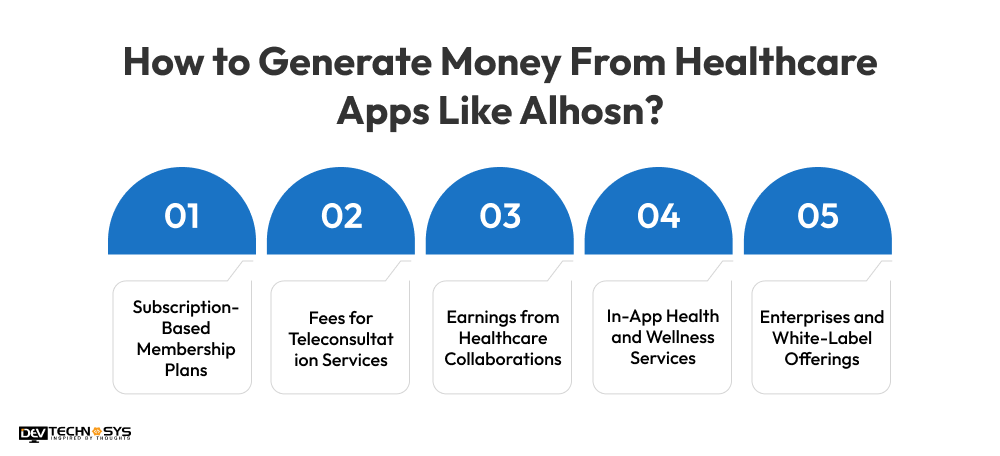
1. Subscription-Based Membership Plans
Utilize a subscription model to offer patients access to upgraded health services such as unlimited teleconsultations, health tracking apps, e-prescriptions, health programs, and quick access to appointments. Users need to pay for subscription plans on a monthly, quarterly, or yearly basis. This is one of the most common ways to generate money from an app.
2. Fees for Teleconsultation Services
Charge your patients for any teleconsultation services rendered, whether they are video consultations with doctors, specialist fees, counseling fees, or regular follow-ups. These consultation fees help businesses or healthcare provider to increase their overall valuations.
3. Earnings from Healthcare Collaborations
Collaborate with healthcare organizations, including hospitals, clinics, and pharmacies. According to the mobile app development company, these collaborations receive commission from the app for appointments booked, lab tests done, medicines purchased, and other facilities used.
4. In-App Health and Wellness Services
You may charge for some services provided via the app, including wellness and fitness programs, nutrition advice, and e-health consultation. Users can choose their services as per their requirements and pay for only those services. It can also enhance the users’ experience and open a new source of income.
5. Enterprises and White-Label Offerings
Alhosn clone app offers medical platforms to hospitals, clinics, insurance companies, and governmental entities as a white-label product. Generate revenues from implementation projects, customization, maintenance agreements, and continuous SaaS contracts.
Conclusion
To sum up, the process to build an Alhosn like app involves keeping in mind different aspects such as safety, convenience, compliance with regulations, and effective management of information. Some of the core features include providing secure authentication options, electronic health records, vaccination certificates, lab results, conducting appointments, and sending notifications. Scalability, high performance, and use of cloud systems must also be taken into account during the process.
Are you ready to build an Alhosn like app? Connect with a professional healthcare software development company to get a high-quality healthcare app with proper security and compliance requirements.
Frequently Asked Questions
Q 1. How Much Does it Cost to Build an Alhosn Like App?
To build an Alhosn like app, one will need to spend anywhere between $30,000 and $150,000+. The price depends on what functionalities the app has, what platform is used, what security standards are needed, if the app has any healthcare connections, if it implements AI, how complex the design is, whether it meets any regulations, and who is developing it.
Q 2. How Long Does it Take to Create an Alhosn Like App?
To make an Alhosn like app takes about 3-6 months. The timeframe is significantly impacted by the complications of the project. A simpler version of the app can be implemented quickly as opposed to an advanced app that makes use of AI technology, has real-time health data, and requires many integrations.
Q 3. Can A Healthcare App Integrate With Hospitals And Laboratories?
Sure, healthcare apps can be connected to hospitals, labs, pharmacies, and other healthcare organizations through APIs. This capability opens the door for efficient exchange of patient data, health records, test results, and scheduling while making communication easier, eliminating manual operations, and creating a unified ecosystem in the field of digital healthcare.
Q 4. Why is Compliance Important For Healthcare App Development?
The significance of compliance in healthcare app development lies in the protection of patients’ information and in ensuring secure handling of information. Meeting standards like HIPAA and GDPR, as well as local legislation, minimizes security risks and promotes user trust in the company and the software.
Q 5. What Challenges Occur During Healthcare App Development?
To develop an Alhosn like app, it is a complex process due to various challenges, such as handling sensitive medical data, compliance with regulations, the integration of complicated healthcare systems, and data accuracy. Developers have to create a successful healthcare solution that combines state-of-the-art functionalities with usability, safety, scalability, and reliability.