





The Middle East is experiencing rapid digital transformation, with businesses across industries investing in mobile apps to enhance customer experiences and streamline operations. However, this growth has also increased the risk of cyberattacks, data breaches, and regulatory challenges. Whether you’re developing a fintech, healthcare, eCommerce, or logistics app in the Middle East, knowing about mobile app development security Middle East and integrating security measures is important from the very beginning.
From protecting sensitive user data to complying with regional regulations such as the UAE PDPL and Saudi Arabia PDPL (Personal Data Protection Law), a proactive security strategy is essential. This mobile app development security checklist outlines the key measures businesses should implement to build secure, compliant, and resilient mobile applications.
Why Mobile App Security Matters More Than Ever in the Middle East
The Middle East’s rapid digital transformation has accelerated mobile app adoption across industries, making cybersecurity a top business priority. As cyber threats grow and regional data protection laws evolve, businesses must hire experts providing digital transformation security in Middle East to embed security into every stage of app development.
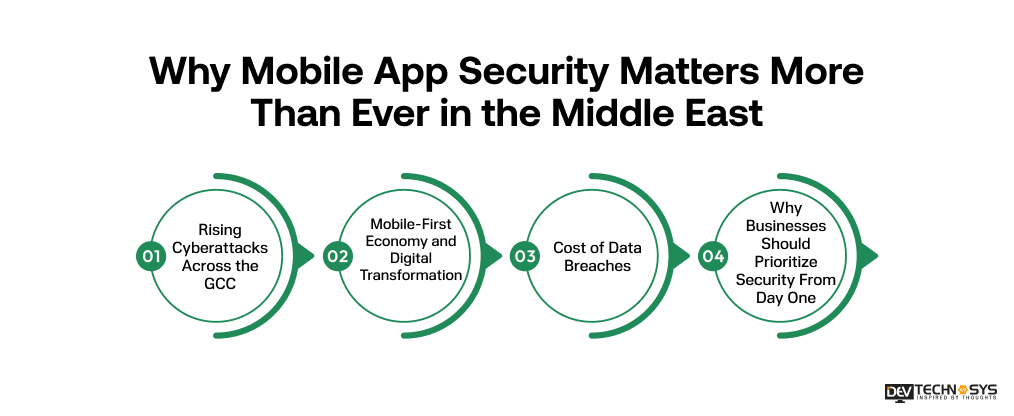
1. Rising Cyberattacks Across the GCC
Cyberattacks targeting businesses across the GCC are becoming more frequent and sophisticated, increasing the risk of data theft, financial fraud, and service disruptions. This is why integrating measures for Mobile app development security Middle East is crucial
2. Mobile-First Economy and Digital Transformation
With mobile-first services driving industries like fintech, healthcare, retail, and government, secure applications are essential to protect users and maintain business continuity.
3. Cost of Data Breaches
Mobile app development security Middle East matters because security breaches can lead to significant financial losses, regulatory penalties, reputational damage, and loss of customer trust, making prevention far more cost-effective than recovery.
4. Why Businesses Should Prioritize Security From Day One
Mobile app development security for businesses is crucial because building security into the development process helps reduce vulnerabilities, meet regional compliance requirements, safeguard sensitive data, and deliver secure mobile experiences that users can trust.
Understanding the Mobile App Security Threat Landscape
Modern mobile applications face evolving cybersecurity risks that can compromise sensitive data, disrupt business operations, and erode customer trust, which urges the high demand for Cybersecurity for businesses in UAE. According to a top mobile app development company in UAE, understanding these common threats enables businesses to implement stronger security measures throughout the app development lifecycle.
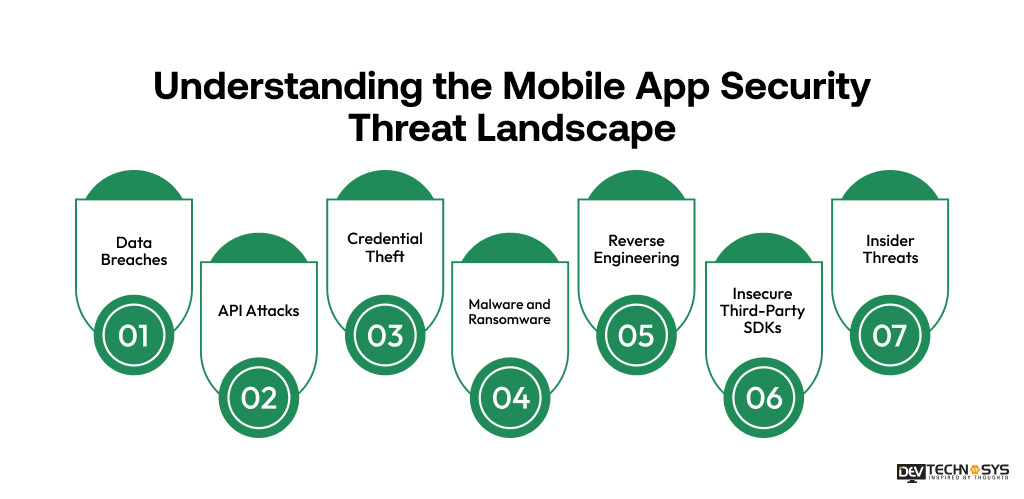
1. Data Breaches
Weak encryption, insecure storage, or unauthorized access can expose sensitive customer and business data, resulting in financial losses, regulatory penalties, reputational damage, and reduced user confidence.
2. API Attacks
Poorly secured APIs can be exploited to bypass authentication, manipulate application functionality, access sensitive information, or disrupt services, making secure API integration a critical part of mobile app development.
4. Credential Theft
Cybercriminals use phishing, credential stuffing, and weak passwords to gain unauthorized access to user accounts, increasing the risk of identity theft, financial fraud, and account compromise.
5. Malware and Ransomware
UAE data protection laws are necessary because malicious software can infiltrate mobile applications to steal sensitive data, disrupt operations, monitor user activity, or encrypt business information until a ransom is paid.
6. Reverse Engineering
Attackers decompile application code to identify vulnerabilities, extract confidential information, bypass security controls, or create counterfeit apps that imitate legitimate mobile applications.
7. Insecure Third-Party SDKs
Using outdated or unverified third-party SDKs and libraries can introduce hidden vulnerabilities, expose sensitive data, and increase the application’s overall cybersecurity risk.
8. Insider Threats
Employees, contractors, or trusted partners with privileged access may intentionally or accidentally expose confidential data, misuse system permissions, or create security vulnerabilities within the application.
Answer a few quick questions and our experts will share a tailored project estimate.
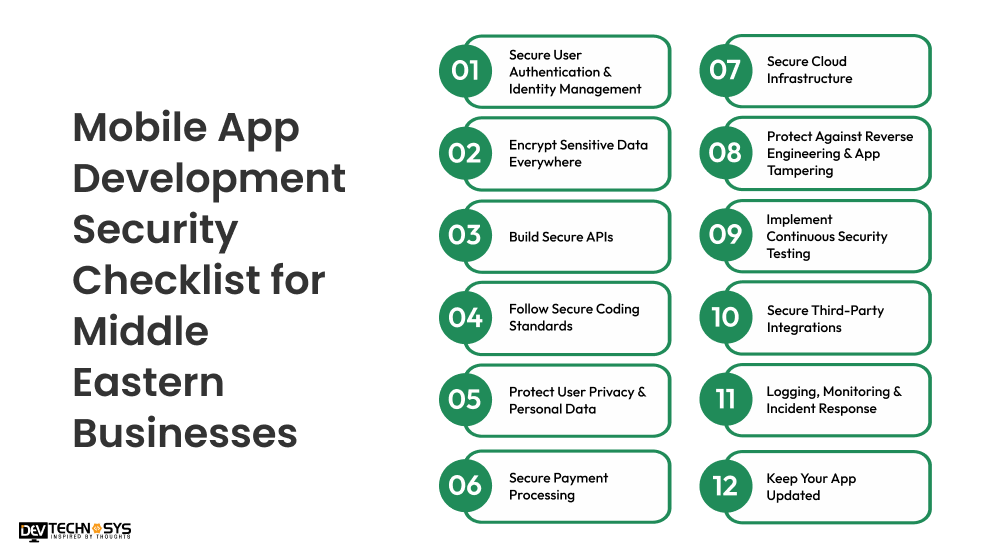
Mobile App Development Security Checklist for Middle Eastern Businesses
Mobile app development security Middle East should be embedded throughout the development lifecycle, not treated as a final step. This checklist outlines the essential security practices businesses in the Middle East should implement to protect user data, reduce cyber risks, and comply with regional regulations.
1. Secure User Authentication & Identity Management
When it comes to secure mobile app development, user authentication is the first layer of defense against unauthorized access. Strengthening identity management reduces the risk of credential theft, account takeovers, and fraudulent logins.
Checklist:
- Multi-factor authentication (MFA) app
- Support biometric authentication
- Implement OAuth 2.0 or OpenID Connect
- Enforce strong password policies
- Use secure session management and automatic session timeouts
2. Encrypt Sensitive Data Everywhere
Sensitive information should remain protected whether it’s stored on a device, transmitted over a network, or processed in the cloud. Strong encryption helps prevent unauthorized access and data leaks.
Checklist:
- Encrypt data at rest
- Encrypt data in transit using TLS
- Implement secure encryption key management
- Use SSL certificate pinning
3. Build Secure APIs
APIs connect your mobile app with backend systems and third-party services, making them a common target for cyberattacks. Securing APIs helps prevent unauthorized access, data manipulation, and service abuse.
Checklist:
- Require API authentication
- Implement rate limiting
- Use an API Gateway
- GDPR compliance
- Validate all user inputs
- Follow OWASP API security mobile app guidelines
4. Follow Secure Coding Standards
Writing secure code from the beginning reduces vulnerabilities and minimizes costly security fixes after deployment. A secure development process should be integrated into every development phase.
Checklist:
- Follow OWASP Mobile Top 10
- Perform Static Application Security Testing (SAST)
- Conduct Dynamic Application Security Testing (DAST)
- Scan third-party dependencies
- Adopt a secure SDLC (software development life cycle)
5. Protect User Privacy & Personal Data
Businesses must protect personal information while complying with regional privacy laws. Collect only the data you need and implement strong controls to prevent misuse or unauthorized disclosure.

Checklist:
- Apply Privacy-by-Design principles
- Collect and manage user consent
- Minimize personal data collection
- Store sensitive data securely
6. Secure Payment Processing
Applications that process payments should secure every transaction against fraud and unauthorized access. Experts who offer mobile app maintenance support services in UAE utilize secure payment gateway compliance to help protect customer financial information.
Checklist:
- Comply with PCI DSS
- Tokenize payment information
- Implement fraud detection mechanisms
- Use trusted and secure payment gateways
7. Secure Cloud Infrastructure
A secure cloud environment protects application servers, databases, and APIs from external threats. Proper access controls and network security are essential for safeguarding cloud-hosted resources.
Checklist:
- Configure Identity and Access Management (IAM)
- Adopt Zero Trust security
- Segment networks
- Deploy a Web Application Firewall (WAF)
- Maintain backup and disaster recovery plans
8. Protect Against Reverse Engineering & App Tampering
Attackers often analyze mobile apps to identify vulnerabilities or extract sensitive information. According to experts at app store security guidelines (Apple/Google), protecting application code helps prevent unauthorized modifications and intellectual property theft.
Checklist:
- Obfuscate application code
- Enable runtime protection
- Detect rooted or jailbroken devices
- Implement app shielding
9. Implement Continuous Security Testing
Security testing should continue throughout mobile app development frameworks, the development process, and even after deployment. Regular assessments help identify new vulnerabilities before they can be exploited by attackers.
Checklist:
- Penetration testing mobile app service
- Perform mobile app vulnerability assessment
- Launch bug bounty programs
- Continuously monitor application security
10. Secure Third-Party Integrations
According to a top iOS app development company, External SDKs, APIs, and libraries can introduce hidden security risks if not properly managed. Every integration should be evaluated before deployment and monitored regularly.
Checklist:
- Verify SDK authenticity
- Review API security
- Conduct vendor risk assessments
- Keep integrations updated

11. Logging, Monitoring & Incident Response
Real-time visibility enables businesses to detect suspicious activity quickly and respond before security incidents escalate. A well-defined response plan minimizes downtime and reduces business impact.
Checklist:
- Centralize security logs
- Enable threat detection
- Configure automated security alerts
- Maintain an incident response plan
12. Keep Your App Updated
Cyber threats constantly evolve, making regular updates essential for maintaining application security. Prompt patching and dependency updates help protect your app against newly discovered vulnerabilities.
Checklist:
- Apply security patches promptly
- Maintain OS compatibility
- Update third-party dependencies
- Continuously review security and compliance requirements
Middle East Data Protection & Compliance Requirements
Mobile apps operating in the Middle East must comply with evolving data protection and cybersecurity regulations to safeguard user information and avoid legal penalties. Understanding country-specific compliance requirements is essential for building secure, trusted, and legally compliant mobile applications.
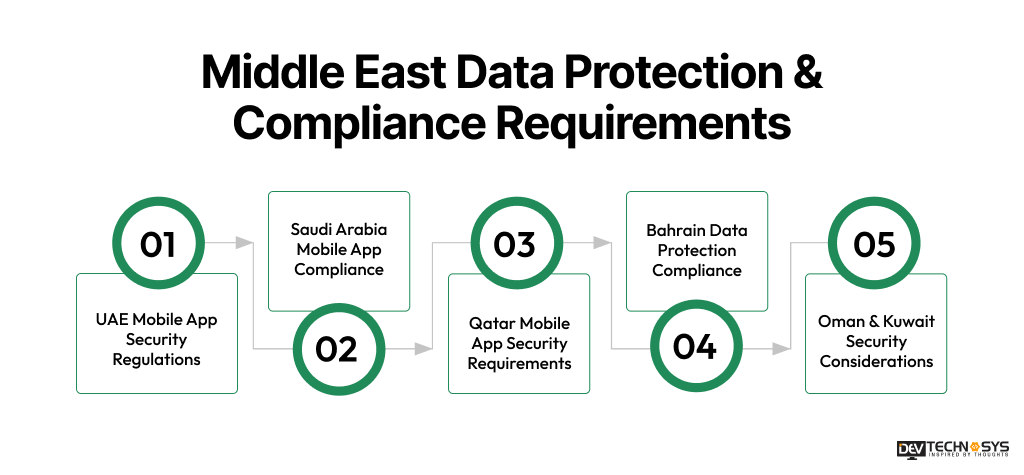
UAE Mobile App Security Regulations
The UAE has established a strong regulatory framework to protect personal data and strengthen cybersecurity. Businesses developing mobile apps should align with these regulations to ensure compliance and build user trust.
- UAE Personal Data Protection Law (PDPL): Regulates how personal data is collected, processed, stored, and transferred.
- UAE Information Assurance Standards: Provide cybersecurity controls and mobile app security best practices for protecting digital systems and sensitive information.
- Sector-Specific Requirements: Industries such as banking, healthcare, and government may have additional security and compliance obligations.
Saudi Arabia Mobile App Compliance
Saudi Arabia has introduced comprehensive privacy and cybersecurity regulations that businesses must follow when developing and operating mobile applications.
- Saudi Personal Data Protection Law (PDPL): Establishes requirements for collecting, processing, storing, and sharing personal data.
- SDAIA Regulations: The Saudi Data and Artificial Intelligence Authority oversees data governance, privacy, and compliance requirements.
- NCA Essential Cybersecurity Controls (ECC): Defines mandatory cybersecurity controls for protecting digital infrastructure and managing cyber risks.
Qatar Mobile App Security UAE Requirements
Businesses investing in an Android app development solution in the Middle East or who are operating in Qatar should ensure their mobile applications comply with national privacy laws and cybersecurity guidelines.
- Personal Data Privacy Protection Law (Law No. 13 of 2016): Governs the lawful processing and protection of personal data.
- National Cyber Security Agency Guidance: Experts in providing Mobile app security Qatar recommend cybersecurity practices for securing digital services and critical information systems.
Bahrain Data Protection Compliance
Bahrain’s Personal Data Protection Law (PDPL) establishes rules for collecting, processing, storing, and transferring personal data. Businesses should implement appropriate technical and organizational measures to protect user information and maintain regulatory compliance.
Oman & Kuwait Security Considerations
While privacy regulations continue to evolve, businesses operating in Oman and Kuwait should adopt internationally recognized security practices and monitor local regulatory developments. Organizations in regulated industries such as finance, healthcare, and telecommunications may also need to comply with additional sector-specific cybersecurity and data protection requirements.
Industry-Specific Mobile App Security Checklist
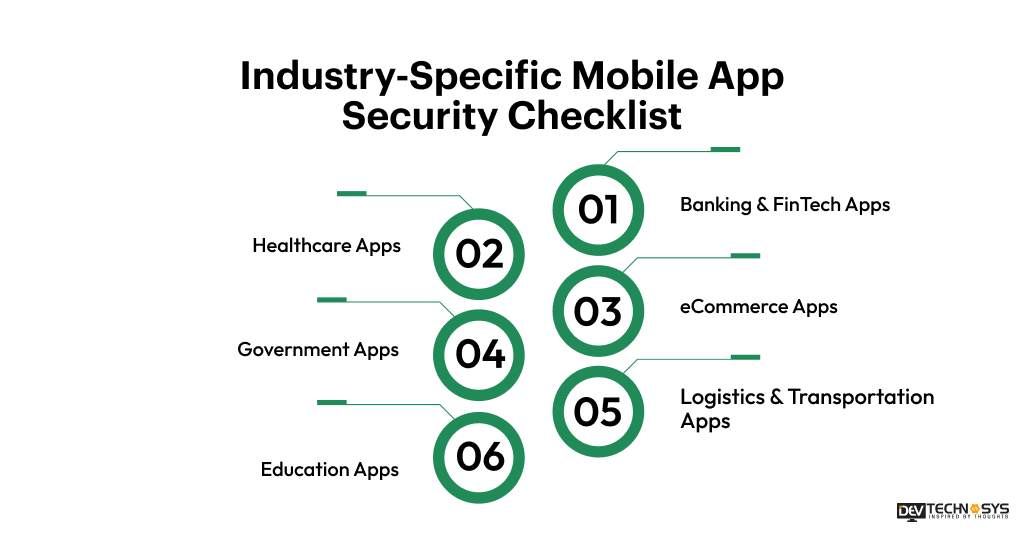
Different industries face unique security challenges based on the type of data they process and the regulations they must follow. Tailoring your mobile app security strategy to your industry helps reduce risks, maintain compliance, and protect sensitive information.
1. Banking & FinTech Apps
Protect financial transactions with end-to-end encryption, multi-factor authentication (MFA), fraud detection, PCI DSS compliance, secure APIs, and real-time transaction monitoring to safeguard customer accounts and payment data.
2. Healthcare Apps
Secure electronic health records (EHRs), patient information, and telemedicine services using strong encryption, role-based access control (RBAC), secure authentication, audit logs, and healthcare data privacy regulations. However, be mindful of the fact that adding advanced security measures can increase mobile app development cost indefinitely.
3. eCommerce Apps
Protect customer accounts and payment information through secure payment gateways, PCI DSS compliance, tokenization, fraud prevention tools, encrypted transactions, and regular vulnerability assessments to prevent cyberattacks.
4. Government Apps
Government applications require high-security standards, including identity verification, end-to-end encryption, Zero Trust architecture, continuous monitoring, secure cloud infrastructure, and compliance with national cybersecurity regulations.
5. Logistics & Transportation Apps
Protect GPS tracking, fleet management, shipment data, and operational systems through secure APIs, encrypted communications, device authentication, Cloud security for mobile apps, and continuous monitoring of connected services.
6. Education Apps
Safeguard student records, online learning platforms, and digital assessments with secure authentication, role-based permissions, encrypted data storage, privacy controls, and regular security testing to protect users and educational content.
Conclusion
Building a secure mobile app is no longer optional for businesses in the Middle East. By following a comprehensive checklist of Mobile app development security Middle East, implementing industry best practices, and complying with regional data protection laws, organizations can reduce cyber risks. Businesses can hire a mobile app development company such as Dev Technosys to create mobile applications that support long-term business growth.
Frequently Asked Questions
1. Why Is Mobile App Security Important For Businesses In The Middle East?
Mobile apps handle sensitive customer and business data, making them attractive targets for cyberattacks. Strong measures for Mobile app development security Saudi Arabia help prevent breaches, ensure regulatory compliance, protect user privacy, and maintain customer trust in an increasingly digital economy.
2. What Are The Biggest Security Threats To Mobile Applications?
Common threats include data breaches, insecure APIs, credential theft, malware, ransomware, reverse engineering, cloud vulnerabilities, insecure third-party SDKs, and insider threats that can compromise application security and sensitive information.
3. What Is The UAE Personal Data Protection Law (PDPL)?
The UAE PDPL regulates how organizations collect, process, store, and transfer personal data. Businesses developing mobile apps must implement appropriate security controls and privacy practices to comply with the law.
4. How Does Saudi Arabia’s PDPL Affect Mobile App Development?
Saudi Arabia’s PDPL requires businesses to protect personal data through secure processing, storage, and access controls. Mobile apps must also comply with cybersecurity requirements issued by SDAIA and the National Cybersecurity Authority.
5. What Security Features Should Every Mobile App Include?
Essential features for maintaining Mobile app development security Middle East include multi-factor authentication, biometric login, data encryption mobile app, secure APIs, role-based access control, secure payment processing, continuous security testing, and real-time monitoring to protect users and application data.
6. How Can Businesses Secure Payment Transactions In Mobile Apps?
Businesses should implement data privacy laws Middle East, including PCI DSS-compliant payment gateways, tokenization, ISO 27001 compliance, end-to-end encryption, fraud detection systems, and secure authentication methods to protect payment information and reduce financial fraud risks.
7. How Often Should A Mobile App Undergo Security Testing?
Security testing should be performed throughout development and after deployment. Regular penetration testing, vulnerability assessments, dependency scanning, and security monitoring help identify and address new threats before exploitation.
8. How Can A Mobile App Development Company Improve App Security?
An experienced development company integrates security into every development phase by following Secure coding practices mobile apps, conducting regular testing, implementing compliance requirements, and deploying advanced security technologies to build resilient applications.