





Key Takeaways:
The cost to build an app like Ticketmaster in 2026 generally falls between $30,000 and $150,000+, depending on the app’s features, complexity, technology requirements, platform choice, and development team.
Development Cost Based on App Complexity
- Entry-Level Ticket Booking App ($30,000 – $60,000): Designed for startups and small event businesses, this version includes user accounts, event browsing, ticket reservations, payment processing, and booking history.
- Feature-Rich Ticket Marketplace ($60,000 – $100,000): This version supports multiple event organizers and includes features such as interactive seat maps, ticket resale options, event filters, and promotional campaigns.
- Enterprise Ticketing Platform ($100,000 – $150,000+): Built for large-scale operations, this solution includes AI-driven recommendations, dynamic ticket pricing, real-time availability updates, and fraud prevention.
Major Factors Affecting Development Cost
- Business Model:The type of ticketing platform directly influences cost. A single-event booking app is more affordable than a multi-vendor marketplace connecting venues, organizers, and customers.
- Technology Selection: The choice between native development and cross-platform frameworks impacts both budget and development time.
- Feature Requirements: Features like live seat availability, automated ticket validation, AI suggestions, chat support, loyalty programs, and analytics increase development complexity and investment.
- Infrastructure & Maintenance: Hosting, database management, security monitoring, software updates, and ongoing improvements typically require an additional 10-20% of the initial development cost annually.
- External Integrations: Payment gateways, email/SMS services, maps, CRM tools, analytics platforms, and third-party event APIs can add extra development expenses.
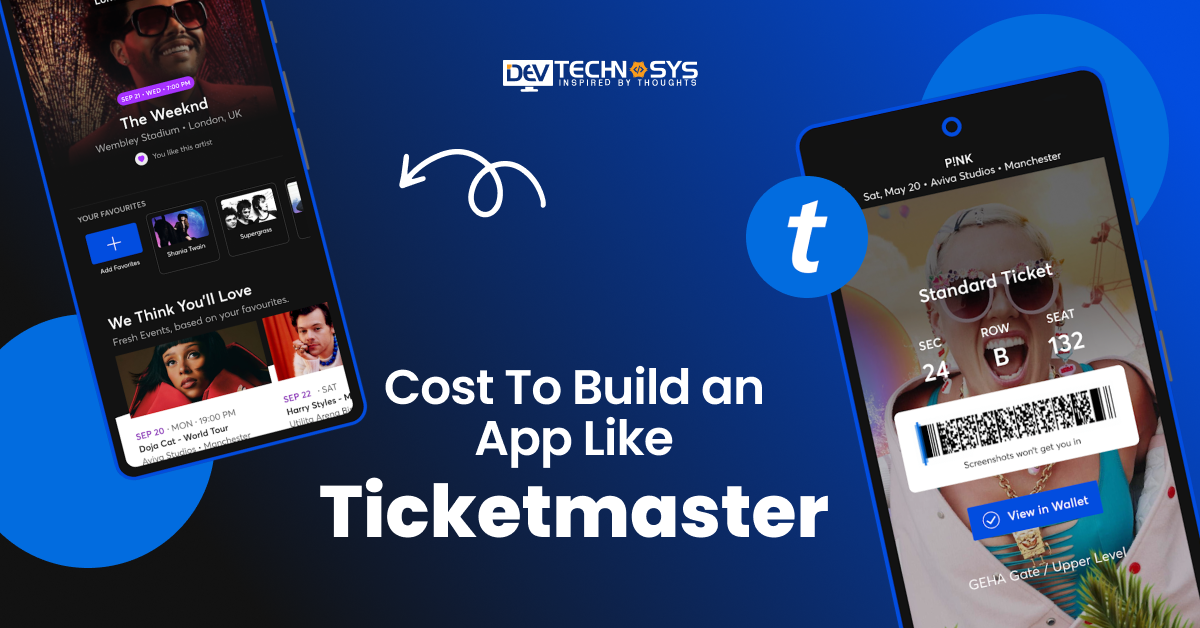
The advent of digital ticketing solutions has revolutionized ticket purchases and management. The arrival of services like Ticketmaster allows users to buy tickets for different events such as concerts and sports competitions.
These applications are marked by an easy ticket booking process and safe payment options that ensure users can easily select their seats in real-time and receive recommendations for their bookings.
If you plan to create a similar app, you are most likely interested in the costs of launching a ticketing platform like Ticketmaster.
The cost to build an app like Ticketmaster depends on a number of factors, including the complexities of desired features, design aspects, the technologies used as part of the development process, the scalability of the app created, and other important factors.
What is Ticketmaster?
As an online ticketing powerhouse, Ticketmaster empowers people to find, buy, and manage their tickets seamlessly for concerts, sports events, theatrical performances, and fabulous festivals. The technology utilized connects organizers of events with venues and fans by providing them with a secure marketplace and facilitating the booking process with a variety of features. Starting from easy seat selection, mobile ticketing, secure payments, as well as event recommendations and ticket transfer.
Why UAE Businesses Want to Invest in Event Ticket Booking App Development?
Businesses in the UAE are putting money into creating ticket booking apps to address the demand for quick, efficient, and digitally-first solutions from clients. These applications help users book their tickets, whether they’re for events, vacations, films, or attractions, whenever they want and offer an improved customer experience. Enterprises profit from features like automated bookings, secure online payments, up-to-date availability, and insight into their clients through analytics.
With the robust tourist industry, smart city development projects, and high smartphone penetration rate in the UAE, ticket booking applications open new income channels and allow them to cut costs. They also boost brand awareness and help develop operational methods and maintain competitiveness in the fast-changing digital economy.
What is the Cost to Build an App Like Ticketmaster?
The usual cost to develop an app like Ticketmaster ranges from approximately $30,000 to $150,000 and depends on the application’s complexity, platform requirements, technologies used, and functionalities. The investment for event management app development services includes activities such as planning, design of the UI and UX, frontend and backend development, integration of payment services, software testing, security measures, and application maintenance. Moreover, advanced features such as real-time ticket availability and seat selection increase the total cost to create an app like Ticketmaster.
App Complexity Level |
Estimated Cost |
Key Features |
| Basic Ticket Booking App | $30,000 – $50,000 | Login, event listings, search, booking, payments, digital tickets |
| Medium Complexity Ticketing App | $50,000 – $100,000 | Seat selection, notifications, profiles, organizer panel, analytics |
| High Complexity Ticket Marketplace App | $100,000 – $150,000+ | Real-time inventory, resale, dynamic pricing, AI features, fraud protection |
Top 5 Types of Ticket Booking Apps and Their Development Cost
Come and see the five most outstanding forms of ticket-booking applications available on the market. Analyze the development costs incurred in creating a new app based on the technical characteristics and business goals behind the software. Learn about apps designed for booking different types of events, movie theatres, travel agencies, sports activities, and marketplaces similar to Ticketmaster.
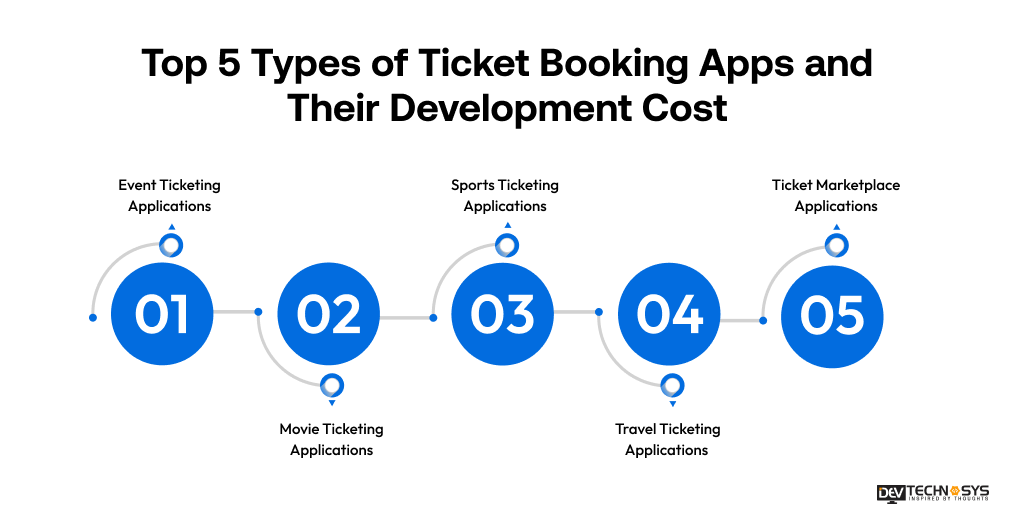
1. Event Ticketing Applications
Estimated Cost: $20,000-$50,000
Event ticketing applications enable users to find and buy tickets for seminars, exhibitions, training sessions, or entertainment activities. The apps provide users with all functions, including event listing, categorization, online payments, e-tickets, booking history, and alerts.
2. Movie Ticketing Applications
Estimated Cost: $30,000-$80,000
Movie ticketing apps make it easy for users to see movies, find out when they are on, select the preferred seats, and book tickets. They usually have many other features like seating maps, cinema information, booking payment, movie reviews, loyalty schemes, etc.
3. Sports Ticketing Applications
Estimated Cost: $60,000-$100,000
Sports ticketing apps let sports fans buy tickets to matches, games, and other sporting events. They usually possess data regarding teams, event schedules, stadium seating maps, real-time ticket availability, and payment security.
4. Travel Ticketing Applications
Estimated Cost: $50,000-$90,000+
Travel ticketing apps help users to book transport facilities such as flights, train rides, and bus trips. They provide such features as route searching, real-time checking, a booking management system, cancellation options, etc.
5. Ticket Marketplace Applications
Estimated Cost: $100,000-$150,000+
Ticket marketplace applications facilitate a connection between event organizers, venues, and consumers using a single application. Event scheduling apps have many features to offer, such as ticket inventory management, availability to check available seats, ticket resale, fraud protection, recommendations, and a dashboard that allows control of ticket sales.
7 Major Factors That Impact Ticket Booking App Development Cost
The cost to build an event management app like Ticketmaster relies on several influential factors that go beyond simple programming alone. Among these elements are the complexity of the functionality, choice of platform, user interface design, back-end infrastructure, integration of third-party apps, security needs, and the qualification of the development team.
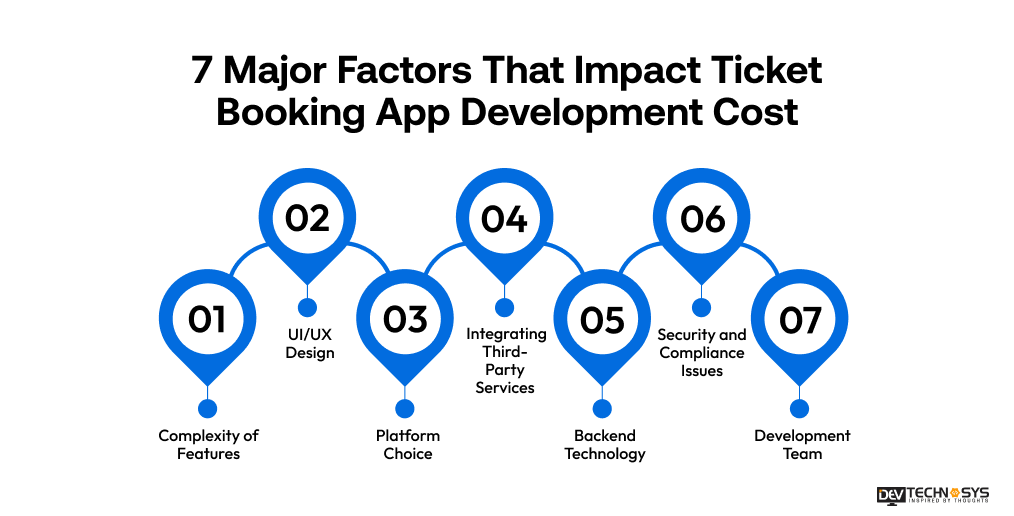
1. Complexity of Features
Several characteristics contribute to the overall complexity and determine the cost to build an event planner app like Socio. Important features include user registration of the users, posting events, buying tickets and choosing seats, integrating different payment methods, QR code ticketing, and sending notifications. The risks are increasing with the presence of advanced features such as AI recommendations and live updates to the information regarding the events.
Feature Complexity |
Examples |
Cost Impact |
| Basic | Event listing, user registration, ticket booking | +$0–$10,000 |
| Moderate | Seat selection, payment gateway, notifications | +$10,000–$30,000 |
| Advanced | AI recommendations, dynamic pricing, loyalty program | +$30,000–$60,000 |
2. UI/UX Design
A good-looking design can stimulate the users’ interest in the software and influence the background of the development project. Custom design, seating maps, interactivity, navigability, animations, and accessibility are factors contributing to the expenditures on an event management software development project.
Design Level |
Scope |
Cost Impact |
| Basic | Standard templates and navigation | +$3,000–$7,000 |
| Custom | Branded interface and custom layouts | +$7,000–$15,000 |
| Premium | Interactive seat maps, animations, micro-interactions | +$15,000–$30,000 |
3. Platform Choice
While deciding on the preference between iOS, cross-platform, and Android app development, it should be mentioned that this would influence the cost of the whole project. In case the client chooses to develop separate native applications, it would require more resources as compared to using cross-platform technologies.
Platform |
Description |
Cost Impact |
| Single Platform | Android or iOS | Base Cost |
| Cross-Platform | Flutter or React Native | +$10,000–$20,000 |
| Native Android + iOS | Separate native applications | +$25,000–$50,000 |
4. Integrating Third-Party Services
Various external services such as payment gateways, mapping service providers, customer relationship management solutions, analytics platforms, email alerts system, SMS API, and social networking logins are crucial for online ticket-booking applications.
Integration Level |
Examples |
Cost Impact |
| Essential APIs | Payment gateway, SMS OTP | +$2,000–$8,000 |
| Business APIs | Maps, analytics, social login | +$8,000–$15,000 |
| Enterprise Integrations | CRM, ERP, marketing automation | +$15,000–$35,000 |
5. Backend Technology
In order to run the app, a scalable backend with the ability to deal with user accounts, events, ticket sales, payment processing, and bandwidth is required. Cloud hosting, DB management, API utilization, security, and optimization of servers will add to the expenses of app development process but will ensure good working of the solution.
Backend Level |
Capabilities |
Cost Impact |
| Basic | Database and user management | +$5,000–$15,000 |
| Scalable | Cloud infrastructure, APIs | +$15,000–$30,000 |
| Enterprise | Microservices, auto-scaling, real-time processing | +$30,000–$50,000 |
6. Security and Compliance Issues
In order to safeguard users’ personal information and transactions, lots of innovations have to be used. It includes the implementation of features like data encryption, secure authentication, fraud detection, compliance with PCI DSS and GDPR requirements, and continuous security testing.
Security Level |
Features |
Cost Impact |
| Standard | SSL, encrypted authentication | +$3,000–$8,000 |
| Advanced | Multi-factor authentication, fraud detection | +$8,000–$20,000 |
| Enterprise | PCI DSS, GDPR compliance, penetration testing | +$20,000–$40,000 |
7. Development Team
The cost of an app like Ticketmaster depends a lot on the expertise of the team and its size and location. Should you hire mobile app developers in Dubai, and such experts as UI/UX designers, QA specialists, or project managers located in places with high wages, that will lead to increased costs.
Team Type |
Expertise |
Cost Impact |
| Freelancers | Basic MVP development | Lowest Development Cost |
| Mid-Sized Agency | Custom feature development | +15–25% higher than freelancers |
| Enterprise Development Company | End-to-end development with premium support | +30–50% higher than freelancers |
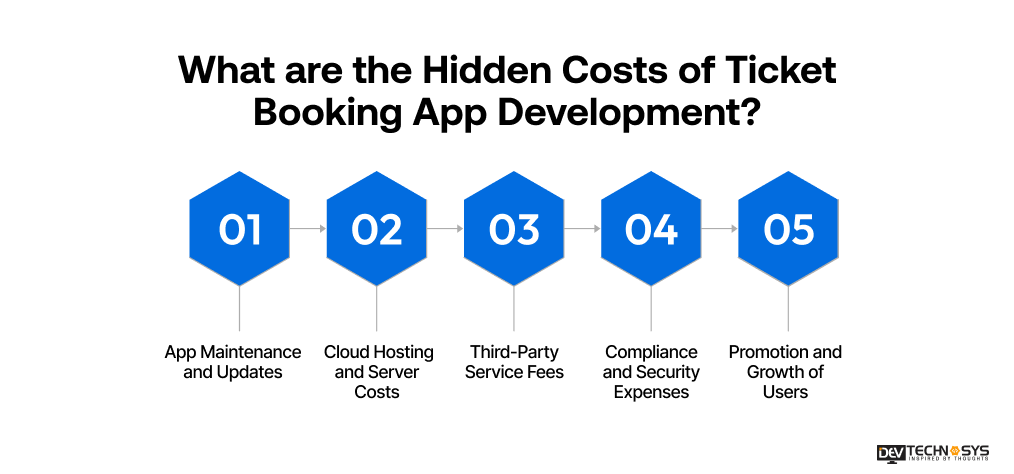
What are the Hidden Costs of Ticket Booking App Development?
There are often various unforeseen costs that can add a significant amount to the overall budget of the ticket booking app after the initial development costs have been taken into account. The ongoing costs of the app include app maintenance, cloud hosting, third-party service fees, backup, security updates, compliance measures, marketing, and customer support.
1. App Maintenance and Updates
The process of app development is just the start. The app needs continuous investment to ensure that it runs smoothly and safely. The app needs maintenance, including fixes for bugs, OS updates, improvements in functions, and everything else.
2. Cloud Hosting and Server Costs
The ticketing application deals with peaks of traffic, repeated as a result of a few major events happening in the area. There are several expenses involved with database management, cloud hosting, server scaling, and so on.
3. Third-Party Service Fees
Third-party payments, SMS, e-mail services, analytics, mapping, and push notifications also charge monthly fees or some transaction costs, making your budgeting process a bit tedious.
4. Compliance and Security Expenses
In order to keep the end-user’s information safe, continual security monitoring, SSL certificate systems, penetration tests, compliance audits, and fraud prevention tools have to be implemented and sustained.
5. Promotion and Growth of Users
Even the best ticket-booking application will not work efficiently without marketing activities. Expenses related to digital advertising, optimizing app stores, deals with influencers, referral programs, and customer support are going to contribute greatly to your overall budget after the launch of a product.
5 Tips to Reduce the Ticket Booking App Development Cost
The process of minimizing cost to make an app like Ticketmaster requires optimal planning, effective technology selection, and smart execution. By prioritizing the important features, developing an MVP, determining the appropriate development methodology, utilizing third-party solutions, and cooperating with proficient experts in the field.
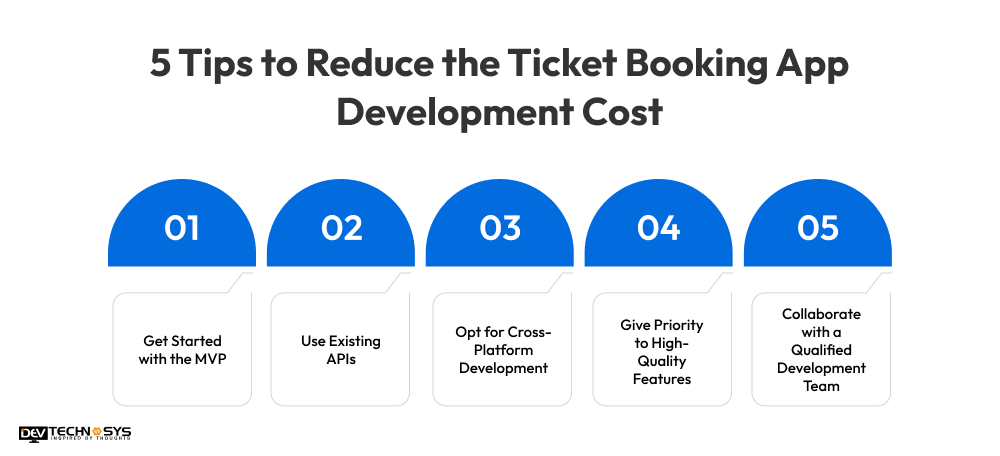
1. Get Started with the MVP
The launch of your ticket reservation application should occur with a Minimum Viable Product (MVP) that contains crucial functionalities like user registration, event listing, ticket reservation, and payment processing. This strategy lowers the initial mobile app development cost while establishing how viable the concept of your application is for future enhancements by using the feedback of users.
2. Use Existing APIs
Instead of creating all dashboards almost from scratch, you can resort to using reliable third-party APIs, allowing you to add functionalities for processing payments, using navigation functionality, and conducting ad services thanks to utilization of maps.
3. Opt for Cross-Platform Development
The option of cross-platform technologies like Flutter and React Native allows writing a single code for both Android and iOS applications. It helps you significantly reduce the development duration and mobile app maintenance costs and gain great savings without sacrificing the performance and experience of the users.
4. Give Priority to High-Quality Features
It is necessary to provide only essential features that should have the highest efficiency for the client. This way, you will be able to make the process of product release cheaper, faster, and better.
5. Collaborate with a Qualified Development Team
Working with an experienced mobile app development company helps prevent expensive errors, enhances planning, and promotes good use of resources. A knowledgeable team can advise on affordable technologies, simplify development processes, and make your ticket reservation application that can be scaled at a reasonable price.
How Long Does it Take to Build an App Like Ticketmaster?
Creating an application comparable to Ticketmaster takes around 3-6 months, depending on its complexity and features, as well as the method adopted for the application development. The simpler versions that do not have features like seat selection, AI-based recommendations, real-time analytics, and multi-platform support take less time to develop as compared to the advanced versions with all those features. Effective planning, UI/UX development, testing, and delivery processes also contribute a lot towards determining the total time needed.
Development Stage |
Estimated Timeline |
Key Activities |
| Planning & Requirement Analysis | 2–3 weeks | Define goals, features, project scope, and technical requirements |
| UI/UX Design | 3–5 weeks | Create wireframes, prototypes, and user-friendly interface designs |
| MVP Development | 8–12 weeks | Develop core features like event listings, ticket booking, user accounts, and payment integration |
| Advanced Feature Development | 4–8 weeks | Add seat selection, notifications, analytics, AI recommendations, and an admin panel |
| Testing & Quality Assurance | 2–4 weeks | Perform functional, performance, security, and bug testing |
| Deployment & Launch | 1–2 weeks | Publish the app on app stores and configure the production environment |
| Total Estimated Timeline | 3-6 Months | Timeline varies based on app complexity, feature set, and development team size |
Cost Comparison: Build vs Buy vs Partner
Selecting an appropriate development methodology can have a major influence on the expense, duration, and expansion potential of your ticketing platform. This section will analyze several options: personalized application development, using a pre-sold service, or collaborating with an experienced software developer to help the reader choose the best solution for their needs.
Approach |
Build from Scratch |
Buy a Ready-Made Solution |
Partner with a Development Company |
| Estimated Cost | $30,000 – $150,000+ | $10,000 – $50,000 | $30,000 – $150,000+ |
| Best For | Custom platforms with unique requirements | Startups needing quick launch | Businesses seeking expertise and support |
| Development Time | Longer (6–12+ months) | Faster (weeks to months) | Moderate (3–12 months) |
| Customization | High | Limited | High |
| Scalability | Excellent | Moderate | Excellent |
| Maintenance | Managed internally | Vendor-dependent | Support available |
| Security Control | Full control over security setup | Depends on provider | Professional security practices |
| Technology Choice | Complete freedom | Limited by existing solution | Flexible technology selection |
| Main Advantage | Full control and flexibility | Faster deployment with lower investment | Expert execution and long-term support |

5 Best Monetization Models for Ticket Booking Applications
Find out the best options for monetizing your ticket booking app. From commission fees to premium subscriptions, and from advertising to resale market opportunities. These revenue models enable businesses to make money and improve the experience of customers at the same time.
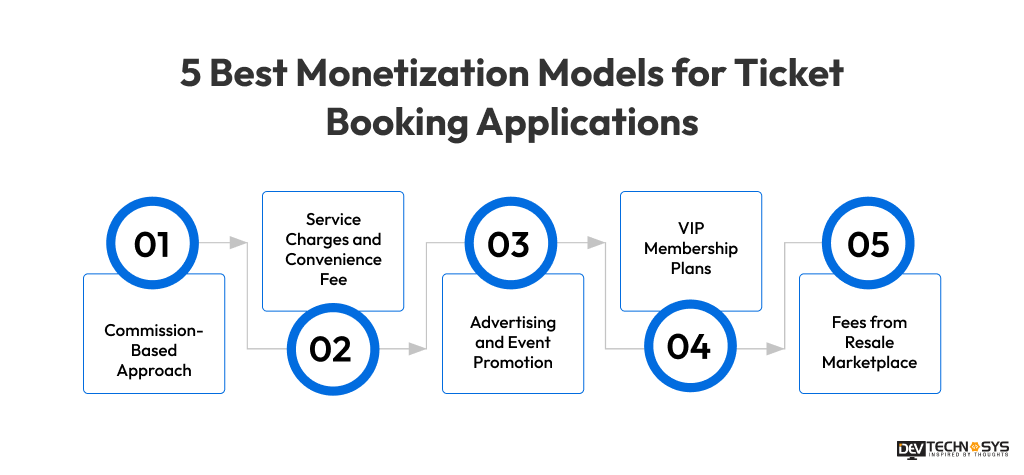
1. Commission-Based Approach
The revenue generation method for ticket booking applications is through charging a commission for ticket bookings done through the apps. Event organizers, service providers, and venues pay some percentage of each ticket booked through the platform. This model gives a regular stream of income as well as lets users access many events with the help of one app.
2. Service Charges and Convenience Fee
Also, ticket booking apps can make money through service charges or convenience fees while booking tickets. In this, users can pay a small amount for the application of the fee. It covers the operation, processing, and technology costs of platform tickets. This model is very popular among ticketing apps.
3. Advertising and Event Promotion
Moreover, apps can earn money through advertisements and sponsored posts. The organizers also get the ability to pay for having their events highlighted through the app and see greater audience engagement.
4. VIP Membership Plans
Event management app development solutions provide fee-based memberships will give users more benefits such as getting tickets beforehand and receiving discounts, priority booking, and special offers. Premium plans provide consistent revenues and help build customer loyalty. This strategy is perfect for platforms with regular users and lively events.
5. Fees from Resale Marketplace
The ticket resale marketplace is a platform that enables users to buy or sell tickets safely via the application. Apps can charge some transaction fees (or service fees) for resale transactions that go smoothly. This way of earning generates interaction with the platform and new revenue opportunities from secondary tickets.
Conclusion
The cost to build an app like Ticketmaster relies on different aspects like functionality needed, choice of platform, design of the user interface, integration of third-party services, security requirements, and skills and experience of the development company. A simple application needs less budget, while a complex app providing features like real-time ticketing, seat selection, and integration with analytics is more expensive to develop. Proper planning, selection of a technology stack, and collaboration with a professional event management app development company will help with cost reduction while developing a secure and user-friendly ticket booking application.
Frequently Asked Questions
Q1. How Much Does It Cost To Build An App Like Ticketmaster?
The estimated cost to develop an app like Ticketmaster usually lies within the range of $30,000 to $150,000 and even more. The cost varies depending on the features of the app, the number of platforms the app is compatible with, the complexity of the UI/UX design, security measures, and the level of experience of the development team.
Q2. How Long Does It Take To Develop A Ticketmaster-Like App?
Creating an app like Ticketmaster takes, on average, a period of 3 to 6 months. The exact duration varies based on the complexity of the project, custom features of the application, requirements for design, platform compatibility, and the size of the development team involved in working on the app.
Q3. What Are The Essential Features Of A Ticketmaster-Like App?
A perfect live entertainment app must have user registration, event discovery options, complex filters, choice of seats, secure payment processing, availability of QR code tickets, the history of bookings, notifications, and reviews, and an admin dashboard for streamlining management of events.
Q4. How Much Does Payment Gateway Integration Cost?
Payment gateway integration generally costs between $2,000 and $10,000. The actual cost depends on various factors, including the pricing model of the provider, the payment methods being used, level of security compliance, possibility of recurring payments, and other features like enabling refunds and invoices, supporting multiple currencies, etc.
Q5. How Much Does It Cost To Maintain A Ticketmaster-Like Application Annually?
Generally, it costs between 10% and 20% of the original development budget to maintain an application. It also includes software upgrades, security patches, bug remediation, server management, feature enhancements, performance optimization, and compatibility with new operating systems.