





Key takeaways:
- According to Statista, the Health & Fitness app market is projected to generate over USD 10 billion in global revenue by 2029
- The cost to build a calorie counting app like Cronometer is around $30,000 to $1,50,000 depending on features, platform, UI/UX design, development team location, and more.
- A similar app like Cronometer can generate sustainable revenue by combining multiple monetization models including subscription plans, freemium model, personal coaching, and premium reports.
- Creating Cronometer alternative involves features like verified food library, health insights, calorie calculator, barcode scanner for food, push notification, and progress charts, and AI meal recognition.
With the rise of technology-savvy customers looking to keep track of what they eat, calorie counting apps have become a dominant trend in health and fitness.
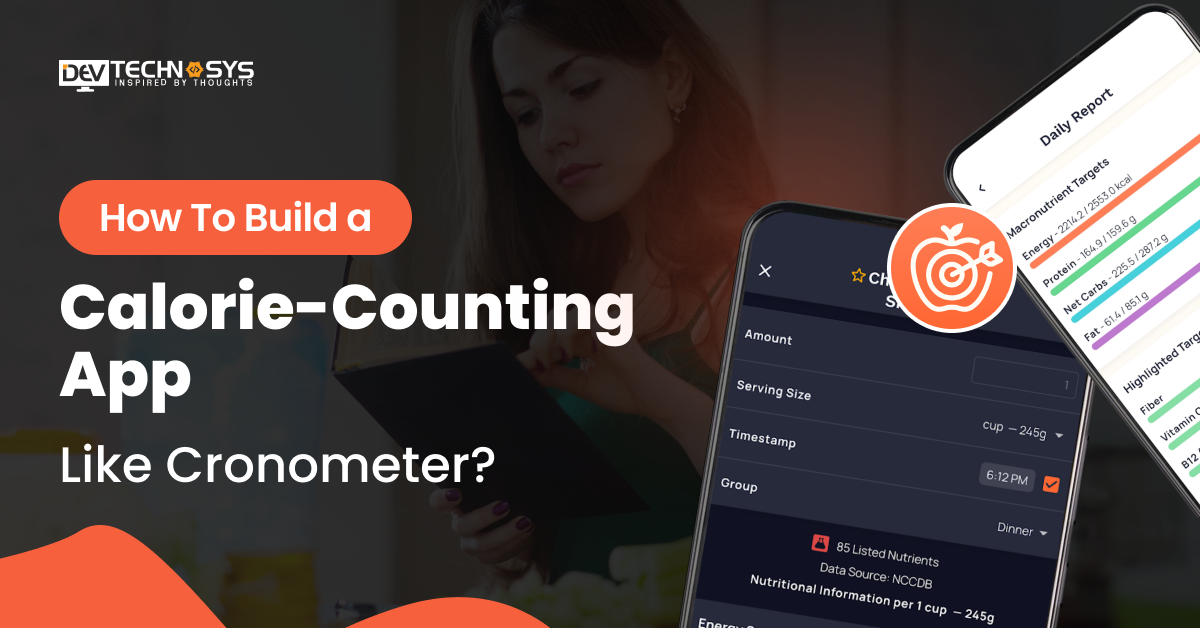
What makes Cronometer unique is its ability to provide you with accurate calorie information, micronutrient information, barcode scanning, and personalized information about your health, all included in a single app. Businesses, healthcare companies, and startups have started to create such apps that combine nutrition information and suggestions from AI with the use of wearable devices.
In this best nutrition tracking app development guide, we will tell you how to build a calorie counting app like Cronometer, what you need to include in such an app, how to develop it step by step, which technologies to use, and how much it will cost in 2026.
What is Cronometer App?
The Cronometer application is a nutrition and diet-tracking application that keeps track of your daily food intake, workout history, and health records regarding body. Known for its reliability. It’s designed to track vitamins and minerals, not just calories. The key features include: food logs, accurate information, nutrient tracking and synching with wearables.
Market Overview of Calorie Counting Apps
- The global fitness app market size is projected to grow from USD 13.94 billion in 2026 to USD 38.71 billion by 2034, exhibiting a CAGR of 0.13% during the forecast period.
- Nearly 71% of smartphone users in the United States utilize at least one health or fitness application for exercise monitoring, calorie tracking, or wellness management
- More than 64% of fitness applications globally now support smartwatch synchronization and real-time biometric monitoring.
- Approximately 46% of active fitness app users subscribe to premium wellness plans offering personalized exercise routines and dietary recommendations.
Answer a few quick questions and our experts will share a tailored project estimate.
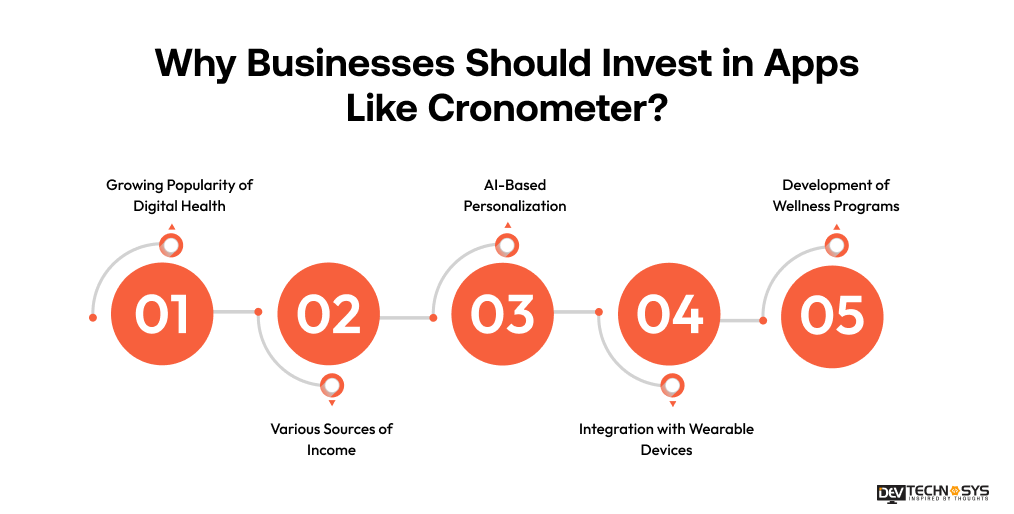
Why Businesses Should Invest in Apps Like Cronometer?
The demand for personalized health and wellness options is rising and has made calorie counting applications an attractive field of investment for the companies. Here are a few important reasons why companies need to invest in applications like Cronometer.
1. Growing Popularity of Digital Health
Growing popularity of diggital health is one of the biggest reason for businesses to invest in nutrition tracking app development. Consumers use mobile applications to track their calories, the nutritional intake, and achieve fitness targets, leading to increased demand for health and wellness applications.
2. Various Sources of Income
Businesses should build a medical fitness app like DHA because they can earn consistent income by offering at least one premium subscription, in-app purchases, personal nutrition plans, ad placement, and affiliate marketing.
3. AI-Based Personalization
Cronometer alternatives involve AI-powered meal suggestions, food identification, and personalized nutrition information increase user engagement, improve retention, and provide incentives for upgrading to a premium plan.
4. Integration with Wearable Devices
To build a similar app like Cronometer, you need to Integrate it with Apple Health, Google Fit, Fitbit, Garmin, and other wearables. It allows for automatic tracking of the activities and makes the experience more enjoyable.
5. Development of Wellness Programs
Companies begin to spend more on wellness solutions for employees to increase their productivity and lower healthcare expenses, making it possible for apps focused on nutrition and fitness to start promoting their services to the corporate sector.
How Does a Calorie Counting App Like Cronometer Work?
A calorie counting app like Cronometer helps users monitor their daily nutrition by calculating calorie intake, tracking nutrients, and providing personalized health insights. It combines a food database, barcode scanning, wearable integrations, and AI-powered recommendations to simplify healthy eating.
- Sign Up & Create a Profile: Users enter personal details, health metrics, and fitness goals.
- Set Daily Nutrition Goals: The food diary app calculates calorie and macronutrient targets based on user preferences.
- Log Food Intake: Meals are added through food search, barcode scanning, recipe creation, or AI food recognition.
- Analyze Nutrition: The app calculates calories, macros, and micronutrients using a verified food database.
- Sync Fitness Data: Wearables like Apple Health, Google Fit, and Fitbit automatically import activity and calorie burn data.
- Track Progress & Get Insights: Users view reports, monitor progress, and receive personalized nutrition recommendations.
App Architecture for a Calorie Counting App
A calorie counting app, such as Cronometer, allows users to track their nutrition intake on a day-to-day basis, as well as their overall calorie intake and provide personalized health advice. In order to assist in the process of leading a healthy lifestyle, the application includes both a food database and security.
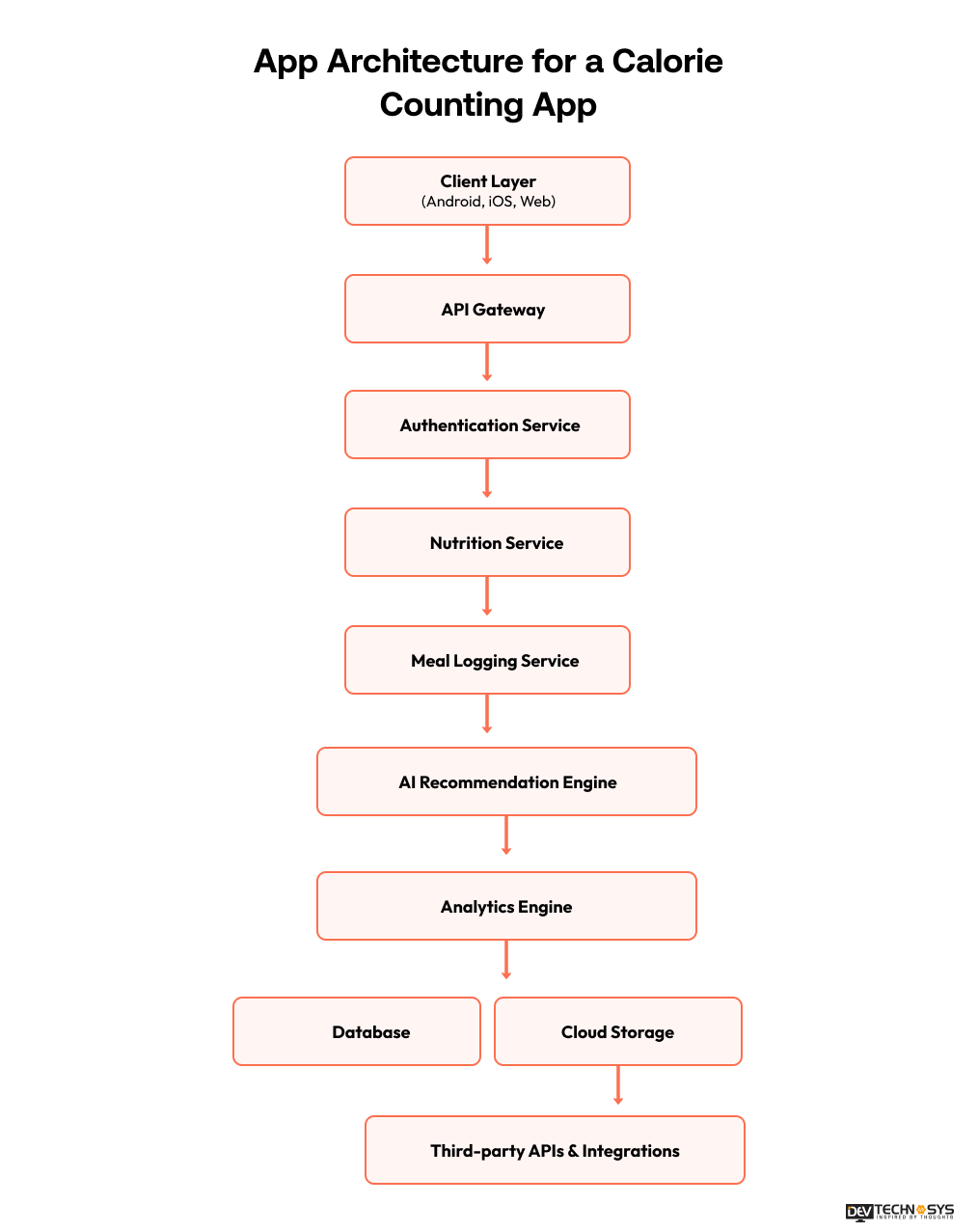
- Microservices Architecture: Allows efficient management and independent scaling of functionalities such as authentication, nutrition tracking, meal logging, and analytics by isolating them separately.
- Serverless Computing: Helps minimize costs associated with infrastructure by using cloud functions for barcode scanning, notifications, and AI inference.
- Event-Driven Architecture: A similar app like Cronometer provides better responsiveness by using message queues to process events, such as meal logging operations, wearable data synchronization, and notification delivery.
- Scalability: Utilizes cloud services, load balancing, caching, and auto-scaling to support millions of users without degrading performance.
What are the Steps to Build A Calorie Counting App Like Cronometer?
Making a calorie counting software like Cronometer is about a lot more than just making a meal diary. A smooth user experience requires the app to include precise nutrition data, AI-powered suggestions, wearable connectors, and scalable cloud infrastructure.
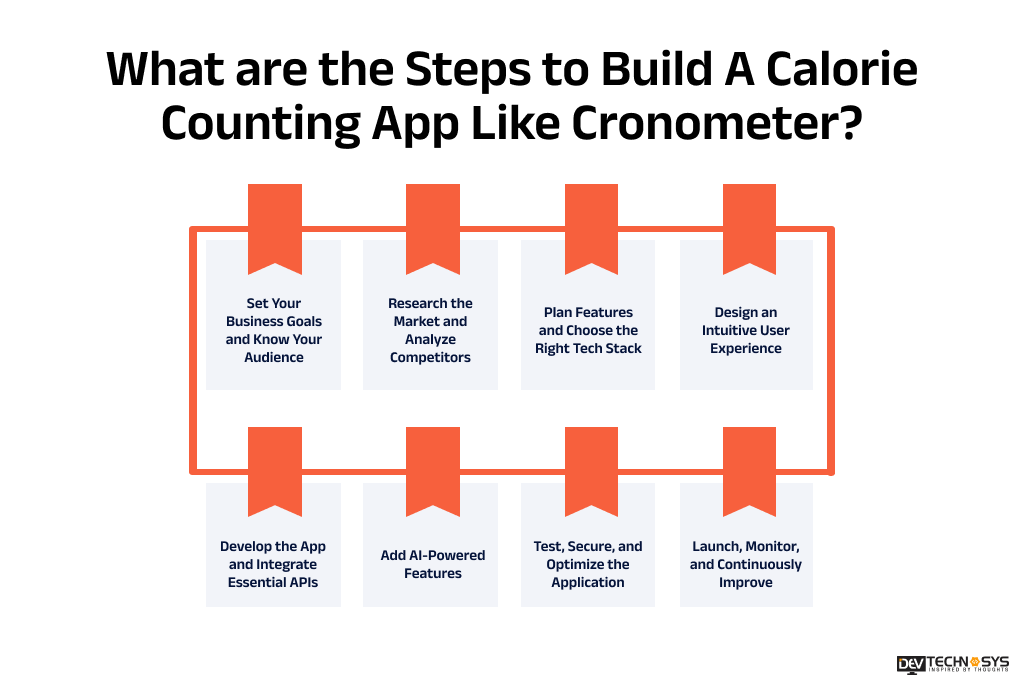
1. Set Your Business Goals and Know Your Audience
First, define your target audience and company model. Decide whether your app is going to be targeting weight loss, sport nutrition, chronic illness management or general wellness. Having clear objectives helps selecting the proper monetization method, features as well as creating a product that satisfies the consumer expectations.
Targeted apps, for example apps for athletes, diabetics or intermittent fasters, tend to have better user retention than broad calorie trackers since they answer more narrowly defined concerns.
2. Research the Market and Analyze Competitors
Check out the best apps like Cronometer, MyFitnessPal, Lose It!, Yazio and more. Learn about what they offer, how much they charge, what users are saying about them and how engaged users are. Spot opportunities that your app can fill, such AI meal recognition, personalized nutrition coaching, or deeper integrations with wearables.
Key areas to evaluate:
- Core features
- Subscription pricing
- User pain points
- App ratings and reviews
- AI capabilities
- Monetization model
Expert Insights:
“According to Grand View Research, the iOS platform captured 52.5% of the diet and nutrition app market in 2024, while smartphone-based deployments represented 67% of total market revenue.”
3. Plan Features and Choose the Right Tech Stack
Begin by determining what MVP features you require, then choose technology supporting scalability. Your MVP must incorporate food logging, barcode scanning, nutrition database support, and tracking of macro & micronutrients. Other key features of that must be included in a Cronometer clone app are progress dashboard, wearable synchronization, and premium subscription functionality.
Next, experts who provide fitness app development services have to consider using modern frameworks such as Flutter or React Native, cloud services like Amazon Web Services (AWS) or Google Cloud, and reliable nutrition APIs such as FoodData Central by USDA.
Expert Insights
“According to our health app development expert Mohit Nag, Choosing scalable technologies early reduces redevelopment costs as your user base grows.”
4. Design an Intuitive User Experience
The users will log their meals many times per day, so the interface needs to ease the process as much as possible. Aim for clear navigation, one-tap meals logging, speedy barcode scanning, and flashy progress dashboards.
According to experts who provide fitness app development solution, each additional step may lead to increases in dropoffs during meal logging. Therefore, making the user journey simple is one of the best techniques to increase loyalty.
Best practices include:
- Minimal onboarding
- Smart search suggestions
- Dark mode
- Personalized dashboards
- Accessibility compliance
5. Develop the App and Integrate Essential APIs
When building the frontend, backend, and web admin panel, implement APIs for nutrition data, barcode scanning, transactions, notifications, and health applications. It is important to build integrations with other Android app development services in a modular way to avoid affecting the app in case something gets changed or updated.
6. Add AI-Powered Features
Cronometer clone app includes artificial intelligence to enhance personalization and increases user engagement. AI can automatically recognize food from images, estimate calories, recommend healthier alternatives, and generate personalized meal plans based on user goals. AI-powered nutrition personalization is becoming a key differentiator for next-generation health and fitness apps.
7. Test, Secure, and Optimize the Application
Your mobile app development company, experts need to perform thorough testing before launch to ensure functionality, performance, security and data accuracy. Apps that measure calories use sensitive health information and it is important to protect user data.
Testing should include:
- Functional testing
- API testing
- Performance testing
- Security testing
- Cross-platform testing
- Usability testing
Expert Insight:
“Even minor inaccuracies in calorie calculations or food database results can reduce user trust and increase app abandonment.”
8. Launch, Monitor, and Continuously Improve
Monitor statistics, gather user feedback and push out regular updates after deployed. We will add new AI functions, extend the food database, optimize performance and fine tune recommendations depending on user behavior.
Track key metrics such as:
- Daily Active Users (DAU)
- Monthly Active Users (MAU)
- User retention
- Subscription conversion rate
- Session duration
- Churn rate
Must-Have Features of a Calorie Counting App Like Cronometer
In order for a calorie tracking application to be deemed successful it has to expand beyond basic food logging; the most important thing that it should offer its users is precise nutrition tracking, that personalized recommendations and smooth operation. In order to create an app like Cronometer it is essential to include the following features.
User Panel |
Nutrition Database Features |
Premium Features |
Admin Panel |
| Signup/Login | USDA Database Integration | Advanced Reports | User Management |
| Dashboard | Verified Food Library | Micronutrient Analysis | Food Database Management |
| Food Diary | Branded Foods | Health Insights | Subscription Management |
| Barcode Scanner | Recipe Nutrition Calculation | Export Reports | Analytics Dashboard |
| AI Food Recognition | Custom Food Creation | Wearable Sync | Push Notification Management |
| Macro Tracking | Serving Size Conversion | Personalized Goals | AI Moderation |
| Water Intake Tracker | Barcode Food Lookup | AI Nutrition Coach | Content Management System (CMS) |
| Exercise Tracking | Nutrition Label Scanner | Ad-Free Experience | User Feedback Management |
| Meal Planner | Recipe Import & Analysis | Priority Customer Support | Coupon & Offer Management |
| Progress Charts | Multi-Language Food Database | Custom Health Reports | Roles & Per |
Advanced Features that Differentiate Apps Like Cronometer
The advanced features of an app like 7 minute workout and cronometer to make it stand out from the rest in the industry. Here are some of the upgrades that will help the application to become different from its competitors:
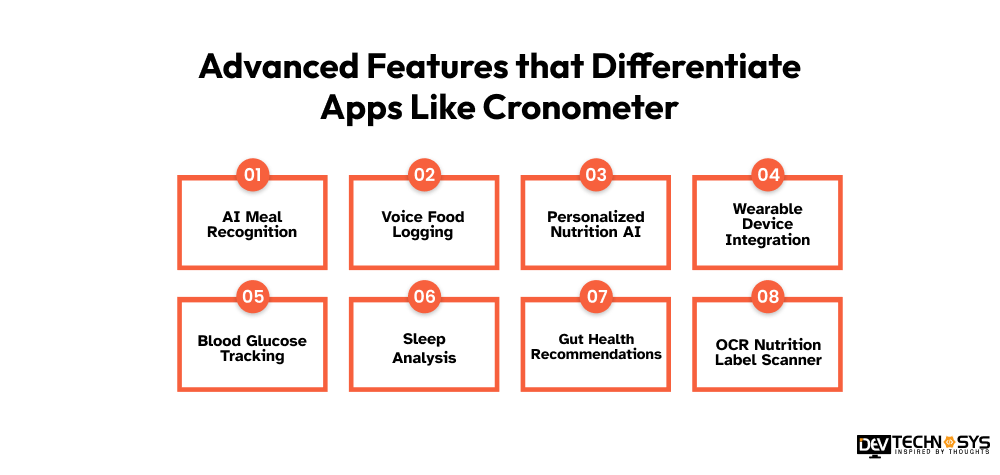
1. AI Meal Recognition
AI food identification technology is able to determine food products by means of images, find out calories and nutrients from the pictures and make entries of food automatically thus saving time and providing users with better experience.
2. Voice Food Logging
Calorie counting app development requires features like voice food logging. With the help of voice recognition option users can tell the name of the meals therefore simplifying calorie tracking and making the process faster and more convenient for users.
3. Personalized Nutrition AI
Using artificial intelligence (AI), an app assesses users’ health goals, medication intake, dietary habits, allergies, andactivity levels and creates personalized meal plans and nutritional guidelines adapted to users’ lifestyles.
4. Wearable Device Integration
The connection with fitness applications such as Apple Health, Google Fit, Fitbit, and Garmin automatically syncs exercise, sleep, heart rate, and calories burned information from those mobile applications.
5. Blood Glucose Tracking
Through integration with continuous glucose monitoring devices, users can monitor blood glucose levels, figure out the effects of foods on their health, and obtain dietary recommendations related to metabolism improvement
6. Sleep Analysis
The application detects sleep patterns to determine the quality and duration of users’ sleep, thus providing insight on the impact of their sleep patterns on their metabolism, energy levels, restoration, and nutritional performance.
7. Gut Health Recommendations
Build a fitness app like Runna that analyzes dietary habits and recommends fiber-rich foods, probiotics, hydration goals, and balanced nutrition plans to support digestive health and improve overall wellness.
8. OCR Nutrition Label Scanner
The use of OCR technology allows the app to scan product labels and extract required data from them, for the purpose of assisting users in food monitoring.
What are the Types of Calorie Counting Apps?
Calorie counting applications help different people fulfil their health, diet, and fitness needs. Here are some common types of calorie counting apps which can help companies choose the correct application for the particular market position.
App Type |
App Example |
Development Cost (USD) |
Complexity Level |
| Basic Calorie Tracking Apps | Calory | $20,000 – $35,000 | Low |
| Nutrition Tracking Apps | Cronometer | $30,000 – $60,000 | Medium |
| AI-Powered Food Recognition Apps | SnapCalorie | $60,000 – $120,000 | High |
| Weight Loss & Diet Apps | Noom | $40,000 – $80,000 | Medium–High |
| Fitness & Workout Apps | MyFitnessPal | $35,000 – $75,000 | Medium |
| Medical Nutrition Apps | MyNetDiary Diabetes | $70,000 – $120,000+ | High |
| Intermittent Fasting Apps | Zero | $30,000 – $60,000 | Medium |
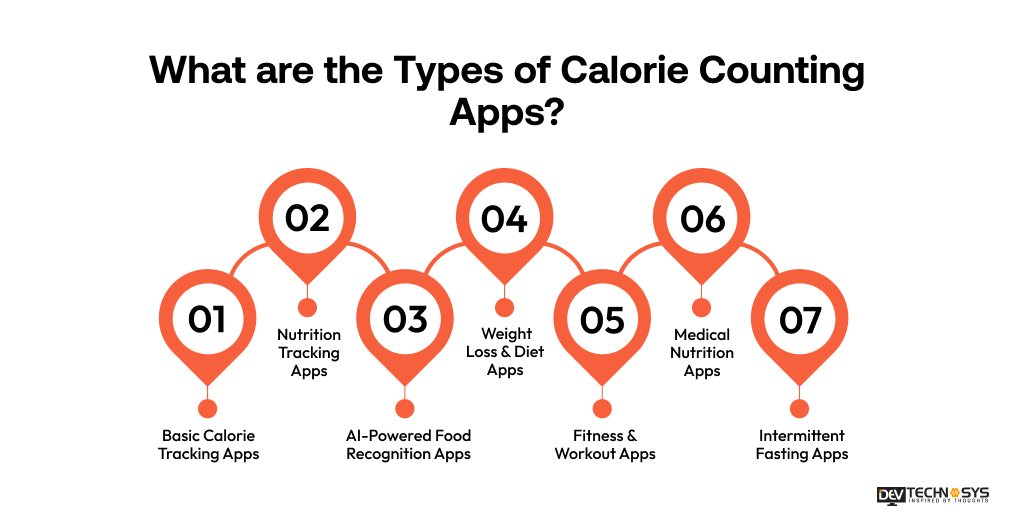
1. Basic Calorie Tracking Apps
These app allow users to log foods, calories, and their meals, meaning simple calorie counting applications. These Cronometer alternatives are perfect for beginners in weight management and maintaining a healthy lifestyle.
2. Nutrition Tracking Apps
Nutrition tracking applications track calories as well as micronutrients and macronutrients showing the dietary picture in detail. For example, there is an application called Cronometer designed to improve one’s nutrition through accurate food analysis.
3. AI-Powered Food Recognition Apps
Artificial food recognition applications use artificial intelligence for finding out food from photos and barcode scans. The Meal planner apps automatically estimates calodetermine calories and nutrients automatically.
4. Weight Loss & Diet Apps
Designed for users with fitness goals, these apps provide personalized meal plans, calorie budgets, progress tracking, and coaching to support healthy weight loss or weight gain. To build a wait loss and diet apps, businesses should hire a top ios app development company.
5. Fitness & Workout Apps
Apps that focus on fitness are capable of tracking the number of calories people burn while exercising. They can be combined with a wearable device to assist users in keeping track of exercises, calories consumed, their activity levels, and their overall progress.
6. Medical Nutrition Apps
Medical nutrition apps help users handle different ailments, including diabetes, high blood pressure, and heart disease, by tracking things like sodium and sugar intake as well as the cholesterol level.
7. Intermittent Fasting Apps
These applications combine fasting periods with the monitoring of calorie consumption. Users are able to monitor their consumption during defined time periods. To build an an app for intermittent fasting, the experienced hybrid app development services providers from top companies.
Industry Insights
According to Mordor Intelligence, AI-driven personalization, wearable integration, and predictive health analytics are among the fastest-growing trends shaping the future of nutrition and fitness applications.
Top 5 Cronometer App Alternatives to Explore in 2026
Several calorie counting and nutrition tracking apps offer features similar to Cronometer, catering to different fitness goals and dietary preferences. Exploring these alternatives can help businesses identify market trends, feature gaps, and opportunities to build a more competitive health app.
1. MyFitnessPal
MyFitnessPal is among the most famous applications catering to the calorie-counting sphere. It contains a huge food database, provides barcode scanning, enables tracking workouts, and offers food database integration with all kinds of wearable devices.
2. MacroFactor
MacroFactor uses AI-driven coaching to automatically adjust calorie and macronutrient targets based on user progress, helping individuals optimize weight loss, muscle gain, and long-term nutrition with evidence-based recommendations.

3. MyNetDiary
MyNetDiary provides comprehensive calorie tracking, meal planning, diabetes management, barcode scanning, and detailed nutrition reports, making it a preferred choice for users seeking personalized health and wellness management.
4. Fitia
Fitia offers personalized meal plans, macro tracking, healthy recipes, and calorie management tailored to individual fitness goals, helping users maintain balanced nutrition through customized dietary recommendations. Hire mobile app developers in Middle East is the best option for businesses wanting to build an app like Fitia.
5. Yazio
Yazio combines calorie counting, intermittent fasting, nutrition tracking, and meal planning in one platform, enabling users to achieve weight management goals through personalized diet plans and progress monitoring.
App |
Launch Year |
Google Play Rating* |
Platform Availability |
Best For |
| MyFitnessPal | 2009 | 4.4/5 | Android, iOS, Web | Calorie Tracking |
| MacroFactor | 2021 | 4.7/5 | Android, iOS | Macro Coaching |
| MyNetDiary | 2008 | 4.7/5 | Android, iOS, Web | Nutrition Analysis |
| Fitia | 2019 | 4.8/5 | Android, iOS | Meal Planning |
| Yazio | 2014 | 4.7/5 | Android, iOS | Fasting & Diets |
What is the Cost to Build a Calorie Counting App Like Cronometer?
The cost to build a calorie counting app like Cronometer is around $30,000 to $1,50,000. The factors that impacting the cost involves platform, features, third-party APIs, UI/UX design, and team location.
The basic fitness app development cost ranges from $30,000 to $60,000. Making cronometer app alternatives with mid-level complexities ranges between $60,000 to $100,000.
App Type |
Development Timeline |
Estimated Cost (USD) |
| Basic MVP | 3–4 Months | $20,000 – $40,000 |
| Standard App | 4–6 Months | $40,000 – $70,000 |
| Enterprise Grade App | 6–9 Months | $70,000 – $120,000 |
However, the cost to build a calorie counting app like Cronometer with advanced features and functioaities, custom designs, and third party integrations, the cost may exceed to $1,50,000. Now let’s take a look at the factors affecting the nutrition mobile app development cost in detail.
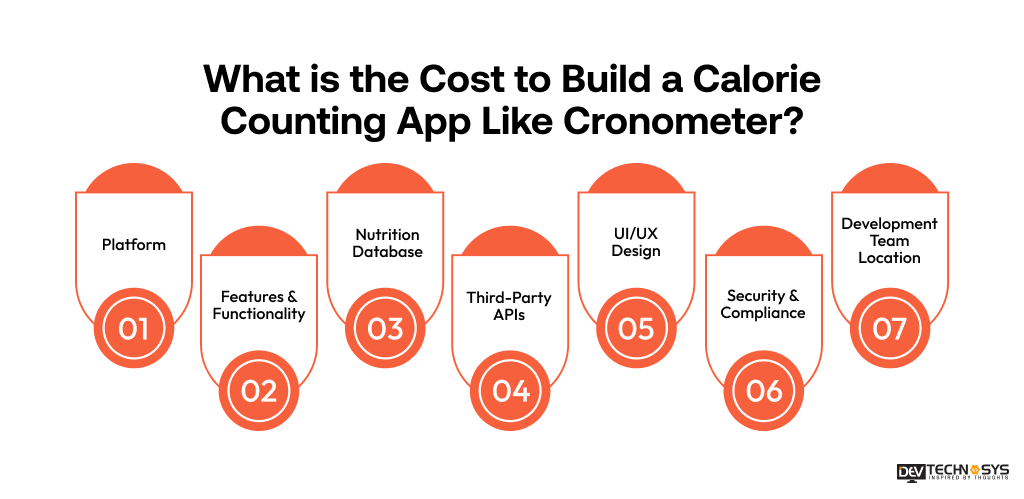
1. Platform
Developing for Android, iOS, or both platforms directly impacts the overall cost to build a calorie counting app like Cronometer. Cross-platform frameworks like Flutter or React Native can reduce development time and expenses compared to native development.
2. Features & Functionality
Core features such as calorie tracking, barcode scanning, meal planning, AI food recognition, wearable integration, and premium subscriptions significantly influence the project’s complexity and final cost to develop a calorie counting app like Cronometer.
3. Nutrition Database
Integrating reliable nutrition databases such as USDA FoodData Central, Nutritionix, or Edamam requires API integration, data mapping, and, in some cases, licensing fees, increasing the cost to develop a calorie counting app like Cronometer.
4. Third-Party APIs
The cost to develop a calorie counting app like Cronometer also depends on third-party integrations. Features like payment gateways, barcode scanning, push notifications, Apple Health, Google Fit, and Fitbit integrations require third-party APIs. Adding them increases both development effort and recurring subscription costs.
5. UI/UX Design
Adding custom designs increases the cost to create a calorie counting app like Cronometer. A modern and intuitive interface with personalized dashboards, interactive charts, and seamless navigation improves user engagement but requires additional design and frontend development resources.
6. Security & Compliance
Implementing secure authentication, data encryption, GDPR or HIPAA compliance, and regular security audits is essential for protecting sensitive health information and ensuring regulatory compliance. However adding advances security measures increases the the cost to create a calorie counting app like Cronometer.
7. Development Team Location
Nutrition app development costs vary by region. If you hire dedicated developer from North America or Western Europe is generally more expensive than outsourcing to experienced teams in Asia or Eastern Europe, making location a major pricing factor.
Development Factor |
Estimated Timeline |
Estimated Cost (USD) |
| Platform | 2 to 3 Weeks | $3,000 – $8,000 |
| Features & Functionality | 8 to 12 Weeks | $12,000 – $40,000 |
| Nutrition Database Integration | 2 to 3 Weeks | $2,500 – $8,000 |
| Third-Party API Integration | 2 to 4 Weeks | $3,000 – $10,000 |
| UI/UX Design | 3 to 4 Weeks | $4,000 – $12,000 |
| Security & Compliance | 2 to 3 Weeks | $3,000 – $10,000 |
| Development Team Location | Impacts Overall Timeline | $2,500 – $32,000* |
Industry Insights
Based on a report by Apple Developer & Google Health Connect Documentation, The Apple Health and Google Fit ecosystems now connect with thousands of health and fitness applications, making wearable synchronization a standard feature for modern calorie counting apps. This interoperability significantly improves user engagement and retention.
What are the Monetization Strategies for Calorie Counting App Like Cronometer?
A calorie counting app can generate sustainable revenue by combining multiple monetization models. The following strategies help maximize profitability while delivering added value to users.
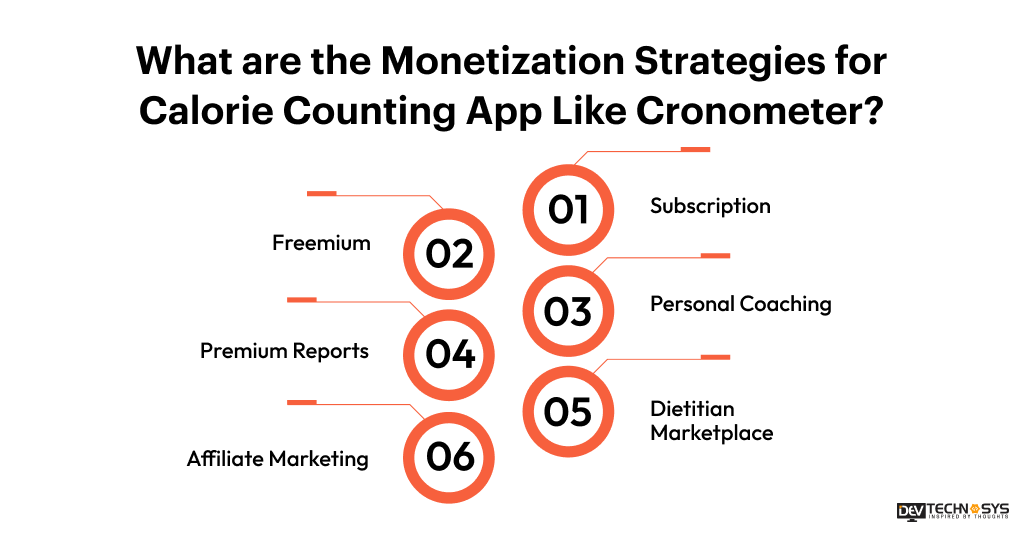
1. Subscription Plans
Offer monthly, quarterly, or annual subscription plans that unlock premium features such as AI meal recommendations, advanced nutrition analysis, wearable integrations, personalized diet plans, and detailed health reports, creating a reliable source of recurring revenue.
2. Freemium Model
Provide essential features like calorie tracking and food logging for free while encouraging users to upgrade for premium capabilities, including advanced analytics, barcode scanning, fasting tools, and personalized nutrition coaching.
3. Personal Coaching
Enable users to connect with certified dietitians, nutritionists, and fitness coaches through paid virtual consultations, personalized meal plans, and one-on-one wellness programs, generating additional revenue while improving customer engagement and retention.
4. Premium Reports
Offer comprehensive nutrition, fitness, and health reports featuring calorie trends, micronutrient analysis, progress tracking, and actionable recommendations. Users can access these detailed reports through one-time purchases or premium subscription plans.
5. Dietitian Marketplace
Build a marketplace where licensed dietitians and nutrition experts provide customized meal plans, dietary consultations, and wellness programs. Create a calorie counting app like Cronometer that generates revenue by charging commissions or service fees on every successful booking.
6. Affiliate Marketing
Partner with fitness brands, healthy meal delivery services, supplement companies, and wellness retailers to recommend relevant products. Earn commission-based revenue whenever users purchase products or services through affiliate links within the app.
What are the Security & Compliance Requirements for Cronometer App Development?
Since calorie counting apps collect personal and health-related information, implementing strong security measures and complying with privacy regulations are essential to protect user data and build trust.
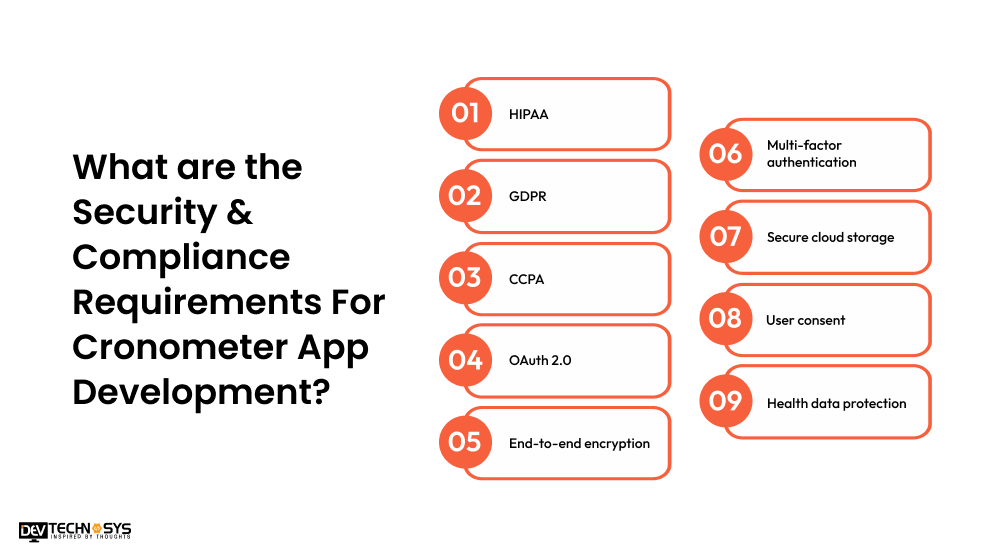
Requirement |
Purpose |
| HIPAA Compliance (If Applicable) | Protects Protected Health Information (PHI) when the app integrates with healthcare providers or stores medical records in the United States. |
| GDPR Compliance | Ensures user privacy, consent management, and data protection for users in the European Union while allowing data access, modification, and deletion. |
| CCPA Compliance | Gives California users greater control over their personal information by allowing them to access, delete, or opt out of data sharing practices. |
| OAuth 2.0 Authentication | Provides secure user authentication through trusted identity providers such as Google and Apple while reducing password-related security risks. |
| End-to-End Encryption | Encrypts sensitive health and nutrition data during transmission and storage, preventing unauthorized access and ensuring data confidentiality. |
| Multi-Factor Authentication (MFA) | Adds an extra layer of security by requiring users to verify their identity through OTPs, biometrics, or authentication applications. |
| Secure Cloud Storage | Stores user profiles, food logs, and health records in encrypted cloud infrastructure with regular backups, monitoring, and access controls. |
| User Consent Management | Obtains clear user permission before collecting, processing, or sharing personal and health-related data, ensuring transparency and regulatory compliance. |
| Health Data Protection | Implements role-based access, audit logs, and regular security assessments to safeguard sensitive health information and maintain compliance with global privacy standards. |
Expert Note
According to top experts at Dev Technosys, Health and wellness apps increasingly handle sensitive personal information. Adopting a privacy-by-design approach, performing regular penetration testing, and complying with standards like HIPAA, GDPR, and CCPA not only reduce legal risks but also improve user trust and long-term retention.
Future Trends in Nutrition Tracking Apps (2026–2030)
As AI and digital health technologies continue to evolve, nutrition tracking apps are becoming more intelligent, predictive, and personalized. The following trends are expected to shape the next generation of calorie counting applications.
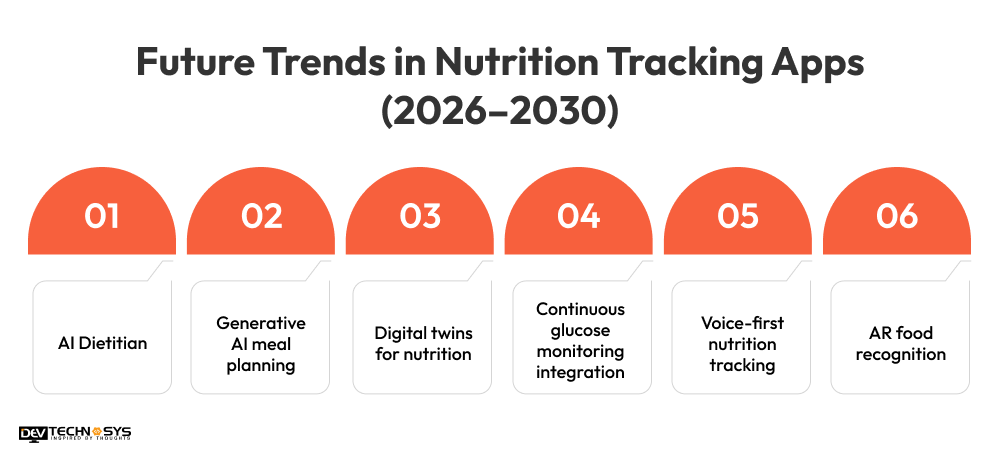
1. AI Dietitian
AI-powered virtual dietitians will provide real-time nutrition advice, personalized meal recommendations, and adaptive coaching based on users’ health goals, dietary habits, and medical conditions.
2. Generative AI Meal Planning
Generative AI will create customized meal plans, recipes, and grocery lists by analyzing user preferences, allergies, calorie goals, available ingredients, and nutritional requirements.
3. Digital Twins for Nutrition
Digital twin technology will build virtual health models of users to simulate dietary changes, predict nutritional outcomes, and recommend personalized interventions before lifestyle modifications are implemented.
4. Continuous Glucose Monitoring (CGM) Integration
Nutrition apps will integrate with continuous glucose monitoring devices to provide real-time blood sugar insights, helping users optimize meals and improve metabolic health through data-driven recommendations.
5. Voice-First Nutrition Tracking
Advanced voice assistants will enable users to log meals, receive nutrition advice, and access health reports using natural voice commands, making calorie tracking faster and completely hands-free.
6. AR Food Recognition
Augmented Reality (AR) combined with AI will identify food items, estimate portion sizes, and display nutritional information in real time through smartphone cameras or smart glasses, enhancing tracking accuracy and user experience.
Conclusion
Building a calorie counting app like Cronometer is a promising opportunity as demand for personalized nutrition and digital health solutions continues to grow. With a well-planned development strategy and experienced fitness app development company, businesses can create a competitive health app that drives user engagement, recurring revenue, and long-term growth.
FAQs
Q 1. How Much Does it Cost to Build an App Like Cronometer?
The cost to build a calorie counting app like Cronometer typically ranges from $30,000 to $120,000. The final Cronometer app development cost depends on app complexity, AI-powered features, wearable integrations, nutrition database licensing, security requirements, and the location of the development team.
Q 2.How Long Does it Take to Develop a Calorie Counting App?
Developing a calorie counting app generally takes 4 to 8 months. An MVP can be launched in around 3 to 4 months, while advanced apps with AI meal recognition, wearable integration, and personalized nutrition features require additional development time.
Q. 3 Which APIs are Best for Nutrition Tracking Apps?
Popular APIs for Cronometer app development include USDA FoodData Central, Nutritionix, Edamam, Spoonacular, Apple HealthKit, Google Fit, and Fitbit API. These APIs provide nutrition data, barcode scanning, recipe analysis, health tracking, and wearable synchronization.
Q. 4 Can AI Accurately Estimate Calories From Food Images?
Yes, AI can accurately recognize many food items and estimate calorie values using computer vision and machine learning models. However, accuracy depends on image quality, portion size estimation, and the quality of the underlying nutrition database.
Q. 5 What Technologies are Used to Build Calorie Counting Apps?
Modern calorie counting apps commonly use Flutter or React Native for frontend development, Node.js, Python, or Laravel for backend services, Firebase or PostgreSQL for databases, and cloud platforms like AWS or Google Cloud.
Q. 6 How do Nutrition Apps Make Money?
Nutrition apps generate revenue through premium subscriptions, freemium upgrades, personal coaching, dietitian marketplaces, affiliate marketing, advertisements, and paid health reports, creating multiple recurring income streams.
Q. 7 Is HIPAA Compliance Required for Calorie Tracking Apps?
HIPAA compliance is only required if the app stores, processes, or shares Protected Health Information (PHI) with healthcare providers or covered entities in the United States. Consumer-only nutrition apps typically focus on privacy regulations such as GDPR and CCPA unless they handle regulated medical