





Key Takeaways:
-
- Modern yoga app capabilities may include on-demand lessons, live sessions, personalized routines, meditation, tracking, subscriptions, wearable integrations, and other features.
- The choice of the best yoga mobile app development company will depend on whether you are creating a studio, wellness, or instructor platform
- The following factors can impact your development scope quite strongly: video infrastructure, content management, payments, personalization, and integration capabilities.
- Development of a custom yoga app may cost about $30,000 to $150,000+, depending on requirements and other factors.
- Startups can lower their initial costs by launching an MVP and implementing advanced features after validating user demand.
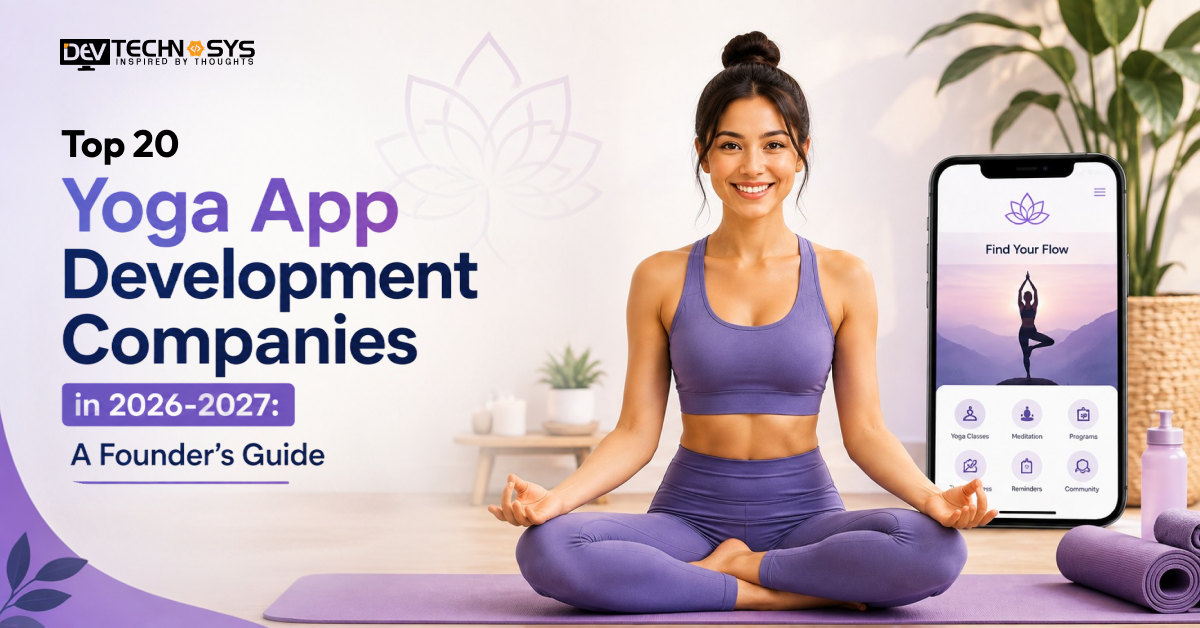
Yoga is no longer something you can only do during a specific class in an actual studio. Modern-day people want to pick up the instructors, attend classes, track their progress, and access wellness content anytime, anywhere.
These expectations create possibilities for studios, individual yoga instructors, wellness companies, fitness brands, and entrepreneurs to develop their own solutions. However, a yoga app isn’t just a set of video tutorials.
Your product may have to deal with:
- Instructors management
- Yoga classes
- Membership
- Video content
- Users’ goals
- Subscription plans
- Progress tracking
- Connecting with wearables
- Personalizing suggestions
And the main question that a founder has to ask isn’t “Can the company develop my yoga app?” But rather: “Can the company develop a solution that will help me earn money with my yoga business and retain the users?” That’s how you will reach out to the ideal yoga app development company.
Top 10 Yoga App Development Companies Worth Shortlisting in 2026-2027
The following companies represent different technology and delivery strengths. Some are better suited for custom consumer applications, while others make more sense for enterprise-scale digital products. Have a look at the best yoga app development companies.
Company |
Strongest Fit |
Business Stage |
Yoga/Fitness Product Potential |
Technology Strength |
| Dev Technosys | Custom yoga & wellness platforms | Startup to Enterprise | High | Mobile, AI, Cloud, Wearables |
| Cognizant | Large wellness ecosystems | Mid-size to Enterprise | High | AI, Cloud, Data |
| EPAM Systems | Complex digital wellness products | Enterprise | Strong | Product Engineering |
| Wipro | Enterprise fitness technology | Mid-size to Enterprise | Strong | Cloud, AI, Digital |
| Globant | Experience-led wellness apps | Startup to Enterprise | Strong | UX, AI, Product Engineering |
| TCS | Large-scale wellness platforms | Enterprise | Strong | Cloud, Data, Enterprise Tech |
| Xebia | Cloud-native yoga products | Growing Businesses | Strong | Cloud, DevOps, Data |
| IBM | AI-led wellness ecosystems | Enterprise | Strong | AI, Cloud, Analytics |
| UST | Connected fitness solutions | Mid-size to Enterprise | Strong | Digital Engineering |
| GlobalLogic | Consumer fitness products | Startup to Enterprise | Strong | Product Engineering, UX |
Which Are The Best 20 Leading Yoga App Development Companies in 2026-2027?
Finding a development partner becomes easier when you first decide what kind of yoga product you are building. A studio membership app has very different technical requirements from a global subscription platform or an instructor marketplace. Here are 20 companies worth evaluating based on their broader product engineering capabilities and potential fit for different yoga business models.
1. Dev Technosys
Dev Technosys among the reliable top yoga app development companies 2026-2027. It can be a practical choice for founders who want a custom yoga application rather than a generic fitness template. With 15+ years of development experience and 2,900+ projects delivered across 71+ countries, the company works across mobile, AI, cloud, fitness, and wellness solutions.
Its yoga app capabilities can support everything from class discovery and instructor management to live streaming, subscriptions, personalized practice plans, meditation, progress tracking, and wearable synchronization.
For startups, the product can begin with a focused MVP and later expand into AI-based personalization, multi-studio management, community features, or connected fitness experiences.
Top Yoga App Development Services:
-
- Custom Yoga App Development
- Yoga Studio App Development
- Fitness & Wellness App Development
- Live Yoga Streaming Development
- Healthcare Software Development
- AI-Powered Yoga Solutions
- Wearable & Health API Integration
- Yoga App Maintenance & Enhancement
2. Cognizant
Cognizant is more relevant when yoga is part of a larger digital wellness ecosystem. A business building connected member experiences across mobile, web, analytics, cloud, and enterprise systems can consider its broader technology capabilities.
Top Services:
- Digital Product Engineering
- Cloud Solutions
- AI & Analytics
- Mobile Application Development
- Customer Experience Solutions
- Enterprise Technology
3. EPAM Systems
EPAM is a stronger consideration for technically complex yoga products where scalability and architecture matter as much as the mobile interface. If a wellness company planning a platform with multiple applications, personalization, integrations, and content delivery. It require the type of engineering depth.
Top Services:
- Product Engineering
- Mobile Development
- Cloud Engineering
- AI & Data Solutions
- API Development
- Digital Experience Engineering
4. Wipro
Wipro can suit established wellness businesses looking to connect their yoga application with broader digital infrastructure. Its capabilities across cloud, analytics, automation, application development, and digital engineering can be useful. Wipro works alongside existing CRM, business, or enterprise systems rather than operating as an isolated mobile app.
Top Services:
- Digital Engineering
- Cloud Development
- Application Modernization
- Data & Analytics
- AI Solutions
- Automation
5. Globant
Globant is worth considering for consumer-facing yoga products where experience and engagement are central to the business model. A yoga app competes through beautiful content discovery, personalized journeys, interactive experiences, and strong mobile UX. It may benefit from a product-engineering approach that equally values technology and user experience.
Top Services:
- Digital Product Development
- UX/UI Engineering
- AI Solutions
- Mobile Development
- Cloud Services
- Digital Experience Design
6. TCS
TCS is primarily suited to organizations with substantial technology requirements and larger implementation programs. For a wellness company expanding across countries, brands, studios, or customer segments, TCS can be evaluated. It is chosen when the yoga platform needs to integrate with enterprise systems.
Top Services:
- Enterprise Application Development
- Cloud Solutions
- Data & Analytics
- AI Development
- Digital Transformation
- Application Services
7. Xebia
Xebia is particularly relevant when cloud architecture and scalability are major priorities. A yoga startup expecting rapid growth may need infrastructure that can handle increasing content consumption, user traffic, integrations, and frequent product releases. Xebia’s cloud and DevOps capabilities can support that type of development model.
Top Services:
-
- Cloud-Native Development
- DevOps
- Data Engineering
- Application Modernization
- Agile Product Development
8. IBM
IBM becomes more relevant when the yoga product has a strong AI, analytics, or enterprise-data component. For example, an enterprise wellness platform could use AI to analyze engagement patterns, personalize content, or generate business insights across a large member base.
Top Services:
- AI & Machine Learning
- Cloud Computing
- Data Analytics
- Enterprise Software
- Cybersecurity
- Digital Transformation
9. GlobalLogic
GlobalLogic is one of the yoga application development companies that focuses heavily on digital product engineering. It is a good fit for yoga businesses that want to build a differentiated consumer product rather than a basic class-booking application. Its broader capabilities can support mobile experiences, connected products, and user-centric digital interfaces.
Top Services:
- Product Engineering
- Mobile App Development
- UX/UI Development
- Cloud Engineering
- API Development
- Digital Experience Solutions
10. UST
Wellness businesses can consider UST for a combination of digital engineering, cloud capabilities, data solutions, and application modernization. It is suitable when the yoga application needs to connect with existing business technology or evolve from an older digital platform.
Top Services:
- Digital Engineering
- Cloud Solutions
- Data & Analytics
- Application Development
- Technology Modernization
- AI Solutions
11. Infosys
Established wellness organizations can evaluate Infosys when they need to modernize applications while introducing new digital capabilities. For yoga platforms, this could involve connecting mobile experiences with analytics, customer platforms, cloud infrastructure, automation, and other enterprise systems.
Top Services:
- Digital Engineering
- Application Development
- Cloud Services
- Data Analytics
- Automation
- Technology Consulting
12. Tech Mahindra
Tech Mahindra can fit connected wellness products that combine mobile applications with cloud, AI, data, and external devices. This makes it worth considering for businesses exploring a broader ecosystem involving users, instructors, wearable devices, digital content, and automated engagement.
Top Services:
- AI & Automation
- Cloud Engineering
- Data Engineering
- Connected Solutions
- Digital Transformation
13. Coforge
Consider Coforge as one of the top yoga software development companies to modernize its digital operations alongside its customer-facing application. Its technology capabilities can support applications that connect membership workflows, customer data, analytics, automation, and backend business processes.
Top Services:
- Application Development
- Digital Transformation
- Cloud Services
- Data Analytics
- Process Automation
- Application Modernization
14. Capgemini
Capgemini is better suited to larger wellness organizations with broader transformation requirements. A yoga platform that needs to connect with existing enterprise technology, customer systems, analytics, cloud infrastructure, and multiple digital channels may benefit from its wider technology capabilities.
Top Services:
- Digital Engineering
- Cloud Transformation
- Data & AI
- Application Modernization
- Cybersecurity
- Enterprise Technology
15. Deloitte
Deloitte can be relevant when the yoga application is part of a larger business transformation initiative rather than a standalone consumer app. For example, an enterprise wellness provider may need help aligning its digital product strategy, data, technology architecture, analytics, and operational processes.
Top Services:
-
- Digital Strategy
- Data & Analytics
- Cybersecurity
- Digital Transformation
- Technology Advisory
16. EY
EY is another option for organizations where technology development needs to align with broader transformation and business objectives. It can be considered by established wellness companies that need support with technology strategy, modernization, data, and digital operating models.
Top Services:
- Technology Strategy
- Digital Transformation
- Data Solutions
- Technology Consulting
- Application Modernization
- Digital Advisory
17. Hexaware
Hexaware can be considered by yoga and wellness businesses that want to modernize existing technology while moving toward cloud-based infrastructure and automated workflows. This can be useful for established businesses that already have digital systems but want to introduce a more modern member-facing experience.
Top Services:
- Cloud Engineering
- Application Modernization
- Data Engineering
- AI & Automation
- Digital Engineering
- Technology Modernization
18. KPMG
KPMG is more appropriate for organizations where technology, strategy, governance, risk, and transformation need to be considered together. For an enterprise wellness business developing a large digital ecosystem, its advisory capabilities may be useful alongside technology implementation.
Top Services:
- Digital Transformation
- Data & Analytics
- Cybersecurity
- Technology Strategy
- Risk Advisory
19. DXC Technology
DXC Technology can be relevant for large organizations working with complex IT environments and legacy infrastructure. A yoga or wellness platform operates alongside established enterprise applications, cloud environments, and managed technology systems. Businesses usually consider DXC for large-scale modernization requirements.
Top Services:
- Application Modernization
- Cloud Transformation
- Enterprise Technology
- Managed IT Services
- Data Solutions
- Application Services
20. HCL Tech
HCL Tech is suitable for organizations that want to combine digital product development with cloud, analytics, automation, and enterprise modernization. For a wellness business expanding an existing yoga platform, its broader engineering capabilities can support the transition from a basic application toward a connected digital ecosystem.
Top Services:
- Digital Engineering
- Cloud Services
- Application Modernization
- Data Analytics
- AI & Automation
- Enterprise Solutions
Answer a few quick questions and our experts will share a tailored project estimate.
How To Choose the Right Yoga App Development Company in 2026-2027?
The cheapest quote is rarely the most useful comparison point. Evaluating the company’s content model, revenue model, users, technology requirements, and expected growth is really important. Here we have explained the points to check before selecting a yoga app development company to develop an app like BetterMe.
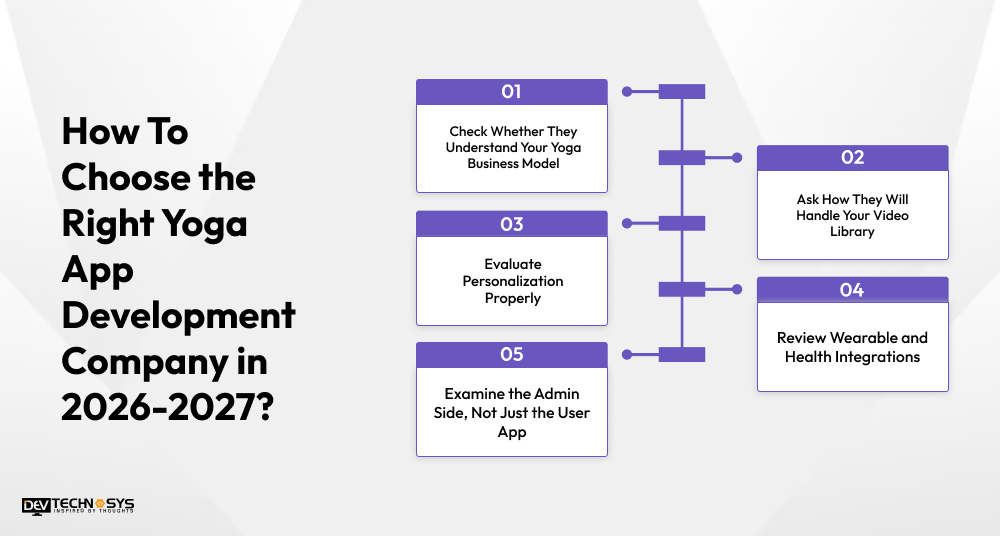
1. Check Whether They Understand Your Yoga Business Model
A yoga studio, instructor marketplace, meditation startup, and subscription-based wellness platform do not need the same application. Tell the development company how you plan to make money before discussing the final feature list.
2. Ask How They Will Handle Your Video Library
If video is central to the product, ask about content storage, streaming, bandwidth, access control, thumbnails, categories, search, offline viewing, and content management. A developer who only discusses the mobile interface may not be thinking about the full product.
3. Evaluate Personalization Properly
Personalization does not always mean AI. Your first version might simply recommend classes according to experience level, preferred yoga style, available time, goals, or completed sessions. You can introduce AI later, once you have enough user data to make it useful.
4. Review Wearable and Health Integrations
If your product depends on activity or wellness data, ask which APIs and devices the team has worked with. Also ask how permissions will be handled. Do not assume every wearable integration works the same way.
5. Examine the Admin Side, Not Just the User App
A beautiful user application means little if your team needs developers every time an instructor wants to upload a class. Your platform should ideally give administrators and instructors control over the content and business operations they actually manage.

Security, Privacy & Compliance Considerations for Yoga Apps
Yoga apps can handle personal profiles, practice history, wearable data, location information, payments, and behavioral data. Founders should evaluate not only application security but also the development partner’s security certifications, privacy practices, data controls, and compliance readiness.
Area |
What Founders Should Check |
| Account Protection | Secure authentication, MFA, session management, and access controls |
| Personal Data | Encryption, data minimization, secure storage, and controlled access |
| Wearable Data | Permission-based access and secure health/API integrations |
| Payments | Secure payment gateways and protected transaction workflows |
| Live Classes | Authenticated access for private or paid sessions |
| Instructor Access | Role-based permissions for instructors, admins, and support teams |
| API Security | Authentication, validation, rate limiting, and monitoring |
| Privacy Management | Consent, retention, deletion, and user-data controls |
| Cloud Security | Secure infrastructure, backups, monitoring, and restricted access |
| Security Testing | Vulnerability assessment, penetration testing, and remediation |
| Compliance Readiness | Processes aligned with applicable privacy, security, and regulatory requirements |
Security Certifications & Privacy Standards to Look For
When selecting yoga app developers, founders should check whether recognized certifications or frameworks support its security practices and organizational controls.
Standard / Certification |
Why It Matters for a Yoga App |
| ISO 27001 | Demonstrates a structured information security management system and risk-control practices |
| ISO Standards | Relevant ISO certifications can demonstrate formalized quality, security, or management processes |
| SOC 1 | Provides assurance around controls relevant to financial reporting and related business processes |
| SOC 2 | Evaluates controls related to security, availability, confidentiality, processing integrity, and privacy |
| GDPR | Important when the yoga app collects or processes personal data from users in the European Economic Area |
| CCPA | Relevant for businesses handling personal information of California consumers under applicable requirements |
These certifications and regulations should not simply appear as badges on a website. Ask the development partner which certifications it currently holds, what scope they cover, and how those controls apply to your specific project.
What Should Your Development Partner Handle?
At minimum, ask how the team plans to protect:
- User accounts and authentication
- Subscription and payment workflows
- Personal and activity information
- Wearable and health-platform integrations
- Instructor and administrator permissions
- Live and premium video access
- Third-party APIs
- Cloud infrastructure
- Data retention and deletion
- Privacy and compliance requirements
The exact obligations depend on your app’s data, business model, and target markets. A yoga platform operating internationally may need to address GDPR, CCPA, and other applicable privacy requirements, while enterprise clients may also expect evidence of formal security and operational controls.
Founder Tip
Don’t ask only, “Is my yoga app secure?” Ask for the development partner’s relevant ISO 27001, ISO, SOC 1, SOC 2, GDPR, and CCPA credentials or compliance approach. After that, verify which ones actually apply to your project.
Mohit Nag (CTO at Dev Technosys)
Final Words
An ideal yoga app development agency would know both the technology behind your product and the business behind it. While developing an MVP, concentrate on the validation of content, target audience, prices, and retention strategy instead of adding extra functionality.
If you have an existing yoga studio, you will want to consider other requirements. It includes memberships, scheduling of classes, management of instructors, digital content, payments, and customer retention.
Developing a full-fledged wellness platform, you require personalization options, integration with wearables, analytics, multi-platform availability, scalable video delivery, and robust enterprise-level integration.
A good development company does not necessarily mean a company with the most extensive list of features to offer. It is a company that will help you figure out what features are needed immediately or not. It also answers what features can wait until later and what each of the choices will cost.
FAQs
1. How Much Does It Cost to Build a Yoga App in 2026-2027?
Development of a yoga application is estimated to cost somewhere between $30,000 and $150,000. It depending on the range of functionality, supported platforms, personalized features, live streams, integration with wearables, subscription features, etc. Development of the MVP is much cheaper than that of the enterprise yoga and wellness platform
2. How Do I Prevent My Yoga App From Becoming Just Another Workout Content Library?
Focus on building the product around a particular problem that a user faces rather than building an additional class. Personalization, teacher-student interactions, progress tracking, difficult tasks, wellness courses, and recommendations are required for a yoga app for modern users. All these can help you build more reasons for frequent usage.
3. What Happens If My Yoga App Gets 10× More Users After Launch?
The backend architecture must be scalable even before the users come. It demands infrastructure in the cloud, database architecture, APIs, caching, media distribution, monitoring, and load testing. All these must be thought about beforehand so that high traffic automatically doesn’t mean poor performance.
4. Should I Give the Development Company Ownership of My Yoga App’s Source Code?
The owner should have clear ownership of the product, source code, design, data, documentation, and any other specified deliverables. Intellectual property ownership, repository access, licensing, NDA details, and transfer of ownership details are mandatory. These details should be clearly defined before development begins.
5. What Should I Ask Top Yoga App Developers Before Signing the Contract?
Inquire about previous experience, process used for development, technology architecture, and integrations. Also ask for security measures, estimated cost of maintenance, ownership rights, team composition, communication, and post-release support. Request that the scope be specified to prevent development costs in the future because of additional features.