





Key Takeaways:
-
- To build a Kids learning app like Lamsa, you need age-appropriate content, personalized learning, gamification, parental controls, progress tracking, secure child-data handling, and a scalable backend
- The cost to develop a kids learning app like Lamsa normally ranges from AED 110,000 to AED 550,000+, depending on features, design complexity, platforms (iOS/Android), content generation, and more.
- Core features of apps like Lamsa should include age-based content, quizzes, activities, progress tracking, parental controls, and secure profiles.
- Lamsa alternatives that involve AI can personalize learning paths, recommend activities, and adapt content based on a child’s progress.
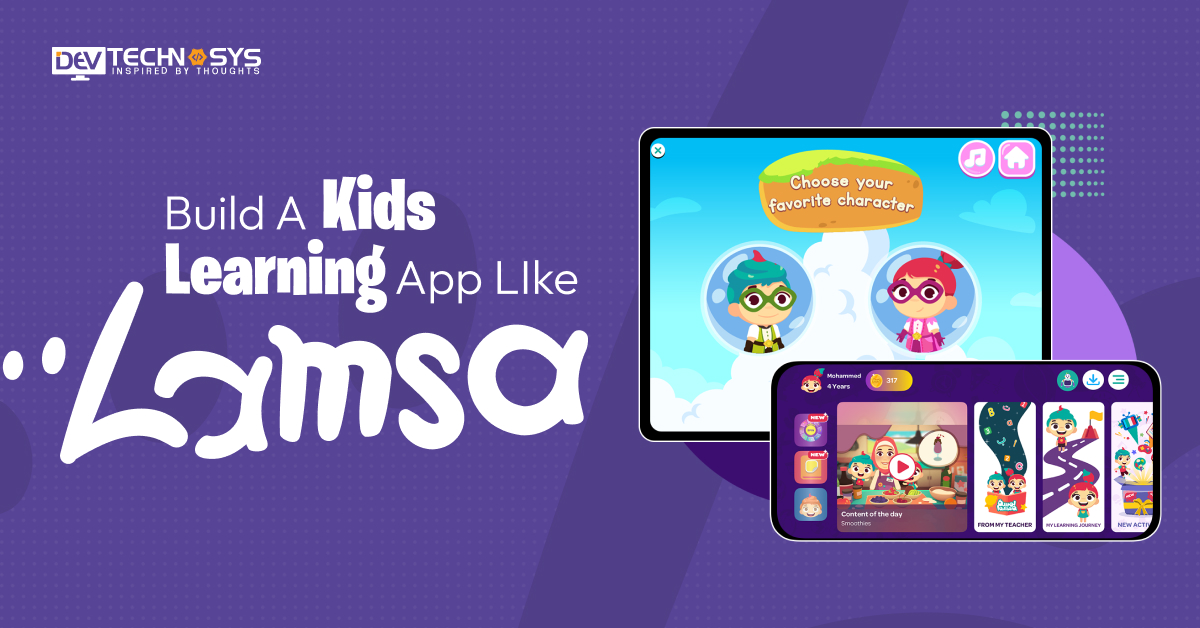
As children grow in a digital world, it is easy to see how interactive learning applications can transform screen time into learning experiences. Applications of the type of Lamsa bring together stories, games, animations, videos, and even personalized experiences to make learning entertaining and impactful.
The idea of developing an application for children such as Lamsa boils down to creating an application that is not just an educational product. Rather, it is all about ensuring that the app creates a safe, entertaining, and intelligent learning experience for the little ones.
The app includes many UI/UX design and development features, including gamification, AI-driven personalization, and parental controls. Keep reading to learn how to build a kids learning app like Lamsa.
Kids Learning App Market Insights
- According to Business Research Insights, the kids’ apps market stood at USD 2.81 billion in 2026 and is expected to reach USD 26.68 billion by 2035, driven by a 28.4% CAGR from 2026 to 2035.
- Over 68% of parents prioritize educational value when downloading apps, boosting demand for learning-based children’s applications.
- Around 47% of parents worry about data privacy in kids’ apps, limiting wider market penetration.
- Approximately 52% of new kids’ apps integrate AI for personalized learning and adaptive content delivery.
What Is a Kids Learning App Like Lamsa?
Lamsa is an educational app for young children, particularly preschoolers and toddlers. It teaches early abilities, including the alphabet, numbers, shapes, colors, and basic problem-solving through interactive games, stories, music, and films.
With its emphasis on play-based learning, the app helps kids develop their language, cognitive, and creative abilities in a playful and secure online setting. Educational apps for Islamic studies frequently feature multilingual content to expose kids to languages at a young age. If you are interested in developing such app, contact a skilled children’s app development company UAE.
How Does a Lamsa-Like Kids Learning App Work?
Before learning how to build a kids learning app like Lamsa, let’s see how it works. A Lamsa-like kids learning app creates a personalized learning journey by combining interactive content, gamification, progress tracking, and parental insights. Instead of following the same lessons for every child, the platform can adapt activities based on age, interests, learning goals, and performance.
- Parent Creates an Account
Parental control app features for kids learning apps allow parents to register securely and provide basic information needed to set up their child’s learning experience.
- Child Profile & Age Configuration
Parents create a child profile by entering age and other relevant learning preferences. This helps the app deliver developmentally appropriate content.
- Learning Goals Are Selected
Parents can choose learning areas such as language, numbers, reading, creativity, science, or general early education based on the child’s needs.
- Personalized Content Recommendations
The app analyzes the child’s profile and learning activity to recommend suitable games, stories, videos, quizzes, and educational exercises.
- Interactive Learning Begins
Children learn through engaging activities, animations, stories, games, and videos designed to make educational concepts easier and more enjoyable to understand.
- Progress & Performance Tracking
The education app like Kidzapp, records completed activities, assessment results, learning time, strengths, and areas that may need additional practice.
- Parents Receive Learning Insights
A dedicated parent dashboard provides progress reports, activity summaries, recommendations, and insights that help parents understand and support their child’s learning journey.
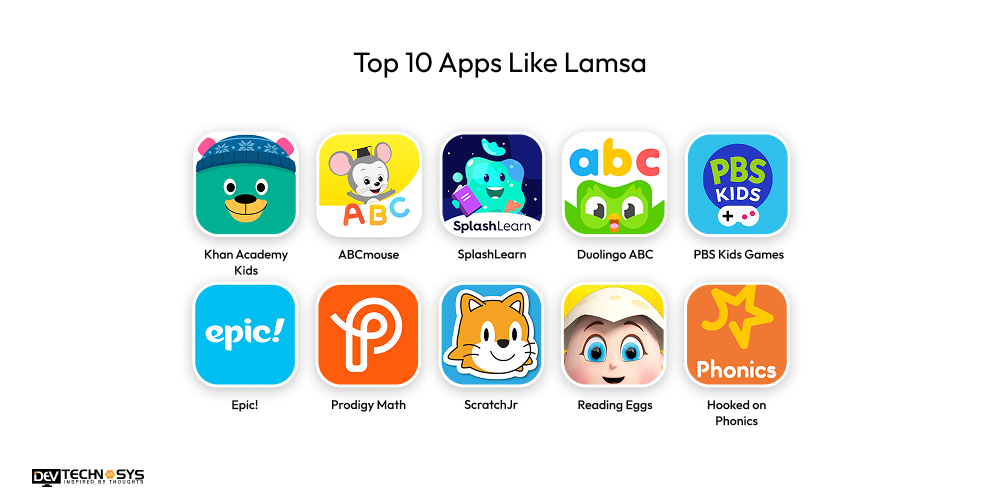
Top 10 Apps Like Lamsa
Explore the 10 premier educational applications for children, akin to Lamsa, that integrate entertainment and education via games, movies, and narratives, facilitating the development of early reading, numeracy, and creativity. So, here is the list of the best kids learning apps in UAE:
App Name |
Estimated Downloads |
Avg. Rating |
Launch Year |
Platforms |
| Khan Academy Kids | 10M+ | 4.8 | 2018 | Android, iOS |
| ABCmouse | 10M+ | 4.4 | 2010 | Android, iOS, Web |
| SplashLearn | 50M+ | 4.5 | 2014 | Android, iOS, Web |
| Duolingo ABC | 10M+ | 4.7 | 2020 | Android, iOS |
| PBS Kids Games | 10M+ | 4.4 | 2012 | Android, iOS |
| Epic! | 10M+ | 4.3 | 2013 | Android, iOS |
| Prodigy Math | 10M+ | 4.3 | 2013 | Android, iOS, Web |
| ScratchJr | 5M+ | 4.4 | 2014 | Android, iOS |
| Reading Eggs | 5M+ | 4.5 | 2013 | Android, iOS |
| Hooked on Phonics | 5M+ | 4.3 | 2010 | Android, iOS |
Why Businesses Want to Invest in Kids Learning App Development?
Due to the growing need for digital education, great income potential, high user engagement, good social impact, and global scalability, businesses are spending more in education app development services for children.
In the cutthroat edtech sector, these apps help organizations establish trust while attaining sustainable growth by fusing education with entertainment.
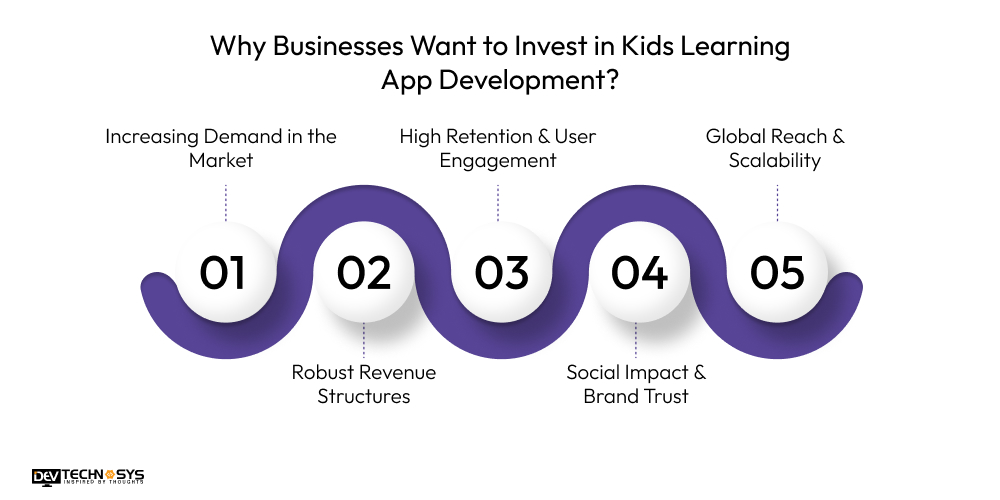
1. Increasing Demand in the Market
Digital learning resources that facilitate early education at home are becoming more and more sought after by parents. By fusing instruction and pleasure, kids’ learning apps satisfy this need and are therefore very appealing. For enterprises, this steady demand generates long-term market potential and steady revenue opportunities.
2. Robust Revenue Structures
If businesses build an Arabic language learning app, it provides flexible revenue options, like in-app purchases, freemium plans, and subscriptions, which are supported by kids’ learning apps.
When it comes to safe, high-quality educational content, parents are frequently prepared to pay. Over time, the business model becomes successful and sustainable because of this willingness.
3. High Retention & User Engagement
Through games, rewards, and progress tracking, educational applications for kids promote frequent use. Children return frequently when they are enjoying their education.
Better retention rates result from high engagement, which is advantageous for companies looking to attract devoted, long-term customers.
4. Social Impact & Brand Trust
By supporting kids’ education and growth, investing in kids’ learning applications helps companies establish a positive brand image. Brands that put safety and education first are trusted by parents.
According to the hybrid app development company, in cutthroat digital marketplaces, this trust enhances reputation and fortifies brand loyalty.
5. Global Reach & Scalability
With curriculum-based customisation and bilingual content, children’s learning apps can readily expand beyond geographical boundaries. Once created, they may reach a worldwide audience with inexpensive distribution costs, enabling companies to grow rapidly and access markets for international education.
7 Key Steps to Build a Kids Learning App Like Lamsa
To create a kids learning app like Lamsa, you must follow the various development steps to understand each process in detail. From market research and gathering requirements to final post-launch maintenance services. So, let’s explore the step-by-step guide to the iOS and Android app development process:
Step 1: Collect Project Requirements
In the first stage to build a kids learning app like Lamsa, collect the project’s basic and advanced requirements. Research the digital market to determine which types of applications are trending and to clarify your project scope. To create an app like Lamsa, identify the primary and secondary users of the kids’ learning app. You can also check the existing applications that have gained higher success rates.
Step 2: Identify Features
Move to the second step to make a kids learning app like Lamsa; identify the simple and premium features for your educational learning app. Hire on-demand app developers to make a proper list of features to reduce data redundancy, and it can also be the working criteria. It includes a real-time progress report, live classes, fun-learning quizzes, offline access, and personalized recommendations.
Step 3: Choose Tech Stacks
Let’s come to the third phase to build an Arabic language learning app like Lamsa. Choosing the best tech stacks is important for successful and reliable mobile app development. It involves:
- Frontend: AngularJS, HTML, CSS
- Backend: PHP, Java, Python
- Security: Firewalls, Biometrics, Two-factor Authentications
- Database: SQL, PostgreSQL, MongoDB
Step 4: Design UI/UX
In the fourth stage of full-stack development services, hire creative designers to design a unique interface for kids’ learning app to increase user engagement.
For successful Islamic kids learning app development, include key UI elements such as layouts, themes, templates, wireframes, fonts, styles, colors, prototyping, and more. Build an education app like Abwaab that allows users to easily and quickly access all the functionalities and services of the app with just one click.
Step 5: App Development
The next step in Arabic kids learning app development is hiring backend programmers to begin the real coding and implement third-party tools and applications. There are various backend processes such as creating APIs, managing server-side, networking, authentication, and databases.
To develop a kids education app like Lamsa, you must involve various third-party integrations such as payment gateways, social media logins, ERP, CRM, and more.
Step 6: Testing and QA
Move to the sixth stage to make a kids learning app like Lamsa, and hire a mobile app development company to test the app before publishing it.
There are many testing techniques available, such as unit, functional, security, black-box, white-box, and integration testing. Solve all bugs and glitches that are found during testing and ensure all features are working perfectly.
Step 7: Publish & Maintenance
In the last stage of kids learning app development in Middle East, publish the app on specific platforms such as Android or iOS. After successfully launching your lamsa alternatives, conduct maintenance services such as regular backups, authentication, performance optimizations, design enhancements, update outdated features, upgrading the OS version, and more.
10 Must-Have Features to Integrate in Kids Learning Apps Like Lamsa
Learn about the characteristics that every children’s learning app, such as Lamsa, has to have, such as safe settings, interactive games, parental controls, progress tracking, and captivating audio-visual learning opportunities.
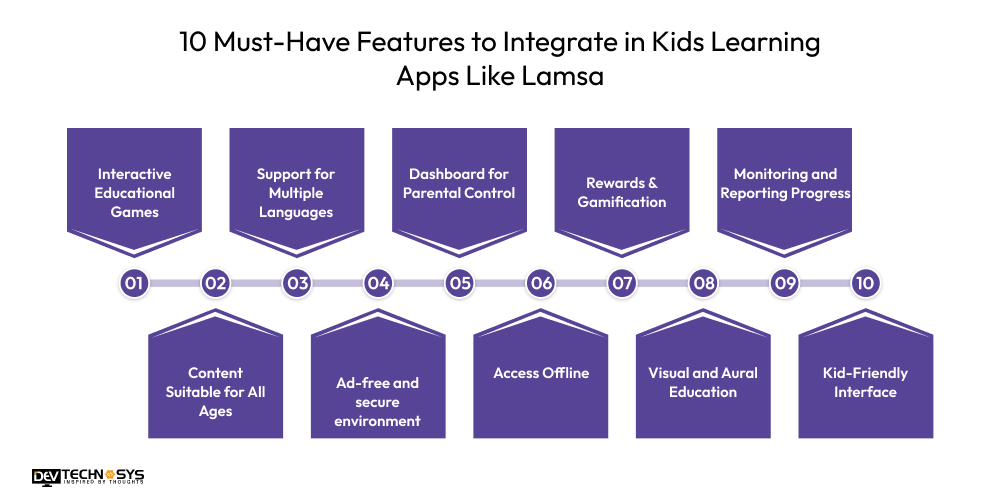
1. Interactive Educational Games
Play-based, entertaining games that enhance young children’s cognitive, memory, and problem-solving skills while making learning enjoyable.
2. Content Suitable for All Ages
Lamsa alternatives provide structured content that is created for certain age groups, guaranteeing that courses successfully align with kids’ developmental phases.
3. Support for Multiple Languages
Possibilities for teaching children new languages for early bilingual development while assisting them in learning their mother tongue.
4. Ad-free and secure environment
Parents may use the app with confidence thanks to its safe, kid-friendly UI, which is free of inappropriate information and advertisements.
5. Dashboard for Parental Control
Lamsa clone apps lets parents establish usage limitations, keep an eye on their kids’ progress, and personalize their learning courses.
6. Access Offline
E-Learning apps like MAWAQIT and Lamsa provide lessons and exercises that can be downloaded for continuous learning without continuous internet access.
7. Rewards & Gamification
Children are encouraged to finish chores and remain involved in learning activities by badges, points, and accomplishments.

8. Visual and Aural Education
Lamsa alternatives offer top-notch voice instructions, noises, and animations to enhance comprehension and successfully hold kids’ interest.
9. Monitoring and Reporting Progress
The Lamsa clone apps offer comprehensive information on a child’s development that aids parents in recognizing their child’s strong points and areas in need of development.
10. Kid-Friendly Interface
The top kids learning apps in Dubai allow children to use the app on their own and with confidence because of their straightforward navigation, vibrant graphics, and touch-friendly design.
How Much Does It Cost to Build a Kids Learning App Like Lamsa?
The cost to develop a kids learning app like Lamsa normally ranges from AED 110,000 to AED 550,000+, depending on features, design complexity, platforms (iOS/Android), content generation, and backend infrastructure.
Basic kids education app development cost with core learning modules typically lies between AED 110,000 – AED 185,000; however, the cost to build an education app with sophisticated features such as adaptive learning, AI personalization, offline access, and parental dashboards is generally higher.
Ongoing cost to develop an education app include maintenance, updates, content licensing, and marketing. Partnering with skilled developers guarantees quality, safety, and scalability. Here’s the table highlighting the cost of kids app development Dubai
App Complexity |
Estimated Development Cost in UAE |
Development Timeline |
| Basic MVP | AED 110,000–AED 185,000 | 3–4 months |
| Mid-Level App | AED 185,000–AED 295,000 | 4–6 months |
| Advanced App | AED 295,000–AED 440,000 | 6–8 months |
| Enterprise-Level Lamsa-Like App | AED 440,000–AED 550,000+ | 8–12+ months |
- Number and Complexity of Learning Features: If your kids app development company in Dubai integrates more interactive lessons, games, quizzes, animations, assessments, and personalized learning paths, it will increase development time, backend logic, testing, and specialized expertise.
- Educational Content Production: Creating original stories, videos, illustrations, animations, audio lessons, quizzes, and curriculum-based activities can significantly increase costs, especially when content requires professional production and regular updates.
- AI Personalization: AI-driven recommendations, adaptive learning paths, intelligent assessments, and AI tutoring require data pipelines, model integration, testing, and continuous optimization, making personalization a major cost driver.
- Number of Platforms: Developing separate iOS, Android, web, and parent applications increases coding, testing, deployment, and maintenance requirements. Cross-platform development can help control costs while supporting multiple devices.
- Multilingual/RTL Support: Arabic learning app for kids development like Lamsa supports multiple languages. Such apps, particularly Arabic-English apps, require localized content, RTL layouts, typography, audio, navigation, and testing across language versions, increasing design and development effort.
- Third-Party Integrations: Payment gateways, analytics tools, video platforms, authentication services, AI APIs, notifications, and content-management systems require additional integration, testing, maintenance, and potentially recurring service costs.
- Security and Child-Data Compliance: Kids’ apps require privacy-focused architecture, COPPA-style compliance + UAE PDPL parental consent, age verification, secure data handling, access controls, and compliance measures, which add development, testing, and legal-review requirements.
- Post-Launch Maintenance: Kids learning app development cost in UAE also depends on post-launch updates. Regular bug fixes, OS updates, security patches, cloud costs, content updates, performance optimization, and new feature releases create ongoing expenses after the initial app development is completed.
Cost Factor |
Estimated Cost in AED |
| Number & Complexity of Learning Features | AED 29,380–91,813+ |
| Educational Content Production | AED 18,363–110,175+ |
| AI Personalization | AED 29,380–91,813+ |
| Number of Platforms | AED 18,363–73,450+ |
| Multilingual/RTL Support | AED 11,018–44,070+ |
| Third-Party Integrations | AED 11,018–55,088+ |
| Security & Child-Data Compliance | AED 18,363–55,088+ |
| Post-Launch Maintenance |
AED 1,836–18,363+/month |
How to Make Money From Kids Learning Apps Like Lamsa?
Learn how to make money from educational apps for kids. Discover how to make consistent money while producing entertaining, secure, and instructive experiences that both parents and children adore, from subscriptions and in-app purchases to school licensing, advertising partnerships, and affiliate marketing.
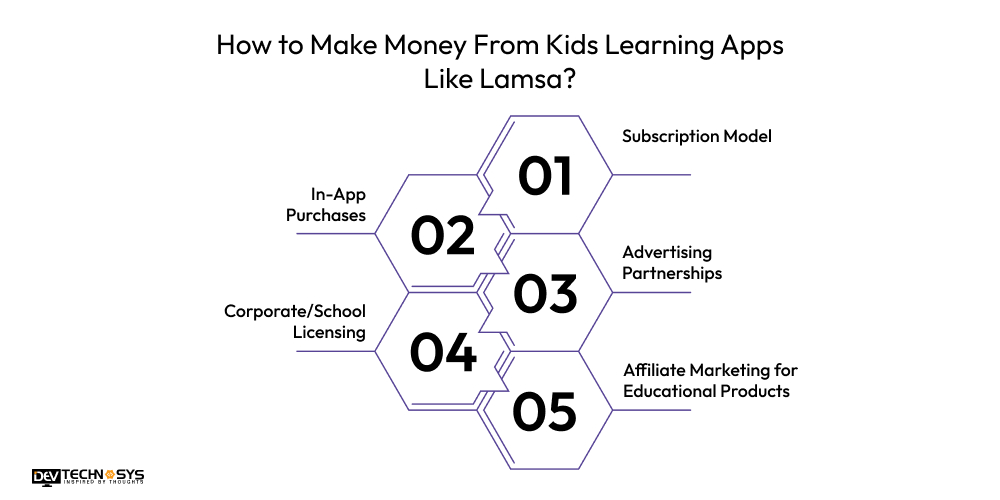
1. Subscription Model
Charge parents a monthly or annual charge for complete access to instructional resources. To attract customers, provide free trials and then upsell premium services such as more games, offline access, or individualized learning paths. Consistent subscriptions offer stable revenue while fostering long-term involvement.
2. In-App Purchases
Provide additional content, such as special learning modules, interactive stories, or virtual incentives, for parents to purchase within the app. Kids learning mobile app development solutions provide basic free access while generating revenue from customers who want more features, making it a versatile and scalable monetization method for educational apps.
3. Advertising Partnerships
Collaborate with child-friendly brands to display safe and relevant adverts in the app. Use non-intrusive commercial formats, such as banners or rewarded films, to provide kids with additional content.
This generates cash while providing a good learning environment, but careful safety precautions must be taken for young audiences.
4. Corporate/School Licensing
Sell bulk licenses for the app to schools or educational organizations. Institutions charge for numerous student accounts or annual access. According to an iOS app development services provider, this model generates significant upfront cash and broadens reach, while schools benefit from structured, curriculum-aligned learning resources for their kids.
5. Affiliate Marketing for Educational Products
Recommend kid-friendly books, toys, or learning tools in the app and get a commission on sales through affiliate links. Integrate these effortlessly into classes to increase value. This generates passive income without charging users directly, as parents are more likely to purchase recommended educational resources.
Security & Compliance Requirements for Kids Learning Apps
Building an app like Lamsa is one of the best education app ideas for edtech startups. But kids learning apps handle sensitive information, so security should be built into the product from the beginning rather than added after development. For UK-facing apps, the ICO’s Children’s Code emphasizes privacy by default, data minimization, parental controls, age-appropriate design, and responsible data use.
- Parental Consent & Child-Data Protection: To make how to make a learning app safe for children, obtain appropriate parental authorization where required and protect children’s personal information throughout collection, processing, storage, and sharing.
- Age-Appropriate Design: Design interfaces, content, privacy notices, and data practices around children’s age and developmental needs. The ICO recommends a risk-based approach to age assurance.
- Secure Authentication: Use strong authentication for parent accounts, secure session management, MFA where appropriate, and role-based access to prevent unauthorized access.
- Encryption of Children’s Data: Encrypt sensitive information in transit and at rest using modern security protocols, while maintaining secure key-management practices.
- Parental Controls: Lamsa alternatives provide parents with controls for profiles, permissions, privacy settings, activity visibility, purchases, and account management.
- Minimal Data Collection: Collect only the personal information necessary to deliver the learning experience and avoid retaining unnecessary children’s data.
- Secure Payment Processing: Use reputable, compliant payment gateways and avoid storing sensitive card information unnecessarily. Add parental purchase controls to reduce accidental transactions.
- Privacy Policy & Data Retention Controls: Clearly explain what data is collected, why it is used, who it is shared with, and how long it is retained. Establish deletion and retention procedures aligned with applicable laws.
Dev Fact: DevTechnosys follow GDPR and ISO 27001 aligned practices consistently, ensuring data protection is never an afterthought in development.
How to Measure the Success of a Kids Learning App?
Downloads alone don’t indicate whether a kids learning app is actually helping children learn. A better approach is to track engagement, learning outcomes, retention, and parent involvement through key performance indicators (KPIs).
Key Metric |
What It Measures |
Why It Matters |
| Daily/Weekly Active Learners | Active learners | Measures engagement |
| Lesson Completion Rate | Lessons completed | Shows content effectiveness |
| Learning Session Duration | Time spent learning | Indicates engagement |
| Retention Rate | Returning learners | Measures user loyalty |
| Subscription Conversion | Paid users | Tracks monetization |
| Parent Engagement | Parent activity | Shows parental involvement |
| Assessment Improvement | Score improvement | Measures learning outcomes |
| Content Completion | Learning progress | Tracks curriculum completion |
| Churn Rate | Users who leave | Identifies retention issues |
| Cost per Acquisition (CPA) | Customer acquisition cost | Measures marketing efficiency |
The Most Important KPI: Learning Outcomes
For a kids learning app, learning improvement should remain the primary success indicator. For example, if children consistently improve their assessment scores while maintaining healthy engagement and retention, the app is delivering more meaningful value than one that simply generates high download numbers.
Lamsa-Like App vs Traditional Learning App
Lamsa-like learning apps focus on making education more interactive, engaging, and enjoyable for children through games, stories, videos, and personalized activities. In contrast, traditional learning apps typically follow structured lessons, quizzes, and fixed learning paths. Understanding these differences helps businesses choose the right features, technology, and development approach for their target learners.
Factor |
Traditional Learning App |
Lamsa-Like App |
| Learning Style | Content-focused | Interactive |
| Personalization | Limited | AI/adaptive |
| Gamification | Basic | Core experience |
| Parent Insights | Limited | Detailed |
| Content | Lessons | Games, videos, stories & activities |
| Engagement | Passive | Interactive |
| Language Support | Usually limited | Bilingual/multilingual |
How Can AI Improve a Kids Learning App?
Lamsa like app development with AI makes its more personalized, adaptive, and engaging by analyzing learning behavior and adjusting content to individual needs.
- Personalized Learning: Create learning paths based on progress and interests.
- Adaptive Difficulty: Adjust lesson and question difficulty automatically.
- Learning-Gap Detection: Identify weak areas and recommend targeted practice.
- Smart Recommendations: Suggest relevant lessons, games, and activities.
- Voice & Pronunciation: Provide real-time feedback on speaking and pronunciation.
- Progress Insights: Give parents and educators clear AI-powered performance reports.
Why Choose Dev Technosys for Kids Learning App Development?
Dev Technosys combines education technology, AI, gamification, and secure app development to create engaging learning experiences for children. Its kids’ learning solutions support features such as interactive lessons, parental controls, rewards, progress tracking, adaptive learning, and personalized training.
- Kids-Focused UX/UI: Simple, engaging, and age-appropriate interfaces.
- AI-Powered Learning: Personalized paths, adaptive difficulty, and smart recommendations.
- Gamified Experiences: Rewards, badges, games, and interactive activities.
- Parental Controls: Progress monitoring and child-focused controls.
- Scalable Architecture: Built to support growing users and content libraries.
- Secure Development: Focus on data protection and reliable learning platforms.
- End-to-End Services: From consultation and design to development, testing, launch, and maintenance.
Note: Our engineering expertise has helped deliver payment solutions with 98% fraud-detection accuracy, 99.50% transaction uptime, and 30% lower operational costs.
Conclusion
To build a kids learning app like Lamsa, it necessitates thorough preparation, interesting content, and a thorough comprehension of the learning requirements of young users.
Every element, including gamified experiences and interactive courses, should prioritize safety and education. Professional design, seamless operation, and scalability are guaranteed when working with a reputable education app development company in USA.
In the cutthroat edtech industry, you may build a profitable learning platform that engages kids, appeases parents, and produces a steady income by fusing creativity, technology, and educational know-how.
People Also Ask!
-
How Much Does it Cost to Build a Kids Learning App Like Lamsa?
A Lamsa-like kids learning app can cost around AED 110,000 to AED 550,000+, depending on features, AI integration, platform selection, content complexity, UI/UX, backend infrastructure, and security requirements.
-
How Long Does it Take to Develop a Kids Learning App?
Development can take approximately 3 to 5 months for an MVP and 6 to 12 months for a feature-rich app, depending on customization, educational content, AI capabilities, testing, integrations, and overall technical complexity.
-
What Features Should a Lamsa-Like Learning App Include?
Essential features include interactive lessons, educational games, animated content, videos, stories, gamification, personalized learning, assessments, progress tracking, parental controls, notifications, and secure user management.
-
How Can AI Be Integrated Into a Kids Learning App?
AI can personalize learning paths, automatically adjust difficulty, detect learning gaps, recommend relevant activities, provide voice and pronunciation assistance, and generate meaningful progress insights for parents and educators.
-
How Can a Kids Learning App Make Money?
Popular monetization models include freemium plans, monthly or annual subscriptions, premium educational content, in-app purchases, advertisements designed for parents, and partnerships with schools or educational institutions.
-
How Do You Ensure Safety in a Kids Learning App?
Implement parental consent, secure authentication, encryption, limited data collection, parental controls, age-appropriate interfaces, privacy protections, and compliance with applicable child-data protection regulations to create a safer learning environment