





Key Takeaways
The average fitness app development cost ranges from $8,000 to $26,000+, depending on features, complexity, design, and technology stack. Factors like AI integration, wearable support, and real-time tracking significantly increase the overall cost to build a fitness app.
Cost Based on Development Complexity
- Basic Fitness Apps ($8,000 – $12,000): Includes simple UI, login/signup, workout tracking, calorie counter, and minimal backend. Best for MVPs and startups entering the fitness market.
- Mid-Level Fitness Apps ($12,000 – $20,000): Includes custom UI, push notifications, API integrations, workout plans, admin panel, and user progress tracking.
- Advanced Fitness Apps ($20,000 – $26,000): Includes AI/ML features, wearable integration, real-time tracking, chatbot support, subscription system, and scalable architecture.
Cost Based on Types of Fitness Apps
- Workout Tracking App – $8,000 to $12,000: Basic activity tracking, calorie monitoring, and progress reports.
- Personal Trainer App – $12,000 to $18,000: Live coaching, chat support, scheduling, and personalized workout plans.
- Subscription-Based Fitness App – $15,000 to $22,000: Paid plans, premium content access, video workouts, and payment integration.
- AI-Powered Fitness App – $20,000 to $26,000: AI recommendations, chatbot integration, predictive analytics, and smart coaching.
- Cross-Platform Fitness App – $10,000 to $18,000: Single codebase for Android and iOS with optimized performance.
Cost of Popular Fitness Apps
- WalkFit – $10,000 – $16,000
- Sworkit – $16,000 – $22,000
- MyFitnessPal-like App – $18,000 – $23,000
- Nike Training Club-like App – $22,000 – $26,000+
Key Cost Drivers in Fitness App Development
- App complexity and feature set
- UI/UX design quality and customization
- Platform selection (Android, iOS, or cross-platform)
- Backend architecture and cloud hosting
- Third-party integrations (wearables, payments, APIs)
- AI features and real-time functionality
- Development team location and expertise
Timeline Impact on Cost
- Basic Apps (1–2 months): Low-cost MVPs with essential features only
- Standard Apps (2–3 months): Balanced features with moderate pricing
- Advanced Apps (3–6 months): High-end solutions with AI, real-time sync, and scalability
The fitness app development cost has become a key consideration for startups, gyms, and healthcare brands looking to enter the booming digital fitness space. From simple workout trackers to advanced platforms with AI-powered coaching, the cost to build a fitness app can vary widely based on features, design, and technology.
Businesses today are investing in mobile fitness solutions to offer personalized training, real-time tracking, and seamless user experiences. On average, the cost to build a fitness app depends on factors like app complexity, platform, and integrations such as wearable devices or chatbots.
Whether you’re planning a basic app or a feature-rich solution, understanding the mobile fitness app development cost helps you set realistic expectations and avoid budget overruns. This guide provides a complete breakdown to help you plan effectively.
What is the Average Fitness App Development Cost?
The fitness app development cost typically ranges between $8,000 and $26,000, depending on the app’s complexity, features, and supported platforms. A simple solution with basic tracking requires a lower budget, while apps with AI-powered coaching, real-time sync, and wearable integrations increase the mobile fitness app development cost significantly. For a detailed estimate, you can also explore the cost to develop a mobile app before planning your project.
| App Level | Features | Cost (USD) |
| Basic App | Simple UI, 3–5 screens, basic login, minimal backend | $8,000 – $12,000 |
| Mid-Level App | Custom UI, 10–20 screens, API integrations, push notifications, admin panel | $12,000 – $20,000 |
| Advanced App | Complex architecture, AI/ML features, real-time functionality, third-party integrations, multi-platform | $20,000 – $26,000 |
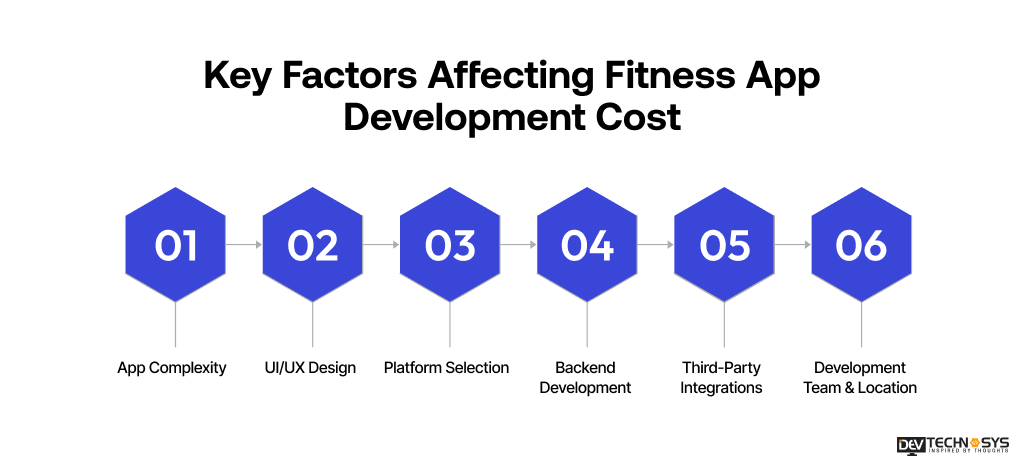
Key Factors Affecting Fitness App Development Cost
The fitness app development cost depends on several factors, such as features, design, platform choice, and integrations. Each element directly impacts the final budget and determines the overall cost to build a workout tracking app.
1. App Complexity
App complexity affects the mobile app development cost based on features and backend logic. Simple apps cost less, while AI-powered fitness tracking, real-time updates, and advanced architecture significantly increase development effort and overall pricing. Choosing the right level of complexity is crucial when planning fitness app development solutions, as it directly impacts scalability and long-term performance.
| Complexity Level | Features | Cost (USD) |
| Basic | Simple login, minimal backend | $1,500 – $3,000 |
| Mid-Level | User roles, push notifications | $3,000 – $4,000 |
| Advanced | AI/ML, real-time features, complex architecture | $4,000 – $5,500 |
2. UI/UX Design
UI/UX design impacts the cost of health and fitness apps by improving user engagement. Basic templates are cheaper, while custom designs with animations, branding, and interactive elements increase design effort and overall development budget. High-quality UI/UX also improves retention rates and helps users stay engaged longer. Businesses investing in premium design often collaborate with experts offering hybrid app development services for smoother cross-device experiences.
| Complexity Level | Features | Cost (USD) |
| Basic | Pre-built templates | $800 – $1,500 |
| Mid-Level | Custom UI with branding | $1,500 – $2,400 |
| Advanced | Interactive UI, animations, premium UX | $2,400 – $3,500 |
3. Platform Selection
Platform choice influences mobile fitness app development cost. Single-platform apps are cheaper, while building for both Android app development and iOS or using cross-platform frameworks increases development scope and total investment required.
| Complexity Level | Features | Cost (USD) |
| Basic | Single platform (Android or iOS) | $1,500 – $2,200 |
| Mid-Level | Both platforms (separate builds) | $2,000 – $4,000 |
| Advanced | Cross-platform optimized apps | $4,000 – $6,000 |
4. Backend Development
Backend development affects gym app development pricing through data handling, APIs, and real-time syncing. A simple backend is cheaper, while scalable cloud systems and advanced databases significantly increase cost. Strong backend architecture ensures smooth performance during high user traffic and supports future scalability.
| Complexity Level | Features | Cost (USD) |
| Basic | Basic database, limited APIs | $1,000 – $2,000 |
| Mid-Level | Cloud integration, APIs | $2,000 – $4,000 |
| Advanced | Real-time database, scalable architecture | $4,000 – $6,000 |
5. Third-Party Integrations
Integrations like wearables, payment systems, and chatbots increase the fitness app cost with AI features. More integrations require additional development effort, testing, and maintenance, which raises the overall project cost. These integrations enhance user experience by enabling smart tracking and automated services. Choosing the right fitness app development solutions helps balance performance, security, and long-term maintenance costs.
| Complexity Level | Features | Cost (USD) |
| Basic | Limited integrations | $700 – $1,500 |
| Mid-Level | Payment gateways, APIs | $1,500 – $2,500 |
| Advanced | Wearables, AI chatbots, multiple APIs | $2,500 – $4,000 |
6. Development Team & Location
The cost to hire dedicated developer depends on experience and region. Freelancers are cheaper, while experienced agencies charge more but deliver better quality, scalability, and long-term support. Outsourcing to regions like Asia or the Middle East helps reduce costs without compromising quality.
| Complexity Level | Features | Cost (USD) |
| Basic | Freelancers or a small team | $1,000 – $2,000 |
| Mid-Level | Mid-sized development team | $2,000 – $3,500 |
| Advanced | Experienced agency or specialists | $3,500 – $5,000 |
Industry Insight
According to Precedence Research (via GlobeNewswire), the fitness app market is expected to reach $45.45 billion by 2035, highlighting long-term expansion fueled by digital health trends and wearable integration.
Why Should You Invest in Fitness App Development?
Investing in fitness app development is a smart move as the demand for digital health solutions continues to grow rapidly. A fitness app helps businesses reach a wider audience, offer personalized workout experiences, and generate recurring revenue through subscriptions or in-app purchases. It also improves user engagement with features like tracking, AI-powered fitness recommendations, and wearable integrations.
With increasing health awareness, users prefer convenient mobile solutions for workouts and wellness. A well-built app enhances brand visibility and creates long-term customer loyalty. Overall, it is a scalable opportunity that ensures strong ROI in the competitive fitness industry.

Why Proper Budget Planning Is Essential for Fitness App Development
Proper budgeting plays a critical role in managing the fitness app development cost effectively and avoiding unexpected expenses during the project. Without a clear budget, features like AI integration, UI/UX design, or third-party APIs can quickly increase the overall personal trainer app development cost beyond expectations. A well-planned budget helps prioritize essential features, control development scope, and choose the right technology stack. It also ensures better allocation of resources for design, development, and testing phases.
Additionally, budgeting allows businesses to plan for future upgrades and maintenance, ensuring long-term scalability and stability of the fitness application in a competitive market.
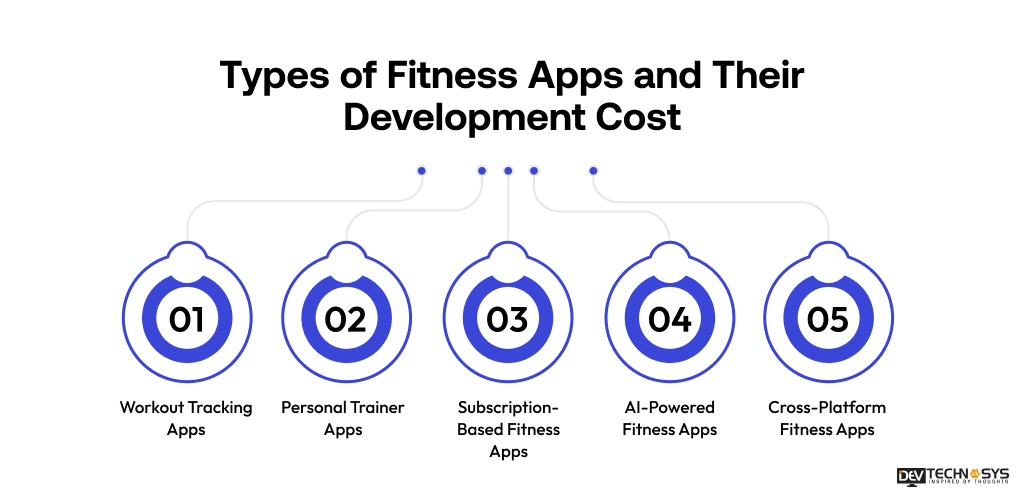
Types of Fitness Apps and Their Development Cost
Fitness apps are built in different categories depending on user goals, features, and business models. Each type requires unique functionality, integrations, and design complexity, which directly impacts the fitness app development cost and overall cost to build a fitness app.
1. Workout Tracking Apps
Workout tracking apps are designed to help users monitor daily activities, calorie intake, and fitness progress. These apps usually include simple dashboards, activity logs, and basic analytics features. Since they rely on limited backend functionality, they are relatively affordable but still require proper data management and a responsive UI for a smooth user experience.
| App Type | Key Features | Cost (USD) |
| Workout Tracking App | Activity tracking, calorie counter, progress reports, basic analytics | $8,000 – $12,000 |
2. Personal Trainer Apps
Personal trainer apps connect users with certified trainers for customized workout plans, live coaching sessions, and chat support. These apps require real-time communication, scheduling systems, and user management features. Because of their interactive nature, the personal trainer app development cost is higher than that of basic fitness apps.
| App Type | Key Features | Cost (USD) |
| Personal Trainer App | Live sessions, chat, workout plans, scheduling, progress tracking | $12,000 – $18,000 |
3. Subscription-Based Fitness Apps
Subscription-based fitness apps provide users with premium workout programs, diet plans, and exclusive fitness content through monthly or yearly plans. These apps require secure payment gateways, subscription management, and content delivery systems. The subscription-based fitness app costs increase with scalability and content personalization features.
| App Type | Key Features | Cost (USD) |
| Subscription Fitness App | Paid plans, video workouts, premium content access, payment integration | $15,000 – $22,000 |
4. AI-Powered Fitness Apps
AI-powered fitness apps use advanced technologies to deliver personalized workout suggestions, predictive analytics, and smart coaching experiences. Features like AI-powered fitness recommendations and chatbot support improve user engagement but significantly increase development complexity and cost due to machine learning integration.
| App Type | Key Features | Cost (USD) |
| AI Fitness App | AI recommendations, smart coaching, analytics, chatbot integration | $20,000 – $26,000 |
5. Cross-Platform Fitness Apps
Cross-platform fitness apps are built using a single codebase that works on both Android and iOS devices. They reduce development time and cost compared to native apps while still offering a consistent user experience. However, performance optimization and testing across devices are essential.
| App Type | Key Features | Cost (USD) |
| Cross-Platform App | Android + iOS support, unified codebase, optimized performance | $10,000 – $18,000 |
Cost to Build Popular Fitness Apps Like WalkFit, Sworkit & More
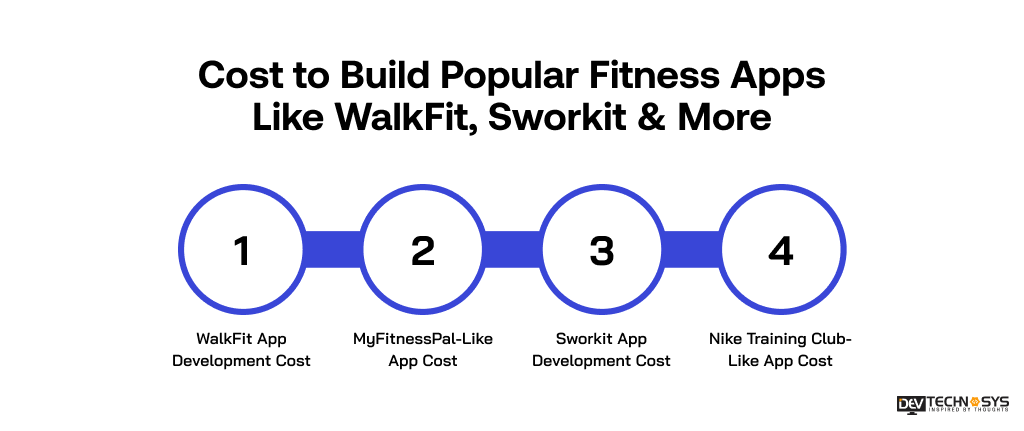
The fitness app development cost for popular apps like WalkFit, Sworkit, and similar platforms varies based on features, complexity, and user experience design. Apps with basic tracking are more affordable, while advanced platforms with video content, AI personalization, and subscriptions require higher investment and scalable backend systems.
1. WalkFit App Development Cost
WalkFit is a walking-focused fitness app that includes step tracking, guided plans, and gamified challenges. The cost to build an app like WalkFit is moderate because it uses structured content, simple tracking, and subscription features without heavy real-time processing or complex integrations.
| App Name | Estimated Cost (USD) | Key Features Included |
| WalkFit | $10,000 – $16,000 | Step tracking, guided walking plans, gamification, subscription model, progress tracking, basic personalization |
2. MyFitnessPal-Like App Cost
MyFitnessPal-style apps focus on calorie tracking, nutrition databases, and barcode scanning features. The mobile fitness app development cost increases due to large data handling, third-party integrations, and continuous database updates for food and nutrition tracking.
| App Name | Estimated Cost (USD) | Key Features Included |
| MyFitnessPal-like App | $18,000 – $23,000 | Food database, calorie tracking, barcode scanner, wearable integration, analytics, subscription plans |
3. Sworkit App Development Cost
Sworkit is a more advanced fitness platform offering customizable workouts, video-based training, and adaptive exercise plans. The the cost to build an app like Sworkit is higher due to rich media handling, personalization engines, and cross-platform support for seamless user experience.
| App Name | Estimated Cost (USD) | Key Features Included |
| Sworkit | $16,000 – $22,000 | Video workouts, personalized plans, workout timer, subscription system, analytics, multi-device support |
4. Nike Training Club-Like App Cost
Nike Training Club-type apps deliver premium workout videos, expert training sessions, and personalized fitness programs. These apps require high-end UI/UX, scalable infrastructure, and strong content management, increasing the overall fitness app development cost significantly.
| App Name | Estimated Cost (USD) | Key Features Included |
| Nike Training Club-like App | $22,000 – $26,000+ | HD videos, expert workouts, personalized plans, offline access, multi-platform support, advanced UI/UX |
Industry Insight
According to a Business Insider report (2026), successful fitness apps increasingly rely on AI, lean development teams, and influencer-driven growth strategies, with startups scaling rapidly by focusing on speed and simplicity.
Hidden Fitness App Development Costs You Should Know
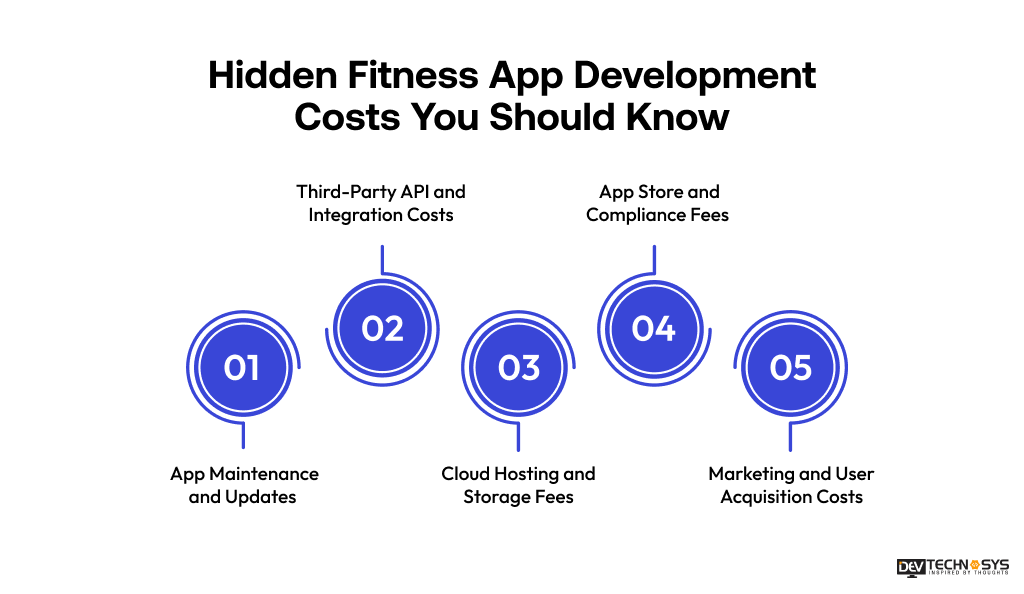
Beyond the core fitness app development cost, several hidden expenses can significantly impact your overall budget. These costs are often overlooked during planning but play a crucial role in scalability, performance, and long-term success of your cost to develop a fitness app strategy.
1. App Maintenance and Updates
After launch, continuous maintenance is required to fix bugs, improve performance, and add new features. Regular updates ensure compatibility with new OS versions and devices. This ongoing effort increases long-term mobile app maintenance cost , especially for apps with growing user bases and complex functionality.
2. Third-Party API and Integration Costs
Many fitness apps rely on third-party APIs for payments, wearables, maps, or nutrition databases. These services often come with monthly or usage-based charges. Over time, these recurring costs increase the overall gym app development pricing, especially for feature-rich or AI-powered platforms.
3. Cloud Hosting and Storage Fees
Fitness apps generate large amounts of data from user activity, videos, and analytics. Cloud services like AWS or Google Cloud charge based on storage and usage. As the user base grows, this becomes a major hidden factor in fitness app cost with AI features and real-time tracking apps.

4. App Store and Compliance Fees
Publishing apps on platforms like Google Play and Apple App Store involves registration fees, along with compliance costs for privacy and security regulations. These ongoing requirements add to the total cost to create a fitness app, especially for subscription-based or health-focused applications.
5. Marketing and User Acquisition Costs
Even a well-built fitness app needs strong marketing to gain users. Paid ads, influencer promotions, and ASO strategies can significantly increase initial investment. These costs are often higher than expected and directly affect the real-world fitness app development in the UAE cost beyond just development.
How Long Does It Take to Develop a Fitness App?
The time required to develop a fitness app typically ranges from 1 to 6 months, depending on the app’s complexity, feature set, and the size of your development team. Planning your timeline alongside the fitness app development cost helps ensure smooth execution and timely delivery.
| App Type | Development Phase | Estimated Time |
| Basic App | Simple UI, basic tracking, minimal backend | 1 – 2 Months |
| Standard App | Custom UI, API integrations, push notifications, admin panel | 2 – 3 Months |
| Advanced App | AI/ML features, real-time functionality, wearable integrations, multi-platform | 3 – 6 Months |
| Total Timeline | From initial planning to final launch | 1 – 6 Months |
- Basic fitness apps (1–2 months) cover simple workout trackers or activity loggers with minimal backend requirements. These are ideal for startups testing an MVP before scaling.
- Standard fitness apps (2–3 months) involve more development effort due to custom UI/UX, third-party API integrations, and user management systems. Most mid-level fitness apps with subscription features fall into this range.
- Advanced fitness apps (3–6 months) require the most time due to complex architecture, AI-powered coaching, real-time data syncing, and multi-platform development. Apps comparable to MyFitnessPal or Nike Training Club typically fall in this category.
Cost Reduction Strategies for Fitness App Development
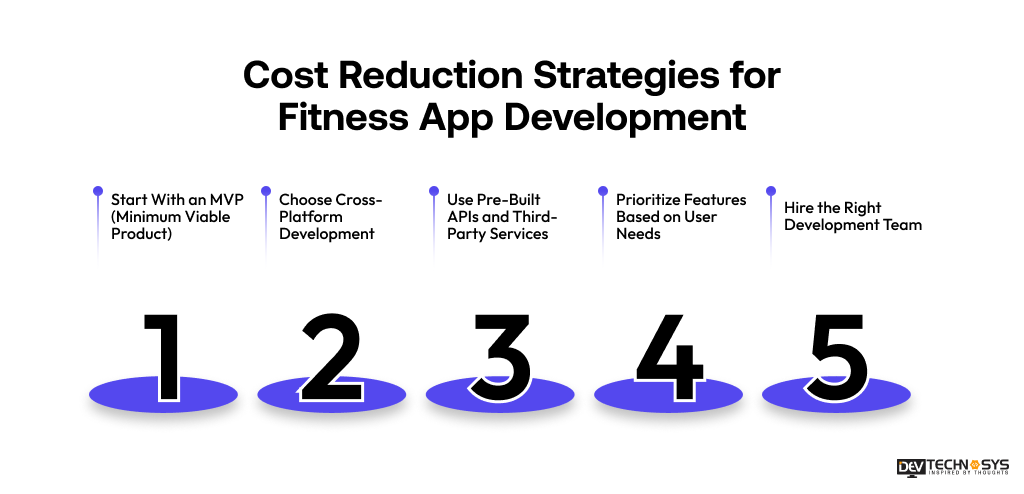
Managing the fitness app development cost doesn’t mean cutting corners, it means making smarter decisions at every stage of the project. With the right approach, you can significantly reduce the cost to create a fitness app without compromising on quality or user experience.
1. Start With an MVP (Minimum Viable Product)
Instead of building a full-featured app from day one, launch with only the core features your users need. An MVP allows you to test your idea in the market, gather real user feedback, and invest further based on what actually works. This approach keeps the initial mobile fitness app development cost low while reducing the risk of over-building.
2. Choose Cross-Platform Development
Building separate native apps for Android and iOS doubles your development effort and budget. Using cross-platform frameworks like Flutter or React Native allows you to maintain a single codebase for both platforms, which can reduce the overall gym app development pricing by up to 30–40% compared to building two native apps.
3. Use Pre-Built APIs and Third-Party Services
Rather than building every feature from scratch, integrate existing third-party services for payments, notifications, nutrition databases, or wearable sync. These ready-made solutions save significant development hours and reduce the fitness app cost with AI features and complex integrations.
4. Prioritize Features Based on User Needs
Not every feature needs to be included in the first version. Work with your development team to prioritize features that directly impact user experience and business goals. Deferring non-essential features to later updates helps control scope creep and keeps the cost to make a fitness app within budget.
5. Hire the Right Development Team
Choosing the right development partner directly impacts your budget. Offshore or nearshore development agencies often offer the same quality at a lower rate compared to onshore teams. A mid-sized experienced agency can deliver better value than a large enterprise firm, especially for startups managing a tight fitness app development cost. Hire mobile app developers in Dubai to ensure the success of your fitness app development.
Quote
Nir Eyal (Author & Habit-Formation Expert), through Hooked: How to Build Habit-Forming Products,
“Companies increasingly learn to build habit-forming products not to be used just once, but instead to be used regularly.”
Monetization Models That Impact Fitness App Development Cost
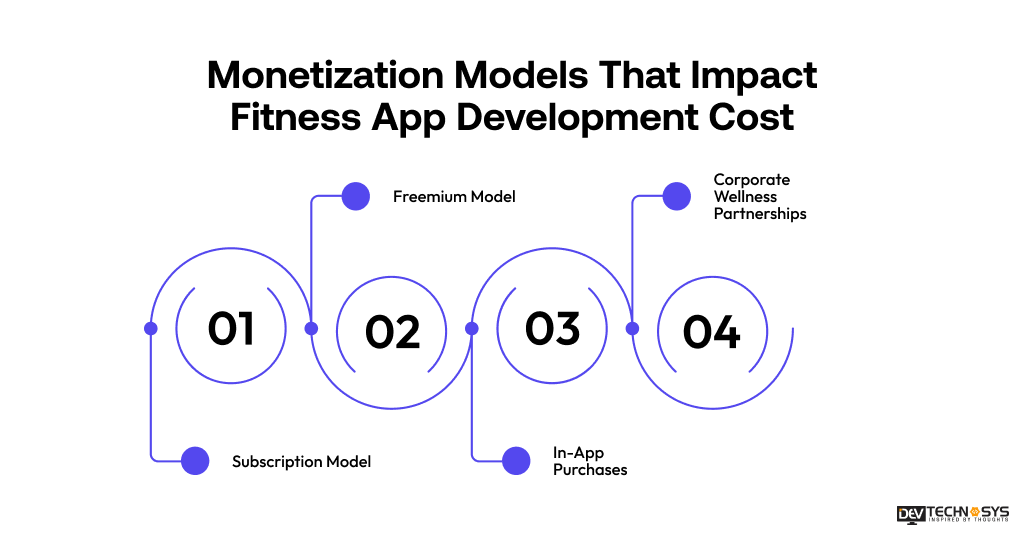
Choosing the right monetization model is just as important as planning your fitness app development services. The model you select directly influences the features you need to build, the backend complexity, and ultimately the total cost to create a fitness app. Here are four proven monetization models to consider.
1. Subscription Model
The subscription model is one of the most popular and reliable revenue streams for fitness apps. Users pay a recurring monthly or yearly fee to access premium workouts, diet plans, or coaching content. While this model requires a secure payment gateway, subscription management system, and content delivery infrastructure, it generates consistent recurring revenue and justifies a higher mobile fitness app development cost over time.
2. Freemium Model
The freemium model offers a free version of the app with basic features while charging users for premium upgrades. This approach helps attract a large user base quickly and converts engaged users into paying customers. It requires careful feature segmentation during development, which adds some complexity to the overall gym app development pricing but delivers strong long-term growth potential.
3. In-App Purchases
In-app purchases allow users to buy individual features, workout packs, or one-time upgrades directly within the app. This model works well for apps that offer specialized content or tools. Integrating a secure in-app purchase system increases the fitness app cost with AI features and premium content but gives users flexible spending options without a full subscription commitment.
4. Corporate Wellness Partnerships
Many fitness apps generate revenue by partnering with companies that offer wellness programs to their employees. This B2B model requires enterprise-level features like admin dashboards, usage reporting, and multi-user management, which increases the overall cost to develop a fitness app. However, it offers high-value contracts and a stable revenue stream that can significantly improve ROI.

Conclusion
Understanding the fitness app development cost is the first step toward building a successful digital fitness product. From basic workout trackers to AI-powered platforms, every app type comes with its own budget requirements, timelines, and monetization opportunities. Proper planning across features, design, platform, and team selection helps you control the cost to create a fitness app without sacrificing quality.
At Dev Technosys, with over 13+ years of experience as a mobile app development company, we have helped businesses across the globe build powerful, scalable, and user-friendly fitness apps within their budget. Whether you are a startup or an established brand, our expert team ensures the best ROI for your mobile fitness app development cost.
FAQs on Fitness App Development Cost
Q1. How Much Does It Cost to Develop a Fitness App?
The fitness app development cost typically ranges between $8,000 and $26,000 depending on the app’s complexity, features, platform, and development team. A basic workout tracker starts at $8,000, while an advanced AI-powered fitness platform with wearable integrations and premium content can go up to $26,000 or more.
Q2. How Long Does It Take to Build a Fitness App?
The development timeline for a fitness app ranges from 1 to 6 months. A basic app takes 1–2 months, a standard app with custom UI and integrations takes 2–3 months, and an advanced app with AI features and multi-platform support can take 3–6 months, depending on complexity.
Q3. What Factors Affect the Cost to Build a Fitness App?
Several key factors influence the mobile fitness app development cost, including app complexity, UI/UX design, platform selection (Android, iOS, or cross-platform), backend development, third-party integrations like wearables or payment gateways, and the experience level of your development team or agency.
Q4. Which Monetization Model is Best for a Fitness App?
The best monetization model depends on your target audience and business goals. The subscription model works well for consistent recurring revenue, while the freemium model helps attract a large user base. In-app purchases offer flexibility, and corporate wellness partnerships provide high-value B2B revenue opportunities.
Q5. How Can I Reduce My Fitness App Development Cost?
You can reduce the cost to make a fitness app by starting with an MVP, choosing cross-platform development, using pre-built APIs and third-party services, prioritizing essential features, and partnering with an experienced offshore or nearshore development agency that offers quality at a competitive rate.