





Key takeaways:
-
- Building a fitness app like Runna requires a focus on AI-driven, adaptive programming, seamless wearable integration, and a premium user experience.
- Businesses should build a fitness app like Runna to boost employee well-being, engagement, and productivity.
- The advanced AI-powered app with personalized coaching, wearable integration, and subscriptions can cost $10,000 to $25,000+
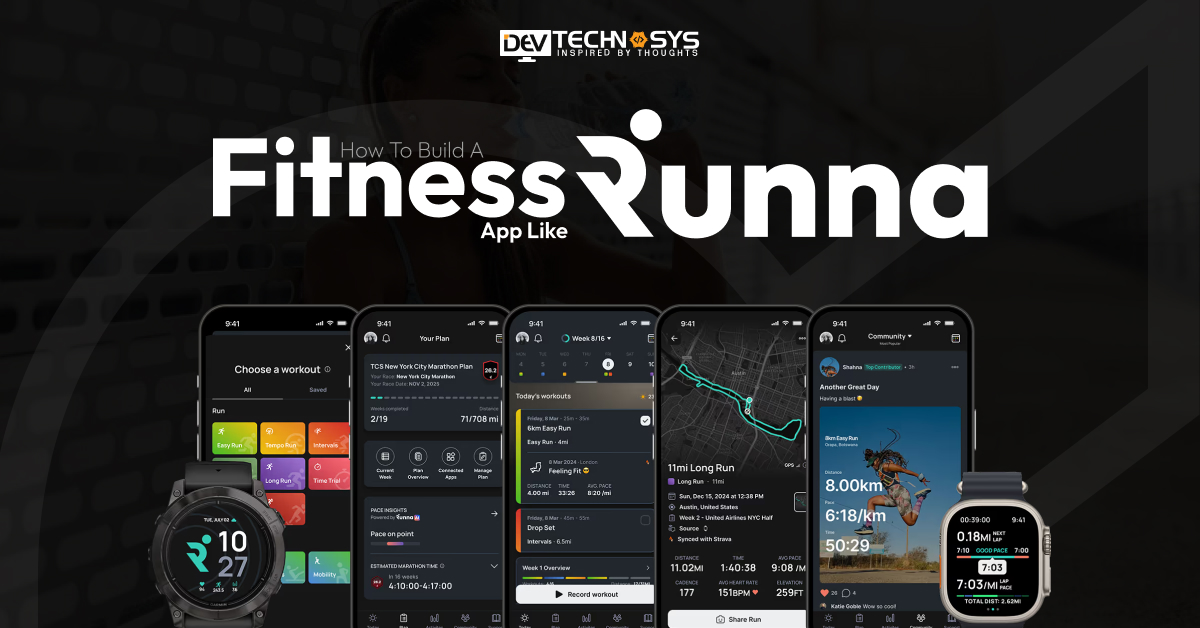
The fitness and wellness industry is undergoing a digital revolution, with mobile apps empowering users to track workouts, monitor progress, and stay motivated anytime, anywhere. Apps like Runna have transformed the way people approach fitness, offering personalized training plans, real-time activity tracking, and goal-oriented challenges.
Runna stood out as the best fitness app in Middle East, not only providing users with convenient tools to improve health and performance but also opening significant business opportunities for entrepreneurs and fitness brands.
By combining engaging user experiences, data-driven insights, and seamless integration with wearables or health platforms, such an app can drive high user engagement, foster loyalty, and create multiple revenue streams.
Developing a feature-rich, scalable, and secure fitness app requires careful planning, the right technology stack, and a clear focus on user needs and retention strategies. This guide covers everything you need to learn to build a fitness app like Runna. Keep reading!
What is the Runna App?
With the aim of making training smarter and more organized, the Runna app is a personalized running coach that develops adaptive training plans for runners of all skill levels, from novices to experts, preparing them for events like 5Ks, marathons, and even obstacle races.
The best fitness app in UAE, like Runna, also offers strength and mobility exercises, synchronizes with wearables, and offers a community of support. Unlike solely tracking apps, it focuses on goal-specific training and incorporates features such as shoe tracking, race preparation, and in-app coaching. Workouts are adjusted based on your success and comments.
Why Businesses Should Invest in a Fitness App Like Runna?
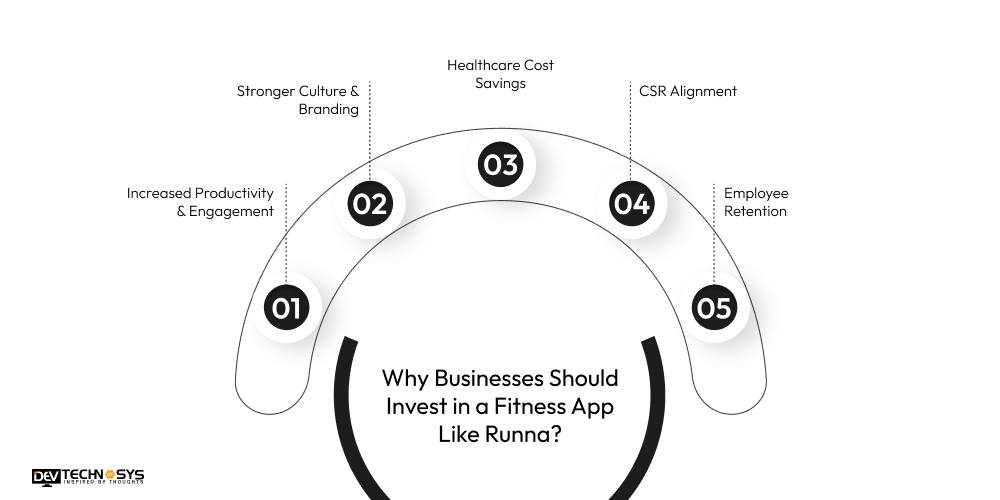
Businesses should build a fitness app like Runna to boost employee well-being, engagement, and productivity.
1. Increased Productivity & Engagement:
Employees who stay healthy, active, and energized tend to be more focused, motivated, and productive, resulting in better performance and higher engagement levels across the organization.
2. Stronger Culture & Branding:
Offering wellness initiatives shows that the company genuinely cares about employee well-being, which boosts morale, fosters teamwork, and enhances the organization’s reputation as a supportive employer.
3. Healthcare Cost Savings:
Encouraging proactive fitness and healthy lifestyle choices can significantly reduce long-term healthcare expenses by preventing chronic illnesses and lowering absenteeism due to health issues.

4. CSR Alignment:
One of the reasons to create a fitness app like Runna is CSR alignment. The corporate wellness programs help align business initiatives with CSR goals, promote community health awareness, support employee well-being, advance environmental sustainability, and build a strong, socially responsible corporate image that resonates with stakeholders.
5. Employee Retention:
Providing access to wellness apps is a highly valued employee benefit that makes staff feel supported, appreciated, motivated, and invested in, ultimately reducing turnover, boosting loyalty, and strengthening long-term organizational commitment.
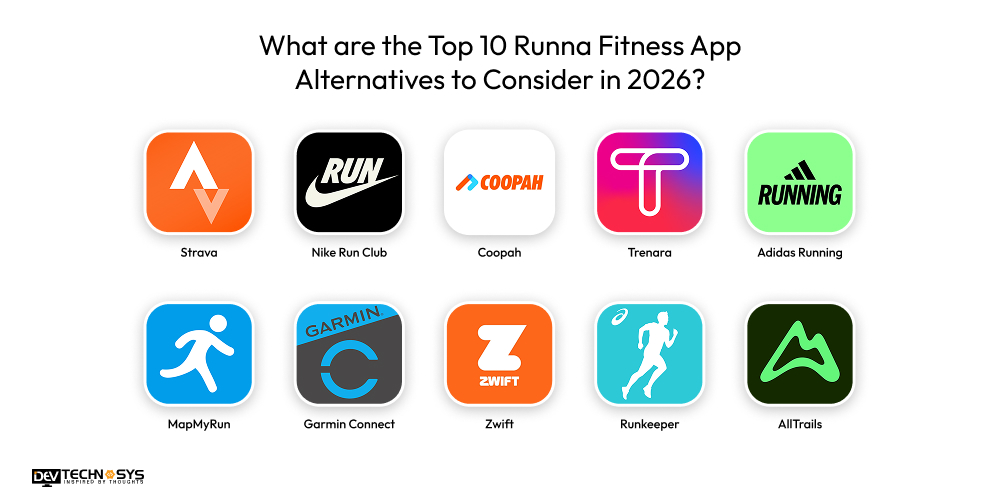
What are the Top 10 Runna Fitness App Alternatives to Consider in 2026?
Looking for the best fitness app in Middle East in 2026? These top fitness apps in UAE and running apps offer diverse features that are perfect for runners, walkers, and fitness enthusiasts. Take a look at these Runna alternatives!
App |
Launch Year |
Rating |
Downloads |
Platforms |
| Strava | 2009 | 4.4 | 50M+ | iOS, Android, Web |
| Nike Run Club | 2015 | 4.5 | 10M+ | iOS, Android |
| Coopah | 2021 | 4.8 | 100K+ | iOS, Android |
| Trenara | 2022 | 4.3 | 50K+ | iOS, Android |
| Adidas Running | 2019 | 4.5 | 50M+ | iOS, Android |
| MapMyRun | 2010 | 4.4 | 10M+ | iOS, Android |
| Garmin Connect | 2007 | 4.6 | 10M+ | iOS, Android |
| Zwift | 2014 | 4.5 | 5M+ | iOS, Android, Desktop |
| Runkeeper | 2008 | 4.7 | 10M+ | iOS, Android |
| AllTrails | 2010 | 4.8 | 50M+ | iOS, Android, Web |
What Are The Easy Steps to Build a Fitness App Like Runna?
Building a fitness app like Runna requires a focus on AI-driven, adaptive programming, seamless wearable integration, and a premium user experience. Follow these easy steps and start your journey towards a trend-setting fitness and wellness app.
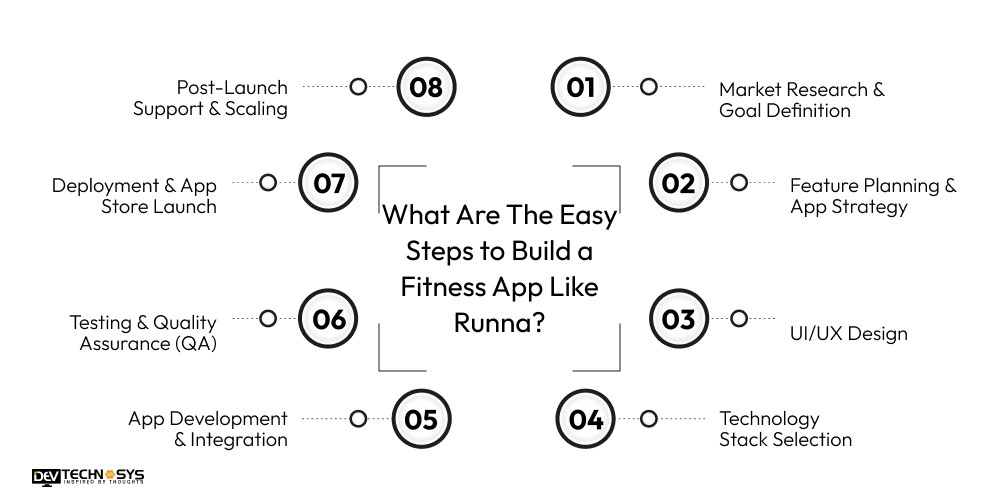
1. Market Research & Goal Definition
Before reaching out to a top artificial intelligence development company for development, there are some things that you need to consider. On top of that list is the market and competitor study. Begin by researching fitness industry trends, analyzing competitors like Runna, and understanding user pain points.
Identify your target audience, such as beginners, marathon runners, or corporate users. To develop a fitness app like Runna, define clear business goals, monetization strategies, and differentiation factors to ensure your app delivers measurable value and stands out in a competitive fitness market.
2. Feature Planning & App Strategy
The next step to develop a fitness app like Runna involves outlining core features, including personalized training plans, workout scheduling, progress tracking, performance analytics, and coaching support. Decide which features are essential for your MVP and which can be introduced later.
A well-defined feature roadmap helps manage development costs, reduces complexity, and ensures faster time-to-market without compromising user experience.
3. UI/UX Design
Runna app development involves creating a design and an intuitive, visually motivating interface that keeps users engaged and consistent with their fitness goals. If you want to develop a fitness app like Runna, focus on simple navigation, readable workout plans, progress charts, reminders, and accessibility-friendly layouts.
A strong UI/UX design not only improves usability but also increases retention rates and encourages long-term app usage.
4. Technology Stack Selection
Experts who provide smart fitness app development solutions will choose a scalable and secure technology stack for frontend, backend, cloud hosting, and APIs. Select tools that support real-time tracking, wearable integrations, AI-based recommendations, and data analytics.
The right technology stack ensures smooth performance, easy future upgrades, cross-platform compatibility, and long-term scalability as your user base grows.
5. App Development & Integration
Develop Runna alternatives using agile methodologies to ensure flexibility and faster iterations. Integrate essential components such as workout engines, AI coaching logic, wearable device syncing, push notifications, and secure payment gateways. Regular sprint reviews help identify improvements early and maintain alignment with business goals throughout development.
6. Testing & Quality Assurance (QA)
After completing the healthcare mobile app development, perform rigorous testing to ensure your Runna alternatives function smoothly across devices and platforms. This includes functional testing, performance testing, security validation, and usability testing. Quality assurance helps identify bugs, prevent crashes, protect user data, and deliver a stable, reliable fitness experience to end users.
7. Deployment & App Store Launch
Prepare the app for release by ensuring compliance with Google Play and Apple App Store guidelines. Optimize app store listings with engaging descriptions, screenshots, and keywords. A well-planned launch strategy helps maximize visibility, attract early adopters, and generate initial user traction effectively.
8. Post-Launch Support & Scaling
After launch, the tech support team of your mobile app development company will continuously monitor app performance, user feedback, and analytics. Release regular updates, enhance features, and add advanced capabilities such as AI personalization or social challenges.
Scaling infrastructure and introducing new offerings ensure long-term growth, higher retention, and sustained competitiveness in the evolving fitness app market.
What Core Features are Required to Build a Fitness App Like Runna?
Everyone knows the role of mobile apps in the healthcare industry is massive, so creating a feature-rich fitness app is crucial to meet users’ rising expectations. Here are the crucial features you need to build a fitness app like Runna.
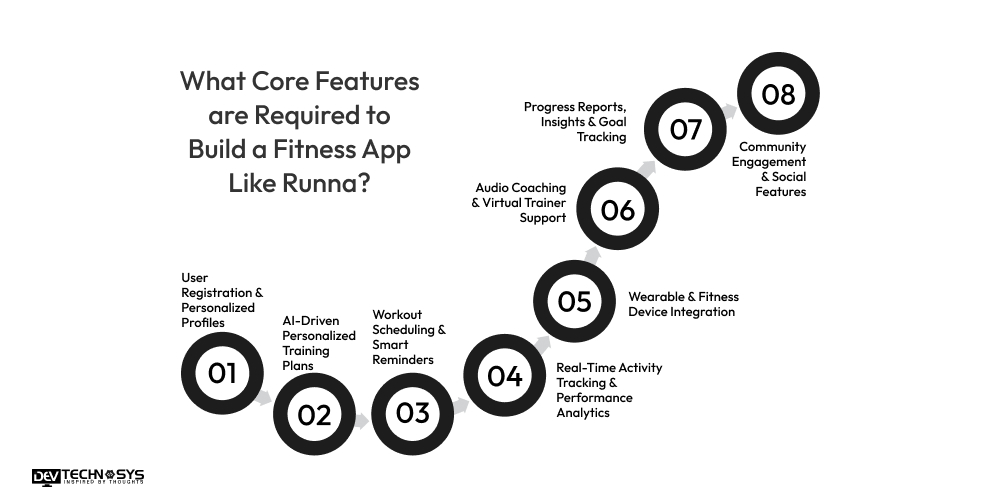
1. User Registration & Personalized Profiles
If you want to develop health & fitness app like 7 Minute Workout, adding user registration is necessary. A secure, seamless onboarding process allows users to sign up with email, phone number, or social logins.
Detailed profile creation includes age, weight, fitness level, goals, and preferences, enabling the app to deliver highly personalized training plans, accurate progress tracking, and tailored fitness recommendations.
2. AI-Driven Personalized Training Plans
The app should generate customized running and fitness plans based on user goals, availability, experience level, and performance data. AI algorithms or expert trainers can dynamically adjust workouts, intensity, and recovery periods to help users progress safely and achieve long-term fitness results.
3. Workout Scheduling & Smart Reminders
Integrated workout calendars allow users to schedule sessions, plan rest days, and track consistency. Smart reminders, alerts, and notifications help users stay committed, reduce missed workouts, and maintain discipline, which is critical for habit formation and sustained engagement.
4. Real-Time Activity Tracking & Performance Analytics
Accurate tracking of metrics such as distance, pace, speed, duration, calories burned, and heart rate provides valuable performance insights. Interactive graphs, trend analysis, and workout summaries help users understand improvements, identify gaps, and optimize their training routines effectively.
5. Wearable & Fitness Device Integration
Seamless integration with wearables like Apple Watch, Garmin, Fitbit, and Google Fit enables real-time data synchronization. This ensures accuracy, enhances user convenience, and allows the app to deliver advanced metrics, recovery insights, and performance-based workout adjustments.
6. Audio Coaching & Virtual Trainer Support
Build a medical fitness app like DHA with In-app audio cues, voice guidance, pacing instructions, and motivational prompts to provide real-time coaching during workouts. Virtual trainers simulate professional guidance, helping users maintain correct pacing, improve endurance, and stay motivated without requiring a physical trainer’s presence.
7. Progress Reports, Insights & Goal Tracking
Weekly and monthly reports display performance trends, achievements, milestones, and goal completion status. Data-driven insights help users adjust their routines, celebrate progress, and remain motivated by clearly visualizing improvements over time.
8. Community Engagement & Social Features
Community tools such as challenges, leaderboards, group workouts, and social sharing create motivation through healthy competition. Social engagement increases accountability, enhances retention, and helps users feel connected with others pursuing similar fitness goals.

What is the Cost To Build a Fitness App Like Runna?
The cost to develop an app similar to Runna ranges from $8,000 to $25,000. Various factors determine the total budget, including features, platform choice, and complexity. The cost to develop a fitness app like Runna with basic workout plans, tracking, and profiles may range from $10,000 to $15,000.
On the other hand, the advanced AI-powered app with personalized coaching, wearable integration, and subscriptions can cost $10,000 to $25,000+. Here’s the table showcasing the cost to build an app like Runna, along with the development timeline.
App Version |
Development Timeline |
Estimated Cost |
| Basic MVP | 6–8 weeks | $8,000 – $12,000 |
| Standard Fitness App | 8–12 weeks | $12,000 – $18,000 |
| Enhanced Fitness App | 12–16 weeks | $18,000 – $25,000 |
What Factors Influence the Cost to Build an App Like Runna?
The final price depends on a range of factors, including feature combinations, platform choice, team location, and design complexity. Here are the key factors that influence the cost to build an app like Runna:
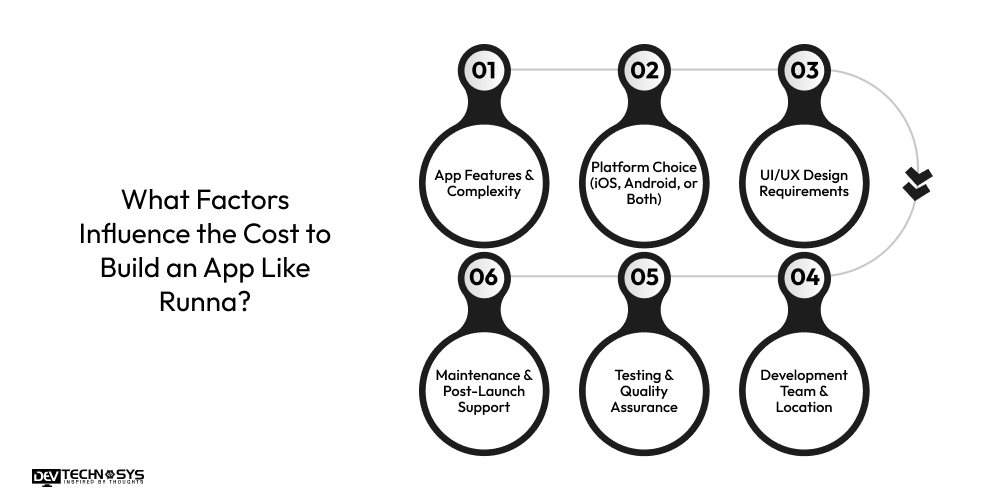
1. App Features & Complexity
The number, type, and sophistication of features play a major role in determining the mobile app development cost. Basic functionality, such as workout tracking, goal setting, and simple training plans, is relatively affordable.
However, advanced features like AI-powered coaching, adaptive training plans, audio guidance, real-time performance analytics, and data-driven insights significantly increase development time, technical complexity, and overall project pricing.
Feature Level |
Included Scope |
Timeline |
Estimated Cost |
| Basic | Workout tracking, user profiles, basic plans | 4–6 weeks | $3,000 – $6,000 |
| Moderate | GPS tracking, progress analytics, reminders | 6–8 weeks | $6,000 – $10,000 |
| Advanced | AI coaching, audio guidance, insights | 8–12 weeks | $10,000 – $12,000 |
2. Platform Choice (iOS, Android, or Both)
Building an app for a single platform, either iOS or Android, generally requires fewer resources. Thus, the cost to develop an app like Runna will be less as well. In contrast, developing cross-platform solutions or native apps for both platforms involves additional coding, device testing, optimization, and maintenance efforts, which increases development timelines and total cost to create an app like Runna.
Platform Type |
Development Scope |
Timeline |
Estimated Cost |
| Single Platform | iOS or Android only | 6–8 weeks | $4,000 – $7,000 |
| Cross-Platform | Shared codebase (Flutter/React Native) | 8–10 weeks | $6,000 – $10,000 |
| Dual Native | Separate iOS + Android apps | 10–14 weeks | $10,000 – $15,000 |
3. UI/UX Design Requirements
Custom UI/UX design with visually engaging layouts, smooth animations, interactive dashboards, and detailed progress charts increases the cost to develop an app like Runna. Custom designs require specialized designers and more design iterations.
While this increases upfront costs compared to template-based designs, high-quality UI/UX significantly improves user experience, engagement, retention rates, and long-term app success.
Design Level |
Design Scope |
Timeline |
Estimated Cost |
| Basic | Template-based layouts | 2–3 weeks | $1,000 – $2,000 |
| Custom | Branded UI, dashboards, charts | 3–5 weeks | $2,000 – $4,000 |
| Advanced | Animations, micro-interactions | 4–6 weeks | $4,000 – $6,000 |
4. Development Team & Location
The overall cost depends heavily on whether development is handled by freelancers, a dedicated agency, or an in-house team. Runna app development costs charged by developers differ widely by geographic location, with offshore or nearshore teams often offering cost-effective solutions without compromising quality, especially for startups and budget-conscious businesses.
Team Type |
Location |
Timeline Impact |
Estimated Cost |
| Freelancers | Global | Flexible | $6,000 – $10,000 |
| Offshore Agency | Asia/Eastern Europe | Moderate | $8,000 – $15,000 |
| Onshore Agency | US/UK | Fast but expensive | $15,000 – $25,000 |
5. Testing & Quality Assurance
Extensive testing across multiple devices, operating systems, and fitness scenarios ensures the app performs reliably under different conditions, but it impacts the cost to develop an app like Runna. Functional testing, performance testing, security checks, and data accuracy validation add to fitness app development cost and timeline, but are essential for delivering a stable, trusted fitness application.
QA Level |
Testing Scope |
Timeline |
Estimated Cost |
| Basic | Functional testing | 1–2 weeks | $800 – $1,500 |
| Standard | Device & performance testing | 2–3 weeks | $1,500 – $3,000 |
| Advanced | Security & data accuracy testing | 3–4 weeks | $3,000 – $5,000 |
6. Maintenance & Post-Launch Support
After launch, ongoing maintenance includes bug fixes, performance optimization, server and cloud infrastructure costs, feature upgrades, and security updates. These recurring expenses typically require 15 to 25% of the total cost to create an app like Runna annually. It ensures long-term stability, user satisfaction, and compatibility with new devices or OS updates.
Support Level |
Services Included |
Timeline |
Annual Cost |
| Basic | Bug fixes & monitoring | Ongoing | $1,500 – $3,000 |
| Standard | Updates & performance optimization | Ongoing | $3,000 – $5,000 |
| Advanced | Feature upgrades & scaling | Ongoing | $5,000 – $7,000 |
What are the Monitization Tactics for Fitness Apps Like Runna?
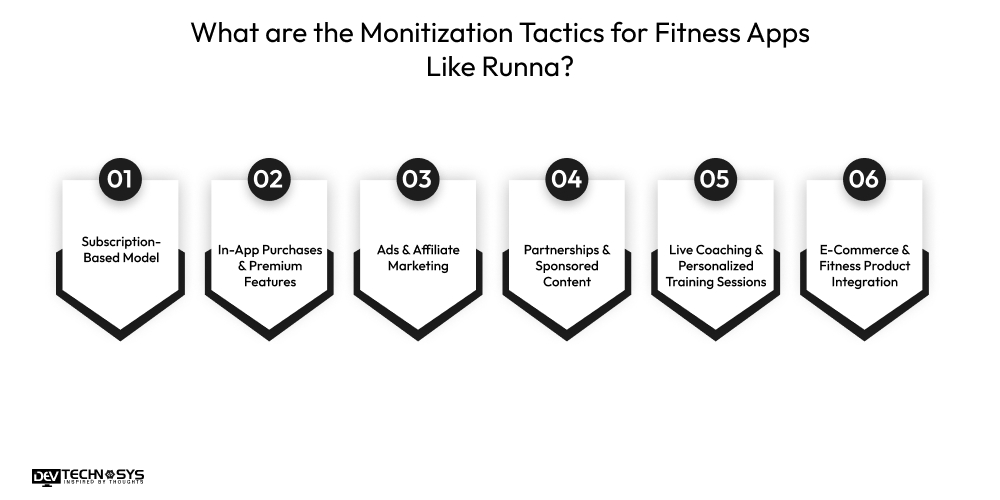
As of 2026, the monetization strategies center on providing structured, adaptive training plans that feel like having a personal coach, which justifies a higher willingness to pay. Let’s see what these strategies are:
1. Subscription-Based Model
This is the most effective monetization strategy for fitness apps like Runna. Users pay monthly or annual fees to access premium features such as personalized training plans, AI coaching, advanced analytics, audio guidance, goal-based programs, and wearable integrations, ensuring predictable and recurring revenue.
2. In-App Purchases & Premium Features
Fitness apps can offer one-time purchases for specialized content such as marathon plans, strength programs, recovery modules, nutrition add-ons, or exclusive coaching sessions. This model allows users to customize their experience without committing to a full subscription, increasing overall revenue flexibility.
3. Ads & Affiliate Marketing
Free users can be monetized through non-intrusive ads, sponsored workout content, or affiliate links for fitness gear, supplements, wearables, and apparel. Strategic placement ensures ads generate revenue without negatively impacting the workout experience or user engagement.
4. Partnerships & Sponsored Content
Collaborations with sports brands, wellness companies, trainers, and fitness influencers allow apps to earn revenue through sponsored challenges, branded workout programs, or featured content. These partnerships also enhance credibility while offering users valuable, trusted fitness recommendations.
5. Live Coaching & Personalized Training Sessions
One-on-one virtual coaching sessions with certified trainers, nutritionists, or fitness experts can be offered as premium paid services. Users may pay per session, per weekly/monthly program, or via subscription tiers, making this a high-value monetization channel. It adds personalized guidance, accountability, and motivation for serious fitness enthusiasts, driving both engagement and revenue.
6. E-Commerce & Fitness Product Integration
Fitness apps can integrate in-app stores offering workout gear, wearable devices, supplements, digital training plans, or branded merchandise. A seamless shopping experience in the app enhances user convenience, encourages repeat purchases, and generates additional revenue. This strategy also strengthens brand loyalty while offering users all-in-one fitness solutions directly from the platform.
Conclusion
Building a fitness app like Runna requires a clear strategy, user-focused design, and the right balance between features, performance, and scalability. Continuous testing, post-launch improvements, and data-driven enhancements help the app evolve with user needs.
With the right development approach and monetization strategy, a Runna-like fitness app can become a scalable, profitable, and long-term digital fitness solution. If you are a business looking for a top smart fitness app development company, turn to Dev Technosys. Stay tuned for more insights!
FAQs
Q1. How To Integrate Wearable Devices And Fitness Trackers With The App?
Wearable integration is achieved using official APIs and SDKs provided by platforms such as Apple HealthKit, Google Fit, Garmin, and Fitbit. These APIs enable secure, real-time syncing of workout data like steps, heart rate, pace, calories, and distance.
Q2. How Does Runna Monetize Its Fitness App, And What Alternatives Exist?
Runna primarily monetizes through subscription-based plans offering personalized coaching, training programs, and advanced analytics. Alternative monetization options include:
- Subscription-based premium training plans
- In-app purchases and live coaching sessions
- Brand partnerships, ads, and fitness e-commerce
Q3. What Is A Fitness App Like Runna?
A fitness app like Runna is a personalized training and coaching platform that offers structured workout plans, progress tracking, performance analytics, and motivational guidance to help users achieve specific fitness goals effectively.
Q4. How Much Does It Cost To Build A Fitness App Like Runna?
The development cost typically ranges between $8,000 and $25,000, depending on features, platform choice, UI/UX complexity, integrations, and the development team’s location.
Q5. How Long Does It Take To Develop A Fitness App Like Runna?
A basic MVP can be developed in 6–8 weeks, while a more feature-rich fitness app usually requires 10–16 weeks, including design, development, testing, and deployment.