





Key Takeaways
Quick Summary:
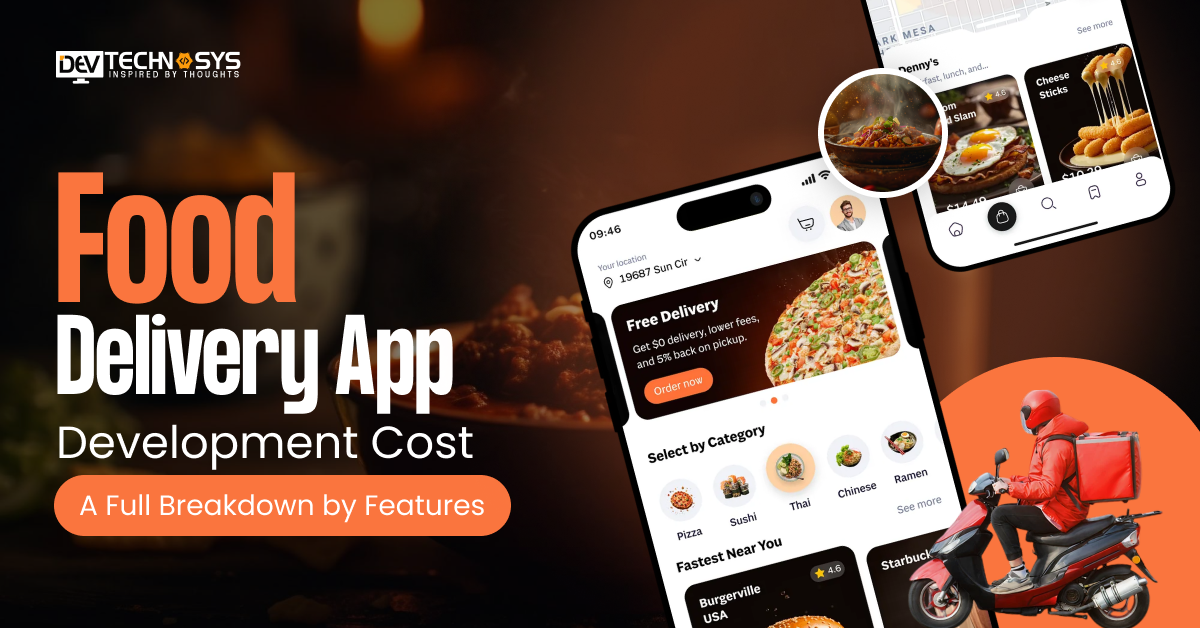
Food delivery app development costs typically range from $8,000 to $30,000+, depending on app complexity, features, and scalability requirements. Basic MVP apps may start at $8,000 to $16,000, mid-level apps range from $16,000 to $22,000, while advanced, enterprise-grade platforms can exceed $22,000 to $30,000+. Costs are mainly influenced by features, integrations, and technology choices.
Cost Breakdown by Development Complexity
-
- Basic/MVP($8,000 to $16,000): Includes essential features like user login, restaurant listings, cart system, order placement, and basic payment integration.
- Medium ($16,000 to $22,000): Adds real-time order tracking, push notifications, advanced UI/UX, multiple payment options, and third-party integrations.
- Complex ($22,000 to $30,000+): Includes AI-based recommendations, live order tracking, multi-vendor management, advanced analytics, and scalable cloud infrastructure.
Key Cost Drivers
-
- App Type: Single restaurant apps are more affordable compared to aggregator platforms like Uber Eats or multi-vendor marketplaces with advanced logistics.
- Features & Integrations: Real-time tracking, AI recommendations, and multiple payment gateways significantly increase development costs.
- Platform: Native development (iOS/Android separately) costs more than cross-platform frameworks like Flutter or React Native.
Cost Based on Countries (Hourly Rates)
-
- United States: $18 – $50 per hour
- United Kingdom & Western Europe: $20 – $50per hour
- Eastern Europe: $20 – $45 per hour
- Southeast Asia: $15 – $24 per hour
- Australia: $22 – $48 per hour
Development Timeline
-
- MVP App: 2 – 4+ months
- Mid-Level App: 4 – 7+ months
- Advanced App: 8 – 12+ months or more
Additional Costs
-
- Maintenance: Typically 15 – 20% of the total development cost annually
- Marketing & Launch: User acquisition and branding expenses
- Third-Party Services: Payment gateways, maps, cloud hosting, and notifications
In 2026, a food delivery app is no longer just a platform to order meals. It has become a complete digital dining ecosystem that connects customers, restaurants, and delivery partners in real time.
Users now expect fast delivery, personalized recommendations, live tracking, and seamless payments, all in one place. That’s why businesses are investing in smart, scalable food delivery apps to stay competitive.
If you are planning to launch your own on-demand food delivery startup, one of the first questions that comes to mind is:
“What is the cost to build a food delivery app?”
The cost depends on multiple factors such as app features, UI/UX design, platform (Android/iOS), backend infrastructure, and third-party integrations. Whether you want to build a basic MVP or a full-scale app like Zomato or Uber Eats, each level comes with a different investment.
Understanding the food delivery app cost estimation will help you plan better and avoid unexpected expenses. Let’s explore everything in detail about the cost to build a food delivery app.
What Is An On-Demand Food Delivery App?
An on-demand food delivery app is a digital platform that allows users to browse restaurants, order food, and get it delivered to their doorstep in real time.
These apps act as a bridge between customers, restaurants, and delivery partners. They provide services such as menu browsing, order placement, payment processing, live tracking, and customer support.
The features included in the app by a food delivery app development company are:
- AI-based food recommendations
- Real-time delivery tracking
- Multiple payment options
- Ratings and reviews
- Subscription and loyalty programs
With increasing smartphone usage and busy lifestyles, food delivery apps have become an essential part of daily life.
Key Features of a Food Delivery App
Building a food delivery app requires more than just a great idea; it depends on delivering convenience, speed, and reliability. To compete effectively, your app must include essential features that enhance user experience and streamline operations. These features are integrated into the food delivery app development services for coordination between customers, restaurants, and delivery partners.
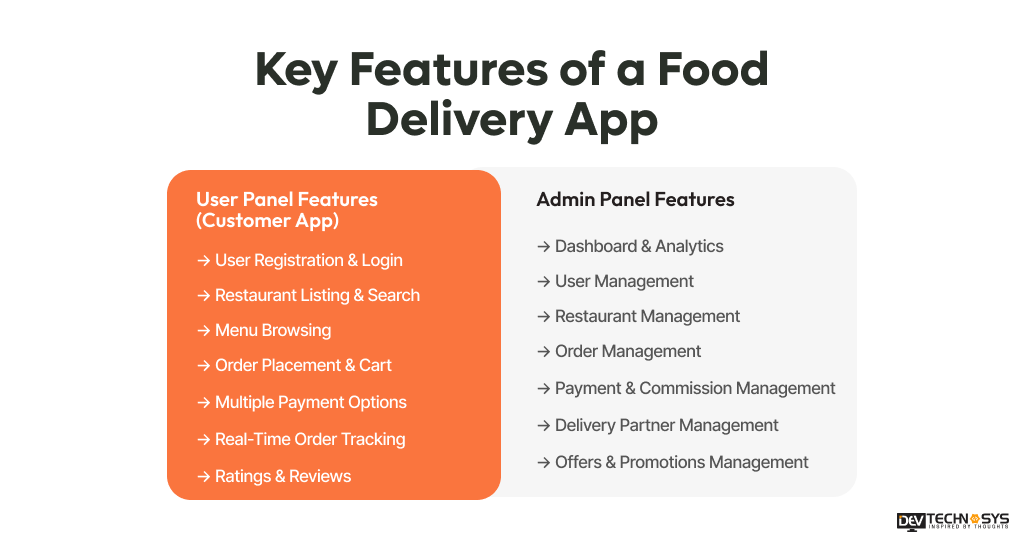
User Panel Features (Customer App)
1. User Registration & Login
This feature allows users to quickly create an account using email, phone number, or social media. It ensures secure authentication while offering a smooth onboarding experience, enabling users to save preferences, addresses, and order history for future convenience.
2. Restaurant Listing & Search
Users can easily browse nearby restaurants based on their location. Advanced filters like cuisine type, ratings, pricing, and distance help users quickly find relevant options, improving overall usability and making food discovery faster and more personalized.
3. Menu Browsing
This feature provides detailed restaurant menus with images, descriptions, and pricing. It helps users understand dishes better before ordering, supports customization options, and enhances decision-making by giving a clear view of available food items.
Industry Insights: According to Business of Apps, over 1.6 billion users globally use food delivery apps, driven largely by easy menu exploration and mobile-first interfaces.
4. Order Placement & Cart
Users can add multiple items to their cart, modify quantities, and customize orders before checkout. This feature is necessary in every food delivery app development solution. It ensures a smooth ordering process by providing a clear summary and reducing errors.
5. Multiple Payment Options
Offering various payment methods like UPI, credit/debit cards, digital wallets, and cash on delivery ensures flexibility. It enhances user trust and convenience by allowing customers to choose their preferred payment mode for a seamless transaction experience.
6. Real-Time Order Tracking
This feature allows users to track their orders from preparation to delivery in real time. With GPS integration and live status updates, users stay informed about their order’s progress, estimated delivery time, and delivery partner location.
7. Ratings & Reviews
Users can provide feedback by rating restaurants and delivery services. This feature remains common when you build a food delivery app like Smile UAE. It helps maintain quality standards, builds trust among new users, and gives valuable insights.
Admin Panel Features
1. Dashboard & Analytics
The admin dashboard provides a comprehensive overview of business performance, including orders, revenue, and user activity. It helps decision-makers analyze trends, monitor growth, and make data-driven strategies to improve operational efficiency and profitability.
2. User Management
Admins can manage user accounts, monitor activity, and handle complaints or issues efficiently. This feature helps maintain platform integrity, ensures better customer support, and allows quick resolution of disputes to enhance overall user satisfaction.
3. Restaurant Management
This feature is mainly added by food delivery app development companies in Riyadh in food apps. It enables admins to add, update, or remove restaurant listings and menus. It ensures accurate information on the platform, maintains quality control, and helps onboard new restaurants.
4. Order Management
Admins can track all orders in real time, from placement to delivery. This feature helps in resolving issues, managing delays, and ensuring smooth coordination between restaurants and delivery partners for efficient order fulfillment.
5. Payment & Commission Management
This feature manages all financial transactions, including customer payments, restaurant payouts, and platform commissions. It ensures transparency, accurate calculations, and timely settlements, helping maintain trust among all stakeholders involved in the platform.
6. Delivery Partner Management
Admins can assign orders to delivery agents, track their performance, and monitor availability. This feature should be incorporated when you develop an app like Postmates. It ensures efficient logistics, faster deliveries, and helps maintain accountability.
7. Offers & Promotions Management
Admins can create and manage discount campaigns, promo codes, and special offers. This helps attract new users, retain existing customers, boost order volume, and increase engagement by providing value-driven incentives to users.
What Is the Cost to Build a Food Delivery App?
The development cost of a food delivery app generally ranges between $8,000 and $30,000, depending on the type and features of the app.
- Basic App ($8,000 – $16,000):
Includes simple UI, basic ordering functionality, and support for a single restaurant. Ideal for small businesses or startups testing the market with minimal features. - Mid-Level App ($16,000 – $22,000):
Supports multiple restaurants, includes payment gateway integration, and offers real-time order tracking. Suitable for growing businesses aiming to provide a better user experience. - Advanced App ($22,000 – $30,000):
Comes with AI-based recommendations, advanced analytics, real-time delivery tracking, and scalable architecture. Best for large-scale platforms targeting high performance and long-term growth.
The final cost to develop a food delivery app depends on customization, technology, and overall app complexity.
| Type of App | Cost Range | Key Features |
| Basic App | $8,000 – $12,000 | Simple UI, single restaurant, basic ordering |
| Mid-Level App | $12,000 – $20,000 | Multi-restaurant support, payments, real-time tracking |
| Advanced App | $20,000 – $30,000 | AI features, analytics, and a scalable system |
Which Factors Influence the Cost to Build a Food Delivery App?
The overall cost to create a food delivery app is influenced by several key factors beyond basic features. From platform selection to ongoing maintenance, each element plays a crucial role in determining the final budget and ensuring long-term app performance and scalability.
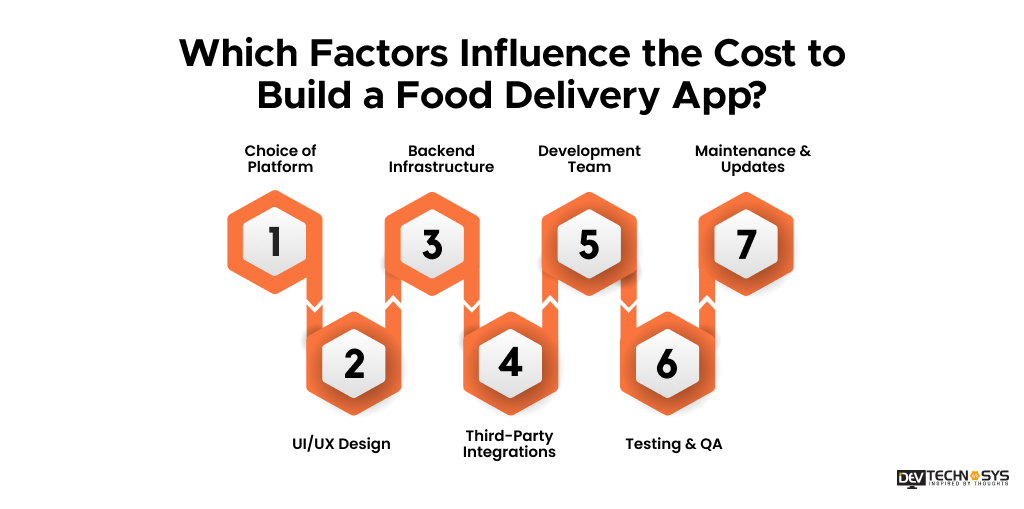
1. Choice of Platform
Choosing whether to develop for Android, iOS, or both significantly impacts the total food ordering app development cost. Building for multiple platforms requires more time, resources, and testing. Cross-platform development can reduce the mobile app development cost.
| Type | Description | Cost Range |
| Single Platform | Android or iOS only | $8,000 – $15,000 |
| Cross-Platform | One codebase for both platforms | $12,000 – $22,000 |
| Native (Both) | Separate apps for Android and iOS | $18,000 – $30,000 |
2. UI/UX Design
A well-designed interface enhances user engagement and satisfaction. Custom layouts, smooth navigation, and interactive animations require more design effort and expertise. Investing in intuitive UI/UX ensures better retention but also increases overall on-demand food delivery app development budget.
Industry Insights: According to Statista, The surge to 3.9 billion users globally highlights the importance of intuitive app design for retention.
| Level | Description | Cost Range |
| Basic Design | Simple layout with minimal customization | $2,000 – $4,000 |
| Standard UI | Custom design with better user experience | $4,000 – $7,000 |
| Advanced UI | High-end design with animations & branding | $7,000 – $10,000 |
3. Backend Infrastructure
The backend powers core functionalities like order processing, user data management, and real-time tracking. It involves servers, databases, and APIs. A robust and scalable backend is essential for handling high traffic. However, it also adds to development complexity and expenses to create a food ordering app.
| Level | Description | Cost Range |
| Basic | Simple server and database setup | $2,500 – $4,000 |
| Moderate | APIs and real-time functionality | $4,000 – $6,000 |
| Advanced | Scalable system with high-performance handling | $6,000 – $8,000 |

4. Third-Party Integrations
Integrating external services such as payment gateways, maps, and push notifications enhances app functionality. However, these integrations may involve licensing fees, setup costs, and ongoing charges. These can contribute to the overall food delivery app development cost in UAE and additional configuration efforts.
| Level | Description | Cost Range |
| Basic | Payment gateway integration | $500 – $1,500 |
| Standard | Payments + maps + notifications | $1,500 – $2,500 |
| Advanced | Multiple APIs with advanced configurations | $2,500 – $3,500 |
5. Development Team
The cost to hire a food delivery app developer depends on their location, expertise, and experience level. Skilled professionals or agencies may charge higher rates but deliver better quality. Offshore teams can reduce restaurant app development cost in Dubai. However, communication and project management should be handled carefully.
| Type | Description | Cost Range |
| Freelancers | Individual developers | $3,000 – $7,000 |
| Small Agency | Mid-level team with structured process | $7,000 – $12,000 |
| Experienced Team | Highly skilled developers/agency | $12,000 – $15,000 |
6. Testing & QA
Testing ensures the app functions smoothly across devices and platforms. It involves identifying bugs, fixing errors, and validating performance and security. A thorough QA process improves reliability and user experience, but also increases the food delivery app development cost.
Industry Insights: According to Statista, the U.S. food delivery market alone generated $353 billion in 2024, underscoring the need for stable, scalable platforms.
| Level | Description | Cost Range |
| Basic | Manual testing | $2,000 – $4,000 |
| Standard | Manual + basic automation testing | $4,000 – $7,000 |
| Advanced | Full automation, security & performance tests | $7,000 – $10,000 |
7. Maintenance & Updates
Post-launch maintenance includes fixing bugs, updating features, and ensuring compatibility with new devices or operating systems. Regular updates are essential for keeping users engaged and maintaining performance. This becomes an ongoing mobile app maintenance cost that businesses must plan for.
| Level | Description | Cost Range |
| Basic | Bug fixes and minor updates | $800 – $2,000 |
| Standard | Regular updates and performance improvements | $2,000 – $3,500 |
| Advanced | Continuous upgrades and feature enhancements | $3,500 – $5,000 |
Types of Food Delivery Apps and Their Cost Impact
Food delivery apps come in different models, each designed to serve specific business needs and target audiences. The type of app you choose directly affects development complexity, required features, scalability, and overall cost. This makes it important to understand each category before building.
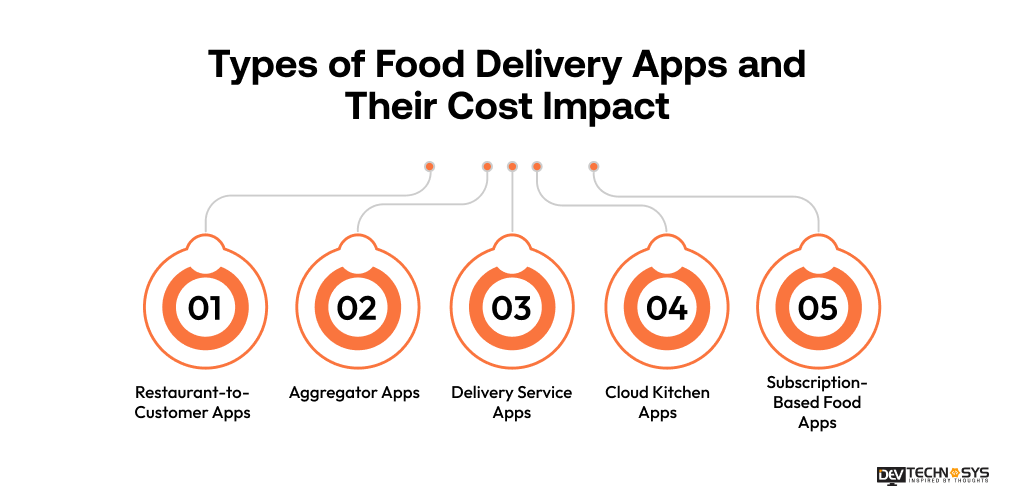
1. Restaurant-to-Customer Apps
These apps are designed for a single restaurant to handle orders and deliveries directly without involving third parties. They are easier to build with fewer features and integrations, making them cost-effective and ideal for small restaurants or local food businesses starting online.
| Type | Complexity | Cost Impact |
| Basic Single Restaurant App | Low | $8,000 – $12,000 |
| Custom Restaurant App | Medium | $12,000 – $18,000 |
| Advanced Branded App | High | $18,000 – $22,000 |
2. Aggregator Apps
Aggregator apps connect users with multiple restaurants on a single platform. They require complex backend systems, real-time order management, and multiple integrations. Due to their scalability and advanced features, Android app development is more expensive and suitable for large businesses or startups.
| Type | Complexity | Cost Impact |
| Basic Aggregator Platform | Medium | $12,000 – $18,000 |
| Standard Multi-Restaurant App | High | $18,000 – $25,000 |
| Advanced Aggregator Platform | Very High | $25,000 – $30,000 |
3. Delivery Service Apps
These apps focus only on logistics by connecting restaurants with delivery partners. They do not manage food listings but handle delivery operations. This model requires real-time tracking and route optimization, making it moderately complex and cost-dependent on logistics features.
| Type | Complexity | Cost Impact |
| Basic Delivery App | Medium | $10,000 – $15,000 |
| Real-Time Tracking App | High | $15,000 – $22,000 |
| Advanced Logistics Platform | Very High | $22,000 – $28,000 |
4. Cloud Kitchen Apps
Cloud kitchen apps are hybrid app development services that are delivery-only restaurants without physical dine-in facilities. These apps focus on efficient order handling, menu management, and delivery integration. They are moderately complex and cost-effective compared to aggregator apps, making them popular among modern food startups.
| Type | Complexity | Cost Impact |
| Basic Cloud Kitchen App | Medium | $10,000 – $15,000 |
| Multi-Brand Kitchen App | High | $15,000 – $22,000 |
| Scalable Cloud Platform | Very High | $22,000 – $28,000 |
5. Subscription-Based Food Apps
These apps provide recurring meal plans, diet-based services, or subscription packages. They require features like user plans, scheduling, and automated payments. Their complexity depends on personalization and subscription models, which can increase development time and overall cost.
| Type | Complexity | Cost Impact |
| Basic Subscription App | Medium | $12,000 – $18,000 |
| Personalized Meal Plan App | High | $18,000 – $24,000 |
| Advanced Subscription Platform | Very High | $24,000 – $30,000 |
What Are The Best Food Delivery Apps in the Market?
The food delivery market is highly competitive, with several leading apps setting benchmarks in convenience, speed, and user experience. Studying these successful platforms helps businesses understand essential features, technology requirements, and the estimated cost of building similar applications.
1. Zomato
Zomato is widely known for its restaurant discovery and food delivery services. It offers detailed menus, user reviews, and real-time tracking. Its strong presence in multiple countries and focus on user experience make it a leading choice among customers.
2. Swiggy
Swiggy is popular for its fast delivery and efficient logistics network. It provides real-time tracking, multiple payment options, and a wide restaurant selection. Swiggy is the best food delivery business in Qatar. It offers services like grocery delivery, enhancing its overall platform value.
3. Uber Eats
Uber Eats leverages the strong logistics network of Uber to deliver food quickly and efficiently. It focuses on a seamless user interface, accurate delivery tracking, and personalized recommendations, making it a globally recognized food delivery platform.
4. DoorDash
DoorDash is a leading food delivery service, especially in the United States. It connects users with local and national restaurants, offering fast delivery and subscription services. An Android and iOS app development company builds such apps to improve affordability and customer retention.
5. Grubhub
Grubhub is known for its extensive restaurant network and easy ordering experience. It offers features like order tracking, promotions, and customer reviews. The app focuses on reliability and convenience, making it a strong competitor in the market.
Estimated Cost to Build Similar Apps
| App Type (Inspired By) | Complexity Level | Estimated Cost Range |
| Basic App (like Zomato) | Medium | $8,000 – $15,000 |
| Fast Delivery App (like Swiggy) | Medium-High | $10,000 – $18,000 |
| Global Scale App (like Uber Eats) | High | $15,000 – $25,000 |
| Logistics-Focused App (like DoorDash) | High | $18,000 – $28,000 |
| Feature-Rich App (like Grubhub) | Very High | $20,000 – $30,000 |
What are the Measures to Reduce Food Delivery App Development Cost?
Reducing food delivery app development costs requires smart planning and strategic decisions. By focusing on essential features, choosing the right technologies, and optimizing resources, a mobile app development company can lower development expenses.
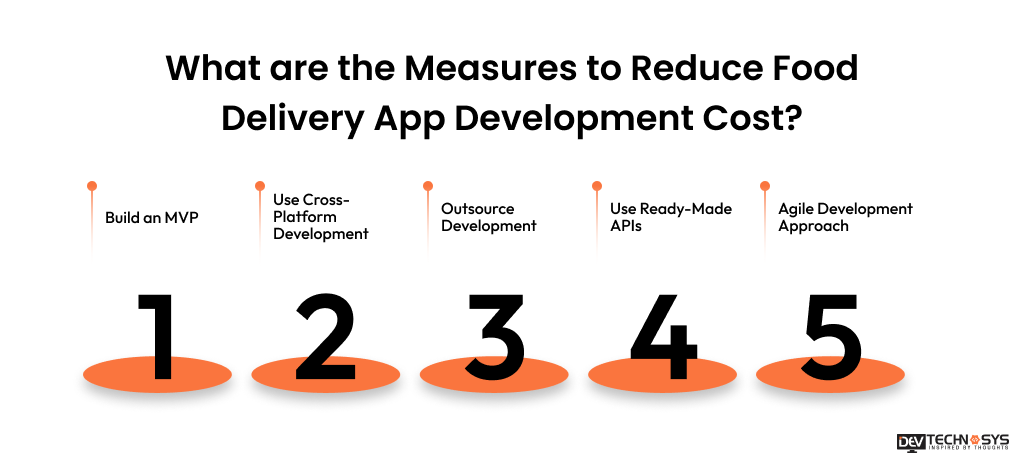
1. Build an MVP
Starting with a Minimum Viable Product (MVP) allows you to launch with only essential features. The MVP food delivery app cost is less and speeds up development. It helps gather real user feedback, enabling you to improve and expand the app gradually.
2. Use Cross-Platform Development
Using frameworks like Flutter or React Native allows developers to build apps for both Android and iOS with a single codebase. This reduces development time, minimizes resource requirements, and significantly lowers overall costs without compromising functionality.
3. Outsource Development
Outsourcing development to regions with lower labor costs can help reduce expenses. Skilled offshore developers often provide high-quality work at competitive rates, allowing businesses to save money while maintaining development efficiency and meeting project deadlines.
4. Use Ready-Made APIs
Integrating pre-built APIs for features like payments, maps, and notifications eliminates the need to build everything from scratch. This saves time and reduces development complexity. API integration cost for a food delivery app is lower and still ensures reliable and efficient functionality.
5. Agile Development Approach
An agile development approach focuses on iterative progress and continuous feedback. It helps identify issues early, avoid unnecessary features, and reduce delays. This results in better resource management, controlled spending, and a more efficient development process.

How to Monetize Your Food Delivery App?
Monetizing a food delivery app is essential for generating revenue and sustaining business growth. By implementing multiple income streams, businesses can maximize profits while offering value to users, restaurants, and delivery partners on the platform.
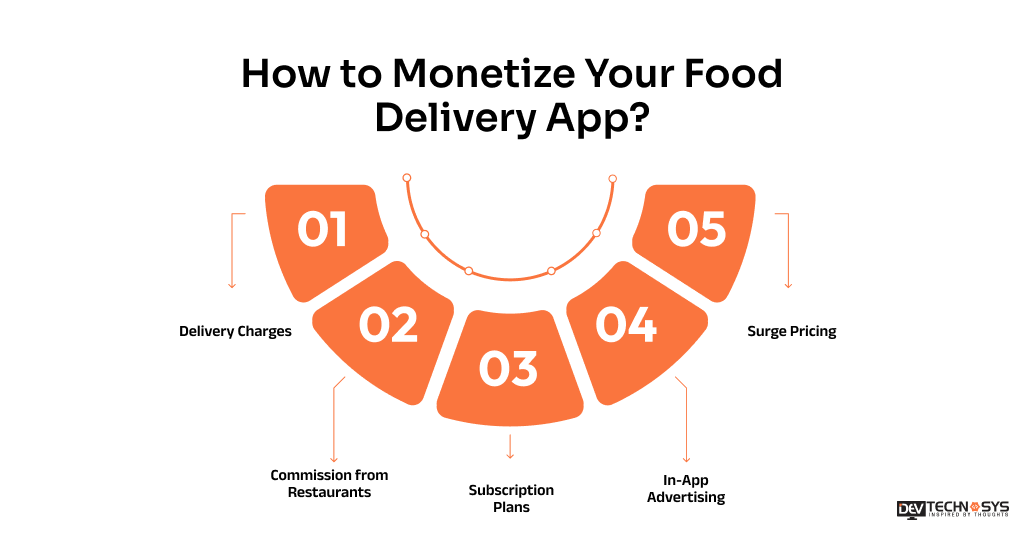
1. Delivery Charges
Charging users a delivery fee for each order is one of the most common revenue models. The fee can vary based on distance, location, or order size, helping businesses cover logistics costs and generate consistent income.
2. Commission from Restaurants
Apps can earn revenue by charging partner restaurants a percentage on every order placed through the platform. This model ensures a steady income stream while allowing restaurants to benefit from increased visibility and customer reach.
3. Subscription Plans
Offering subscription-based plans provides users with benefits like free delivery, exclusive discounts, or faster service. This creates a recurring revenue stream while improving customer loyalty and encouraging users to order more frequently.
4. In-App Advertising
Restaurants can pay to promote their listings within the app, increasing visibility and attracting more customers. This advertising model generates additional revenue while helping restaurants grow their business through targeted exposure.
5. Surge Pricing
Surge pricing increases delivery charges during peak hours, high demand, or limited driver availability. This helps balance supply and demand, encourages more delivery partners to be active, and boosts revenue during busy periods.
Final Words
Building a food delivery app in 2026 presents a strong business opportunity, but success depends on smart planning, the right technology, and a clear understanding of user needs. Instead of investing heavily up front, businesses should focus on launching with an MVP, validating their idea, and scaling gradually. Choosing the right features, tech stack, and development approach can help control costs while maintaining performance and user satisfaction. With consistent improvements, effective monetization strategies, and a focus on customer experience, your app can compete with established platforms like Zomato and Swiggy, ultimately growing into a scalable and profitable digital business.
People Also Ask
Q1. How Much Does It Cost To Build A Food Delivery App?
The cost to build a food delivery app typically ranges between $8,000 and $30,000, depending on features, platform, and complexity. Basic apps cost less, while advanced apps with real-time tracking, AI features, and scalability require higher investment and development effort.
Q2. What Are The Most Popular Food Delivery Apps?
Some of the most popular food delivery apps include Zomato, Swiggy, and Uber Eats. These platforms are known for their smooth user experience, fast delivery, wide restaurant network, and strong logistics systems that ensure convenience and reliability for users.
Q3. What Factors Affect Development Cost?
Several factors influence the cost of development, including platform choice (Android, iOS, or both), app features, UI/UX design, backend infrastructure, third-party integrations, and the development team’s expertise. Higher customization and advanced functionalities significantly increase overall cost and development time.
Q4. How Can I Reduce Development Cost?
You can reduce development costs by starting with an MVP, focusing only on essential features, and scaling later. Using cross-platform frameworks, outsourcing to cost-effective regions, and integrating ready-made APIs also help lower expenses without compromising quality or performance.
Q5. What Is The Best Monetization Model?
The best monetization strategies include charging delivery fees, earning commissions from restaurants, offering subscription plans, and running in-app advertisements. Combining multiple revenue streams ensures consistent income while improving user engagement and maximizing the app’s long-term profitability.