





Key takeaways:
-
- The global real estate software & apps market size is valued at USD 4154.46 million in 2026.
- The Nawy app development cost ranges from $30,000 to $1,50,000, depending on various factors like features and platform choice.
- A real estate platform like Nawy generates revenue through diversified streams such as commissions, subscriptions, and premium listings.
- To develop a real estate app like Nawy, you need a structured approach that combines product strategy, scalable architecture, and PropTech-specific features.
The real estate industry is undergoing a major digital transformation, with PropTech platforms reshaping how people buy, sell, invest, and manage properties. According to Grand View Research, the global PropTech market is expected to grow from USD 50.05 billion in 2026 to USD 115.04 billion by 2033, driven by rising adoption of AI, cloud technologies, and digital-first property transactions.
For real estate businesses and entrepreneurs, building an app like Nawy presents a significant opportunity to streamline operations, enhance customer experiences, and unlock new revenue streams in an increasingly digital property market. In this informative guide, we will explain how to build a real estate app like Nawy, covering every crucial aspect from features to benefits to cost.
What is Nawy App?
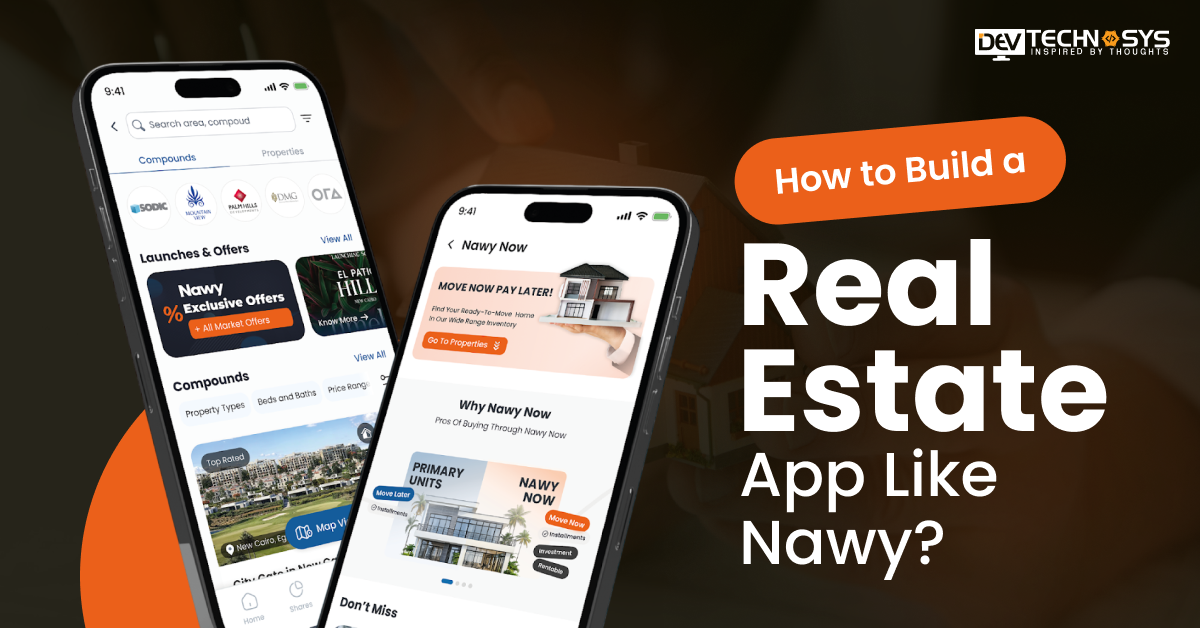
Nawy is Africa’s leading prop-tech platform, offering an end-to-end real estate ecosystem to buy, sell, invest, and manage properties. Key services include property listings; Nawy Unlocked for rental income generation; Nawy Now for flexible home financing with up to 7-year installment terms; and Nawy Shares for fractional real estate investments.
Answer a few quick questions and our experts will share a tailored project estimate.
How Real Estate App Like Nawy Works?
An app like Nawy for real estate acts as a marketplace for all kinds of property, bringing together buyers, sellers, investors, landlords, and real estate managers in one digital space. Here’s how it operates:
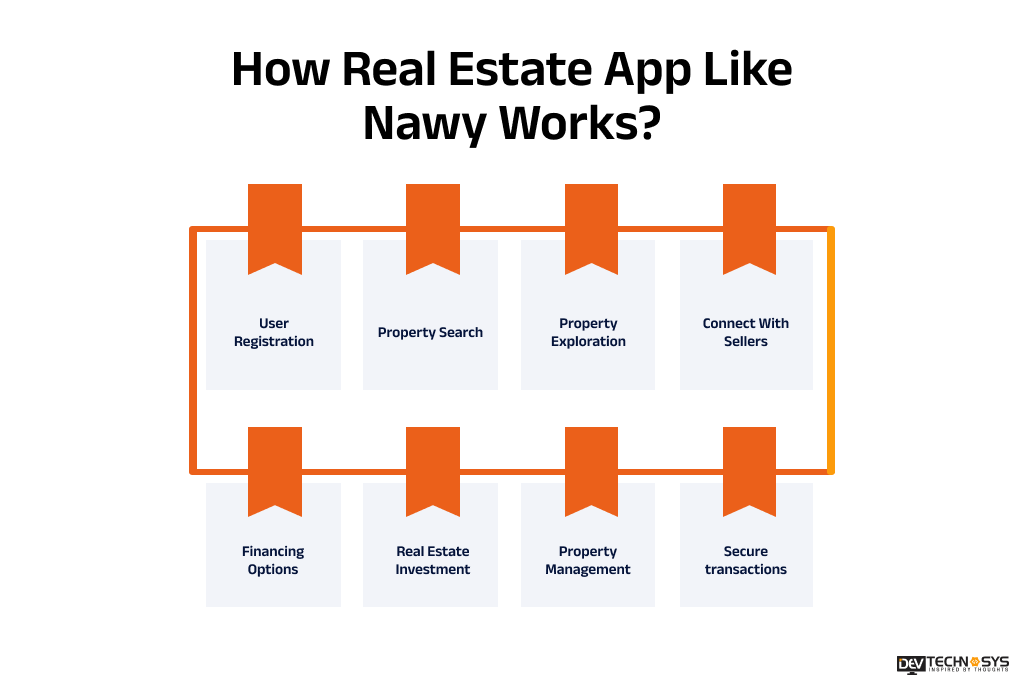
- User Registration: Users sign up for an account, indicating their property preferences and budget.
- Property Search: Search through the verified listings by location, price, property type, amenities, and more.
- Property Exploration: View images, virtual tours, floor plans, and full property information.
- Connect With Sellers: Reach out to property owners, agents, or developers via chat or inquiry forms.
- Financing Options: Obtain mortgages, installment plans, or flexible payment options.
- Real Estate Investment: Invest in properties via fractional ownership and monitor returns.
- Property Management: Manage rentals, renters, and maintenance requests from the platform.
- Secure transactions. Complete all papers, payments, and agreements digitally and securely.
Why Apps Like Nawy Are Gaining Popularity in the Middle East?
Before learning how to build a real estate app like Nawy, let’s first know why it’s getting so popular. The growing popularity of apps like Nawy is driven by changing consumer expectations and the rapid digitalization of the real estate sector. Here are the factors that are fueling the adoption of real estate super apps in Middle East:
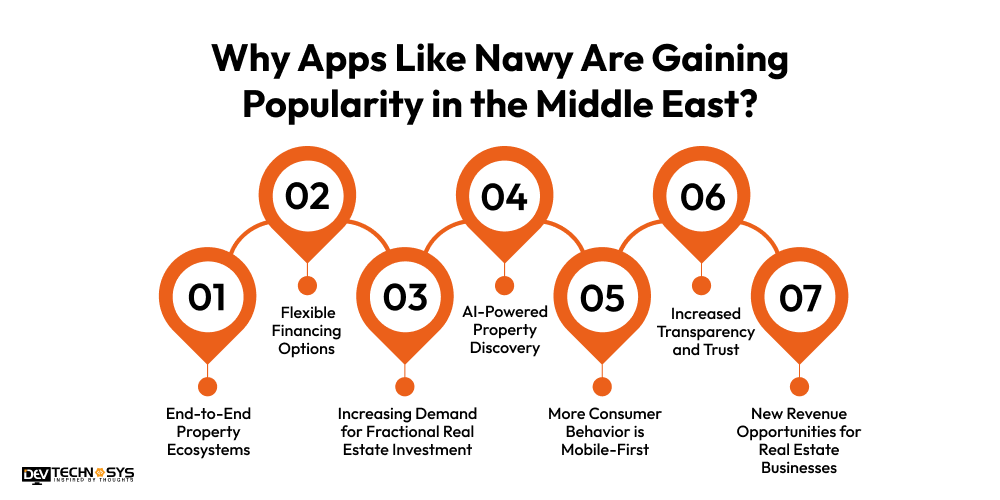
1. End-to-End Property Ecosystems: Platforms like Nawy offer a seamless client experience by allowing consumers to buy, sell, rent, finance, and manage homes from one app.
2. Flexible Financing Options: An Android and iOS app development company includes services such as “Move Now, Pay Later” that help make home ownership more accessible by offering installment-based payment structures and removing upfront financial hurdles.
3. Increasing Demand for Fractional Real Estate Investment: Real estate investing is no longer the exclusive domain of high-net-worth individuals. Fractional ownership options allow consumers to get involved in luxury properties with smaller capital requirements.
4. AI-Powered Property Discovery: Advanced search filters, personalized recommendations, virtual tours, and AI-driven matching all assist consumers in finding suitable properties faster and more efficiently.
5. More Consumer Behavior is Mobile-First: Today, the majority of property purchasers start their search online using their smartphones, leading to a need for mobile apps that provide ease of use and instant access to listings.
6. Increased Transparency and Trust: Digital paperwork, verified listings, secure payment channels, and real-time market analytics empower buyers, sellers, and investors to gain trust.
7. New Revenue Opportunities for Real Estate Businesses: Multiple revenue streams for platform owners by providing integrated services such as property management, mortgage assistance, rental programs, premium listings, and investment goods.
Market Overview of Real Estate Platforms?
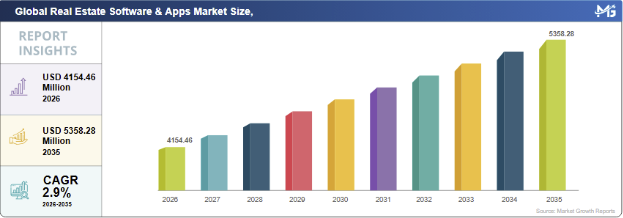
- The Global Real Estate Software & Apps Market size is valued at USD 4154.46 million in 2026 and is expected to reach USD 5358.28 million by 2035, at a CAGR of 2.9% during the forecast period.
- Approximately 58% of these users operate on cloud-based systems, while 42% use on-premises software.
- Nearly 78% of large enterprises have adopted comprehensive software systems for end-to-end real estate lifecycle management.
- Virtual property tour integration supported by VR and AR are included in 31% of new app deployments.
- Governments and regulatory bodies in more than 40 countries now recommend or mandate digital records for property-related transactions, enhancing transparency and compliance.
Why Invest in an App Like Nawy in 2026?
The real estate industry is rapidly evolving with digital-first PropTech solutions, and platforms like Nawy are transforming how people buy, sell, and invest in properties. In 2026, rising demand for integrated, AI-driven, and flexible property ecosystems is creating strong opportunities for real estate innovation and investment.
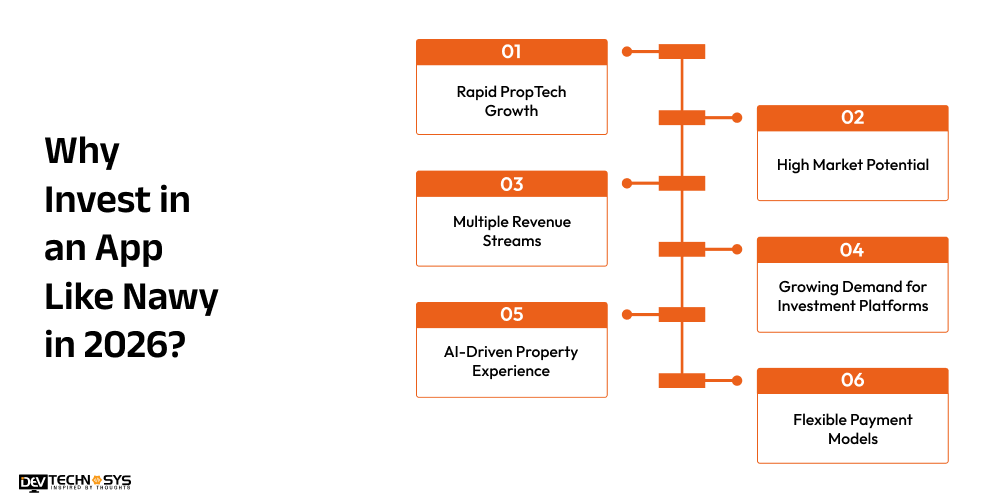
1. Rapid PropTech Growth: The real estate industry is shifting toward digital platforms, creating strong demand for integrated property apps.
2. High Market Potential: Increasing urbanization and property demand are expanding opportunities in online real estate ecosystems.
3. Multiple Revenue Streams: Investing in property listing app development offers monetization opportunities through commissions, listings, subscriptions, financing services, and property management.
4. Growing Demand for Investment Platforms: Users are actively seeking fractional ownership and real estate investment opportunities.
5. AI-Driven Property Experience: Advanced technologies improve property matching, valuation, and customer personalization.
6. Flexible Payment Models: Features like “buy now, pay later” and installment plans increase user adoption and conversions.
Real-World Architecture of a Real Estate App Like Nawy
A real estate app like Nawy is typically built on a scalable, microservices-based architecture designed to handle high traffic, real-time listings, and complex financial transactions.
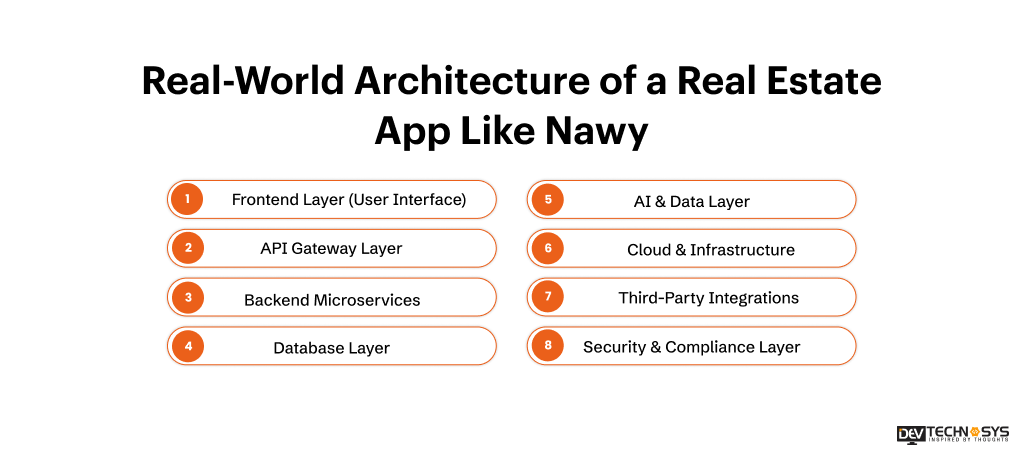
1. Frontend Layer (User Interface)
- Mobile apps (iOS & Android) using Flutter or React Native
- Web platform for property browsing and management
- Features: search, filters, listings, dashboards, chat
2. API Gateway Layer
- Acts as a single entry point for all requests
- Handles authentication, routing, rate limiting, and security
3. Backend Microservices
- User Service: registration, profiles, authentication
- Property Service: listing creation, updates, verification
- Search Service: AI-powered property search & filtering
- Booking/Transaction Service: payments, bookings, agreements
- Investment Service: fractional ownership & portfolio tracking
- Notification Service: email, SMS, push alerts
4. Database Layer
- SQL databases (PostgreSQL/MySQL) for structured data
- NoSQL databases (MongoDB) for listings and media
- Redis for caching frequently accessed data
5. AI & Data Layer
- Recommendation engine for personalized property suggestions
- Price prediction and market analytics models
- Image recognition for property categorization
6. Cloud & Infrastructure
- Hosted on AWS / Google Cloud / Azure
- Uses containerization (Docker, Kubernetes) for scalability
- CDN for fast image and video delivery
7. Third-Party Integrations
- Payment gateways (Stripe, PayPal)
- KYC/identity verification APIs
- Map-based property search and APIs (Google Maps)
- CRM and communication tools
8. Security & Compliance Layer
- End-to-end encryption
- Secure payment processing
- Data privacy compliance (GDPR-style standards)
This architecture ensures scalability, high performance, and seamless user experience, making apps like Nawy capable of handling large-scale real estate ecosystems efficiently.
Step-by-Step Process to Build a Real Estate App Like Nawy
Building a real estate platform like Nawy requires a structured approach that combines product strategy, scalable architecture, and PropTech-specific features such as listings, financing, and investment modules. Below is a detailed step-by-step development process:
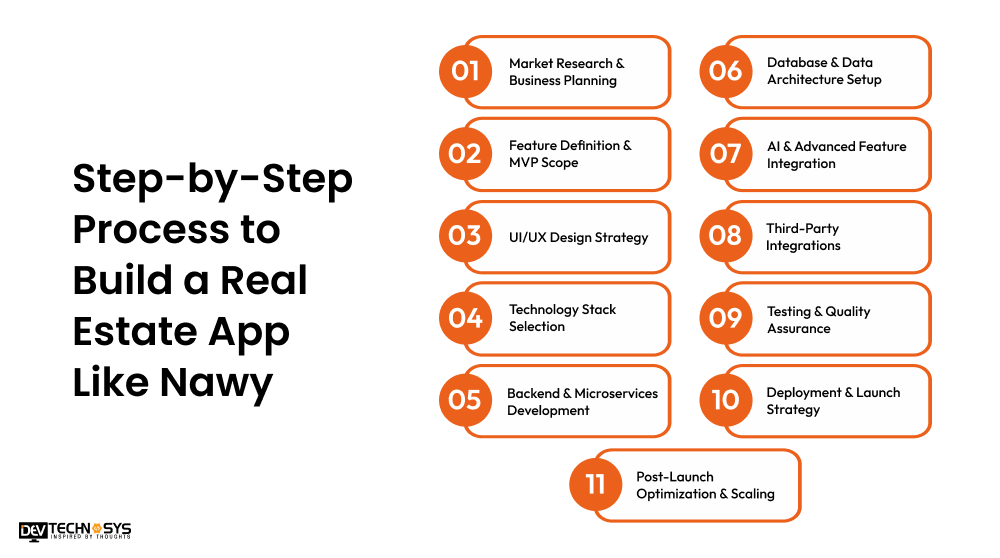
1. Market Research & Business Planning
Start by analyzing the real estate ecosystem, target audience (buyers, sellers, investors, agents), and competitors. Involve experts who provide hybrid app development services and begin identifying gaps in existing platforms and define your unique value proposition, such as fractional ownership, flexible payment plans, or AI-driven property matching. Also, finalize monetization strategies like commissions, subscriptions, ads, and financing partnerships.
2. Feature Definition & MVP Scope
Whether it’s iOS or Android app development, features play a key role in shaping the app’s performance. Define the core features required for the first version (MVP), including:
- User registration and profile management
- Property listing and search functionality
- Advanced filters (price, location, property type)
- Agent/seller dashboard
- Basic chat or inquiry system
- Payment or booking integration
This helps launch faster without overbuilding and validates product-market fit early.
3. UI/UX Design Strategy
Your mobile app development company should design an intuitive and visually rich interface that supports property browsing, image galleries, maps, and quick actions. Focus on:
- Clean and simple navigation flow
- Fast property discovery experience
- Mobile-first responsive design
- Features like saved searches and alerts
UX is critical because real estate decisions are high-value and trust-driven.
4. Technology Stack Selection
Choose a scalable tech stack such as Flutter or React Native for mobile, React.js for web, Node.js/Django/Laravel for backend, PostgreSQL for structured data, MongoDB for flexible data, Redis for caching, and AWS/GCP/Azure for cloud infrastructure.
5. Backend & Microservices Development
Build a modular microservices architecture including user service (auth/profiles), property service (listings/verification), search service (filters/AI matching), transaction service (payments/agreements), and notification service (email/SMS/push). This ensures scalability and maintainability. This structure ensures scalability, flexibility, and easy maintenance.
6. Database & Data Architecture Setup
Use a hybrid data architecture to handle different types of real estate data efficiently:
- SQL databases (PostgreSQL/MySQL) for structured data such as user profiles, transactions, payments, and bookings.
- NoSQL databases (MongoDB/Firestore) for flexible data like property listings, images, descriptions, and dynamic attributes.
- Redis caching layer for frequently accessed data, such as search results, featured listings, and user sessions, to improve speed.
Proper indexing, query optimization, and data partitioning are critical to ensure fast property search, low latency, and smooth performance even under high traffic loads.
7. AI & Advanced Feature Integration
Integrate intelligent AI-powered features to enhance user experience, improve decision-making, and increase platform engagement:
- Smart property recommendations based on user behavior and preferences
- Price prediction models for accurate market insights and valuation trends
- Image recognition for automatic property classification and tagging
- AI chatbots for customer support, lead qualification, and instant responses
These AI capabilities improve personalization, reduce search time, and significantly increase conversion rates on the platform.
8. Third-Party Integrations
To develop a real estate mobile app for UAE, integrate essential external services to enhance functionality, security, and user experience:
- Payment gateways (Stripe, PayPal, and local payment providers) for secure transactions
- KYC/identity verification APIs to authenticate users and prevent fraud
- Google Maps API for accurate geo-based property search and navigation
- CRM systems to manage agents, leads, and customer interactions efficiently
These integrations ensure a complete real estate ecosystem with secure and seamless operations.
9. Testing & Quality Assurance
Conduct thorough testing to ensure platform reliability, scalability, and performance:
- Functional testing to validate all features and workflows
- Load testing to evaluate performance under high traffic conditions
- Security testing to protect financial data and prevent vulnerabilities
- UX testing to improve usability, navigation, and overall user experience
A strong QA process ensures a stable, high-performing, and trustworthy real estate platform.
10. Deployment & Launch Strategy
After the process to create real estate management platform in Middle East is done, it’s time to deploy the platform using cloud infrastructure with CI/CD pipelines. Publish mobile apps on App Store and Google Play. Launch targeted marketing campaigns focused on buyers, investors, and real estate agencies to drive early adoption.
11. Post-Launch Optimization & Scaling
After launching a real estate app like Nawy, continuous optimization is essential to maintain performance, user satisfaction, and long-term growth:
- Optimize performance and search speed
- Add new modules like rental management and investment tools
- Scale infrastructure based on user growth
- Improve AI models using real user behavior data
Key Features Required to Build a Real Estate App Like Nawy
Features play a crucial role in determining the performance of the app. Below, we have discussed some of the crucial features required
User / Buyer |
Agent / Broker |
Admin |
| Smart onboarding | Profile verification | User management |
| AI recommendations | Listing management | Listing approval |
| Search filters | Lead dashboard | Fraud detection |
| Property details | Inquiry tracking | Commission control |
| Save & favorites | Commission tracking | CMS management |
| Compare properties | Calendar scheduling | Analytics dashboard |
| EMI / ROI calculator | CRM communication | Payment system |
| Buy vs rent tool | Performance analytics | Role-based access |
| Chat with agents | Promotion tools | Support tickets |
| Booking & tours | Document upload | AI moderation |
1. AI-Powered Property Recommendation Engine
AI analyzes user behavior, search history, budget, and preferences to deliver personalized property recommendations, improving match accuracy and reducing search time for buyers and investors significantly.
2. Predictive Property Pricing Model
Machine learning models predict future property values based on historical trends, demand patterns, and location development, helping users identify undervalued assets and make long-term investment decisions.
3. Investment ROI Intelligence System
Advanced analytics calculate rental yield, capital appreciation, and total ROI using real-time market data, enabling users to compare properties and select the most profitable investment opportunities.
4. Geo-Spatial Intelligence Layer
Integrates geospatial data such as transport access, schools, hospitals, and infrastructure projects to evaluate neighborhood quality and long-term property value growth potential accurately.
5. 3D Virtual Tours and AR Visualization
Immersive 3D walkthroughs and augmented reality features allow users to explore properties remotely, visualize interiors, and understand layouts before visiting, improving engagement and decision-making.
6. Market Trends and Heatmap Dashboard
Develop a real estate app like Trulia with Real-time dashboards that display demand hotspots, price fluctuations, and buyer activity across regions, helping users and investors identify emerging areas with strong growth potential.
7. AI Real Estate Assistant
Conversational AI helps users find properties, calculate costs, explain investment options, and answer queries instantly, acting as a 24/7 virtual advisor throughout the property journey.
8. Smart Mortgage and Loan Engine
Automated system checks eligibility, calculates EMI plans, compares lenders, and simplifies mortgage approvals, making financing transparent, faster, and more accessible for users.
9. Dynamic Listing Optimization System
AI continuously ranks and boosts property listings based on engagement, conversion rates, and user interest, ensuring high-quality listings gain visibility and improve lead generation.
10. Fraud Detection and Verification AI
Advanced AI models detect fake listings, duplicate properties, and suspicious agent behavior, ensuring platform trust, improving data accuracy, and protecting users from fraudulent activity.
Types of Real Estate Apps Businesses Can Build
Businesses can develop different types of real estate apps depending on their target audience, revenue model, and market goals. From property discovery platforms to investment-focused ecosystems, each app type addresses specific challenges while creating new opportunities for buyers, renters, agents, and investors.
1. Property Listing Platforms
These apps focus on aggregating residential and commercial property listings in one place. Users can browse, filter, and compare properties based on location, price, size, and amenities. The primary value is discovery and lead generation for agents and developers. Examples include Zillow-style platforms that connect buyers with sellers efficiently.
2. Investment-Focused Real Estate Apps
These platforms are designed for users who want to analyze properties from an investment perspective rather than just browsing. They include ROI calculators, rental yield estimation, price appreciation forecasts, and market trend analytics. The goal is to help users make data-driven investment decisions using AI and predictive models.
3. Rental Marketplace Apps
Rental-focused platforms connect tenants with landlords or property managers for short-term or long-term rentals. Key features include rental listings, lease management, tenant screening, digital agreements, and payment tracking. These apps often prioritize speed, convenience, and verified listings for trust and reliability.
4. Fractional Ownership Platforms
Fractional ownership apps allow multiple investors to collectively own a share of high-value properties. Users can invest small amounts and earn proportional rental income or capital gains. These platforms rely heavily on legal structuring, smart contracts, and transparent ownership tracking systems.
5. Hybrid Prop-Tech Ecosystems
Hybrid platforms combine listing, rental, and investment features into a single ecosystem. They serve multiple user types: buyers, renters, investors, agents, and developers. These apps are typically powered by AI, advanced analytics, and multi-panel architectures, making them scalable and data-driven like platforms such as Nawy.
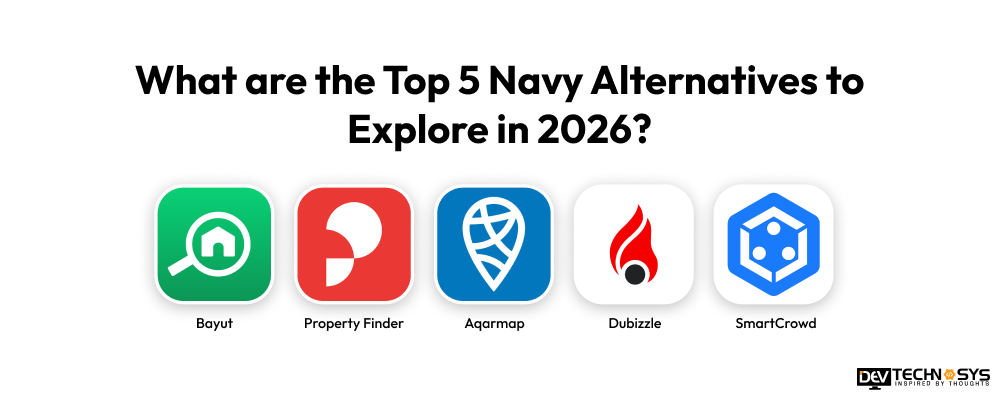
What are the Top 5 Nawy Alternatives to Explore in 2026?
As the prop-tech industry continues to evolve, several platforms offer features similar to Nawy, including property discovery, investment analytics, and digital real estate transactions. Here are five leading alternatives that are reshaping the real estate experience across the Middle East and beyond.
Platform |
Launch Year |
User Rating* |
Best For |
Platform Availability |
| Bayut | 2008 | 4.9/5 | Property buying, renting, and market insights in the UAE | Web, iOS, Android |
| Property Finder | 2007 | 4.7/5 | Verified property listings and mortgage assistance | Web, iOS, Android |
| Aqarmap | 2011 | 4.5/5 | Egyptian property search and developer listings | Web, iOS, Android |
| Dubizzle | 2006 | 4.6/5 | Property classifieds, rentals, and resale listings | Web, iOS, Android |
| SmartCrowd | 2018 | 4.7/5 | Fractional real estate investing and portfolio management | Web, iOS, Android |
1. Bayut
Bayut is a leading real estate marketplace in the UAE that helps users buy, sell, and rent residential and commercial properties. The platform offers advanced search filters, detailed property insights, neighborhood guides, market reports, and virtual viewing capabilities, making property discovery more transparent and data-driven. To build a similar real estate platform, contact a top real estate app development solution provider.
2. Property Finder
Property Finder is one of the most recognized prop-tech platforms in the Middle East, offering verified listings, virtual tours, mortgage assistance, and market analytics. Its user-friendly interface and extensive property database help buyers, renters, and investors make informed real estate decisions.
3. Aqarmap
Aqarmap is a prominent Egyptian property portal that connects homebuyers, investors, developers, and agents through a centralized marketplace. The platform provides verified property listings, neighborhood insights, pricing trends, and market intelligence to simplify property transactions.
4. Dubizzle
Dubizzle is a popular online marketplace that combines the latest real estate app development trends, classified advertising, and real estate services. Users can explore property listings, connect directly with sellers or agents, compare options, and manage rental or sales inquiries through a single platform.
5. SmartCrowd
SmartCrowd specializes in fractional property investment, allowing users to invest in income-generating real estate with relatively low capital requirements. The platform provides portfolio management tools, investment analytics, and transparent ownership structures, making real estate investing more accessible to a broader audience.
Technology Stack Required to Develop a Real Estate App Like Nawy
Building a real estate app like Nawy requires a robust technology stack capable of handling property listings, real-time search, AI-powered recommendations, financial calculations, geolocation services, and large volumes of user data.
The right technology foundation ensures scalability, security, and seamless user experiences across web and mobile platforms. According to McKinsey & Company, AI is transforming real estate through intelligent property valuation, investment analysis, workflow automation, and personalized customer experiences.
They estimated that AI could unlock $430–$550 billion in value across the real estate value chain. For businesses planning to develop a Nawy-like platform, investing in scalable cloud infrastructure and AI capabilities is no longer optional; it’s a competitive necessity.
Technology Layer |
Recommended Technologies |
| Frontend (Web) | React.js, Next.js, Vue.js |
| Frontend (Mobile) | Flutter, React Native |
| Backend | Node.js, Django, Laravel, Spring Boot |
| Database | PostgreSQL, MySQL, MongoDB |
| Cloud Infrastructure | AWS, Google Cloud Platform, Microsoft Azure |
| AI & Machine Learning | TensorFlow, PyTorch, OpenAI APIs |
| Search Engine | Elasticsearch, Algolia |
| Maps & Geolocation | Google Maps API, Mapbox |
| Real-Time Communication | Twilio, SendBird, Socket.io |
| Payment Gateway | Stripe, PayPal, Checkout.com |
| Authentication & Security | OAuth 2.0, Firebase Auth, JWT |
| Analytics & Monitoring | Google Analytics, Mixpanel, Datadog |
| DevOps & CI/CD | Docker, Kubernetes, Jenkins, GitHub Actions |
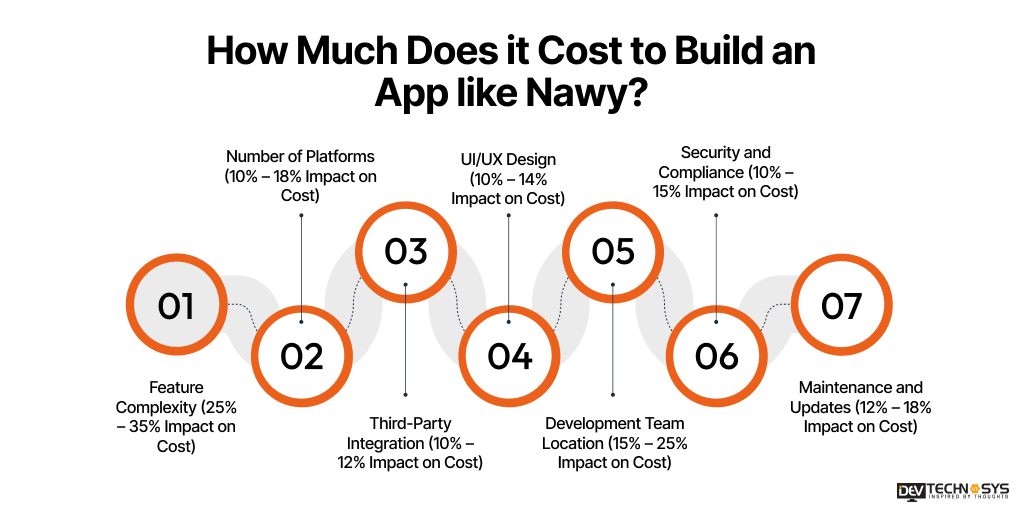
How Much Does it Cost to Build an App like Nawy?
The cost to build an app like Nawy starts from $30,000 and can go up to $1,50,000, depending on the features, functionalities, and development team location and expertise. The Cost To Build A Real Estate App Like Magicbricks or Nawy with basic features and functionality is between $30,000 to $70,000.
Development Level |
Key Features |
Estimated Cost |
| Basic MVP | User registration, property listings, search filters, favorites, and admin panel | $30,000 – $50,000 |
| Standard App | Advanced search, agent panel, chat, property booking, mortgage calculator, notifications | $50,000 – $80,000 |
| Advanced Prop-Tech Platform | AI recommendations, property comparison, ROI calculator, analytics, and real estate CRM integration | $80,000 – $120,000 |
| Enterprise-Grade Solution | Predictive pricing, AI assistant, 3D tours, fraud detection, market intelligence, multi-panel system | $120,000 – $150,000+ |
The mid-level real estate app development cost with a balance of basic and advanced features ranges from $70,000 to $100,000. However, an advanced Nawy app development cost with an AI-powered property recommendation engine, geo-spatial intelligence layer, and 3D virtual tours and AR visualization can exceed $ 1,50,000. Now, lets move on and discuss th factors that affect the Nawy mobile app development cost.
1. Feature Complexity (25% – 35% Impact on Cost)
Higher complexity features like AI recommendation engines, predictive pricing models, real-time analytics dashboards, and geospatial intelligence layers significantly increase backend architecture effort, API load, machine learning integration, and overall development time, directly raising total cost to create a real estate app like Nawy.
2. Number of Platforms (10% – 18% Impact on Cost)
Nawy clone app development for iOS, Android, and web simultaneously increases workload across frontend frameworks like Flutter or React Native, backend API scalability, testing cycles, and device compatibility handling, increasing the cost to develop a real estate app like Nawy.
3. Third-Party Integration (10% – 12% Impact on Cost)
Integrating services such as Google Maps API, Stripe payments, Twilio chat, MLS data feeds, and mortgage APIs adds dependency management, API orchestration complexity, rate-limit handling, and additional backend synchronization efforts, increasing development overhead and cost.
4. UI/UX Design (10% – 14% Impact on Cost)
If you create a real estate app like Nawy, you need advanced UI/UX involving interactive dashboards, 3D property visualization, micro-interactions, and responsive design systems. Adding them requires extensive prototyping, user journey mapping, design systems in Figma, and front-end engineering, increasing both design and implementation expenses.

5. Development Team Location (15% – 25% Impact on Cost)
Nawy clone app development costs vary based on geography. If you hire developers from North America and Europe, they charge higher hourly rates. On the other hand, if you hire mobile app developers in Dubai, Asia, or Eastern Europe, the development cost will be way cheaper. The development team’s location highly impacts the overall budget for frontend, backend, DevOps, and QA resources.
6. Security and Compliance (10% – 15% Impact on Cost)
Implementing JWT authentication, OAuth2.0, data encryption (AES-256), GDPR compliance, fraud detection systems, and secure payment gateways increases backend complexity, auditing requirements, and infrastructure hardening, significantly affecting overall Nawy app development cost.
7. Maintenance and Updates (12% – 18% Impact on Cost)
Post-launch maintenance includes bug fixes, cloud infrastructure scaling, CI/CD pipeline updates, performance optimization, database tuning, and feature upgrades. It requires continuous engineering effort and long-term operational budgeting. The mobile app maintenance cost is generally 12% to 20% of the total cost to build a real estate app like Nawy.
Factor |
% Cost Impact |
Cost Range (USD) |
Role in Budget |
| Feature Complexity | 25% – 35% | $7,500 – $52,500 | Core driver (AI, search, analytics, recommendation systems) |
| Number of Platforms | 10% – 18% | $3,000 – $27,000 | iOS + Android + Web development effort |
| Third-Party Integration | 10% – 12% | $3,000 – $18,000 | Maps, payments, chat, mortgage APIs |
| UI/UX Design | 10% – 14% | $3,000 – $21,000 | Design systems, dashboards, user journeys |
| Development Team Location | 15% – 25% | $4,500 – $37,500 | Hourly rate differences across regions |
| Security & Compliance | 10% – 15% | $3,000 – $22,500 | Encryption, GDPR, authentication, fraud prevention |
| Maintenance & Updates | 12% – 18% | $3,600 – $27,000 | Post-launch scaling, bug fixes, CI/CD, cloud ops |
What are the Monetization Strategies for a Real Estate App Like Nawy?
A real estate platform like Nawy generates revenue through diversified streams such as commissions, subscriptions, and premium listings. Let’s learn about these strategies in detail:
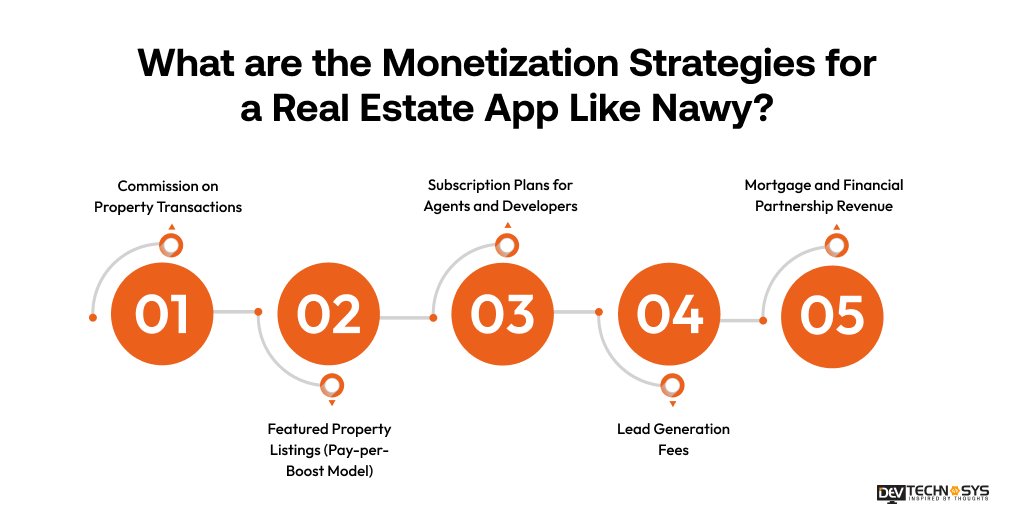
1. Commission on Property Transactions
The platform earns a percentage commission on successful property sales or rentals facilitated through the app. This remains the primary revenue driver in most real estate marketplaces globally. In many prop-tech ecosystems, commissions typically range between 1% to 5% per transaction, depending on property type and market region.
2. Featured Property Listings (Pay-per-Boost Model)
Agents and developers pay to promote listings at the top of search results, category pages, or recommendation feeds. This model is widely used in platforms like Zillow-style ecosystems because visibility directly influences lead generation and inquiry volume. Boosted listings often generate 3–5x higher engagement compared to organic listings
3. Subscription Plans for Agents and Developers
Monthly or annual subscription plans provide access to premium dashboards, CRM systems, analytics tools, and higher listing quotas. This SaaS-style monetization model is becoming increasingly important in prop-tech platforms, as highlighted by CBRE research on digital real estate ecosystems.
4. Lead Generation Fees
The platform charges agents or developers for qualified leads generated through user inquiries, chat interactions, booking requests, and contact form submissions. Unlike traditional advertising, this performance-based model ensures revenue is tied directly to conversion potential.
Industry Insights
‘Forbes Tech Council, real estate platforms increasingly prioritize high-intent lead monetization, where a single verified lead can be valued significantly higher than impressions or clicks.’
5. Mortgage and Financial Partnership Revenue
Revenue is generated through partnerships with banks, fintech companies, and mortgage providers for loan referrals, pre-approvals, and financing facilitation. This embedded finance model is one of the fastest-growing trends in prop-tech.
Common Reasons Why Real Estate Apps Fail After Launch
Even well-funded platforms similar to Nawy can fail after launch if core product, market, and execution challenges are not handled properly. In prop-tech, success depends heavily on data quality, user trust, liquidity (buyers + sellers), and strong operational systems.
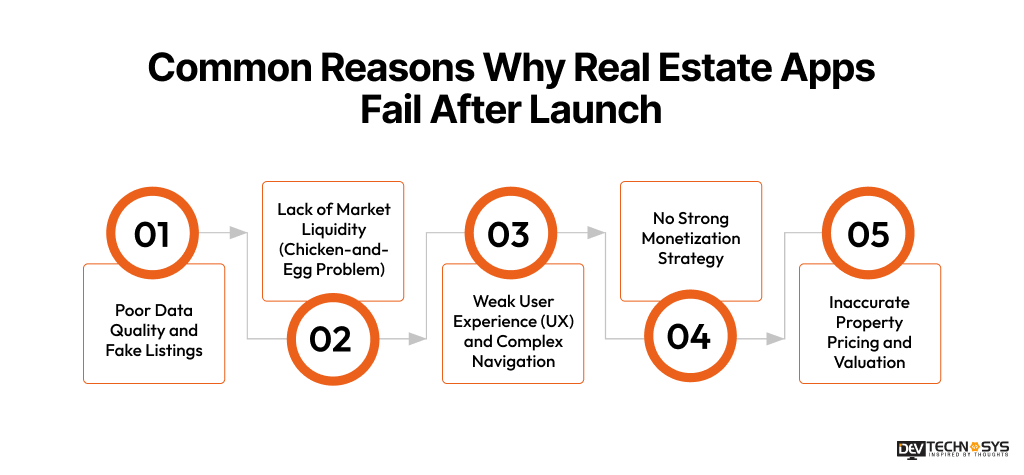
1. Poor Data Quality and Fake Listings
Experts who provide real estate app development services have noticed that many real estate apps fail because they allow outdated, duplicate, or fake property listings. Without strong verification systems, users lose trust quickly, leading to high churn rates and low engagement.
2. Lack of Market Liquidity (Chicken-and-Egg Problem)
Real estate platforms need both buyers and sellers simultaneously. Early-stage apps often struggle to attract enough listings or users, creating low marketplace activity and weak engagement loops.
3. Weak User Experience (UX) and Complex Navigation
If search filters, maps, and property details are not intuitive, users abandon the app quickly. Poor UI/UX design significantly reduces conversion rates, especially in mobile-first property discovery journeys.
4. No Strong Monetization Strategy
Many startups launch without a clear revenue model. Over-reliance on ads or ignoring subscription, commission, and lead-generation models leads to unsustainable operations and cash flow issues.
5. Inaccurate Property Pricing and Valuation
Without AI-driven or data-backed pricing models, users often see unrealistic or inconsistent property values, which reduces trust and discourages serious buyers and investors.
Build vs Buy vs Partner: Which Option is More Cost-Effective?
When building a real estate platform like Nawy, businesses typically choose between building a custom solution, buying a ready-made platform, or partnering with existing providers. Each approach has different cost structures, scalability potential, and control levels over technology and data.
- Build gives full control, customization, and long-term scalability but requires higher upfront investment and longer development time.
- Buy is faster and cheaper initially, but limits flexibility and differentiation.
- Partner ( Dev Technosys) offers a balanced approach where companies integrate existing systems (APIs, SaaS tools, listing networks) to reduce cost and speed up launch.
Factors |
Build (Custom Platform) |
Buy (Ready SaaS Solution) |
Partner (DevTechnosys) |
| Initial Cost | $30,000 – $150,000+ | $5,000 – $40,000 | $15,000 – $80,000 |
| Time to Launch | 4 – 9 months | 2 – 4 weeks | 1 – 3 months |
| Customization | Very High (full control over AI, data, UX) | Low (limited to platform features) | Medium (partial customization via APIs) |
| Scalability | Very High (cloud-native, microservices-ready) | Low to Medium | High (depends on integrations) |
| Maintenance | Medium to High (DevOps, CI/CD, scaling) | Low (vendor-managed) | Medium (shared responsibility) |
| Tech Ownership | Full ownership (code, data, AI models) | None (vendor-owned system) | Partial ownership |
| Risk Level | High initial risk, low long-term dependency | Low initial risk, high dependency on vendor | Medium balanced risk |
| Best For | Large-scale prop-tech platforms like Nawy | MVPs, startups validating an idea | Growing startups scaling step-by-step |
Conclusion
Building a real estate app like Nawy requires scalable architecture, verified property data, AI-driven recommendations, and a seamless user experience. Success depends on combining technology, trust, and monetization strategies while evolving from MVP to a full prop-tech ecosystem with strong marketplace liquidity and data intelligence capabilities. If you are a business looking to build a Nawy clone app, contact a leading real estate app development company. At Dev Technosys, we have 15+ years of developing advanced real estate apps for businesses iof every scale.
FAQs
Q1. How Much Does It Cost To Build A Real Estate App Like Nawy?
The cost to build a real estate app like Nawy is between $30,000 and $150,000, depending on features, AI integration, platform support, UI/UX complexity, and scalability requirements. Advanced apps with analytics, chat, and investment tools fall on the higher end.
Q2. How Long Does It Take To Develop A Real Estate App Like Nawy?
Development usually takes 2 to 4 months for an MVP and 6 to 9 months for an advanced platform. Timeline depends on feature complexity, third-party integrations, testing cycles, and overall system architecture.
Q3. What Are The Must-Have Features In A Real Estate App?
Essential features include property listings, advanced search filters, AI recommendations, mortgage calculators, booking systems, agent chat, and an admin panel. These features improve user engagement, trust, and overall conversion rates.
Q4. Which Technology Stack Is Best For Real Estate Apps?
Popular stacks include Flutter or React Native for frontend, Node.js or Django for backend, PostgreSQL or MongoDB for databases, and AWS or Google Cloud for scalable infrastructure and secure deployment.
Q5. How Do Real Estate Apps Like Nawy Generate Revenue?
They earn through commissions, featured listings, subscription plans, lead generation fees, mortgage partnerships, and advertising. Diversified monetization helps increase lifetime value and ensures long-term platform sustainability.