





Key Takeaways
- Growing digital adoption in UAE and MENA real estate is pushing businesses to build a real estate app like Aqarmap and capture mobile-first property demand.
- The UAE PropTech sector is expanding at over 17% CAGR, signaling strong long-term potential for real estate app investments.
- Apps like Aqarmap rely on features such as map-based search, live chat, CRM systems, and smart filters to simplify property discovery.
- The Aqarmap app development cost ranges from $8,000 to $26,000+, based on features, integrations, and platform complexity.
- Long-term success depends on scalable architecture, strong monetization models, and continuous feature upgrades aligned with market trends.
Picture this: A Dubai investor racing against time, swiping through blurry photos and fake listings that vanish when they inquire, while Riyadh renters chase the dream of villas that don’t exist.
Here enters the MENA real estate powerhouse, Aqarmap.
Aqarmap has revolutionized property discovery with verified, real-time listings and map-smart insights that close deals before competitors even load. With this shift, now, businesses in Dubai and Riyadh are racing to build a real estate app like Aqarmap, blending scalable cloud tech, dynamic API feeds, and flawless UX to dominate the PropTech boom.
From a technical standpoint, these platforms depend on scalable cloud architecture, map-based property search, and API integrations to process dynamic listings and user interactions.
From here, we’ll unpack every crucial step to develop a real estate app like Aqarmap, from architecture to MENA-specific scalability. At the end of the blog, you will be able to build an app like Aqarmap that keeps users hooked and scales with the UAE’s red-hot real estate market.
Let’s dive into the development!
What is Aqarmap?
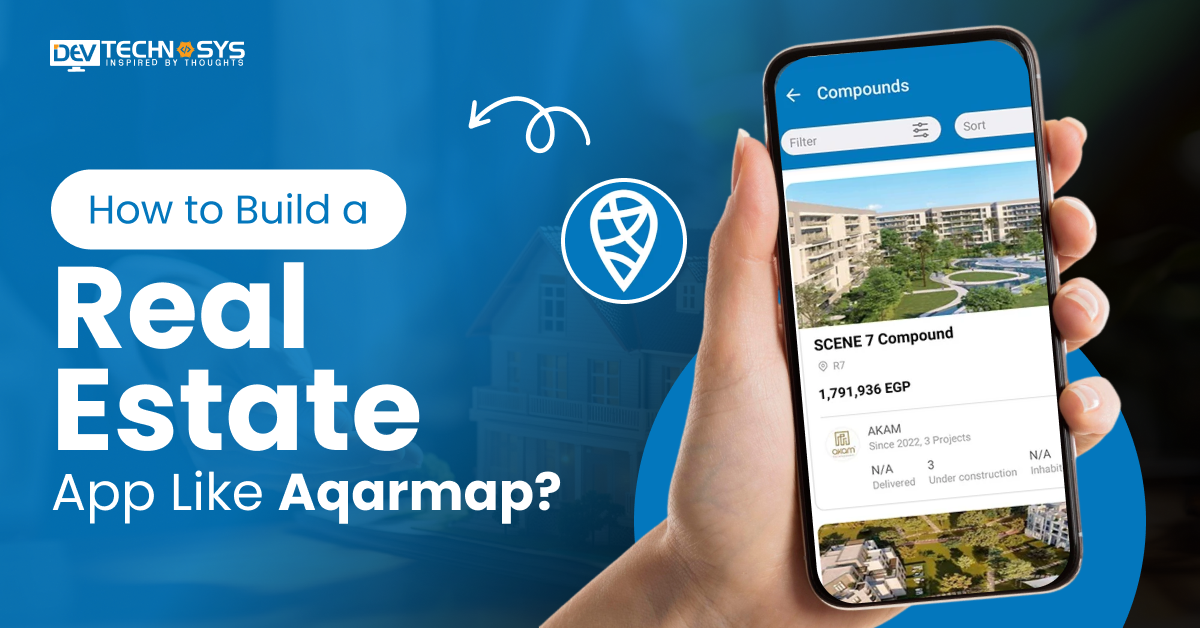
Aqarmap is a digital real estate platform designed to simplify property discovery across the MENA region, particularly in markets like Egypt and the UAE. It aggregates thousands of verified property listings, enabling users to search, compare, and evaluate options using location-based filters and interactive maps. The platform stands out for its map-driven interface, market insights, and user-friendly navigation, making it easier for buyers, renters, and investors to make informed decisions.
For businesses planning to make a real estate app like Aqarmap, it represents a strong model that combines data accuracy with a seamless user experience.
Answer a few quick questions and our experts will share a tailored project estimate.
How Does Aqarmap Work?
Aqarmap functions as a centralized real estate marketplace that connects users with property listings through a structured, data-driven system. It combines location intelligence, real-time data processing, and user-focused design to simplify how properties are searched and evaluated.
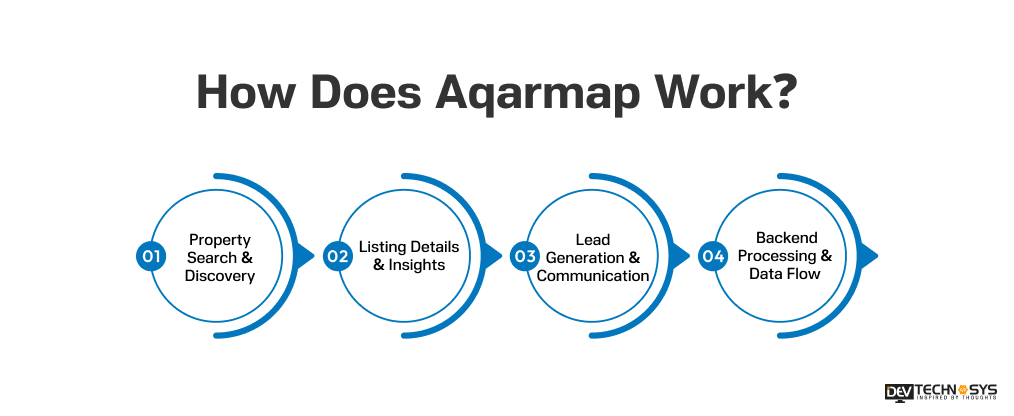
1. Property Search & Discovery
Aqarmap starts with a location-first approach where users enter a city or area. The system then displays listings using map integration and filters like price, property type, and amenities, enabling efficient map-based property search.
2. Listing Details & Insights
Each property listing includes high-quality images, specifications, pricing trends, and location insights. Users can compare multiple properties, analyze market data, and make informed decisions without relying on offline visits in the early stages.
3. Lead Generation & Communication
Once a user finds a suitable property, the platform enables direct interaction with agents through inquiry forms or chatbot integration. This streamlined communication improves lead conversion and response time.
4. Backend Processing & Data Flow
Behind the interface, Aqarmap relies on real-time data syncing, a secure API gateway, and scalable infrastructure. For businesses aiming to develop an app like Aqarmap, building a system that ensures data accuracy, fast loading, and seamless user flow is critical.
What Are the Market Stats For Real Estate App Development in UAE?
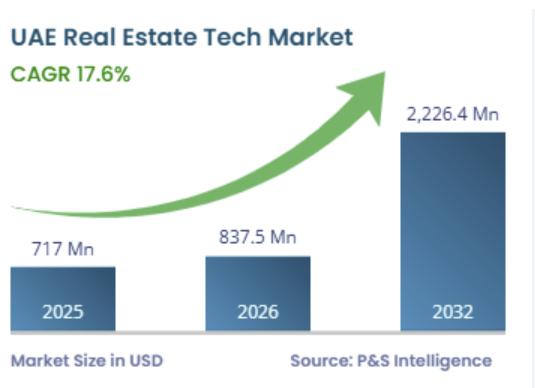
The UAE PropTech market is expanding rapidly, driven by digital adoption and smart city initiatives across Dubai and Abu Dhabi. According to PS Market Research, below are the market stats for proptech in the UAE.
Key Market Insights
- The UAE real estate tech market is expected to reach $837.5 million in 2026, showing strong adoption of digital platforms.
- The market is projected to grow at a 17.6% CAGR through 2032, indicating long-term scalability for PropTech apps.
- Cloud-based solutions dominate with around 80% market share, highlighting demand for scalable app infrastructure.
- Dubai holds nearly 45% of the market share, making it a key hub for real estate app innovation
- Technologies like AI, blockchain, and VR are rapidly transforming property search and transactions across the UAE.
Why Do Entrepreneurs Invest in Apps Like Aqarmap in 2026?
Rising digital adoption and high-value property transactions in the UAE and MENA region are pushing businesses to explore scalable PropTech solutions with strong revenue potential.
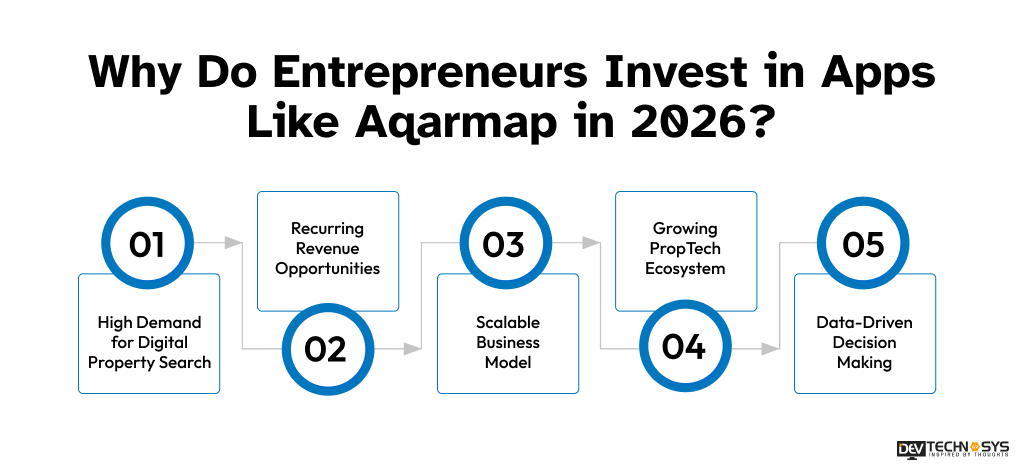
1. High Demand for Digital Property Search
Property buyers now prefer mobile platforms over traditional brokers, especially in cities like Dubai and Riyadh. This shift creates strong demand to build an app like Aqarmap that offers instant access to listings, filters, and location insights.
2. Recurring Revenue Opportunities
Real estate apps generate consistent income through subscriptions, featured listings, and lead generation models. Businesses planning Aqarmap app development can build predictable revenue streams by monetizing agents, brokers, and property owners.
3. Scalable Business Model
Unlike traditional real estate, digital platforms scale faster with minimal operational cost increase. Companies aiming to develop a real estate app like Aqarmap can expand across regions without heavy infrastructure investment.
4. Growing PropTech Ecosystem
Government initiatives and smart city projects in the UAE are accelerating PropTech adoption. This makes it easier for startups to enter the market with innovative housing app development solutions. Additionally, increasing investor interest is further driving innovation and competition in the sector.
5. Data-Driven Decision Making
Modern platforms leverage analytics to provide pricing trends and user behavior insights. This enhances user trust and helps businesses refine their offerings over time. Moreover, real-time data enables more accurate property recommendations and personalized user experiences.
Industry Insight
According to PwC Middle East, digital transformation is reshaping the real estate sector in the UAE, with PropTech adoption accelerating across property search, transactions, and asset management.
How to Build a Real Estate App Like Aqarmap: Step-by-Step Development Process
Building a scalable PropTech platform requires a structured approach that balances performance, user experience, and data handling, especially for businesses targeting UAE and MENA real estate markets.
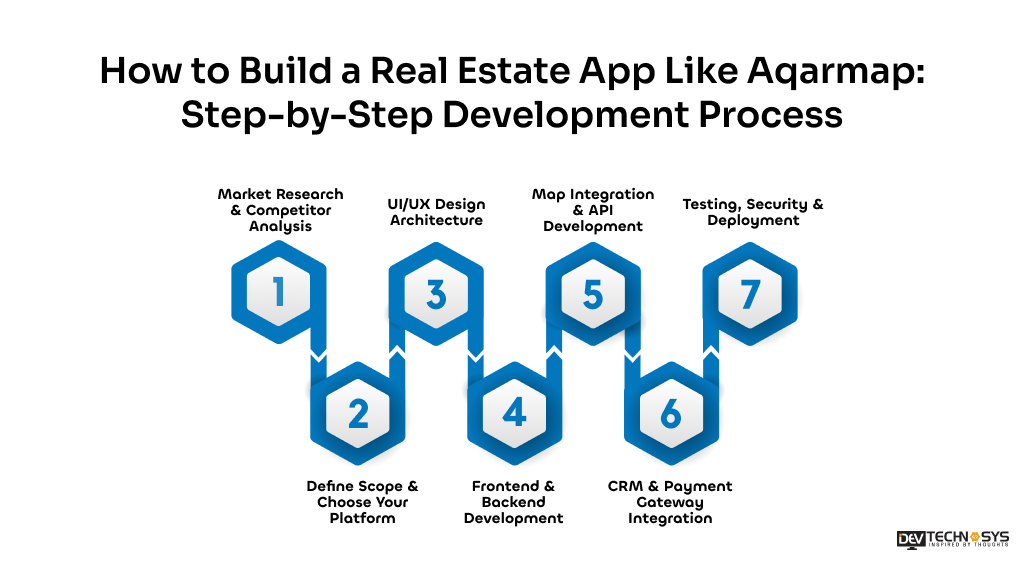
1. Market Research & Competitor Analysis
Start by analyzing regional platforms, user behavior, and gaps in existing solutions. Evaluate features, pricing models, and user pain points to define a strong product strategy. This step ensures your platform aligns with market demand before initiating development with a reliable real estate app development company. You can also take the help of independent researchers to provide you with more accurate information regarding competitor analysis.
2. Define Scope & Choose Your Platform
Clearly define your app’s core features, target audience, and supported platforms such as Android, iOS, or hybrid. Businesses planning to build a real estate app like Aqarmap must align feature scope with scalability goals, ensuring the platform supports future expansion across multiple regions and user segments. These features will assist you in retaining the user while also gaining new ones.
3. UI/UX Design Architecture
Design a user-centric interface with smooth navigation, clean layouts, and advanced filtering options. Implement modern real estate app UI/UX design ideas that enhance usability and engagement.
A well-designed interface improves retention, simplifies property discovery, and ensures users can interact with listings without friction. Hire dedicated developers in the UAE to create a custom and well-defined UI that provides users with a seamless performance.
4. Frontend & Backend Development
Develop responsive frontends supported by a scalable backend architecture capable of handling large property datasets. Businesses investing in real estate app development should focus on performance optimization, modular architecture, and efficient data handling to support real-time updates and seamless user interactions across the platform. The tech also indirectly affects the cost to develop a real estate app like Aqarmap, so the choice should be appropriate.
5. Map Integration & API Development
Integrate advanced mapping services to enable precise location tracking and property visualization. Strong map integration combined with third-party APIs ensures accurate listings, geolocation services, and smooth data exchange.
This step is critical for delivering map-based property search and enhancing user decision-making experiences. Maps can be a great addition to your Aqarmap-like app, which would be a great USP to differentiate from competitors.
6. CRM & Payment Gateway Integration
Implement CRM integration to manage leads, track user activity, and streamline communication with agents. Additionally, integrate a secure payment gateway for transactions, subscriptions, or featured listings.
These systems improve operational efficiency and create monetization opportunities within the application ecosystem. A proper payment system is essential for a high level of security and safety, this ensures the trust between the users.
7. Testing, Security & Deployment
Perform rigorous testing to identify performance issues, bugs, and security vulnerabilities. Implement a secure API gateway and data protection measures to ensure compliance and user trust. Once validated, deploy the application with scalable infrastructure and plan post-launch updates for continuous improvement. Continuous monitoring of user behavior and system analytics to optimize performance, enhance features, and proactively address emerging issues.

Which Technology Stack is Required to Develop an App Like Aqarmap in 2026?
Choosing the right technology stack ensures scalability, performance, and seamless integrations. A well-planned stack helps businesses develop a real estate app like Aqarmap with high availability, fast data processing, and secure infrastructure.
Layer |
Technology |
Description |
| Frontend | React Native / Flutter | Enables cross-platform development with smooth UI and faster time-to-market for Android and iOS apps. |
| Backend | Node.js / Django | Handles business logic, user requests, and real-time data processing efficiently. |
| Database | PostgreSQL / MongoDB | Stores structured and unstructured property data with high scalability and performance. |
| Cloud Services | AWS / Google Cloud | Provides scalable infrastructure, storage, and high availability for real estate platforms. |
| Map Integration | Google Maps API | Enables map-based property search, geolocation, and interactive property visualization. |
| API Layer | REST / GraphQL APIs | Ensures smooth communication between frontend, backend, and third-party services. |
| Authentication | OAuth / Firebase Auth | Secures user login, identity management, and access control. |
| CRM Integration | HubSpot / Zoho CRM | Helps manage leads, automate workflows, and improve customer engagement. |
| Payment Gateway | Stripe / PayPal | Supports secure payment gateway integration for subscriptions and premium listings. |
| Chat & Notifications | Firebase / Twilio | Enables real-time messaging, alerts, and chatbot integration for better user engagement. |
8 Crucial Features of an App Like Aqarmap
A high-performing real estate platform depends on feature depth, usability, and seamless integrations. Businesses aiming to create a real estate app like Aqarmap must prioritize functionality that enhances discovery, engagement, and transaction efficiency.
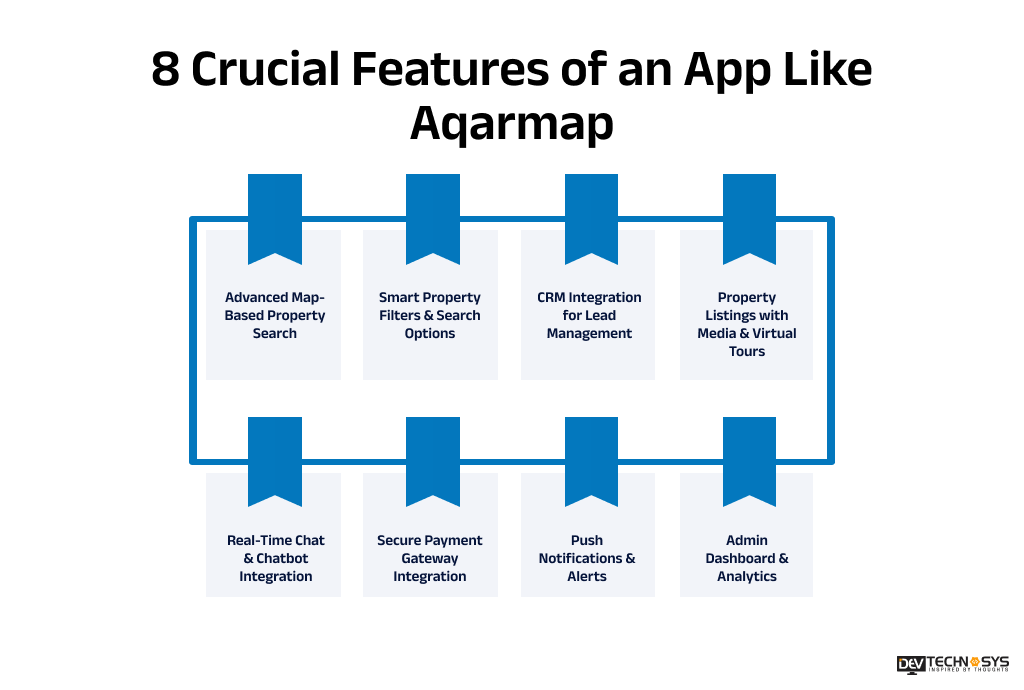
1. Advanced Map-Based Property Search
Map-based property search allows users to explore listings visually using geolocation and interactive maps. Users can zoom into specific areas, view nearby amenities, and filter properties by location. This feature improves decision-making by offering a clear understanding of neighborhood dynamics and accessibility.
2. Smart Property Filters & Search Options
Advanced filters help users narrow down listings based on price, property type, size, and amenities. This feature reduces search time and enhances user satisfaction. Intelligent filtering systems ensure users quickly find relevant properties aligned with their preferences and investment goals.
3. CRM Integration for Lead Management
CRM integration helps businesses manage leads, track user behavior, and automate communication workflows. It enables agents to follow up effectively and improve conversion rates. This feature is essential for maintaining organized customer data within scalable real estate app development services.
4. Property Listings with Media & Virtual Tours
Detailed property listings include images, videos, and virtual tours to give users a realistic view of properties. This feature minimizes the need for physical visits in early stages and helps users compare multiple properties efficiently before making decisions.

5. Real-Time Chat & Chatbot Integration
Real-time chat and chatbot integration enable instant communication between users and agents. Automated responses handle initial queries, while live chat supports deeper interaction. This feature improves lead conversion, reduces response time, and enhances overall user engagement within modern real estate app development solutions.
6. Secure Payment Gateway Integration
Payment gateway integration allows users to make secure transactions for bookings, subscriptions, or featured listings. It ensures data protection and builds user trust. This feature also supports monetization strategies, making it crucial for revenue generation in apps built through mobile app development company expertise.
7. Push Notifications & Alerts
Push notifications keep users informed about new listings, price changes, and personalized recommendations. Timely alerts increase engagement and encourage users to revisit the app frequently, improving retention rates and overall user activity on the platform.
8. Admin Dashboard & Analytics
An admin dashboard provides complete control over listings, users, and transactions. Integrated analytics offer insights into user behavior, property trends, and performance metrics. This feature helps businesses make data-driven decisions and continuously improve platform efficiency, especially when planning to build an app like Aqarmap.
What is the Average Cost to Build a Real Estate App Like Aqarmap?
Understanding the Aqarmap app development cost typically ranges from $8,000 to $26,000, depending on features, complexity, and technology choices. Businesses planning to build a real estate app like Aqarmap must consider scalable architecture, map integration, and real-time data systems, all of which directly impact overall investment.
App Complexity |
Features Included |
Estimated Cost |
| Basic MVP | Property listings, search filters, chat, basic UI | $8,000 – $12,000 |
| Mid-Level App | MVP + map integration, notifications, payment gateway integration | $12,000 – $18,000 |
| Full-Featured App | Advanced features + AI recommendations, analytics, and admin panel | $18,000 – $26,000 |
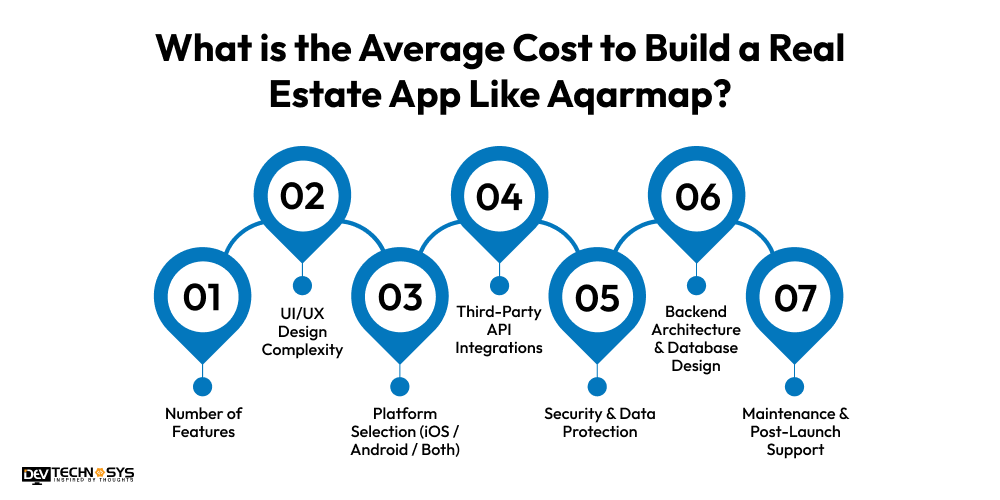
Below are the factors that affect the real estate app development cost:
1. Number of Features
The number and complexity of features significantly impact the real estate app development cost. Basic features require minimal backend logic, while advanced capabilities like AI recommendations, map-based property search, and chatbot integration increase development time, testing efforts, and system architecture complexity when building scalable platforms.
Feature Type |
Features |
Cost Contribution |
| Basic Features | Login, listings, filters | $500 – $1,500 |
| Core Features | Chat, notifications, booking | $1,500 – $2,500 |
| Advanced Features | AI suggestions, virtual tours | $2,500 – $4,000 |
2. UI/UX Design Complexity
UI/UX design impacts user engagement and retention. Basic layouts reduce the cost to develop a real estate app like Aqarmap, as they are premade or take less time to develop. While custom dashboards, animations, and interactive flows increase design effort, they also increase the cost. Businesses want to create a real estate management platform in Middle East, and must invest in intuitive interfaces to improve usability, which directly affects overall development time and cost.
Design Level |
Features |
Cost Contribution |
| Basic UI | Simple layouts, standard screens | $300 – $800 |
| Custom UI/UX | Branded flows, improved navigation | $800 – $1,500 |
| Premium UI | Animations, advanced interactions | $1,500 – $3,000 |
3. Platform Selection (iOS / Android / Both)
Platform selection directly influences development effort and cost. A single-platform app is faster and budget-friendly, while cross-platform or native development requires additional resources, testing, and optimization. Businesses planning to create a real estate app like Aqarmap for a wider reach must account for increased development workload.
Platform |
Features |
Cost Contribution |
| Single Platform | Basic app version | $500 – $1,000 |
| Cross-Platform | Shared codebase apps | $1,000 – $2,000 |
| Native Apps | Full iOS + Android apps | $2,000 – $3,500 |
4. Third-Party API Integrations
APIs enable essential features like maps, payments, notifications, and data exchange. Basic integrations are cost-effective, while advanced APIs, such as payment systems and analytics tools,s increase complexity. Choosing the right integrations through a reliable hybrid app development service ensures scalability but adds to development costs.
Integration Type |
Features |
Cost Contribution |
| Basic APIs | SMS, email, notifications | $300 – $800 |
| Medium Integrations | Payment gateway, CRM integration | $800 – $1,500 |
| Advanced Integrations | AI tools, analytics APIs | $1,500 – $3,000 |
5. Security & Data Protection
Security is critical for handling user and property data. Basic protection is cost-effective, while advanced encryption, authentication, and secure API gateway implementation increase development effort. Businesses planning to develop a real estate app like Aqarmap must prioritize security to ensure compliance and build long-term user trust.
Security Level |
Features |
Cost Contribution |
| Basic Security | SSL, login protection | $300 – $1,000 |
| Standard Security | 2FA, secure authentication | $1,000 – $1,500 |
| Advanced Security | Encryption, audit logs | $1,500 – $3,500 |
6. Backend Architecture & Database Design
Backend architecture determines how efficiently the app handles data, user requests, and scalability. Simple databases reduce cost, while distributed systems, real-time syncing, and cloud optimization increase development effort. Businesses investing in a real estate app development solution must prioritize structured data flow, which directly impacts performance and overall cost.
Architecture Level |
Features |
Cost Contribution |
| Basic Backend | Simple database, static data | $500 – $1,200 |
| Scalable Backend | Cloud-based, API-driven system | $1,200 – $2,500 |
| Advanced Architecture | Microservices, real-time sync | $2,500 – $4,000 |
7. Maintenance & Post-Launch Support
Ongoing maintenance ensures app stability, updates, and performance optimization after launch. Basic support is affordable, while continuous updates, bug fixes, and feature enhancements increase long-term investment. Businesses planning to build a real estate app like Aqarmap must allocate mobile app maintenance costs for updates, security patches, and scalability improvements.
Maintenance Level |
Features |
Cost Contribution |
| Basic Maintenance | Bug fixes, minor updates | $300 – $800 |
| Standard Support | Performance optimization, updates | $800 – $1,500 |
| Advanced Support | Continuous upgrades, scaling | $1,500 – $3,000 |
Industry Insight
According to P&S Intelligence, the UAE real estate tech market is projected to grow at a CAGR of over 17%, driven by cloud adoption and smart city initiatives.
What Are the Best Aqarmap Alternatives in 2026?
Several real estate platforms across the UAE, MENA, and global markets offer similar functionality, user experience, and business models. Analyzing these Aqarmap alternatives helps businesses understand features, positioning, and opportunities before building a competitive solution.
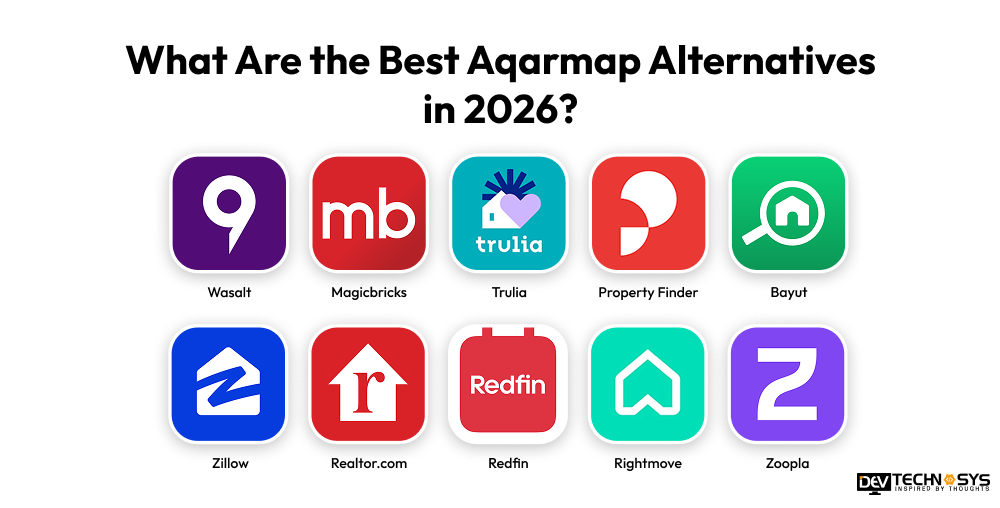
App Name |
Core Strength |
Key Features |
Business Model |
| Wasalt | Localized UX & simplicity | Property listings, map search, agent connect | Subscription + Listings |
| Magicbricks | High traffic & data insights | Advanced filters, insights, and rental tools | Ads + Premium Listings |
| Trulia | Hyperlocal insights | Neighborhood data, maps, lifestyle info | Ads + Lead generation |
| Property Finder | Verified listings ecosystem | Advanced filters, agent tools | Subscription |
| Bayut | Data accuracy & AI insights | TruCheck, analytics, smart search | Featured listings |
| Zillow | Automated property valuation | Zestimate, virtual tours | Ads + Leads |
| Realtor.com | Real-time listing updates | Affordability tools, alerts | Lead generation |
| Redfin | Brokerage + tech model | Map-based search, agent services | Commission |
| Rightmove | Massive property database | Alerts, search filters | Ads + Listings |
| Zoopla | Price trend analytics | Valuation tools, insights | Ads + Premium |
1. Wasalt
Wasalt is a Saudi-based platform focused on simplifying property discovery through verified listings and user-friendly navigation. It emphasizes transparency and agent connectivity, making it a strong regional competitor. Businesses planning to build a real estate app like Wasalt can learn from its localized approach and clean interface.
2. Bayut
Bayut is another UAE-based real estate platform known for its AI-driven insights and TruCheck verification system. It focuses on transparency and data accuracy, helping users make informed decisions while improving trust and engagement across the platform.
3. Magicbricks
Magicbricks is one of India’s largest real estate platforms, offering advanced filters, market insights, and rental tools. Its strong monetization model through ads and premium listings makes it scalable. Companies evaluating the cost to build a real estate app like Magicbricks should consider its feature-rich ecosystem.
4. Property Finder
Property Finder is a leading UAE-based platform offering verified listings, agent tools, and advanced search filters. Its strong presence in Dubai and Abu Dhabi makes it a direct competitor. The platform stands out for its clean UX and reliable property data.
5. Trulia
Trulia focuses heavily on user experience by offering neighborhood insights, crime data, and lifestyle information alongside listings. Its data-driven approach enhances decision-making. Businesses looking to develop a real estate app like Trulia can benefit from integrating hyperlocal insights and user-centric features.
Monetization Strategies for Real Estate Apps in 2026
A well-defined monetization strategy is essential to sustain growth and profitability. Businesses planning to build a real estate app like Aqarmap must combine multiple revenue streams to maximize returns while maintaining a seamless user experience.
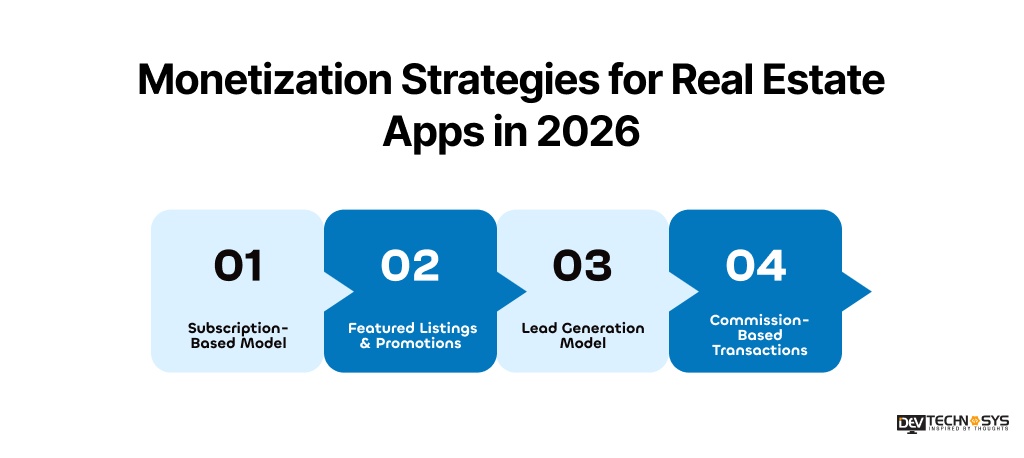
1. Subscription-Based Model
This model allows agents, brokers, and property owners to pay recurring fees for premium access. Features include advanced listings, analytics dashboards, and lead tracking tools. It ensures predictable revenue while encouraging long-term engagement, making it a reliable approach in evolving real estate app development trends.
2. Featured Listings & Promotions
Property owners can pay to promote listings for better visibility and higher engagement. Highlighted properties appear at the top of search results, increasing lead generation. This model directly boosts revenue while improving property exposure, especially in competitive markets like Dubai and Abu Dhabi.
3. Lead Generation Model
Platforms charge agents or agencies for verified leads generated through user inquiries. This performance-driven approach aligns revenue with actual conversions. It reduces upfront risk for agents while ensuring businesses generate consistent income based on user engagement and platform activity.
4. Commission-Based Transactions
This model generates revenue by taking a percentage from successful property deals or bookings. It works well in high-value markets where transaction sizes are large. Companies planning to develop a real estate mobile app For UAE often adopt this model to maximize returns from property transactions.
What Makes Your Aqarmap Clone App Stand Out in a Competitive Market?
To succeed in a crowded PropTech landscape, businesses must go beyond basic features. Differentiation comes from innovation, personalization, and intelligent systems that enhance user experience and decision-making across the platform.
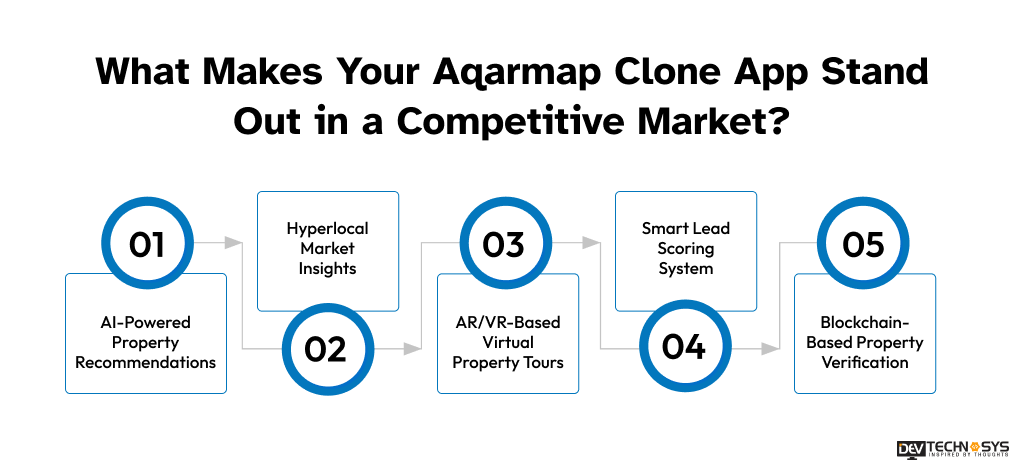
1. AI-Powered Property Recommendations
AI-driven recommendation engines analyze user behavior, search patterns, and preferences to deliver highly relevant property suggestions. This improves engagement and reduces search time. Businesses aiming to create a real estate app like Aqarmap can leverage AI to create personalized experiences that increase user retention and conversion rates.
2. Hyperlocal Market Insights
Providing area-specific insights such as pricing trends, demand patterns, and neighborhood data helps users make informed decisions. This feature builds trust and positions the platform as a reliable source of information, especially in competitive real estate markets like the UAE and broader MENA region.
3. AR/VR-Based Virtual Property Tours
Virtual tours allow users to explore properties remotely using immersive technologies like augmented and virtual reality. This reduces the need for physical visits in early stages and enhances user experience. It also influences overall mobile app development cost due to higher technical complexity and integration requirements.
4. Smart Lead Scoring System
A smart lead scoring system prioritizes high-intent users based on behavior and interaction patterns. This helps agents focus on quality leads, improving conversion rates. Businesses planning to create an app like Aqarmap can use automation to optimize sales workflows and improve efficiency.
5. Blockchain-Based Property Verification
Blockchain technology ensures secure and transparent property records, reducing fraud and increasing trust. It enables tamper-proof data storage and verification processes. Partnering with an experienced iOS app development company helps implement such advanced features efficiently across secure and scalable mobile environments.
Conclusion
Building a scalable PropTech platform requires a balance of advanced features, performance, and market alignment. Businesses aiming to make a real estate app like Aqarmap must focus on user experience, data accuracy, and seamless integrations to stay competitive in the UAE and MENA regions.
From feature planning to deployment, every stage impacts long-term success and ROI. Whether you are developing a custom solution or an Aqarmap clone app, partnering with an experienced team like Dev Technosys, with 15+ years of development expertise, ensures reliable architecture, faster delivery, and market-ready solutions. To accelerate your project, consider to hire mobile app developers in Dubai with strong regional and technical expertise.
FAQs
Q1. How Much Does It Cost to Build a Real Estate App Like Aqarmap?
The cost to build a real estate app like Aqarmap typically ranges between $8,000 and $26,000, depending on features, platform, and integrations. Advanced functionalities like map-based property search, AI recommendations, and secure APIs increase overall investment, while MVP versions reduce initial costs for faster market entry.
Q2. What Are the Essential Features of Apps Like Aqarmap?
The features of apps like Aqarmap include map-based property search, advanced filters, real-time chat, CRM integration, payment gateway integration, and virtual tours. These features enhance user experience, improve engagement, and support lead generation, making them critical for building scalable and competitive real estate platforms.
Q3. How Long Does It Take to Develop a Real Estate App?
To make a real estate app like Aqarmap, the timeline usually ranges from 1 to 6 months based on complexity. Basic MVPs take 1 to 2 months as they comprise the most essential features. While feature-rich apps with integrations, analytics, and custom UI/UX require longer development cycles, almost 4 to 6+ months, testing, and deployment for optimal performance.
Q4. Which Tech Stack is Best for Real Estate App Development?
The best tech stack for Aqarmap app development includes React Native or Flutter for frontend, Node.js or Django for backend, and AWS for cloud services. Integrating map APIs, a secure API gateway, and scalable databases ensures performance, security, and seamless user experience across platforms.
Q5. How Do Real Estate Apps Make Money?
Real estate apps generate revenue through subscriptions, featured listings, lead generation, and commissions on transactions. Businesses planning to make a real estate app like Aqarmap can combine these models to maximize profitability while maintaining a user-friendly experience and scalable monetization strategy.