





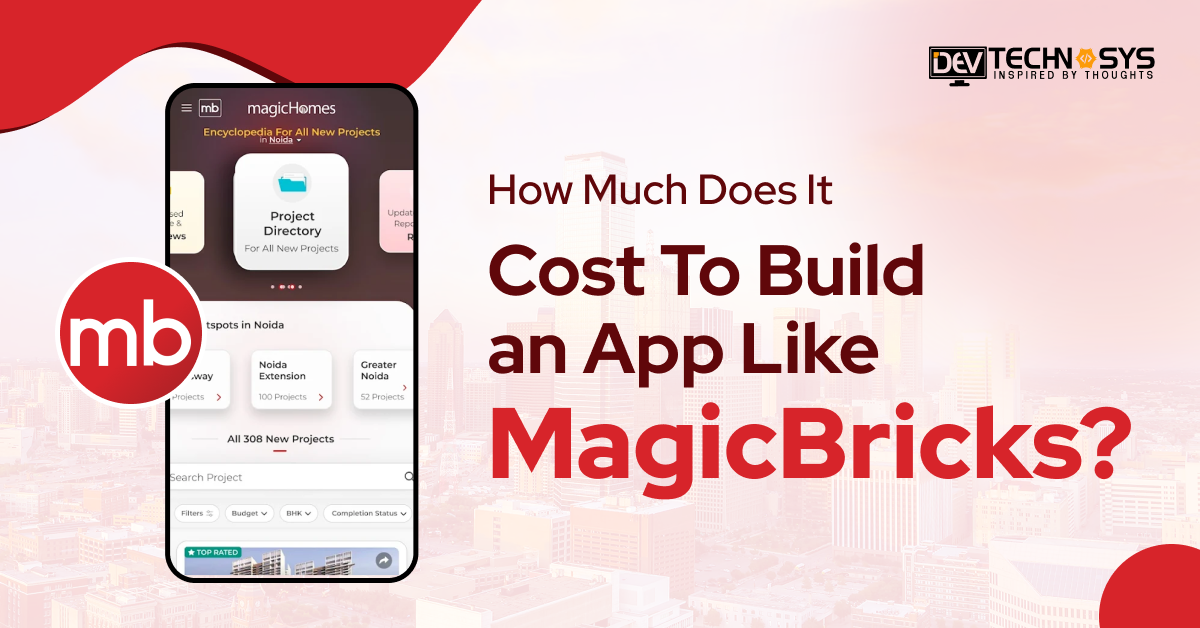
The average cost to build an app like MagicBricks ranges from $8,000 to $25,000+, depending on features, platform, and scalability. A basic MVP starts from $8,000 to $12,000, mid-level apps cost $12,000 to $18,000, while advanced real estate platforms cost $18,000 to $25,000+.
Cost Breakdown by Development Complexity
-
- Basic/MVP ($8,000 – $12,000): Property listings, basic search filters, simple dashboards, single platform
- Mid-Level ($12,000 – $18,000): Verified listings, map integration, chat, notifications, cross-platform support
- Advanced ($18,000 – $25,000+): AI recommendations, virtual tours, financial tools, analytics, scalable backend
Key Factors That Affect the Cost
-
- App Complexity: More features like AI, virtual tours, and chat significantly increase development time and cost
- Platform Choice: Native (Android/iOS) costs more than a hybrid but offers better performance
- Backend Infrastructure: An advanced backend with analytics, AI, and real-time data handling increases cost
- UI/UX Design: Custom designs with animations and interactive elements raise the overall
- Third-Party Integrations: APIs for maps, payments, chat, and AI add to development and licensing costs
Development Timeline
-
- Basic MVP: 2 to 4 months
- Mid-Level App: 4 to 6 months
- Advanced App: 6+ months
Hidden Costs
-
- Maintenance: Annual cost ranges from 15% to 20% of the total development cost
- Server & Cloud Hosting: Costs increase with user growth and media-heavy features
- Testing & QA: Essential for performance, security, and bug-free experience
- Marketing & Launch: App promotion, ASO, and campaigns require a dedicated budget
- Legal & Compliance: Adhering to property laws and data privacy regulations adds extra cost
Monetization Models
-
- Paid Listings: Charge users to post property listings
- Featured Listings: Offer premium visibility for higher fees
- Subscription Plans: Recurring plans for agents and property developers
- In-App Advertising: Earn through ads and sponsored content
- Commission Fees: Charge a percentage on property transactions
Cost Optimization Tips
-
- Start with MVP: Launch with essential features and scale later
- Use Hybrid Development: Reduce cost with a single codebase for multiple platforms
- Leverage APIs: Save time and cost using ready-made integrations
- Hire Strategically: Outsourcing or hiring dedicated developers improves efficiency
- Focus on Core Features: Build essentials first, add advanced features after validation
The real estate industry has undergone a major digital shift, making it easier for users to buy, sell, and rent properties online. Platforms like MagicBricks have simplified property discovery with features such as smart search filters, verified listings, and virtual tours.
As more businesses enter the digital property business, understanding the cost to build an app like Magicbricks becomes essential for proper planning and execution. From startups to established enterprises, companies are investing in digital platforms to stay competitive in an evolving market.
Having clarity on development costs helps in selecting the right features, technology stack, and scalability strategy, ensuring your real estate app delivers long-term value and a seamless user experience.
Let’s get started!
Why Are Real Estate Apps Like MagicBricks Booming? The UAE Real Estate Market Stats
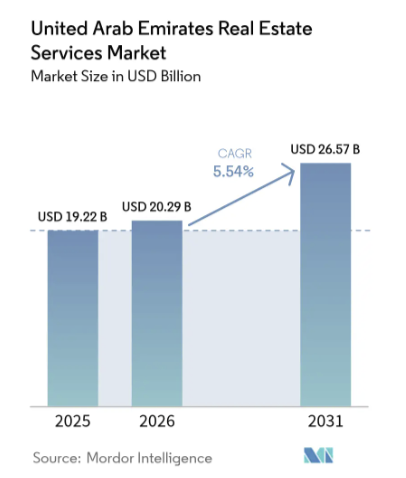
Digital portals, AI-powered marketplaces, and smart property management tools are reshaping how users interact with real estate. Businesses investing in a real estate app development company can better align with these market trends and user expectations. According to the Morder Intelligence market stats for UAE, they are as follows:
Key Market Statistics
- UAE real estate services market size reached USD 18.45 billion in 2025. It is projected to reach USD 26.57 billion by 2031, growing at a CAGR of 5.54% (2026–2031)
- Residential services dominated with 60.9% market share in 2025
- Brokerage services held 42.3% share, while property management is growing at 6.12% CAGR
- Individuals accounted for 51.1% market share, with corporates growing at 6.23% CAGR
- Dubai captured 58.4% of total revenue, while Ras Al Khaimah is the fastest-growing region at 6.48% CAGR
What is MagicBricks?
MagicBricks is one of India’s leading property portals that connects buyers, sellers, and tenants through a unified digital platform. It has become a benchmark in the proptech space, inspiring businesses to create similar solutions while evaluating the cost to build an app like Magicbricks.
It’s essential to understand the core functionalities that make such platforms successful. These features enhance user experience by simplifying property discovery, improving search accuracy, and enabling seamless communication between users. They also play a crucial role in increasing user engagement, trust, and overall platform efficiency in the competitive real estate market.
Industry Insight
According to Research and Markets, the UAE real estate digital marketplace was valued at around USD 610 million with rapid adoption of AI, blockchain, VR, and IoT technologies, highlighting how digital proptech innovations are driving efficiency and transparency in the property sector.
What Are the Core Features of an App Like MagicBricks?
To build an app like MagicBricks requires a comprehensive property search experience, connecting buyers, sellers, and renters through verified listings and smart filters. It offers interactive maps, AI-based recommendations, and virtual tours to help users make informed decisions. Also, it is important to check the cost to develop a real estate app in UAE if it aligns with your budget. Below are the core features of MagicBricks:
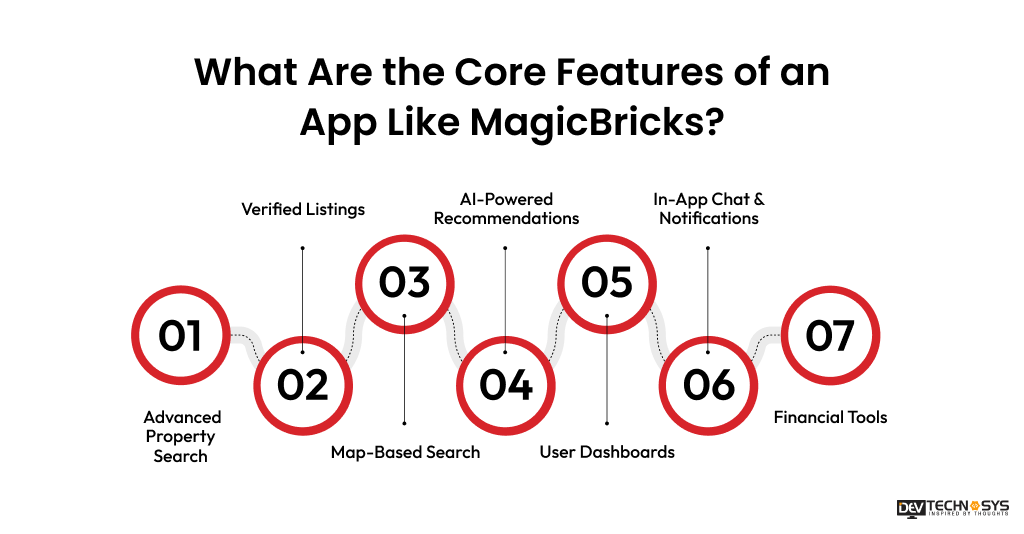
1. Advanced Property Search
This feature allows users to filter properties based on location, budget, property type, and amenities. It enhances user experience by delivering highly relevant search results. Implementing advanced filters and search algorithms can increase the overall development complexity.
2. Verified Listings
Ensures that properties listed on the platform are authentic and trustworthy. This builds user confidence and reduces the chances of fraud. Verification systems require backend moderation tools, which add to development efforts.
3. Map-Based Search
Integrates map services to help users explore properties based on geographic location. Users can view nearby schools, hospitals, and transport facilities. This feature improves decision-making and requires third-party API integration.
4. AI-Powered Recommendations
Uses user behavior and preferences to suggest relevant properties. It improves engagement and retention by personalizing the experience. However, AI integration increases the real estate app backend development cost.
5. User Dashboards
Separate dashboards for buyers, sellers, and agents enable efficient property management. Users can track listings, inquiries, and interactions. This feature requires a robust backend system.
6. In-App Chat & Notifications
Enables real-time communication between users through messaging and alerts. It improves engagement and speeds up decision-making. Push notifications and chat systems add to development time.
7. Financial Tools
Includes EMI calculators, loan estimators, and financial assistance options. These tools help users plan their investments better. Integration with financial APIs increases the MagicBricks app development cost.
How Much Does It Cost To Build an App Like MagicBricks?
The cost to develop an app like MagicBricks depends on the features, design complexity, and backend infrastructure required. On average, developing a property listing app can start from $8,000 for a basic version and go up to $25,000 or more for a fully-featured, scalable solution. The cost to create an app like MagicBricks is also influenced by factors like platform choice, third-party integrations, and post-launch maintenance.
| App Complexity | Features Included | Estimated Cost (USD) |
| Basic | Property listings, search filters, simple user dashboard | $8,000 – $12,000 |
| Medium | Verified listings, maps integration, chat, notifications | $12,000 – $18,000 |
| Advanced | AI recommendations, virtual tours, financial tools, analytics | $18,000 – $25,000 |
What Are The Factors That Affect the Cost To Build An App Like MagicBricks?
The cost to develop a real estate app like MagicBricks is influenced by multiple factors, each of which affects development time, resources, and technology requirements. Here’s a detailed breakdown of these factors and how they impact the cost to develop an app like MagicBricks:
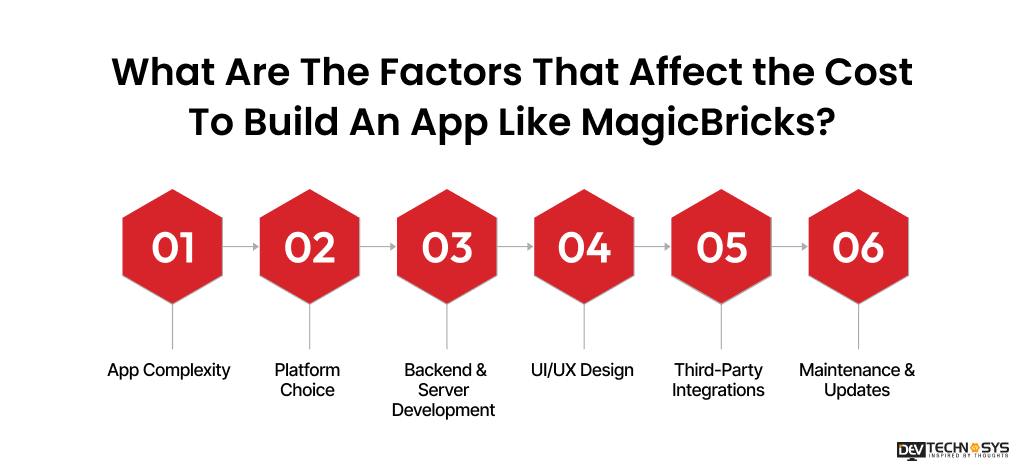
1. App Complexity
The complexity of the app is one of the biggest cost drivers. A simple app with basic property listings and search filters requires minimal coding, fewer screens, and limited backend logic. In contrast, advanced apps with AI-based recommendations, virtual tours, and in-app chat require more development time, extensive testing, and robust server infrastructure. More features also increase design complexity and ongoing maintenance needs.
| Complexity Level | Why It Affects Cost | Relative Impact on Budget |
| Basic | Simple listings, filters, and dashboards | $0 – $1,000 |
| Medium | Maps, verified listings, notifications, basic chat | +$3,000 – $5,000 |
| Advanced | AI recommendations, virtual tours, analytics, and financial tools | +$6,000 – $8,000 |
2. Platform Choice
The choice of platform, Android, iOS, or both, affects cost because each platform requires separate development and testing. Native apps are optimized for a single platform but require more resources for android app development or iOS development. Hybrid apps save time and cost but may compromise on performance and user experience. The platform choice also determines compatibility with devices, OS versions, and app store requirements.
| Platform | Why It Affects Cost | Relative Impact on Budget |
| Android Only | Single platform, moderate effort | +$0 – $1,500 |
| iOS Only | Single platform, Apple-specific development | +$0 – $2,500 |
| Hybrid | Single codebase for both platforms, reduced cost, some compromise | +$1,500 – $3,000 |
3. Backend & Server Development
The choice of platform, Android, iOS, or both, affects cost because each platform requires separate development and testing. Native apps are optimized for a single platform but require more resources if building both Android and iOS versions. Partnering with an experienced iOS app development company can ensure optimized performance and seamless user experience. Hybrid apps save time and cost but may compromise on performance and user experience.
| Backend Type | Why It Affects Cost | Relative Impact on Budget |
| Basic | Simple database for listings | +$0 – $1,500 |
| Medium | User accounts, notifications, and maps integration | +$1,500 – $3,000 |
| Advanced | AI algorithms, virtual tours, analytics | +$3,000 – $5,000 |
4. UI/UX Design
The user interface and experience determine how easy and enjoyable the app is to use. Custom animations, multiple interactive screens, and advanced workflows increase design time and effort. Better design improves user engagement, retention, and brand perception but comes at a higher development cost.
| Design Level | Why It Affects Cost | Relative Impact on Budget |
| Basic | Standard templates, simple interface | +$0 – $1,000 |
| Medium | Custom UI elements, multiple screens | +$1,000 – $2,500 |
| Advanced | High-end animations, interactive prototypes | +$2,500 – $4,000 |
5. Third-Party Integrations
Integrating third-party APIs like maps, payment gateways, AI recommendations, or chat systems adds functionality but increases complexity. Each integration requires development, testing, and sometimes licensing fees. More integrations also mean higher backend and security requirements, which slightly increase overall app cost.
| Integration Level | Why It Affects Cost | Relative Impact on Budget |
| Basic | Maps, analytics | +$0 – $500 |
| Medium | Payment gateways, notifications, and cloud storage | +$500 – $1,500 |
| Advanced | AI, virtual tours, advanced analytics | +$1,500 – $2,000 |
6. Maintenance & Updates
Post-launch maintenance is crucial for app performance, security, and compatibility with new OS versions. Apps with complex features require more frequent updates, server scaling, and bug fixes. Regular maintenance ensures the app runs smoothly and keeps users engaged, making it an important long-term cost factor for the magicbricks clone app development.
| Maintenance Level | Why It Affects Cost | Relative Impact on Budget (Yearly) |
| Basic | Bug fixes, minor updates | $500 – $1,500 |
| Medium | Regular updates, moderate feature enhancements | $1,500 – $1,800 |
| Advanced | Major updates, server scaling, AI improvements | $1,800 – $2,200 |
Industry Insight:
According to Gulf Times, digital property platforms are reshaping the UAE real estate market by improving accessibility, transparency, and the user experience for buyers, sellers, and investors, making tech‑enabled property search tools an indispensable part of the market.
Hidden Costs of Real Estate App Development You Should Never Ignore
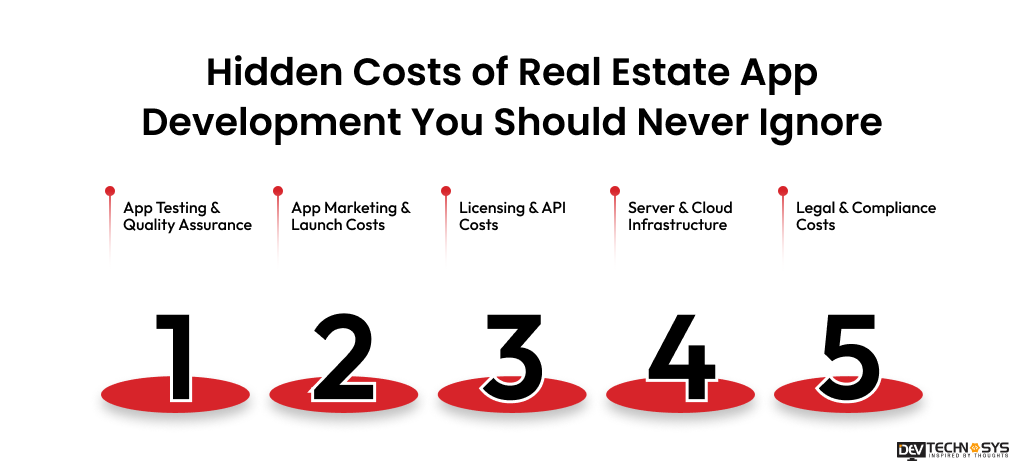
Even after budgeting for core development, several hidden costs can significantly impact the overall cost to build an app like MagicBricks. These are often overlooked but essential for a smooth, scalable, and successful app launch.
1. App Testing & Quality Assurance
Thorough testing ensures your app works seamlessly across different devices, screen sizes, and OS versions. Testing for functionality, performance, and usability takes time and effort, especially for advanced features like AI recommendations, in-app chat, or virtual tours. Partnering with experts or choosing to hire mobile app developers in Middle East can further ensure high-quality QA processes and efficient testing standards. Skipping QA can result in bugs, crashes, and poor user experience, which can be far more expensive to fix later.
2. App Marketing & Launch Costs
Building the app is only half the journey. Marketing, app store submission, social media campaigns, and initial promotions are necessary to attract users and generate traction. Even the best app will fail to gain users without a proper launch and marketing strategy, which adds to the overall investment.
3. Licensing & API Costs
Many essential features rely on third-party services such as maps, payment gateways, AI algorithms, chat systems, and cloud storage. These services often require ongoing subscriptions or license fees, which are recurring costs that need to be factored into your budget.

4. Server & Cloud Infrastructure
Your backend requires servers, cloud storage, and database management. As user numbers grow or the app includes media-rich content, server scaling and bandwidth can become significant expenses. Proper planning ensures smooth performance and avoids unexpected infrastructure costs.
5. Legal & Compliance Costs
Real estate apps must comply with local property laws, data privacy regulations, and terms of service requirements. When you make a real estate app, consulting legal experts and ensuring compliance helps prevent fines, lawsuits, and operational risks, which can be a hidden but crucial expense.
How To Reduce the Cost To Create an App Like MagicBricks Without Compromising Quality
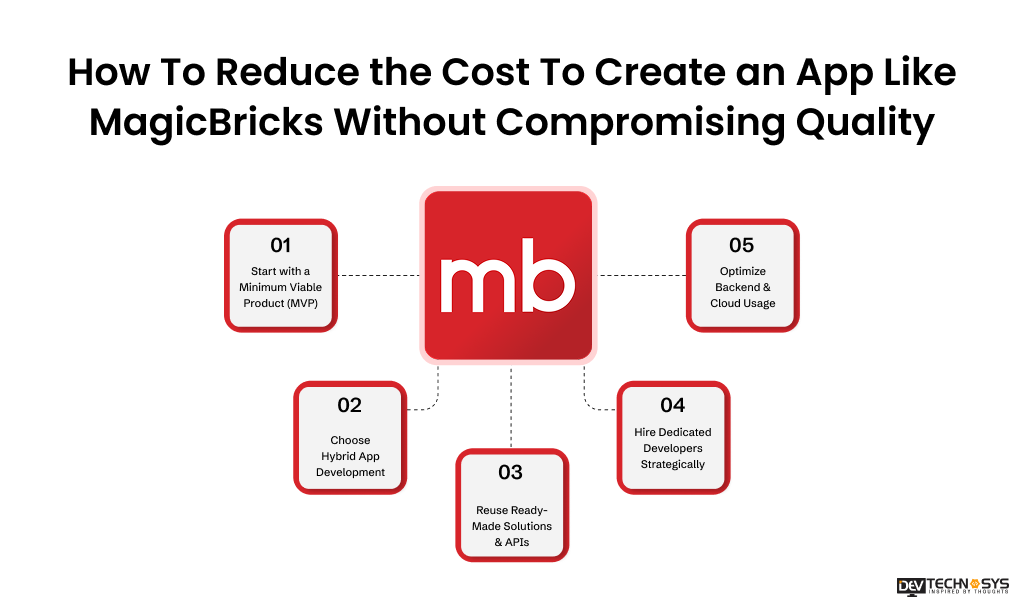
Building a feature-rich real estate app doesn’t always mean spending a fortune. With smart planning and strategic choices, you can reduce the cost to create an app like MagicBricks without compromising functionality, performance, or user experience.
1. Start with a Minimum Viable Product (MVP)
Launching an MVP allows you to focus on essential features like property listings, search filters, and user dashboards first. This approach reduces initial development time and cost, avoiding investment in complex features before validating user demand. Once your app gains traction, you can gradually add advanced functionalities like AI recommendations, virtual tours, or analytics.
2. Choose Hybrid App Development
Hybrid apps use a single codebase for both Android and iOS, reducing development time and effort compared to building separate native apps. This approach lowers costs without significantly compromising performance or user experience. Hire hybrid app development services to build an app like MagicBricks without compromising quality over costs.
3. Reuse Ready-Made Solutions & APIs
Using pre-built modules, templates, and third-party APIs for maps, chat, payment gateways, or notifications saves significant custom development effort. This strategy accelerates the development timeline and reduces cost while maintaining quality and functionality. Many reliable APIs provide scalable, tested solutions that integrate seamlessly with your backend.
4. Hire Dedicated Developers Strategically
Instead of assembling a full in-house team, hire dedicated developers through a real estate app development company or by hiring dedicated developers. Skilled professionals deliver high-quality code faster, reducing development time and errors. Outsourcing also allows you to scale your team according to project needs, keeping costs predictable. This approach combines expertise, efficiency, and flexibility, making it ideal for budget-conscious startups.
5. Optimize Backend & Cloud Usage
Efficient backend planning reduces costs without affecting app performance. Start with infrastructure that matches expected traffic, then scale gradually as user numbers grow. Using cloud services with pay-as-you-go models avoids over-provisioning resources and unnecessary spending. Optimized backend design also ensures smooth handling of property data, user management, and analytics, which prevents expensive future upgrades.
Quote
According to Georges Calas, CEO of Lifesize Plans Dubai, “From immersive Virtual Reality and Augmented Reality walkthroughs to AI‑driven analytics, these new technologies are redefining how real estate is bought, sold, and built in the UAE.”
Monetization Strategies: How To Earn Revenue From a Property Listing App
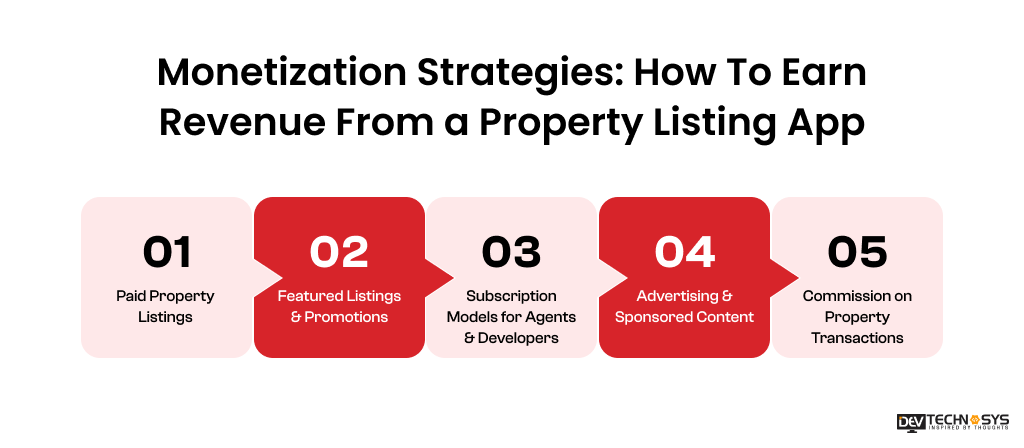
A property listing app can generate revenue in multiple ways beyond just offering free listings. Choosing the right monetization model ensures profitability while maintaining a positive user experience. Aligning these strategies with the latest real estate app development trends ensures your platform stays competitive and scalable. Here are some effective strategies for a MagicBricks alternative development:
1. Paid Property Listings
Charge property owners or real estate agents a fee to list their properties on your platform. You can offer tiered packages based on listing visibility, duration, or premium features like highlighted listings. Paid listings not only generate steady revenue but also encourage higher-quality and verified content. This strategy is widely used in real estate portals to maintain profitability while keeping basic services free for users.
2. Featured Listings & Promotions
Allow users to pay extra to feature their properties at the top of search results or in special promotional sections. Featured listings increase exposure and engagement, giving sellers higher chances of attracting buyers. This monetization method works well alongside standard paid listings, providing flexible options for property owners and generating incremental revenue. It also improves user satisfaction by offering premium visibility.
3. Subscription Models for Agents & Developers
Offer subscription packages for real estate agents, brokers, or developers who want unlimited listings or access to advanced analytics tools. Subscriptions provide predictable recurring revenue while fostering long-term engagement with your platform. You can include benefits like lead management, performance reports, and access to premium marketing tools.
4. Advertising & Sponsored Content
Display advertisements from related businesses, such as home loan providers, interior designers, or moving services. Sponsored content and banner ads can generate revenue without charging property owners directly. Carefully managed advertising ensures it does not disrupt user experience. This model works best once your app has a significant user base, giving advertisers better visibility and ROI.
5. Commission on Property Transactions
If your app facilitates direct sales or rentals, you can earn a commission on successful transactions. This requires secure payment integration and legal compliance, but can provide a high-value revenue stream. Commissions motivate you to ensure smooth transactions and high-quality service. Many real estate apps use this strategy to align their success with that of property sellers and agents.

How to Scale a Real Estate App Like MagicBricks for Long-Term Success
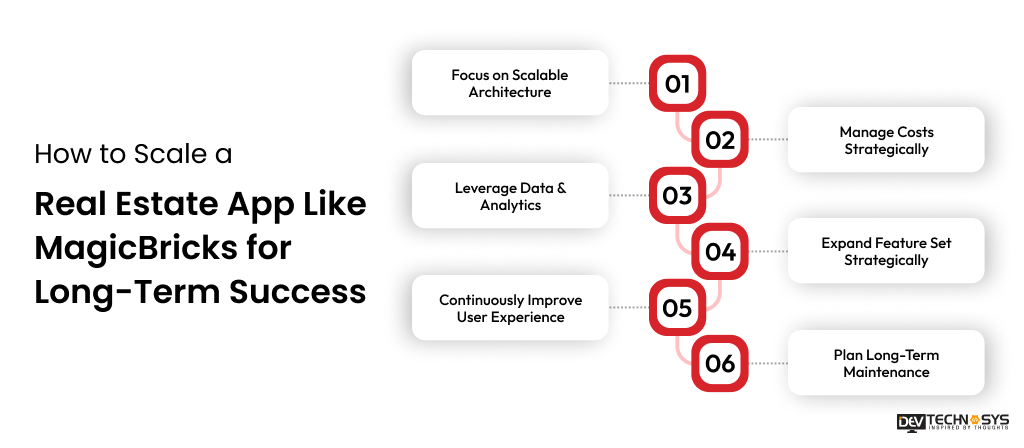
To build an app like MagicBricks is just the beginning; scaling it effectively is what determines long-term success. As your user base grows, your platform must handle increased traffic, data, and feature demands without compromising performance or user experience. Here’s how you can ensure sustainable growth:
1. Focus on Scalable Architecture
Design your app with a scalable backend from day one. Cloud-based infrastructure allows you to handle increasing user traffic, property listings, and media content without downtime. Using modular architecture also makes it easier to add new features as your business grows. This foundation ensures your app remains flexible, adaptable, and ready for future expansion without major technical disruptions.
2. Manage Costs Strategically
Scaling is not just about adding features; it’s also about controlling expenses. Planning your infrastructure, development phases, and feature rollouts carefully helps optimize your mobile app development cost. By avoiding unnecessary features in early stages and focusing on core functionalities, you can allocate resources more efficiently while maintaining high performance.
3. Leverage Data & Analytics
Track user behavior, search patterns, and engagement metrics to understand what users want. Data-driven decisions help you improve property recommendations, optimize search filters, and enhance overall user experience. Analytics also play a key role in refining your monetization strategies and improving conversion rates over time.
4. Expand Feature Set Strategically
Instead of launching all features at once, add advanced functionalities in phases. Features like AI-based recommendations, virtual tours, and smart alerts should be introduced based on user demand and business goals. If you aim to build a real estate app like Wasalt, this phased approach allows you to stay competitive while continuously improving your platform based on real user needs and market trends.
5. Continuously Improve User Experience
Regularly update your app based on user feedback and market demands. Smooth navigation, faster load times, and intuitive design directly impact retention rates. Even small UX improvements can significantly increase user engagement and conversions.
6. Plan Long-Term Maintenance
Ongoing updates, bug fixes, and server optimization are essential for long-term success. As your user base grows, so do technical demands, making it important to plan for mobile app maintenance costs in advance. Proper maintenance ensures consistent performance, reduces downtime, and keeps your app aligned with the latest technology standards.
Conclusion
The cost to build an app like MagicBricks depends on factors such as app complexity, platform choice, backend requirements, UI/UX design, third-party integrations, and hidden costs like testing, marketing, and legal compliance.
By carefully planning your budget, starting with an MVP, leveraging hybrid development, using ready-made solutions, and hiring experienced developers, you can control costs without compromising quality.
Choosing the right mobile app development company further ensures smooth development, timely delivery, and ongoing support. With strategic planning, your app can become a successful platform in the growing real estate market.
FAQs
Q1. What is the Average Cost to Make an App Like MagicBricks?
The average cost to make an app like MagicBricks typically ranges from $8,000 to $25,000. The final amount depends on factors like app complexity, platform choice, UI/UX design, backend development, and third-party integrations. Hidden costs, such as testing, server infrastructure, and maintenance, may slightly increase the overall budget.
Q2. How Long Does MagicBricks Clone App Development Take?
A basic property search app development can take 1 to 2 months, while an advanced MagicBricks clone with AI recommendations, virtual tours, and analytics may require 4 to 6 months. While mid-level apps with verified listings, maps integration, chat, and notifications take 2 to 4 months to build.
Q3. Which Platform Should I Choose: Android, iOS, or Hybrid?
Native Android app development or iOS app development provides optimal performance, but increases cost if building both. Hybrid app development allows a single codebase to run on multiple platforms, reducing time and MagicBricks app development costs while maintaining user experience.
Q4. Can I Build a Real Estate App With a Limited Budget?
Yes, you can build a MagicBricks alternative even on a limited budget by starting with an MVP. Focus on essential features like property listings, search filters, and dashboards first. You can add advanced features like AI recommendations, virtual tours, and analytics in future updates to manage costs efficiently.
Q5. What Team Do I Need to Build a Property Rental App?
A professional team for a property rental app development typically includes: a project manager, UI/UX designer, Android and/or iOS developers, backend developers, QA testers, and optionally a marketing strategist. Hiring dedicated developers or working with a real estate app development company ensures expertise and efficient project delivery.