





User registration and login Menu browsing & customization Cart & checkout Secure payments Real-time order tracking Admin and delivery management Optional: In-app chat, voice ordering, loyalty rewards, AI recommendations" } }, { "@type": "Question", "name": "How Can I Ensure Users Keep Using The App?", "acceptedAnswer": { "@type": "Answer", "text": "Here are some effective engagement strategies to drive excellent service and retention.
Personalized offers and discounts Loyalty and reward programs Push notifications and reminders Smooth UX/UI and fast loading Accurate order tracking Responsive customer support" } }, { "@type": "Question", "name": "Can This App Support Multiple Restaurant Branches?", "acceptedAnswer": { "@type": "Answer", "text": "Yes, the Kudu Restraunt clone app can scale to support multiple locations and partnerships. It includes:
Single restaurant support Multi-branch management Third-party restaurant integrations." } }, { "@type": "Question", "name": "How Long Does It Take To Build an App Like Kudu Restaurant?", "acceptedAnswer": { "@type": "Answer", "text": "Kudu Restaurant app development typically takes 3 to 6 months, depending on complexity, features, platforms, and integrations. Basic MVPs take around 3 months, mid-level apps 4 to 5 months, while advanced apps with AI, AR, or voice ordering may take longer." } } ] }
Key takeaways:
-
- Developing an app like Kudu requires careful planning, research, and understanding user needs, ensuring a seamless experience for customers, restaurants, and delivery partners.
- Core features such as menu browsing, cart & checkout, secure payments, and real-time order tracking are essential for smooth operations.
- Advanced features such as in-app chat, voice ordering, loyalty programs, and AI recommendations enhance engagement and differentiate your app from competitors.
- Choosing the right technology stack (React Native/Flutter, Node.js/Django, cloud services, and secure payment gateways) ensures scalability, performance, and security.
- A well-defined monetization strategy, along with delivery fees, commissions, subscriptions, in-app advertising, and promotions, can maximize profitability and long-term sustainability.
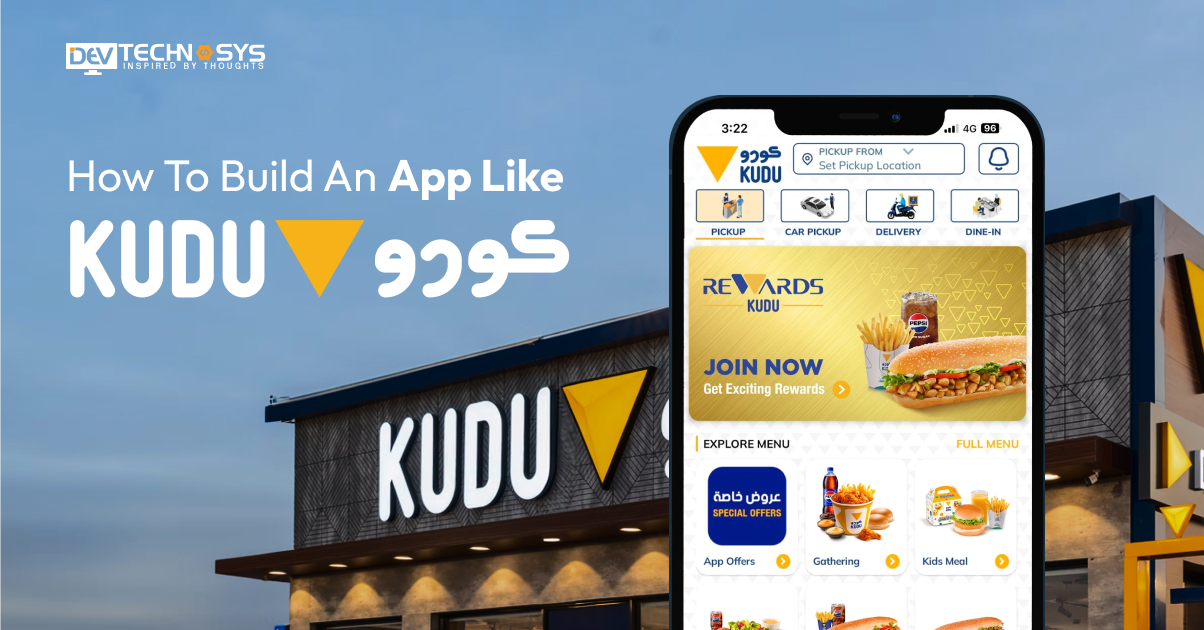
In today’s fast-moving, mobile-first world, food lovers don’t just crave great taste; they crave convenience. That’s exactly why restaurant apps like Kudu have become so popular. From browsing mouth-watering menus and customizing meals to placing quick orders and tracking deliveries in real time, everything happens in just a few taps. If you’re planning to build an app like Kudu Restaurant, you’re not just creating a food ordering platform; you’re building a digital dining experience.
Whether you run a fast-food chain or a growing restaurant brand, a powerful mobile app can boost sales, strengthen customer relationships, and keep your business ahead in a competitive food market. Let’s dive into the world of food delivery app development and see the process to develop app like Kudu restaurant, the features it requires, the benefits, the cost requirements, and more. Let’s begin!
What is the Kudu Restraunt App?
An app like Kudu Restaurant is a mobile app designed for restaurant customers to browse menus, place orders, pay digitally, and track deliveries, all from their smartphones. It functions as a digital ordering and customer-engagement platform for a restaurant or food chain. Key services the Kudu Restraunt app provides for users are:
- View the full food menu with images and prices
- Customize orders (size, ingredients, add-ons)
- Place takeaway or delivery orders
- Pay securely using digital wallets, cards, or UPI
- Track order status and delivery in real time
- Earn loyalty points, offers, or rewards
Food Delivery App Market Stats
- The Food Delivery Mobile Application Market grew from USD 7.74 billion in 2025 to USD 8.64 billion in 2026, showing consistent expansion with a CAGR of 13.39%.
- The food delivery app market value is on track to reach USD 18.67 billion by 2032.
- The UAE Food Delivery Apps Market is valued at USD 1.5 billion, based on a five-year historical analysis
- Companies balance in-house logistics and third-party providers with customer pickup options, each influencing brand visibility, operational costs, and overall customer experience.
From Order To Delivery: How the Kudu App Functions?
A restaurant app like Kudu Restaurant simplifies the entire food ordering journey, from browsing the menu to doorstep delivery. It combines smart technology, secure payments, and real-time tracking to deliver a fast, seamless, and satisfying customer experience.
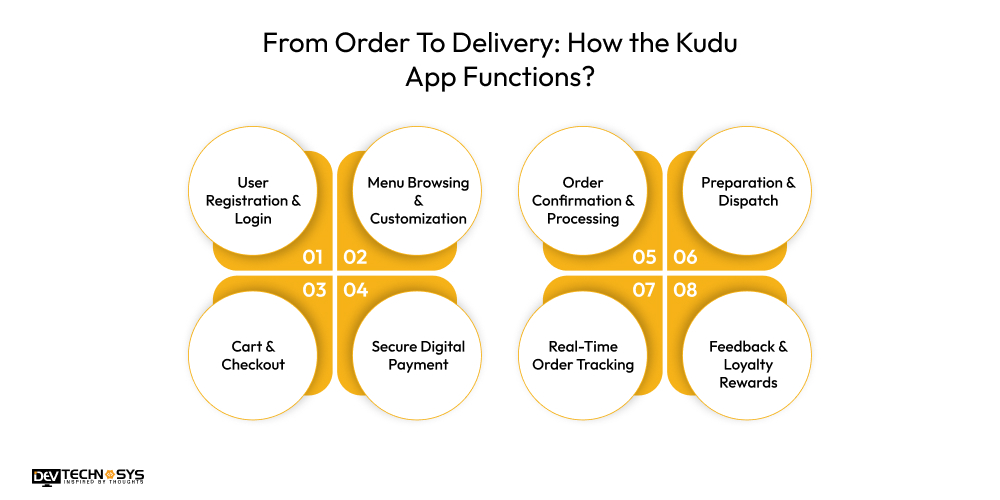
1. User Registration & Login
Customers download the app and quickly sign up using their phone number, email, or social login. A personalized profile is created to save addresses, payment methods, and order history for faster future checkouts.
2. Menu Browsing & Customization
Users browse the interactive digital menu featuring high-quality images, detailed descriptions, and updated pricing. They can customize meals by selecting sizes, add-ons, combo options, and special instructions.
3. Cart & Checkout
Once items are selected, they are added to the cart. The system automatically calculates taxes, applies promo codes, adds delivery charges (if applicable), and shows the final payable amount.

4. Secure Digital Payment
Customers complete the payment using credit/debit cards, digital wallets, or other integrated payment gateways. End-to-end encryption ensures secure and safe transactions.
5. Order Confirmation & Processing
After payment, the order is instantly forwarded to the nearest restaurant branch. The kitchen team receives it through an integrated POS or order management system for immediate processing.
6. Preparation & Dispatch
The restaurant prepares the order according to the selected preferences. For delivery orders, the system assigns the request to an available rider or delivery partner.
7. Real-Time Order Tracking
Customers can track their order status in real time, from confirmation and preparation to dispatch and final delivery.
8. Feedback & Loyalty Rewards
After receiving the order, customers can rate their experience and leave feedback. The app may offer loyalty points, discounts, or exclusive rewards to encourage repeat orders.
What are the Top 10 Popular Kudu Restaurant Alternatives to Explore in 2026?
Looking for the top food delivery apps in Middle East? You’ve arrived at the right place. Here‘s the list of the 10 best food delivery apps in Saudi Arabia that you can consider as an alternative to Kudu Restaurant.
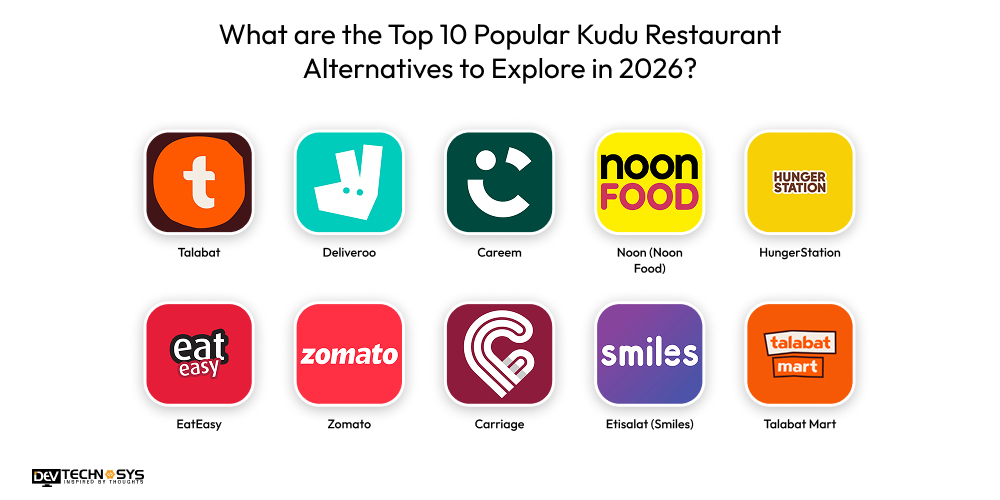
| App | Launch Year | Downloads* | Rating* | Platforms |
| Talabat | 2004 | 10M+ | 4.5 | Android, iOS |
| Deliveroo | 2013 | 100M+ | 4.6 | Android, iOS |
| Careem | 2012 | 50M+ | 4.2 | Android, iOS |
| Noon (Noon Food) | 2017 | 10M+ | 4.5 | Android, iOS |
| HungerStation | 2013 | 10M+ | 4.5 | Android, iOS |
| EatEasy | 2010 | 500K+ | 4.0 | Android, iOS |
| Zomato | 2008 | 100M+ | 4.5 | Android, iOS |
| Carriage | 2016 | 1M+ | 4.0 | Android, iOS |
| Etisalat (Smiles) | 2014 | 5M+ | 4.6 | Android, iOS |
| Talabat Mart | 2018 | 5M+ | 4.4 | Android, iOS |
If you are still confused about which app to choose, here are the top 5 apps trusted by users in the Middle East. All the apps mentioned below provide exceptional food ordering services without hassle.
1. Talabat:
A leading Middle Eastern online food-ordering and delivery platform founded in 2004, connecting users with thousands of restaurants across GCC countries. It offers real-time tracking, promotions, and expanded services like groceries and essentials. Known for its easy interface, fast delivery, and subscription plan (Talabat Pro), which offers free delivery and exclusive deals.
Delivery fees and promos vary by location and time. To build a similar app like Tabalat, contact a top mobile app development company in Dubai.
Industry Insights: Statista states that Talabat is the leading food delivery app in the Middle East, often the most used choice for online food orders across the region, with strong top-of-mind awareness among users.
2. Deliveroo:
Deliveroo is a global food and grocery delivery service launched in 2013, partnering with local and premium restaurants to deliver meals fast. It is one of the best Kudu Restaurant alternatives
that features real-time tracking, scheduled deliveries, and a membership service (Deliveroo Plus) for free deliveries and rewards. The app also highlights exclusive restaurant partners and peak-time delivery insights. Costs include per-order delivery fees and optional subscription plans for frequent users.
3. Careem:
As one of the best food delivery apps in Dubai, Careem expanded into food delivery (Careem NOW) across the Middle East, the UAE, and Pakistan. It combines restaurant ordering with rides, groceries, courier services, secure payments, real-time tracking, and loyalty points within one platform. Popular for bundled offers and dynamic pricing, This Kudu Restaurant clone app often runs promo codes, partner discounts, and seasonal deals. Delivery charges vary by distance and time.
Industry Insight: According to Syrve MENA numbers, in 2025, Careem delivered more than 1.6 million burgers across the UAE, averaging about 4,400 deliveries per day, demonstrating high usage and engagement. Source: Gulf News.
4. Noon (Noon Food):
Part of the Noon super-app launched in the late 2010s, Noon Food offers affordable meals and fast delivery to users in the UAE and across the wider GCC. As one of the top Kudu Restaurant alternatives, Noon seamlessly integrates with its e-commerce ecosystem, offering exclusive food deals, cashback, combo promotions, and transparent pricing. Unique features include Noon Coins rewards and express delivery slots. Costs are competitive, with occasional free delivery events.
5. HungerStation:
HungerStation is considered among the best food delivery apps in Dubai, serving 100+ cities and 55,000+ restaurants, shops, and grocery stores. It offers real-time order tracking, a variety of cuisines, and subscription perks, including free delivery, rewards, and member discounts. The app emphasizes localized service, multilingual support, and frequent flash deals. Payment options include cash on delivery, card, and digital wallets. The costs depend on demand and delivery distance.
What are the Steps to Develop an App Like Kudu Restaurant?
Kudu Restaurant app development procedure requires a clear roadmap from concept to launch. To create an app like Kudu Restaurant, you need to understand your target audience, select the right technology, and create a seamless experience for customers, restaurants, and delivery partners. In this guide to start a food delivery business in Qatar, we ensure covering efficiency, scalability, and success in a competitive market.
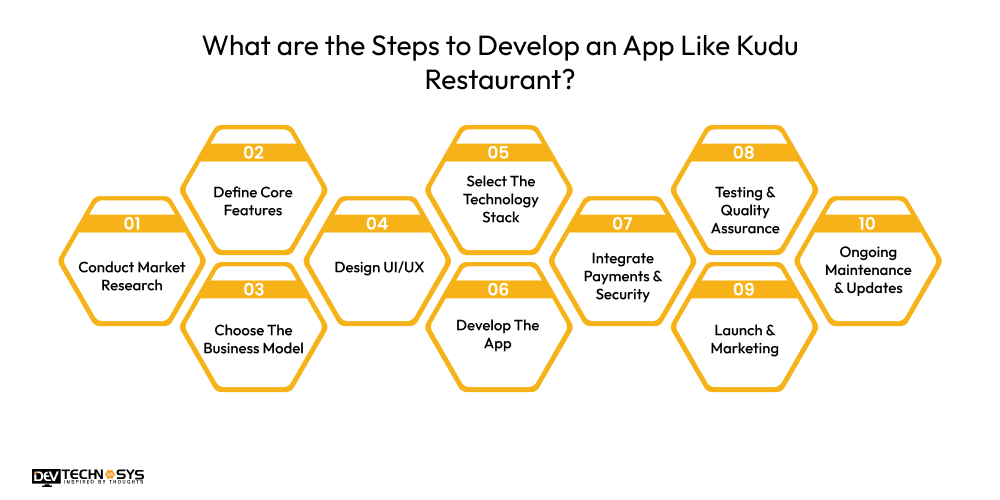
1. Conduct Market Research
The first step to create an app like Kudu Restaurant starts by analyzing competitors, customer behavior, and regional food delivery trends. Identify your target audience, pricing strategy, and unique selling proposition. Understanding user expectations helps you design features that solve real problems and position your restaurant app effectively in a competitive market.
2. Define Core Features
To create a Kudu Restaurant clone app, outline essential features such as user registration, menu browsing, customization, cart management, secure payments, order tracking, push notifications, and loyalty rewards. If you want to build food delivery apps like Postmates, prioritize the features for your MVP to reduce development time while ensuring a smooth, functional user experience.
3. Choose The Business Model
Decide whether the app will serve a single restaurant, multiple branches, or integrate third-party delivery services. To create an app like Kudu Restaurant, finalize revenue streams like delivery charges, subscription plans, promotions, or in-app advertising to ensure long-term profitability and sustainable growth.
| Model | Description | Revenue |
| Single Restaurant | One restaurant outlet | Delivery fees, promotions |
| Multi-Branch | Multiple branches of the same brand | Delivery fees, subscriptions, loyalty |
| Aggregator | Multiple restaurants on one platform | Commission, ads, and delivery fees |
4. Design UI/UX
Create a simple, attractive, and intuitive interface to make an app like Kudu Restaurant. Make sure it ensures easy navigation and quick checkout. Focus on responsive layouts, clear calls to action, and visually appealing food images to enhance engagement and encourage repeat orders. Designers from your iOS app development company in UAE will use consistent branding, color schemes, and typography to build trust and recognition. Incorporate micro-interactions and feedback cues to make the app feel dynamic and interactive.
5. Select The Technology Stack
Choose reliable technologies for frontend (iOS/Android), backend servers, cloud hosting, databases, APIs, and payment gateways. A scalable, secure tech stack ensures smooth performance, faster load times, and seamless real-time order management. Take a look at the table below to better understand the technology stack.
| Component | Technology / Tool | Purpose |
| Customer App | Flutter / React Native / Swift / Kotlin | Cross-platform mobile app |
| Admin Panel | React.js / Angular / Vue.js | Menu, orders, reports management |
| Backend | Node.js / Django / Laravel | Business logic, APIs, integrations |
| Database | PostgreSQL / MySQL / MongoDB | Store users, orders, and menus |
| Cloud Hosting | AWS / Google Cloud / Azure | Scalable hosting |
| Payment Gateway | Stripe / PayPal / Apple Pay | Secure digital payments |
| Real-Time Tracking | Google Maps API / Firebase | Track deliveries live |
| Push Notifications | Firebase Cloud Messaging | Order updates & promotions |
| Analytics | Google Analytics / Mixpanel | User behavior & performance |
| Security | OAuth2 / JWT / SSL | Secure login & transactions |
6. Develop The App
Begin Android app development with an MVP including essential features. Build the customer app, admin dashboard, and delivery management system simultaneously. Ensure seamless integration between frontend and backend systems to manage orders. Focus on scalability to handle a growing user base and order volume. Optimize performance for fast loading, smooth navigation, and minimal downtime. Incorporate modular architecture to allow easy addition of new features in future updates.
7. Integrate Payments & Security
Experts in food delivery app development services will implement trusted payment gateways with encryption protocols and secure authentication systems. Protect user data with SSL certificates and adhere to compliance standards to ensure secure transactions and build customer trust. Enable multiple payment options, such as cards, wallets, and UPI, for user convenience. Conduct regular security audits and penetration testing to prevent fraud and data breaches.
8. Testing & Quality Assurance
Experts conduct functional, usability, security, and performance testing before launch to ensure an app like Kudu Restaurant performs well. Identify and fix bugs, optimize loading speed, and ensure smooth order processing. A thoroughly tested app reduces negative reviews and enhances user satisfaction.
9. Launch & Marketing
Once theapp passes the testing phase, it is ready to be launched. Deploy the app on Google Play and the App Store. Promote it through social media campaigns, influencer marketing, in-store QR codes, and introductory offers to drive downloads and boost early engagement.
10. Ongoing Maintenance & Updates
Post-launch maintenance is an unskippable step because it keeps the app functional and relevant for users. Continuously monitor performance, gather user feedback, and release updates with new features or improvements. Regular maintenance ensures long-term success, customer retention, and adaptability to evolving market trends.
Can You Provide a Feature Checklist to Build an App Like Kudu Restaurant?
Building a restaurant app like Kudu requires careful planning to ensure it meets both customer and business needs. A well-structured feature checklist helps developers prioritize essential functionalities and create a seamless, engaging user experience. Below is a detailed checklist covering all three app panels.
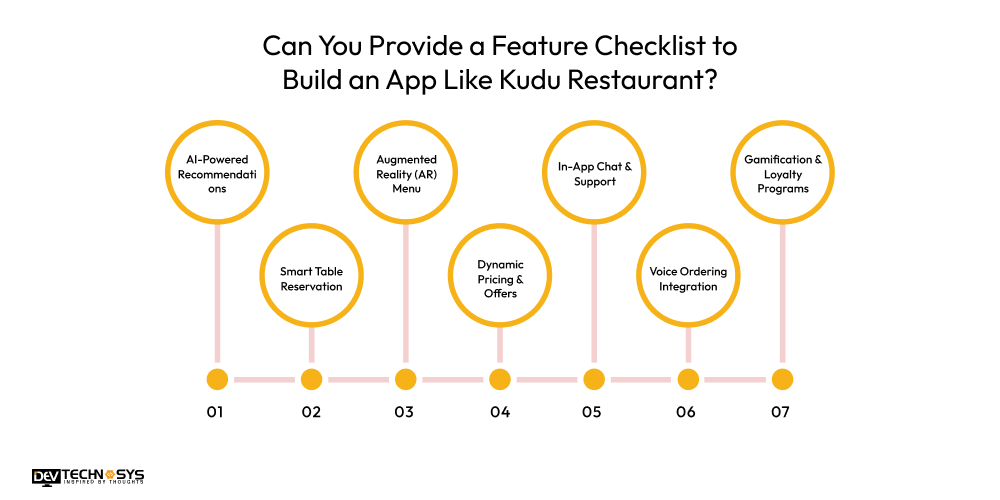
| Customer App | Admin Panel | Delivery/Rider Panel |
| User Registration & Login | Dashboard & Analytics | Order Assignment |
| Menu Browsing & Customization | Menu Management | Route Optimization |
| Cart & Checkout | Order Management | Status Updates |
| Secure Payment | User Management | Earnings & Incentives |
| Real-Time Order Tracking | Reporting & Insights | Notifications |
1. AI-Powered Recommendations
The role of artificial Intelligence in food delivery industry is pretty massive. Use artificial intelligence to analyze user preferences, order history, and trending items. Offer personalized dish suggestions to enhance customer satisfaction, increase average order value, and encourage repeat purchases through smart upselling techniques.
2. Smart Table Reservation
Allow customers to book tables in advance with real-time availability. Automatically confirm reservations, send reminders, and manage peak hours efficiently, improving customer convenience and optimizing restaurant seating capacity.
3. Augmented Reality (AR) Menu
Developers must integrate AR technology to display 3D visuals of dishes. Users can virtually see portion sizes, ingredients, and presentation, creating an immersive, interactive experience that helps them make informed ordering decisions.

4. Dynamic Pricing & Offers
Implement real-time pricing based on demand, peak hours, or special events. Combine personalized discounts, bundle offers, and flash sales to increase engagement, attract new users, and boost overall revenue.
5. In-App Chat & Support
Provide real-time communication between customers, restaurant staff, and delivery partners. Address order queries, complaints, or special requests instantly, improving customer satisfaction, trust, and overall app reliability.
6. Voice Ordering Integration
Enable customers to place orders via voice commands in the app or with smart assistants. This feature ensures hands-free convenience, faster ordering, and accessibility for users with disabilities, enhancing the overall user experience.
According to Market Reports World, worldwide, consumers increasingly use voice assistants with 8.4 billion voice‑enabled devices in operation by 2025, demonstrating a massive reach for voice features.
7. Gamification & Loyalty Programs
Incorporate points, badges, levels, and challenges for users. Reward repeat orders and app engagement to drive customer loyalty, boost retention, and encourage social sharing, creating long-term brand advocates.
Why Businesses Must Invest in an App Like Kudu Restaurant?
In today’s fast-paced digital world, having a restaurant app is no longer optional. Apps like Kudu streamline ordering, enhance customer engagement, and unlock new revenue opportunities for businesses.
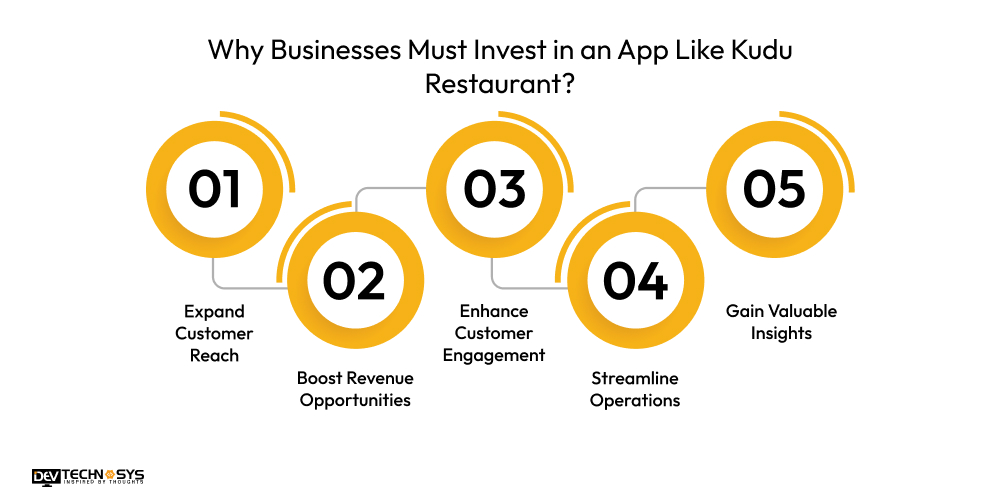
1. Expand Customer Reach:
A meal delivery app like Kudu Restaurant allows restaurants to connect with a wider audience beyond physical locations, reaching users who prefer ordering online or via mobile.
2. Boost Revenue Opportunities:
Through delivery fees, promotions, loyalty programs, and in-app upselling, restaurants can create multiple revenue streams and increase average order value.
3. Enhance Customer Engagement:
Push notifications, personalized offers, loyalty rewards, and real-time order tracking keep customers engaged, encourage repeat purchases, and strengthen brand loyalty.
4. Streamline Operations:
A Kudu Restaurant clone app must integrate ordering, payment, and delivery management, reducing human errors, saving time, and improving operational efficiency for staff and management.
5. Gain Valuable Insights:
Analytics dashboards and reports provide data on customer preferences, order trends, and peak hours, helping businesses make informed decisions and refine marketing strategies.
How Much Does it Cost to Build an App Like Kudu Restaurant?
In general, the cost to build an on-demand food delivery app like Kudu Restaurant ranges from $8,000 to $30,000+ (around 29,380.00 AED to 110,175 AED) in the GCC region, depending on features, complexity, and the development team.
A basic Kudu Restaurant app development cost will range from $8,000 to $15,000, while a fully featured app with real-time tracking, AI recommendations, and a custom UI/UX can exceed $30,000. To help you better understand, we present a table detailing the food delivery app development cost.
| App Type | Estimated Cost (USD) |
| Basic / MVP | $8,000 – $12,000 |
| Mid-Level | $12,000 – $20,000 |
| Advanced / Full-Featured | $20,000 – $30,000 |
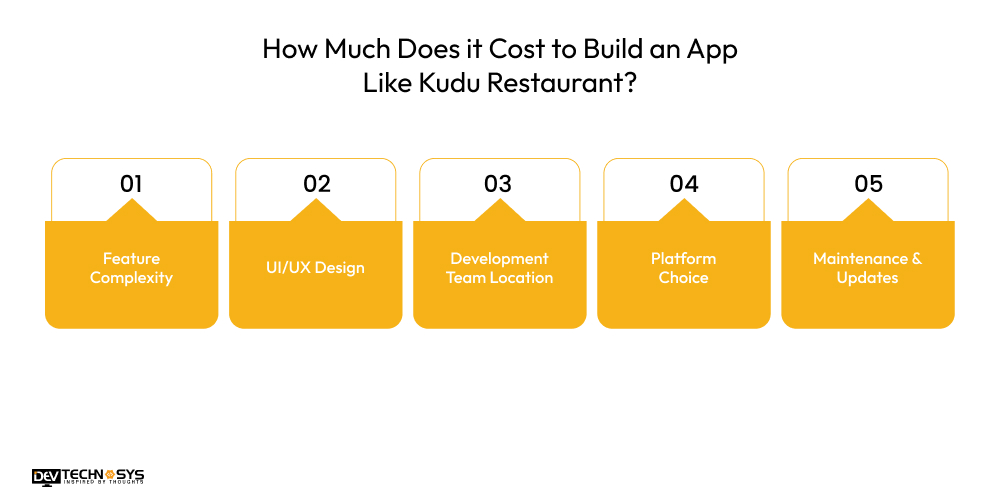
Various factors impact the final cost of developing the Kudu Restaurant app, including features, platform, design, and more. This section explains the key factors affecting the cost to develop an app like Kudu Restaurant:
1. Feature Complexity
Features can significantly affect the food delivery app development cost. Advanced features like AI-based dish recommendations, AR menus, voice ordering, gamification, and loyalty programs require additional coding, testing, and integration. The more sophisticated the functionality, the longer development takes, directly increasing both time and overall mobile app development cost.
| Feature Type | Estimated Cost Impact (USD) |
| Basic Features | $3,000 – $6,000 |
| Mid-Level Features | $6,000 – $8,000 |
| Advanced Features (AI, AR, Gamification) | $8,000 – $10,500 |
2. UI/UX Design
Custom, visually engaging interfaces require more effort than standard templates, thereby increasing the overall Kudu Restaurant app development cost. Interactive designs, smooth animations, and intuitive workflows improve the user experience. However, custom UI/UX requires additional design, prototyping, and testing, thereby increasing the cost to develop an app like Kudu Restaurant.
| Design Type | Estimated Cost Impact (USD) |
| Template-Based | $1,000 – $3,000 |
| Custom UI/UX | $3,000 – $6,000 |
| Interactive & Animated | $6,000 – $10,000 |
3. Development Team Location
Developer rates vary by region. North American or European teams charge higher hourly rates; on the other hand, if you hire mobile app developers in Dubai or Southeast Asia then the development rates will be more affordable. Location directly affects total cost, while maintaining quality depends on team expertise. Regional differences in labor costs significantly affect the total project budget.
| Region | Hourly Rate (USD) | Estimated Project Cost Impact |
| North America | $50 – $150 | High |
| Europe | $40 – $120 | High |
| India / MENA / SEA | $15 – $50 | Medium |
4. Platform Choice
Building for a single platform (iOS or Android) is cheaper, whereas dual-platform native apps require separate codebases and resources. Cross-platform frameworks save time but may require additional customization, which influences the cost to develop an app like Kudu Restaurant. The table mentioned below explains how supporting multiple platforms increases the cost to create an app like Kudu Restaurant.
| Platform | Estimated Cost (USD) |
| Single Platform (iOS or Android) | $8,000 – $13,000 |
| Dual Native Platforms (iOS + Android) | $12,000 – $20,000 |
| Cross-Platform Framework | $15,000 – $22,000 |
5. Maintenance & Updates
Mobile app maintenance cost will be around 12% to 20% of the total app development cost. Apps require ongoing support, including bug fixes, server maintenance, performance optimization, and periodic feature upgrades. Ignoring maintenance can lead to a poor user experience, but regular updates ensure long-term usability and reduce the total cost to make an app like Kudu Restaurant.
| Maintenance Type | Estimated Cost (USD per year) |
| Bug Fixes & Minor Updates | $1,000 – $3,000 |
| Performance Optimization | $2,000 – $5,000 |
| Feature Upgrades & Enhancements | $3,000 – $7,000 |
How to Maximize Revenue in Food Delivery App Development?
Building a food delivery app is not just about taking orders; it’s about creating sustainable revenue streams. Effective monetization strategies ensure your app remains profitable while enhancing user engagement and restaurant partnerships.
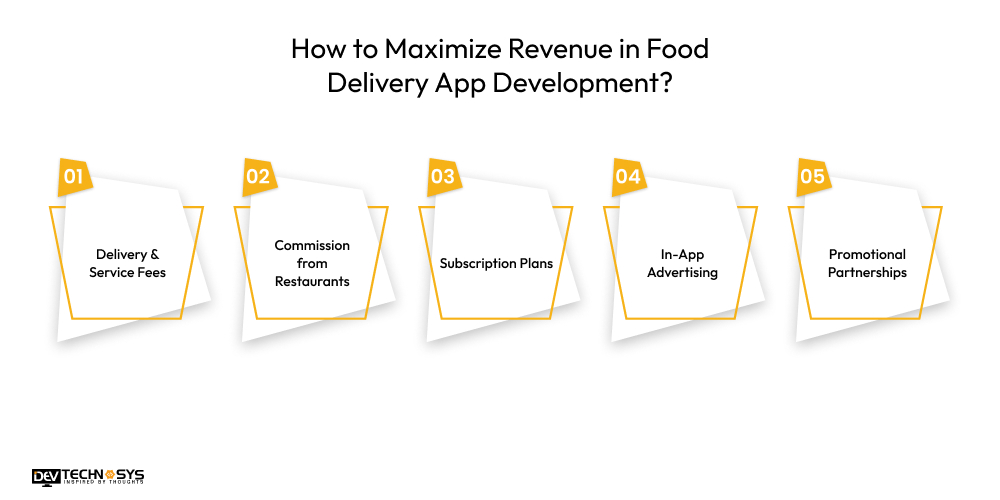
1. Delivery & Service Fees
Food delivery apps charge customers a delivery fee, which can be flat, distance-based, or demand-sensitive, depending on location and order size. This provides consistent revenue per transaction, helps cover operational and logistics costs, and ensures customers enjoy the convenience of timely home delivery while maintaining a seamless app experience.
Industry Insights: According toa report by Statista, the online food delivery market worldwide is projected to reach US$1.40 trillion in revenue in 2025, with convenience and delivery fees a core part of that ecosystem
2. Commission from Restaurants
The app earns a percentage of every order placed through the platform, typically ranging between 10% to 25%. According to top food delivery app development companies in Riyadh, this model guarantees a steady revenue stream while encouraging restaurants to join and stay active. Commission rates may vary based on restaurant popularity, order volume, or premium features offered, providing flexibility for both parties.
3. Subscription Plans
Offer customers subscription-based packages for monthly or yearly fees, including perks like free delivery, priority service, early access to promotions, or exclusive discounts. This strategy fosters customer loyalty, encourages frequent use, increases engagement, and creates predictable recurring revenue for the app, strengthening long-term financial stability.
4. In-App Advertising
Allow restaurants, brands, and third-party companies to advertise in the app through banners, featured listings, sponsored promotions, or pop-ups. It generates additional revenue while helping advertisers increase visibility, reach a targeted audience, and boost engagement, all without affecting the core user experience or order process.
5. Promotional Partnerships
Collaborate with food brands, beverage companies, or event organizers to run co-branded campaigns, bundle deals, or limited-time offers. These partnerships generate revenue through fees, increase app traffic, enhance user engagement, and provide additional value to customers, strengthening both brand recognition and platform credibility.
What are the Major Challenges in Food Ordering App Development?
The decision to build an app like Kudu Restaurant can elevate your brand, streamline operations, and boost sales, but it also comes with certain challenges. Understanding these hurdles early helps you plan smarter and avoid costly mistakes.
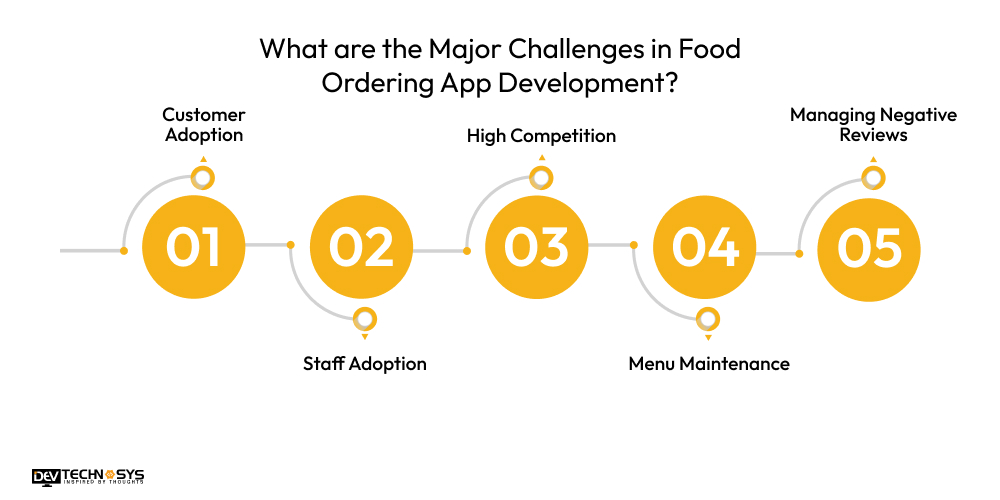
1. Customer Adoption
Getting customers to download your app is only the first step; keeping them engaged is the real challenge. With multiple food delivery apps already on their phones, users need a strong reason to switch. Attractive onboarding offers, loyalty programs, fast checkout, and exclusive deals can drive installs. However, long-term retention depends on seamless performance, intuitive design, and consistent value.
2. Staff Adoption
Technology works best when your team fully supports it. Staff may resist shifting from manual processes to digital systems, especially during busy hours. Without proper training, errors and delays can occur. Clear communication, hands-on onboarding sessions, and simple workflows help employees feel confident and reduce operational friction.
3. High Competition
The food delivery and restaurant app market is highly competitive, dominated by platforms like Uber Eats and DoorDash. To stand out, your app needs a clear USP, whether that’s exclusive menu items, faster delivery, subscription perks, hyper-local branding, or personalized recommendations.
4. Menu Maintenance
Keeping your menu updated with accurate prices, availability, photos, and promotions requires ongoing effort. Outdated listings frustrate customers and damage trust. A user-friendly admin panel that allows real-time updates ensures smooth management and prevents operational confusion.
5. Managing Negative Reviews
No app launches perfectly. Early users may report bugs, delivery delays, or payment issues. Instead of ignoring criticism, respond professionally and fix issues quickly. Transparent communication builds trust and can turn dissatisfied users into loyal advocates.

Final Thoughts
Building an app like Kudu Restaurant requires careful planning, a clear business model, and robust technical execution. With careful planning, the right technology, and attention to customer satisfaction, you can transform your restaurant business into a scalable, modern digital experience that meets the expectations of today’s fast-paced consumers. For businesses planning to develop a similar app like Kudu Restraunt, contact a top food delivery app development company like Dev Technosys. With 800+ skilled restaurant app developers, we deliver projects with perfection.
FAQs
Q1. How Much Does it Cost to Build an App Like Kudu Restaurant?
Depending on complexity, platform, and features, the cost to build an app like Kudu Restaurants can range from $8,000 to $30,000. Basic food ordering apps cost less, while advanced apps with functionalities and integrations like AI, voice ordering, and loyalty programs are at the higher end.
Q2. Which Features Are Essential to Develop an App Like Kudu Restaurant?
Here are the essential features required to develop an app like Kudu Restaurant. These features ensure smooth ordering, while advanced features enhance engagement.
- User registration and login
- Menu browsing & customization
- Cart & checkout
- Secure payments
- Real-time order tracking
- Admin and delivery management
- Optional: In-app chat, voice ordering, loyalty rewards, AI recommendations
Q3. How Can I Ensure Users Keep Using The App?
Here are some effective engagement strategies to drive excellent service and retention.
- Personalized offers and discounts
- Loyalty and reward programs
- Push notifications and reminders
- Smooth UX/UI and fast loading
- Accurate order tracking
- Responsive customer support
Q4. Can This App Support Multiple Restaurant Branches?
Yes, the Kudu Restraunt clone app can scale to support multiple locations and partnerships. It includes:
- Single restaurant support
- Multi-branch management
- Third-party restaurant integrations.
Q5. How Long Does It Take To Build an App Like Kudu Restaurant?
Kudu Restaurant app development typically takes 3 to 6 months, depending on complexity, features, platforms, and integrations. Basic MVPs take around 3 months, mid-level apps 4 to 5 months, while advanced apps with AI, AR, or voice ordering may take longer.