





Key takeaways:
-
- With digitalization nd technological advancements, the travel and tourism industry is also revolutionized. This has made travel, hotel, or flight booking seamless within a few taps through an application.
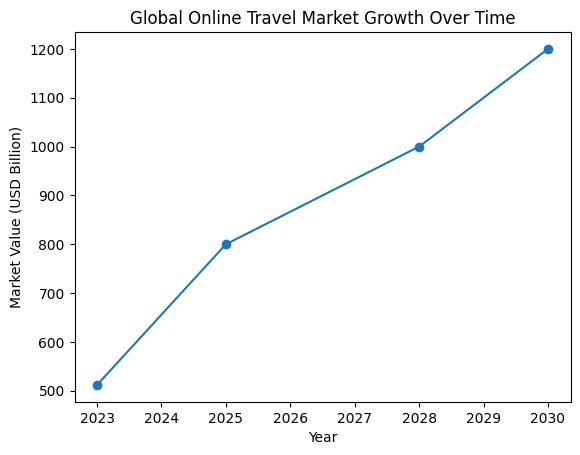
- The online market size of the travel industry was priced at $512 billion in 2023 and is expected to exceed $1.2 trillion by 2030.
- This blog covers reasons entrepreneurs invest in travel apps, a list of top travel apps, and the development process of travel apps.
- Here, you will also learn the must-have features, the cost to develop, factors affecting the cost, and monetization models used to create a travel app like Travelocity.
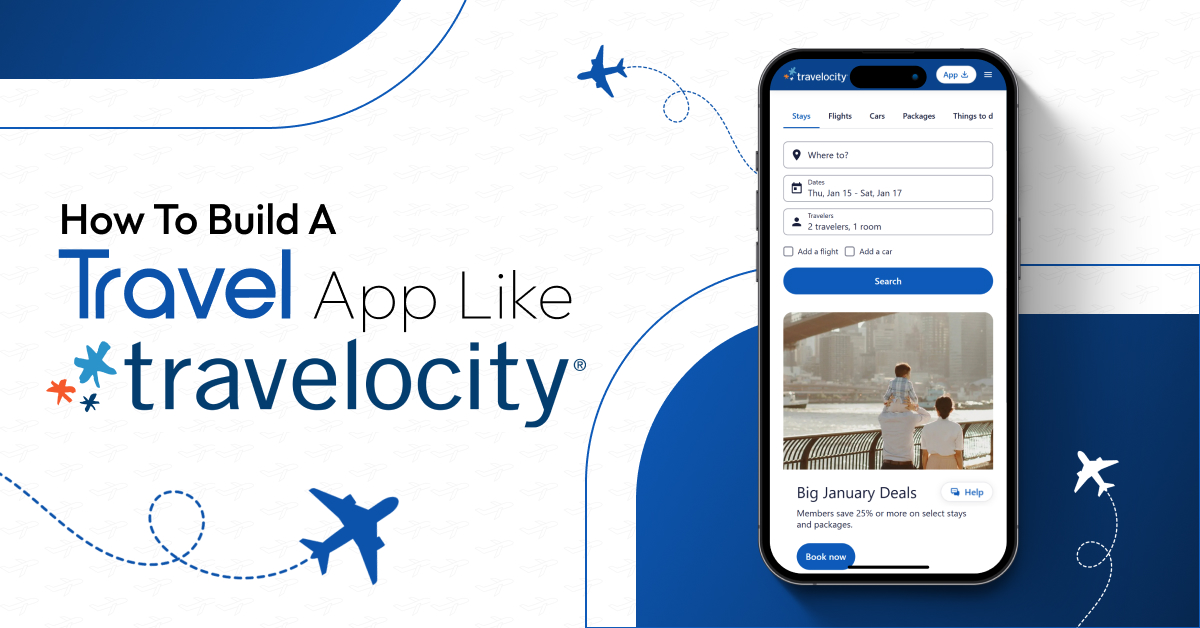
The travel and tourism industry has undergone a massive digital transformation. Especially, the mobile apps are becoming the primary medium for trip planning and bookings. Apps like Travelocity have transformed the way people search, compare, and book flights, hotels, and rental cars from a single interface.
Modern travelers expect speed, personalization, real-time availability, and secure transactions, making travel apps an essential business investment. When entrepreneurs or startups build a travel app like Travelocity, they offer immense revenue potential, global reach, and scalability.
However, developing such an app requires strategic planning, the right technology stack, and a deep understanding of user behavior. This guide explains every critical aspect required to develop a travel app like Travelocity, from market insights to features, costs, and monetization strategies.
What Are The Market Stats Of Travel Apps?
Understanding the market statistics of travel apps provides valuable insights into industry growth, user adoption, and future potential. These numbers highlight how digital travel iOS and Android app development is reshaping booking behavior, driving mobile-first reservations, and creating lucrative opportunities for businesses entering the travel technology ecosystem.
- The global online travel market was valued at approximately $512 billion in 2023 and is expected to exceed $1.2 trillion by 2030, driven by mobile-first bookings and digital travel platforms.
- Mobile travel app bookings account for nearly 60% of total online travel reservations in 2025, reflecting users’ preference for on-the-go trip planning and instant confirmations.
- The travel app market is growing at a CAGR of 9–11% between 2024 and 2030, supported by AI-driven personalization and dynamic pricing models.
- Over 70% of travelers worldwide use at least one travel app for booking flights, hotels, or managing itineraries, highlighting widespread adoption.
- The global travel technology market is projected to cross $18 billion by 2028, with Travelocity-like travel app development driving innovation through automation and real-time data integration.
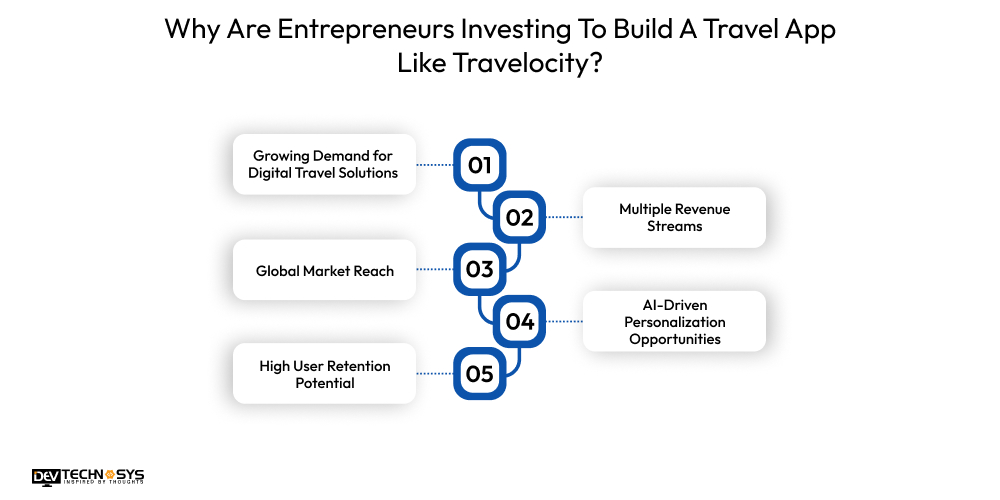
Why Are Entrepreneurs Investing To Build A Travel App Like Travelocity?
Entrepreneurs are increasingly investing in a travel app development solution, such as Travelocity, due to rising demand for digital bookings and centralized travel solutions. With multiple revenue streams, global scalability, and AI-driven personalization, such platforms offer strong returns while addressing modern travellers. Here, we will elaborate on the reasons why entrepreneurs want to create a travel app like Travelocity.
1. Growing Demand for Digital Travel Solutions
Travelers increasingly rely on mobile apps for trip planning, bookings, and itinerary management. A similar app like Travelocity meets this demand by offering convenience, real-time updates, and seamless experiences. If you make a travel app like Travelocity, it is a profitable long-term business opportunity for entrepreneurs.
2. Multiple Revenue Streams
When entrepreneurs start tour & travel business in Dubai for outsiders, it generates income through commissions, ads, premium listings, subscriptions, and partnerships. Unlike single-service apps, a comprehensive travel platform allows entrepreneurs to diversify revenue while maximizing customer lifetime value.
3. Global Market Reach
A Travelocity clone app is not restricted to one geography. Entrepreneurs can target international users, collaborate with global suppliers, and scale their platforms across regions, currencies, and languages with minimal physical expansion and travel app development cost.
4. AI-Driven Personalization Opportunities
Modern travel app development services leverage AI to recommend destinations, predict prices, and personalize offers. Entrepreneurs investing in such platforms gain a competitive edge by delivering tailored experiences that boost engagement and conversions.
5. High User Retention Potential
The best travel apps in Middle East encourage repeat usage through loyalty programs, discounts, and saved preferences. By offering value-added features, entrepreneurs can build long-term relationships with users and increase repeat bookings.
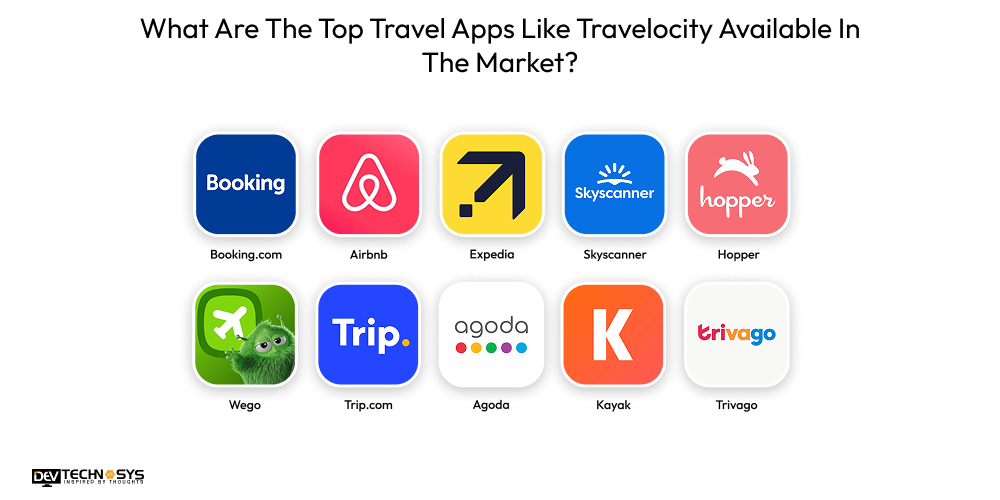
What Are The Top Travel Apps Like Travelocity Available In The Market?
Discover the most popular travel booking apps that are Travelocity alternatives, offering flights, hotels, car rentals, and travel planning features. These apps are popularly used across the Middle East and worldwide. These top travel apps in UAE make travel search and booking easier for millions of users every day.
App Name |
Year Launched |
Ratings |
Downloads |
Platform Availability |
| Booking.com | 1996 | 4.7/5 | 80M+ | iOS, Android, Web |
| Airbnb | 2008 | 4.6/5 | 50M+ | iOS, Android, Web |
| Expedia | 1996 | 4.5/5 | 30M+ | iOS, Android, Web |
| Skyscanner | 2003 | 4.7/5 | 100M+ | iOS, Android, Web |
| Hopper | 2007 | 4.8/5 | 10M+ | iOS, Android |
| Wego | 2005 | 4.6/5 | 20M+ | iOS, Android, Web |
| Trip.com | 1999 | 4.5/5 | 10M+ | iOS, Android, Web |
| Agoda | 2005 | 4.5/5 | 50M+ | iOS, Android, Web |
| Kayak | 2004 | 4.6/5 | 10M+ | iOS, Android, Web |
| Trivago | 2005 | 4.4/5 | 20M+ | iOS, Android, Web |
How To Build A Travel App Like Travelocity?
Generally, a Travelocity app development requires full-stack development services approach that combines market research, feature planning, scalable technology, and user-focused design to deliver seamless booking experiences and long-term business growth.
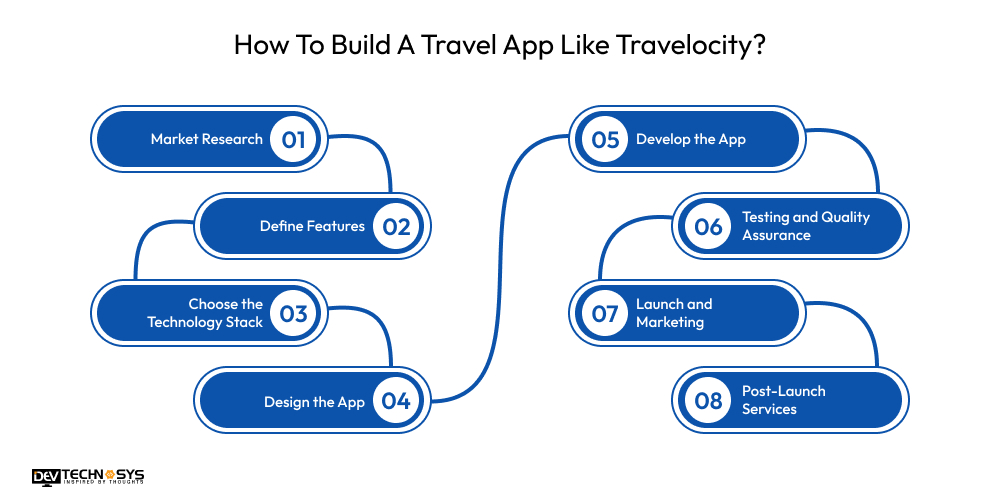
1. Market Research
Market research helps identify your target audience, competitors, and feature gaps while developing Travelocity alternatives. Analyze leading travel apps, user reviews, pricing strategies, and regional demands. This step ensures your app idea is validated, differentiates your offering, and aligns with current travel trends and user expectations. It also helps uncover unmet user needs and emerging travel behaviors across different regions. Strong research reduces business risks and increases chances of market success.
2. Define Features
Clearly define core and advanced features such as flight booking, hotel reservations, filters, and payment gateways. Prioritize must-have features for the MVP and plan advanced functionalities for future updates. This approach controls the mobile app development cost and ensures faster market entry. Well-defined features help create a clear product roadmap and development timeline. This step ensures the app delivers value without unnecessary complexity at launch.
3. Choose the Technology Stack
Selecting the right tech stack ensures scalability, performance, and security. Decide between native or cross-platform frameworks, cloud infrastructure, APIs for bookings, and secure payment systems. A robust tech stack supports real-time updates and high traffic volumes. The right technology choices simplify future upgrades and third-party integrations. It also ensures that when you build an app like Trip.com, it remains reliable as user demand and data volume grow.
4. Design the App
UI/UX design focuses on simplicity, intuitive navigation, and visual appeal. A Travelocity clone app must offer easy search, quick comparisons, and seamless booking flows. User-centric design enhances engagement, reduces drop-offs, and improves overall app retention rates. A visually appealing interface builds trust and encourages repeat usage. Good design directly impacts user satisfaction, conversion rates, and brand perception.
5. Develop the App
A B2C travel portal development like Expedia involves frontend and backend implementation, API integration, database management, and security setup. Agile development methodologies help in continuous testing and feature iteration, ensuring a stable and scalable application aligned with business goals. Efficient development ensures faster delivery while maintaining code quality. Scalable architecture allows the app to handle future feature expansion seamlessly.
6. Testing and Quality Assurance
Testing ensures the app functions smoothly across devices, platforms, and network conditions. QA teams perform functional, performance, security, and usability testing to eliminate bugs, improve reliability, and deliver a flawless user experience. When you build a travel booking app like Etihad Airways, early issue detection reduces post-launch failures and negative reviews. Thorough testing ensures consistent performance even during peak booking seasons.

7. Launch and Marketing
After successful testing, the top travel apps in Dubai are launched on app stores with optimized listings. Marketing strategies such as ASO, digital advertising, influencer partnerships, and referral programs help attract users and generate early traction. A strategic launch to create an app like Travelocity required strong initial visibility and user acquisition. Continuous marketing efforts help sustain growth and brand recognition.
8. Post-Launch Services
Post-launch services include monitoring performance, fixing bugs, adding new features, and scaling infrastructure. Continuous updates based on user feedback ensure the long-term success and competitiveness of your travel mobile app development solutions in the market. Ongoing improvements keep the app aligned with evolving user expectations. Regular updates help maintain competitiveness and long-term user loyalty.
What Are The Must-Have Features Of A Travel App Like Travelocity?
The success of a travel app depends heavily on its features and user experience. Must-have functionalities ensure smooth searching, booking, and payment processes while delivering personalization, security, and real-time updates. These features, integrated in an app by a Travel app development company, help travel apps attract users, improve retention, and stay competitive.
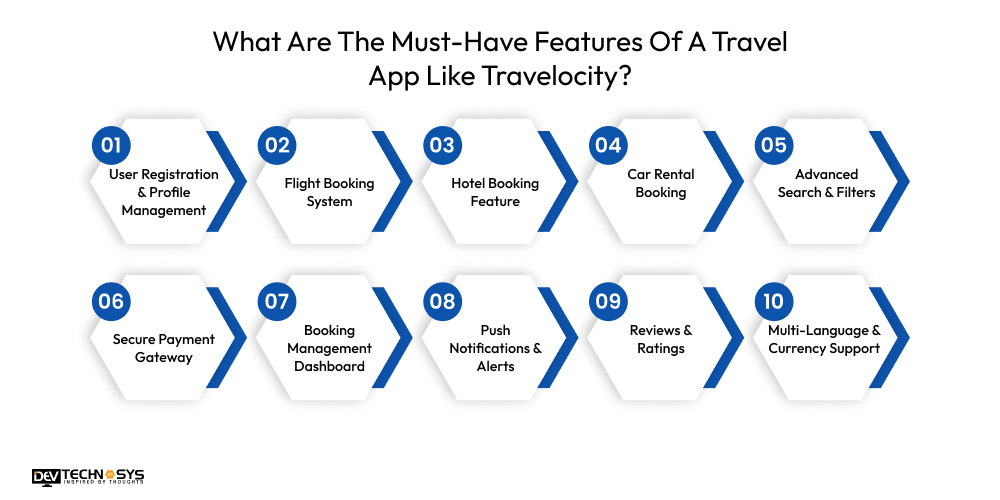
1. User Registration & Profile Management
Allows users to sign up via email or social accounts, save preferences, manage bookings, and store payment details securely. Personalized profiles improve convenience and enable tailored travel recommendations.
2. Flight Booking System
Enables users to search, compare, and book flights in real time. Advanced filters such as price, duration, airlines, and layovers enhance decision-making and improve booking efficiency.
3. Hotel Booking Feature
A hybrid app development company lets the user search hotels with detailed descriptions, images, amenities, pricing, and reviews. Real-time availability and instant confirmation build user trust and improve conversion rates.
4. Car Rental Booking
Allows users to rent vehicles directly from the app. Integrating car rental services provides a complete travel solution and increases average booking value.
5. Advanced Search & Filters
Smart filters help users narrow down options based on budget, ratings, location, and preferences. This feature improves user experience and reduces time spent on decision-making.
6. Secure Payment Gateway
Supports multiple payment methods, including cards, wallets, and international payments. Secure and fast transactions enhance user confidence and reduce cart abandonment.
7. Booking Management Dashboard
Allows users to view, modify, or cancel bookings easily when you build a travel app like Travelocity. A centralized dashboard improves trip organization and reduces dependency on customer support.
8. Push Notifications & Alerts
Sends real-time updates on booking confirmations, price drops, travel reminders, and promotional offers, keeping users engaged and informed throughout their journey.
9. Reviews & Ratings
User-generated reviews and ratings help travelers make informed decisions. It has become the most preferred feature in the top tour and travel business ideas in Cyprus. This feature builds credibility and transparency across hotels, flights, and services.
10. Multi-Language & Currency Support
Develop an app like Travelocity that should be supported by global users by offering multiple languages and currencies. This feature expands market reach and enhances usability for international travelers.
How Much Does It Cost To Build A Travel App Like Travelocity?
The cost to build a travel app like Travelocity typically ranges between $8,000 and $30,000, depending on complexity, features, and development approach. A basic MVP with essential booking features, standard UI, and limited third-party integrations falls on the lower end of the spectrum.
More advanced apps with AI-driven recommendations, real-time pricing, multi-language support, and robust security require higher investment. The Travelocity app development cost also depends on the chosen platform, technology stack, and team location.
While the initial cost to build a travel app may seem significant, a well-built travel app delivers high ROI through multiple monetization channels. Strategic planning and phased development help control expenses without compromising quality.
App Type |
Description |
Estimated Cost Range |
| Basic MVP Travel App | Includes essential features like flight and hotel search, basic booking flow, standard UI, and secure payment integration. | $8,000 – $12,000 |
| Mid-Level Travel App | Offers advanced filters, user profiles, push notifications, third-party API integrations, and improved UI/UX for better user engagement and higher conversions. | $13,000 – $20,000 |
| Advanced Travel App | Comes with AI-powered recommendations, multi-language and currency support, enhanced security, an admin dashboard, and scalable architecture for global expansion. | $21,000 – $30,000 |
Which Factors Affect The Cost To Develop A Travel App Like Travelocity?
The cost to develop an app like Wego or Travelocity varies based on multiple technical and business considerations. Factors such as platform selection, feature complexity, integrations, security standards, and development location play a crucial role in determining overall development expenses and project timelines.
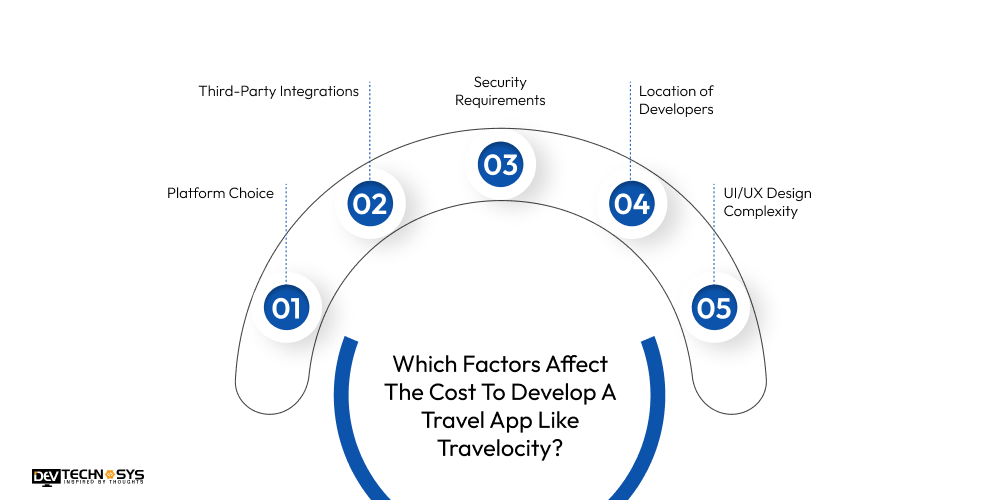
1. Platform Choice
Developing for iOS, Android, or both significantly impacts travel App development cost. Native apps cost more, while cross-platform development reduces time and expenses. Supporting multiple platforms also increases testing and ongoing maintenance efforts. Platform-specific guidelines and updates further influence the expenses of long-term Android and iOS app development services.
Platform Type |
Description |
Estimated Cost |
| Single Platform App | App developed for either iOS or Android with core booking features and basic integrations. | $8,000 – $12,000 |
| Cross-Platform App | One codebase for iOS and Android using frameworks like Flutter or React Native. | $13,000 – $20,000 |
| Native Multi-Platform App | Separate native apps for iOS and Android with optimized performance and advanced features. | $21,000 – $30,000 |
2. Third-Party Integrations
APIs for flights, hotels, maps, payments, and analytics add functionality but increase the cost to maintain an app. Complex integrations require continuous monitoring and version updates. Licensing fees and API usage limits can also impact the recurring operational Travelocity app development cost.
Integration Level |
Description |
Estimated Cost |
| Basic Integrations | Flight or hotel API, maps, and basic payment gateway integration. | $500 – $1,200 |
| Moderate Integrations | Multiple booking APIs, analytics tools, and push notification services. | $1,300 – $2,500 |
| Advanced Integrations | Real-time pricing APIs, CRM tools, multi-payment gateways, and monitoring services. | $2,600 – $3,500 |
3. Security Requirements
A mobile app development company integrates secure authentication, encrypted payments, and data protection measures increases development complexity and overall cost. Compliance with data protection regulations adds further development effort. Regular security audits and updates are essential to prevent vulnerabilities.
Security Level |
Description |
Estimated Cost |
| Basic Security | Standard authentication, SSL encryption, and secure payment handling. | $1,000 – $2,000 |
| Enhanced Security | Data encryption, role-based access, and fraud prevention measures. | $2,100 – $4,000 |
| Advanced Security | Compliance support, penetration testing, secure APIs, and regular audits. | $4,100 – $6,000 |
4. Location of Developers
The cost to hire on-demand app developers varies by region. Hiring developers from cost-effective regions can significantly reduce overall project expenses. Time zone differences and communication models can affect project timelines. Team expertise and experience level also influence overall development quality and cost.
Development Region |
Description |
Estimated Cost |
| Cost-Effective Regions | Developers from regions offering lower hourly rates with good technical expertise. | $8,000 – $14,000 |
| Mid-Cost Regions | Balanced cost and quality with experienced teams and structured workflows. | $14,000 – $22,000 |
| High-Cost Regions | Premium development teams with advanced expertise and higher hourly rates. | $22,000 – $30,000 |
5. UI/UX Design Complexity
When you make a travel app like Travelocity, custom designs, animations, and interactive elements increase design effort and development time, affecting the final cost. User testing and design iterations increase production time. A highly polished interface often requires collaboration between designers and developers.
Design Level |
Description |
Estimated Cost |
| Basic UI Design | Standard layouts, minimal animations, and basic branding elements. | $2,000 – $4,000 |
| Custom UI/UX Design | Interactive elements, custom screens, and user flow optimization. | $4,100 – $7,000 |
| Premium UI/UX Design | Advanced animations, personalized journeys, and extensive user testing. | $7,100 – $10,000 |

What Monetization Strategies Work Best For Travel Apps Like Travelocity?
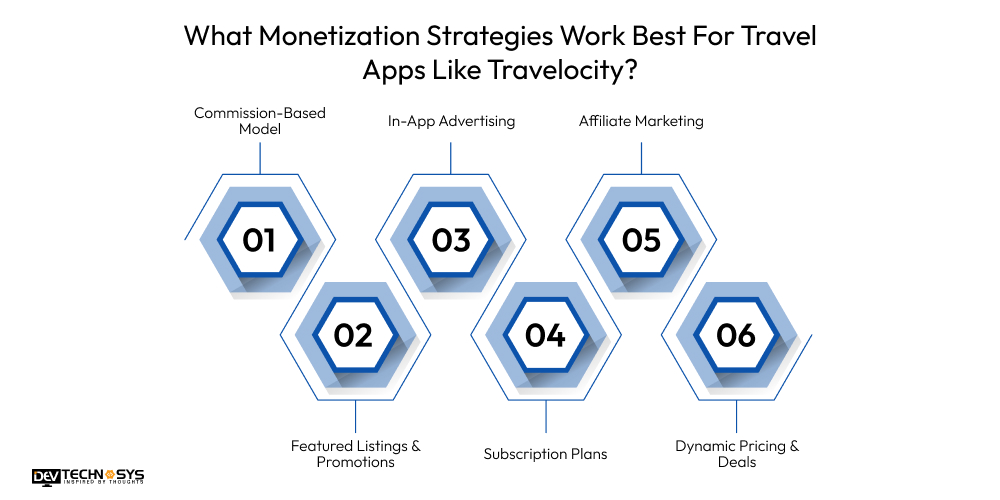
Choosing the right monetization strategy is essential for maximizing profitability when you make an app like Travelocity. Effective revenue models leverage commissions, partnerships, advertising, and premium offerings, allowing platforms to generate consistent income while delivering value-driven experiences to travelers and service providers.
1. Commission-Based Model
Earn commissions from airlines, hotels, and car rental providers for every successful booking made through the app. This model scales easily as booking volume increases over time. It aligns platform success directly with supplier performance and customer satisfaction.
2. Featured Listings & Promotions
Travel service providers pay to feature their offerings prominently, increasing visibility while generating additional revenue. Premium placements help suppliers gain a competitive advantage. This strategy works well during peak travel seasons and high-demand destinations.
3. In-App Advertising
Display targeted ads for travel-related services such as insurance, tours, and experiences, generating steady ad revenue. Advanced targeting improves ad relevance and click-through rates. Advertising revenue grows alongside the app’s active user base.
4. Subscription Plans
Offer premium subscriptions with exclusive discounts, early access deals, or personalized travel insights for frequent travelers. Recurring subscriptions provide predictable monthly revenue. Loyal users benefit from consistent value, improving long-term retention.
5. Affiliate Marketing
Promote third-party services and earn affiliate commissions for successful referrals, expanding revenue without additional inventory. Affiliate partnerships expand offerings without operational risk. This approach is ideal for monetizing travel add-ons and experiences.
6. Dynamic Pricing & Deals
Partner with suppliers to offer exclusive deals and earn margins through negotiated pricing and special packages. Exclusive pricing creates urgency and boosts conversion rates. It also strengthens long-term partnerships with travel service providers.
Final Words
Building a travel app like Travelocity is a strategic investment in a rapidly growing digital ecosystem. With the right combination of market research, feature planning, advanced technology, and user-centric design, entrepreneurs can create scalable and profitable travel platforms.
While development costs range between $8,000 and $30,000, the long-term revenue potential far outweighs the initial investment. Incorporating AI, secure payments, and seamless booking experiences ensures a competitive advantage and user satisfaction.
By following a structured development approach and adopting effective monetization strategies, businesses can successfully launch and grow a travel app that meets modern traveler expectations and stands strong in the global travel market.
FAQs
Q1. What Makes Travelocity A Successful Travel Booking Platform?
Travelocity’s success lies in its all-in-one booking system, real-time pricing, wide travel inventory, user-friendly design, trusted brand presence, and AI-driven personalization that simplifies travel planning and enhances customer experience. Its seamless integrations with global travel providers ensure accurate availability and instant confirmations.
Q2. How Much Does It Cost To Build An App Like Travelocity?
The cost to develop a travel app like Travelocity generally ranges between $8,000 and $30,000, depending on features, platforms, integrations, design complexity, and development team location. Costs also vary based on post-launch maintenance, security compliance, and scalability requirements. A phased development approach helps manage budgets while ensuring high-quality delivery.
Q3. How Should Flight, Hotel, And Car Rental Booking Be Integrated In One App?
Integration is achieved through third-party APIs that provide real-time data. A unified backend manages bookings, while a centralized UI allows users to search, compare, and book multiple services seamlessly. Smart filters and unified search logic ensure consistent results across services. Secure transaction handling and synchronized booking management enhance overall user experience.
Q4. How Can AI Predict The Best Time To Book Flights Or Hotels?
AI analyzes historical pricing data, demand trends, seasonal patterns, and real-time market fluctuations to predict price changes and recommend the optimal booking time for users. Machine learning models continuously improve predictions as more data becomes available. Personalized alerts notify users when prices are expected to drop or rise.
Q5. Should The Travel App Be Built Using Native Or Cross-Platform Development?
Native development offers superior performance, while cross-platform development reduces cost and time. The choice depends on budget, target audience, and long-term scalability goals. Cross-platform frameworks enable faster updates across devices. Businesses often choose a hybrid approach based on performance and scalability needs.