





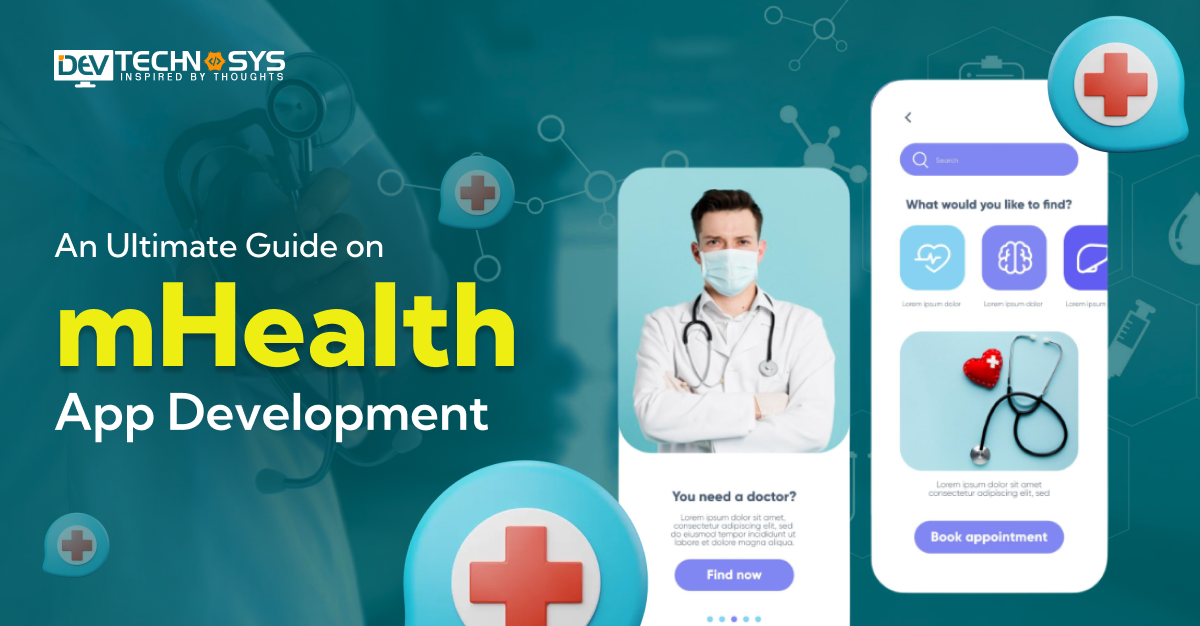
“Keep your business health alive by developing an mHealth application.”
Medical sector is one of the most engaging and highly monitored across the globe. It provides multiple benefits including mental health improvement to users. So, investing money for mhealth app development in UAE is a challenging but beneficial idea for small and new entrepreneurs. There are both government and private mHealth applications active in the UAE.
It is seen that around 65% of the business investors are targeting healthcare app development solutions that are affordable and unique. Additionally, the rise of investment in mental health wellness website development has increased from the past 5 years.
In this blog, we will discuss how you can develop an mHealth application for the people in UAE and other nearby Middle East countries.
So, let’s get started
What is mHealth?
mHealth, or mobile health, refers to the practice of using mobile devices like smartphones, tablets, and wearable sensors to deliver health services, information, and monitoring tools. It provides a wide range of applications, including telemedicine consultations, real‑time tracking of vital signs, medication reminders, fitness and wellness programs, and electronic health record access.
By using healthcare mobile app development services with mobile connectivity and advanced sensors, you can help patients to manage their health through mHealth. Additionally, it can facilitate remote care delivery by clinics, and enables public health agencies to collect and analyze data at scale. Ultimately, mHealth aims to improve healthcare accessibility, efficiency, and patient outcomes.
Answer a few quick questions and our experts will share a tailored project estimate.
How Does a mHealth App Work?
mHealth apps streamline healthcare delivery by leveraging mobile technology to connect patients, providers, and data. Here is the working process in 7 steps:
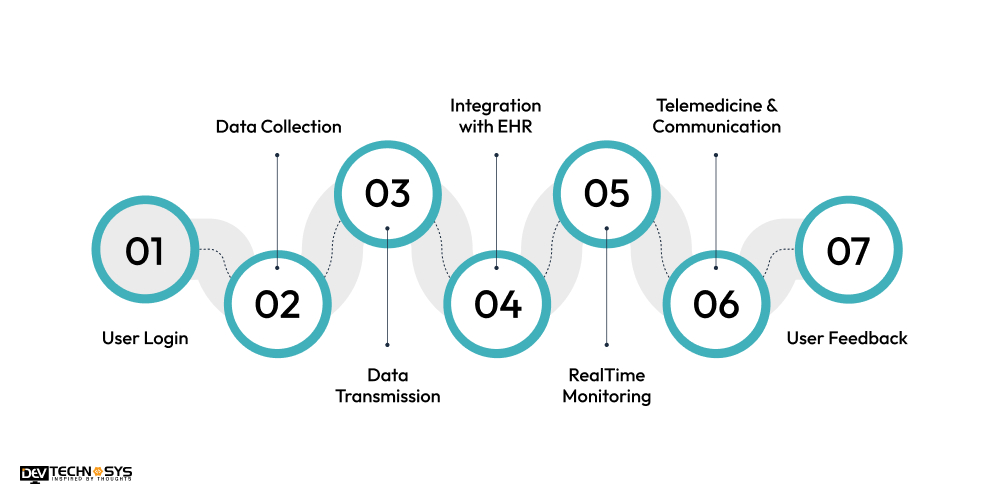
1. User Login
Users download the mental health application and create an account, verifying identity through government IDs. Secure authentication methods ensure only authorized access to personal health data.
2. Data Collection
Patients manually enter their health information, like symptoms, medication schedules, or lifestyle habits. Additionally, the app pulls data automatically from wearable sensors and device APIs.
3. Data Transmission
Collected data is encrypted and sent to secure cloud servers or compliant on‑premise systems. Proper data architecture ensures fast, reliable access while maintaining privacy and residency requirements.
4. Integration with EHR
The app uses standardized protocols to sync with electronic health records and hospital management systems. This interoperability allows clinics to view patient data and reduces manual errors.

5. Real‑Time Monitoring
Built‑in analytics engines and rule‑based triggers monitor incoming data for anomalies. When thresholds are crossed, the app sends push notifications or alerts care teams for immediate intervention.
6. Telemedicine & Communication
Users can initiate video calls and chat with healthcare providers. Creating healthcare software solutions with Integrated telehealth SDKs provides secure consultations and secure file sharing.
7. User Feedback
The app delivers personalized reminders for medication, appointments, or lifestyle goals based on user data and clinician input. It also generates progress reports and analytics dashboards.
Different Types of mHealth Applications
Many types of mHealth applications are available, and businesses can also choose one of them as per their requirement and demand. It includes telemedicine apps, medication reminder apps, mental health apps, remote patient monitoring apps, and many more. Every application has different functionality and services, which makes it easy for businesses.
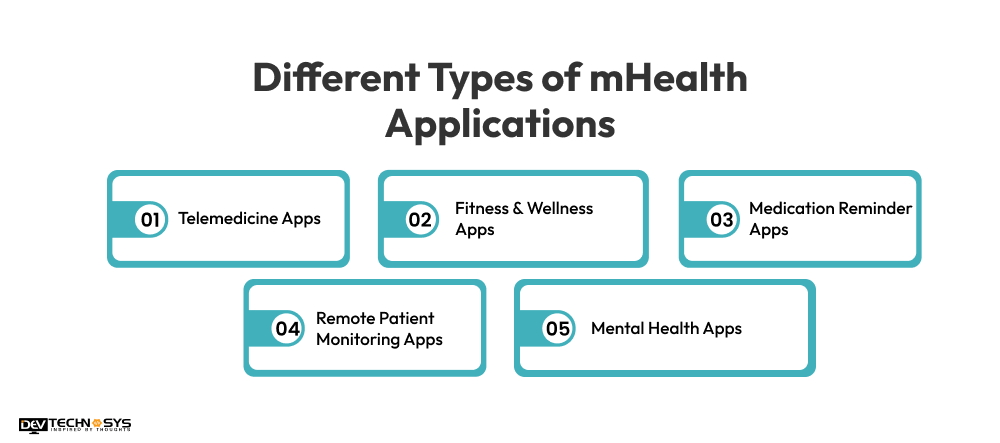
1. Telemedicine Apps
Telehealth applications allow patients to consult healthcare professionals from a distance using video calls, voice calls, or messaging. They facilitate making appointments, obtaining prescriptions, sharing health records, and follow-up consultations. These applications enhance access to healthcare, save travel time, and enable patients to receive medical assistance regardless of their location.
2. Fitness & Wellness Apps
Fitness and wellness applications assist users in maintaining a healthy lifestyle by tracking their activity level, number of calories consumed, sleeping habits, amount of fluids drunk, and all physical exercises carried out. Most apps can be synced with wearable devices that provide health updates in real time. They encourage users to reach fitness goals based on their personal data collected to give advice, remind them, and track the progress of users.
3. Medication Reminder Apps
Applications for medication reminders help users take their prescription medication on time by sending them messages at the planned time. Users can manage their medication schedule, dosage instructions, refill reminders, and medical history. These applications enhance adherence to prescriptions and decrease the number of missed medication doses.
4. Remote Patient Monitoring Apps
Remote patient monitoring applications provide health information gathered from portable gadgets and medical equipment to medical practitioners. They are used to measure such indices as heartbeats, blood pressure, glucose level, and blood oxygen saturation. These applications allow for early diagnosis, individualized care, and optimal treatment of chronic diseases.
5. Mental Health Apps
Mental health applications help improve mental conditions via meditation, relaxation exercises, mood monitoring, anxiety management, as well as consultations and self-evaluation methods. Among the functions available in the applications mentioned above are virtual therapy, breathing control techniques, as well as the cognitive behavioral therapy (CBT) method.
What is the Role of AI in mHealth Systems?
By providing individualized, data-driven solutions, artificial intelligence (AI) in mHealth systems transforms healthcare delivery. It improves treatment planning, automates administrative work, forecasts health trends, and improves patient monitoring. This offers profitable chances for innovation for business owners. AI is essential in mHealth for the following five reasons:
-
Cost-efficiency: Reduces manual labor and errors, cutting operational costs.
-
Personalization: Tailors health advice based on real-time data.
-
Scalability: Easily adapts to growing user needs.
-
Predictive Analytics: Anticipates health issues before they arise.
-
Accessibility: Bridges gaps in remote and underserved areas.
Market Stats of the UAE Healthcare Industry
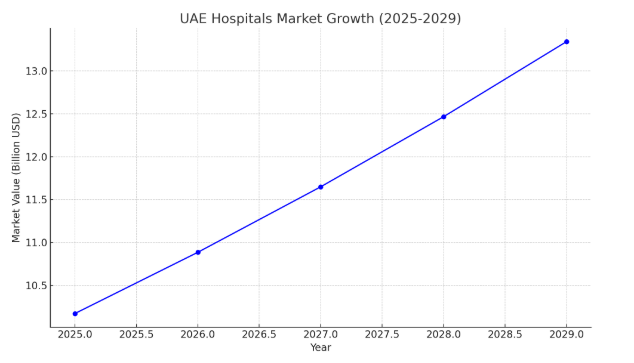
- By 2025, the United Arab Emirates’ Hospitals market is estimated to rise significantly in income and reach $10.17 Billion.
- With an annual growth rate of 02% CAGR between 2025 and 2029, this increase is expected to continue and produce a market volume of $13.35 Billion by 2029.
- With a projected value of $1.55 Trillion in 2025, the United States is expected to create the largest revenue in the Hospitals market when compared to worldwide estimates.
- Additionally, in terms of per-person incomes, the United Arab Emirates is expected to produce in 2025 almost $1.05K per person.
How to Develop a mHealth Application?
In this section, we will discuss a generally used mhealth app development process. So, it can help entrepreneurs to manage investment and maintain their business stability.
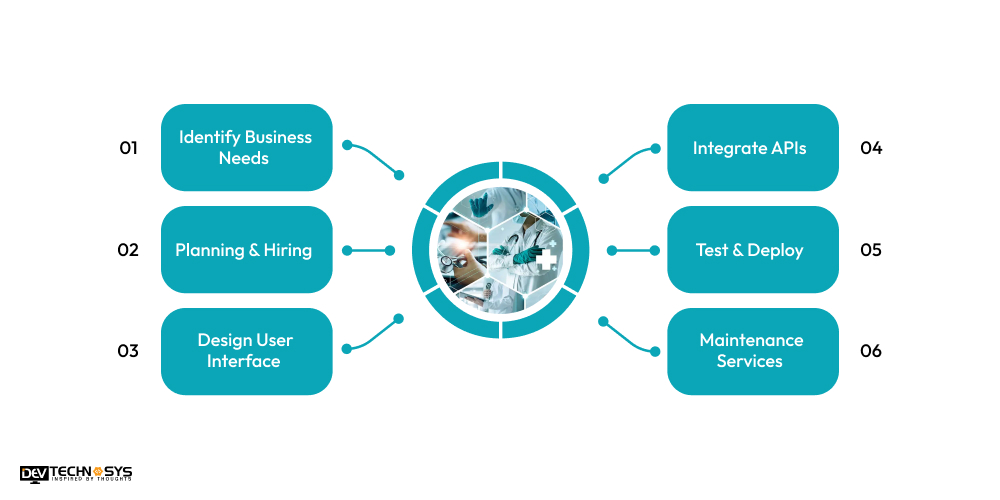
1. Identify Business Needs
The first step is to understand the specific healthcare problems that the app aims to solve. This includes defining the target audience, their needs, and the goals of the app, such as improving patient engagement or offering telemedicine services.
A mHealth app development company in Dubai helps you to analyze competitors, regulations, and user expectations so you can define clear objectives and success modules.
- What specific healthcare problem should I target?
- Who are the primary users of the app?
- What regulatory requirements must be considered?
2. Planning & Hiring
After identifying the business needs, the next step is to create a detailed project plan. This includes budgeting, defining timelines, and setting deliverables. It is also crucial to hire a professional healthcare software development company who can provide app developers and healthcare experts.
Their expertise will help entrepreneurs to align the app’s features with healthcare regulations. Additionally, they can easily fulfill user requirements.
- What skills and expertise should I look for?
- How should the project timeline be structured?
- What is the budget allocation for different phases of development?
3. Design User Interface
A structured mHealth app design ensures a seamless and intuitive experience for users. Various mHealth apps are often used by individuals with varying technical skills. The design should focus on simplicity, accessibility, and ease of navigation.
Additionally, the UI should be tailored to meet the specific needs of users, such as patients, doctors, or healthcare administrators, with clear visual hierarchies and responsive design for different devices.
- How can the app’s interface be designed?
- What design principles should be followed?
- How can the app’s interface be optimized for different devices?
4. Integrate APIs
Integrating APIs is essential for adding functionalities such as patient data management, appointment scheduling, telehealth, and communication features. Using AI in healthcare industry with APIs allow the app to connect with external systems like healthcare databases, EHRs, and payment systems.
Secure APIs implementation is crucial to ensure that the app functions efficiently. So, you should use custom mHealth app development services to ensure data privacy laws, like HIPAA or GDPR.
- What third-party services need to be integrated?
- How can the app ensure secure API integration?
- What types of APIs are needed to enhance the app’s functionality?
5. Test & Deploy
Once the app has been developed, extensive testing is required to ensure that it functions properly, is bug-free, and meets the defined business requirements. An mHealth app development company helps you to perform different testing methods like functional, usability, security, and performance.
After rigorous testing, the app is ready for deployment on app stores or enterprise platforms, making it available for users to download and use.
- What types of testing are necessary to ensure app security?
- How should user feedback be incorporated during the testing phase?
- What is the best strategy for application launch?
6. Maintenance Services
Post-launch, maintenance is necessary to ensure that the app remains updated, secure, and functional. This includes regular maintenance to fix bugs, add new features, and ensure healthcare regulations. Additionally, it is necessary for businesses to know the cost to maintain an app in UAE.
Ongoing support also involves monitoring app performance, collecting user feedback, and making necessary adjustments to improve user experience and app performance over time.
- How frequently should the app be updated to address security issues?
- What system is in place for monitoring the app’s performance?
- How can user feedback be collected to enhance the app’s efficiency?
Key Features of mHealth Apps
The use of mHealth apps has revolutionized healthcare through powerful tools and information. Below are 10 essential features that make these applications effective, engaging, and secure:
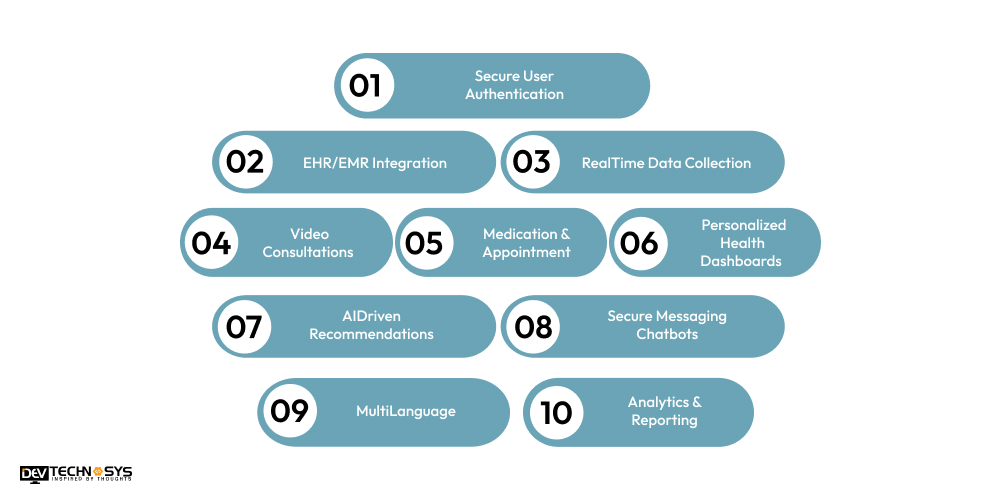
1. Secure User Authentication
Robust login methods like two‑factor authentication, biometric, and OAuth 2.0 ensure that only authorized users can access sensitive health data.
2. EHR/EMR Integration
By supporting standards like HL7 and FHIR, mHealth apps can seamlessly synchronize with existing EHRs. so, you can build healthcare software that can help doctors to view patient history.
3. Real‑Time Data Collection
Apps gather data continuously from built‑in sensors, connected wearables, and manual inputs. This real‑time stream provides clinicians and patients with actionable insights into health trends.
4. Video Consultations
Integrated telehealth allows users to schedule and conduct secure video calls with healthcare providers. This feature reduces travel burdens and keeps vulnerable populations safe at home.
5. Medication & Appointment
Automated push notifications remind users to take medications and attend appointments. You can build an ambulance booking app that can help users to reach hospitals timely with just one click.
6. Personalized Health Dashboards
Interactive dashboards visualize key stats like steps taken, blood pressure readings, or sleep quality using charts and summaries. Customizable widgets let users focus on the most relevant health indicators.
7. AI‑Driven Recommendations
Machine learning algorithms analyze collected data to identify patterns, predict risks, and offer tailored lifestyle or preventive care suggestions. These insights empower proactive health management.
8. Secure Messaging Chatbots
Encrypted in‑app messaging and AI‑powered chatbots let users ask health questions. The use of Blockchain in healthcare industry can easily provide security for medical transactions.
9. Multi‑Language
Offering multiple language options and features like voice commands and screen readers. It ensures that the app is usable by diverse populations, including elderly users and those with disabilities.
10. Analytics & Reporting
Medical experts and administrators access role‑based portals with comprehensive reports on patient populations. These analytics tools support data‑driven decision‑making and resource allocation.
Top mHealth Apps in UAE
mHealth apps in the UAE have transformed how residents access healthcare, offering everything from teleconsultations to digital health records. Below are some of the top mHealth platforms:
1. Sehhaty
Sehhaty is the UAE’s official government health app, providing seamless access to COVID‑19 test results, vaccine certificates, and screening services. Users can book appointments at public health centers, view medical records, and receive notifications for upcoming check‑ups.
- Receive official COVID-19 test results directly on your phone.
- The app helps monitor adherence to home quarantine instructions.
2. myAster
myAster is supported by Aster DM Healthcare, delivers on‑demand telemedicine and pharmacy delivery services in UAE. Patients can video‑chat with doctors and securely upload medical reports. Businesses can approach a mobile app development company for creating a similar healthcare application.
- Book video consultations with general practitioners within 30 minutes.
- Access and manage your medical records, prescriptions, and lab reports in one place.
3. ALHOSN UAE
ALHOSN UAE was the nation’s primary COVID‑19 tracking and status app, offering users real‑time risk assessments via Bluetooth‑based proximity tracing. It displayed test results, vaccination status, and color‑coded health passports for venue access.
- Displays a unique QR code indicating your COVID-19 health status.
- Uses Bluetooth to alert users if they test positive for COVID-19.
4. Burjeel Health
Burjeel Health combines hospitals with telehealth, enabling virtual consultations and digital access to lab results. So, businesses can target healthcare software development solutions to link patient records with their network similar to Burjeel offering second opinions and specialist referrals.
- Book appointments with specialists across the Burjeel network.
- View and manage your medical records and test results.
5. Primehealth ME
It provides a useful health ecosystem with features like appointment booking, digital prescriptions, and lab report viewing across multiple clinics. The platform offers teleconsultations with general practitioners and specialists, backed by seamless payment integration for cashless transactions.
- Book and receive reminders for medical appointments.
- Track and manage vaccination schedules, especially for children.
What is the mHealth App Development Cost?
The mHealth app development cost is influenced by a variety of interrelated factors, from the scope of features to the composition of your development team. Below are five key factors that most strongly impact the overall cost to build medical apps with robust mHealth solutions:
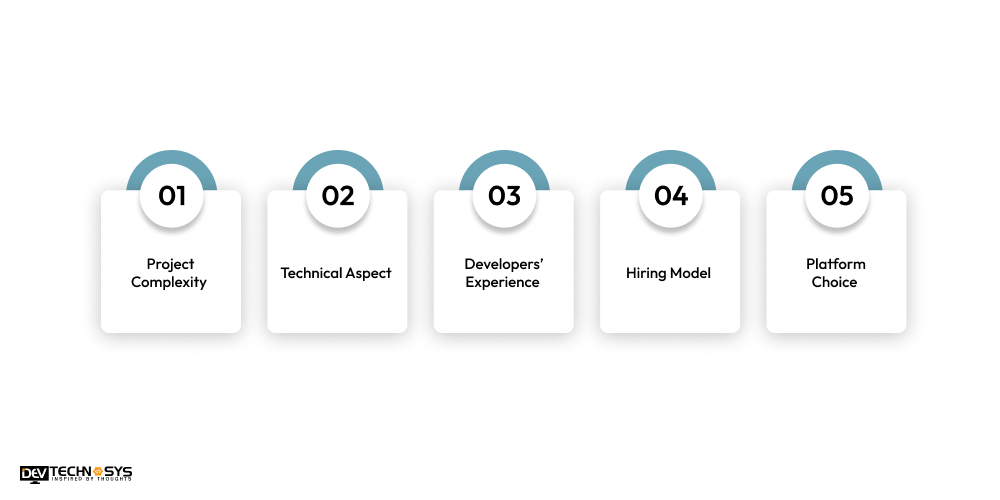
1. Project Complexity
The implementation of features like telemedicine video calls, real‑time sensor integration and AI‑powered diagnostics directly affects the SaaS-based mHealth platform development cost. Complex projects require more rigorous design, testing, and coordination across modules.
App Complexity |
Development Time |
Estimated Cost |
|
Simple |
2-5 months | $5000-$10000 |
| Moderate | 5-8 months |
$10000-$15000 |
|
Complex |
8-12 months | $15000-$20000 |
| Premium | More than 12 months |
$20000-$25000 |
2. Technical Aspect
Choices around architecture, database design, cloud infrastructure, and compliance requirements influence the healthcare software development cost in UAE. Implementation of encryption, audit logs, and advanced analytics frameworks demands on specialized expertise and more infrastructure resources.
Technical Model |
Estimated Cost |
|
Artificial Intelligence |
$10,000-$15,000 |
| Blockchain |
$15,000-$20,000 |
|
Cloud Computing |
$20,000-$25,000 |
| IoT Integration |
$25,000-$30,000 |
3. Developers’ Experience
Hiring senior developers requires higher hourly rates but often results in more efficient problem‑solving, cleaner code, and fewer post‑launch issues. Less experienced developers provide a low mental health wellness website development cost but need more skills that may require additional investment.
Developers’ Experience |
Cost Estimation |
|
Junior/Entry-Level |
$8000-$12000 |
| Mid-Level/Experienced |
$12000-$16000 |
|
Senior/Expert |
$16000-$20000 |
|
Professional |
$20000-$24000 |

4. Hiring Model
The choice of an in‑house team, freelance contractors, or an outsourced agency affects the cost to develop a mobile app in UAE. In‑house teams offer better alignment with company culture and ongoing support, but require higher salaries, benefits, and office costs.
Hiring Cost |
Estimated Cost |
| In-house Team | $5,000-$8,000 |
| Full-Time Freelancers | $3,500-$5,000 |
| Developer Outreach | $8,000-$15,000 |
5. Platform Choice
Deciding between native, cross‑platform, or web‑based solutions influences the cost to develop mHealth apps along with maintenance. Native apps typically deliver the best performance and user experience, but require separate codebases for each platform.
Development Platform |
Estimated Cost |
|
Flutter App |
$15,000-$20,000 |
| Native App |
$20,000-$25,000 |
|
Hybrid App |
$25,000-$30,000 |
5 Common Challenges in mHealth App Development
The process of creating a mobile health application is associated with many challenges that can be technical, regulatory, and operational. This includes ensuring compliance with data security, medical regulations, systems interoperability, and the development of an excellent user experience, among others. So as to contribute to building well-secured, scalable, dependable, and user-centered healthcare applications that will be successful in the long run.
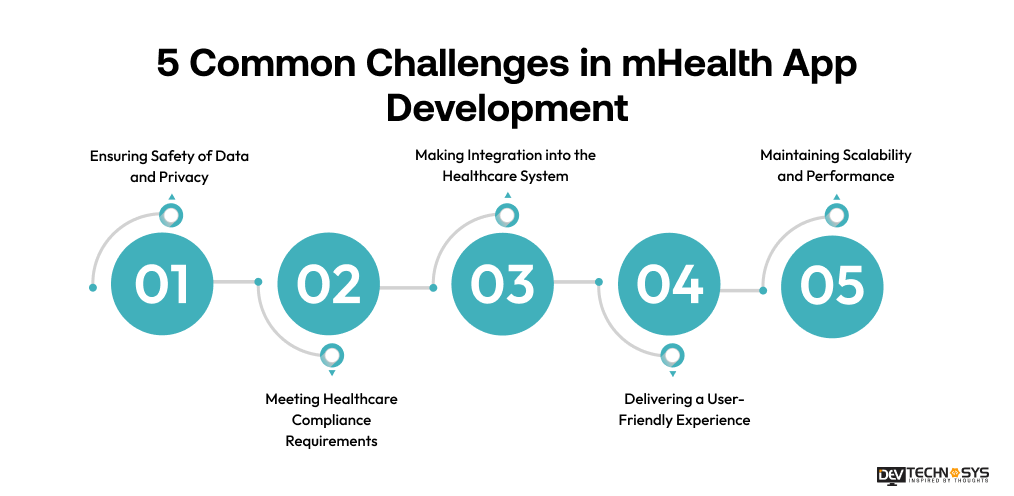
1. Ensuring Safety of Data and Privacy
One of the major problems in the creation of mHealth apps is the secure use of personal patient information. It is obligatory for developers to use reliable encryption techniques, good authentication, and role-based access systems to stop data breaches and unauthorized access and to keep users satisfied and feel safe
2. Meeting Healthcare Compliance Requirements
mHealth apps need to meet some legislative requirements such as HIPAA, GDPR, and some local medical standards. Ensuring lawful and correct handling of people’s data takes a lot of time as there are a number of aspects to go through: data security, monitoring of consent from the patient, tracking their activities, and regular security analyses.
3. Making Integration into the Healthcare System
Putting together a mHealth app and electronic health records (EHR) and hospital management systems, wearable health devices, and various healthcare APIs can pose a number of technical challenges. The people who create mHealth applications need to ensure smooth interoperability, correct data synchronization, and effective communication of different medical devices.
4. Delivering a User-Friendly Experience
Healthcare applications cater to many users, including patients, healthcare professionals, and caretakers with various backgrounds in technology. Hire dedicated developers to develop an application with a user-friendly interface and navigation, which allows for effective access to the services offered.
5. Maintaining Scalability and Performance
When it comes to healthcare applications, they must provide fast and lasting performance regardless of the increasing number of users, healthcare providers, and devices connected to them. That said, developers must implement cloud-based architecture, optimized databases, and effective systems.
Healthcare App Security and Compliance Requirements
The importance of security and compliance in healthcare applications lies in the fact that both are needed to protect crucial patient information, ensure user confidence in the service, and ensure compliance with legal requirements. Following robust safety practices and complying with healthcare laws such as HIPAA regulations or GDPR results in avoiding data breaches, carrying out secure data exchange, and providing quality and secure medical information services.
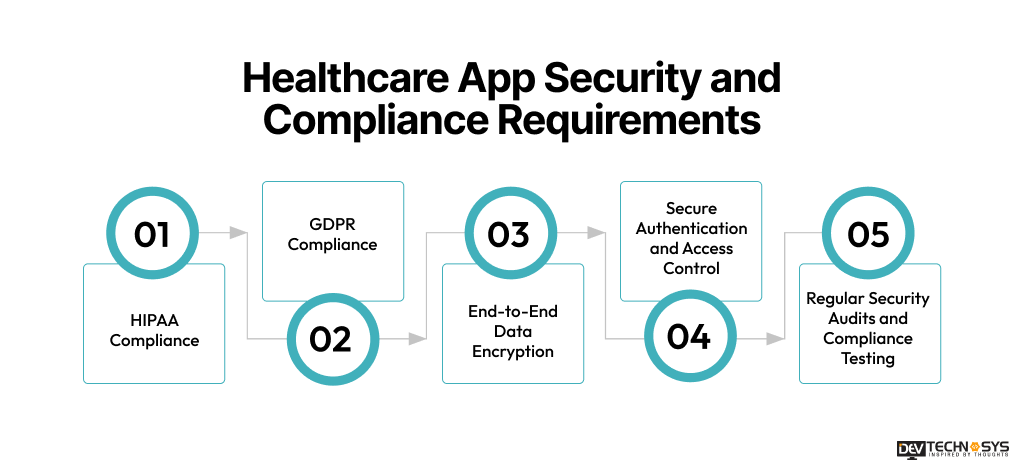
1. HIPAA Compliance
If your mobile health application has U.S. users, it is crucial to comply with HIPAA regulations. HIPAA protects the data that contains sensitive health information of patients and forces the organization to store data securely, use encrypted communication, control access, and conduct audits of data. Compliance with HIPAA requirements allows an organization to maintain trust among its patients and avoid penalties for violation of the law.
2. GDPR Compliance
For applications that process personal data of users from the European Union, GDPR compliance must be ensured. GDPR provides that data collection processes must be transparent, users must give their consent, have the right to access and delete their personal data, and security measures must be implemented. Compliance with GDPR protects personal data privacy while minimizing the chances of being fined by the law.
3. End-to-End Data Encryption
Since a healthcare software like Kareo deals with highly sensitive medical information, end-to-end encryption must be implemented. By encrypting data during transit and storage periods, the organization will minimize the chances of unauthorized access, hacking attacks, and data breaches.
4. Secure Authentication and Access Control
By adopting reliable authentication techniques like multi-factor authentication (MFA), biometric login, and role-based access management (RBAC), one can make sure that medical applications do not get unwanted access. All these practices guarantee that only authorized people will get access to sensitive information and therefore help reduce risks of security breaches.
5. Regular Security Audits and Compliance Testing
By means of performing frequent security checks, periodic vulnerability assessments, and penetration tests, one can detect and resolve possible security problems before they turn into serious threats. Periodic compliance checks allow for improving the application performance and increasing its reliability while making sure that it is compliant with healthcare standards.
Benefits of Developing mHealth Apps
mHealth apps offer businesses new channels to engage customers, streamline operations, and deliver value-driven healthcare services. Below are five key benefits of developing mHealth applications for organizations:
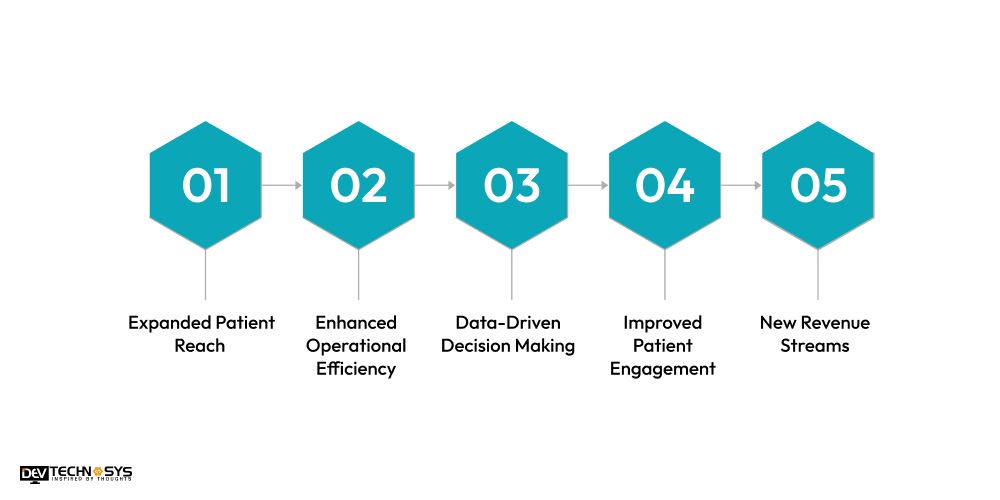
1. Expanded Patient Reach
By availing mobile health app development services, businesses can engage patients through different mobile devices. This preferable accessibility removes geographic barriers, enabling rural and underserved populations to receive timely care.
2. Enhanced Operational Efficiency
Automating routine tasks like appointment scheduling, medication reminders, and follow‑up surveys reduces administrative burdens on staff. So, hiring a custom web development company in UAE is beneficial for healthcare professionals to focus on complex clinical tasks.
3. Data-Driven Decision Making
Qualified mHealth app developers may help you to generate patient data continuously from vitals, activity levels, and treatment results. Businesses can leverage analytics platforms to identify trends, predict health outcomes, and tailor interventions.
4. Improved Patient Engagement
Interactive features like push notifications, in‑app messaging, and personalized health dashboards keep users active. Businesses can approach an Android app development company in UAE to ensure proper medications, appointments, and recommendations to users.
5. New Revenue Streams
Organizations can monetize mHealth platforms through subscription models, premium telemedicine services, or data analytics offerings for research and public health agencies. Additionally, partnerships with insurers or pharmaceutical companies for sponsored programs can generate sponsorship revenue.
Best Technology Stack for mHealth App Development
Choosing the proper technology stack is vital in developing a secure, scalable, and high-performance mHealth application. Modern frameworks, cloud-based platforms, secure databases, and healthcare APIs make it possible to ensure seamless operation and compliance with regulations. While achieving outstanding performance and future-proof capabilities through the delivery of an exceptional user experience across various devices and platforms.
Technology Stack |
Recommended Technologies |
Role |
| Frontend Development | Flutter, React Native, Swift, Kotlin | Builds mobile app interface |
| Backend Development | Node.js, Django, Spring Boot, .NET | Manages server and APIs |
| Database Management | PostgreSQL, MongoDB, MySQL | Stores healthcare data |
| Cloud Services | AWS, Microsoft Azure, Google Cloud | Provides secure cloud hosting |
| API Integration | REST APIs, GraphQL, HL7 FHIR | Connects external healthcare systems |
| Authentication & Security | OAuth 2.0, JWT, MFA, Biometrics | Secures user access |
| Video Consultation | Twilio, Agora, Vonage, Zoom SDK | Enables virtual consultations |
| Payment Integration | Stripe, PayPal, Razorpay, Braintree | Processes secure payments |
| Analytics & Monitoring | Firebase Analytics, Mixpanel, Crashlytics | Tracks app performance |
| DevOps & CI/CD | Docker, Kubernetes, GitHub Actions, Jenkins | Automates deployment and updates |
What are the Future Trends in mHealth App Development?
Emerging technologies, made possible by innovations in accessibility, personalization, and security in healthcare systems, are directing the evolution of mHealth application development. There are many healthcare app development trends paving the way for a new generation of digital healthcare solutions, such as artificial intelligence, integration of wearables, remote patient monitoring, telemedicine, IoT connectivity, and blockchain-based data security.
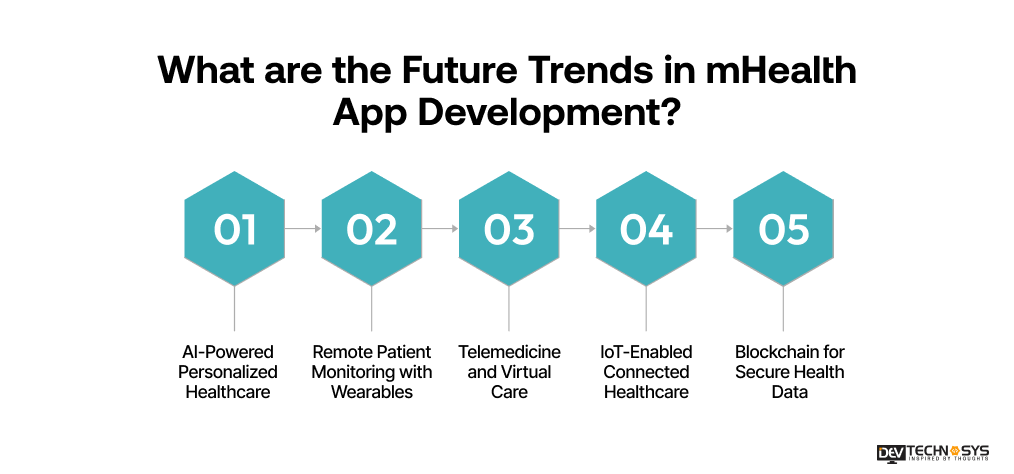
1. AI-Powered Personalized Healthcare
AI is transforming mHealth applications by providing personalized health recommendations, symptom assessments, predictive analysis, and virtual health assistants. Artificial intelligence processes patient information to allow for quick diagnosis, better treatment plans, and delivery of more accurate health care globally.
2. Remote Patient Monitoring with Wearables
Wearable technology is improving the quality of health care by enabling constant monitoring of vital signs such as heart rate, blood pressure, glucose levels, and oxygen saturation. Real-time health monitoring will help healthcare professionals identify problems early, enhance chronic disease care, and provide preventive care.
3. Telemedicine and Virtual Care
Telemedicine is gaining popularity as more and more patients prefer using remote consultations for their convenience. The future of mHealth applications will include more advanced video consultations, secure communications, e-prescriptions, and electronic patient records and retrieval systems.
4. IoT-Enabled Connected Healthcare
Internet of Medical Things (IoMT) connects medical devices, wearables, and healthcare systems for a comprehensive system. This will lead to real-time data transfers, provide better clinical decision-making, continuous monitoring, and improvement of health outcomes.
5. Blockchain for Secure Health Data
Blockchain technology is being adopted in mHealth applications to enhance data protection, visibility, and compatibility. This new technology facilitates safe keeping and dissemination of health records, minimizes risks of data manipulation, improves patient confidentiality, and enables effective communication between health services.
How to Monetize mHealth Applications?
mHealth applications open up diverse revenue opportunities by leveraging user engagement, data insights, and partnerships. Here are six proven monetization strategies:
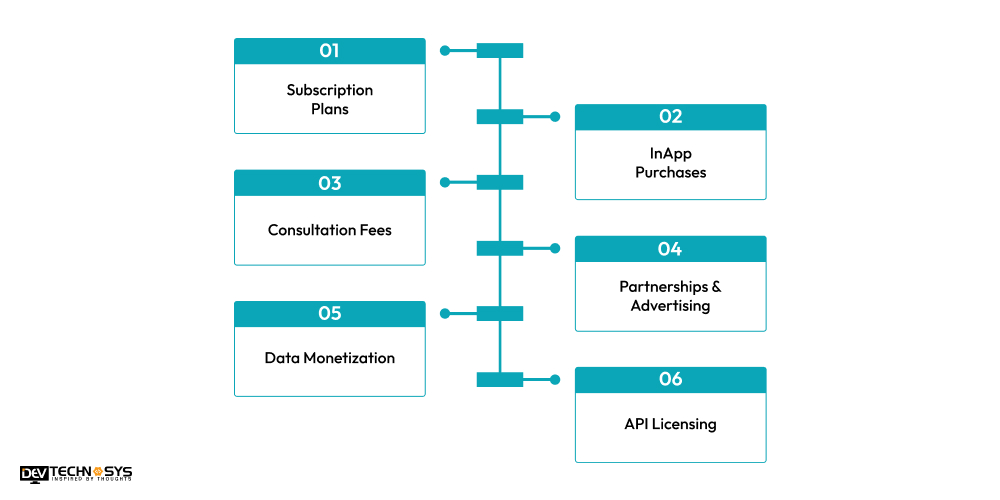
1. Subscription Plans
Offer a free basic version of the app with core features like appointment booking and medication reminders. Additionally, provide advanced functionalities for a monthly or annual subscription. The freemium approach lets users experience value before committing, increasing conversion rates.
2. In‑App Purchases
Provide targeted add‑ons like specialized fitness programs and nutrition plans through healthcare software development services that users can buy. Additionally, you may also sell branded wellness kits and wearables. Bundling content with expert-led workshops or virtual events creates upsell opportunities.
3. Consultation Fees
Integrate secure video‑call and chat platforms to connect users with licensed healthcare providers for on‑demand consultations. Charge per session or offer bundled packages such as a five‑visit bundle at a discounted rate. This model capitalizes on the growing demand for remote care.
4. Partnerships & Advertising
Businesses must collaborate with pharmaceutical companies, health insurers, and fitness brands to feature sponsored content and branded campaigns. Native ads like personalized supplement recommendations can be embedded in user dashboards.
5. Data Monetization
Collect user data like activity patterns and health records to provide insights on research institutions, public health agencies, or insurance companies. It is necessary to contact an iOS app development company in UAE to offer subscription access to dashboards and custom reports.
6. API Licensing
Monetize your mHealth platform’s core functionalities like EHR integration, secure messaging, and AI‑driven risk scoring into APIs for other healthcare providers. License these modules on a usage or subscription basis, enabling third parties to launch their own branded apps quickly.
In a Nutshell!!
The mhealth app development is benefiting businesses in multiple ways from cost-effectiveness to monetization. Thus, it becomes a challenging task for modern investors to target healthcare software development solutions in UAE. keep following some important points such as:
- Use affordable mHealth application development services for better results.
- Contact a reliable IT consulting firm and discuss your development plan.
- Expanding healthcare mobile app development in Saudi Arabia is also a good plan.
- Keep monitoring costs and use suitable monetization methods.
Here, you can easily understand the crispness of this blog. So, you can immediately start the development process without any difficulty.
FAQs
1. What are the Popular mHealth Apps in UAE?
The UAE’s government apps, like Tawakkalna, Sehhaty, Tataman, and Mawid, provide status checks and vaccine records for appointment booking and teleconsultations. Additionally, private telemedicine platforms like Okadoc, Bridge Health, and myAster are widely used for on‑demand doctor chats, prescription delivery, and health tracking.
2. How to Reduce the mHealth App Development Cost?
- Target low-cost development models.
- Focus on core features before investing.
- Integrate open‑source solutions for authentication and analytics.
3. How Much Does it Cost to Maintain mHealth Applications?
Annual maintenance typically runs 15–20% of the initial development cost, covering server hosting, security patching, and third‑party API subscriptions. Monthly costs can range from $5,000 to $20,000, depending on user volume, feature complexity, and compliance requirements like HIPAA/GDPR.
4. Are mHealth Apps Safe for Users?
Most reputable mHealth apps implement end‑to‑end encryption, secure authentication, and regular security audits to protect sensitive health data. But users should always check an app’s privacy policy and permissions before sharing personal health information.
5. Which Tools are Used to Build mHealth Applications?
- Frontend Frameworks: React Native, Flutter, or Swift/Kotlin.
- Backend: Node.js/Express, Django, or Laravel.
- API Services: Firebase or AWS.
- Healthcare‑Specific Integrations: Telemedicine SDKs, HL7/FHIR libraries for EHR interoperability, and HIPAA‑compliant cloud services.