





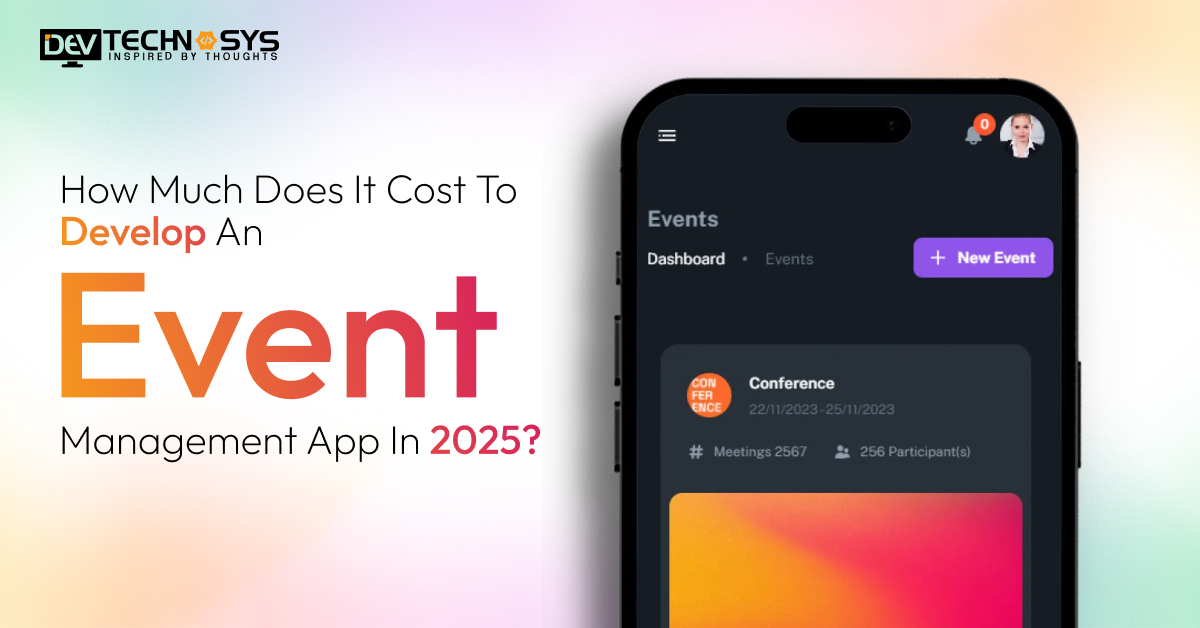
An event management company plans, coordinates, and executes experiences that leave a significant impression on audiences. Likewise, an event management app performs these tasks digitally using smart automated tools and technologies. In short, this can be a groundbreaking idea for startups in 2025.
As you move ahead, the question that bothers you is about the cost to develop an event management app. It is a mandatory but complicated question. Nevertheless, it is important to understand the major factors that influence the event app creation cost.
Are you someone who wants a simple app or is looking for a proficient ecosystem for event management? This comprehensive article will direct you on the budget to create an event management app. So, be ready to develop an event management app that strengthens brand presence and delivers seamless coordination.
Market Predictions Of Event Management App
Having a clear concept of the market statistics about anything lets us scan industry performance and identify business growth. Understand what the market predicts, with the analysis of Grand View Research:
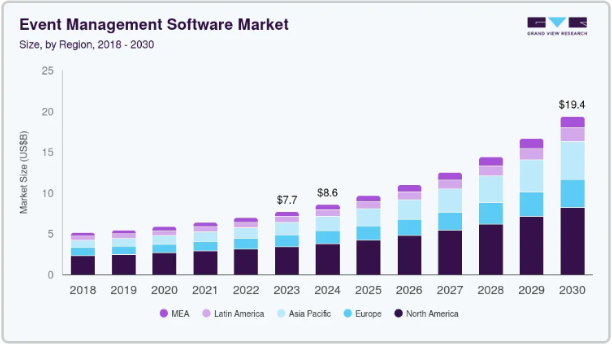
- In 2024, the market size of event management software globally was valued at USD 8.40 billion.
- This stat is estimated to grow with a CAGR of 13.2% in the forecasted period from 2025 to 2030.
- Therefore, by 2030, the event management app market is expected to reach USD 17.33 billion.
- In 2024, North America led the event management software market with a market share of more than 45.0%.
What Is An Event Management App?
An event management app is a software through which organizers handle and conduct the entire sequence of an event. From planning to execution, every end-to-end step is managed by a single platform. It arranges every task, such as registration, offering tickets, scheduling the small tasks, bidirectional communications, and attendee management, gracefully.
For efficient execution, event management apps eliminate the use of tools like spreadsheets and email. With features like real-time updates, networking, and post-event analytics, these apps are revolutionizing the overall event ecosystem. You can also approach a professional mobile app development company if you want to create an event management app.
How Much Does It Cost To Build An Event Management App?
The complexity of the app is the main reason that determines the cost to develop an event management app. In general, an event management app development cost is expected to be somewhere between $8,000-$30,000. However, a simple app with core features, such as event scheduling, registration, and ticketing, will be less costly.
In contrast, an app with advanced integrations like real-time updates and networking features will increase the development cost. These elements help in deciding an accurate budget to create an easy-to-use and effective event management app. Here is a cost breakdown that gives you a clearer idea of the price.
| App Complexity | Description | Estimated Cost |
| Basic App | Core features include registration, simple UI, and limited event tools. | $8,000 – $12,000 |
| Moderate App | Includes ticketing, scheduling, notifications, and smoother UI/UX. | $12,000 – $18,000 |
| Advanced App | Offers analytics, real-time updates, multi-role access, and custom modules. | $18,000 – $25,000 |
| High-End App | AI-driven features, automation, integrations, and fully scalable architecture. | $25,000 – $30,000 |
Which Factors Influence The Cost To Develop An Event Management App?
The cost to create an event management app depends on some factors, such as the app’s design, complexity, features, etc. We will understand how these influences affect event app development pricing.
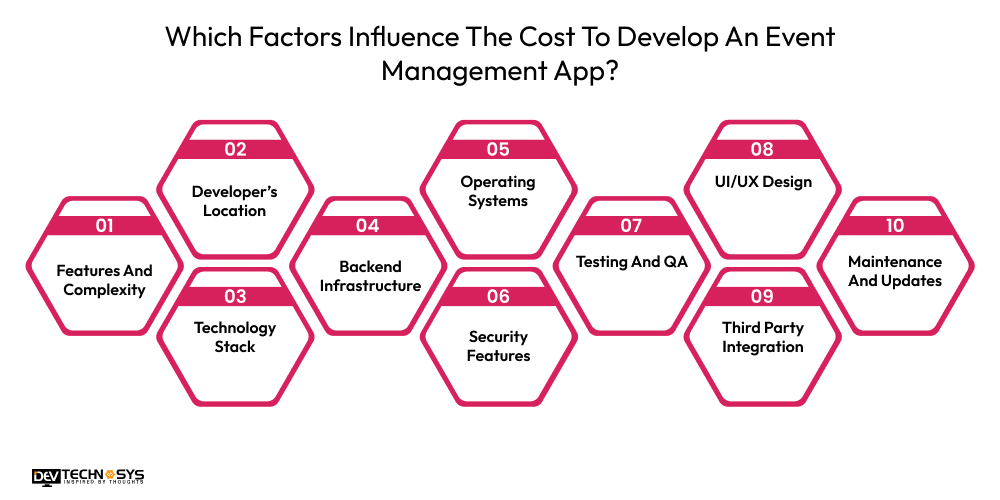
1. Features And Complexity
If your app has more advanced features, its complexity automatically increases, which elevates the cost to develop an event management app. Some advanced features, like event scheduling, live streaming, and AI in event management apps, need extra integrations and coding. This results in increased development time and budget.
| Feature Level | Description | Estimated Cost |
| Basic Features | Simple tools like registration, ticketing, and basic scheduling. | $8,000 – $12,000 |
| Moderate Features | Includes notifications, event pages, attendee tools, and better UI. | $12,000 – $20,000 |
| Advanced Features | Real-time updates, analytics, multi-role access, networking tools. | $20,000 – $30,000 |
2. Developer’s Location
The location of the developer is also the reason for the raised price to build an event management app. If you hire dedicated developers from high-cost regions, the per hour rates here are high. These regions include North America, Western Europe, and Australia, which impact the overall cost to create an event app.
| Developer Region | Description | Estimated Cost |
| Asia | Offers budget-friendly development with quality output. | $8,000 – $15,000 |
| Eastern Europe | Balanced pricing with strong technical skills. | $15,000 – $25,000 |
| USA / UK | Premium rates for high-end expertise and standards. | $25,000 – $30,000 |
3. Technology Stack
The tech stack of an app plays a pivotal role in affecting the final cost to make an event app. Multiple tech stacks require specialized developers as well as more development time. Also, some advanced technologies increase the complexity of the app, which leads to a rise in app development cost.
| Category | Description | Estimated Cost |
| Basic Stack | Standard tools for simple event apps | $8,000 – $15,000 |
| Moderate Stack | Mix of frameworks & APIs for smoother performance | $15,000 – $22,000 |
| Advanced Stack | High-end tech, real-time features, and a strong backend | $22,000 – $30,000 |
4. Backend Infrastructure
From setting up servers, databases, and APIs to manage data, everything depends upon a strong and accurate backend structure. A robust backend requires more resources and development time to make the app scalable. However, it inflates the overall cost to make an event management app.
| Type | Description | Estimated Cost |
| Basic Setup | A simple server with a basic backend database | $8,000 – $15,000 |
| Moderate Setup | A higher API handling with a scalable backend database | $15,000 – $22,000 |
| Advanced Setup | High scalability with a microservices backend | $22,000 – $30,000 |
5. Operating Systems
Choosing between an Android and an iOS app development separately requires excessive work. It is because developers have to work on different guidelines and code for each platform. It means separate codebases, testing, and maintenance efforts. This contributes to the rise in the final cost to build an event app.
| Option | Description | Estimated Cost |
| Android Only | Single platform build with separate guidelines and testing. | $8,000 – $15,000 |
| iOS Only | Requires iOS-specific codebase and App Store standards. | $16,000 – $22,000 |
| Both (Android + iOS) | Two codebases, double testing, and higher maintenance effort. | $23,000 – $30,000 |
6. Security Features
Adding high security features to an app is really important to protect user information. These features include data encryption, secure logins, and payment processing systems etc. Although such features need more development time, experts’ skills, and continuous security updates, this leads to a higher mobile event management app cost.
| Security Level | What It Includes | Estimated Cost |
| Basic Security | Secure login, password protection | $8,000 – $15,000 |
| Standard Security | Data encryption, safe API calls | $15,000 – $22,000 |
| Advanced Security | Payment security, fraud prevention, and continuous monitoring | $22,000 – $30,000 |
7. Testing And QA
Proper testing and quality assurance make the app perfect for customers’ convenience. Here, bugs are identified and fixed, performance is optimized, and the app is made to work seamlessly on various devices. Thorough testing for a smoother user experience increases the cost to develop an event management app.
| Level | Description | Estimated Cost |
| Basic QA | Identifies major bugs and ensures core functions work. | $8,000 – $12,000 |
| Standard QA | Test performance across main devices and fixes repeated issues. | $12,000 – $18,000 |
| Advanced QA | Full device testing, load testing, and continuous quality checks. | $18,000 – $25,000 |
8. UI/UX Design
Making a user-friendly and visually captivating interface for effortless navigation through the app is a part of good UI/UX design. If an app is well-designed, it increases user satisfaction and engagement. However, custom designs and animations add to the average cost to build an event app.
| Level | Description | Estimated Cost |
| Basic Design | Simple layout with standard elements and minimal visuals. | $8,000 – $14,000 |
| Custom Design | Personalized screens with better flow and clean visuals. | $14,000 – $22,000 |
| Advanced Design | High-end visuals, animations, and fully tailored user flows. | $22,000 – $30,000 |
9. Third Party Integration
App owners prefer third-party services to enhance the functionalities of the app. This includes features like payment gateways, social media logins, or event ticketing. But integrating these services requires external tools that come with licensing fees, development time, and elevated overall cost to build an event app.
| Integration Type | Description | Estimated Cost |
| Basic APIs | Simple integrations like email, maps, or social login. | $1,000 – $2,000 |
| Advanced APIs | Payments, ticket scanners, live chat, or CRM tools. | $2,000 – $3,500 |
| Multiple Integrations | Several combined services require deeper setup. | $4,000 – $6,500 |
10. Maintenance And Updates
Continuously working on the app’s maintenance helps it remain bug-free and up to date with new features or security updates. After development, regular investments in the app’s upgrades are necessary to make the app seamless for a long time. Initially, it will cost more, but it saves you from the higher cost to maintain an app in the future.
| Maintenance Level | Description | Estimated Cost |
| Basic Maintenance | Minor fixes, small updates, and regular checks. | $5,00-$1,000 |
| Standard Maintenance | Feature updates, performance tuning, and bug resolution. | $1,000 – $1,500 |
| Advanced Maintenance | Continuous updates, scaling support, and security improvements. | $1,500 – $2,000 |

How To Reduce The Cost To Develop An Event Management App?
As we have discussed, the factors that are the reasons for fluctuation in an event planning app development cost. Now, we will discuss the measures taken to decrease the cost to build an event management app.
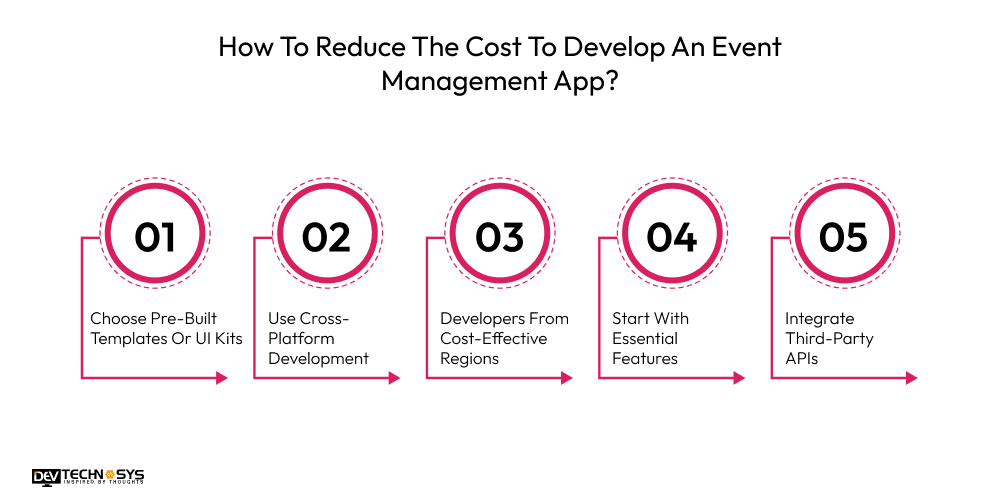
1. Choose Pre-Built Templates Or UI Kits
When you use pre-built templates, designs, or UI kits, it removes the requirement for high-level designers and excessive development time. There are several tools that customize the templates to align with the app’s purpose while cutting down the development cost.
2. Use Cross-Platform Development
Rather than individual iOS and Android app development services, it is advised to develop a cross-platform framework. Creating an app on a cross-platform works on both Android and iOS platforms. It ensured a broader audience reach while saving the event app development cost.
3. Developers From Cost-Effective Regions
Another important measure is to hire dedicated developers from regions with lower hourly rates. This includes regions like Southeast Asia, Eastern Europe, and Latin America, where the per-hour cost ranges between $10-$60. It reduces development cost while offering quality work.
4. Start With Essential Features
Focus on incorporating essential but basic MVP (Minimum Viable Product) features first in your app. The basic features of an event management app include event scheduling, ticketing, and basic registration. This helps in reducing the time and cost to develop an event app.
5. Integrate Third-Party APIs
Avoid developing every feature from scratch; instead, incorporate third-party APIs, especially for payment gateways, social media sharing, or event notifications. With this, you can increase the speed of the development process while reducing the cost to develop a mobile app.
What Monetization Models Are Used In An Event Management App?
To make your app profitable in the long term, event management apps implement some effective monetization strategies. Now, we will discuss some of these models that help the app increase revenue by enhancing user retention.
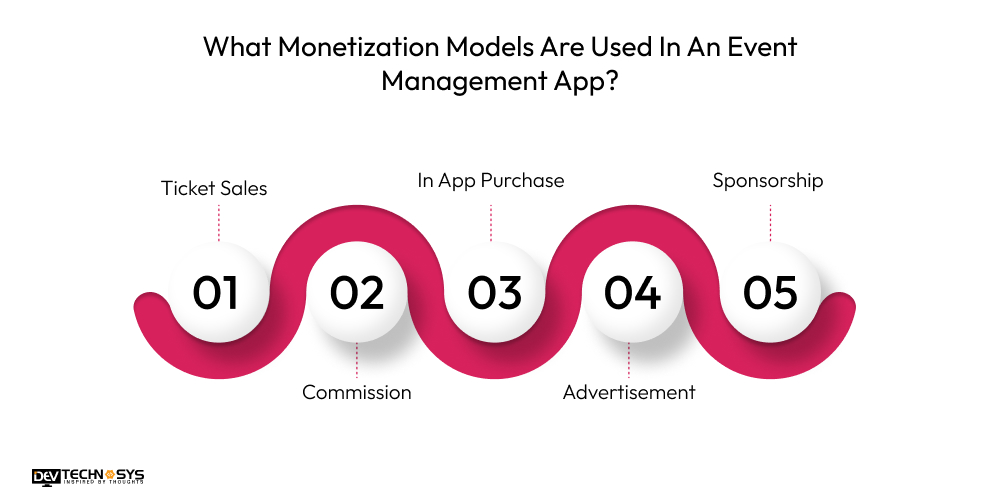
1. Ticket Sales
When tickets for an event are sold directly through your app, people will go nowhere else to purchase them. Therefore, app owners can charge a small fee on every ticket sold either from organizers, attendees, or both. For a streamlined ticketing experience in event management app development, this model generates revenue very well.
2. Commission
Apart from ticket sales, there are multiple transactions that take place in an event management app. These transactions include merchandise sales, paid promotions, lead capturing, fundraising, food & beverages, and more. For every event-related transaction, app owners can earn a small amount as commission, making it the most suitable money-making strategy.
3. In App Purchase
Allow attendees or organizers to buy additional upgrades, like VIP passes, event merchandise, or exclusive access within the app. With this, app owners can get extra revenue-making options while keeping the overall app free. This model is widely used in an app like Socio, that have a broad user engagement base.
4. Advertisement
Another commonly used model to generate recurring revenue is to display ads within your app. This works amazingly for the app, which has a large and active user base. Showing ads between events is the nicest way to make money without directly charging from users. But make sure you display ads that are relevant and non-interrupting.
5. Sponsorship
Sponsors, brands, and organizers are ready to pay for branded event pages or custom promotional banners for their visibility. So, sponsoring any app, event, or brand in your app will make you earn a significant profit. This revenue-making idea is not only effective for significant reach but also for enhancing your partnerships.
6. Subscription
One of the most common monetization models that can be implemented when you develop an event management app is a subscription. With a monthly or yearly subscription, users can access premium services like detailed reports or priority customer support. It is a model that is perfectly used in apps offering continuous services.
Conclusion
After reading the blog, this must be clear that developing an event management app in 2025 requires careful cost planning. Now you must be aware of the factors that impact the development cost and measures to reduce it.
This understanding will help you set a realistic budget that corresponds to your development goals. Does building an app for event management seem challenging? When the right approach and experts are by your side, it becomes completely achievable.
For this, you can contact Dev Technosys, a trusted name when it comes to the best event management app development company. Get in touch with us and see your dreams become a reality.
FAQs
1. What Is The Average Budget To Build An Event Management App?
The average cost to develop an event management app will range somewhere between $8,000-$30,000. However, the complexity of the app determines the final development cost.
2. How Can I Reduce The Event Management App Development Cost?
To reduce the development cost of an event management app, you must implement some measures, such as:
- Select already built templates or designs
- Develop the app on a cross-platform
- Hire developers from cost-effective regions
- Start with basic MVP features
- Incorporate third-party APIs
3. How Much Time Does An Event Management App Take To Build?
An event management app, which consists of simple but essential features, will take 5-7 months. At the same time, an app with high-level functionalities will take 8-12 months to get developed.
4. Which Factors Impact The Cost To Create An Event Management App?
Some of the most influential factors that affect the event management app development cost are:
- Features And Complexity
- Backend Infrastructure
- Security Features
- UI/UX Design
- Maintenance And Updates
5. What Are the 5Cs of Event Management?
The 5Cs of event management are Concept, Coordination, Control, Culmination, and Closeout. These are necessary concepts for event management and its execution. Without following these Cs, proper event completion is not possible.