





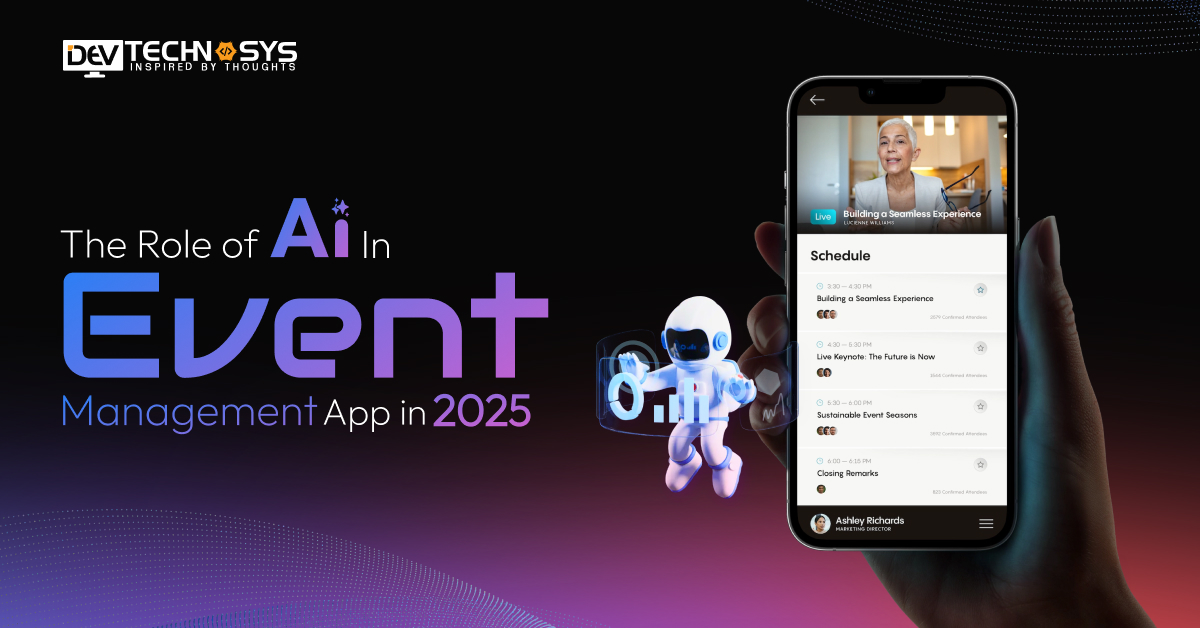
The involvement of AI has transformed various industries, and event management is no exception. AI Solutions for Event Management have enhanced the way events are planned, executed, and experienced.
AI-Powered Event Management apps can easily handle larger events, personalize events according to users’ expectations, and work on hybrid formats to deliver better automation, offer predictive insights, and provide seamless attendee experiences.
AI is at the heart of this transformation. By integrating with CRMs, chatbots, predictive tools, and personalization engines, AI empowers event organizers to streamline operations, elevate attendee experiences, and scale hybrid and virtual events like never before.
In today’s blog, we will explore the vast world of Artificial Intelligence and see how AI in event management apps enhances the experience. How AI Tools for Event Planning & Marketing help the app organize and execute events better! So, let’s begin.
What is an Event Management App?
As the name suggests, event management apps are digital applications designed to organize, manage, and analyze events of all sorts with centralized tasks, automated workflows, and improved experience.
AI in Event Management Apps streamlines everything from registrations, ticket booking, fluent communication, event scheduling, invite sending, and on-site management. AI-Powered Event Management apps include features like attendee tracking and monitoring, data analytics, for both in-person and virtual events.
Event Management App Market Stats
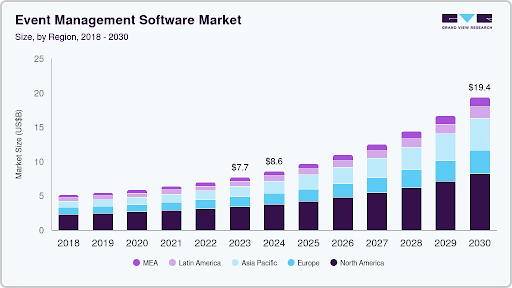
- The event management software market size worldwide was USD 8.40 billion in 2024 and is expected to reach USD 17.33 billion by 2030, with a CAGR of 13.2% from 2025 to 2030.
- The North America event management software market dominated the event managment market with a share of over 45.0% in 2024.
- The event management software market in the Asia Pacific is growing rapidly, with a CAGR of over 15.3% from 2025 to 2030.
- By component, the software segment accounted for the largest market share, over 64.0% in 2024.
Why AI Matters in Event Management Apps?
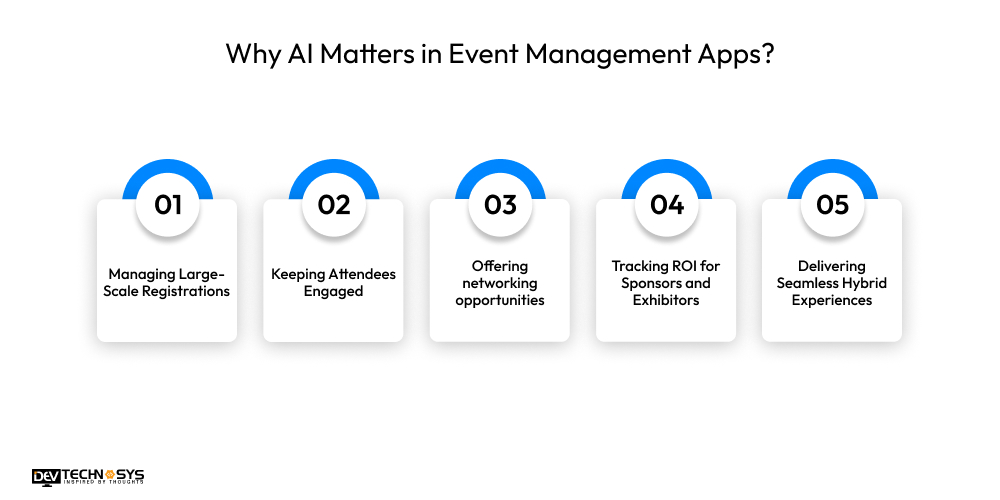
Before learning about the role of AI in event management apps, let’s first know why incorporating Artificial Intelligence in events matters so much, and why it is essential. Here are some of the reasons that show the importance of incorporating AI and Machine learning in event management:
- Managing large-scale registrations.
- Keeping attendees engaged.
- Offering networking opportunities.
- Tracking ROI for sponsors and exhibitors.
- Delivering seamless hybrid experiences.
AI in Event Management Apps has become a necessity, enabling organizers to handle complex operations with speed, accuracy, and personalization. Most businesses now want to develop an event management app with AI because it simplifies large-scale event registrations through automation and smart forecasting.
The role of AI in event management apps is massive as it not only streamlines operations but also boosts engagement, personalizes agendas, recommendations, and offers real-time assistance.

AI in event management apps enhances networking opportunities by leveraging intelligent matchmaking to connect attendees with relevant people, sessions, or exhibitors. As for event organizers and sponsors, AI simplifies ROI tracking by providing actionable insights into attendee behavior, booth interactions, engagement patterns, and lead quality. It also enhances networking opportunities.
Most importantly, AI ensures seamless hybrid event experiences, synchronizing in-person and virtual interactions, optimizing schedules, and maintaining smooth communication across all channels.
Top 10 Event Management Apps to Explore in 2025
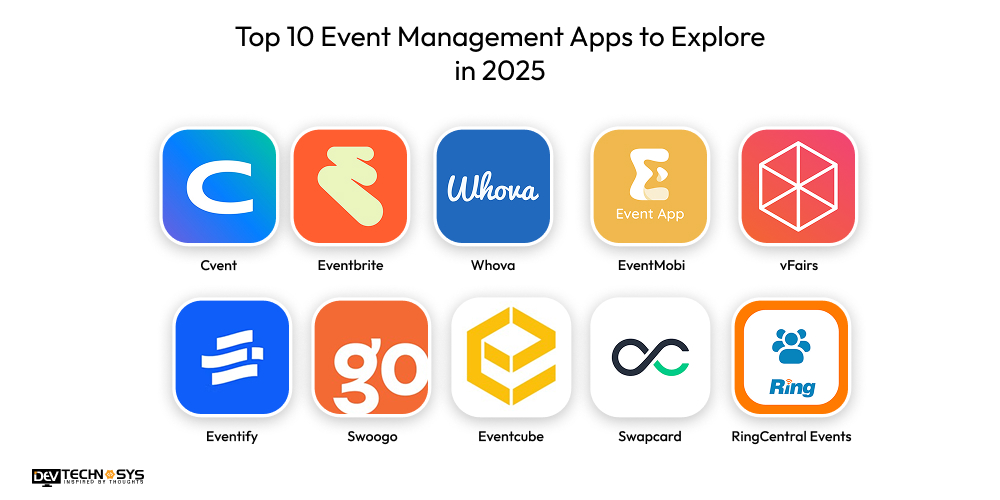
Before learning what role AI plays in event management app development, let’s explore the top 10 event management apps. All the apps listed here provide exceptional tools for planning, organizing, and managing events of any scale.
App |
Launch Year |
Ratings |
Downloads |
Platforms |
| Cvent | 1999 | 4.3★ | Not Public | iOS, Android, Web |
| Eventbrite | 2006 | 4.7★ | 100M+ | iOS, Android, Web |
| Whova | 2012 | 4.8★ | Not Public | iOS, Android, Web |
| EventMobi | 2009 | 4.6★ | Not Public | iOS, Android, Web |
| vFairs | 2016 | 4.7★ | Not Public | iOS, Android, Web |
| Eventify | 2017 | 4.5★ | Not Public | iOS, Android, Web |
| Swoogo | 2015 | 5.0★ | Not Public | iOS, Android, Web |
| Eventcube | 2014 | 4.4★ | Not Public | Web, iOS |
| Swapcard | 2013 | 4.6★ | 1M+ | iOS, Android, Web |
| RingCentral Events | 2019 | 4.4★ | Not Public | iOS, Android, Web |
What is the Role of AI in Event Management Apps in 2025?
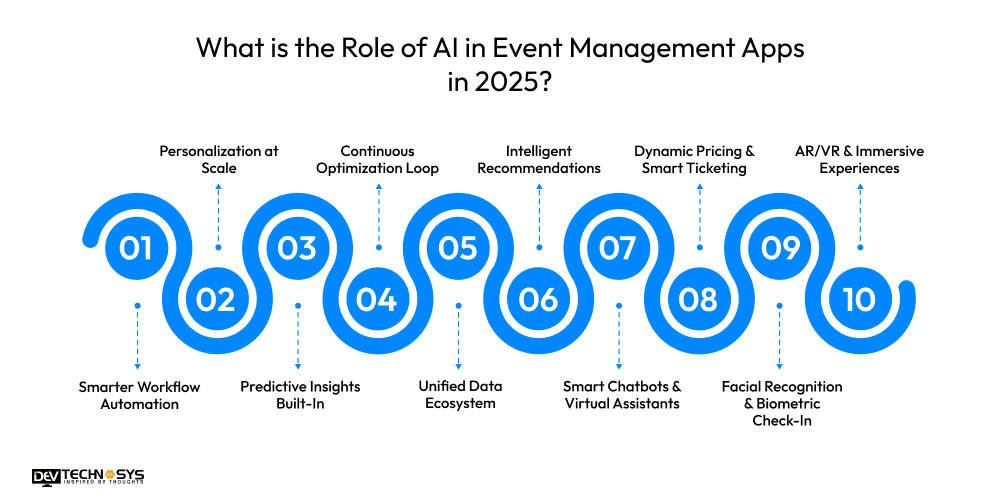
Now, let’s get to the main topic: how AI and smart event management systems help improve event management apps. Here is the role of AI in event management apps in 2025.
-
Smarter Workflow Automation
Artificial intelligence development proved to be beneficial for event management businesses. AI-powered apps are eliminating repetitive event-planning tasks by serving as intelligent co-planners.
Instead of manually coordinating speakers, vendors, and venue logistics, AI systems automatically detect scheduling clashes, suggest optimal time slots, track real-time availability, and send confirmations or reminders without human intervention.
These systems also update event pages instantly, manage document approvals, and even auto-generate task checklists.
-
Personalization at Scale
Personalization is no longer a luxury; AI makes it automatic and scalable. By analyzing attendee behavior, preferences, past event interactions, and even real-time movement inside the venue, AI creates tailored event journeys.
This includes customized agendas, session recommendations, dynamic content feeds, and smart networking matches that connect attendees with the right people.
-
Predictive Insights Built-In
AI doesn’t just show what’s happening, it predicts what will happen next. By analyzing past event data, attendee behavior, registration trends, and engagement patterns, AI tools can forecast session turnout, identify potential drop-offs, and even predict which booths or activities will attract the most traffic.
These insights help organizers make more informed decisions on the fly, such as reallocating staff, optimizing floor layouts, boosting promotions for low-performing sessions, or adjusting resources in real time.
-
Continuous Optimization Loop
Traditional event systems launch and remain unchanged throughout the campaign. But with AI-powered event management software, every event becomes a learning engine.
iOS app development with AI continuously collects insights from attendee behavior, engagement levels, session performance, and operational workflows.
These insights are fed back into the system to automatically refine recommendations, improve scheduling accuracy, personalize content better, and optimize logistics for future events.
The result? Each event becomes more efficient, more engaging, and more cost-effective than the last.

-
Unified Data Ecosystem
Event planners often juggle data from CRMs, marketing tools, ticketing platforms, surveys, and vendor systems, resulting in chaos and inefficiency. AI solves this by creating a single unified data ecosystem.
It integrates all tools seamlessly, ensuring information flows smoothly between registration, attendee tracking, communication tools, and analytics dashboards.
Partnering with a skilled AI integration services provider from a top mobile app development company ensures your system stays secure, compliant, and fully optimized.
-
Intelligent Recommendations
AI-driven event marketing tools don’t just help you plan, they suggest. From venue recommendations based on past event performance to speaker suggestions aligned with audience interests, and even live-session swaps based on real-time attendance, AI ensures every decision is data-backed.
These intelligent insights help organizers reduce guesswork, boost engagement, optimize scheduling, and deliver more personalized, high-impact event experiences.
-
Smart Chatbots & Virtual Assistants
AI-powered chatbots and virtual assistants deliver 24/7 support by handling event queries, registration issues, ticketing problems, schedule updates, and venue navigation.
AI tools for event organizers dramatically reduce staff workload while ensuring instant, accurate assistance for attendees.
These virtual helpers can also handle FAQs, push reminders, suggest sessions, and personalize responses based on user behavior, making the entire event experience smoother, faster, and far more engaging for participants.
-
Dynamic Pricing & Smart Ticketing
AI analyzes demand fluctuations, attendee behavior, booking windows, demographic trends, and market conditions to dynamically adjust ticket pricing in real-time.
This ensures maximum seat occupancy and revenue optimization for organizers. Smart ticketing also minimizes fraud, enhances payment security, and tailors pricing tiers or offers to relevant user segments.
The result is a fair, data-driven system that benefits both event organizers and attendees while streamlining the entire purchase journey.
-
Facial Recognition & Biometric Check-In
AI-enabled facial recognition and biometric check-ins accelerate entry, strengthen event security, and eliminate manual identity verification. Attendees skip long queues and enjoy frictionless, touchless access to sessions and venues.
For organizers, the technology provides accurate attendance insights, prevents badge sharing, improves emergency response, and enhances overall crowd management.
This advanced verification system is especially valuable for large conferences, concerts, trade shows, and corporate events requiring high-level security and efficiency.
-
AR/VR & Immersive Experiences
AI enhances hybrid and virtual events through lifelike avatars, immersive AR layers, and fully interactive VR environments. Attendees can explore 3D booths, test virtual products, participate in simulations, and engage with content more deeply than traditional formats allow.
AI further personalizes experiences by adapting environments and suggestions based on user interactions. According to experts who provide Android app development services, this blend of AR, VR, and AI creates highly engaging, memorable, and future-ready event experiences that boost global reach and participation.
The Future of AI in Event Management Apps
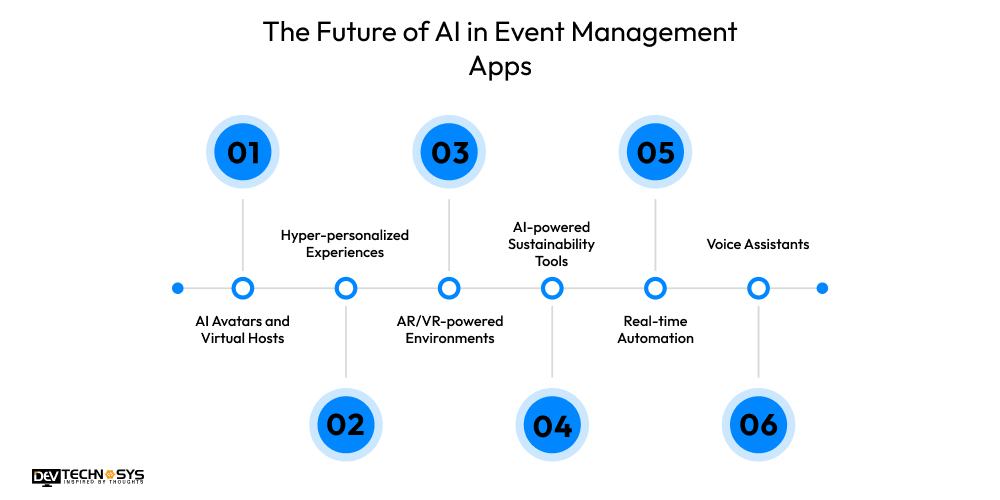
Looking ahead, AI will only grow more influential. AI-powered event planning solutions will continue to improve the organization and execution of events for organizers and enhance the attendee experience. Here are some emerging AI trends that will continue to shape the future of event management apps:
-
AI Avatars and Virtual Hosts
AI avatars will take over tasks such as registrations, announcements, attendee onboarding, and live Q&A, enabling smoother automation and reducing the need for human moderators in large-scale or hybrid events.
-
Hyper-personalized Experiences:
App Like Socio offers a personalized experience by including real-time analytics, biometrics, and behavioral insights in the app. It allows attendees to receive tailored agendas, session suggestions, and networking recommendations explicitly designed around their interests and event journey.
-
AR/VR-powered Environments:
These virtual environments will elevate hybrid events through virtual venues, 3D networking spaces, and interactive booths, giving attendees immersive, lifelike experiences whether they join in person or digitally from anywhere in the world.
-
AI-powered Sustainability Tools:
AI-based event scheduling tools will optimize energy consumption, reduce waste, and allocate resources intelligently, helping organizers run greener, eco-friendly events without compromising efficiency or attendee experience.
-
Real-time Automation:
Artificial intelligence event software with real-time automation and predictive intelligence will forecast attendance, manage logistics, prevent crowding, and enhance engagement, allowing event organizers to make proactive decisions and deliver smoother, more efficient event operations.
-
Voice Assistants:
AI chatbots for event support and conversational AI will simplify event navigation, scheduling, reminders, and on-the-go support, ensuring attendees get instant help and seamless interactions throughout the event without manual searching.

Conclusion
The above-provided details and information discuss the importance of AI in event management apps. AI is transforming event management apps into smarter, faster, and more personalized solutions.
From automating workflows and enhancing attendee engagement to improving logistics, security, and hybrid experiences, AI is now a core driver of modern event success.
If you are a business wanting to build a top event management app, then consult a trusted event management app development company, and stay tuned for more informative updates.
FAQs
1. How Is AI Transforming Event Management Apps in 2025?
AI automates registrations, streamlines scheduling, enhances engagement, and provides real-time insights. It reduces manual workload, improves decision-making, and delivers personalized experiences for both virtual and in-person attendees.
2. What Advantages Does AI Bring to Event Organizers?
AI helps organizers manage logistics, forecast attendance, optimize resources, monitor engagement, automate communication, and offer intelligent recommendations, resulting in smoother, faster, and more efficient event operations.
3. How Does AI Improve Attendee Experience?
AI personalizes agendas, session suggestions, and networking matches. It provides real-time support via chatbots, enhances navigation with voice assistants, and enables immersive experiences through AR/VR environments.
4. Can AI Help Increase Event ROI?
Yes. AI analyzes attendee behavior, booth interactions, content engagement, and lead quality to deliver actionable insights. This helps organizers and sponsors improve marketing strategies and maximize return on investment.
5. What AI Trends Will Shape Event Management in 2025?
Key trends include AI avatars, biometric check-ins, predictive analytics, immersive AR/VR events, sustainability optimization, dynamic pricing, and highly personalized attendee journeys driven by real-time data.