





Key takeaways:
-
-
-
- JACO-like apps combine live video, real-time interaction, creator communities, and multiple engagement features.
- A focused niche, localized experience, and low-latency streaming can help differentiate your live streaming platform.
- AI can improve content discovery, moderation, translations, highlights, and creator analytics.
- UAE and GCC platforms can benefit from Arabic/English localization, RTL support, regional payments, and local content.
- The cost to build a live streaming app like JACO typically ranges from $10,000 to $35,000+, depending on features and complexity.
-
-
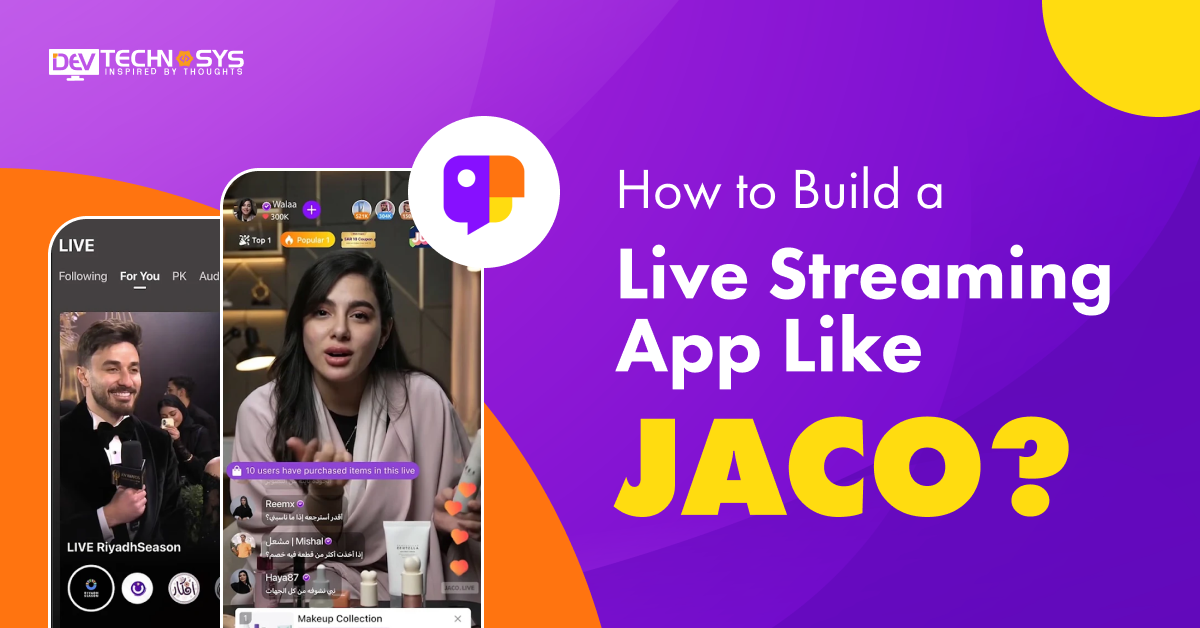
Live streaming has moved beyond one-way video broadcasting. Today’s users expect to watch creators, communicate in real time, send virtual gifts, join interactive sessions, discover communities, and participate in live entertainment from a single platform. JACO reflects this shift by combining high-quality live streams with community interaction, creator profiles, direct messaging, social sharing, gaming, gifts, and interactive features such as PK sessions.
For businesses exploring how to build a live streaming app like JACO, the challenge is not simply reproducing a video player. The platform needs a scalable streaming architecture, responsive social features, creator monetization, strong moderation, secure payments, and an experience that works reliably during high traffic.
This guide explains the development process, essential features, technology stack, security requirements, monetization models, estimated cost, timeline, and UAE/GCC considerations involved in creating such a platform.
What Makes JACO a Successful Live Streaming Platform?
JACO combines live entertainment with social participation. Its platform supports live broadcasts across areas such as sports, music, gaming, and other entertainment categories. Viewers can interact through comments, reactions, games, gifts, and direct communication, while creators can start their own streams and build an audience.
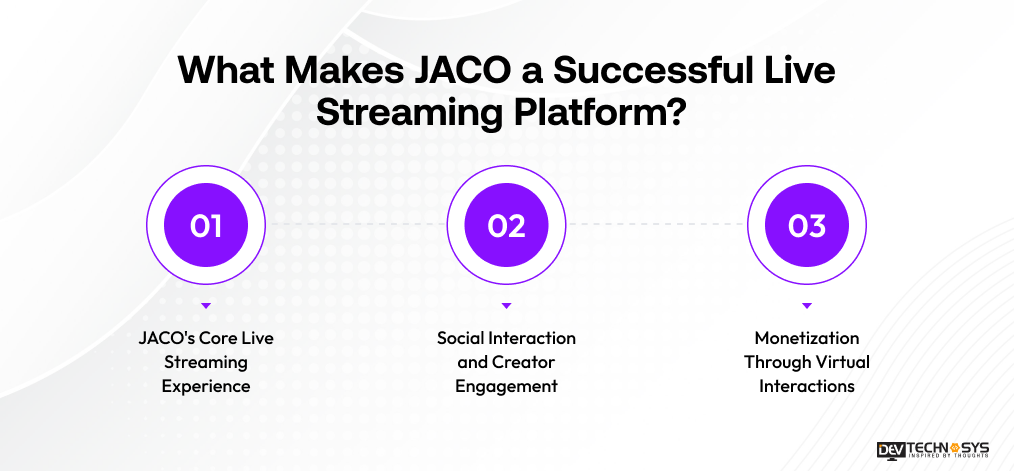
1. JACO’s Core Live Streaming Experience
The core experience centers on real-time video streaming. Users can discover live creators, watch broadcasts, interact with the host, and move between different content categories. This makes the platform more dynamic than a traditional on-demand video service.
2. Social Interaction and Creator Engagement
A successful social live streaming app needs interaction at the center of the experience. JACO supports customizable profiles, direct messaging, comments, social sharing, quick invitations, and PK-style interactions. Its official product information also highlights OBS support for gaming streams.
3. Monetization Through Virtual Interactions
Virtual gifts and coin-based interactions can create a revenue mechanism around creator engagement. JACO’s platform also provides users with a coin-purchasing system and cash-out functionality.
When planning Jaco app development, businesses should therefore think about the entire ecosystem: viewers, creators, content, community interaction, payments, moderation, and platform operations.
Industry Insight
According to Grand View Research, the global live streaming market is projected to grow from $137.1 billion in 2026 to $345.1 billion by 2030, at a 23% CAGR.
Why Build a Live Streaming App Like JACO in 2026?
Live streaming is evolving from simple video broadcasting into interactive digital experiences where viewers can chat, react, share, gift, and connect with creators in real time. Businesses can use this model to build focused communities, introduce new monetization channels, and deliver experiences tailored to specific audiences.
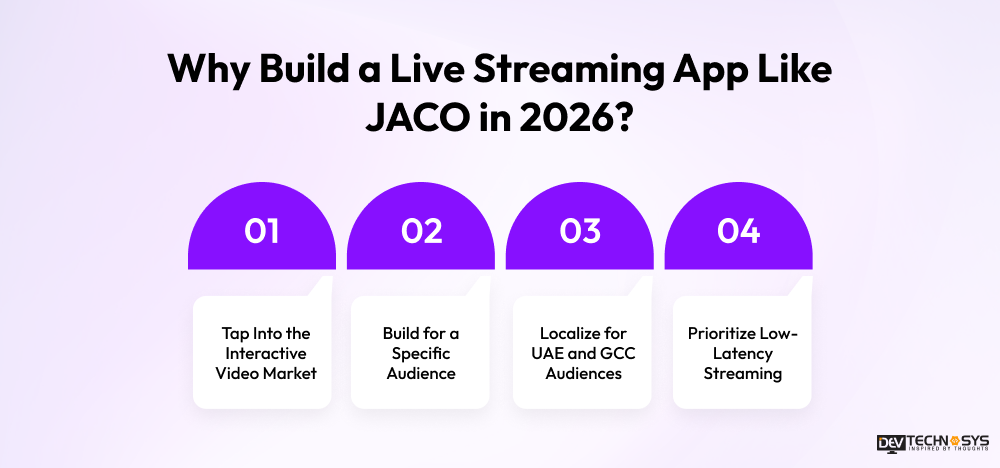
1. Tap Into the Interactive Video Market
Live content can generate stronger participation than passive viewing because audiences become part of the experience. Businesses can apply this model across gaming, sports, entertainment, education, shopping, live events, and niche communities.
2. Build for a Specific Audience
Choosing to build a live streaming app like Jaco gives businesses greater control over their target audience and content strategy. Instead of covering every category, a platform can focus on Arabic creators, regional sports, gaming communities, music, professional broadcasts, or specific interest groups.
3. Localize for UAE and GCC Audiences
Regional localization can make a major difference when targeting users across the Middle East. Arabic and English interfaces, RTL support, regional payment methods, local creators, and culturally relevant content can create a more familiar experience. Businesses can also consider building a video streaming app for Middle East audience strategy when regional requirements are central to the product.
4. Prioritize Low-Latency Streaming
Low-latency streaming should be considered a core product requirement from the beginning. When viewers are chatting, sending virtual gifts, joining competitions, or interacting with creators, excessive delay can interrupt the real-time experience and reduce engagement.
How to Build a Live Streaming App Like JACO?
A successful platform requires more than mobile application development. The streaming infrastructure, social experience, creator tools, monetization system, and backend need to work together. The following process provides a practical framework for development.
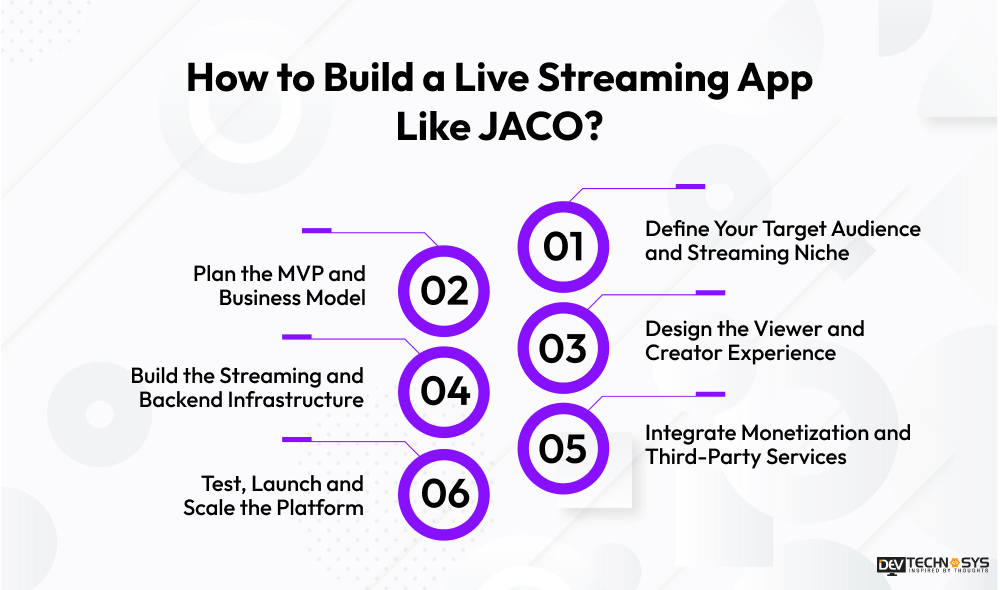
1. Define Your Target Audience and Streaming Niche
Start by identifying exactly who the platform will serve. Decide whether the product targets gamers, sports fans, entertainers, educators, influencers, businesses, or a combination of communities.
Define the primary content categories, creator profile, geographic market, expected audience size, and engagement model. This decision affects feature priorities, content moderation, infrastructure requirements, and monetization.
2. Plan the MVP and Business Model
Before developing every possible feature, define the minimum viable product. A first version may include account registration, creator profiles, live broadcasting, live chat, following, notifications, basic moderation, virtual gifts, and an administrator dashboard.
At this stage, determine how the platform will generate revenue. Options can include virtual gifts, subscriptions, advertisements, paid events, creator memberships, or commissions.
A focused MVP helps businesses validate audience demand before investing heavily in advanced functionality.
3. Design the Viewer and Creator Experience
The viewer journey should make discovery, watching, interaction, and sharing simple. The creator journey should make onboarding, broadcasting, audience management, and earnings easy to understand.
UX planning should cover the home feed, live-room interface, creator profile, chat, gift interactions, notifications, discovery, reporting, and account management.
If you plan to use mobile app development company resources, make sure the team understands real-time interaction rather than treating the product as a conventional content application.
4. Build the Streaming and Backend Infrastructure
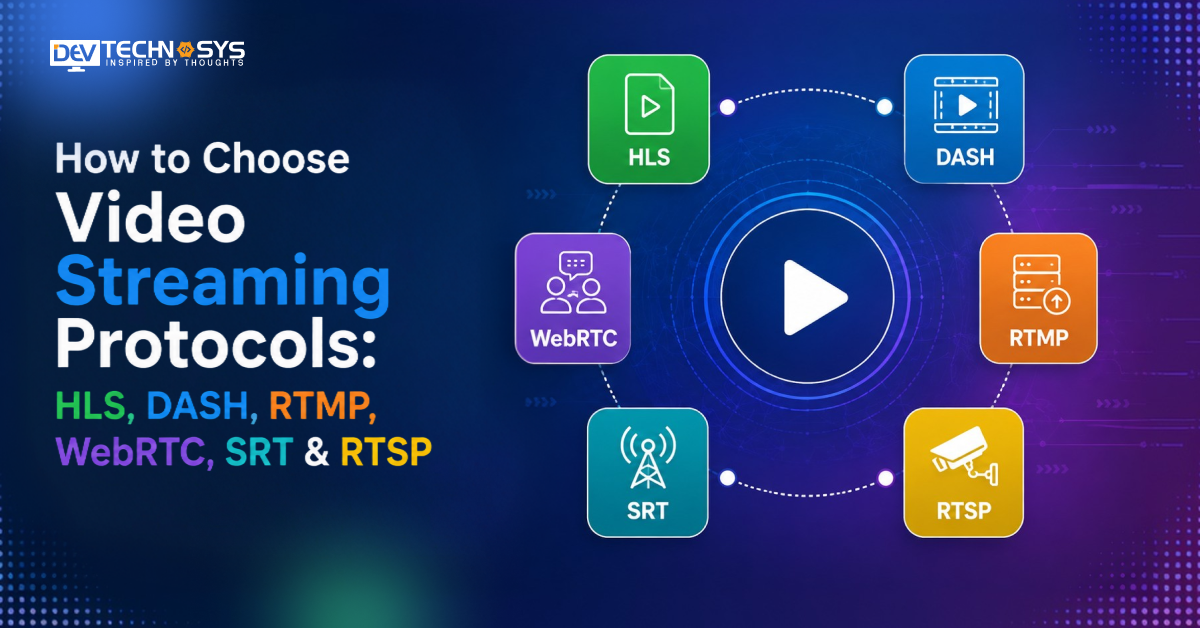
The technical foundation determines whether the platform can deliver stable broadcasts at scale. Depending on the use case, developers may combine WebRTC, RTMP, HLS, MPEG-DASH, media servers, transcoding services, cloud infrastructure, and CDN integration.
WebRTC can support highly interactive, low-latency communication, while protocols such as HLS and MPEG-DASH can support scalable video distribution. RTMP may be used for ingest from broadcasting tools.
The backend should manage users, creators, rooms, content metadata, gifts, transactions, notifications, moderation, analytics, and access permissions. A microservices architecture can help separate critical platform functions as the product grows.
5. Integrate Monetization and Third-Party Services
The platform may require payment gateways, push notification services, analytics tools, authentication providers, cloud storage, content moderation services, and communication APIs.
Payment flows should account for purchases, refunds, creator payouts, transaction records, fraud monitoring, and platform commissions.
6. Test, Launch and Scale the Platform
Testing should cover functional workflows, video quality, network variations, concurrent viewers, chat performance, payment processing, API security, account recovery, and moderation.
Load testing is particularly important. A platform may work correctly with a small group of users but fail when thousands of viewers join the same broadcast.
A phased launch allows the team to monitor performance, collect user feedback, identify infrastructure bottlenecks, and improve the product before expanding.
Businesses looking for structured video streaming app development services should evaluate whether their development partner can handle both application engineering and streaming infrastructure.
Answer a few quick questions and our experts will share a tailored project estimate.
Must-Have Features for a JACO-Like Live Streaming App
A JACO-inspired product needs features for three groups: viewers, creators, and administrators. The objective is to create a continuous loop where users discover content, interact with creators, creators build communities, and the platform generates sustainable revenue.
Feature |
What It Does |
Business/User Value |
| Live Video Streaming | Enables real-time broadcasts | Direct audience engagement |
| Live Chat | Enables real-time conversations | Community building |
| Creator Profiles | Displays creator information and content | Personal branding |
| Virtual Gifts | Lets viewers support creators digitally | Monetization |
| Voice Interaction | Enables real-time communication | Greater immersion |
| PK/Co-Streaming | Allows creator collaborations and challenges | Higher engagement |
| Follow & Notifications | Alerts users about creators and streams | Retention |
| Short Videos | Provides short-form discovery content | Wider content reach |
| Social Sharing | Lets users share streams externally | Audience acquisition |
| Creator Analytics | Tracks views, engagement, and earnings | Creator growth |
| Admin Dashboard | Controls users, content, and transactions | Platform operations |
A scalable video streaming app development solution should also include administration tools from the beginning. Moderators need to review reports, manage accounts, monitor streams, investigate suspicious activity, and control content policies.
Industry Insight
According to the BCG report, India has around 2–2.5 million active digital creators, but only 8–10% currently monetize their content effectively.
Advanced Features to Make Your Live Streaming App Stand Out
Once the core experience is stable, advanced capabilities can differentiate the product from basic Jaco alternatives.
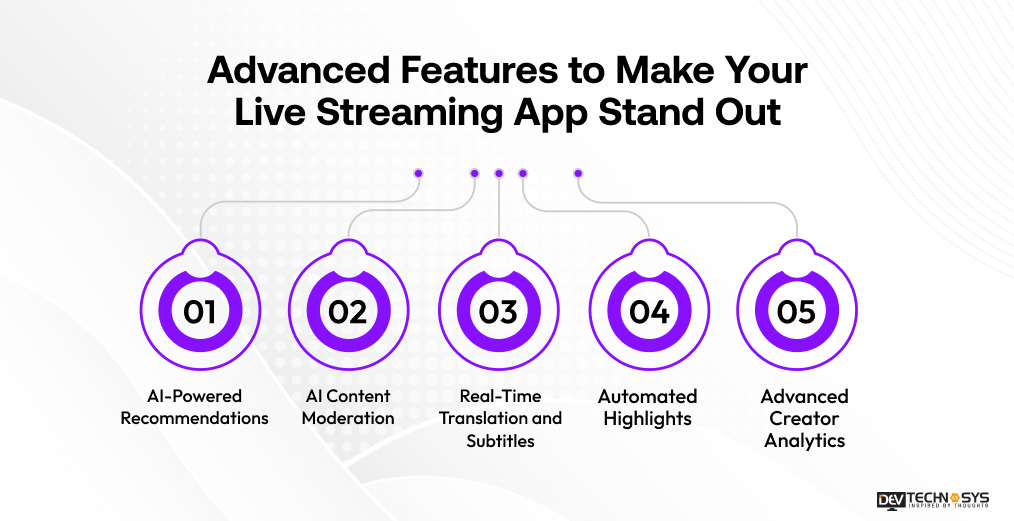
1. AI-Powered Recommendations
AI can analyze viewing patterns, interests, engagement signals, and creator performance to personalize live-stream recommendations. Better discovery can help viewers find relevant streams without manually searching through categories.
2. AI Content Moderation
Automated systems can identify potentially harmful, prohibited, or suspicious content and flag it for human review. Human moderation should remain available for complex cases.
3. Real-Time Translation and Subtitles
Automatic translation and subtitles can help creators reach multilingual audiences. This is particularly valuable for platforms serving Arabic and English users across different GCC markets.
4. Automated Highlights
The platform can identify important moments from longer broadcasts and generate short clips for discovery feeds.
5. Advanced Creator Analytics
Creators can monitor watch time, peak concurrent viewers, engagement, gifting activity, follower growth, and audience retention.
For businesses that are looking to develop a live streaming app like Jaco, these features should be introduced according to actual user needs rather than added simply because they use AI. Ultra-low-latency streaming can also be considered for highly interactive experiences where viewers need near-immediate communication with hosts.
A focused AI in Video Streaming Apps strategy can help determine which AI capabilities are useful for the platform instead of turning AI into a collection of disconnected features.
Technology Stack for Building a Live Streaming App Like JACO
The technology stack should be selected according to the streaming model, expected audience, content quality, latency requirements, geographic coverage, and budget. Businesses can also consider hybrid app development services when they want to share application logic across platforms while maintaining appropriate native capabilities for media-intensive workflows.
Technology Layer |
Options |
Purpose |
| Mobile | Swift, Kotlin, Flutter | iOS and Android applications |
| Backend | Node.js, Python, Java | APIs and business logic |
| Streaming | WebRTC, RTMP, HLS | Live video transmission |
| Video Processing | FFmpeg | Encoding and transcoding |
| Database | PostgreSQL, MongoDB | User and application data |
| Cache | Redis | Fast real-time operations |
| Cloud | AWS, Azure, Google Cloud | Infrastructure |
| CDN | CloudFront, Cloudflare | Content delivery |
| Analytics | Custom/third-party tools | Performance and user insights |
If the project requires additional engineering capacity, businesses can hire dedicated developer resources for specific backend, mobile, DevOps, or streaming requirements.
Security and Compliance for a Live Streaming App
Security needs to cover the complete platform, from user authentication and video infrastructure to payments and creator earnings.
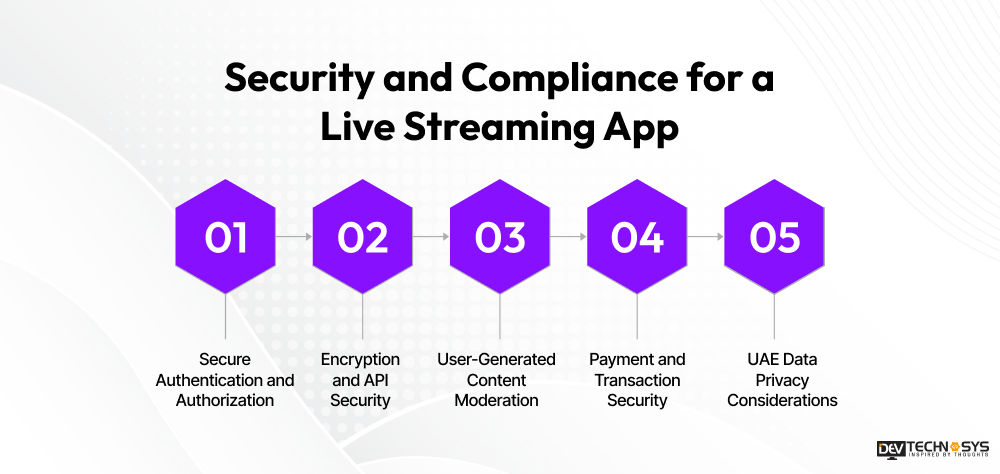
1. Secure Authentication and Authorization
Implement strong API authentication, role-based access, session protection, and appropriate permissions for viewers, creators, moderators, and administrators. A Secure API should reject unauthorized requests and limit access to sensitive operations.
2. Encryption and API Security
Data encryption should protect sensitive information during storage and transmission. Encryption in transit can use TLS/SSL encryption, while encryption at rest protects stored information.
API security should include request validation, rate limiting, access controls, secure token management, dependency monitoring, and vulnerability testing.
3. User-Generated Content Moderation
A social live streaming app can receive large amounts of user-generated content. Moderation systems should support reporting, content review, creator controls, account restrictions, and escalation procedures.
4. Payment and Transaction Security
If the platform supports virtual coins, gifts, subscriptions, or creator payouts, payment workflows should be designed around PCI DSS compliance and fraud prevention.
5. UAE Data Privacy Considerations
Businesses operating in the region should identify the privacy laws and contractual requirements applicable to their users, data processing activities, vendors, and geographic footprint.
Platforms serving international audiences may also need GDPR compliance, CCPA compliance, and CPRA compliance depending on the jurisdictions involved. Security governance can be strengthened through recognized practices and frameworks, including SOC 2 compliance and ISO 27001-aligned information security controls.
For post-launch protection, regular security reviews, dependency updates, API testing, access reviews, incident monitoring, and maintenance should be included in the operating plan. Businesses should also account for mobile app maintenance costs when calculating the long-term ownership of the platform.
How Much Does It Cost to Build a Live Streaming App Like JACO?
The Jaco app development cost depends heavily on the number of platforms, streaming architecture, feature depth, third-party services, security requirements, and development team structure.
For a custom platform, a practical planning range can look like this:
Development Level |
Estimated Cost |
Scope |
| Basic MVP | $10,000–$15,000 | Core streaming, profiles, chat |
| Mid-Level | $15,000–$22,000 | Social features, creator tools, monetization |
| Advanced | $22,000–$35,000+ | AI, advanced streaming, analytics, scalable infrastructure |
What Affects JACO App Development Cost?
- The first factor is feature complexity. A simple streaming application costs less than a platform with PK interactions, advanced creator tools, gifting, real-time communication, AI, and complex moderation.
- The second factor is streaming infrastructure. Video encoding, transcoding, bandwidth, CDN usage, storage, and concurrent viewers can create ongoing infrastructure expenses that ordinary applications may not face.
- The number of platforms also matters. Building separate native iOS and Android applications can require more development resources than a carefully planned cross-platform approach.
- Security, payment integration, analytics, third-party APIs, admin tools, cloud architecture, and testing also influence the final estimate.
For a more detailed budgeting exercise, the video streaming app development cost should be separated into product development, infrastructure, third-party services, and ongoing maintenance.
How Long Does It Take to Develop a JACO-Like Live Streaming App?
The timeline depends on scope, team size, technology choices, streaming architecture, and the number of platforms. The estimated time to create a live streaming app like JACO is 2 to 5 months.
Businesses planning to develop a live streaming app like JACO should define the first release before committing to a fixed timeline. For UAE-based businesses, teams can also hire mobile app developers in Dubai when local collaboration, regional product understanding, or on-site engagement is important.
Development Stage |
Estimated Timeline |
| Research & Planning | 1–3 weeks |
| UI/UX Design | 1–3 weeks |
| Backend Development | 4–6 weeks |
| Mobile Development | 8–12 weeks |
| Streaming Integration | 3–5 weeks |
| Testing & Deployment | 3–4 weeks |
How to Build a JACO-Like App for the UAE and GCC Market?
The UAE and wider GCC market requires more than translating the interface. A regional product should consider language, directionality, payments, audience behavior, creator ecosystems, and applicable privacy requirements.
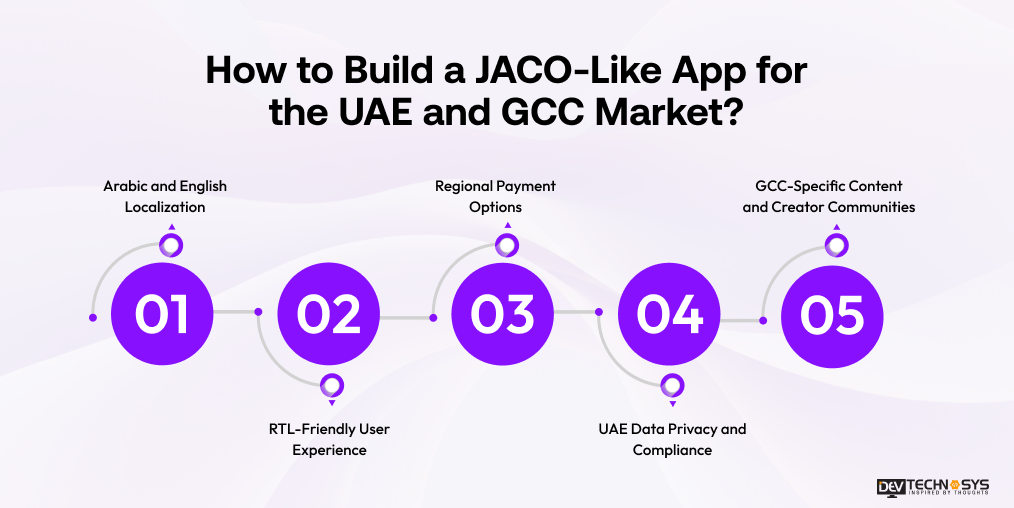
1. Arabic and English Localization
Provide Arabic and English experiences from the beginning rather than adding localization after the product is complete.
2. RTL-Friendly User Experience
Arabic interfaces need proper right-to-left layouts across navigation, text, buttons, chat, profiles, notifications, and content discovery.
3. Regional Payment Options
Support payment methods appropriate to the target markets and design the transaction system around local availability, currency requirements, refunds, and creator payouts.
4. UAE Data Privacy and Compliance
Review the privacy and data-processing requirements applicable to the business model, users, vendors, and geographic coverage. The platform should clearly explain data collection, processing, storage, retention, and user rights.
5. GCC-Specific Content and Creator Communities
A regional platform can focus on Arabic creators, sports, gaming, entertainment, live events, educational broadcasts, or other communities with strong local relevance.
Businesses evaluating regional products can also study approaches used to build a Video Streaming App like TOD when comparing localization, content, subscription, and streaming strategies.
Industry Insight
According to NPAW’s 2025 Video Streaming Industry Report, analysis of more than 200 streaming services showed continued improvements in join time, buffering, and bitrate across live and on-demand streaming.
Common Mistakes to Avoid When Building a Live Streaming App
Building a live streaming platform without accounting for its unique technical and operational requirements can create expensive problems after launch.
- Treating live streaming like ordinary video playback: Live content requires different latency, encoding, networking, and infrastructure decisions.
- Underestimating bandwidth and CDN requirements: Large concurrent audiences can significantly increase delivery costs.
- Ignoring concurrent-user testing: A platform may perform well in development but fail during a major live event.
- Using weak moderation systems: User-generated content requires reporting, review, automated detection, and human escalation.
- Launching without creator monetization: Creators need clear incentives to produce and maintain content.
- Delaying Arabic and RTL support: Regional products should consider localization at the UX architecture stage.
- Building too many features before MVP validation: A smaller, testable product can provide useful market feedback earlier.
- Neglecting fraud prevention: Virtual gifts, payments, accounts, and creator payouts can become targets for abuse.
These considerations are especially important when evaluating Jaco alternatives because the goal should be to create a stronger product experience for a defined audience rather than simply reproduce an existing application.
How to Monetize a JACO-Like Live Streaming App?
A video streaming app development company can help you build multiple revenue channels instead of depending on advertising alone, which will help you develop profitable revenue streams in the long term.
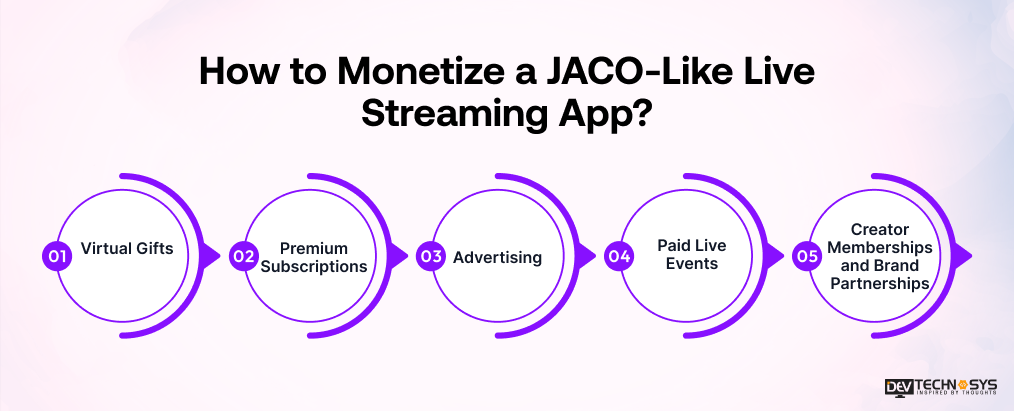
1. Virtual Gifts
Viewers purchase digital credits or coins and use them to send gifts during broadcasts. The platform can retain a percentage while distributing an agreed share to eligible creators.
2. Premium Subscriptions
Users can pay for premium communities, exclusive streams, subscriber-only chats, badges, or additional content.
3. Advertising
Advertising can include display placements, sponsored streams, branded events, and targeted promotions.
4. Paid Live Events
Special concerts, sports-related programming, workshops, classes, or professional events can use ticket-based access.
5. Creator Memberships and Brand Partnerships
Creators can offer memberships while brands can sponsor broadcasts, creators, competitions, or special events.
When businesses create a live streaming app like Jaco, monetization should be designed into the product architecture from the beginning. The platform needs accurate transaction records, creator earnings calculations, payout workflows, refunds, fraud controls, and reporting.
A sustainable model should also make the value exchange clear: viewers receive access or interaction, creators earn from their communities, and the platform earns from facilitating the ecosystem.

Conclusion
A successful live streaming platform needs much more than a live video player. It requires reliable real-time delivery, creator tools, social interaction, monetization, content moderation, secure APIs, scalable infrastructure, and a product experience designed around its target audience.
Businesses planning to build a live streaming app like Jaco should begin with a focused MVP, select the streaming architecture according to latency and scale requirements, and then expand into AI, advanced analytics, creator monetization, and regional capabilities.
For the UAE and GCC, Arabic support, RTL design, regional payment options, local creator communities, and appropriate privacy practices can become important parts of the product strategy.
Working with an experienced live streaming app development company can help connect these technical, business, and regional requirements into a production-ready platform.
Frequently Asked Questions
1. How Much Does It Cost to Build a Live Streaming App Like JACO?
A custom JACO-like live streaming application can cost around $10,000–$35,000+, depending on features, platforms, streaming architecture, AI, monetization, security, integrations, and scalability requirements. Advanced products with complex infrastructure can require a larger investment.
2. How Does a JACO-Like Live Streaming App Make Money?
Revenue can come from virtual gifts, subscriptions, advertisements, paid live events, creator memberships, sponsorships, and platform commissions. The monetization model should also define creator revenue sharing, payment processing, refunds, fraud controls, and payout workflows before launch.
3. What Technology Is Used to Build a Live Streaming App?
A typical architecture can use WebRTC, RTMP, HLS, MPEG-DASH, SRT, media servers, FFmpeg, cloud infrastructure, databases, Redis, APIs, and CDN services. The final stack depends on latency requirements, content type, audience size, device support, and geographic distribution.
4. Can I Build a Live Streaming App for the UAE Market?
Yes. A UAE-focused platform can be designed around Arabic and English interfaces, RTL support, regional payment options, GCC creator communities, localized content categories, scalable cloud infrastructure, and applicable privacy and security requirements.
5. How Can AI Improve a Live Streaming Platform?
AI can support personalized recommendations, automated content moderation, real-time translation, subtitles, creator analytics, highlight generation, anomaly detection, and discovery. Each capability should address a measurable platform requirement rather than being added without a defined business or user benefit.