





Key Takeaways:
-
- Businesses can access the quickly expanding digital entertainment market and make long-term profits by developing a video streaming app like TOD.
- TOD is a high-end over-the-top (OTT) platform that provides smooth streaming and customized user experiences for movies, TV series, and live sports.
- Netflix, Amazon Prime Video, Shahid, OSN+, and Disney+ are a few well-liked substitutes.
- Pay-per-view content, partnerships, in-app purchases, ads, and subscription models are how video streaming applications make money.
noDemand for video streaming apps has been on a steep increase as people abandon traditional television for online digital entertainment. The current generation demands access to movies, TV shows, and live shows anywhere at any given time, whether on mobile or TV. The rise has presented a great opportunity to businesses in developing scalable and feature-rich streaming platforms.
Apps like TOD have become popular for offering a mix of regional and international content and a friendly, easy-to-use interface. Their popularity comes from high streaming quality, recommendations, and customized subscriptions in attracting and retaining users.
If you want to build a video streaming app like TOD, it is crucial to know the overall development process, key features, cost, and monetization strategies. This blog will deconstruct the details you need to start and grow a competitive video streaming app.
What is a TOD App?
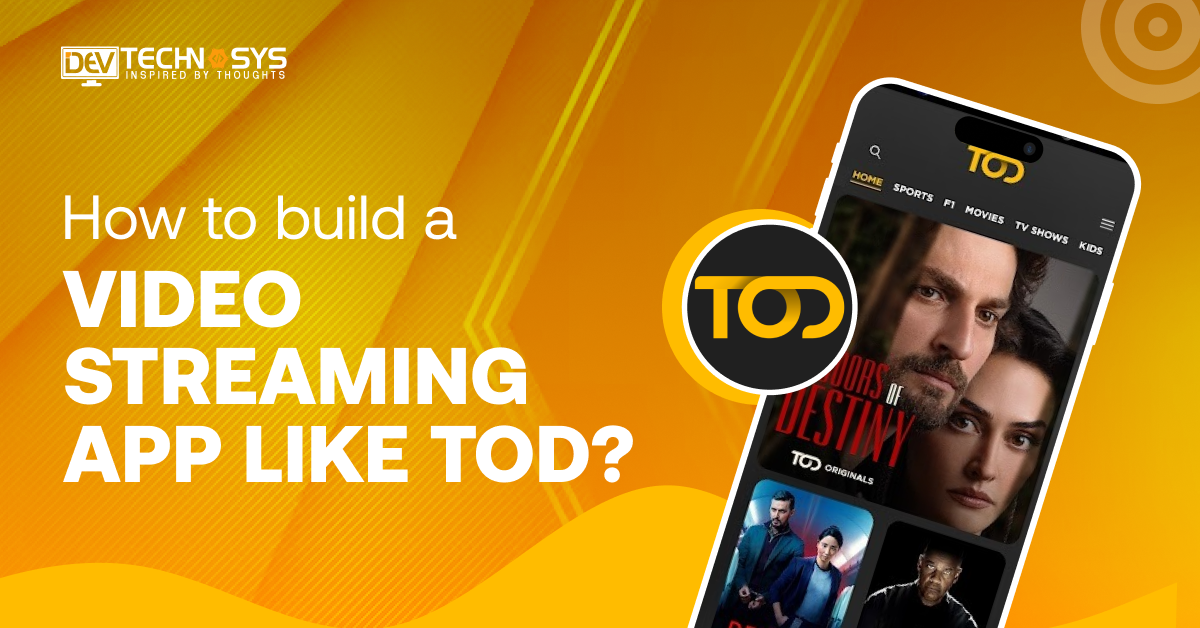
The TOD app is a premium video streaming platform widely used across the Middle East, offering a mix of movies, TV shows, and live sports. Owned by beIN Media Group, it has built a strong presence by delivering high-quality content with smooth streaming performance and a user-friendly experience.
Unlike traditional TV services, TOD works as an OTT (Over-the-Top) platform, allowing users to access content anytime on smartphones, smart TVs, and web browsers. Its ability to combine regional content with global entertainment makes it especially popular in countries like the UAE and Saudi Arabia. You can hire a video streaming app development company to make a TOD clone app.
How Does the TOD App Work?
TOD functions as a subscription-based over-the-top (OTT) platform that enables customers to view live events in real time or stream content on demand. Many companies research it when preparing to create a video streaming software similar to TOD because of its smooth procedure from user registration to content delivery.
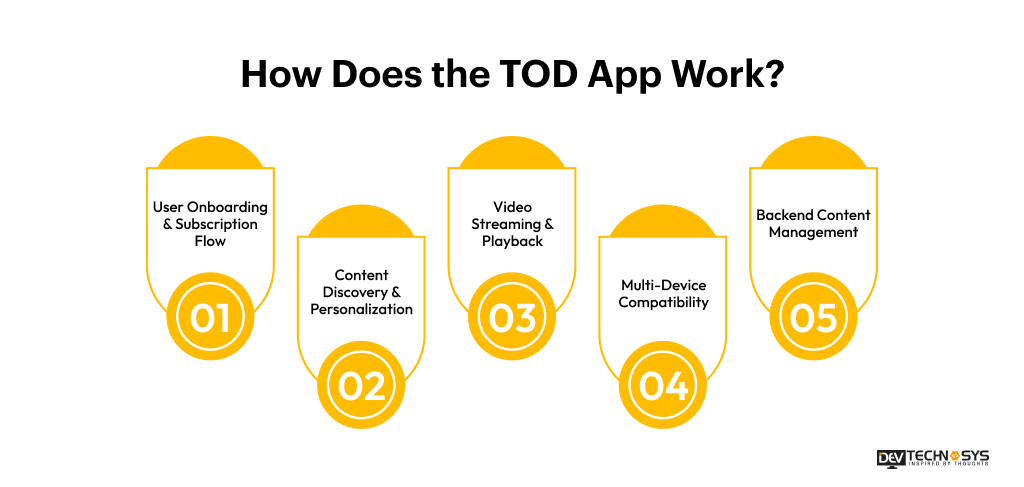
1. User Onboarding & Subscription Flow
The first step for users is to register on the platform with their mobile number or email address. Following registration, consumers can select from a variety of subscription plans, such as sports packages or all-inclusive entertainment bundles, depending on their watching requirements.
2. Content Discovery & Personalization
After logging onto the app, customers are shown a customized dashboard with suggested films, television series, and live events. To recommend pertinent material, sophisticated algorithms examine user behavior.
3. Video Streaming & Playback
TOD delivers high-quality video with little buffering by utilizing cutting-edge streaming technologies. Adaptive bitrate streaming, which automatically modifies video quality according on internet speed, is supported.
4. Multi-Device Compatibility
On smartphones, tablets, smart TVs, and online platforms, users can access TOD. They can continue watching where they left off because their data syncs between devices. If you want to develop an app similar to TOD, cross-platform accessibility is essential. You can quickly create TOD substitutes by working with a hybrid app development business.
5. Backend Content Management
On the admin side, TOD includes a robust content management system (CMS) that helps manage video uploads, licensing, user data, and analytics. This backend efficiency plays a major role in scaling the platform, especially for businesses planning to launch a TOD clone app with a large content library.
What are the Market Stats of Video Streaming Apps Like TOD?
Due to increased internet penetration, smartphone use, and the growing demand for on-demand content, the worldwide video streaming market is developing at an astounding rate. Businesses are increasingly aiming to develop a video streaming app like TOD in order to take advantage of the growing trend of streaming as the primary method of content consumption.
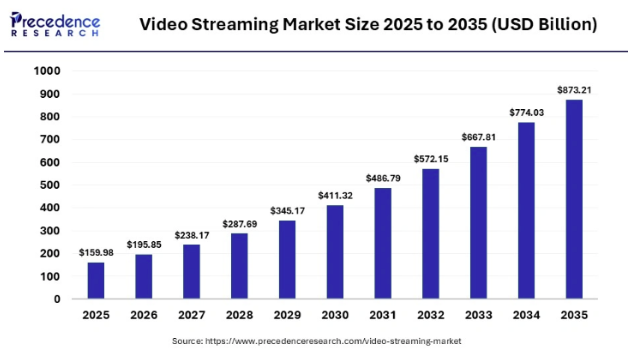
Key Market Statistics
- The global video streaming market is valued at $159.98 billion in 2025 and is expected to grow to $195.85 billion in 2026.
- It is projected to reach approximately $873.21 billion by 2035, growing at a CAGR of 18.5% (2026–2035).
- North America accounted for the largest share, contributing 33% of the market in 2025, with a size of $53.41 billion.
- By streaming type, live streaming dominates with 62% market share in 2025.
- By deployment, cloud-based solutions lead with 59% market share, highlighting scalability trends.
- The consumer segment holds 54% of the market, showing strong end-user demand.
What is the Process to Develop a Video Streaming App Like TOD?
Businesses wish to develop a video streaming app similar to TOD, which must be focused on giving users a continuous viewing experience and include some modern features like personalization and cross-platform compatibility.
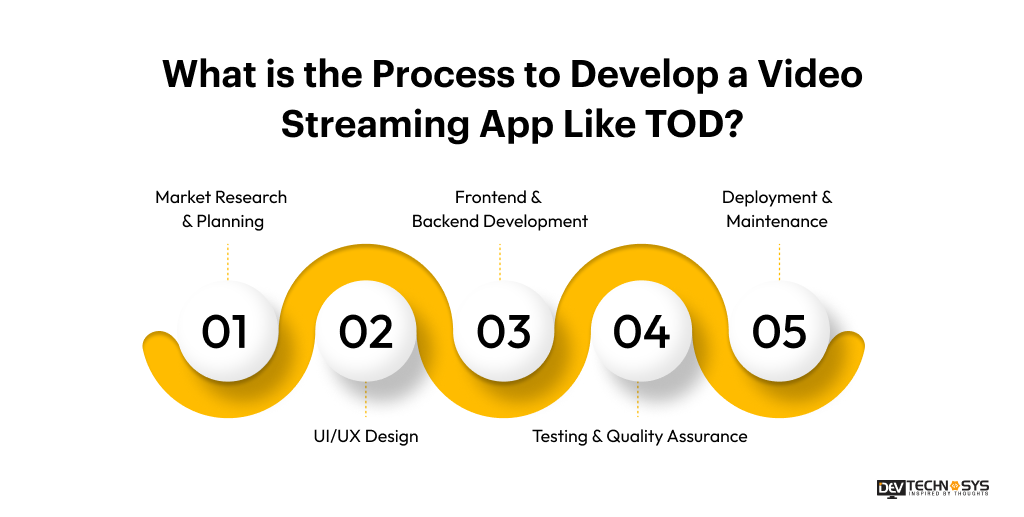
1. Market Research & Planning
First, learn about your target market, your competitors, and the demand in the area. To figure out what your app is really about, you should know what the user wants to see, what kind of content they want, what language they speak, and how much they plan to pay. It’s also used to find gaps in the market and put your brand in the right place.
2. UI/UX Design
A user-friendly interface will help the site to maximize time on the site, which enhances clicks and subscriptions. Collaborating with a video streaming app development services provider will enable the development of an easy-to-use interface that would not contradict the existing design trends and user expectations.
3. Frontend & Backend Development
Frontend provides a nimble and fluid user experience, whereas the backend handles data, streaming reasoning, and content delivery. A scalable backend is essential to support a lot of traffic and provide continuous streaming. To build a video streaming app like TOD, performance and flexibility should be the priority of businesses that seek to develop a video streaming app such as TOD.
4. Testing & Quality Assurance
The app should be tested intensively before it can be released into the market. This makes sure that it functions perfectly on various devices and networks. This will involve identifying and fixing bugs, optimizing performance for fast loading and minimal buffering, and ensuring strong data security to protect user information.
5. Deployment & Maintenance
The deployment of the app is done on Android, iOS, and web platforms after the test. This will need constant updates and maintenance to correct the problems, optimize the performance, and introduce new features after the launch. The cost to maintain an app is around 15%-20% of the total video streaming app development cost.
Why are Businesses Looking to Invest in Video Streaming App Development?
The demand for digital entertainment app development is at an all-time high, with users increasingly shifting from traditional TV to on-demand streaming platforms. As a result, many companies are planning to create a video streaming app like TOD to tap into this growing market and generate long-term revenue.
1. Rising Demand for On-Demand Content
Modern users prefer watching content anytime, anywhere, without being restricted by schedules. This shift toward on-demand viewing has significantly increased the popularity of streaming platforms. Businesses aiming to create a video streaming app like TOD can benefit from this growing demand by offering flexible and user-centric content access.
2. Rapid Growth of the OTT Industry
The global OTT market is expanding rapidly, supported by increasing internet penetration and smartphone usage. With millions of users subscribing to streaming platforms, the industry offers strong growth potential.
3. Multiple Revenue Opportunities
Video streaming apps provide various monetization options such as subscriptions, advertisements, and pay-per-view models. These revenue streams allow businesses to generate consistent income while scaling their platform. This makes it highly profitable to make a video streaming app like TOD with a well-planned business model.
4. Expansion into Regional Markets
There is a growing demand for localized content, especially in regions like the Middle East. Platforms that offer region-specific content tend to perform better and attract more subscribers. This creates a strong opportunity for businesses to build an app like TOD that caters to specific audiences. By allowing to build video streaming app like Jio Cinema, it will help to gain thousands of users.
Read Also: How Much Does it Cost to Build an App Like Shahid?
What are the Essential Features of an App Like TOD?
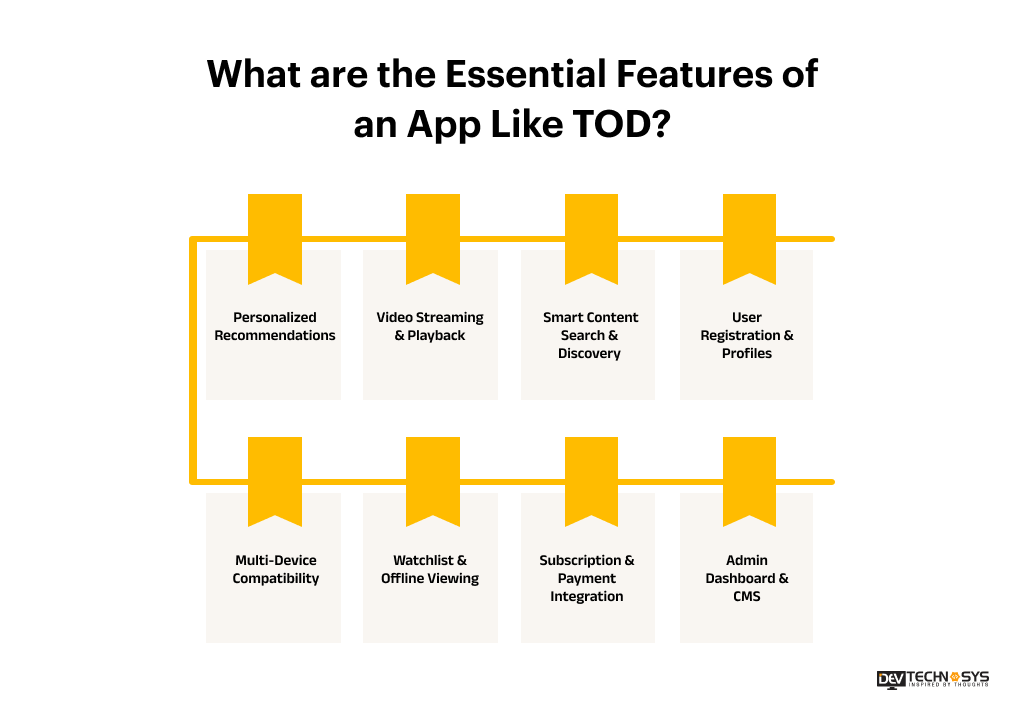
To Build a Streaming Platform Like Filmlicious, you need to integrate a set of core features that ensure seamless streaming, personalization, and scalability. These features not only enhance user experience but also help in increasing engagement, retention, and revenue generation in the long run.
1. User Registration & Profiles
A simple and secure registration system allows users to sign up using email, mobile number, or social media accounts. Once registered, users can create personalized profiles, manage their preferences, and track their watch history.
2. Smart Content Search & Discovery
An advanced search system with filters, categories, and genre-based browsing helps users quickly find relevant content. Features like trending sections, recommendations, and curated playlists improve content discovery.
3. Video Streaming & Playback
Features like adaptive bitrate streaming adjust video quality based on internet speed, ensuring smooth playback. Support for HD and 4K content, fast loading, and minimal buffering are essential if you plan to make a video streaming app like TOD that delivers a premium experience.
4. Personalized Recommendations
The role of AI in video streaming apps has help to analyze user behavior, watch history, and preferences to suggest relevant content. Implementing smart recommendations is critical for businesses aiming to build a video streaming app like TOD that feels intuitive and user-centric.
5. Multi-Device Compatibility
Users expect flexibility to watch content across multiple devices such as smartphones, tablets, smart TVs, and desktops. Cross-device syncing allows users to resume content from where they left off. This feature is essential to build an app like TOD in Dubai that meets modern user expectations.
6. Watchlist & Offline Viewing
The watchlist feature allows users to save content for later, while offline viewing enables downloading videos to watch without internet access. These features are especially useful for users with limited connectivity and help improve retention and user satisfaction.
7. Subscription & Payment Integration
A secure and flexible payment system allows users to choose subscription plans based on their needs. Integration with multiple payment gateways, including cards and digital wallets, ensures convenience. This is a key feature if you want to create an app like TOD with a strong monetization model.
8. Admin Dashboard & CMS
A robust admin panel enables platform owners to manage content, users, subscriptions, and analytics efficiently. It also helps in uploading new content, tracking performance, and making data-driven decisions. This backend control is crucial for scaling and maintaining a streaming platform.
What is the Cost to Develop a Video Streaming App Like TOD?
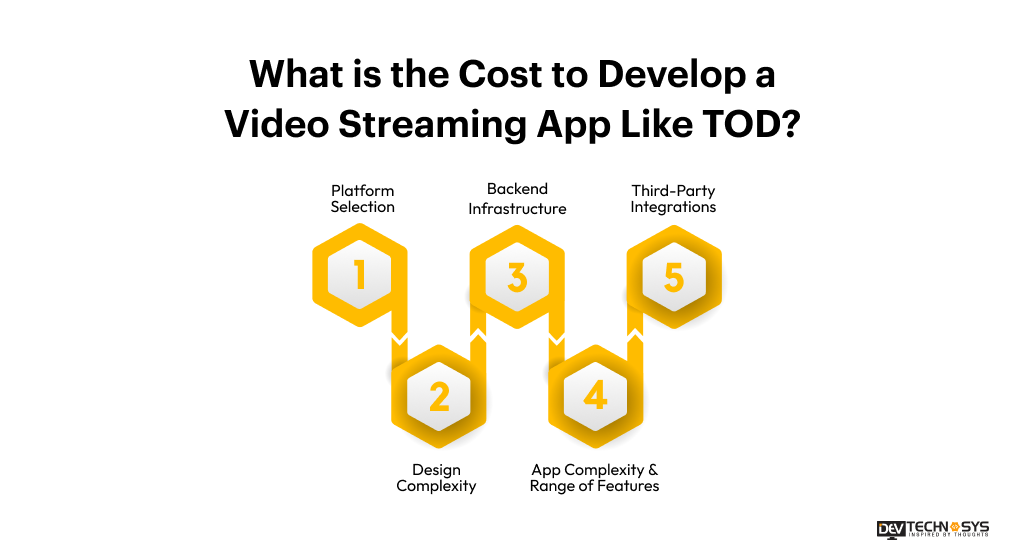
The cost to develop a video streaming app typically ranges from $8,000 to $25,000, depending on factors such as app complexity, features, design, and platform selection. Below is the detailed analysis of the video streaming app development cost.
| App Type | Key Features Included | Estimated Cost |
| Basic App (MVP) | User registration, basic streaming, search, and limited content | $8,000 – $12,000 |
| Mid-Level App | HD streaming, subscriptions, notifications, basic analytics | $12,000 – $18,000 |
| Advanced App | Multi-device support, offline viewing, enhanced UI/UX, security | $18,000 – $25,000 |
1. Platform Selection
Building for a single platform requires less effort and development time, but it limits your audience reach. On the other hand, native apps require separate codebases for iOS and Android app development, which increases development time, effort, and cost. Cross-platform frameworks like Flutter or React Native allow developers to use a single codebase for multiple platforms, making it a cost-effective solution for businesses planning to build a video streaming app like TOD in UAE.
| Platform Choice | Cost Contribution | Impact |
| Single Platform | $2,000 – $4,000 | Faster and budget-friendly |
| Cross-Platform | $4,000 – $7,000 | Wider reach with moderate cost |
| Native (iOS + Android) | $7,000 – $10,000 | Best performance but higher cost |
2. Design Complexity
Basic UI designs using pre-built templates cost less compared to advanced UI/UX designs that require custom elements, animations, and smooth navigation. A video streaming app needs an intuitive and visually appealing interface to keep users engaged, which adds to the design cost depending on the level of customization required.
| Design Level | Cost Contribution | Description |
| Basic UI | $1,000 – $2,000 | Simple layouts |
| Custom UI/UX | $2,000 – $4,000 | User-friendly dashboards |
| Premium UI | $4,000 – $6,000 | Advanced visuals and animations |
3. Backend Infrastructure
Developing backend infrastructure requires time and expertise, especially for streaming apps that handle large volumes of data. Basic backend systems are more affordable as they handle limited functionality. However, scalable backend architecture involves cloud integration, load balancing, and real-time data processing, which increases development time and cost.
| Backend Type | Cost Contribution | Features |
| Basic Backend | $2,000 – $4,000 | Data storage, APIs |
| Scalable Backend | $4,000 – $6,000 | Real-time sync, analytics |
| Advanced Backend | $6,000 – $8,000 | High security, large-scale data handling |
4. App Complexity & Range of Features
Basic features such as login, profiles, and content browsing cost less as they do not require extensive coding. They are quicker to implement and take less time to build. However, advanced features like AI-based recommendations, offline viewing, and multi-device synchronization require more development hours and technical expertise, which increases the overall mobile app development cost.
| Feature Type | Cost Contribution | Examples |
| Basic Features | $1,000 – $2,000 | Login, profiles, content browsing |
| Core Features | $2,000 – $4,000 | Video playback, subscriptions, notifications |
| Advanced Features | $4,000 – $6,000 | Offline viewing, personalization, multi-device sync |
5. Third-Party Integrations
Third-party integrations involve additional costs such as licensing fees and subscriptions. Basic integrations like payment gateways and notifications are cost-effective, while advanced integrations such as AI engines, CDN services, and recommendation systems require more complex implementation and higher investment.
| Integration Type | Cost Contribution | Integration Example |
| Basic APIs | $500 – $1,000 | Notifications, payments |
| Medium Integrations | $1,000 – $1,500 | Analytics tools, CDN services |
| Advanced Integrations | $1,500 – $2,500 | AI engines, recommendation systems |
What are the Top TOD Alternatives in 2026?
The video streaming market is highly competitive, with several platforms offering diverse content and user experiences. While TOD has a strong presence in the Middle East, users often explore other platforms based on pricing, exclusive content, and features. Hire on-demand app developers to develop the best TOD alternatives. Here are some of the top alternatives:
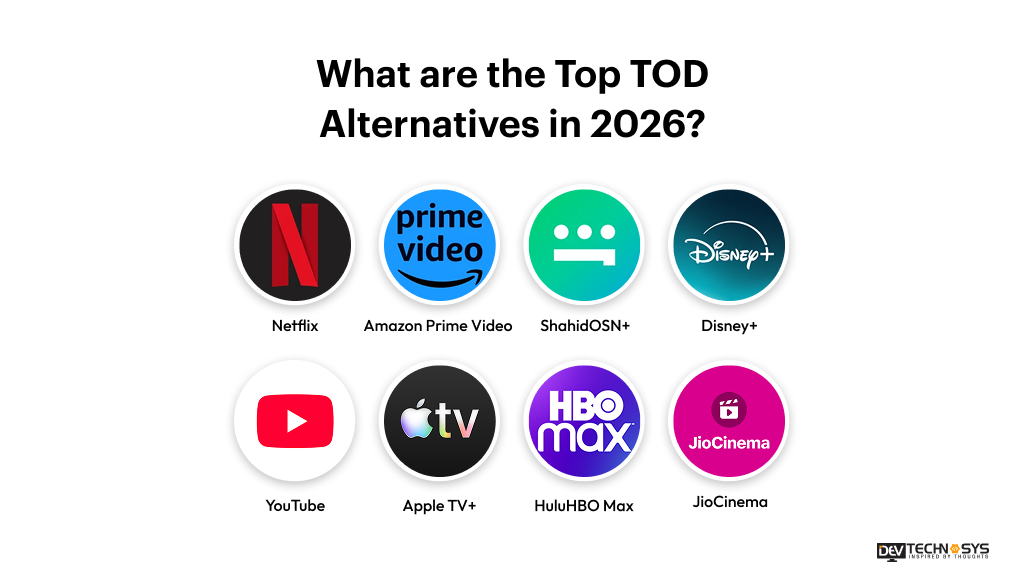
| Platform | Supported Devices | Downloads | Top Features |
| Netflix | Android | iOS | Smart TV | Web | 1B+ | Original content, personalized recommendations, multi-device streaming |
| Amazon Prime Video | Android | iOS | Smart TV | Web | 500M+ | Regional & global content, offline downloads, bundled Prime benefits |
| Shahid | Android | iOS | Smart TV | Web | 50M+ | Arabic content, live TV channels, regional exclusives |
| OSN+ | Android | iOS | Smart TV | Web | 10M+ | Premium shows, HBO content, high-quality streaming |
| Disney+ | Android | iOS | Smart TV | Web | 500M+ | Marvel & Pixar content, family entertainment, exclusive releases |
| YouTube | Android | iOS | Smart TV | Web | 10B+ | User-generated content, live streaming, free & premium options |
| Apple TV+ | Android | iOS | Smart TV | Web | 50M+ | High-quality originals, ad-free streaming, premium experience |
| Hulu | Android | iOS | Smart TV | Web | 100M+ | On-demand content, live TV, flexible subscription plans |
| HBO Max | Android | iOS | Smart TV | Web | 100M+ | Blockbuster movies, HBO originals, premium library |
| JioCinema | Android | iOS | Smart TV | Web | 100M+ | Free content, sports streaming, regional shows |
1. Netflix
Netflix is a global leader in video streaming, offering a massive library of movies, TV shows, documentaries, and original content. Its strong focus on high-quality productions and localized content makes it popular across different regions.
2. Amazon Prime Video
Amazon Prime Video provides a wide mix of international and regional content, including movies, series, and exclusive originals. It is known for its affordability and bundled benefits with an Amazon Prime membership.
3. Shahid
Shahid is one of the leading streaming platforms in the Middle East, focusing primarily on Arabic content, TV shows, and live channels. It has built a strong user base due to its regional relevance and exclusive partnerships.
4. OSN+
OSN+ is known for offering premium international content, including popular TV series, blockbuster movies, and exclusive shows. It has strong partnerships with global studios, which ensures a high-quality content library. The cost to build a video streaming app like OSN+ is very affordable to invest.
5. Disney+
Disney+ stands out with its family-friendly content and globally recognized franchises like Marvel, Pixar, and Star Wars. The platform’s strong brand value and consistent content updates make it a major player in the streaming industry.
How Video Streaming Apps Are Transforming Entertainment in 2026?
Video streaming apps are reshaping the entertainment industry by changing how users consume content. With the rise of on-demand platforms, audiences now have complete control over what, when, and how they watch. This shift has not only disrupted traditional television but also opened new opportunities for content creators and businesses entering the digital space.
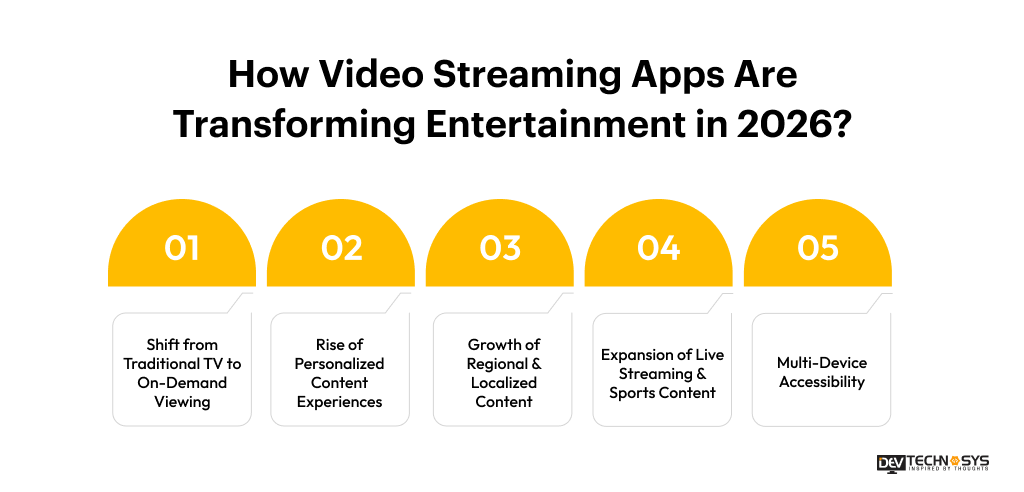
1. Shift from Traditional TV to On-Demand Viewing
Users no longer rely on fixed schedules to watch their favorite shows. Streaming platforms allow instant access to content anytime, which has significantly reduced dependence on cable and broadcast TV. This flexibility has become a major driver behind the growing popularity of OTT platforms.
2. Rise of Personalized Content Experiences
Modern streaming apps use advanced algorithms to analyze user behavior and recommend relevant content. This personalization improves user engagement and ensures that viewers spend more time on the platform. As a result, content discovery has become faster and more efficient.
3. Growth of Regional & Localized Content
There is a significant increase in demand for regional and language-specific content. Streaming platforms are investing heavily in local productions to attract diverse audiences. This trend is especially strong in regions like the Middle East, where localized content drives higher engagement.
4. Expansion of Live Streaming & Sports Content
Live streaming, especially sports and events, has become a major attraction for users. Platforms offering real-time streaming gain a competitive advantage by attracting large audiences during live events. This has also created new monetization opportunities.
5. Multi-Device Accessibility
Users expect seamless access to content across smartphones, smart TVs, tablets, and desktops. Streaming apps now offer cross-device compatibility, allowing users to switch devices without losing their progress. This convenience enhances the overall user experience.

How to Monetize Apps Like TOD?
Once your video streaming app is launched, choosing the right monetization strategy becomes essential for generating consistent revenue. Most successful streaming platforms use a combination of different models to maximize earnings while keeping users engaged. You can get mobile app development solutions that can help you build the best monetization techniques.
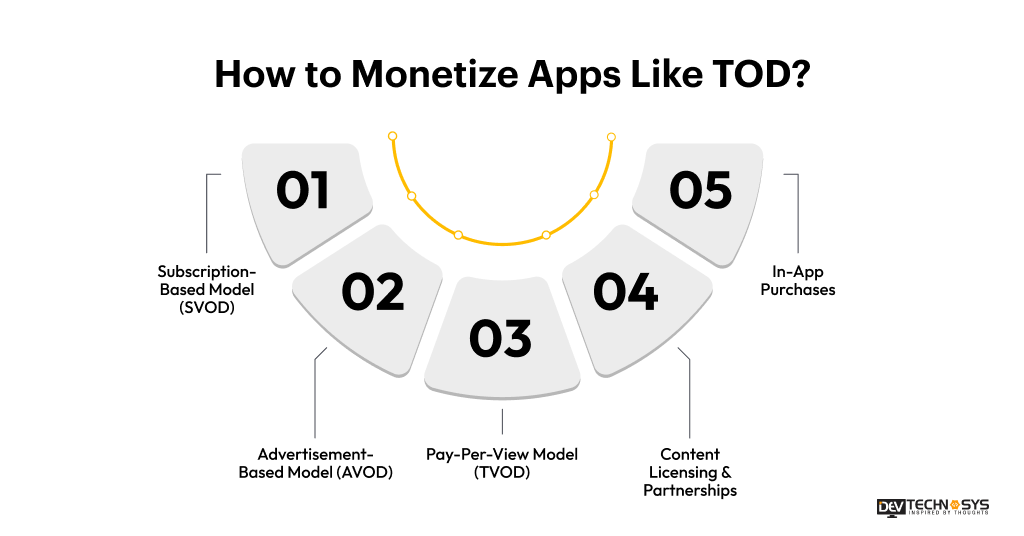
1. Subscription-Based Model (SVOD)
This is the most widely used monetization strategy in streaming apps. Users pay a recurring monthly or yearly fee to access content without interruptions. You can offer multiple pricing tiers based on video quality, number of devices, or content access. This model ensures steady and predictable revenue while encouraging long-term user retention.
2. Advertisement-Based Model (AVOD)
In this model, users can access content for free, but ads are shown during video playback. Revenue is generated through ad impressions, clicks, and partnerships with advertisers. This approach works well for attracting a large audience, especially in markets where users are less willing to pay for subscriptions.
3. Pay-Per-View Model (TVOD)
Users pay only for specific content, such as newly released movies, live sports events, or exclusive shows. This model is ideal for premium or high-demand content and allows platforms to generate revenue from one-time purchases without requiring subscriptions.
4. Content Licensing & Partnerships
Streaming platforms often collaborate with content creators, production houses, and distributors to expand their content library. Revenue can be generated through licensing agreements, revenue-sharing models, or exclusive distribution rights. Strong partnerships also enhance the platform’s credibility and content quality.
5. In-App Purchases
In-app purchases allow users to pay for additional features such as ad-free viewing, early access to content, or premium upgrades. These microtransactions provide an additional revenue stream and enhance the overall user experience.
Conclusion
Video streaming platforms represent one of the best business opportunities in the modern world due to the increasing demand for digital entertainment. TOD platforms have established a good standard in the market, with users transitioning to on-demand and customized content. No matter what it is, content strategy or smooth streaming experience, each of these elements is critical to the creation of an effective platform.
Ultimately, the creation of an effective streaming app is not only a matter of technology, but it is also a matter of providing value, convenience, and captivating content to users. With the right strategy and the right mobile app development company, you can build a platform that stands out in the competitive streaming market.
FAQs
Q1. How Much Does It Cost To Build A Video Streaming App Like Tod?
The cost to build a video streaming app like TOD typically ranges between $8,000 and $25,000 for an MVP. The final cost depends on features, design complexity, development team, platform choice, and backend infrastructure required for streaming performance.
Q2. How Long Does It Take To Develop A Video Streaming App Like Tod?
Developing a video streaming app like TOD usually takes around 2 to 6 months. The timeline depends on app complexity, number of features, design requirements, and whether you are building for a single platform or multiple platforms.
Q3. What Features Are Essential In A Video Streaming App Like Tod?
Essential features include user registration, profile management, content search, video playback, subscription system, personalized recommendations, offline viewing, and multi-device compatibility. These features ensure a seamless user experience and help improve engagement and retention.
Q4. Which Technologies Are Used In Video Streaming App Development?
To build a video streaming app like TOD, use technologies like React Native or Flutter for the frontend, Node.js or Python for the backend, cloud services like AWS, and streaming protocols such as HLS or MPEG-DASH for efficient video delivery.
Q5. How Do Video Streaming Apps Like Tod Make Money?
Streaming apps generate revenue through subscriptions, advertisements, pay-per-view content, in-app purchases, and partnerships. Many platforms combine multiple monetization strategies to maximize revenue while catering to different types of users.