





Key takeaways:
- The UAE video streaming market is projected to grow at a CAGR of 9.91% through 2034, with AVOD emerging as the fastest-growing segment, signaling strong regional demand for new platforms.
- Building a video streaming app for the Middle East typically ranges from $25,000 for a basic VOD app to $90,000+ for a full-featured OTT platform.
- Native RTL Arabic UI, local payment gateways, and offline viewing aren’t optional extras; they directly affect adoption and retention with Middle East audiences.
- Launching with a focused MVP on one core streaming model, then expanding based on real usage data, reduces risk and keeps early-stage costs manageable.
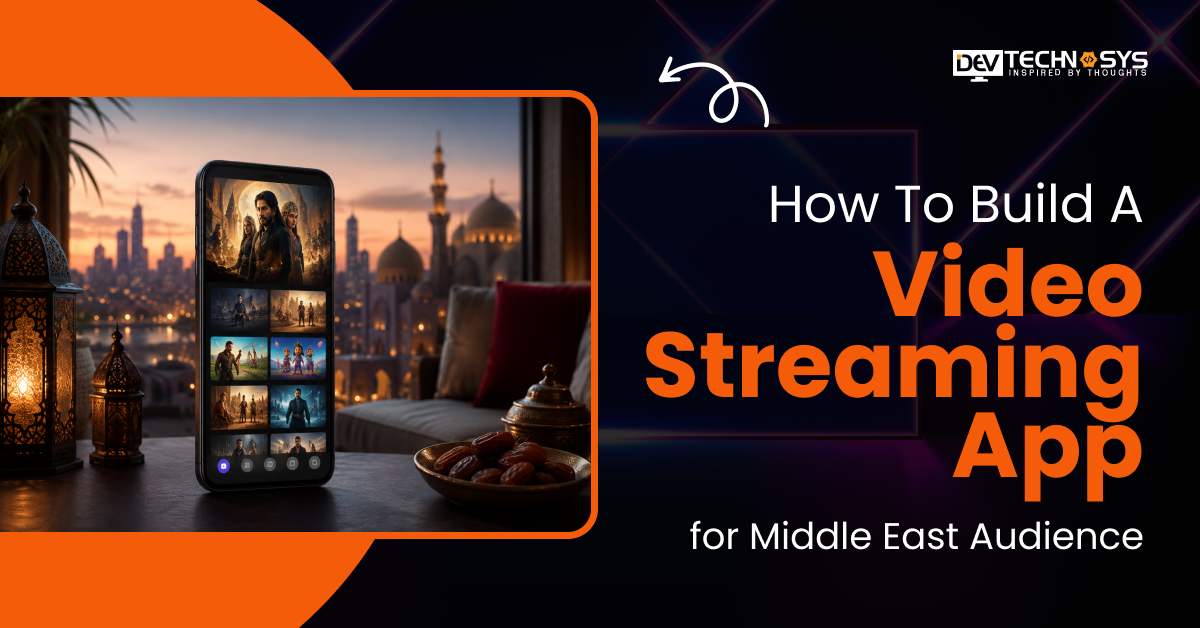
The video streaming app allows users to watch movies, series, and live material instantly over the internet without downloading or keeping data locally. For businesses, it means a direct line to viewers, without having to go through cable networks or other platforms.
The Middle East is becoming one of the fastest-developing regions for this kind of app. Across the UAE, Saudi Arabia, and the wider GCC, viewers are shifting away from traditional TV and towards on-demand and mobile-first viewing, driven by high smartphone penetration and high demand for Arabic-language content. That transition is an opportunity, but it also means that a streaming software developed for this region needs more than a basic feature set lifted from the West.
This guide walks through how to build a video streaming app for a Middle East audience, covering the development process, must-have features, tech stack, security and compliance, and realistic cost expectations.
Why the Middle East is a High-Growth Market for Video Streaming Apps
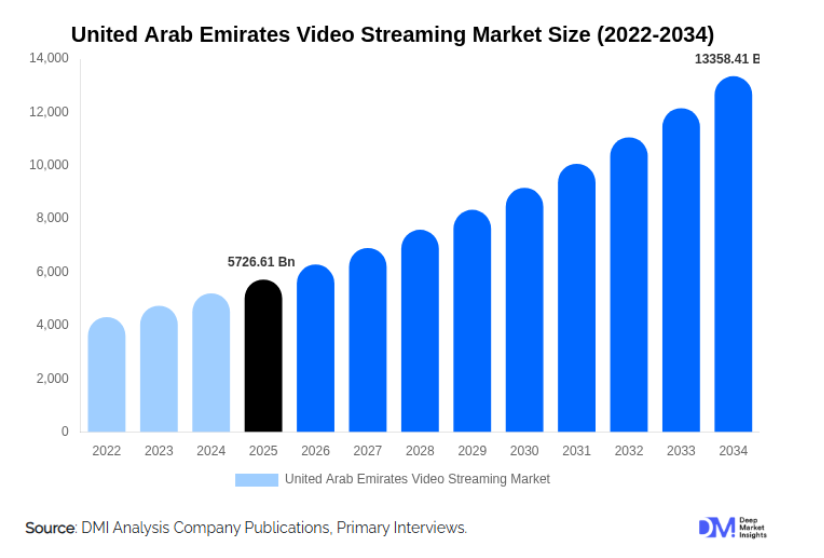
The UAE video streaming market was valued at $5,726.61 billion in 2025, according to Deep Market Insights, and is set to grow further.
- Market size is projected to reach $13,358.41 billion by 2034, growing at a CAGR of 9.91% from 2026 to 2034
- SVOD held the leading position among service types in 2025, based on market size
- AVOD is projected to post the fastest growth rate, making it the most attractive segment through the forecast period
- UAE contributed 6.16% to the global video streaming market size in 2025
- Among Middle East and Africa markets, UAE is expected to post the fastest growth, reaching $13,403.94 billion by 2034, capturing the region’s leading market share
How to Build a Video Streaming App: The Development Process
Video streaming app development process for Middle East is an organized process, starting from market research to post-launch scaling. Getting each aspect right, particularly backend architecture and content delivery, determines whether your app can handle regional traffic patterns, fluctuating connectivity, and Arabic-language content at scale.
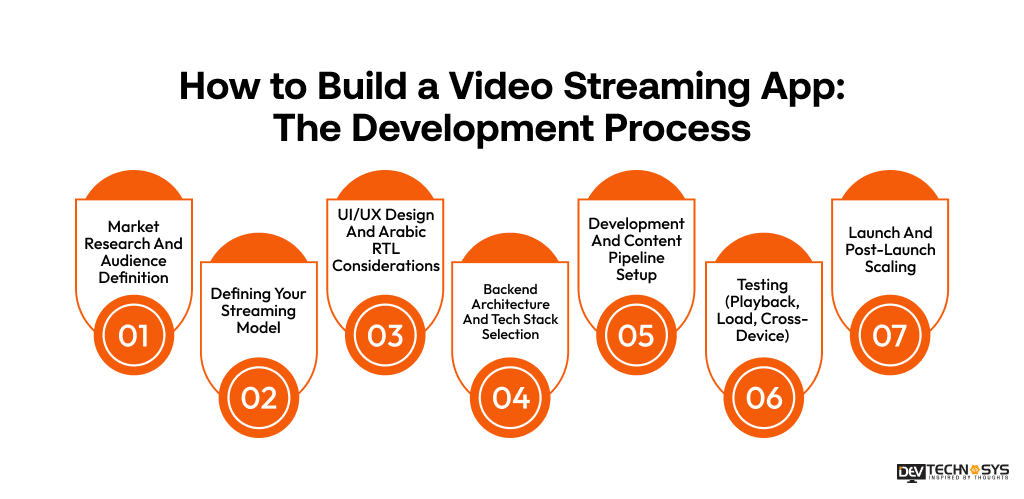
Market Research And Audience Definition
First, chart out watching habits, device preferences, and content gaps for your target market, be it the UAE, Saudi Arabia, or the whole GCC. Existing platforms should also be benchmarked in this stage to find the space where a new entry might distinguish itself in terms of content, pricing, or user experience.
Defining Your Streaming Model
Decide whether you’re building a VOD platform, live streaming service, or hybrid model. Then you can match it with a monetization model: SVOD, AVOD, TVOD, or a mix. This decision will define your backend architecture, content pipeline, and DRM needs from day one.
UI/UX Design And Arabic RTL Considerations
Build natively for right-to-left (RTL) layouts rather than adapting them later. Navigation, search, subtitles, and content carousels need to render appropriately in Arabic as well as supporting English and other regional languages.
Backend Architecture And Tech Stack Selection
That’s where the money comes in for a video streaming app development service. A scalable system is usually developed with a microservices architecture, cloud-native infrastructure, and adaptive bitrate streaming (HLS or MPEG-DASH) to accommodate the varied network circumstances in the location. Secure APIs and OAuth authentication should be put in at this point, not bolted on later, as retrofitting security into a live streaming platform is significantly more expensive than building for it from the start.

Development And Content Pipeline Setup
App development is parallelized with the engineering teams building the video ingestion, transcoding, and CDN integration pipeline. Transcoding using FFmpeg and edge computing aids reduce buffering for users on shaky mobile networks, a reality in portions of the region.
Testing (Playback, Load, Cross-Device)
Test playing on different devices, screen sizes, and connection speeds; load test for concurrent streams during peak times, such as Ramadan evenings or major sports events, when regional traffic surges significantly.
Launch And Post-Launch Scaling
Start with the core markets and then add device support and content libraries based on actual usage data. After you go live, monitor your CDN performance and DDoS prevention systems closely, as streaming services are often attacked based on traffic after they have an active user base.
Industry Insight
According to PwC Strategy& Middle East, Across MENA, the total number of OTT subscribers is projected to reach 21 million by 2028 as consumers increasingly adopt international and local streaming platforms offering high-quality regional content.
Answer a few quick questions and our experts will share a tailored project estimate.
Choosing the Right Video Streaming App Model
Once you’ve defined your target audience, the next decision is which type of streaming app fits your content and business goals best. Each model comes with different infrastructure, licensing, and monetization requirements.
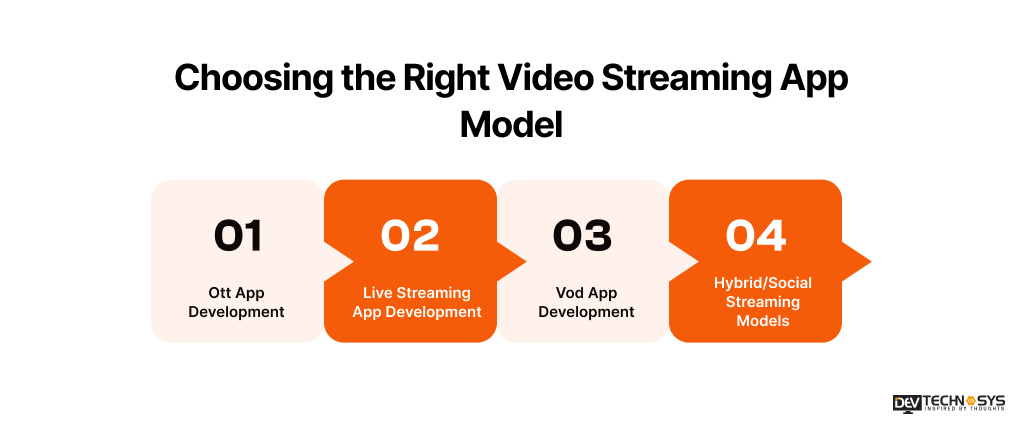
Ott App Development
OTT, or over-the-top, apps send material straight to viewers over the internet, bypassing cable and satellite providers. The most generic category that includes most modern platforms, from Shahid to Netflix, and usually merges VOD libraries and live channels in one app.
Live Streaming App Development
Live streaming apps are for real-time broadcasts of sports, news, concerts, or religious activities such as Ramadan programming. These require low-latency infrastructure, as a few seconds of delay might be significantly noticeable on the viewing experience in the case of live sports or breaking news coverage.
Vod App Development
Video on demand apps are the backbone of most subscription services, providing consumers with pre-recorded material at their convenience. VOD is often the easiest option to begin with since it does not require the real-time infrastructure that live streaming needs, making it a typical entry point for an MVP.
Hybrid/Social Streaming Models
There are many popular regional platforms that mix VOD, live channels and social elements like as comments, sharing and watch parties in one app. This methodology requires more development effort but tends to create better interaction, particularly with younger, mobile-first audiences across the Gulf.
Must-Have Features for a Middle East Audience Streaming App
Building for this region means going beyond a standard feature checklist. These are the features that directly affect adoption and retention among Middle East viewers.
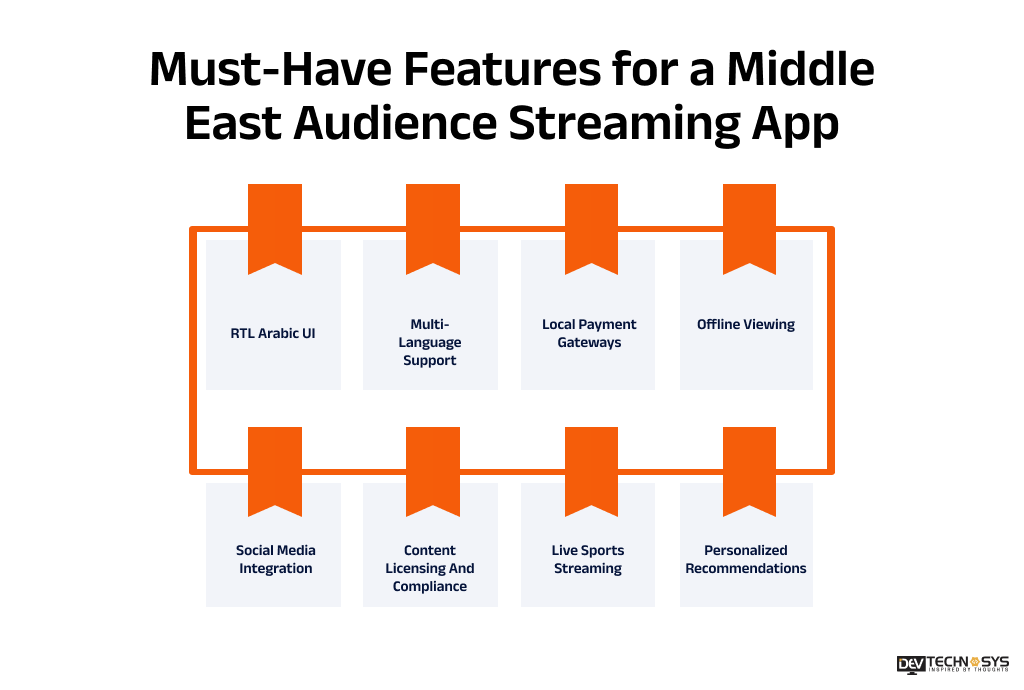
RTL Arabic UI
The entire UI, navigation, search, and content carousels must have native right-to-left support. RTL is expensive after launch, and usually disrupts layouts. It needs to be part of the core UI/UX design, not an afterthought.
Multi-Language Support
Provide subtitles, dubbing and menus in Arabic, English and other local languages. Multi-language subtitling also grows your addressable audience via the GCC’s varied expat and diaspora groups without needing separate app builds.
Local Payment Gateways
Integrate local payment methods and telecom carrier billing, as many people in the region prefer using their mobile carriers instead of credit cards. This has a more immediate influence on subscription conversion rates than most teams originally assume.
Offline Viewing
It allows users to download content for offline listening, since the quality of the mobile network still varies in sections of the region. Viewing offline lowers buffering issues and keeps people engaged while traveling or in areas of limited connectivity.
Social Media Integration
Users can share clips, ratings and watch parties straight from the app with built-in social media connectivity. That plays into spontaneous discovery, particularly among younger, mobile-first audiences for whom sharing is part of the viewing habit.
Content Licensing And Compliance
The rules for licensing and reviewing content for regional markets are different from those in the West, which affects what can be displayed and how it is rated. Bake this into your content pipeline early to minimize costly removals or compliance issues post-launch.
Live Sports Streaming
This is where low-latency live streaming technology important, particularly with big concurrent audiences for football and regional sporting events. This one ability has created entire audiences with apps like TOD.
Personalized Recommendations
AI-driven recommendation engines that factor in language preference, viewing history, and regional content trends keep users engaged longer. Personalization is increasingly expected as a baseline feature, not a differentiator, across MENA streaming platforms.
Industry Insight
According to GSMA, Mobile data consumption in the MENA region is expected to grow more than 5x, from 5.6 GB per subscriber per month in 2019 to 30.2 GB by 2025, driven largely by video streaming and high-speed mobile networks.
Tech Stack to Build a Scalable Video Streaming App
The success of a video streaming app is all on the tech that powers it behind the scenes. From streaming protocols to backend infrastructure, each layer needs to handle high concurrency, varying network circumstances, and delivery of material in the Arabic language without compromising on the quality of playback across the Middle East.
Layer |
Technology |
Purpose |
| Frontend (mobile) | Swift (iOS), Kotlin (Android), Flutter/React Native | Native or cross-platform app development |
| Frontend (web) | React.js, Next.js | Fast, SEO-friendly web streaming interface |
| Backend | Node.js, Python (Django), Java (Spring Boot) | Core application logic and API layer |
| Database | PostgreSQL, MongoDB | Structured and unstructured data storage |
| Caching | Redis | Session management and fast content lookups |
| Streaming protocol | HLS, MPEG-DASH | Adaptive bitrate streaming across devices |
| Live streaming | RTMP, WebRTC integration | Live ingest and real-time, low-latency streaming |
| Video processing | FFmpeg transcoding, cloud video transcoding | Converts and compresses video into streaming-ready formats |
| Infrastructure | Media server architecture, cloud storage | Manages delivery, load balancing, and content storage |
| Content delivery | CDN integration, edge computing | Reduces buffering by serving content closer to users |
| Backend architecture | Event-driven architecture, serverless computing | Real-time updates and auto-scaling backend resources |
| Cloud platform | AWS, Google Cloud, Azure | Hosting, scaling, and managed streaming services |
| Security | Secure APIs, OAuth authentication, DDoS protection | Protects user data and platform against attacks |
| Payments | PCI DSS-compliant payment gateways | Secure subscription and transaction handling |
| DevOps | Docker, Kubernetes, CI/CD pipelines | Deployment, scaling, and infrastructure management |
| Analytics | Google Analytics, Mixpanel, custom dashboards | Viewer behavior tracking and content performance |
Video Streaming App Development Timeline
The time it takes to develop a video streaming app can range from a lean MVP to a full-featured OTT platform, depending on the app type and the complexity of features. The total development duration normally falls in the range of 2 to 9+ months, depending on whether you are launching a basic VOD app or a complete OTT platform with live streaming and multi-device compatibility.
Development stage |
Time taken |
What is done in the stage |
| Market research and planning | 2-3 weeks | Audience research, competitor analysis, defining app type and monetization model |
| UI/UX design | 3-5 weeks | Wireframes, RTL Arabic UI design, multi-language interface layout |
| Backend and tech stack setup | 4-8 weeks | Architecture setup, database, CDN, and streaming protocol integration |
| App development | 8-16 weeks | Frontend and backend build, video pipeline, payment and security integration |
| Testing and QA | 3-6 weeks | Playback, load, cross-device, and security testing |
| Launch and deployment | 1-2 weeks | App store submission, production deployment, monitoring setup |
| Post-launch scaling | Ongoing | Feature expansion, performance monitoring, infrastructure scaling |
Security and Compliance for Video Streaming Apps
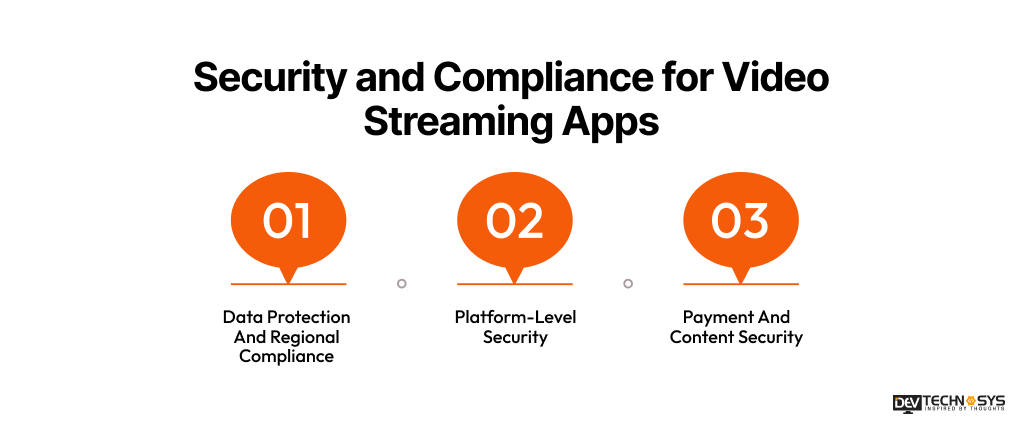
A streaming app is a target of assaults and regional regulation because it handles sensitive user data, payment details and licensed content. Security and compliance, done well. Protect your users and your content rights.
Data Protection And Regional Compliance
The UAE PDPL and Saudi PDPL govern the collection, storage and processing of personal data inside the area, and both should be baked into your data architecture from the outset, not after launch. Additionally, if your platform has foreign or diaspora audiences, then you may need to meet GDPR and CCPA regulations depending on where those users are based, adding another level of data handling compliance.
Platform-Level Security
User accounts are protected by secure APIs and OAuth authentication, preventing illegal access to backend systems. DDoS protection is especially true for streaming services. When you have big crowds watching a live event, it makes sense for someone to try to take down the service during peak viewership with a traffic assault.
Payment And Content Security
PCI DSS compliance is needed to process subscription payments and card data securely, safeguarding both the user and the business from fraud responsibility. DRM (digital rights management) is a well-established method to safeguard licensed Arabic and international content from piracy, a perennial problem for the region’s streaming market and an important consideration when negotiating content arrangements with studios and distributors.
How Much Does Video Streaming App Development Cost in 2026?
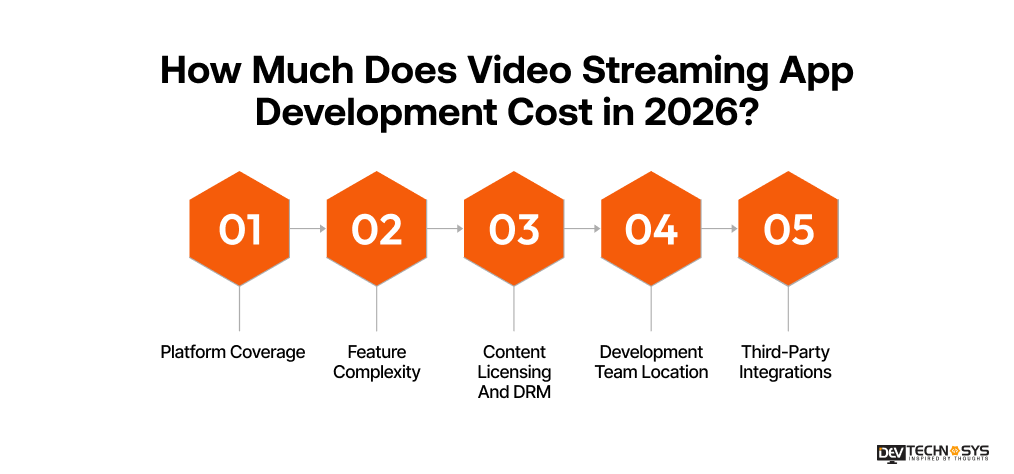
The video streaming app development cost for a Middle East typically ranges between $25,000 and $90,000, depending on app type, feature complexity, and platform coverage. This range represents the regional market environment, from minimal MVP builds to full-featured OTT platforms with extensive content and compliance needs. Below, you’ll find a breakdown of costs by app type, as well as the elements that affect final pricing.
App type |
Cost |
Features |
| Basic VOD app | $25,000 – $40,000 | Core playback, single payment method, basic UI, one platform |
| Live streaming app | $40,000 – $65,000 | Low-latency streaming, RTMP/WebRTC integration, live chat |
| Full-featured OTT platform | $65,000 – $90,000+ | Multi-device support, AI recommendations, offline viewing, multi-language, DRM |
Factors that affect the cost to develop a video streaming app:
Platform Coverage
Launching on one platform first is less expensive than building for iOS, Android and web all at once. Each additional platform has its own development and testing cycle , and this directly impacts the timing and budget for the project .
Feature Complexity
Things like offline viewing, live streaming infrastructure, AI suggestions, etc. take a lot of time to implement above a basic VOD software. Every improved feature also adds backend complexity, which requires more testing and long-term maintenance expenditure.
Content Licensing And DRM
The economic and legal overheads associated with securing regional content rights and using DRM to protect licensed Arabic and international material. This is commonly underestimated yet has a direct impact on the launch timeline and on the total expenditure.
Development Team Location
The cst of development varies greatly by area, with teams in South Asia often being cheaper than in North America or Western Europe. The location of a team might not impact the quality if the team has relevant experience with streaming apps, but it will impact the overall cost
Third-Party Integrations
Payment gateways, telecom billing, CDN services, and analytics tools often carry their own licensing or usage-based fees. These recurring costs should be factored into both the initial development and the ongoing operational budget.
Popular Video Streaming Apps in the Middle East
Several regional platforms have shaped what Middle East audiences expect from a streaming app, offering useful benchmarks for anyone building in this space.
Shahid
Shahid, the region’s biggest Arabic-language streaming platform owned by MBC Group, is noted for its rich collection of Gulf dramas, Egyptian comedies and Turkish programs dubbed in Arabic. Its success demonstrates the extent regional content licensing and localization can take a platform, and it’s a typical reference point for anyone researching how to build a video streaming app like Shahid.
Watch IT
Watch IT has grown a dedicated Egyptian and pan-Arab following with exclusive originals and cinematic programming, directly competing with Shahid in regional drama and movies. Businesses who are looking at this, typically desire to build a video streaming app like Watch IT, particularly because of its content curation and price mechanism.
TOD
Owned by beIN, TOD focuses heavily on live sports streaming, especially football, giving it a distinct audience separate from drama-led platforms. Its approach is a strong reference for anyone planning to build a video streaming app like TOD with a sports-first strategy.
Aha
Aha targets Telugu-speaking audiences within the broader South Asian diaspora across the Gulf, showing how niche-language platforms can carve out loyal audiences even in a market dominated by Arabic content, relevant for anyone exploring an app like Aha.
Quote
“Rapid smartphone adoption, expanding 5G networks, and growing mobile data consumption are accelerating video streaming across the Middle East.“ — GSMA Mobile Economy MENA Report.
Streaming App MVP: How To Start Small And Scale
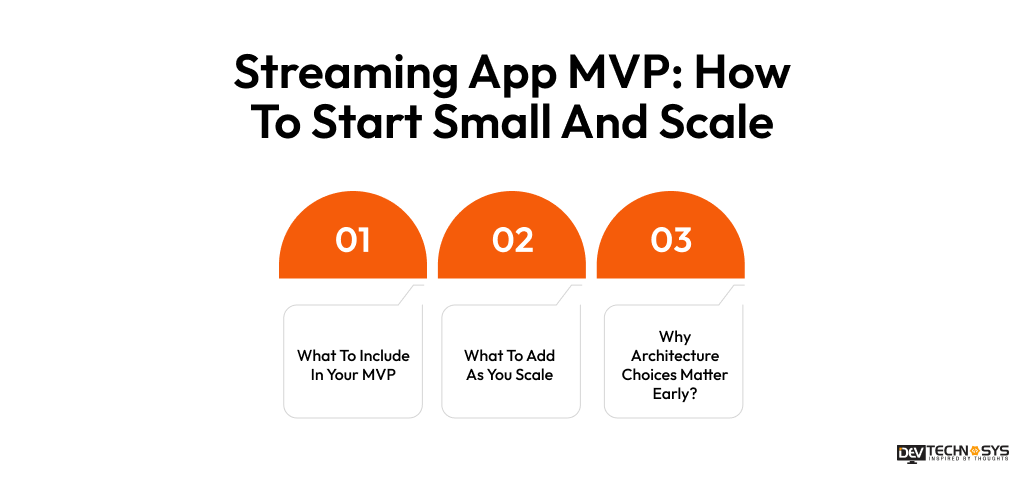
Launching with a focused MVP lets you validate demand before committing to a full feature set, reducing risk and development cost in an unproven market.
What To Include In Your MVP
Focus on one core streaming model, either VOD or live, not both, along with adaptive bitrate playback, native RTL Arabic UI, basic user accounts, and a single payment method. This gives you a functional, testable product without the cost of building every feature upfront
What To Add As You Scale
Once usage data validates demand, expand into personalized recommendations, additional device support such as smart TV apps, social media integration, and secondary payment or telecom billing options. Prioritize these based on what your actual users request, not a generic feature roadmap.
Why Architecture Choices Matter Early?
The tech stack decisions made at the MVP stage directly affect app scalability later. Choosing serverless computing and CDN integration from day one means your backend can absorb growing concurrent users and traffic spikes without a costly re-architecture, unlike platforms that bolt on scalability after outgrowing their initial infrastructure.
Develop a Video Streaming App: Monetization Models for the Middle East
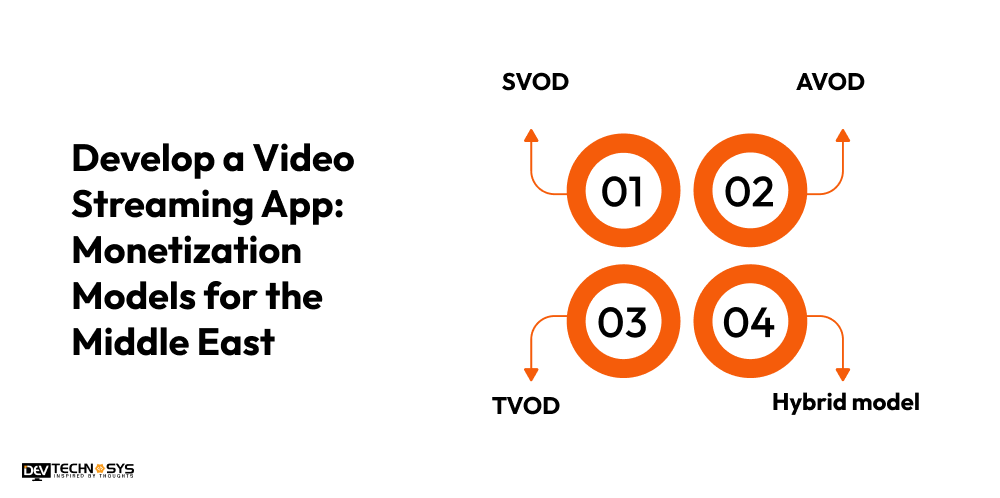
Choosing the right monetization model early shapes how you develop a video streaming app, from payment integration to content licensing. Most successful Middle East platforms are built around one of four proven models.
SVOD (subscription)
Subscription video-on-demand charges users a recurring fee for full access to the content library. This model works well for platforms with strong original or exclusive content, similar to Shahid VIP, and provides predictable recurring revenue once you develop a video streaming app with a loyal subscriber base.
AVOD (ad-supported)
Ad-supported video-on-demand offers free access funded by advertising, lowering the barrier to entry for price-sensitive users across the region. AVOD is currently the fastest-growing segment in the UAE market, making it a strong option for platforms prioritizing reach over immediate revenue.
TVOD (pay-per-view)
Transactional video-on-demand charges per title or event, suited to premium content like new film releases or major sports fixtures. This model works well alongside a core subscription offering rather than as a standalone strategy for most custom video streaming app builds.
Hybrid model
Combining SVOD, AVOD, and TVOD lets platforms serve multiple audience segments within one app, maximizing revenue potential. Most major regional platforms, including Shahid and OSN+, now operate hybrid models rather than committing to a single monetization path.
Conclusion
Building a video streaming app for the Middle East comes down to getting the fundamentals right: understanding regional viewing habits, choosing the right app type and monetization model, and designing natively for Arabic RTL on infrastructure that scales without a costly rebuild later.
Whether you want to create a video streaming app from scratch, develop an OTT app with live and on-demand content, or build a custom video streaming app around a specific niche, video streaming app development follows the same core process regardless of scope. What changes is complexity, timeline, and budget, not the underlying approach.
Working with an experienced video streaming app development company means you’re not starting from scratch, giving you the right architecture, compliance, and scaling support from day one.
Frequently Asked Questions
Q1. How Much Does It Cost To Develop A Video Streaming App?
The cost to build a video streaming app typically ranges from $25,000 to $90,000, depending on app type and features. A basic VOD app costs less, while a full-featured OTT platform with live streaming, AI recommendations, and multi-language support sits at the higher end of that range
Q2. How Long Does It Take To Build A Video Streaming App?
Development timelines range from 2 to 9+ months. A basic VOD app can launch in a few months, while a custom video streaming app with live streaming, multi-device support, and advanced compliance requirements takes longer to develop and test properly.
Q3. What Is The Best Way To Start Building A Video Streaming App?
Starting with a streaming app MVP is the most practical approach. Focus on one core streaming model, essential playback features, and RTL Arabic UI first, then expand based on real user data once you’re ready to scale.
Q4. Which Monetization Model Works Best For A Streaming App?
Most successful platforms in the region use a hybrid model combining SVOD, AVOD, and TVOD. This lets you develop a video streaming app that serves subscription users, ad-supported viewers, and pay-per-view audiences within a single platform.
Q5. What Features Should A Video Streaming App Have For Middle East Users?
Essential features include RTL Arabic UI, multi-language support, local payment gateways, offline viewing, and live sports streaming. These directly affect adoption, since generic global feature sets rarely account for regional viewing habits and infrastructure.
Q6. Is It Possible To Create A Video Streaming App On A Limited Budget?
Yes, an MVP-focused approach lets you create a video streaming app with core features first, keeping initial costs closer to $25,000 to $40,000, then scale features and platform coverage as the user base grows.