





Key Takeaways:
-
- Businesses can tap into the rapidly growing digital real estate market and generate sustainable revenue by developing an app like Trulia.
- A Trulia-like app provides seamless property discovery, smart filters, virtual tours, and neighborhood insights for buyers, renters, and investors.
- Monetization strategies include subscriptions, pay-per-listing, ads, promoted property partnerships, and in-app purchases to maximize revenue.
- Trulia alternatives like Zillow, Realtor.com, Redfin, Magicbricks, and Bayut offer inspiration for features, regional focus, and user experience.
There has been a huge change in the real estate business, and apps like Trulia are leading the charge into the future. Real estate apps are becoming the best way for millions of people around the world to find their dream house or an investment opportunity.
With the property market growing rapidly across regions like the UAE, entrepreneurs and businesses are eager to build a real estate app like Trulia. These apps deliver seamless property discovery, smart search filters, and data-driven insights all in one place.
But what does it actually take to develop such a platform? From core features to development costs, this blog will walk you through everything you need to know to turn your real estate app idea into a fully functional, market-ready product.
What is a Trulia App?
Trulia is a leading US-based real estate marketplace that connects homebuyers, renters, and sellers with property listings across thousands of neighborhoods. Launched in 2005 and acquired by Zillow Group in 2015, it has grown into one of the most trusted property discovery platforms in the market.
If you’re planning to make a real estate app, understanding Trulia’s core value proposition is the perfect starting point for building a competitive, user-centric platform.
How Does the Trulia App Work?
Trulia operates as a two-sided real estate marketplace that seamlessly connects property seekers with agents, landlords, and sellers. Many businesses study their working model when planning to create a real estate app like Trulia because of its intuitive flow from user registration to property discovery.
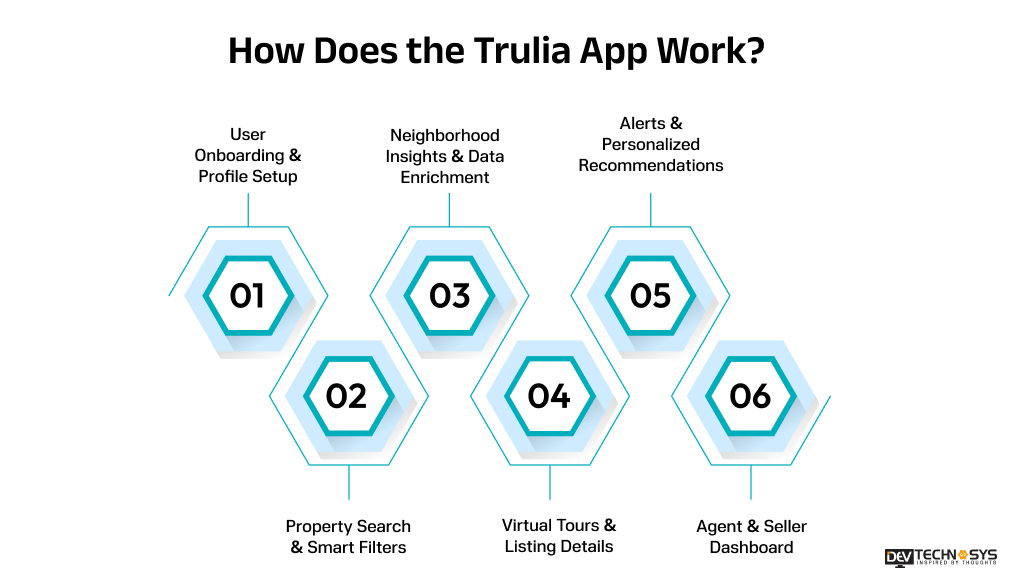
1. User Onboarding & Profile Setup
New users can sign up on Trulia using their email address or social media accounts. Once registered, they set their preferences, including location, budget, property type, and whether they are buying or renting. This preference data powers a personalized experience from the very first session.
2. Property Search & Smart Filters
After logging in, users are presented with a dynamic listing feed tailored to their preferences. Advanced search filters allow users to narrow results by price range, number of bedrooms, square footage, pet policies, and more, making property discovery fast and highly relevant.
3. Neighborhood Insights & Data Enrichment
What truly differentiates Trulia is its hyper-local data layer. Every listing comes enriched with neighborhood crime rates, nearby school ratings, commute time calculators, and local amenity maps. This depth of information empowers users to evaluate not just the property but the entire living environment around it.
4. Virtual Tours & Listing Details
Each property listing on Trulia includes high-resolution images, virtual tours, floor plans, and open house schedules. Users can save favorite listings, share them, and directly contact the listing agent or landlord through the in-app messaging system.
5. Alerts & Personalized Recommendations
Trulia’s algorithm continuously learns from user behavior and saved searches. It sends real-time push notifications and email alerts whenever a new listing matches a user’s saved criteria, ensuring no opportunity is missed in a fast-moving market.
6. Agent & Seller Dashboard
On the supply side, real estate agents and property owners get access to a dedicated dashboard to manage listings, track inquiries, respond to leads, and monitor listing performance. This backend efficiency is a key reason why businesses looking to build an app like Trulia prioritize a robust agent-facing interface alongside the consumer experience.
What are the Market Stats of Real Estate App Like Trulia?
The global real estate market is witnessing unprecedented digital adoption, and the UAE stands as one of the most dynamic growth hubs in the world. For entrepreneurs looking to develop a real estate mobile app for UAE, like Trulia, these numbers highlight a compelling opportunity to tap into a fast-growing, tech-driven property market.
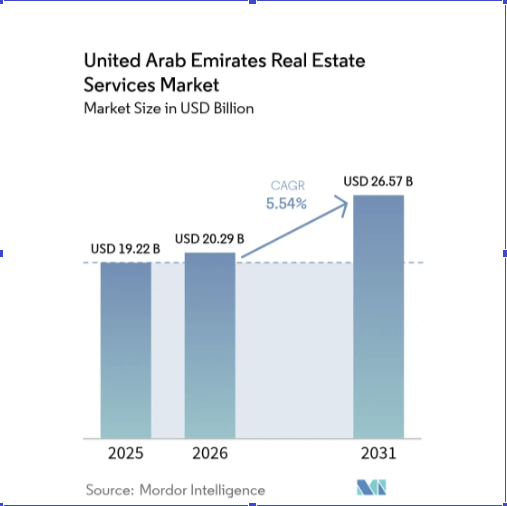
According to Mordor Intelligence, these are the key market stats you need to know:
- The UAE Real Estate Services Market is projected to reach USD 19.22 billion in 2025, growing to USD 20.29 billion in 2026, and is expected to hit USD 26.57 billion by 2031 at a CAGR of 5.54%.
- Residential services dominated the market with 60.9% share in 2025.
- Dubai commanded 58.4% revenue share in 2025, while Ras Al Khaimah is set to post the fastest growth at a 6.48% CAGR over 2026–2031
- Office rents surged 16.8% in Dubai and 31.3% in Abu Dhabi through Q3 2025, widening advisory opportunities in commercial real estate.
- Digital portals and AI-driven marketplaces are rapidly automating listings and settlements, pushing the industry toward high-skill, tech-first advisory solutions.
What is the Process to Develop a Real Estate App Like Trulia?
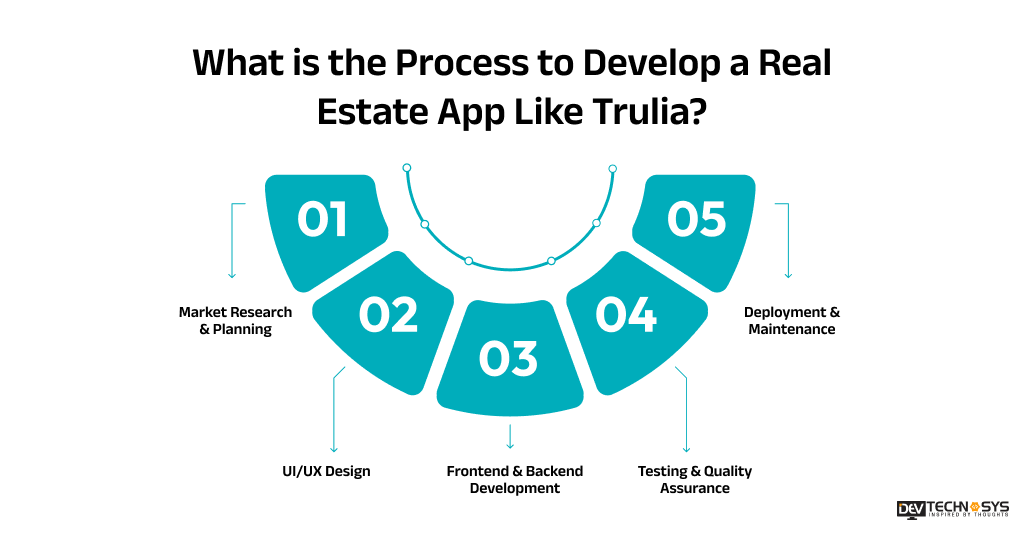
Businesses aim to build a real estate app like Trulia that offers users seamless property search, advanced filters, and interactive features such as map views, virtual tours, and personalized recommendations.
1. Market Research & Planning
Start by analyzing your target audience, competitors, and demand in the real estate market. Understanding user preferences, property types, location interests, and pricing expectations helps identify gaps in the market. This research lays the foundation for a Trulia clone app development strategy that aligns with current trends and user needs. Build an MVP to start with and test the app with real users, their feedback and refine the app’s functionality before scaling it to the higher-level.
2. UI/UX Design
A clean and intuitive interface is essential to keep users engaged. Collaborating with a real estate app development company ensures that your app design is user-friendly, responsive, and consistent with popular real estate platforms in UAE. Features like easy navigation, interactive maps, and simple property listing layouts enhance user satisfaction. By incorporating visually appealing elements such as high-quality images, icons, and color schemes can help enhance the browsing experience for users.
Read more: How to Build a Real Estate App Like Aqarmap?
3. Frontend & Backend Development
The frontend should provide smooth browsing, filter options, and quick property searches, while the backend manages data storage, property databases, and analytics. Scalability is critical to handle heavy traffic and maintain performance. When you develop an app like Trulia, ensure the backend supports real-time updates, notifications, and secure user accounts. You should integrate robust APIs and cloud services, that can enhance data synchronization and reduce server downtime for the Trulia clone.

4. Testing & Quality Assurance
Before launch, the app must undergo thorough testing across multiple devices and networks. This includes identifying bugs, optimizing loading speeds, and safeguarding sensitive user information. When you conduct performance, usability, and security testing, it helps in detecting potential bottlenecks and vulnerabilities early. Proper QA ensures a stable app like Trulia with minimal downtime and enhanced user trust.
5. Deployment & Maintenance
Once testing is complete, deploy the app on iOS, Android, and web platforms. Continuous maintenance and updates are necessary to introduce new features, improve performance, and fix issues. Typically, maintenance costs account for 15%-20% of the total mobile app development cost. Proactive maintenance ensures the app remains compatible with the latest OS versions and devices, enhancing user satisfaction and long-term engagement.
Industry Insight
According to Market Growth Reports, the global real estate software and apps market was valued at around USD 4.15 billion in 2026 and is projected to grow to USD 5.35 billion by 2035, reflecting strong demand for digital platforms that streamline property search, analytics, and management.
Why are Businesses Looking to Invest in a Real Estate App Like Trulia?
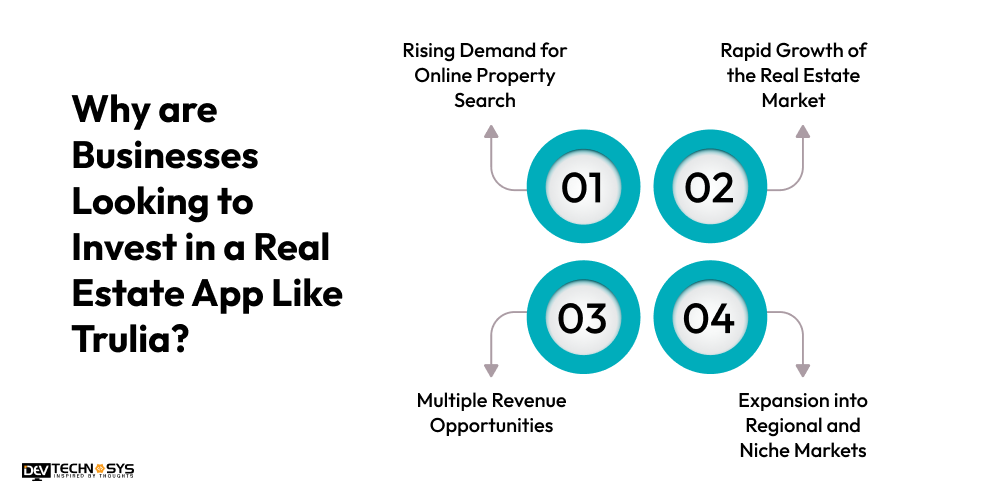
The real estate industry is rapidly shifting toward digital platforms, with users preferring to search, compare, and buy properties online. As a result, businesses are keen to develop an app like Trulia to tap into this growing market and generate sustainable revenue.
1. Rising Demand for Online Property Search
Modern buyers and renters prefer browsing properties anytime, anywhere, without relying on physical visits or brokers. This shift toward digital property search has increased the popularity of real estate platforms in UAE and globally. Companies that build an app like Trulia can capitalize on this demand by providing convenient, user-friendly access to listings.
2. Rapid Growth of the Real Estate Market
The digital real estate sector is expanding rapidly due to increased smartphone adoption, internet penetration, and urbanization. With millions of users seeking homes and investment properties online, the market presents strong growth potential for businesses planning to build a real estate app like Trulia.
3. Multiple Revenue Opportunities
Real estate apps offer diverse monetization strategies, such as premium listings, advertisements, subscription plans for agents, and featured property promotions. These revenue models allow businesses to generate steady income while scaling their platform, making it profitable to develop a real estate app like Trulia with a strategic business approach.
4. Expansion into Regional and Niche Markets
There is a growing demand for region-specific property listings, especially in high-growth areas like the Middle East. Apps that provide localized content, language support, and market insights perform better and attract more users. By offering a similar app like Trulia tailored to regional needs, businesses can secure a competitive edge and capture a loyal customer base.
What are the Essential Features of an App Like Trulia?
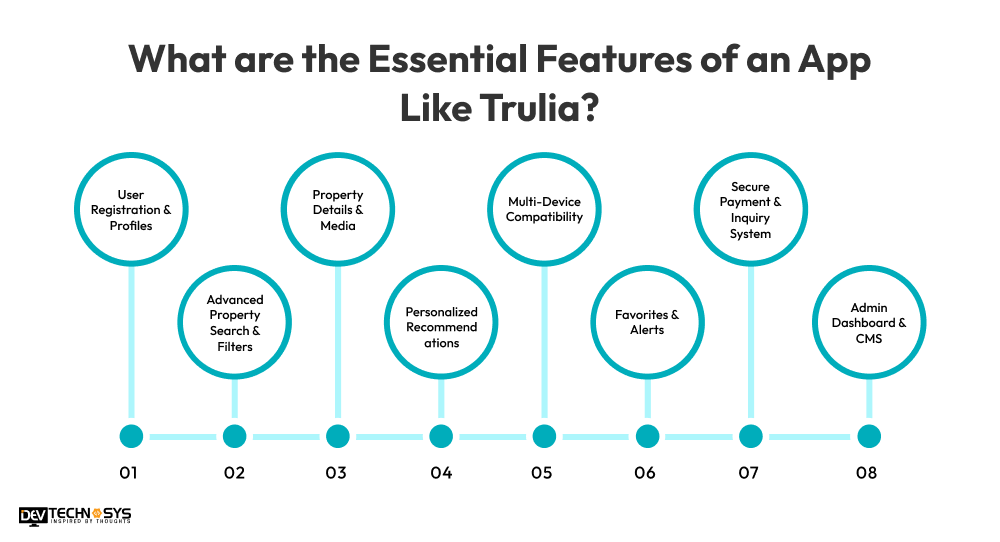
To build a real estate app like Trulia, you need to integrate a set of core features that ensure seamless property search, personalized experiences, and scalability. These features not only enhance user satisfaction but also improve engagement, retention, and revenue potential. Essential features for the Trulia app development are:
1. User Registration & Profiles
A simple and secure registration system allows users to sign up using email, phone number, or social media accounts. Once registered, users can create personalized profiles, save property preferences, and track their search history, making it easier to revisit favorite listings.
2. Advanced Property Search & Filters
An intelligent search system with filters such as location, price range, property type, and amenities helps users find relevant listings quickly. Features like trending properties, suggested homes, and curated property lists enhance discovery and user engagement.
3. Property Details & Media
High-quality photos, 3D virtual tours, videos, and detailed property descriptions help users make informed decisions. Features like floor plans, neighborhood insights, and nearby facilities ensure a premium property browsing experience for users of a Trulia clone app.
4. Personalized Recommendations
AI-powered recommendations analyze user behavior, saved properties, and preferences to suggest similar listings. This feature is essential for businesses that want to develop a real estate app like Trulia that feels intuitive and user-centric.

5. Multi-Device Compatibility
Users expect to search and save properties across multiple devices, including smartphones, tablets, and desktops. Cross-device syncing allows users to continue their property search seamlessly from any device.
6. Favorites & Alerts
The favorites or watchlist feature allows users to save properties for later, while push notifications alert them about price drops, new listings, or nearby properties. This enhances engagement and improves lead conversion.
7. Secure Payment & Inquiry System
A secure system for booking appointments, submitting inquiries, or paying for premium listings ensures convenience. Integration with multiple payment gateways and contact options helps users interact with agents or property owners efficiently.
8. Admin Dashboard & CMS
A robust backend allows admins to manage property listings, agents, users, and analytics. It also supports uploading new listings, tracking performance, and making data-driven decisions crucial for scaling a Trulia clone app successfully.
What is the Cost to Build a Real Estate App Like Trulia?
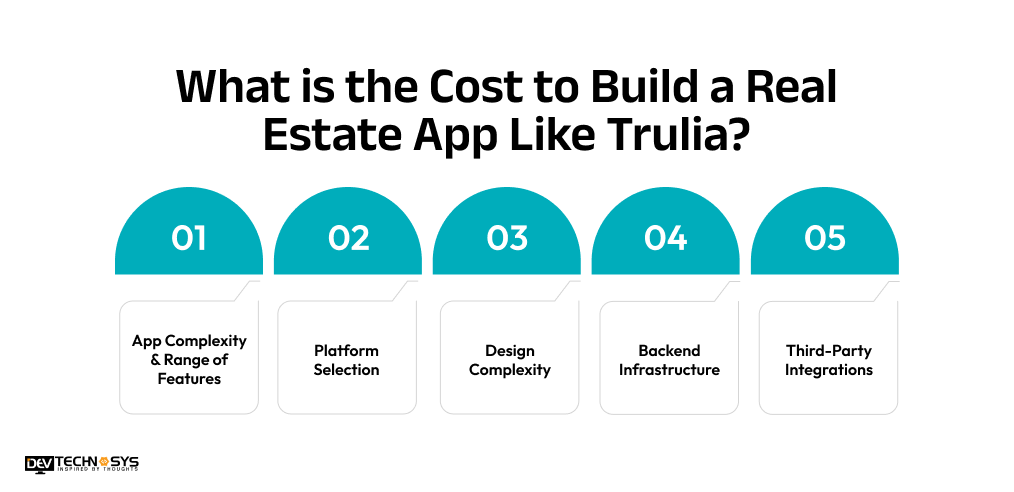
The cost to build a real estate app like Trulia typically starts from $8,000 and can range up to $25,000, depending on factors such as app complexity, the number of features, design requirements, and platform selection. Investing in a feature-rich and user-friendly app ensures better engagement, higher user retention, and long-term profitability. Below is a detailed analysis of the Trulia development cost:
| App Type | Key Features Included | Estimated Cost |
| Basic App (MVP) | User registration, property search, basic listings, favorites | $8,000 – $12,000 |
| Mid-Level App | Advanced search filters, property details, notifications, agent contact | $12,000 – $18,000 |
| Advanced App | AI-based recommendations, virtual tours, multi-device support, analytics | $18,000 – $25,000 |
1. App Complexity & Range of Features
The complexity and number of features directly influence the real estate app development cost. Basic features like login, property browsing, and favorites require less development effort, while advanced features such as AI-based property recommendations, virtual tours, multi-device sync, and push notifications demand more coding, integration, and testing, which increases the overall development cost.
| Feature Type | Cost Contribution | Examples |
| Basic Features | $1,000 – $1,500 | Login, profiles, property browsing |
| Core Features | $2,000 – $3,500 | Advanced search filters, notifications, agent contact |
| Advanced Features | $4,000 – $5,000 | AI recommendations, virtual tours, multi-device sync |
2. Platform Selection
The choice of platform directly affects the cost to create a real estate app like Trulia because it determines development effort, code complexity, and reach. Native apps for both iOS and Android require a separate codebase that increases development time and cost. While hybrid app development services allow a single codebase for multiple platforms, they provide a cost-effective and efficient solution without compromising performance.
| Platform Choice | Cost Contribution | Impact |
| Single Platform | $800 – $1,500 | Faster development, limited reach |
| Cross-Platform | $2,000 – $3,500 | Moderate cost, wider audience |
| Native (iOS + Android) | $3,500 – $5,000 | Best performance, higher cost |
3. Design Complexity
The complexity of the app’s design significantly impacts the cost to make a real estate app like Trulia because advanced UI/UX requires more design hours, custom graphics, animations, and interactive elements. A basic UI with pre-built templates is faster and cheaper, while a custom or premium design improves user engagement, retention, and brand perception but increases development investment.
| Design Level | Cost Contribution | Description |
| Basic UI | $800 – $1,500 | Simple layouts and standard templates |
| Custom UI/UX | $2,000 – $3,500 | User-friendly dashboards, moderate customization |
| Premium UI | $4,000 – $5,000 | Advanced visuals, animations, interactive property features |
4. Backend Infrastructure
The backend infrastructure is a key factor in real estate app development because it manages property data, user accounts, analytics, and real-time updates. A simple backend with basic storage and APIs is cost-effective, while a scalable or advanced backend supporting AI recommendations, virtual tours, and high user traffic. This requires more development time and expertise, which is why many businesses choose to hire dedicated developers to ensure efficiency and quality while managing costs.
| Backend Type | Cost Contribution | Features |
| Basic Backend | $1,000 – $1,500 | Data storage, APIs, basic property management |
| Scalable Backend | $2,500 – $3,500 | Real-time sync, analytics, notifications |
| Advanced Backend | $4,000 – $5,000 | AI recommendations, virtual tours, large-scale data handling |
5. Third-Party Integrations
Integrating third-party services affects the Trulia app development cost because each integration requires setup, licensing, and testing. Basic integrations like payment gateways, maps, or notifications are straightforward and cost-effective, while advanced integrations such as AI property recommendation engines, analytics platforms, or cloud CDN services require more development time and investment, increasing the overall project cost.
| Integration Type | Cost Contribution | Integration Example |
| Basic APIs | $500 – $1,000 | Notifications, payments, maps |
| Medium Integrations | $1,500 – $2,500 | Analytics tools, property databases |
| Advanced Integrations | $3,000 – $4,000 | AI engines, virtual tours, CDN services |
Industry Insight
According to Ken Research, the UAE real estate PropTech and housing apps market was valued at approximately USD 610 million in 2026, with technology adoption and smart city initiatives boosting digital property search and transaction platforms.
What are the Top Trulia Alternatives in 2026?
The real estate app market is highly competitive, with several platforms offering diverse property listings, features, and user experiences. While Trulia remains popular, users often explore other platforms based on pricing, property types, regional focus, and advanced search options. Businesses can hire a real estate app development services for the best Trulia app development. Here are some of the top alternatives:
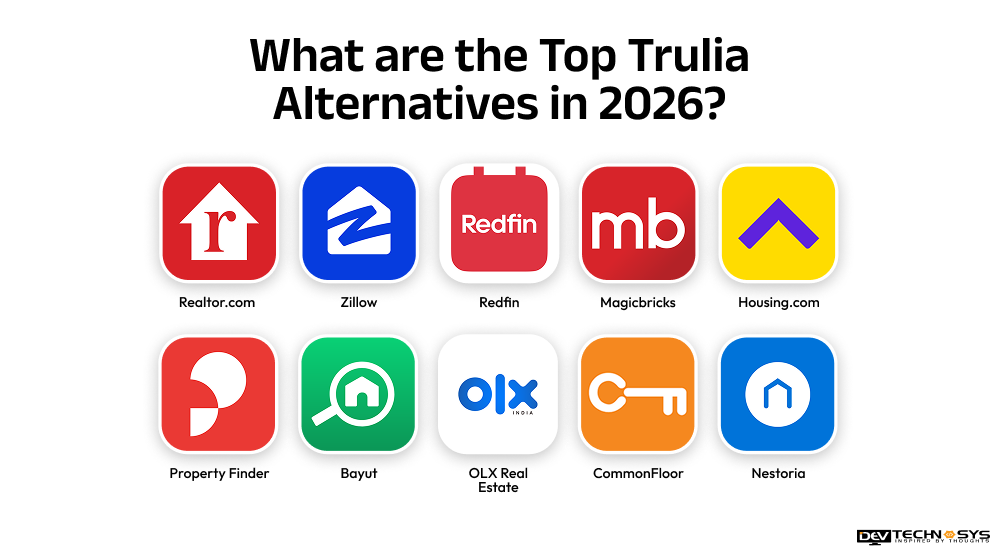
| Platform | Supported Devices | Downloads | Top Features |
| Zillow | Android, iOS, Web | 100M+ | Advanced search, mortgage calculator, neighborhood insights |
| Realtor.com | Android, iOS, Web | 50M+ | Verified listings, agent contacts, property alerts |
| Redfin | Android, iOS, Web | 30M+ | Map-based search, home tours, pricing estimates |
| Magicbricks | Android, iOS, Web | 20M+ | Local property focus, builder contacts, buy/rent filters |
| Housing.com | Android, iOS, Web | 15M+ | Verified listings, amenities, virtual tours |
| Bayut | Android, iOS, Web | 10M+ | UAE-focused listings, agent directory, property comparison |
| Property Finder | Android, iOS, Web | 12M+ | Premium listings, neighborhood insights, mortgage guides |
| OLX Real Estate | Android, iOS, Web | 25M+ | Classified listings, seller contacts, multi-region coverage |
| CommonFloor | Android, iOS, Web | 8M+ | Apartment search, builder profiles, price trends |
| Nestoria | Android, iOS, Web | 5M+ | International listings, map search, property alerts |
1. Zillow
Zillow is a global leader in real estate apps, offering extensive property listings, pricing estimates, and neighborhood insights. Its advanced search filters and mortgage calculator make it a preferred choice for buyers, renters, and investors looking for accurate and up-to-date property information.
2. Realtor.com
Realtor.com provides verified property listings, agent contacts, and instant alerts for new or updated properties. Its emphasis on accurate data and comprehensive property details makes it a reliable alternative to Trulia, helping users make informed real estate decisions.
3. Redfin
Redfin combines map-based property search with home tours and pricing estimates. By integrating brokerage services with a user-friendly interface, it offers a complete solution for buyers and sellers seeking both property discovery and professional guidance.
4. Magicbricks
Magicbricks focuses on local property listings and builder contacts, offering detailed filters for buying, renting, or investing in real estate. Its regional approach ensures that users can find properties tailored to specific cities or neighborhoods, and understanding the cost to build a real estate app like MagicBricks helps businesses plan their investment effectively.

5. Bayut
Bayut specializes in UAE real estate, featuring verified listings, agent directories, and comparison tools. Its platform is designed for users looking for premium and reliable property options, making it an ideal choice for investors and home seekers in the Middle East.
How Real Estate Apps Are Transforming Property Search in 2026?
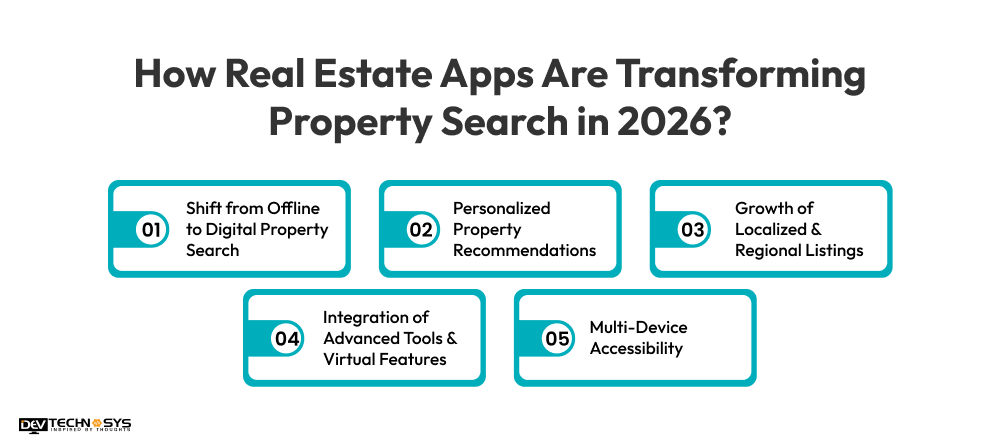
Real estate app development trends show that real estate apps are reshaping the property industry by changing how users discover, evaluate, and transact properties. With Trulia alternatives, buyers, renters, and investors now have instant access to listings, insights, and professional tools.
1. Shift from Offline to Digital Property Search
Users no longer need to rely on newspaper listings, physical visits, or word-of-mouth referrals. Real estate apps allow instant access to thousands of properties, enabling users to search, filter, and compare listings from anywhere. This convenience has significantly accelerated property discovery and decision-making.
2. Personalized Property Recommendations
Modern apps use AI and data analytics to suggest properties based on user preferences, search history, and location. This personalization improves engagement, helping users find the most relevant properties faster while increasing the likelihood of successful transactions.
3. Growth of Localized & Regional Listings
There is a rising demand for location-specific and region-focused listings. Platforms invest in verified local data, neighborhood insights, and language-specific interfaces to attract diverse users. This trend is particularly strong in regions like the Middle East, where users prefer apps tailored to their cities.
4. Integration of Advanced Tools & Virtual Features
Features like virtual tours, 3D walkthroughs, mortgage calculators, and price estimates give users an immersive experience. Apps that offer these advanced tools enable informed decision-making and provide a competitive edge over traditional real estate methods.
5. Multi-Device Accessibility
Users expect seamless access across smartphones, tablets, and desktops. Real estate apps now offer cross-device compatibility, ensuring users can browse, save favorites, or schedule visits without losing progress. This flexibility enhances the overall user experience and encourages continued engagement.
How to Monetize Real Estate Apps Like Trulia?
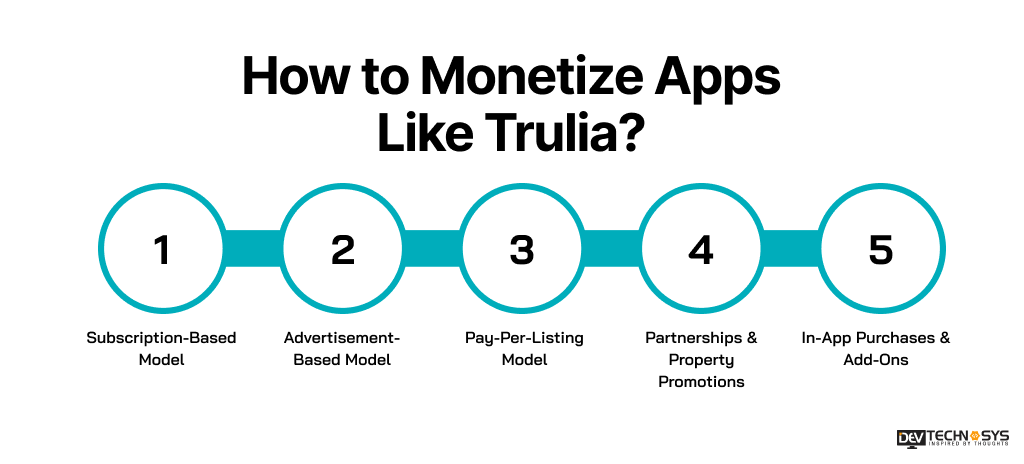
Once your app like Trulia, is launched, choosing the right monetization strategy is essential for generating consistent revenue. You can get a real estate app development solution to implement the best monetization techniques.
1. Subscription-Based Model
This model allows users, especially agents or brokers, to pay a recurring monthly or yearly fee to access premium features such as advanced listings, property analytics, and marketing tools. Multiple pricing tiers can be offered based on features, number of listings, or ad-free access. This ensures steady revenue and encourages long-term retention.
2. Advertisement-Based Model
Users can access basic listings for free, while revenue is generated by displaying ads from property developers, mortgage providers, or related services. Ad revenue comes from impressions, clicks, or partnerships, making this an effective model for attracting a large audience without requiring upfront payments.
3. Pay-Per-Listing Model
Users or real estate agents pay only for posting specific premium property listings or featured placements. This one-time fee model works well for high-demand properties and ensures revenue per transaction, making it a key strategy for any mobile app development company building real estate platforms.
4. Partnerships & Property Promotions
Apps can collaborate with builders, brokers, and service providers for promoted listings, sponsorships, or lead generation. Revenue is earned through revenue-sharing agreements, exclusive listing promotions, or referral fees. Strong partnerships also enhance the app’s credibility.
5. In-App Purchases & Add-Ons
Users can pay for additional services such as virtual tours, priority listing visibility, premium analytics, or agent support. This model provides flexibility, allowing users to choose extra features while increasing the app’s average revenue per user (ARPU).
Conclusion
To build a real estate app like Trulia offers immense opportunities for businesses looking to tap into the growing digital property market. By combining seamless property search, advanced filters, AI-driven recommendations, and virtual tours, you can provide users with a convenient, personalized, and engaging experience.
Careful budget planning, starting with an MVP, leveraging hybrid development, using ready-made solutions, and hiring experienced developers can ensure quality and scalability. By adopting these strategies, businesses can launch a feature-rich and user-friendly real estate app without overspending. Hire mobile app developers in Middle East to transform your app idea into a market-ready platform that attracts users and drives long-term growth.
FAQs
Q1. How Much Does It Cost to Develop a Real Estate App Like Trulia?
The cost to develop a real estate app like Trulia ranges from $8,000 to $25,000, depending on app complexity, platform choice, UI/UX design, backend infrastructure, and third-party integrations. Advanced features like AI recommendations and virtual tours increase costs, while an MVP or cross-platform approach reduces initial investment.
Q2. How Long Does It Take to Build a Trulia-like App?
The development timeline to build an app like Trulia varies with complexity. A basic MVP with core features can take 3–6 months, while a fully-featured app with AI recommendations, virtual tours, and advanced analytics may take 6–12 months, including planning, design, development, testing, and deployment.
Q3. How Do I Ensure My Real Estate App Is Secure?
Security requires SSL encryption, secure payment gateways, regular audits, and strict data protection protocols. Protecting user data, property information, and transactions builds trust, ensures regulatory compliance, and prevents breaches, which is especially crucial when handling sensitive financial and personal information in a real estate app.
Q4. How Can I Reduce Development Costs Without Compromising Quality?
Careful budget planning, starting with an MVP, leveraging hybrid development, using ready-made solutions, and hiring experienced developers can reduce costs while ensuring quality and scalability. Businesses can also focus on essential features first, gradually adding advanced functionalities to manage expenses effectively.
Q5. How Can a Real Estate App Generate Revenue?
Revenue can be generated through subscription plans for agents, ad-based free listings, pay-per-listing fees, promoted property partnerships, and in-app purchases. Combining multiple monetization models allows platforms to maximize income, maintain user engagement, and provide premium services for buyers, sellers, and real estate professionals, while effectively balancing and recovering the real estate app development cost over time.