





Key takeaways:
-
- Property listing apps help buyers, sellers, and renters connect efficiently in the real estate market.
- To develop a property listing app, thorough planning, from idea validation to choosing the right tech stack, is required.
- Monetization options include subscriptions, featured listings, in-app ads, and premium services.
- With real estate technology adoption on the rise, property listing apps represent a highly lucrative market.
The real estate industry is rapidly embracing digital transformation, reshaping how buyers, renters, and agents interact with properties. Property listing apps have become essential tools, allowing users to search, compare, and even book properties instantly from their smartphones.
These apps offer advanced search filters, high-quality images, virtual tours, and AI-powered recommendations, making property discovery faster and more convenient than ever. For entrepreneurs, this trend represents a lucrative opportunity.
By building a property listing app, startups can connect users with properties efficiently. They provide real estate professionals with tools to manage listings, track leads, and engage clients.
This guide explores everything needed to create a property listing app in 2026. It covers market insights, features, monetization strategies, cost estimation, and a detailed development roadmap. It helps your app succeed in a competitive digital landscape.
What is a Property Listing App?
A property listing app is a platform where real estate agents, property owners, and developers can list residential or commercial properties. Here, buyers and renters can search, filter, and connect with sellers efficiently. Unlike traditional property searches, these apps provide real-time updates, interactive listings, and advanced filters powered by AI and analytics.
Key Capabilities:
- Advanced Search & Filters – Users can search properties by location, price, size, type, and amenities.
- Property Details & Media – High-quality images, videos, and virtual tours give buyers a clear view.
- Agent/Owner Profiles – Connect users directly to verified sellers or agents.
- Favorites & Alerts – Save listings, receive notifications, and track property status.
- User-Friendly Interface – Simple navigation to make property browsing seamless.
How Does a Property Listing App Work?
Property listing apps simplify and streamline the entire property search, discovery, and management process. They enable users to browse listings, compare options, connect with agents or owners, schedule visits, and even complete transactions efficiently. Here’s a typical workflow:
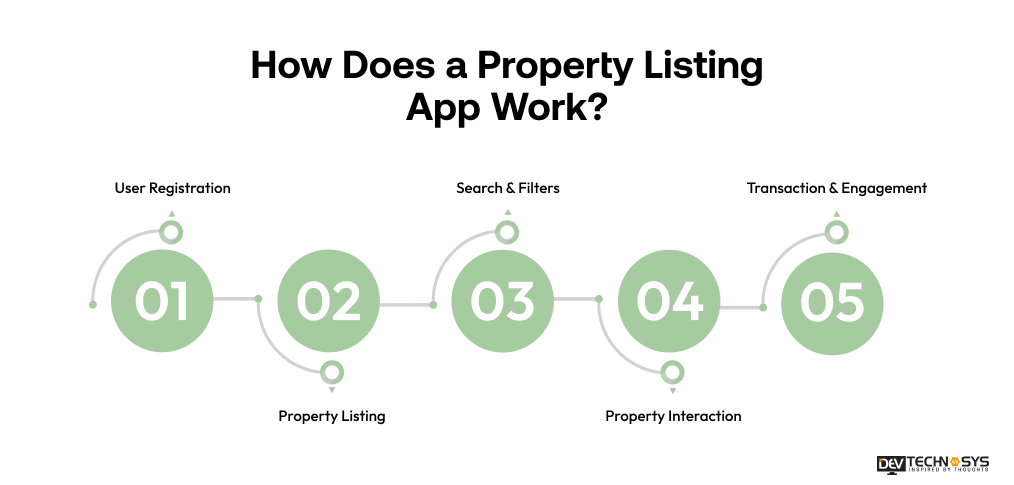
- User Registration: Users can sign up via email, phone, or social accounts to access full features. Agents and owners have separate dashboards for listing management.
- Property Listing: Sellers or agents upload property details, images, videos, and documents. AI-powered tools may auto-categorize listings or enhance images for better visibility.
- Search & Filters: Buyers and renters search using advanced filters: location, property type, budget, number of bedrooms, amenities, and more. AI recommendations suggest properties based on user behavior.
- Property Interaction: Users can save favorites, schedule visits, chat with agents, or request virtual tours. Real-time updates ensure availability and pricing are accurate.
- Transaction & Engagement: Some apps integrate payment gateways for booking deposits or rental agreements. In-app analytics allow agents to track leads and engagement.
Market Stats of Property Listing Apps
The real estate app market has witnessed explosive growth, fueled by mobile adoption and digital property management. According to research by Fortune Business Insights:
- The global property management software market was valued at approximately USD 26.55 billion in 2025.
- The market will grow from USD 29.19 billion in 2026 to USD 61.41 billion by 2034.
- The industry is expected to exhibit a compound annual growth rate of 9.70% during the forecast period.
- North America dominated the global property management software market, accounting for a 35.10% share in 2025.
- Strong growth reflects increasing demand for real estate app development solution, automation, and efficient real estate management systems worldwide.
Are Property Listing Apps a Smart Startup Idea for Entrepreneurs?
To make a property listing app in 2026 represents a great opportunity for entrepreneurs. It is due to high demand, monetization potential, and growing mobile-first user behavior. The property finder app development can offer tremendous growth potential due to rising mobile adoption, AI-driven tools, and high user engagement.
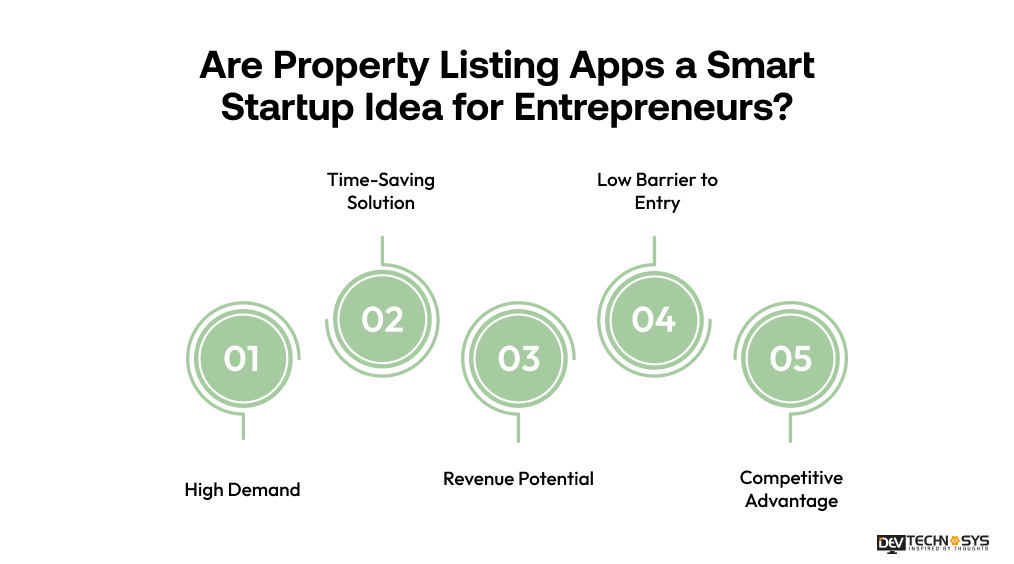
1. High Demand
With property searches moving online, users prefer housing app development solutions. They provide fast, accurate, and detailed property listings with virtual tours and advanced search filters. This trend ensures consistent app traffic, creating opportunities to capture a loyal and active user base.
2. Time-Saving Solution
Custom property listing app development reduces the effort of visiting multiple properties or agencies. It provides curated listings and instant agent connectivity. Users can quickly shortlist properties, schedule visits, and receive notifications, improving efficiency and overall experience.
3. Revenue Potential
A real estate platform development can generate revenue through premium listings, subscriptions, in-app ads, and lead-generation for agents. Additional monetization can include featured property promotions and collaborations with mortgage or home services providers.
4. Low Barrier to Entry
With cross-platform frameworks, AI integration for property recommendations, and cloud storage solutions, startups can launch an MVP efficiently. Early-stage apps can validate market demand before investing in full-scale development or advanced features.

5. Competitive Advantage
Apps that combine real-time AI recommendations, virtual tours, and seamless booking stand out in the crowded market. Innovative user experiences, intuitive design, and fast search capabilities help retain users and boost app credibility.
How to Build a Property Listing App: A Detailed Roadmap
To make a real estate app successful, clear planning, understanding user needs, and studying market trends are needed. A well-structured property listing app development guide ensures the app is scalable, feature-rich, and optimized for engagement and monetization.
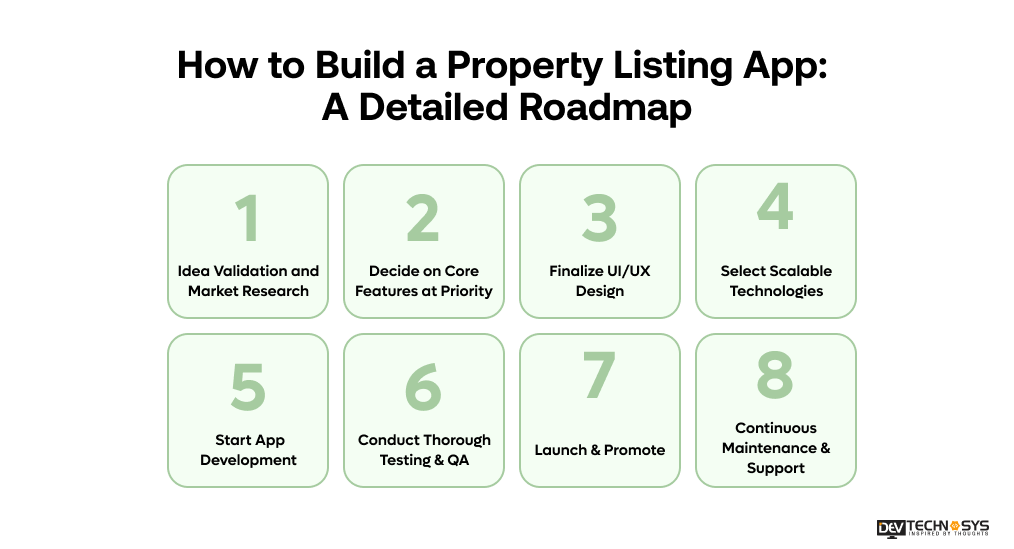
1. Idea Validation and Market Research
Analyze competitors to create real estate management platform in Middle East. Conduct surveys and focus groups to identify pain points, pricing models, and features users need most. Research emerging trends like virtual tours and AI recommendations to differentiate your app in a crowded market. Validate your concept through MVP testing to confirm user demand and ensure long-term feasibility and growth potential.
2. Decide on Core Features at Priority
Prioritize essential features like search filters, property upload, virtual tours, and agent messaging. Secondary features like AI recommendations, analytics dashboards, and social sharing can follow in later updates. Focus on features that solve primary user problems first to accelerate adoption and generate initial traction. Plan feature rollouts strategically to avoid overwhelming users while gradually enhancing app functionality and engagement.
3. Finalize UI/UX Design
Design an intuitive interface to develop a real estate app like Trulia. It comes with clear property details, easy navigation, and responsive layouts. It includes interactive prototypes and conduct usability testing for improvements. Incorporate accessibility standards to ensure your app is user-friendly for a diverse audience across multiple devices. Refine UI elements iteratively based on feedback to improve retention and reduce user frustration or drop-offs.
4. Select Scalable Technologies
Choose a modular architecture that allows future feature upgrades and seamless integration of third-party APIs efficiently. Ensure your tech stack supports high traffic, real-time property updates, and smooth app performance on all devices.
- Frontend: Flutter, React Native (cross-platform), or Swift/Kotlin (native).
- Backend: Node.js, Django, or Laravel.
- Database: PostgreSQL, MongoDB.
- Cloud & Storage: AWS, Google Cloud, or Azure.
- AI Recommendations: TensorFlow, PyTorch for property suggestions and analytics.
5. Start App Development
Follow agile methodology to develop a real estate mobile app for UAE. Integrate property upload, search, chat, and AI recommendation modules. Ensure secure authentication, smooth UI, and cloud integration. Develop iteratively, testing each module to fix bugs and improve performance during development sprints. Collaborate closely between designers, developers, and AI engineers for high-quality features and timely delivery.
6. Conduct Thorough Testing & QA
Test for functional accuracy, usability, load handling, and cross-device compatibility. Beta testing can reveal real-user insights before launch. Automate repetitive tests to save time and ensure consistent quality across multiple updates and app versions. Gather detailed user feedback from beta testers to refine features, navigation, and overall user experience before release.
7. Launch & Promote
Deploy the iOS and Android app development for real estate on Google Play and App Store. Promote via social media, real estate blogs, influencer marketing, and referral programs. Use ASO to improve discoverability. Develop marketing campaigns that highlight unique features, such as AI property recommendations and virtual tours, to attract users. Track downloads, engagement, and retention metrics to optimize promotions and maximize ROI after launch.
8. Continuous Maintenance & Support
Update the app with new features, bug fixes, and AI enhancements. Monitor analytics to optimize property suggestions and user engagement. Provide 24/7 support or chatbots to resolve user queries quickly, enhancing satisfaction and loyalty. Regularly analyze user behavior and feedback to introduce improvements, ensuring your app remains competitive and relevant.
Essential Features of a Property Listing App
Property listing apps must combine usability, advanced functionality, and intelligent recommendations to deliver a seamless user experience. These features are essential to build a real estate app like Wasalt and help agents manage listings effectively. It also helps startups with competitive differentiation in the real estate market.
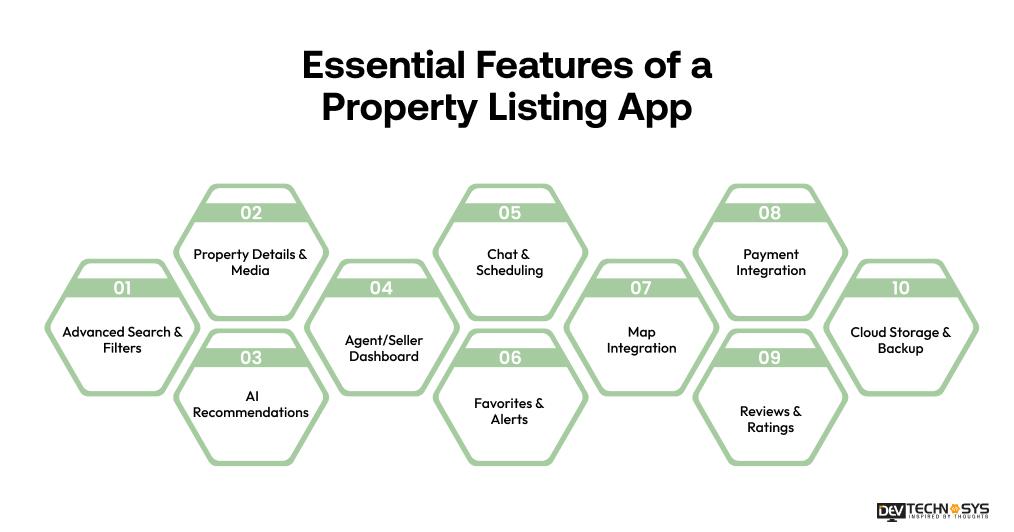
1. Advanced Search & Filters
Allow users to filter properties by location, price, type, size, and amenities. Advanced search ensures users find listings matching their exact preferences, reducing time spent browsing irrelevant options and improving overall satisfaction and engagement with the app.
2. Property Details & Media
Display high-quality images, 3D virtual tours, and videos for every listing. Rich media enables users to evaluate properties virtually, increasing transparency, trust, and engagement while reducing the need for multiple in-person visits or unnecessary inquiries.
3. AI Recommendations
Provide personalized property suggestions based on user behavior, preferences, and search history. AI-powered hybrid app development services for real estate help users discover relevant listings faster. This improves retention and encourages more interactions with properties.
4. Agent/Seller Dashboard
Offer tools for agents or sellers to manage listings, track leads, and analyze performance. Dashboards enable real-time insights, improve responsiveness, and streamline property management, boosting productivity and creating a professional experience for property professionals.
5. Chat & Scheduling
Enable in-app messaging and appointment booking between users and agents. Instant communication improves engagement, allows for seamless property visits, and facilitates faster decision-making, enhancing user experience and increasing conversion rates.
6. Favorites & Alerts
Allow users to save favorite properties and receive notifications about status updates or price changes. Personalized alerts keep users engaged, encourage repeated app visits, and help users act quickly on opportunities they care about most.
7. Map Integration
Integrate interactive maps showing property locations, nearby amenities, and directions. Maps provide spatial context, improve discovery, and help users evaluate convenience, neighborhood quality, and accessibility, making property searches more comprehensive and user-friendly.
8. Payment Integration
Enable secure deposit or rental payments directly through the app. A secure payment integration in real estate apps simplifies transactions, enhances trust, and reduces friction. It makes property booking or renting faster and more convenient for both users and agents.
9. Reviews & Ratings
Allow users to provide feedback and ratings for agents and properties. Reviews build credibility, improve transparency, and guide future users, creating a trustworthy ecosystem that supports informed decision-making and strengthens platform reliability.
10. Cloud Storage & Backup
Store property data and user activity securely on the cloud. A cloud-based property listing platform ensures access across multiple devices, prevents data loss, and supports scalability. It also maintains high performance and smooth user experiences.
How Much Does It Cost to Build a Property Listing App?
The property listing app development cost generally ranges between $8,000 and $30,000, depending on features, complexity, and platform selection. Basic apps with core functionalities and simple UI fall on the lower end.
Whereas advanced apps with AI recommendations, virtual tours, and scalable architecture reach the higher range. Proper planning ensures budget optimization without compromising quality. Multiple factors influence the cost to build a real estate app like Magicbricks, from platform choice to design complexity.
Understanding these elements helps startups estimate expenses accurately and launch a competitive, fully functional property listing app in 2026.
App Type |
Estimated Cost Range |
Key Features Included |
| Basic App | $8,000 – $12,000 | Core property listings, basic search & filters, simple UI, limited backend, no AI recommendations |
| Mid-Range App | $12,000 – $20,000 | Advanced search filters, property media uploads, virtual tours, in-app chat, AI suggestions, cloud storage |
| Advanced App | $20,000 – $30,000 | AI-powered property recommendations, analytics dashboards, interactive maps, payment integration, premium UI/UX, multi-platform support |
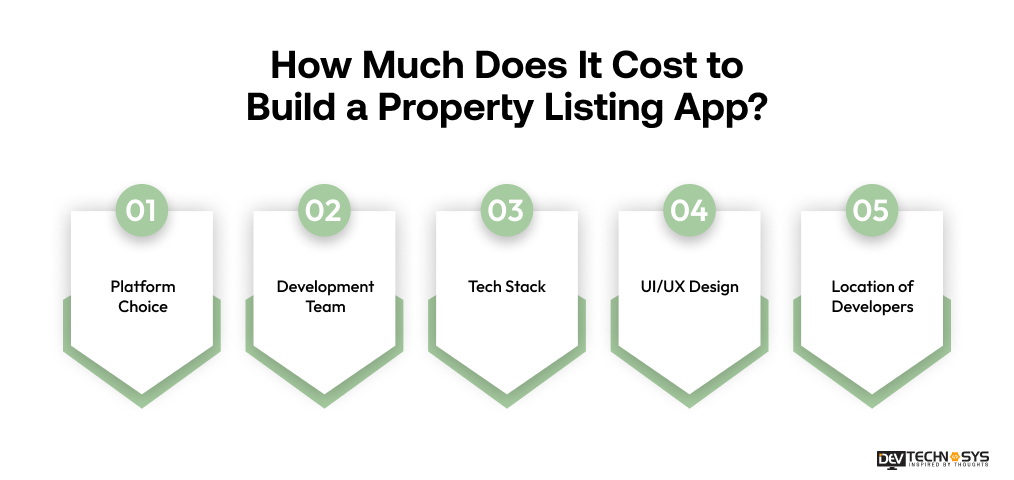
1. Platform Choice
Choosing between iOS, Android, or cross-platform development significantly affects mobile app development cost. Native apps for both platforms require more resources and time, increasing expenses. Cross-platform frameworks like Flutter or React Native reduce the cost to build a property listing app. It maintains performance, making them ideal for startups seeking faster deployment.
Platform Type |
Estimated Cost Range |
Description |
| Single Platform (iOS or Android) | $8,000 – $15,000 | Core features for one platform |
| Cross-Platform (Flutter/React Native) | $15,000 – $22,000 | Shared code for both platforms |
| Native (iOS + Android) | $22,000 – $30,000 | Separate development for optimized performance |
2. Development Team
The type of team impacts cost and quality. Freelancers are affordable but may lack scalability. In-house teams offer better control and collaboration but increase overhead. Development companies provide full-stack expertise, project management, and QA, ensuring high-quality apps with long-term support at a higher budget.
Team Type |
Estimated Cost Range |
Description |
| Freelancers/Small Team | $3,000 – $6,000 | Basic development with limited scalability |
| Mid-Sized Team | $6,000 – $11,000 | Balanced team with designers, developers, testers |
| Experienced Agency | $11,000 – $15,000 | Full-stack team with project management and QA |

3. Tech Stack
The choice of programming languages, frameworks, and AI tools affects mobile app maintenance cost. Basic stacks with a simple backend and APIs are cheaper. Advanced stacks with cloud integration, AI recommendations, and real-time features increase costs. This can build a property listing app with better performance, scalability, and future flexibility.
Stack Type |
Estimated Cost Range |
Description |
| Basic Stack | $2,000 – $5,000 | Simple backend, minimal APIs |
| Moderate Stack | $5,000 – $7,500 | Cloud integration, AI APIs |
| Advanced Stack | $7,500 – $10,000 | AI/ML models, real-time processing, scalable architecture |
4. UI/UX Design
Design complexity influences cost. Basic layouts with limited interactivity are affordable, while custom, interactive designs with animations, responsive layouts, and polished branding demand higher investment. Superior UI/UX improves user retention, engagement, and app credibility, making it a critical factor for success.
Design Type |
Estimated Cost Range |
Description |
| Basic Design | $2,500 – $5,000 | Simple layouts, minimal interactivity |
| Custom Design | $5,000 – $8,000 | Interactive UI, better user experience |
| Premium Design | $8,000 – $10,000 | High-end animations, branding, and user-focused design |
5. Location of Developers
Geographic location impacts development rates when you hire dedicated developers. Offshore developers in Asia or Eastern Europe are cost-effective, while nearshore teams provide a balance between quality and cost. Onshore developers in North America or Western Europe charge premium rates but offer close collaboration, communication, and high-quality deliverables.
Location Type |
Estimated Cost Range |
Description |
| Offshore (Asia/Eastern Europe) | $1,500 – $2,500 | Cost-effective development |
| Nearshore | $2,500 – $4,000 | Moderate pricing with good collaboration |
| Onshore (US/UK) | $4,000 – $6,000 | High cost with premium quality |
Top Property Listing Apps to Take Inspiration From
Studying successful property listing apps for buyers and sellers helps startups understand user expectations, design trends, and essential features. Analyzing top-performing apps provides inspiration for features, monetization strategies, and innovative functionalities to include in your own property listing platform.
App Name |
Launch Year |
Downloads (M) |
Ratings |
Platform |
| Zillow | 2006 | 100+ | 4.6 | iOS, Android, Web |
| MagicBricks | 2006 | 50+ | 4.4 | iOS, Android |
| Bayut | 2008 | 10+ | 4.5 | iOS, Android |
| Dubizzle | 2005 | 50+ | 4.4 | iOS, Android |
| Realtor.com | 2005 | 100+ | 4.5 | iOS, Android, Web |
| Trulia | 2005 | 50+ | 4.4 | iOS, Android, Web |
| Rightmove | 2000 | 20+ | 4.3 | iOS, Android, Web |
| Homes.com | 1998 | 10+ | 4.2 | iOS, Android, Web |
| Property24 | 1999 | 5+ | 4.3 | iOS, Android |
| Housing.com | 2012 | 20+ | 4.4 | iOS, Android |
Analyzing these top property listing platforms highlights common features, design trends, and user engagement strategies. Startups can leverage these insights to build apps that are intuitive, scalable, and competitive, blending innovation with proven best practices.
1. Zillow
Zillow is a leading US-based property app offering comprehensive listings, price estimates, and virtual tours. Its AI-driven recommendations and user-friendly interface make property search simple, fast, and reliable for buyers, renters, and real estate professionals.
2. MagicBricks
MagicBricks dominates the Indian market with thousands of listings, advanced filters, and agent connectivity. The platform combines affordability insights, property alerts, and multimedia content, helping users make informed real estate decisions efficiently.
3. Bayut
Bayut serves the Middle East with property listings, interactive maps, and detailed analytics. It emphasizes high-quality media and user engagement tools, enabling buyers and renters to discover relevant properties while improving lead generation for agents.
4. Dubizzle
Dubizzle is popular in the UAE for property, rentals, and classified listings. Its intuitive search filters, chat features, and agent communication options provide a smooth experience while connecting buyers and sellers effectively.
5. Realtor.com
Realtor.com is a trusted US platform featuring verified listings, property trends, and neighborhood insights. Its mobile and web integration, combined with real-time updates, ensures users access reliable data and make confident property decisions quickly.
What are the Revenue Models for Property Listing Apps?
Understanding monetization strategies is crucial for balancing user engagement, profitability, and long-term sustainability in competitive real estate markets. Selecting the right revenue model ensures apps deliver value to users, agents, and property managers while maximizing earnings efficiently.
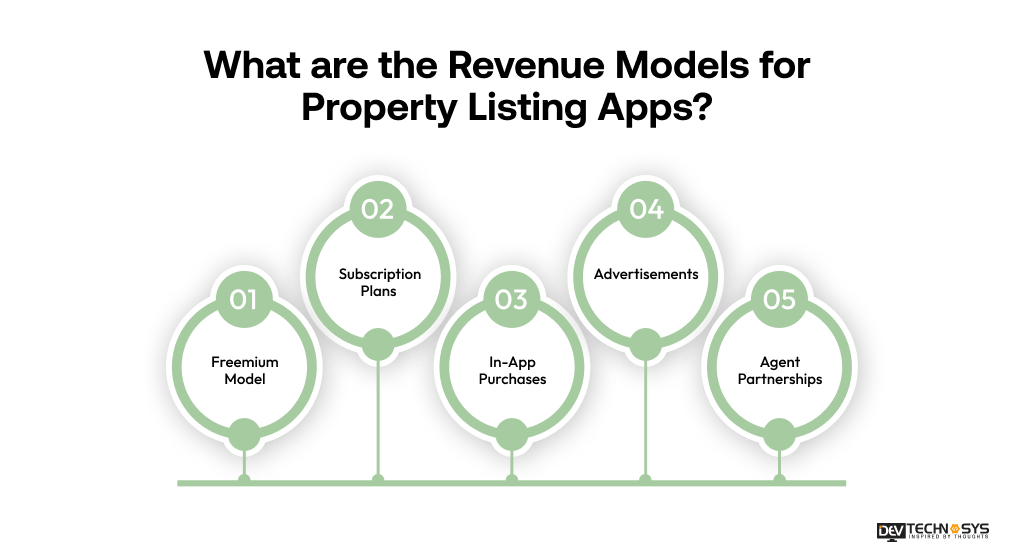
1. Freemium Model
Build a property listing app with basic property listings for free. While charging for premium features like enhanced visibility, virtual tours, or priority listings. This approach attracts a large user base initially and encourages gradual conversion to paid plans for additional functionalities.
2. Subscription Plans
Users or agents pay monthly or annual fees for unlimited access to listings, analytics dashboards, or advanced search tools. Subscription models ensure recurring revenue while providing continuous value, making them suitable for professional agents and property management companies.
3. In-App Purchases
Enable users to pay for specific upgrades such as featured listings, priority visibility, or 3D/virtual tours. This flexible model allows casual users to access premium features on demand, increasing app monetization without requiring a full subscription commitment.
4. Advertisements
Display relevant ads from services like home loans, moving companies, or furniture providers within the app. Advertising generates revenue from free users while maintaining accessibility, and targeted ads can improve engagement and lead to partnerships with related service providers.
5. Agent Partnerships
Collaborate with real estate agents or agencies to earn commissions on lead generation, exclusive property promotions, or successful bookings. This model strengthens agent relationships while generating revenue and incentivizes agents to actively use the app for marketing their properties.

AI-Driven Property Insights & Predictive Analytics: The Future of Real Estate Apps
AI-powered property apps go beyond traditional listings, delivering actionable insights and predictive recommendations. By analyzing historical trends, user behavior, and market data, these tools empower buyers, sellers, and agents to make smarter, faster, and data-driven decisions in real time.
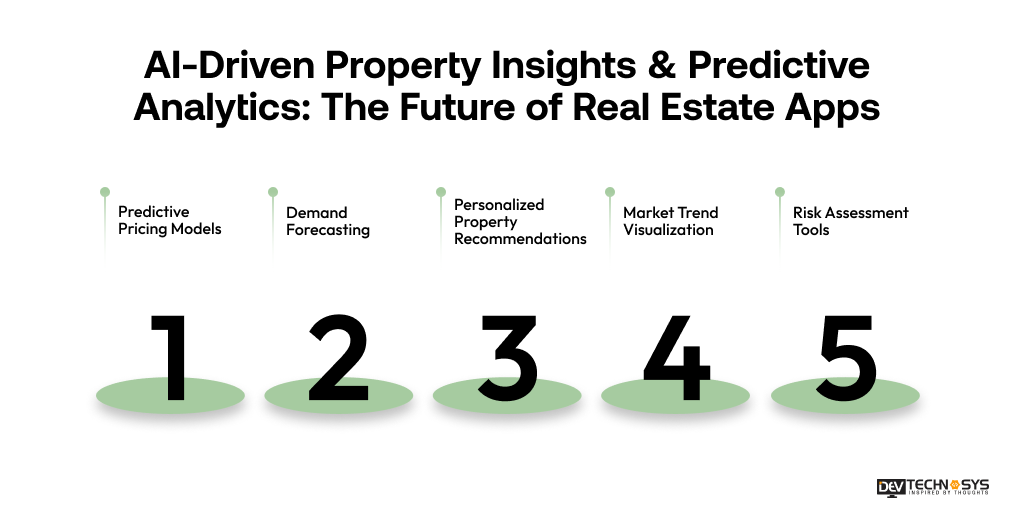
1. Predictive Pricing Models
AI predicts property prices using historical data, location trends, and market demand. This helps buyers invest wisely, sellers set competitive listings, and agents advise clients accurately, creating a transparent and informed property market experience.
2. Demand Forecasting
AI identifies high-demand neighborhoods, popular property types, and emerging areas. Developers, investors, and realtors can leverage these insights to focus on profitable opportunities, reducing risk and improving returns on property investments.
3. Personalized Property Recommendations
By analyzing user behavior, search patterns, and preferences, build a property listing app with AI that delivers tailored property suggestions. This improves engagement, increases conversion rates, and ensures users discover relevant options without manually browsing through countless listings.
4. Market Trend Visualization
Real-time dashboards visualize price trends, neighborhood growth, and property popularity. Users and agents gain a clear understanding of market dynamics, enabling strategic decision-making and smarter investments backed by data rather than guesswork.
5. Risk Assessment Tools
AI evaluates property and neighborhood risks, including safety, flood zones, and market volatility. This feature empowers buyers, investors, and agents to make informed decisions, mitigating potential losses while enhancing trust and transparency in property dealings.
Final Words
Building a property listing app in 2026 presents a strong business opportunity for startups and enterprises aiming to enter the digital real estate market. By integrating AI-powered recommendations, seamless navigation, and scalable architecture, apps can deliver personalized experiences, boost engagement, and increase profitability.
Success requires selecting the right tech stack, implementing smart monetization strategies like subscriptions or featured listings, and continuously updating features based on user feedback. Partnering with an experienced real estate app development company ensures high-quality development, competitive differentiation, and a sustainable digital product that meets evolving user needs while staying ahead in the market.
People Mostly Ask
Q1. How Long Does It Take To Build A Property Listing App?
Typically, developing a property listing app takes 4–8 months, depending on complexity, feature set, and AI integration. Basic apps with core listings launch faster, while advanced apps with virtual tours, predictive recommendations, and analytics dashboards require additional development and testing time.
Q2. Which AI Frameworks Are Best For Property Recommendations?
Popular frameworks for AI-driven property suggestions include TensorFlow, PyTorch, and Scikit-learn. These tools support predictive analytics, user behavior tracking, and personalized property recommendations, enabling real-time, data-driven suggestions that enhance engagement and improve the likelihood of conversions.
Q3. Can A Property Listing App Be Profitable For Startups?
Yes, a property listing app can generate revenue through subscriptions, featured listings, in-app advertisements, and agent partnerships. Profitability depends on high user engagement, unique features, continuous updates, and strategic marketing to attract both users and property professionals.
Q4. What Are The Essential Features Of Property Listing Apps?
Key features include advanced search and filters, AI recommendations, virtual tours, in-app chat, payment integration, favorites, map integration, and cloud storage. These functionalities enhance user experience, streamline property discovery, and provide convenience for both buyers and agents.
Q5. Should I Build Natively Or Cross-Platform?
Cross-platform development is cost-effective for MVPs, allowing startups to launch faster with a single codebase. Native development, using Swift or Kotlin, offers optimized performance, better AI handling, and smoother user experiences for complex, AI-heavy property listing apps.