





Key takeaways:
-
- To build a software like RentRedi, focus on essential tools such as online rent collection, tenant screening, lease management, maintenance tracking, and financial reporting to streamline property operations.
- The cost to develop a software like RentRedi lies between $8,000 to $30,000, depending on factors like features, platform choice, tech stack, and development location and expertise.
- To build a software like RentRedi, select scalable, secure, and reliable technologies for web and mobile development to ensure smooth performance and future growth.
- Developing top property management software in Dubai requires a robust platform that handles multiple properties, users, and integrations as your business grows.
Building a rental property management software like RentRedi is a powerful way to tap into the rapidly growing real estate tech market while solving real challenges for landlords and tenants. As property owners increasingly seek automation, digital payments, and seamless communication tools, platforms like RentRedi have set a high benchmark for efficiency and user experience
For businesses and startups, developing a similar platform offers an opportunity to deliver value-driven innovation, enhance user convenience, and build a scalable digital ecosystem that simplifies property management while maximizing returns and tenant satisfaction.
But how do you build software like RentRedi? Let’s find out through this blog. We will show you how to build a software like RentRedi. From identifying core features and choosing the right technology stack to designing an intuitive UI/UX and scaling your platform for long-term growth, we will leave no stone unturned. So, let’s begin!
What is the RentRedi Software?
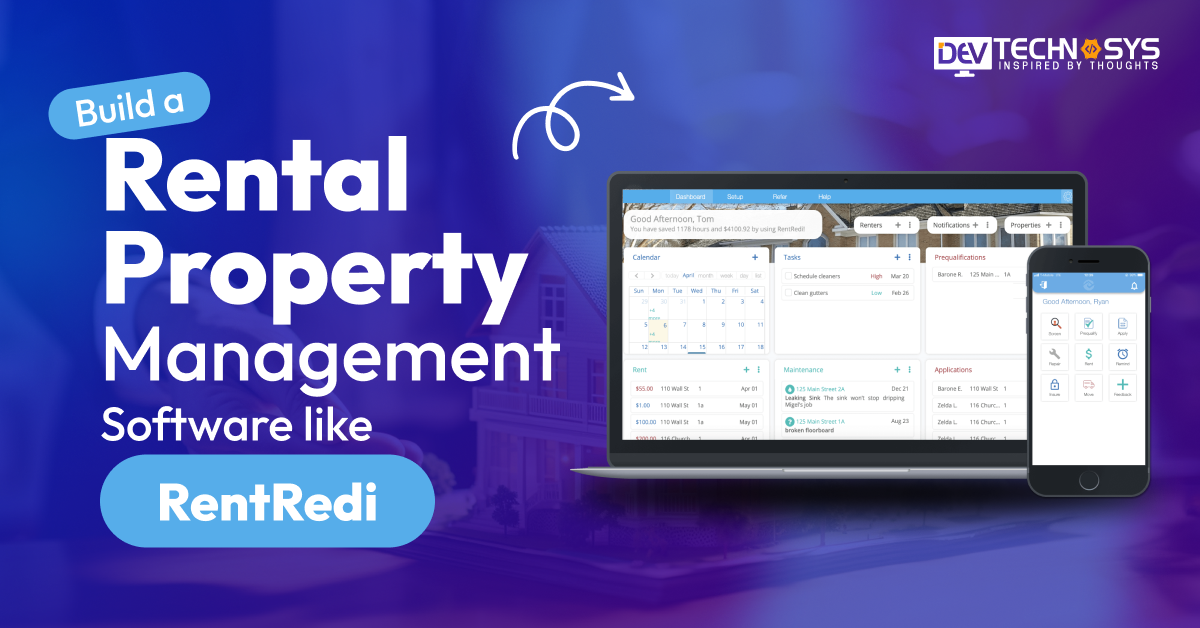
RentRedi is the best property management software in UAE that helps landlords, investors, and property managers streamline the entire rental process through a single web and mobile platform. It combines essential tools for managing rental properties, including online rent collection, tenant screening, lease creation, maintenance tracking, and financial reporting, into one intuitive system.
Rental Property Management Software Market Insights
- The property management software market size reached USD 6.53 billion in 2026 and is projected to climb to USD 9.93 billion by 2031, reflecting an 8.74% CAGR.
- By geography, North America retained 40.27% of 2025 revenue, whereas the Asia Pacific is forecast to expand at a 13.44% CAGR to 2031.
- By property type, residential assets held 58.19% of 2025 spending, whereas industrial and logistics units are advancing at a 10.34% CAGR.
- By end user, property managers and agents accounted for 42.73% of 2025 outlays, but facilities management firms are projected to grow at a 11.12% CAGR.
- By solution module, lease and tenant management accounted for 35.44% of 2025 sales, while integrated payments are rising at a 10.77% CAGR.
How Does Software like RentRedi Work?
Before learning about RentRedi like custom software development, let’s see how the software functions. Rental property management software like RentRedi centralizes and automates the entire property management process. Here’s how it simplifies tasks for landlords and tenants:
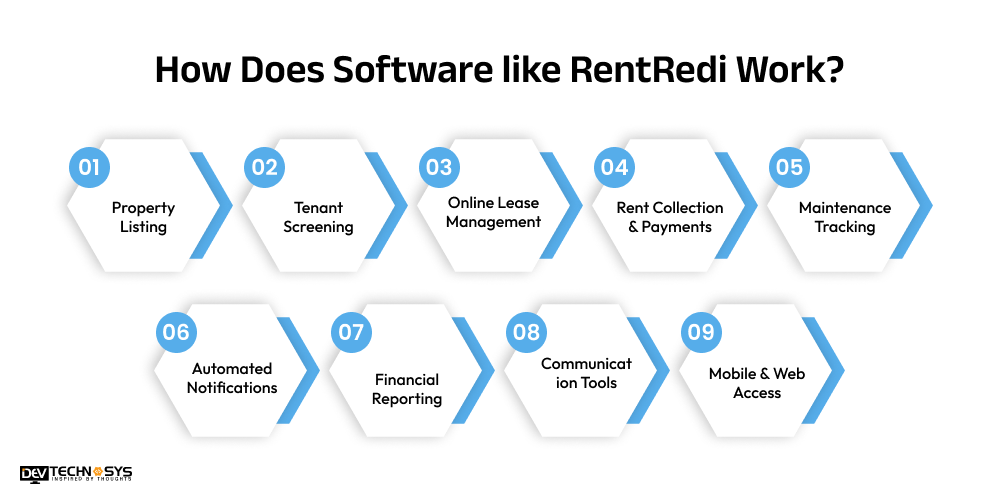
- Property Listing: Landlords can list rental properties with detailed descriptions, photos, and pricing.
- Tenant Screening: The software performs background checks, credit checks, and rental history verification for applicants.
- Online Lease Management: Tenants can e-sign leases digitally, reducing paperwork and speeding up agreements.
- Rent Collection & Payments: Secure online payment portals allow tenants to pay rent, while landlords track transactions and automate reminders.
- Maintenance Tracking: Tenants can submit maintenance requests, and landlords can assign, monitor, and resolve them efficiently.
- Automated Notifications: Rent reminders, lease renewal alerts, and important updates are sent automatically to tenants and landlords.
- Financial Reporting: Generates detailed income and expense reports, helping landlords track property performance.
- Communication Tools: Centralized messaging allows easy interaction between landlords and tenants.
- Mobile & Web Access: Manage properties on the go via web dashboards or mobile apps for convenience.
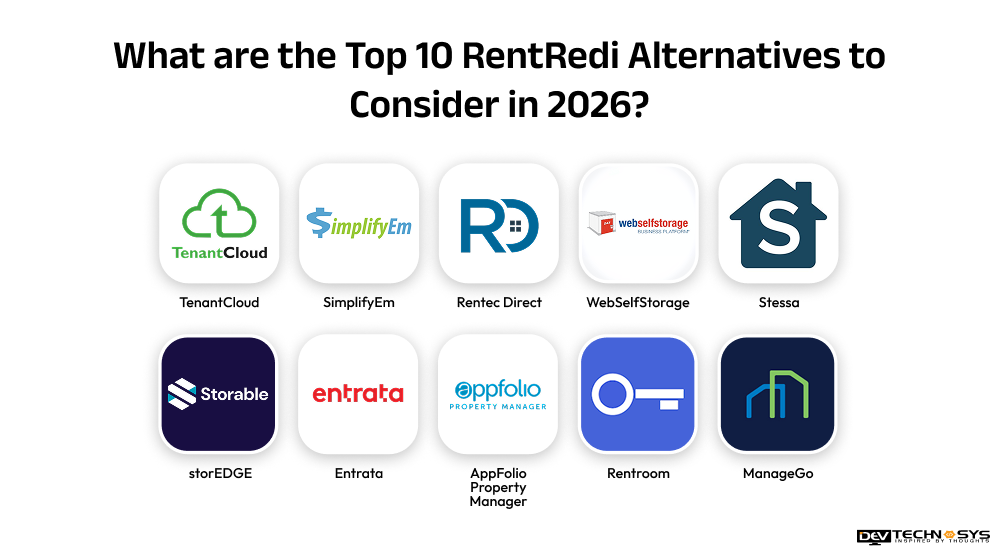
What are the Top 10 RentRedi Alternatives to Consider in 2026?
In 2026, the demand for efficient property management tools has led to the rise of several powerful alternatives to RentRedi. These platforms offer advanced features like automation, tenant management, and financial tracking tailored to different business needs.
Software |
Best For |
Ratings |
| SimplifyEm | Small landlords | 4.2 / 5 |
| TenantCloud | Small–mid portfolios | 4.3 / 5 |
| Rentec Direct | Property managers | 4.7 / 5 |
| WebSelfStorage | Self-storage businesses | 4.3 / 5 |
| Stessa | Financial tracking | 4.7 / 5 |
| Entrata | Large portfolios | 4.5 / 5 |
| storEDGE | Storage operators | 4.4 / 5 |
| AppFolio Property Manager | Mid–large portfolios | 4.5 / 5 |
| Rentroom | Small landlords | 4.2 / 5 |
| ManageGo | Modern managers | 4.4 / 5 |
1. SimplifyEm
SimplifyEm is a user-friendly property management software designed for small to mid-sized landlords. It offers essential tools like rent tracking, tenant management, accounting, and maintenance handling. Its flexible pricing and simple interface make it ideal for users who want core features without unnecessary complexity. To create a rental property management software like RentRedi or SimplifyEm, contact a top company in Middle East .
Industry Insights:
As of September 2025, SimplifyEm achieved approximately $3.3 million in annual revenue, stated by 6Sense.
2. TenantCloud
TenantCloud is a cloud-based rental management platform that provides end-to-end solutions, including property listing, tenant screening, rent collection, and maintenance tracking. It supports both landlords and tenants through dedicated portals, making it a comprehensive and scalable option for efficiently managing rental properties.
3. Rentec Direct
Rentec Direct is a powerful property management solution that offers advanced accounting, tenant management, and online rent collection. It includes general ledger accounting, lease tracking, and reporting tools, making it suitable for landlords, property managers, and associations seeking a reliable, all-in-one management platform. If you want to build property management software like Rentec Direct, contact a top app development company in UAE.
4. WebSelfStorage
WebSelfStorage is a specialized property management platform designed for self-storage businesses. It helps operators manage units, track payments, handle tenant data, and generate reports. Its industry-focused tools make it ideal for storage facility owners looking to streamline operations and improve customer management.
5. Stessa
Stessa is a financial-focused property management tool designed for real estate investors. It excels in automated income and expense tracking, real-time financial reporting, and tax-ready insights. With a strong free plan and powerful analytics, it helps landlords monitor portfolio performance and maximize returns efficiently. Want to create a similar app like Stessa? Contact top property management app development providers in UAE.
How to Build a Rental Property Management Software Like RentRedi in Easy Steps?
Building a rental property management software like RentRedi requires a strategic approach that combines the right features, technology, and user-focused design. It involves streamlining property operations, automating tasks, and delivering a seamless experience for both landlords and tenants.
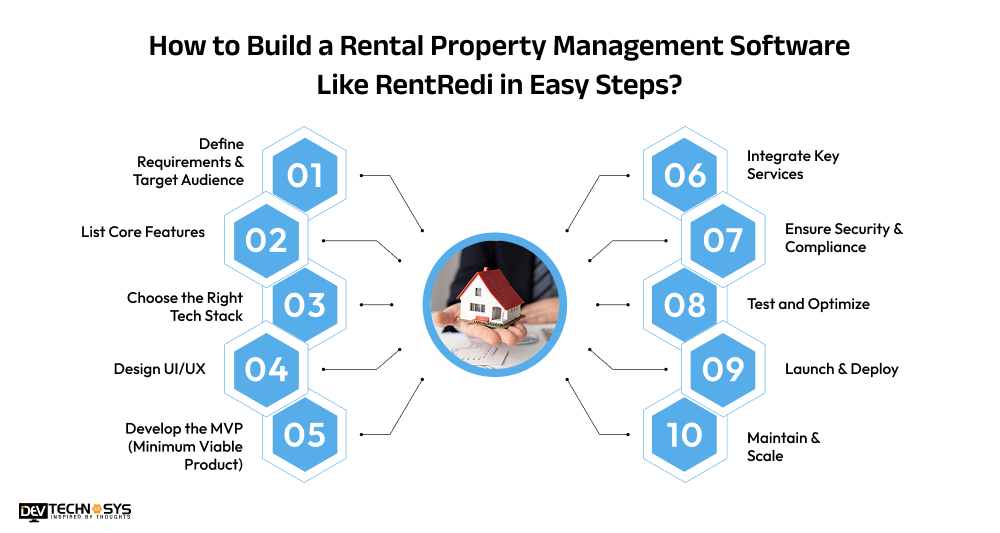
Step1. Define Requirements & Target Audience
Start the process to build a rental property management software like RentRedi by identifying your target users, such as landlords, tenants, and property managers. Understand their pain points and expectations through market research. To build a software like RentRedi, analyze competitors like RentRedi to refine your idea and define clear project goals for better development outcomes.
Industry Insights:
According to Grand View Research, the industry is rapidly expanding due to the growing need for streamlined rent collection, tenant management, and maintenance automation, as SaaS-based platforms gain popularity.
Step2. List Core Features
In this step, your real estate app development services providers will outline essential features your software must include to deliver value and usability. Here are some of the features that you need to add to a similar app like RentRedi:
- Property listing and tenant management
- Online rent collection and payment tracking
- Maintenance request handling and notifications
These rental property management software development features ensure smooth operations while helping landlords manage properties efficiently and tenants access services easily.
Step3. Choose the Right Tech Stack
To develop a software like RentRedi, select a scalable and secure tech stack that supports both web and mobile platforms. Use modern frameworks like React or Angular for the frontend and Node.js or Python for the backend. A reliable database, such as MongoDB or MySQL, ensures efficient data handling, improved system performance, and long-term scalability.
Layer |
Options |
| Frontend | React, Angular |
| Mobile | Flutter, React Native |
| Backend | Node.js, Python |
| Database | MongoDB, MySQL |
| Cloud | AWS, Azure |
| Payments | Stripe, Razorpay |
| Security | JWT, SSL |
Step4. Design UI/UX
To create a software like RentRedi, focus on creating a simple, intuitive, and visually appealing interface for users. Ensure easy navigation, mobile responsiveness, and well-structured dashboards. A good UI/UX design improves user engagement, reduces learning curves, and enhances overall satisfaction for both landlords and tenants who regularly use the platform.
Step5. Develop the MVP (Minimum Viable Product)
Build a simplified version of your rental property management software with only essential features to launch quickly and test your idea in the market. Your real estate app development solution provider in Middle East should focus on core functionalities like property listing, tenant management, and rent collection while gathering real user feedback. This approach helps reduce risks, validate demand, and gradually improve the platform in line with user needs.
Step6. Integrate Key Services
Enhance your platform by integrating third-party services that improve overall functionality and user experience. These integrations help automate operations, reduce manual effort, and ensure seamless communication between landlords and tenants.
- Payment gateways for secure rent transactions
- Tenant screening APIs for background checks
- Notification systems for alerts and reminders
These integrations streamline processes and provide a seamless user experience.
Step 7: Ensure Security & Compliance
If you want to create a rental property management software like RentRedi in Saudi Arebia, implement robust security measures, including data encryption (SSL/TLS), OAuth 2.0 authentication, and role-based access control, to protect sensitive user and financial information. Create a software like RentRedi in Dubai by ensuring compliance with relevant data protection regulations to avoid legal risks and build user trust.
- Data Encryption: Protect user data during storage and transmission
- Secure Authentication: Use multi-factor authentication (MFA) and login security
- Access Control: Limit system access based on user roles
A secure platform enhances credibility and safeguards your system from cyber threats and breaches.
Step 8: Test & Optimize
Conduct comprehensive testing after property management software development. It includes functional, performance, and security testing to identify and fix issues before launch. Optimize the platform for speed, responsiveness, and reliability across devices to ensure a smooth user experience.
- Functional Testing: Ensure all features work as expected
- Performance Testing: Check speed, load handling, and scalability
- Bug Fixing & Optimization: Continuously improve performance and stability
Regular testing minimizes errors and ensures long-term platform success.
Step9. Launch & Deploy
Deploy your software on a reliable cloud platform and make it accessible to users. Provide onboarding guides, tutorials, and customer support to help users get started easily. A well-planned launch strategy ensures better adoption and user engagement from the beginning.
Step10. Maintain & Scale
Continuously update your software with new features, performance improvements, and security patches. Monitor user behavior and feedback to enhance functionality. As your user base grows, scale your infrastructure to handle increased demand and ensure consistent performance without downtime.
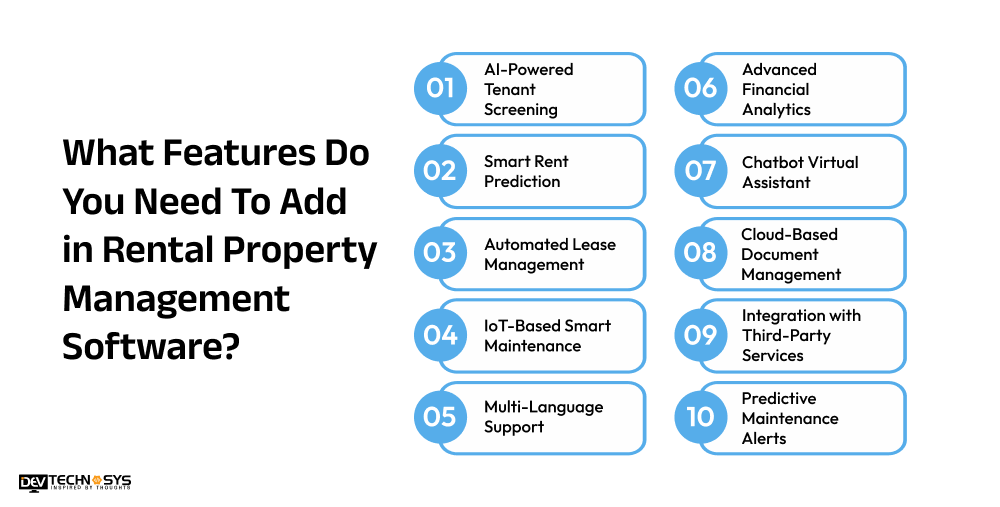
What Features Do You Need To Add in Rental Property Management Software?
Here are some essential and advanced real property software features that enhance efficiency, automation, and user experience. These capabilities help landlords streamline operations, make data-driven decisions, and deliver smarter, more scalable property management solutions.
Tenant Management Features |
Property Management Features |
Financial & Automation Features |
| Tenant registration & profiles | Property listing & management | Online rent collection |
| Tenant screening & background checks | Lease management (e-signatures) | Payment tracking & history |
| Communication portal (chat/email) | Maintenance request tracking | Automated rent reminders |
| Document sharing & storage | Vacancy & occupancy tracking | Expense tracking & reports |
| Support ticket system | Property analytics dashboard | Financial reporting & insights |
| Tenant notifications & alerts | Multi-property management | Invoice generation & billing |
1. AI-Powered Tenant Screening
AI-driven screening analyzes tenant applications using credit scores, rental history, and behavioral data. It improves decision-making accuracy, reduces risk, and helps landlords select reliable tenants quickly while minimizing manual verification and the potential for fraud.
2. Smart Rent Prediction
Advanced analytics tools predict optimal rent pricing based on market trends, location, and demand. This helps landlords maximize revenue, stay competitive, and adjust pricing strategies dynamically for better occupancy rates and long-term profitability.
3. Automated Lease Management
Automates lease creation, renewals, and expirations with digital signatures and reminders. It reduces paperwork, ensures compliance, and keeps both landlords and tenants informed about contract updates, deadlines, and terms without manual intervention.
4. IoT-Based Smart Maintenance
Integration with IoT devices enables real-time monitoring of property conditions like water leaks or energy usage. This is one of the crucial tenant management software features that helps detect issues early, reduces maintenance costs, and ensures timely repairs, improving tenant satisfaction and operational efficiency.

5. Multi-Language & Multi-Currency Support
Supports multiple languages and currencies for global users, making the platform accessible to international landlords and tenants. This feature enhances user experience, simplifies transactions, and enables businesses to expand into diverse markets seamlessly.
6. Advanced Financial Analytics
Provides in-depth insights into income, expenses, ROI, and cash flow through dashboards and reports. It helps landlords make data-driven decisions, track property performance, and optimize investments for higher profitability and long-term growth.
7. Chatbot & Virtual Assistant
AI-powered chatbots handle tenant queries, rent reminders, and support requests 24/7. This reduces manual workload, improves response time, and enhances user engagement by providing instant assistance and personalized interactions.
8. Cloud-Based Document Management
Secure cloud storage enables easy anytime access to leases, agreements, and financial records. It ensures data safety, simplifies document sharing, and eliminates the need for physical paperwork, improving efficiency and organization.
Industry Insights:
Global Growth Insights states that Cloud-based deployments account for 65%+ of new implementations, showing a strong shift toward SaaS-based platforms.
9. Integration with Third-Party Services
Seamless integration with payment gateways, accounting tools, CRM systems, and marketing platforms enhances functionality. It enables automation, improves workflow efficiency, and provides a unified ecosystem for managing all property-related operations.
10. Predictive Maintenance & Alerts
Uses data analytics to forecast potential maintenance issues before they occur. Automated alerts help landlords take proactive actions, reduce unexpected repair costs, and maintain property quality, ensuring a better living experience for tenants.
Why Businesses Must Invest in RentRedi Clone Software Development?
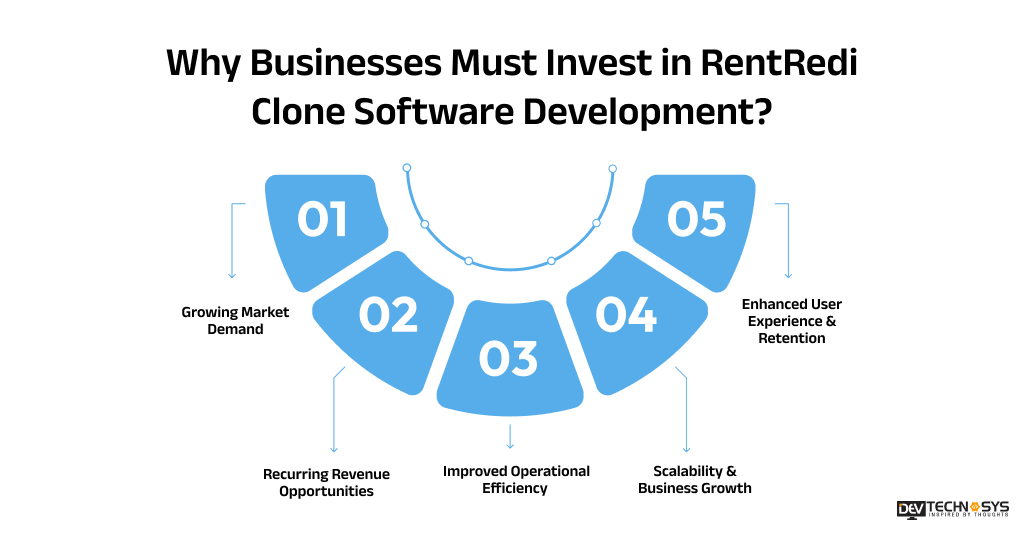
Investing in a rental property management solution like RentRedi offers significant growth opportunities as the real estate sector rapidly embraces digital transformation. Here are the reasons why investing in RentRedi clone app development is a profitable venture for businesses:
1. Growing Market Demand
The rising adoption of digital property management solutions is driving strong market demand. Businesses investing in platforms like RentRedi can capitalize on this trend, attract modern landlords, and gain a competitive edge in the evolving real estate technology landscape.
2. Recurring Revenue Opportunities
Rental management software enables subscription-based or freemium pricing models, ensuring steady and predictable revenue streams. Businesses can generate long-term profits by offering premium features, add-ons, and scalable plans tailored to landlords, property managers, and real estate enterprises.
3. Improved Operational Efficiency
Automation of tasks like rent collection, tenant communication, and maintenance tracking reduces manual effort and operational costs. This improves overall efficiency, allowing businesses to manage multiple properties seamlessly while saving time and resources for both users and administrators.
4. Scalability & Business Growth
A RentRedi clone solution allows businesses to scale effortlessly as their user base grows. With cloud-based infrastructure and flexible features, companies can expand services, manage larger portfolios, and enter new markets without compromising performance or user experience.
5. Enhanced User Experience & Retention
User-friendly interfaces, mobile accessibility, and seamless integrations improve customer satisfaction. A well-designed RentRedi clone software ensures better engagement, higher retention rates, and long-term customer loyalty, which are essential for building a successful and sustainable property management business.
What is the Cost to Build a Rental Property Management Software like RentRedi?
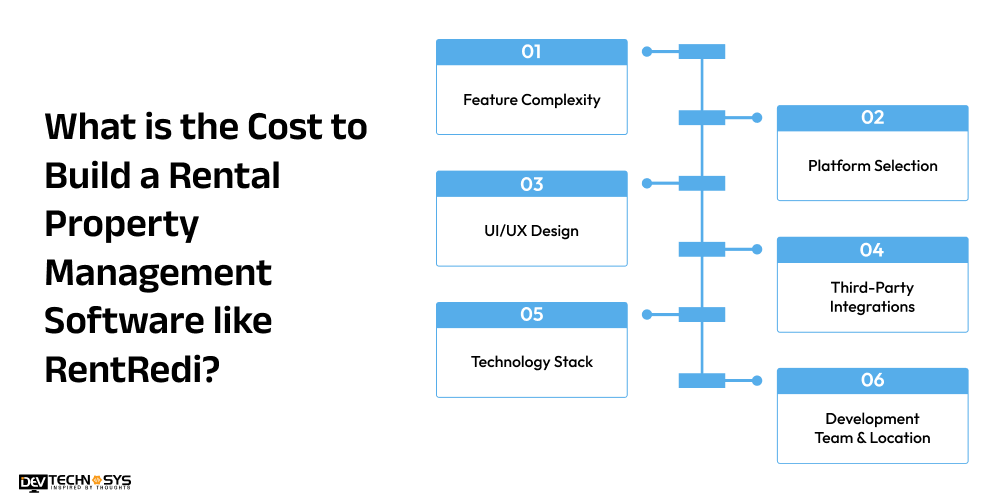
The cost to build a rental property management software like RentRedi typically ranges from $8,000 to $30,000+, depending on the app’s complexity, features, and scalability. A basic MVP with essential features such as property listing, rent collection, and tenant management may cost between $8,000 and $15,000, while a mid-level software development cost in UAE will be around $15,000 and $20,000.
Development Type |
Estimated Cost |
Timeline |
| Basic MVP | $8,000 – $12,000 | 3–5 weeks |
| Standard MVP | $12,000 – $20,000 | 4–8 weeks |
| Advanced MVP | $20,000 – $30,000 | 6–10 weeks |
The cost to develop a house finder app with advanced functionalities like AI, automation, and custom features can cost more than $30,000. Additionally, ongoing costs such as maintenance, updates, hosting, and third-party integrations should also be considered for long-term success.
1. Feature Complexity
The overall cost to build a software like RentRedi largely depends on the number and complexity of features included in the software. Basic functionalities like property listing and rent tracking are affordable, while advanced features such as AI analytics, automation, and reporting systems require more development time, increasing the overall cost to develop a software like RentRedi.
Level |
Estimated Cost Impact |
| Basic Features | $2,000 – $4,000 |
| Moderate Features | $4,000 – $6,000 |
| Advanced Features (AI, Automation) | $6,000 – $8,000 |
2. Platform Selection
Choosing the platform, web, mobile, or cross-platform, directly impacts the Cost to develop a software like RentRedi. Native app development for both iOS and Android is more expensive compared to cross-platform solutions. Additionally, maintaining multiple platforms increases long-term costs, making platform selection a crucial factor that impacts the cost to build a software like RentRedi.
Platform Type |
Estimated Cost Impact |
| Web Only | $10,000 – $15,000 |
| Cross-Platform App | $15,000 – $20,000+ |
| Native (iOS + Android) | $20,000 – $25,000+ |
3. UI/UX Design
The cost to create real estate management platform can affect the total budget. Creating a well-designed interface improves user engagement but also adds to development costs. Simple layouts are budget-friendly, whereas custom, interactive, and visually rich designs require more design effort, prototyping, and testing, which increases the overall investment needed for a seamless user experience.
Design Level |
Estimated Cost Impact |
| Basic UI | $3,000 – $5,000 |
| Custom UI/UX | $5,000 – $8,000 |
| Advanced Interactive Design | $8,000 – $12,000 |
4. Third-Party Integrations
Integrating external services such as payment gateways, tenant screening APIs, and communication tools increases development complexity and costs. These integrations often involve licensing fees, API usage charges, and additional development time, but they significantly enhance the platform’s functionality and efficiency.
Integration Type |
Estimated Cost Impact |
| Basic APIs | $1,000 – $3,000 |
| Payment + Notifications | $3,000 – $7,000 |
| Advanced Integrations | $7,000 – $12,000 |
5. Technology Stack
The choice of programming languages, frameworks, and tools affects both initial and long-term cost to create a software like RentRedi. Modern, scalable technologies may require experienced developers, increasing costs, but they deliver better performance, greater flexibility, and future scalability, making them a worthwhile investment for robust software development.
Stack Type |
Estimated Cost Impact |
| Basic Stack | $2,000 – $5,000 |
| Standard Stack | $5,000 – $10,000 |
| Advanced Scalable Stack | $10,000 – $15,000 |
6. Development Team & Location
The cost of hiring developers varies by region and expertise level. Teams in North America or Europe typically charge higher rates than offshore developers. Additionally, the team’s size and skill level influence the timeline and quality, directly impacting the overall cost to create a software like RentRedi.
Team Type |
Estimated Cost Impact |
| Freelancers / Offshore | $8,000 – $15,000 |
| Mid-Level Agency | $15,000 – $21,000 |
| Premium Agency (US/EU) | $21,000 – $28,000+ |
How to Monetize a Software like RentRedi?
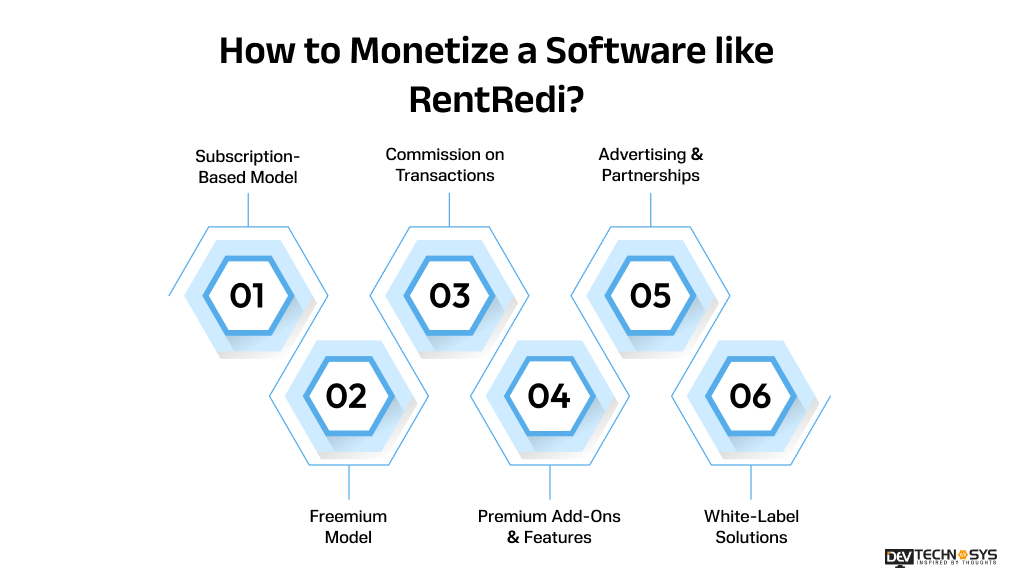
Monetizing a rental property management platform like RentRedi requires a strategic approach that balances user value with revenue generation. By leveraging multiple monetization models, businesses can create sustainable income streams while delivering flexible and scalable solutions to landlords and property managers.
1. Subscription-Based Model
Offer tiered subscription plans (monthly or yearly) based on features and property limits. Basic plans can include essential tools, while premium plans unlock advanced features like analytics, automation, and integrations. This model ensures predictable recurring revenue and allows users to scale services as their property portfolio grows.
2. Freemium Model
Provide a free, limited-feature version to attract users and build a customer base. Charge for premium functionalities such as tenant screening, financial reporting, or advanced automation. This approach helps increase user acquisition while converting free users into paying customers over time.
3. Commission on Transactions
Charge a small percentage or fixed fee on rent payments processed through the platform. This includes online rent collection, late fees, or maintenance payments. It creates a scalable revenue stream that grows with user activity and transaction volume across the platform.
4. Premium Add-Ons & Features
Offer optional paid add-ons like advanced analytics, AI-based insights, priority customer support, or additional storage. Users can customize their experience by purchasing only the features they need, which increases revenue while providing flexibility and value to different customer segments.
5. Advertising & Partnerships
Generate revenue by partnering with real estate service providers such as insurance companies, maintenance services, or moving companies. Display targeted ads or offer featured listings within the platform, creating an additional income stream without directly charging users for core functionalities.
6. White-Label Solutions
Offer your software as a white-label solution for real estate agencies or enterprises. Businesses can rebrand and use your platform as their own, paying licensing or subscription fees. This approach helps expand your reach and generate higher revenue from enterprise clients.

Can You Provide a Checklist for Launching Your Property Management Software?
So, you want to develop a rental property management software like RentRedi and launch it smoothly? Well, launching a platform like RentRedi requires careful planning and execution. Use this checklist to ensure a smooth and successful launch:
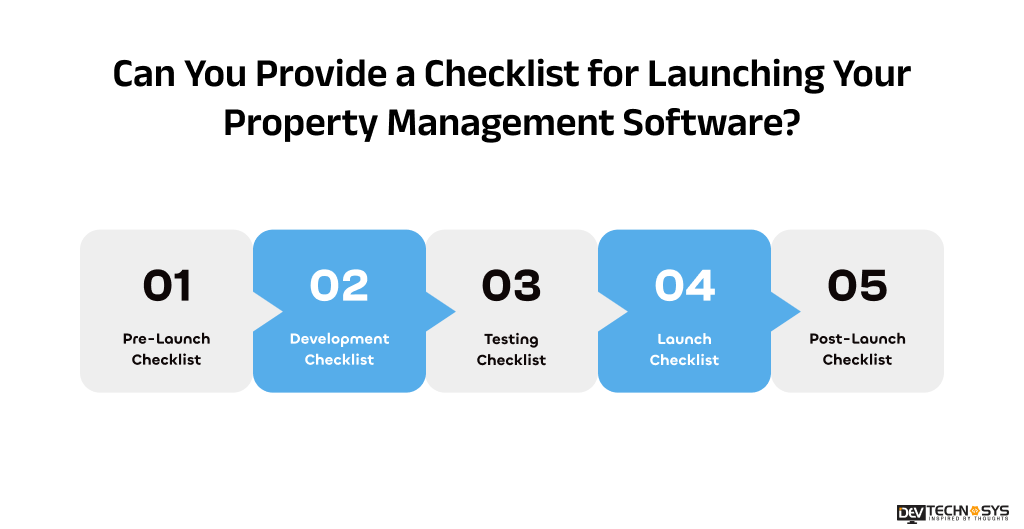
1. Pre-Launch Checklist
- Define your target audience (landlords, tenants, property managers)
- Finalize core features and MVP scope
- Conduct market and competitor research
- Ensure legal compliance and data protection policies
- Prepare branding (logo, website, app design)
2. Development Checklist
- Complete frontend and backend development
- Integrate payment gateways and third-party APIs
- Implement security measures (encryption, authentication)
- Optimize for mobile responsiveness and performance
- Set up cloud hosting and database infrastructure
3. Testing Checklist
- Perform functional testing for all features
- Conduct security and performance testing
- Fix bugs and ensure a smooth user experience
- Test across devices and platforms (web, iOS, Android)
4. Launch Checklist
- Deploy software on live servers
- Set up user onboarding and tutorials
- Launch marketing campaigns (SEO, ads, social media)
- Provide customer support channels
- Monitor initial user feedback and performance
5. Post-Launch Checklist
- Track user engagement and analytics
- Roll out regular updates and improvements
- Fix bugs and enhance performance
- Scale infrastructure as the user base grows
- Introduce new features and monetization strategies
Conclusion
Building a rental property management software like RentRedi requires a strategic blend of the right features, modern technology, and user-centric design. From planning an MVP to integrating advanced tools like automation and analytics, every step plays a vital role in success.
Businesses should hire a top real estate app development company in Middle East that focuses on scalability, security, and a seamless user experience when developing powerful property management software. Having professional support and guidance throughout the development process leads to robust solutions that simplify property management and generate long-term revenue.
FAQs
Q1. How Long Does It Take To Build Rental Property Management Software Like RentRedi?
The development timeline usually ranges from 2 to 6 months, depending on features, complexity, and team size. A basic MVP can be launched faster, while advanced platforms with integrations, WT (JSON Web Token) authorization, and custom functionalities require more time for development, testing, and deployment.
Q2. What Features Are Required to Develop a Rental Property Management Software Like RentRedi?
Here are the crucial features required to build a rental property management software like RentRedi:
- Property listing and tenant management
- Online rent collection and lease management
- Maintenance tracking and financial reporting
These features help streamline operations and improve user experience.
Q3. Is It Better To Build A Web Or Mobile-Based Property Management App?
The choice depends on your audience and budget. Web apps are cost-effective and easier to maintain, while mobile apps offer better accessibility. Many businesses prefer cross-platform solutions to deliver both web and mobile experiences efficiently.
Q4. How Can Property Management Software Generate Revenue?
Here’s how property management software like RentRedi generates money:
- Subscription plans and premium features
- Transaction fees and service charges
- White-label and enterprise solutions
These models ensure consistent and scalable revenue streams.
Q5. What Technologies Are Best For Building Property Management Software?
Technologies like React or Angular for frontend, Node.js or Python for backend, and cloud platforms like AWS ensure scalability, performance, and security. Choosing the right tech stack is essential to develop a rental property management software like RentRedi