





Key Takeaways:
-
- The fitness apps market size was valued at USD 12 billion in 2025 and is projected to grow from USD 13.5 billion in 2026 to USD 38 billion by 2034.
- The cost to develop a fitness app like Classpass ranges from $8,000 to $30,000. The cost of basic MVP is lower than the cost to develop an advanced app with AI features and functionality.
- Plan features meticulously, including class search, booking, subscriptions, reviews, studio dashboards, admin control panels, and advanced AI-driven recommendations for user engagement.
- Develop the app iteratively using agile methods, perform thorough testing for functionality, performance, and security, and conduct beta testing with real users for feedback.
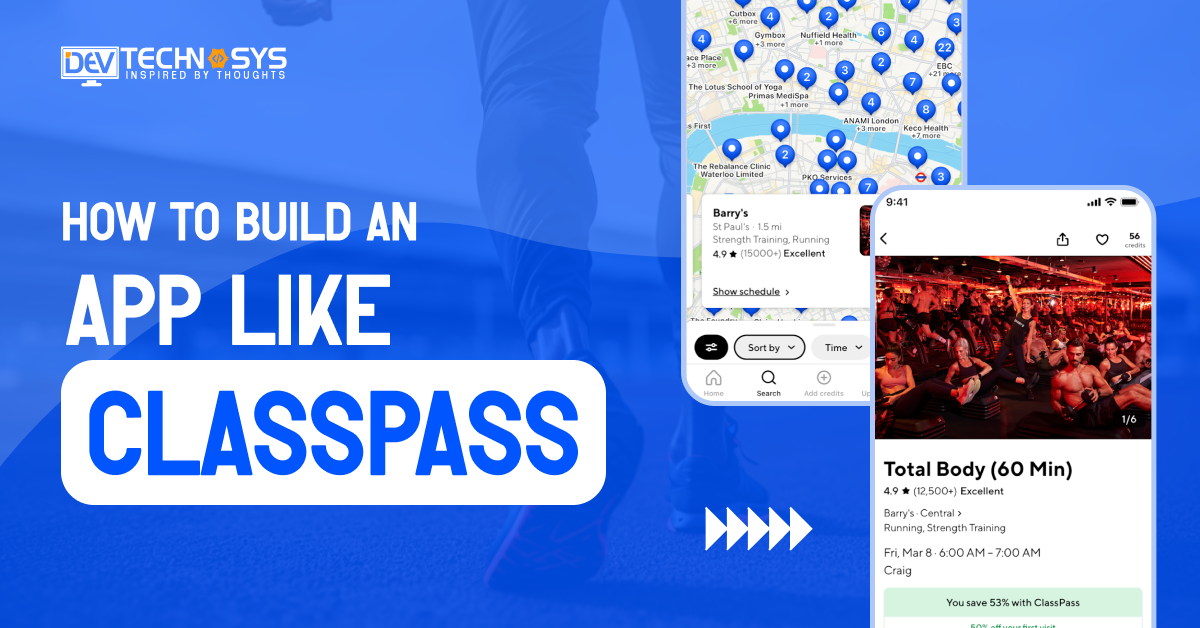
Building a fitness app like ClassPass isn’t just about booking gym sessions; it’s about creating a lifestyle platform people love to open every day. Imagine giving users access to yoga studios, gyms, spas, and wellness experiences, all in one sleek app. Sounds exciting, right?
With the booming digital fitness industry and rising demand for flexible memberships, top fitness apps UAE, such as ClassPass, have completely transformed how people stay active. Whether you’re a startup founder or a business looking to enter the health-tech space, this is your chance to tap into a fast-growing market.
In this guide, we’ll discuss how to build an app like Classpass and dissect every crucial factor and feature required to make a scalable ClassPass alternative app, from idea to launch, so that you can turn your vision into a thriving fitness platform. Let’s begin!
What is ClassPass?
ClassPass is a leading fitness app that provides access to a collection of top-rated workout classes, studios, gyms, and more. Try any fitness or workout class with one app. Founded in 2013, the company was acquired by Mindbody Inc in 2021. The health and fitness apps GCC lets you pay a monthly fee to receive a set number of credits, which you can use to book classes.
Credit costs vary by class time and popularity. Using a credit-based app system, members can book a variety of workouts, including yoga, HIIT, boxing, and pilates, without committing to one single gym.
Health and Fitness App Market Overview
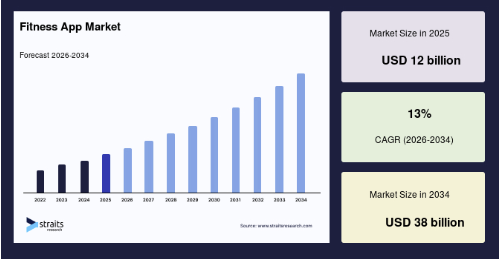
- The fitness apps market size was valued at USD 12 billion in 2025 and is projected to grow from USD 13.5 billion in 2026 to USD 38 billion by 2034, growing at a CAGR of 13% during the forecast period (2026–2034).
- North America dominated the market, accounting for 35.6% of the market share in 2025.
- Asia Pacific is expected to be the fastest-growing region in the market during the forecast period, with a CAGR of 19.5%.
- By type, the exercise & weight loss segment accounted for the largest share of 53% in 2025.
- By devices, the wearable devices segment is anticipated to register the fastest CAGR of 17.5% during the forecast period.
How Does an App Like ClassPass Work?
An app like ClassPass works on a subscription-based aggregator model, connecting users with a wide range of fitness and wellness providers through a single platform. Here’s how the fitness marketplace app operates:
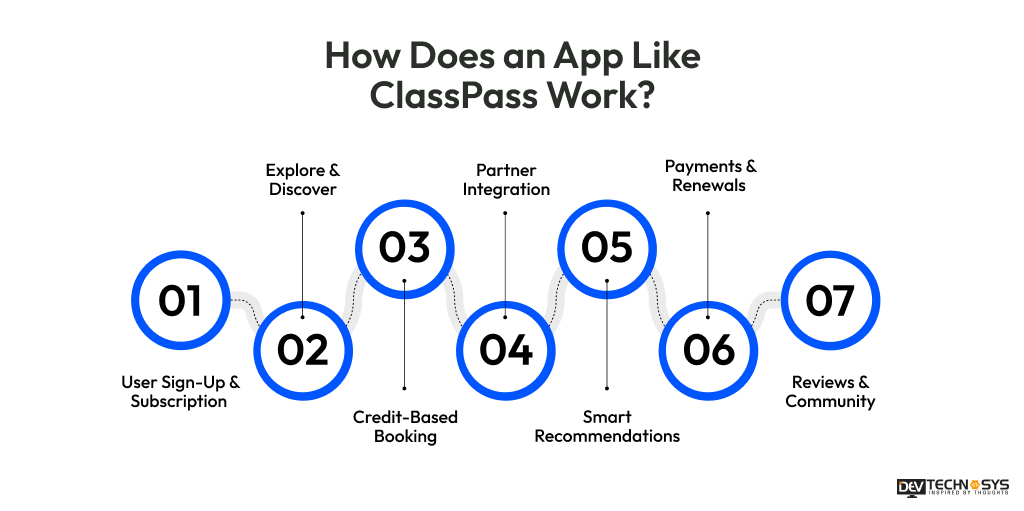
1. User Sign-Up & Subscription:
The fitness aggregator app lets users create an account and choose a monthly plan that provides a set number of credits. These credits act as in-app currency to book classes or services.
2. Explore & Discover:
A similar app like ClassPass allows users to browse nearby gyms, yoga studios, salons, and wellness centers based on location, preferences, ratings, and schedules.
3. Credit-Based Booking:
Each class or service has a credit value depending on demand, time, and popularity. Users can book sessions by spending their credits directly within the app.
4. Partner Integration:
Fitness studios and wellness businesses partner with the platform to list their services, manage schedules, and fill unused slots, helping them increase revenue and visibility.
5. Smart Recommendations:
The ClassPass clone app uses AI-driven algorithms to suggest classes and services based on user behavior, past bookings, and fitness goals.
6. Payments & Renewals:
Subscriptions renew monthly, and users can purchase extra credits if needed. Payments are handled securely through integrated payment gateways.
7. Reviews & Community:
The ClassPass clone app allows users to rate and review their experiences, helping others make informed decisions while building trust within the platform.
What are the Top 10 ClassPass Alternatives to Consider for Development in 2026?
As the fitness tech industry evolves, businesses are exploring diverse platforms beyond ClassPass to build innovative and scalable solutions. These ClassPass clone apps offer unique features and business models worth considering.
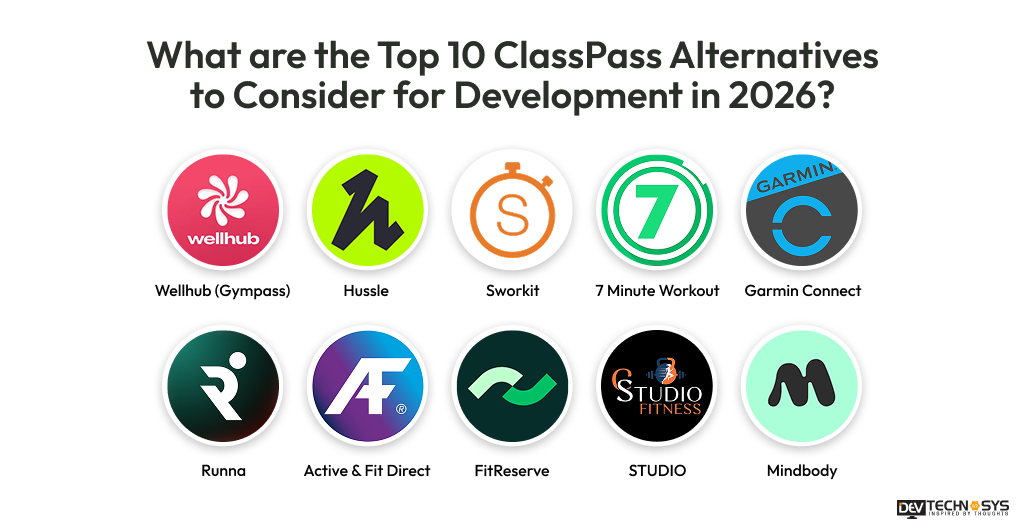
| App Name | Launch Year | Ratings (Avg) | Downloads | Platform Availability |
| Wellhub (Gympass) | 2012 | 4.5 | 1M+ | iOS, Android, Web |
| Hussle | 2011 | 4.4 | 500K+ | iOS, Android, Web |
| Sworkit | 2012 | 4.6 | 5M+ | iOS, Android |
| 7 Minute Workout | 2013 | 4.5 | 10M+ | iOS, Android |
| Garmin Connect | 2010 | 4.3 | 10M+ | iOS, Android, Web |
| Runna | 2021 | 4.7 | 1M+ | iOS, Android |
| Active & Fit Direct | 2018 | 4.2 | 500K+ | iOS, Android, Web |
| FitReserve | 2015 | 4.6 | 100K+ | iOS, Web |
| STUDIO | 2018 | 4.5 | 500K+ | iOS, Android |
| Mindbody | 2001 | 4.7 | 10M+ | iOS, Android, Web |
1. Wellhub (Gympass)
Wellhub is a corporate wellness platform that connects employees to gyms, studios, and fitness apps through employer-sponsored subscriptions. Key features include flexible plans, global partner networks, wellness tracking, and HR integrations. Hire top experts who provide fitness app development services to develop a similar app with enterprise dashboards, subscription billing, analytics, and partner onboarding systems.
2. Hussle
Hussle is a flexible fitness marketplace offering pay-as-you-go access to gyms, pools, and spas without long-term commitments. Features include location-based discovery, instant booking, and digital passes. Best for users wanting flexibility. Services span fitness centers and wellness venues. Develop a similar app focusing on geo-based search, dynamic pricing, seamless booking, and local vendor partnerships for scalability.
3. Sworkit
Sworkit is an on-demand fitness app that delivers customizable workout plans powered by AI-driven recommendations. Features include guided video workouts, progress tracking, and personalized routines. Best for home fitness users. It provides services like strength, cardio, yoga, and stretching. Build an app like Sworkit with AI personalization, subscription monetization, wearable sync, and engaging video content to boost retention.
Industry Insights: According to Ken Research, Sworkit operates on both the App Store (iOS) and Google Play, with performance tracked by analytics platforms, including downloads and revenue metrics.
4. Garmin Connect
Garmin Connect is a comprehensive fitness tracking platform integrated with Garmin wearables for real-time health monitoring. Features include GPS tracking, performance analytics, sleep insights, and activity logs. Best for athletes and enthusiasts. Services include detailed health metrics and coaching insights. Develop a similar app with IoT integration, real-time analytics, dashboards, and advanced health data visualization tools.
5. 7 Minute Workout
7 Minute Workout is a fitness app offering short, science-based high-intensity routines for quick daily exercise. Features include timers, guided instructions, and minimal equipment usage. Best for busy users. Services focus on micro-workouts and habit building. To develop health & fitness apps like 7 Minute Workout with gamification, streak tracking, reminders, and quick-session formats to maximize user engagement and consistency.
How to Build an App Like ClassPass From Scratch?
Building an app like ClassPass lets users access gyms, studios, and wellness services through a single platform. From planning features to launch, creating a seamless, scalable, and user-friendly fitness booking app requires a step-by-step development approach.
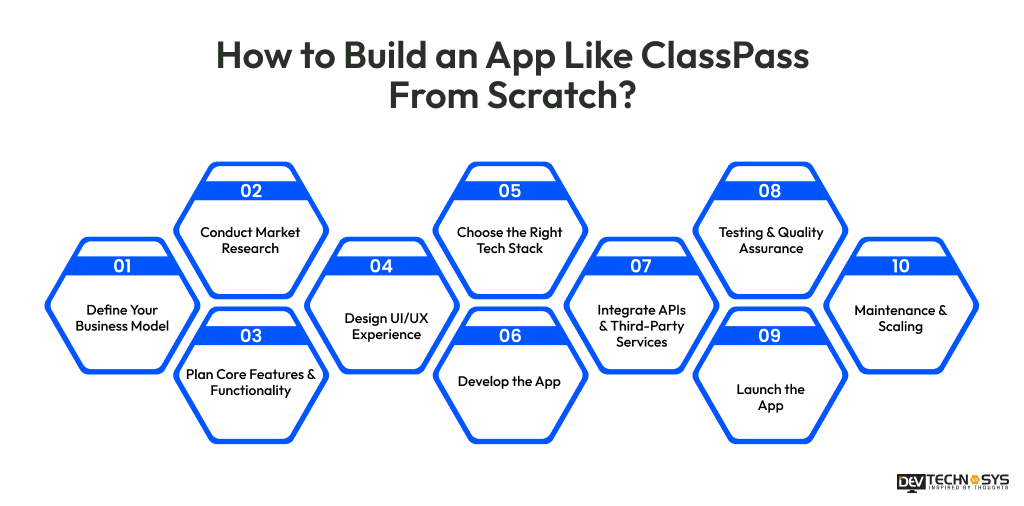
1. Define Your Business Model
Start by identifying your app’s core model: Credit system, hybrid, or subscription-based fitness app model. Decide whether you’ll target individuals or corporate users. Analyze competitors and define your unique value proposition. A clear monetization plan, including memberships, commissions, or partnerships, ensures long-term sustainability and helps position your app effectively in the market.
Industry Insights: According to Grand View Research, the global fitness app market is expanding rapidly, with revenue expected to exceed USD 13.9 billion in 2026 and grow at a ~13.4 % CAGR through 2033.
2. Conduct Market Research
If you want to develop a fitness and healthcare app like Garmin Connect, then conduct thorough research about your target audience, competitors, and industry trends to validate your idea. Study user preferences, pricing strategies, and feature gaps in existing apps.
Identify regional demands and niche opportunities. This step to build a fitness app like ClassPass helps refine your concept, minimize risks, and build a product that aligns with real user needs and current fitness market dynamics.
3. Plan Core Features & Functionality
Build an app like ClassPass by outlining essential features such as user profiles, class discovery, a booking system, payment integration, and reviews. Include advanced functionalities like AI-based recommendations, wearable integration, and real-time availability. To build an on-demand fitness app, you need to prioritize features using an MVP approach to launch faster while ensuring scalability for future updates and improvements based on user feedback.
4. Design UI/UX Experience
Fitness booking app development requires creating an intuitive and visually appealing interface that simplifies navigation and booking. Focus on seamless user journeys, minimal clicks, and responsive design across devices. Incorporate engaging visuals, clear CTAs, and personalized dashboards. A well-designed UI/UX enhances user satisfaction, increases retention, and ensures users consistently return to your platform.
5. Choose the Right Tech Stack
Choosing the right tech stack is essential for creating a robust fitness app development solution that is scalable, secure, and user-friendly. Use frameworks like React Native or Flutter for cross-platform development, Node.js or Django for backend, and cloud services like AWS or Google Cloud. Integrate secure APIs for payments and location tracking. A strong tech stack ensures smooth performance and future scalability.
| Layer | Technologies | Purpose |
| Mobile App | React Native, Flutter, Swift, Kotlin | Build cross-platform or native user interfaces |
| Web Dashboard | React.js, Angular | Admin and partner management panels |
| Backend | Node.js, Django | Manage APIs, business logic, and scalability |
| Database | PostgreSQL, MongoDB | Store user data, bookings, and transactions |
| Cloud | AWS, Google Cloud | Hosting, storage, and app scalability |
| APIs | Stripe, Google Maps, Firebase | Payments, location tracking, notifications |
| Security | OAuth 2.0, JWT, SSL | User authentication and data protection |
| DevOps | Docker, GitHub Actions | Deployment, CI/CD, and app maintenance |
6. Develop the App
Hire on-demand app developers and begin development by building frontend and backend components simultaneously. Implement features like booking systems, search filters, and payment gateways. Developers will use agile methodologies to ensure flexibility and faster iterations. Regularly test modules during development to identify bugs early and maintain code quality for a stable and reliable application.
7. Integrate APIs & Third-Party Services
Experts who offer mobile app development solutions add third-party services and APIs for payments, maps, notifications, and analytics to enhance functionalities. Use services like Stripe for transactions, Google Maps for location tracking, and Firebase for push notifications. These integrations improve user experience, streamline operations, and reduce development time by leveraging reliable third-party solutions.
8. Testing & Quality Assurance
Perform rigorous testing to ensure your app is bug-free, secure, and user-friendly before launch. Conduct functional, usability, performance, and security testing across multiple devices and platforms. Use Selenium, Appium, Postman, unit testing, automated testing, regression, and load testing. This phase helps detect issues early, ensuring a smooth experience similar to ClassPass while minimizing churn and improving reliability.
9. Launch the App
Deploy your app on major platforms like the App Store and Google Play with a well-planned release strategy. Focus on marketing campaigns, influencer partnerships, ASO optimization, and PR outreach to build awareness. Ensure your infrastructure can handle high user traffic and monitor performance post-launch. A strategic launch helps your ClassPass-like app gain traction, attract early adopters, and establish a strong market presence.
10. Maintenance & Scaling
After launch, experts who provide iOS app development services will continuously monitor performance, fix bugs, and roll out updates. Analyze user feedback and introduce new features accordingly. Scale infrastructure as your user base grows. Regular maintenance ensures long-term success, keeps users engaged, and helps your app stay competitive in the evolving fitness industry.
What Features Are Required For ClassPass App Development?
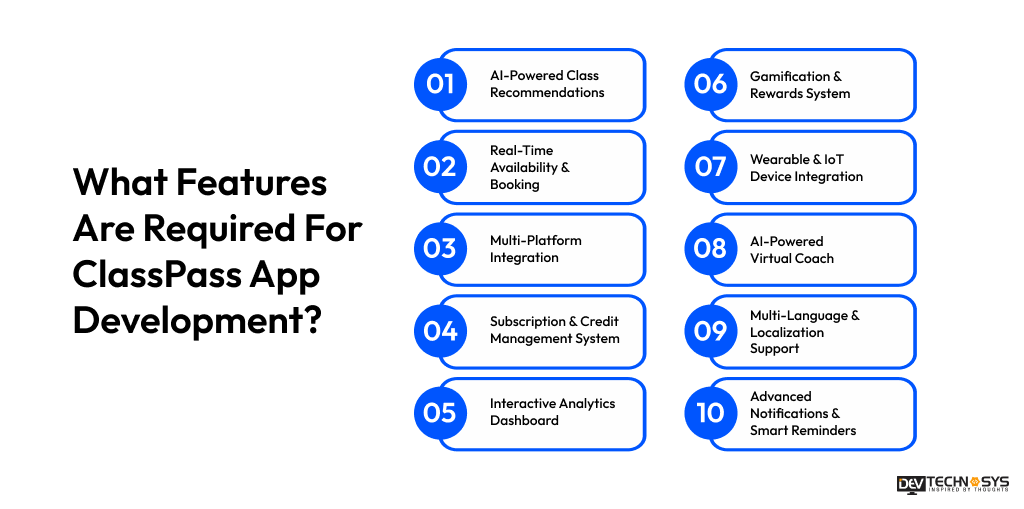
To develop a fitness app like ClassPass, you need a carefully planned set of features to ensure seamless booking, payments, and user engagement. Dividing functionality across user, provider, and admin panels helps create a scalable and efficient fitness platform.
| User Panel | Provider Panel | Admin Panel |
| User Registration & Login | Provider Registration & Profile | User & Provider Management |
| Class Discovery & Search | Class Management | Content & Promotion Management |
| Booking & Scheduling | Booking Management | Analytics & Reporting |
| Credit/Subscription Management | Payment & Revenue Tracking | Payment & Transaction Management |
| Payment Integration | Analytics Dashboard | Feedback & Support Management |
| Reviews & Ratings | Class Analytics & Reports | Notifications & Alerts |
| Notifications & Reminders | Schedule & Availability Management | User Activity Monitoring |
| Favorites & History | Promotions & Offers Management | Partner Studio Oversight |
1. AI-Powered Class Recommendations
Use machine learning to analyze user behavior, preferences, and past bookings, suggesting personalized classes or wellness services. If you build an AI-powered fitness app, it will help you enhance engagement, retention, and customer satisfaction while providing a tailored fitness experience for each user.
2. Real-Time Availability & Booking
Create a fitness app like ClassPass that shows live availability of classes and instantly confirms bookings. Users can see cancellations, open slots, and last-minute sessions, ensuring flexibility and minimizing overbooking for both users and partner studios.
3. Multi-Platform Integration
Sync mobile apps, web dashboards, and wearables for a seamless experience. Best fitness apps Saudi Arabia let users book classes, track progress, and receive notifications across devices, increasing convenience and overall platform engagement.
4. Subscription & Credit Management System
Implement dynamic subscription plans, credit-based payments, and flexible top-ups. Users can manage their plans, view balances, and purchase extra credits, enabling revenue optimization and better control over app monetization. This feature is crucial if you want to build a medical fitness app like DHA.
5. Interactive Analytics Dashboard
Provide both users and providers with detailed analytics, including class attendance, trends, revenue reports, and engagement stats. It helps studios optimize schedules while users track progress and preferences effectively.
6. Gamification & Rewards System
Gym class scheduling software incorporates points, badges, challenges, and referral rewards to encourage consistent usage. Gamification increases motivation, user engagement, and retention, making the fitness journey more interactive and fun.
7. Wearable & IoT Device Integration
Integrate with smartwatches and fitness trackers to monitor workouts, heart rate, calories, and steps. This allows personalized recommendations, performance tracking, and improved health insights within the app ecosystem.
8. AI-Powered Virtual Coach
Make an app like ClassPass that offers AI-driven guidance for workouts, yoga, or meditation sessions. The virtual coach can track form, provide feedback, and suggest improvements, making remote and on-demand fitness experiences more effective and personalized.
9. Multi-Language & Localization Support
Provide app interfaces, notifications, and content in multiple languages. Location-based recommendations, time zone adjustments, and regional offers enhance user accessibility and adoption across diverse markets.
10. Advanced Notifications & Smart Reminders
Send personalized push notifications, including FCM (Firebase Cloud Messaging), APNs (Apple Push Notification Service) for class availability, cancellations, promotions, and progress milestones. AI-driven reminders optimize attendance, engagement, and retention, ensuring users never miss important sessions or updates.
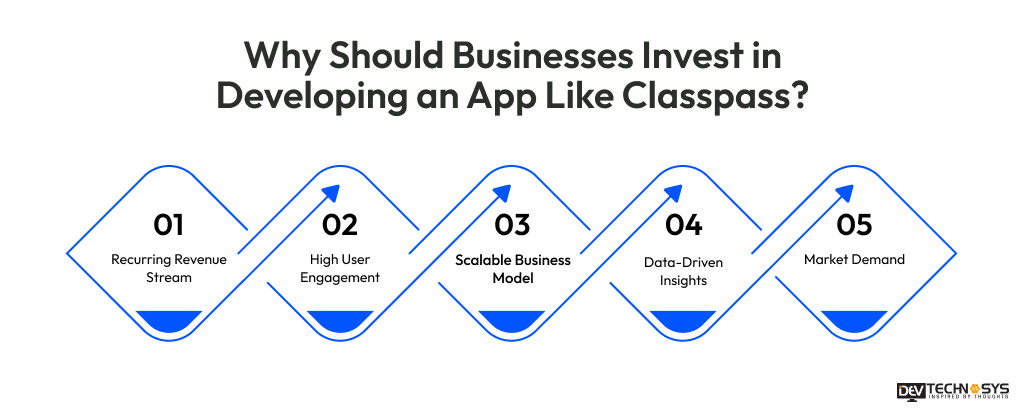
Why Should Businesses Invest in Developing an App Like ClassPass?
Investing in a ClassPass-like app allows businesses to tap into the booming digital fitness and wellness industry. With advanced features and flexible models, such apps boost revenue, engagement, and global reach.
1. Recurring Revenue Stream
Subscription-based or credit-based models provide predictable, recurring income, allowing businesses to maintain steady cash flow. Continuous membership renewals, upsells, and premium packages help scale revenue efficiently while reducing dependence on one-time transactions.
Industry Insights: PR Newswire states that ClassPass itself has become a major marketplace leader, filling underutilized class spots and generating incremental demand both for users and partners.
2. High User Engagement
Businesses should invest in Gym and studio app development because personalized recommendations, flexible booking options, and interactive features keep users consistently active. Engaged users are more likely to return, share the app, and participate in promotions, enhancing retention and overall platform loyalty.
3. Scalable Business Model
A ClassPass-like app can expand seamlessly across cities, studios, and wellness services. The digital platform reduces physical limitations, allowing businesses to grow geographically while managing multiple partners and service offerings from a centralized system.
4. Data-Driven Insights
A hybrid app development company must use data-driven insights to collect detailed analytics on user behavior, class attendance, and preferences. These insights enable data-backed decisions for marketing, service optimization, and personalized offerings, improving both user satisfaction and operational efficiency.
5. Market Demand
Growing awareness of health, fitness, and wellness creates a vast potential audience. The workout apps MENA region cater to diverse users, from gym-goers to home fitness enthusiasts, positioning the business to capitalize on the expanding digital fitness market.
What is the Cost to build an App Like ClassPass?
The cost to build an app like Classpass will be around $8,000 to $ 30,000. The fitness app development cost with basic features and functionalities will be around $8,000 to $15,000. An advanced app like ClassPass with geo-location services, QR code/barcode scanning, augmented reality (AR) workouts, video streaming integration, and API rate limiting will increase the ClassPass app development cost to $30,000+.
| App Type | Estimated Cost (USD) | Development Time |
| Basic Version | $8,000 – $12,000 | 2 to 3 months |
| Mid-Level Version | $12,000 – $20,000 | 3 to 5 months |
| Advanced Version | $20,000 – $30,000 | 5 to 7 months |
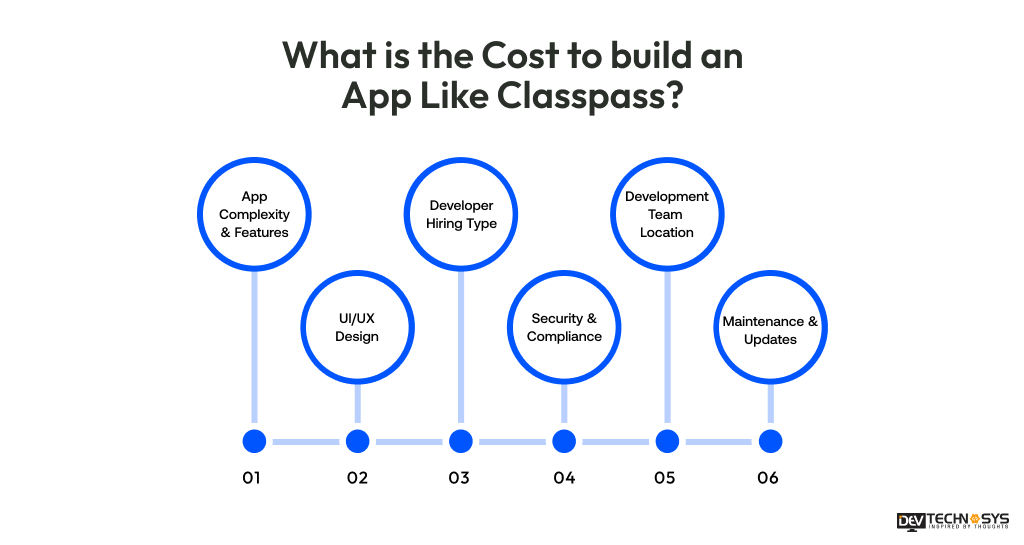
The main factors that can impact the cost to develop an app like ClassPass include features, design complexity, and platform choice. Understanding these elements helps businesses plan budgets effectively for fitness MVP app development and launch. Let’s take a closer look at the factors that impact the mobile app development cost.
1. App Complexity & Features
The number and sophistication of features, such as real-time booking, AI recommendations, gamification, and wearable integration, directly influence the cost to build an app like ClassPass. More complex features require additional backend logic, testing, and UI considerations, increasing both project duration and resource requirements.
| Feature Complexity | Estimated Cost (USD) |
| Basic Features | $1,000 – $2,000 |
| Medium Complexity | $2,500 – $4,000 |
| Advanced Features | $4,500 – $6,000 |
2. UI/UX Design
Custom, interactive, and responsive designs demand skilled designers and longer development time. A well-crafted user interface and seamless experience enhance engagement and retention, but intricate layouts, animations, and personalized elements raise design costs and overall cost to develop an app like ClassPass.
| Design Level | Estimated Cost (USD) |
| Basic UI | $4,000 – $5,500 |
| Medium UI/UX | $5,500 – $8,000 |
| Advanced UI/UX | $8,000 – $10,000 |
3. Developer Hiring Type
The type of development team you hire significantly affects the cost to develop an app like ClassPass. Freelancers are cost-effective but may require more management; in-house teams offer control and quality at higher costs, and offshore or nearshore teams balance cost savings with collaboration efficiency. Choosing the right hiring model depends on your ClassPass app development cost, project complexity, timeline, and desired level of oversight.
| Hiring Type | Estimated Cost (USD) |
| Freelancers | $2,000 – $3,500 |
| Offshore/Nearshore Team | $3,500 – $6,000 |
| In-House Team | $6,500 – $9,000 |
4. Security & Compliance
Security and compliance are crucial factors that influence the cost to make an app like ClassPass. Implementing strong authentication, encryption, GDPR, and PCI compliance ensures user data protection and legal adherence. Security measures require additional development effort, testing, and monitoring, making it a vital yet cost-intensive component of the app.
| Security Level | Estimated Cost (USD) |
| Basic Security | $1,500 – $2,500 |
| Medium Security | $2,500 – $3,500 |
| Advanced Security | $3,500 – $5,000 |
5. Development Team Location
The location of your development team significantly affects the overall cost to create an app like ClassPass. Offshore or nearshore developers often charge lower rates, while local or in-house teams cost more but provide closer collaboration, faster communication, and potentially higher-quality output.
| Location | Hourly Rate (USD) |
| North America | $50 – $90+ |
| Western Europe | $40 – $80 |
| Eastern Europe | $30 – $70 |
6. Maintenance & Updates
Post-launch costs include bug fixes, server monitoring, security patches, and feature upgrades. Regular maintenance is essential to keep the app functional, secure, and competitive. The cost to maintain an app will be higher for complex apps with multiple integrations or real-time features.
| Maintenance Type | Estimated Cost (USD) |
| Basic | $500 – $800 |
| Medium | $800 – $1,200 |
| Advanced | $1,200 – $1,800 |
What are the Monetization Strategies For Apps Like ClassPass?
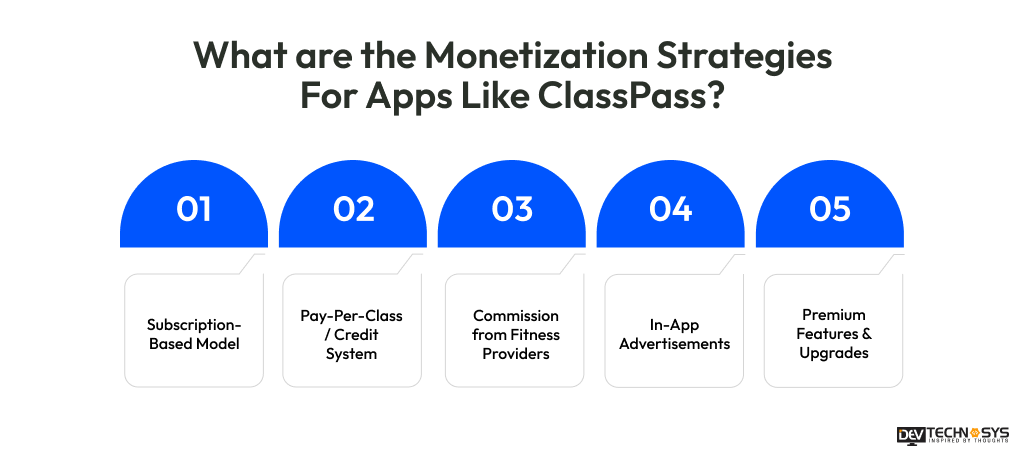
Monetizing a ClassPass-like app is crucial for sustaining growth and generating revenue. By combining subscription models, pay-per-class options, partnerships, and premium features, businesses can create multiple income streams while enhancing user engagement and loyalty.
1. Subscription-Based Model
Android app development providers use this model to offer users monthly or annual subscription plans, granting access to a certain number of classes or credits. This generates predictable, recurring revenue while encouraging user loyalty. Flexible plans, tiered pricing, and premium memberships enhance retention and appeal to a wide range of fitness enthusiasts.
2. Pay-Per-Class / Credit System
Fitness apps Middle East allow users to purchase credits or pay per class instead of committing to a subscription. ClassPass alternatives provide flexibility for casual users and attract those hesitant about long-term plans. Businesses can also offer package bundles to increase upfront revenue and incentivize more bookings.
3. Commission from Fitness Providers
Charge gyms, studios, or trainers a percentage of each booking made through the platform. This incentivizes providers to join while creating a sustainable revenue stream for the app, particularly if it aggregates multiple studios and drives high user engagement.
4. In-App Advertisements
Display ads from relevant brands such as fitness equipment, supplements, or wellness services. Ad placement within free app tiers or between class searches generates additional revenue, though it should be balanced to avoid disrupting the user experience.
5. Premium Features & Upgrades
Offer exclusive features like AI-based coaching, personalized workout plans, priority booking, or early access to special classes. Users pay extra for advanced functionality, enhancing revenue while providing value-added services that differentiate the app from competitors.
What are the Challenges & Solutions in Building a Fitness App like ClassPass?
Building a fitness app like ClassPass comes with unique challenges that can affect user experience, security, and scalability. Addressing these issues with practical solutions ensures smooth operation, higher user retention, and long-term success in a competitive market.
| Challenges | Solutions |
| Managing Provider and User Onboarding | Use social logins, automated verification, and step-by-step tutorials for smooth onboarding and quick adoption. |
| Ensuring App Security and Data Privacy | Implement encryption, secure authentication, GDPR/PCI compliance, and regular security audits. |
| Handling High Traffic and Scaling Challenges | Leverage cloud infrastructure, auto-scaling servers, load balancing, and caching to maintain performance. |
| Retaining Users in a Competitive Market | Boost engagement with personalized recommendations, gamification, push notifications, and loyalty rewards. |
| Integration with Multiple Payment Gateways | Use reliable payment providers, support multiple currencies, wallets, and recurring subscriptions. |
| Providing Real-Time Updates and Notifications | Enable push notifications, in-app alerts, and calendar sync for instant user updates. |
| Maintaining App Performance Across Devices | Optimize for different screen sizes, OS versions, and devices, and use performance monitoring to avoid crashes. |
Final Thoughts
Building an app like ClassPass requires careful planning, from market research and feature selection to UI/UX design, tech stack choice, and monetization strategies. Prioritizing user experience, robust security, and scalable architecture ensures the long-term success of your mobile fitness apps UAE & KSA.
If you are a business looking for a top mobile app development company in Middle East, then contact Dev Technosys. With our 800+ skilled developers, we create fitness apps that attract users, retain them, and generate sustainable revenue in the competitive wellness market.
FAQs
Q1. How Much Does It Cost To Build An App Like Classpass?
The cost to develop a ClassPass-like app ranges from $8,000 to $30,000, depending on feature complexity, UI/UX design, developer location, platform choice, and post-launch maintenance requirements. Advanced features and integrations increase the total cost to create an app like ClassPass.
Q2. How Long Does It Take To Develop A Classpass-Like App?
Developing an app like ClassPass typically takes 4 to 6 months. This includes planning, designing user-friendly interfaces, backend development, API integration, testing, and deployment. Complex features, multiple platforms, or third-party integrations can further extend the timeline.
Q3. Which Features Are Must-Haves For A Fitness App Like Classpass?
Essential features include class search, booking and scheduling, provider management, payment integration, subscriptions, reviews and ratings, push notifications, and AI-based personalized recommendations. Advanced tools like wearable integration and gamification further enhance engagement.
Q4. How Can A Classpass-Like App Generate Revenue?
Revenue streams include subscription plans, pay-per-class options, provider commissions, in-app advertisements, premium features, affiliate marketing partnerships, event bookings, and merchandise sales, creating multiple income channels while providing value to both users and providers.
Q5. What Tech Stack Is Suitable For Building A Classpass-Like App?
Choosing the right tech stack is crucial for building a scalable, secure, and feature-rich ClassPass-like fitness app. Here are the technologies experts use to build an app like Classpass:
- Frontend: Flutter, React Native, Swift, Kotlin.
- Backend: Node.js, Django, Ruby on Rails
- Database: PostgreSQL, MongoDB, Firebase
- Cloud: AWS, Google Cloud
- Payment Gateways: Stripe, PayPal, Razorpay
- APIs & Integrations: Maps, notifications, calendar sync, wearables
- AI/ML Modules: Personalized recommendations and analytics to boost engagement.
Q6. How Can I Retain Users In A Competitive Fitness App Market?
Retention requires personalized recommendations, gamification, loyalty programs, push notifications, and in-app challenges. Regular updates, new features, and feedback-based improvements maintain user engagement, reduce churn, and strengthen long-term loyalty.