





Physical fitness is not only one of the most important keys to a healthy body, it is the basis of dynamic and creative intellectual activity.
John F. Kennedy
Are you ready to take your fitness journey to the next level? Look no further! In our ultimate guide to fitness app development, we’ll unveil the secrets behind creating a top-notch fitness app that will revolutionize the way you track, manage, and achieve your health goals.
From workout tracking to personalized nutrition plans, and gamified challenges to social engagement, we’ll walk you through every step of the development process. Discover the essential features that will keep users hooked, learn how to monetize your app effectively, and ensure the utmost security for user data.
So, whether you’re a fitness enthusiast or an aspiring app developer, join us on this exhilarating journey and unlock the key to building a fitness app that will inspire, motivate, and transform lives!
What is a Fitness App?
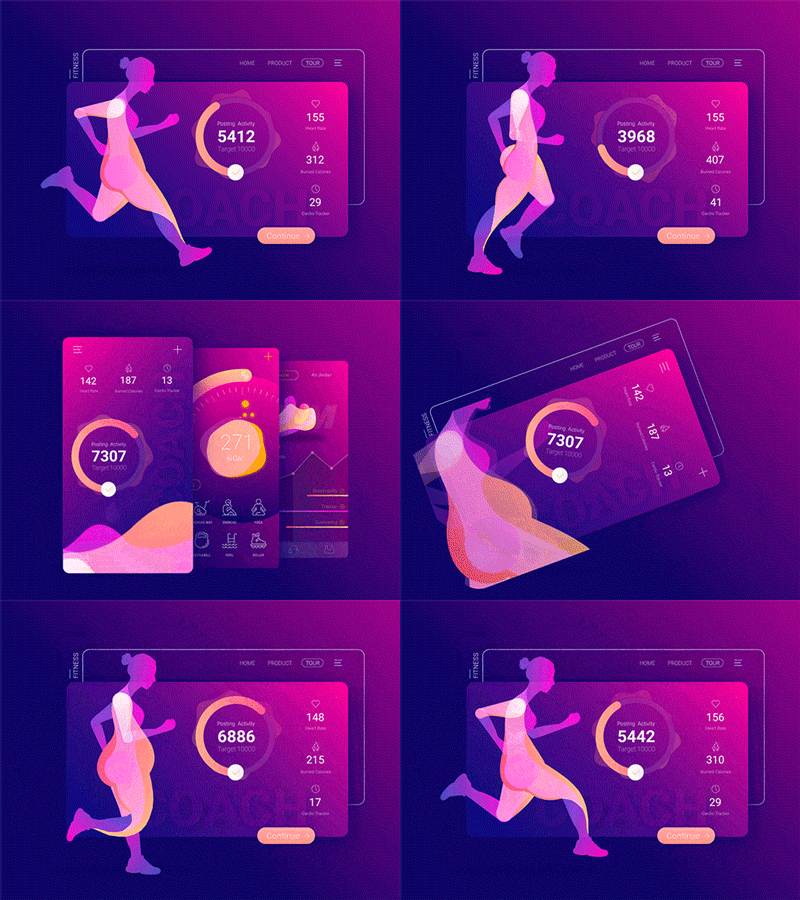
Fitness apps are mobile applications that help individuals track, monitor, and improve their overall fitness and well-being. These apps offer a range of features and functionality to help users reach their fitness goals regardless of their level or preferred activities.
Fitness apps usually offer features like exercise tracking. Users can record their workouts and note the intensity, duration, and type. Fitness applications may provide training schedules and advice catered to particular objectives like muscle building or weight loss. GPS-based apps can track outdoor activities such as running or cycling and provide data on speed, distance, and route.
In addition to exercise tracking, fitness apps often include features for monitoring nutrition, allowing users to log their meals, count calories, and track macronutrients. Additionally, many applications have social capabilities that let users connect with friends, join communities, and share their development and accomplishments. So now is the correct time to connect with a professional firm to get robust on-demand app development solutions for fitness apps.
Why Should Businesses Invest in Fitness App Development?
As you already know there is a huge demand for on-demand fitness app development UAE, so this section describes the facts and stats that can assist you know the reasons to invest in healthcare mobile apps.
- MyFitnessPal, the top fitness and sports mobile app in March 2023, generated revenues from within-app of nearly 12 million U.S. Dollars. Strava was ranked second with combined revenues of approximately 7.31 million U.S. Dollars via Google Play Store and Apple AppStore.
- Revenue from the Fitness Apps category is anticipated to reach US$19.33 billion by 2023.
- Fitness market apps will reach USD 1.3 billion in 2022. The CAGR between 2023-2030 will be 17.6%.
- The user penetration rate is anticipated to be 9.76% in 2023 and to increase to 12.21% in 2027.
- The predicted amount, or average revenue per user (ARPU), is pegged at $25.78 USD.
- China will generate the largest revenue (US$5,457.00m) in global comparison.
- In the United States, 68.7 million smartphone users used a health or fitness app at least once a month.
How Does Fitness App Work?
Fitness apps work by using a combination of user input, data tracking, and analytics in order to monitor and improve physical fitness. In order to begin, the user must create a profile in the app. This includes entering information like age, weight, height, and fitness goals. The app creates customized workout plans and nutrition recommendations based on these data.
After creating a profile, users can begin logging daily activities such as exercises, steps taken, and calories consumed. Many fitness apps are integrated with wearables or smartphone sensors that automatically track activities such as running, cycling, or walking. The data is processed in the app and then displayed, allowing the user to see their progress over time.
Fitness apps also provide videos and tutorials on how to perform exercises, as well as guidance on proper technique and form. Users can also be motivated by features such as community forums, achievements, and challenges.
Fitness apps analyze data and provide personalized recommendations using algorithms and machine learning. These algorithms take into account factors such as the user’s fitness level, goals, and previous data in order to offer suggestions for workouts, change calorie intake and improve.
What Are the Types Of Fitness Apps?
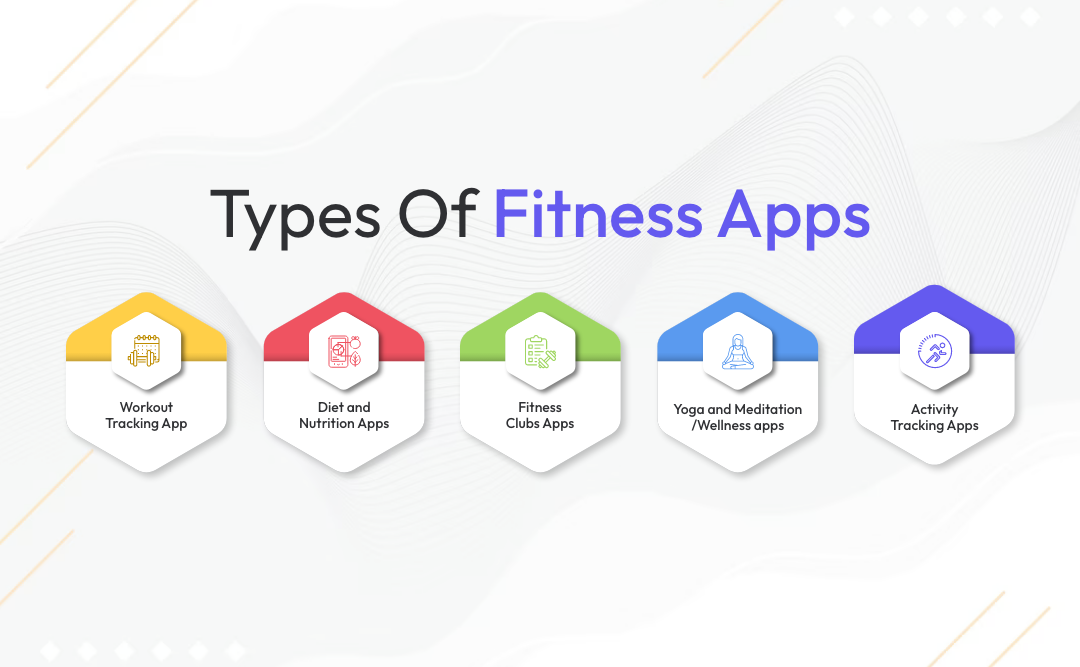
There are various types of fitness apps that you must take into consideration. So let’s have a look:
1. Workout Tracking App
These apps help users track their workouts by tracking the intensity, type, and duration of exercise. These apps can also provide tips on healthy eating, workout plans, and more. To keep users on track and motivated.
2. Diet and Nutrition Apps
People who desire to change their eating habits can create this app. You can help people manage their weight by offering professional nutrition advice. Include a visual diet chart with calorie and progress tracking, as well as cooking recipes.
3. Fitness Clubs Apps
These apps are usually equipped with interactive features and convenient tools for scheduling. This helps to increase user engagement. These apps have tools for tracking progress and integrate with popular payment gateways. Add the LIVE video stream feature to the app and give users access to their statistics.
4. Yoga and Meditation/Wellness apps
These apps are designed by experts to teach you mindfulness, relaxation, and flexibility exercises. It helps improve mental and physical health. These apps are a great resource for all users, offering guided yoga sessions, breathing exercises, and meditations. Even their exercise routine can be customized to ensure consistency.
5. Activity Tracking Apps
These apps allow users to monitor their daily fitness and wellness routines. These apps use smartphone sensors and wearables to collect data from activities such as walking, cycling, or running. These fitness apps provide valuable information such as distance covered, calories burnt, and progress charts that encourage users to adopt healthier habits.
Examples of Popular Fitness Apps
We have researched thoroughly and compiled a list of popular mobile fitness applications that are ruling the market and have gained immense popularity.
| Fitness Apps | Available Platform | Ratings | Downloads |
| FitOn | Android | iOS | 4.7 | 5M+ |
| Burn.Fit | Android | iOS | 4.6 | 100K+ |
| MyFitnessPal | Android | iOS | 4.1 | 100M+ |
| Fitplan | Android | iOS | 4.1 | 1M+ |
| Seven | Android | iOS | 4.5 | 5M+ |
1. FitOn

Fitcon suggests the best variety of workout sessions like, cardio,high-intensity interval training (HIIT), strength training, barre, pilates, yoga, and even dance classes. This application offers workouts that are also done by celebrities. The app is free. There is also a $29.99 annual premium version that includes 500 recipes, workout sessions in real-time, and diet planning charts.
2. Burn.Fit

Burn-Fit is an app that tracks progress and shows the results of the workouts to the user. This app will keep track of data such as volume, goals, and weight. It will also compare your targets regularly. The progress will be displayed in graphs to help you analyze and check your current body condition. You will pay $4.99 per month or $40.99 annually.
3. MyFitnessPal

The application provides the necessary information to maintain a healthy diet. Nearly 14 million food items are suggested, with fitness messages built in to keep you motivated. This fitness tracker app development Iraq allows users to scan barcodes to receive nutritional information, and meal suggestions based on their goals.
4. Fitplan

Users can create their own workout plans with personal trainers’ recommendations. The application will also provide a number of healthy recipes and suggest those that are best suited to the customer’s preferences and needs. FitPlan allows users to work out in their own comfort zone and lose weight. The cost is $15.99 per month and $83.99 for the year.
5. Seven

Seven is a fantastic application for aerobic training programs, according to the Health and Fitness Journal of the American College of Sports Medicine. The intense 7-minute workout will be highly effective. The user will receive audio and video demonstrations of the session to follow progress. So if you are interested in building an app like Seven for your fitness business, then you must consult with a fitness mobile app development company UAE.
Must-Have Features For Health and Fitness App Development
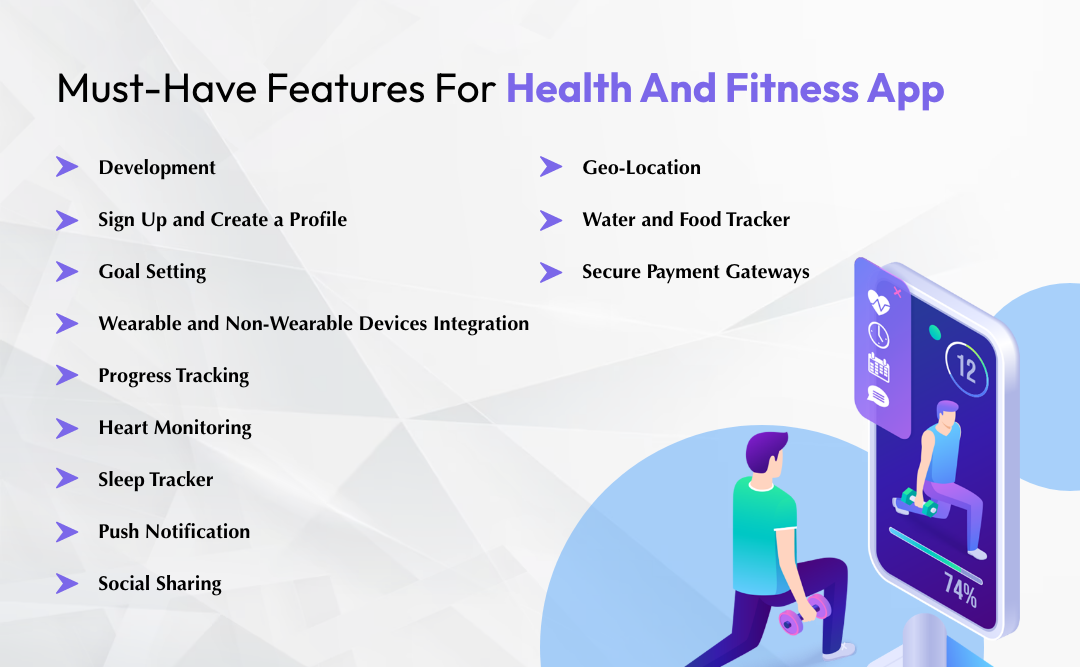
You’ve read the information above and now you want to know which features you must add to your application. Keep an eye out for important demonstrations and take assistance from a custom fitness app development agency UAE for better results.
1. Sign Up and Create a Profile
Signing in is required for users. Users can create an account by using their social media handles or phone numbers. Remember to create a profile after signing in for a personalized experience. Give all the required data such as gender, height and weight, age, allergies, health issues, and other conditions.
2. Goal Setting
Create your app so that you can set goals and create tailored diet and exercise plans. The goal can be based on workout sessions, steps taken, calories, sleep hours, weight gain or loss, and a number of steps. Gamification allows customers to practice achieving their goals.
3. Wearable and Non-Wearable Devices Integration
Untold numbers of people use wearable gadgets. These gadgets help track and improve sporting activities to better your health. You can easily sync your applications with fitness bands that come in many variations.
4. Progress Tracking
The user can track his progress on the dashboard of the fitness app. The app helps users understand which areas need more work, what needs to be done, and what can be left. Additionally, it teaches students how to maintain their health and weight. So you can hire dedicated developers who can integrate this feature into your fitness app.
5. Heart Monitoring
Wearable devices have optical and electrical heart sensors that can measure heart rates anywhere and anytime. Wearables send data to your mobile application, and both are synced. The application will take proactive measures if something triggers or becomes alarming.

6. Sleep Tracker
This feature will allow the trackers to note when you’re awake when your sleep is light, and when you’re in deep sleep. This feature is essential for today’s busy people who are always on the go.
7. Push Notification
An essential component of an app is push notifications. When push notifications are properly managed in an app, they will improve user engagement and increase the time spent on the app. Users can use the feature to remind them when they should drink water, burn more calories, work out, or invest time in exercise.
8. Social Sharing
Social media is the rage now. It is best to integrate your app into social media. Social media is a great way to share and communicate achievements. Social media platforms may be used for sharing your accomplishments or for chatting with your online buddies.
9. Geo-Location
Geo-location is an option that allows you to add the app and it will track the distance covered and suggest routes. The app syncs with wearables as well as non-wearables in order to track and find routes. Routes will be suggested by the integrated Google Maps and local maps.
10. Water and Food Tracker
The app will track regular food and water intake. Users will be reminded to stay hydrated and drink water during the day by a push notification. It also allows tracking of food intake. It will also create a diet plan and track workouts for fitness.
11. Secure Payment Gateways
Include the paid version, and offer it via different payment gateways, such as debit/credit cards or eWallets, UPI, etc. Payment gateways should be secured so that customers can rely on your application.
Tech Stack Required For Fitness App Development
In this section, we will discuss the crucial advanced technologies stack for developing a fitness app Kuwait for your business. So let’s have a glance at the below table:
| Component | Technology Stack |
| Front-end | Swift, Java, Flutter, and React Native |
| Back-end | Node.js and Ruby on Rails are both Django |
| The Database | MySQL, PostgreSQL, MongoDB |
| API Integration | RESTful APIs are available for Google Fit and Apple HealthKit. |
| Cloud Storage | Amazon S3, Google Cloud Storage |
| Push Notifications | Apple Push Notification Service, Firebase Cloud Messaging |
| Payment Gateway | Braintree, Stripe and PayPal |
| Authentication | JWT (JSON Web Tokens), OAuth 2.0 |
Fitness App Development: The Crucial Steps
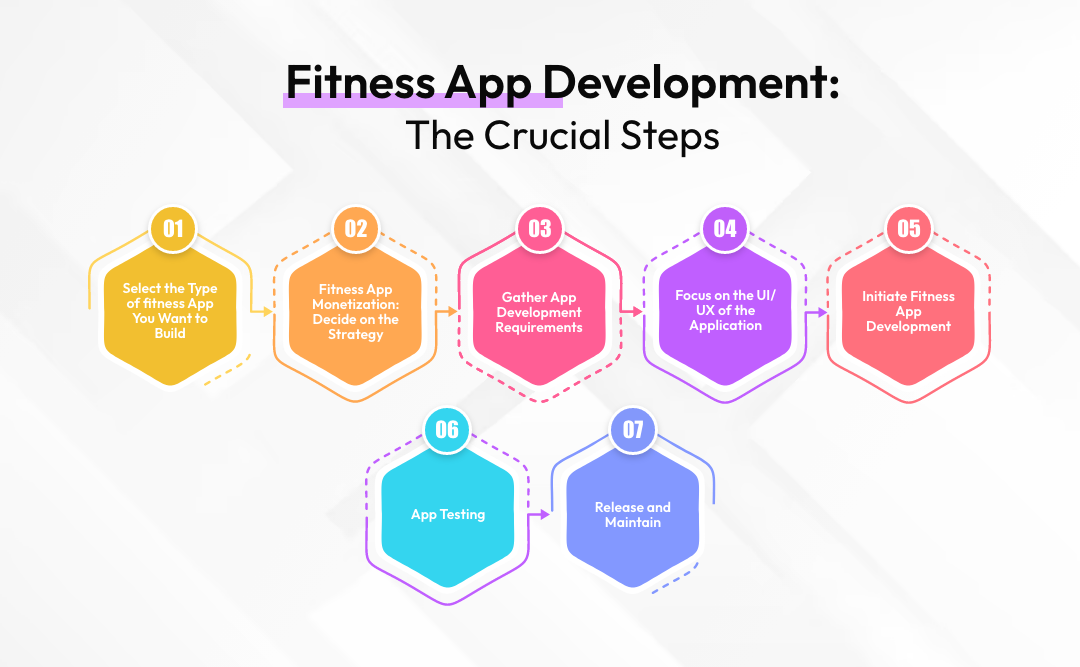
If you’re considering creating a fitness app, you must partner with a reliable React native app development company to bring your vision to life.
1. Select the Type of fitness App You Want to Build
It is important to first identify the type of fitness app that you would like to create to appeal to your target market. Start by categorizing the idea for your fitness app and then choose a fitness app type that will make you stand out from the competition. Check out the top health apps on the market before you decide on the type of app. You can determine the monetization plan for your fitness app if you already have decided what type of app to create.
2. Fitness App Monetization: Decide on the Strategy
You, like every other entrepreneur, must be looking to generate passive income with your fitness app. You may also be wondering how apps that are free make money. Here are some monetization methods you may want to consider.
- Subscription: This monetization method requires a user to pay a fee monthly or annually to unlock premium features in your fitness app. These apps are paid apps.
- In-App Purchases: This strategy allows you to offer premium features to your users that they must purchase in order to access.
- Advertisements: They can be integrated into your free fitness apps to generate income. Make sure the advertisements you employ are pertinent to your application. App users may abandon your app if it is not updated.
3. Gather App Development Requirements
You will need to define all of your business requirements at this stage in order to build an app that functions as you had intended.
Also, gathering the requirements will ensure the fitness app team understands and can deliver the desired outcome of the project. As you are doing this, make sure that you have a strong iOS or android app development team.
Imagine it’s difficult to define your app requirements. You can then involve your team in the process or conduct a survey to find out what features and functions your audience wants.
4. Focus on the UI/UX of the Application
Your app designers will now create user flows that define the best ways to allow your app users interact with your app. The goal here is to create a navigational and simple design for your audience, so there’s no confusion. For additional information on appropriate app design procedures, consult this manual. This stage includes creating wireframes and mockups for the final design of the app.
A prototype can also help you to identify potential issues or opportunities in the functionality of your app. An interactive version of your fitness software serves as a prototype. To learn more about these designs, consult the iOS Design Patterns Guide.
The low-fidelity design is the first step in creating a prototype. You can then test the prototype and refine it to get a better understanding of the overall design.

5. Initiate Fitness App Development
The fitness app developers will create your app during this phase. It is important to identify the best tech stack before building an app. Here are some you need to follow:
Choose the Right Tech Stack
Once the prototype is complete, you must decide on the best technology stack for your fitness application. You can also hire mobile app developers to work on your project and talk about the requirements. Why is it so important to select the right tech stack? The fitness app development cost Yemen will be affected by the tech stack you choose. The benefits and limitations of a tech stack are numerous
Front-end Development of Fitness Applications
Front-end The portion of an application that users view and interact with is created by developers. Also, the Front-end development is usually done using JavaScript, HTML and CSS, React Native, or Angular.
Back-end Development of the Fitness Tracker App
The fitness mobile app developers UAE do the backend programming to define the functionality of fitness apps. This includes several phases such as:
- Integrating basic features
- User account authentication
- Account Management
- Integration with Third-Party Websites
- Customization of UX in fitness apps
- Test the functionality of fitness apps
6. App Testing
The quality analyst team will test your app to ensure it is free of bugs and runs smoothly on all platforms, including mobile devices. The QA team will also test the app’s functionality through functional and non-functional tests.
It could take a long time to complete this process. This is the stage that will determine the success of your application. Investing extra time into app testing is therefore essential. It is vital to know that your app will get rejected from the app store if it is not properly tested. If you plan to upload an Android application, make sure to know how to publish it on Google Play Store.
7. Release and Maintain
The app is now prepared for release in the mobile app stores. Right now is a good moment to unwind and sit back. No, not as long as we want to grow our product. We will require:
Check the usage of your application using a mobile analytics tool built-in (like Google Analytics, Flurry, or other similar tools). Monitor user feedback and app reviews (via email, or the built-in feedback tool). When you add new features and modify old ones in response to customer input, the solution will get update. The quest will never end as the audience grows and the fitness tracker continues to evolve.
How Much Does it Cost to Develop a Fitness App?
The cost to develop a fitness app Oman MVP (minimal-viable product) for a basic app is between $8,000 and $15,000. However, the app development costs for a fitness app with full features may range from $15,000 to $25,000, depending on the following:
- AI/ML (e.g. to recognize the user’s movements during exercise)
- Support BLE and other hardware connectivity
- Include voice integration, video streaming, and more.
Please be aware that if you wish to support Apple Watch, Apple TV, and iPads, and provide clients with an online training experience on desktops, you will need to build fitness app UAE and make extra investments.
Final Thoughts
A fitness app is a great way to tap into an expanding market. To ascertain customer demands and set your app apart from competing products, it is still crucial to perform rigorous research.
The success of any fitness app depends on its user experience and value. So if you want to have a hybrid app, then consult with a hybrid app development services provider, which includes consultations to determine how best to create a fitness application that is both user-friendly and incorporates the latest technology.
FAQ
How Long Does it Usually Take to Build Fitness Apps?
It may take 600-700 hours of developing a fitness app, while a complex and more involved fitness app could take four to six months. So it would be better to consult with a fitness app development services provider who can give an exact time estimation.
How Can Healthcare Software Generate Revenue?
So when you build healthcare software for your business, then you may know how it can make money using a variety of strategies. Subscriptions, in-app purchases, marketing partnerships, sponsorships, affiliate programs, and data monetization are a few of them. A balance must be struck between revenue generation and user experience for successful monetization.
Can I Integrate APIs or Services From Third Parties Into My Fitness App?
Integrating third-party services and APIs is common in the development of fitness apps. APIs can be used for a variety of functionalities, including mapping and location services. Payment gateways, wearable devices integration, nutrition databases and social media sharing are also possible. Fitbit, Google Fit and Apple HealthKit are popular fitness APIs, as well as nutrition databases such USDA FoodData Central.
How Can I Secure MyFitnessPal User Data?
Consider implementing these security measures to protect your user’s data:
- Use two-factor authentication or other secure authentication methods.
- Secure sensitive information about users during transmission as well as storage.
- Conform to relevant data protection laws, such as GDPR and HIPAA.
- Update and patch your security vulnerabilities regularly.
- Implement access control and user permissions.
- Regularly audit and test your security.