





Simple apps: 2 to 3 months Medium complexity apps: 3 to 6 months Complex apps: 6+ months
Proper planning and clear requirements can help reduce delays." } }, { "@type": "Question", "name": "What Factors Increase iOS App Development Cost?", "acceptedAnswer": { "@type": "Answer", "text": "Several factors can raise the total iOS app development budget:
Advanced features like real-time chat or AI Custom UI/UX design Backend infrastructure Third-party integrations Ongoing maintenance and updates
Complexity and scalability needs play a major role." } }, { "@type": "Question", "name": "Do I Need Ongoing Maintenance After Launch?", "acceptedAnswer": { "@type": "Answer", "text": "Yes, regular maintenance of iOS apps is essential after launch. Updates ensure compatibility with new iOS versions and compliance with Apple App Store guidelines. Maintenance typically costs 15-20% of the initial development cost annually." } }, { "@type": "Question", "name": "Can I Reduce iOS App Development Costs?", "acceptedAnswer": { "@type": "Answer", "text": "Yes, it is possible to reduce the custom iOS app development costs by starting with an MVP, clearly defining requirements, using pre-built tools, and choosing a cost-effective development team. Avoiding unnecessary features in the initial phase also helps control the budget and minimizes financial risk." } } ] }
Key takeaways:
-
- iOS apps typically cost between $8,000 and $25,000 for basic to complex projects.
- Advanced apps with custom integrations, real-time features, or AI capabilities can exceed this range by a significant margin.
- Custom UI/UX design, animations, and branding elements raise costs. A clean, standard interface reduces design hours and speeds up development.
- Ongoing updates are required to stay compliant with the Apple App Store and evolving versions of iOS. Maintenance typically costs 15–20% of the initial development cost annually.
Thinking about launching an iOS app but unsure how much it will cost? You’re not alone. With millions of apps competing on the iOS ecosystem and billions of downloads from the Apple App Store every year, building an iPhone app is a smart move, but only if you plan your budget wisely.
From sleek UI/UX design and advanced features to backend infrastructure and ongoing maintenance, the iOS app development cost in UAE can vary widely. The key is understanding what drives the pricing before you start.
In this guide, we’ll provide a complete cost breakdown of iOS app development. From must-have features to factors that impact your final investment, we cover everything. Read the blog till the end to know the iOS application development cost estimate; it will help you build smarter, launch faster, and maximize your ROI.
How Much Does it Cost to Build an iOS App in Middle East?
The cost to build an iOS app typically ranges from $8,000 to $15,000 for basic apps. It includes standard features and functionalities with no customizations. For moderately complex apps, the iOS mobile app development cost will be around $15,000 to $20,000.
However, if you are considering building an advanced app with AI integration, machine learning (Core ML), augmented reality (ARKit), and advanced data security, then expect the cost to develop an iOS app to be around $25,000 or even higher.
| App Type | Estimated Cost (USD) |
| Basic iOS App | $8,000 – $15,000 |
| Moderate iOS App | $15,000 – $20,000 |
| Enhanced iOS App | $20,000 – $25,000 |
What Factors Impact the Cost to Build an iOS App?
Building an iOS app involves multiple technical and strategic decisions that directly affect the overall budget. From feature complexity to design requirements and backend infrastructure, several key factors determine the final development cost.
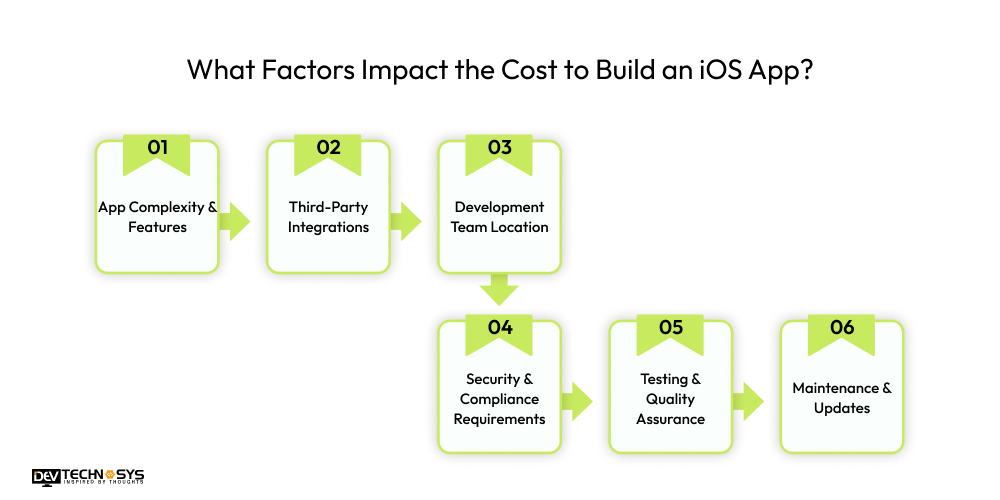
1. App Complexity & Features
The number and sophistication of features directly affect development time and budget. Basic apps with limited functionality cost less, while apps with real-time chat, AI, payment systems, or advanced user roles require more coding, integrations, and testing, significantly increasing the overall cost to create an iOS app.
| Complexity Level | Estimated Cost (USD) |
| Basic App | $8,000 – $12,000 |
| Standard App | $12,000 – $18,000 |
| Advanced Within Budget | $18,000 – $24,000 |
2. Third-Party Integrations
Integrating iOS app development services such as payment gateways, maps, analytics, or social logins increases development time and testing requirements. Each external API must be securely connected and optimized for performance, increasing technical complexity and the overall project budget.
| Integration Type | Estimated Cost Impact (USD) |
| Basic Integrations | $1,000 – $3,000 |
| Payment Integration | $2,000 – $5,000 |
| Advanced APIs | $3,000 – $6,000 |
3. Development Team Location
The hourly rate for iOS developers varies significantly by region. If you hire iPhone app developers in Dubai or North America, expect the iPhone app development cost to be higher than working with teams in South Asia or Eastern Europe. The team’s experience level and project management structure also influence the final price.
| Region | Estimated Project Cost |
| South Asia | $8,000 – $14,000 |
| Eastern Europe | $12,000 – $17,000 |
| Middle East | $15,000 – $22,000 |
4. Security & Compliance Requirements
Apps handling sensitive user data, payments, or financial information require encryption, secure authentication, and compliance standards. The cost to create an iOS app in Middle East can vary depending on the addition of advanced security protocols, which increase development time, testing effort, and overall cost, especially for fintech, healthcare, or enterprise applications. Take a look at the table below to understand the iOS app security implementation cost clearly.
Industry Insight: MarketsandMarkets states that Cloud-based compliance software held a 69.23% market share in 2025.
| Security Level | Estimated Cost Impact (USD) |
| Basic Security | $1,000 – $2,500 |
| Standard Security | $2,500 – $5,000 |
| High Compliance | $5,000 – $8,000 |

5. Testing & Quality Assurance
Thorough testing across multiple devices ensures smooth performance and bug-free operation. Functional, performance, and security testing require dedicated QA resources. The more complex the app, the more extensive testing is needed, which directly impacts the cost to create an iOS app and the timeline.
| Testing Scope | Estimated Cost (USD) |
| Basic Testing | $1,000 – $2,000 |
| Standard QA | $2,000 – $4,000 |
| Advanced QA | $4,000 – $6,000 |
6. Maintenance & Updates
Post-launch maintenance includes bug fixes, compatibility updates, feature upgrades, and server monitoring. Regular updates are essential to remain compliant with new versions of Apple App Store guidelines and iOS updates, typically costing 15-25% of the initial development cost annually.
| Maintenance Type | Annual Cost |
| Basic Support | 12% of development cost |
| Standard Maintenance | 15% of development cost |
| Ongoing Optimization | 20% of development cost |
Top 5 Popular iOS Apps in the Middle East & Their Estimated Development Costs
The Middle East has seen explosive growth in mobile app usage, especially among iPhone users. Understanding their development cost provides insight into what it takes to build successful apps in this competitive market. Below, we explore the top 5 popular iOS apps in the Middle East and their estimated development costs.
1. Anghami-Style App
Estimated Cost: $15,000 – $25,000
A basic music streaming app includes user registration, playlist creation, music search, streaming functionality, and simple recommendations. Within this budget, you can build a limited music library with cloud storage and playback controls. Advanced AI recommendations and large-scale streaming infrastructure would increase costs beyond this range.
| Feature / Component | Estimated Cost (USD) |
| UI/UX Design | $2,000 – $3,500 |
| Core Music Playback | $3,000 – $5,000 |
| User Auth & Profiles | $1,500 – $2,500 |
| Playlist & Library | $2,000 – $3,500 |
| Cloud Storage Setup | $1,000 – $3,000 |
| Basic Testing & QA | $500 – $1,500 |
| Total Range | $15,000 – $25,000 |
2. Careem-Style App
Estimated Cost: $18,000 – $25,000
Developers build a simple ride-booking or delivery app with core features like user login, booking interface, map integration, fare estimates, and push notifications. Within this iphone app development price range, real-time tracking and a basic admin panel are possible. Multi-service expansion and complex logistics systems would require higher investment.
| Feature / Component | Estimated Cost (USD) |
| UI/UX Design | $2,000 – $4,000 |
| Booking Interface | $3,000 – $5,000 |
| Map Integration | $2,000 – $4,000 |
| User Auth & Profiles | $1,500 – $2,500 |
| Notifications | $1,000 – $2,000 |
| Basic Testing & QA | $500 – $1,500 |
| Total Range | $18,000 – $25,000 |
3. myFawry-Style App
Estimated Cost: $15,000 – $25,000
A fintech-style payment app within this range can include wallet functionality, bill payments, transaction history, and secure authentication. Basic encryption and payment gateway integration are feasible. However, advanced fraud detection, banking integrations, and regulatory compliance frameworks would significantly increase development complexity and overall costs.
| Feature / Component | Estimated Cost (USD) |
| UI/UX Design | $2,000 – $3,500 |
| Wallet Functionality | $2,500 – $4,000 |
| Payment Gateway Integration | $3,000 – $5,000 |
| Security & Encryption | $1,500 – $3,000 |
| Transaction History | $1,000 – $2,000 |
| Basic Testing & QA | $500 – $1,500 |
| Total Range | $15,000 – $25,000 |
4. Talabat-Style App
Estimated Cost: $15,000 – $25,000
A food delivery app in this budget can offer restaurant listings, menu browsing, cart functionality, checkout, order tracking, and push notifications. Basic vendor management and admin controls are possible.
Advanced logistics algorithms, driver management systems, and AI recommendations would require additional development resources. Contact an experienced iOS app development solution provider to build you a Talabat-style app within your preferred budget range.
| Feature / Component | Estimated Cost (USD) |
| UI/UX Design | $2,000 – $3,500 |
| Restaurant Listings | $2,000 – $3,500 |
| Menu & Cart System | $2,500 – $4,000 |
| Checkout + Payment | $2,000 – $3,500 |
| Order Tracking | $1,500 – $2,500 |
| Basic Testing & QA | $500 – $1,500 |
| Total Range | $15,000 – $25,000 |
5. TikTok-Style App
Estimated Cost: $20,000 – $25,000
A short-video platform within this range can include video uploads, user profiles, feed browsing, likes, comments, and basic content moderation. A cloud storage and streaming setup is required. Advanced editing tools, algorithm-driven recommendations, and high-scale video processing infrastructure would push costs beyond this budget.
| Feature / Component | Estimated Cost (USD) |
| UI/UX Design | $2,500 – $4,000 |
| Video Upload & Playback | $3,000 – $5,000 |
| User Profiles | $1,500 – $2,500 |
| Likes / Comments | $1,000 – $2,000 |
| Cloud Storage & Delivery | $2,000 – $4,000 |
| Basic Testing & QA | $500 – $1,500 |
| Total Range | $20,000 – $25,000 |
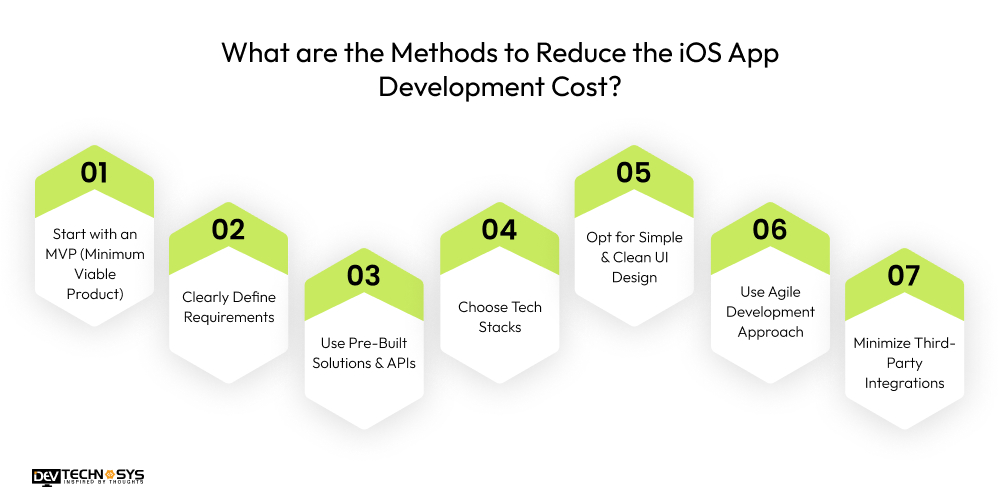
What are the Methods to Reduce the iOS App Development Cost?
Building an app for iOS doesn’t always require a massive budget. With smart planning and the right strategy, you can significantly reduce development expenses without compromising quality. Here are the most effective cost-saving methods:
1. Start with an MVP (Minimum Viable Product)
Instead of launching a fully loaded application, focus on building only the core features that solve the primary user problem. An MVP allows you to test market demand quickly and gather real feedback. This approach minimizes upfront investment, reduces development time, and prevents spending on features users may not actually need.
2. Clearly Define Requirements
Unclear project requirements often result in scope creep, repeated revisions, and budget overruns. Before development begins, prepare a detailed feature list, user journey map, wireframes, and technical documentation. Clear planning aligns stakeholders and developers, reduces misunderstandings, and keeps the cost for iPhone app development and timeline under control.
3. Use Pre-Built Solutions & APIs
Building every feature from scratch significantly increases development hours. Instead, leverage ready-made SDKs, cloud platforms, analytics tools, and payment gateways. These solutions are secure, tested, and faster to implement, helping you reduce engineering effort while maintaining reliability and performance standards.
4. Choose the Right Development Team
Hiring a cost-effective development team in Saudi Arabia can dramatically lower expenses. Developer rates vary by region and expertise. While experienced professionals may charge higher hourly rates, they often deliver faster results with fewer errors, ultimately saving money through efficiency and reduced rework.
5. Opt for Simple & Clean UI Design
A clean, intuitive design not only enhances usability but also reduces development complexity. Save on UI/UX design cost for iOS apps by avoiding overly complex animations, heavy custom graphics, and unnecessary visual effects during the initial phase. A streamlined interface reduces design hours, speeds up development, and keeps testing requirements manageable.

6. Use Agile Development Approach
Agile methodology divides the project into smaller, manageable sprints. This phased approach allows better cost tracking, continuous feedback, and flexibility to adjust features based on performance. Instead of committing to large upfront investments, you can scale development gradually and minimize financial risks.
7. Minimize Third-Party Integrations
Each third-party integration requires coding, configuration, security checks, and ongoing maintenance. Adding too many integrations at the start increases complexity and budget. The initial focus of your mobile app development company in Dubai should be only on essential services for launch, and expand integrations later as your user base and revenue grow.
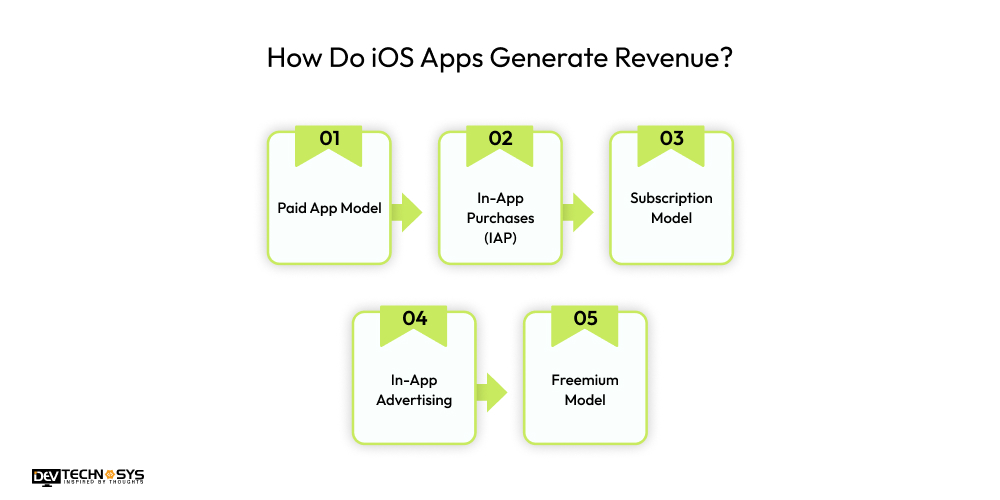
How Do iOS Apps Generate Revenue?
iOS apps have evolved into powerful revenue-generating platforms for businesses of all sizes. Choosing the right revenue model is essential to balancing profitability, user experience, and long-term growth. Here are the strategies businesses use to generate revenue through iOS applications.
1. Paid App Model
Users pay a one-time fee to download the app from the Apple App Store. This model suits niche tools, premium utilities, or professional apps with clear value. Revenue is earned upfront at installation. However, paid apps often have lower download rates than free competitors. Strong branding and clear value propositions are essential for success. High ratings and positive reviews also help increase conversions.
2. In-App Purchases (IAP)
The app is free to install, but charges for additional features or digital items. These may include upgrades, extra content, or virtual goods. This model is popular in gaming and lifestyle categories. Users spend money only when they want enhanced functionality or exclusive in-app benefits. It encourages higher engagement through optional upgrades. Well-designed purchase flows improve user trust and spending behavior.
3. Subscription Model
Users pay a recurring monthly or yearly fee for continuous access to premium services. This model creates stable and predictable revenue streams. It works well for streaming, fitness, and SaaS platforms. Subscriptions encourage long-term engagement and help businesses maintain consistent customer relationships over time. Offering free trials can increase subscription conversions. Regular content updates keep users subscribed longer.
Industry Insight: According to Business of Apps, the leading revenue model for most top-grossing apps is monthly or annual subscriptions.
4. In-App Advertising
The app generates revenue by displaying advertisements to users. Earnings depend on impressions, clicks, or completed video views. Common formats include banner ads, interstitial ads, and rewarded videos. This strategy works best for apps with high traffic and strong daily active user engagement. Ad placement must not disrupt user experience. Optimized targeting improves ad performance and revenue potential.
5. Freemium Model
The app provides basic features for free while offering premium features through paid upgrades. This approach attracts a large user base quickly. Over time, some users convert into paying customers. It balances accessibility with monetization and supports gradual revenue growth. Clear upgrade benefits encourage more conversions. Continuous feature improvements increase long-term profitability.
Industry Insight: Reddit reports that nearly 95% of iOS apps are free, indicating that developers increasingly rely on freemium strategies, in-app purchases, and ads rather than upfront paid downloads
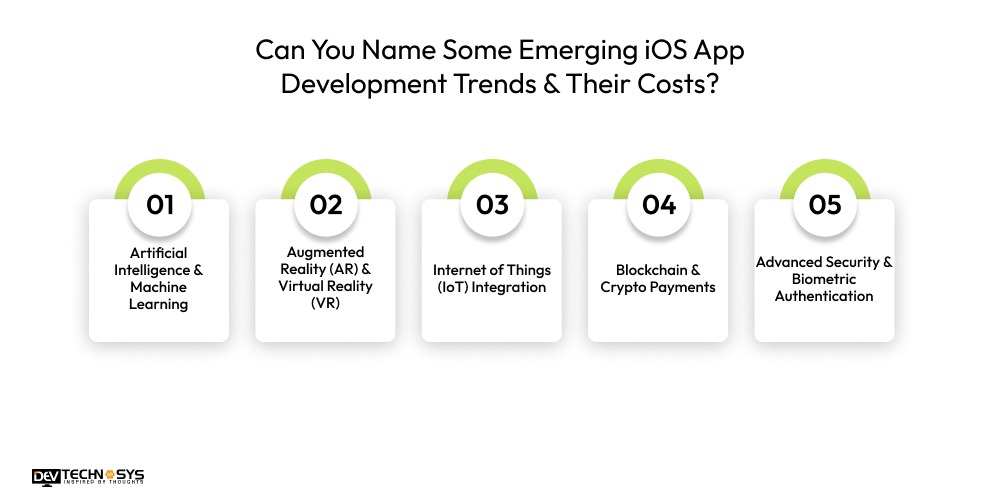
Can You Name Some Emerging iOS App Development Trends & Their Costs?
iOS app development is constantly evolving, driven by new technologies, user expectations, and business needs. Staying up to date with emerging trends helps businesses build apps that are not only functional but also innovative, secure, and user-friendly.
At the same time, these trends often affect development costs, making it essential to carefully plan budgets. Here’s a breakdown of the key emerging trends in iOS app development and their associated costs:
1. Artificial Intelligence & Machine Learning
- Why Trending: AI and ML are used for predictive analytics, personalized recommendations, smart chatbots, and fraud detection.
- Impact on Cost: Integrating AI/ML features can increase development costs by $3,000 to $10,000, depending on complexity.
- Benefit: Improves user experience, engagement, and security while enabling data-driven decisions.
2. Augmented Reality (AR) & Virtual Reality (VR)
- Why Trending: AR/VR is widely used in gaming, retail, education, and real estate apps for immersive experiences.
- Impact on Cost: AR/VR integration may add $5,000 to $12,000 to app development, depending on features.
- Benefit: AR and VR enhance interactivity, retention, and app differentiation.
3. Internet of Things (IoT) Integration
- Why Trending: IoT enables apps to connect with smart devices for automation, health monitoring, and smart home controls.
- Impact on Cost: IoT integration typically adds $4,000 to $10,000 to the budget due to connectivity and security requirements.
- Benefit: Expands app functionality and opens opportunities for new revenue streams.
4. Blockchain & Crypto Payments
- Why Trending: Blockchain enhances security and transparency, while crypto payments attract tech-savvy users.
- Impact on Cost: Implementing blockchain features can cost $6,000 to $15,000 based on complexity and crypto integration.
- Benefit: Secure, tamper-proof transactions and innovative financial services.
5. Advanced Security & Biometric Authentication
- WhyTrending: Apps increasingly use face recognition, fingerprint scanning, and AI-based fraud detection.
- Impact on Cost: Adding advanced security measures may cost $2,000 to $7,000, depending on the technology used.
- Benefit: Protects sensitive data, builds trust, and ensures compliance with regulations.

Food For Thought
The information above discusses the cost of iOS app development. Understanding iOS app development cost is essential for making informed business decisions. Whether your budget is $8,000 or higher, clear planning and defined goals help control expenses.
A well-structured roadmap, starting with an MVP and scaling strategically, ensures better ROI and reduced financial risk. If you want an accurate cost estimate for an iOS project, get in touch with the experts at Dev Technosys, a reputable iOS app development company in Middle East. With exceptional skills and years of experience in iOS app development, we turn your unique vision into reality.
FAQs
Q1. How Much Does It Cost to Develop an iOS App?
The cost to develop an iOS app ranges from $8,000 to $25,000, depending on the level of complexity. More advanced applications with complex features, custom UI, backend systems, or third-party integrations can significantly increase the overall development budget.
Q2. How Long Does It Take to Build an iOS App?
Development time depends on app complexity and features. On average:
- Simple apps: 2 to 3 months
- Medium complexity apps: 3 to 6 months
- Complex apps: 6+ months
Proper planning and clear requirements can help reduce delays.
Q3. What Factors Increase iOS App Development Cost?
Several factors can raise the total iOS app development budget:
- Advanced features like real-time chat or AI
- Custom UI/UX design
- Backend infrastructure
- Third-party integrations
- Ongoing maintenance and updates
Complexity and scalability needs play a major role.
Q4. Do I Need Ongoing Maintenance After Launch?
Yes, regular maintenance of iOS apps is essential after launch. Updates ensure compatibility with new iOS versions and compliance with Apple App Store guidelines. Maintenance typically costs 15-20% of the initial development cost annually.
Q5. Can I Reduce iOS App Development Costs?
Yes, it is possible to reduce the custom iOS app development costs by starting with an MVP, clearly defining requirements, using pre-built tools, and choosing a cost-effective development team. Avoiding unnecessary features in the initial phase also helps control the budget and minimizes financial risk.