





Key Takeaways:
- The UAE grocery app development market is expanding due to the influence of social media on quick commerce.
- According to IMARC, the GCC online market size is expected to grow at 21.51% during 2026-2034.
- Grocery app development cost typically ranges from AED 110,000 to AED 550,000, depending on business size, required AI capabilities, app complexity, features, security, and compliance.
- The grocery shopping app offers businesses monetization options by offering paid memberships or a subscription fee.
Along with the advancement of modern resources, traditional sectors have also grown up into digital assets. Similarly, this trend can also be seen in the grocery industry. So, it is quite important for business investors to know the grocery delivery app development cost at the right time.
There are a lot of things that you have to manage before starting the development. From which the app building value is at the top. Additionally, you should know different aspects related to the development process and cost of a mobile app.
So, we are going to discuss the major issues that can affect and resolve the flaws in the app development cost in this blog.
What is Grocery App Development?
Grocery App Development is the process of developing mobile applications that are specifically designed for convenience in grocery shopping. These apps let users browse, choose, and buy groceries directly from their smartphone or tablet.
Grocery apps offer a variety of features, including product catalogs and search functions, as well as shopping carts and secure payment options. They also allow users to schedule delivery or pick-up times. Online Grocery Store in Qatar is usually designed to simplify the online shopping process and provide users with an easy, convenient way to shop for groceries
The convenience of this technology-driven solution is a major factor in its popularity, particularly at a time when online shopping and contactless deliveries are essential.
What Are the Latest Market Statistics for the Grocery Delivery Industry?
According to our research from The Report Cube, grocery app development costs are mainly affected by product categories and age groups. Businesses should build solutions that are specific to quick commerce, have intuitive design, and have AI features.
Some of our key findings include:
- The UAE online grocery delivery market size is expected to reach a CAGR of 24.65% by 2034. This data highlights the industry’s expansion, as retailers and superstores are preferring digital transformation.
- Companies with stores at multiple locations need to manage online productivity and require a mobile app. The solution is helpful in tracking the supply chain, inventory, and customer responses.
- The market size is projected to increase to USD 33.28 billion by 2034 from USD 5.71 billion in 2026. This major change is observed due to the introduction of artificial intelligence. Businesses are looking to partner with a mobile app development company to build scalable solutions.
What is Grocery Delivery App Development Cost UAE?
The grocery delivery app development cost in the UAE typically ranges from AED 110,000 to AED 550,000 for a standard to advanced solution. The actual budget depends on the app’s complexity, number of platforms, UI/UX requirements, vendor and delivery management, payment integrations, real-time tracking, security, compliance, and third-party APIs. For a UAE grocery platform, the development budget can be estimated as follows:
Grocery App Type |
Estimated Cost in UAE |
| Basic Grocery App | AED 110,000–AED 180,000 |
| Mid-Level Grocery App | AED 180,000–AED 320,000 |
| Advanced Grocery App | AED 320,000–AED 550,000+ |
What Are The Steps To Develop A Grocery Delivery App?
To know development procedure is crucial for business investors to easily manage the grocery delivery app development cost. Here are the important and generalized app building steps to follow:-
1. Domain Understanding
Industry professionals must know about the domain of interest before starting the development process. Additionally, they can study multiple use cases to list major features to be included. Specify your budget to minimize the grocery app development cost in the UAE for fast and easy app development.
2. Hire Development Authority
Next you should contact a suitable grocery delivery app development company that can offer affordable app development services. Conduct a strict hiring process from work analysis to technical interviews to judge their working efficiency for handling pressure situations.
3. Interface Designing
App designing is considered as the first step in the development of a grocery delivery mobile app. So, you can select form a millions of different themes for your vegetable and fruit item delivery platform. But, first ensure qualified wireframing methods to prevent errors.
4. Server & APIs
The second step is to implement backend services so that users can get immediate response from the server. Additionally, it is up to you to manage the cost to build a grocery store with well equipped APIs. So, to get real time updates on value change, stock availability, and order confirmation.
5. Secure Testing
Testing a mobile app for launching is vital that includes identification of code errors. Additionally, using certified and secure platform algorithms is also mandatory. So, in order to create a grocery delivery app you must use effective tools that could persist for longer period of time.
6. Launching & Maintenance
Finally, you can now successfully launch your grocery delivery mobile app. Additionally, for maintenance support you can avail mobile application development services that should match your app suitability. Regular updates are also mandatory to assure app productivity and legacy.
Must-have Features of Grocery App Development
Apps must have certain features to be successful. Instead of focusing on the cost to develop a grocery delivery app, it is important to know what features you want to include. So, as per the hybrid app development company, below are the important features that a grocery app should include:
1. Customer Panel
-
Sign up & Sign in
Every app should have this feature. If you decide to create a grocery-related app, be sure to include this feature. It will enable users to create profiles and access the delivery service. Sign up using an Apple ID, email address, or social media platform.
-
Order Tracking
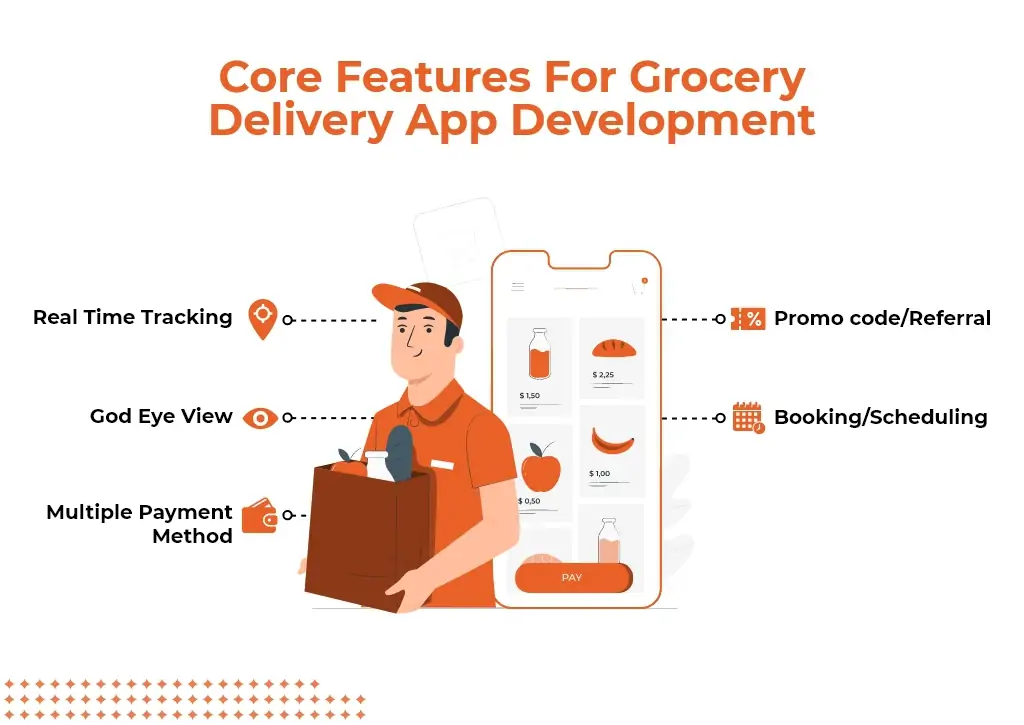
Users can track their orders using the grocery delivery app. The app provides real-time updates. It allows users to know when their products will arrive at their door. You should include this feature into your app. You can Hire dedicated developers who are well versed in creating functional apps to make your job easier and more convenient.
-
Order Management
This amazing feature allows users to manage everything according to their needs, from ordering groceries to canceling and raising questions. You must include this feature in your app. You shouldhire Android app developers who have years of experience and good knowledge in developing feature-rich apps.
-
Multiple payment Methods
Another essential feature that a grocery app must have is the ability to pay digitally. The digital payment options will be integrated to make it easier for users. There are many payment options available, including net banking, debit/credit card, cash-on-delivery, digital wallet and more.
2. Admin Panel
-
Customized Dashboard
This feature allows admins to track, analyze and manage the different processes of grocery delivery. This feature includes tracking orders, streamlining deliveries, verifying customer and vendor details, and much more. It is important to have this feature included in your app.
-
Order/Delivery Queues Management
This feature is a must-have for any grocery delivery app. This feature allows customers to instantly give their orders more priority. You must include this feature into your app. You must know how much it costs to develop a grocery delivery app. This will allow you to decide whether or not you need to add many features.
-
Inventory Management
This will allow admins to keep track of the inventory at grocery stores and vendors. The customer panel can show ‘Out-of-stock’ and In Stock’ items. Make sure your application has this feature.
-
Secure Data Management
This feature allows you to manage your data securely and efficiently, including that of customers, delivery agents, and supermarkets. This feature integrates with mobile-based platform security to ensure the security of all your important data.
-
Discounts/Offers
The admins can use this leverage to market the latest offers on a number of occasions. Advertisements on the app can instantly be used to carry out these activities.
You should therefore ensure that the application you choose has this feature. So, if you want to integrate features in your app, then you must choose the best Grocery App Development Company.
3. Delivery Panel
-
Geo-Location Services
This feature integrates with APIs for location tracking and route navigation. This feature helps delivery executives reach the exact location of the customer on time. This is a feature that every grocery delivery app must have.
-
Accept/Reject delivery request
This feature allows delivery executives to accept orders or reject them based on the idleness of their employees. It is therefore necessary to include this functionality in your application.
-
Delivery Request Notification
This feature allows store managers to communicate with delivery people in real time. This means that the delivery executive will visit the store to collect the groceries, and then deliver them to the buyers.
-
In-app calling/ in-app chat
This feature is necessary to chat or call customers and owners of grocery stores. It helps delivery people to communicate easily for order/delivery-related queries.
What Are the Key Benefits of a Grocery Delivery App?
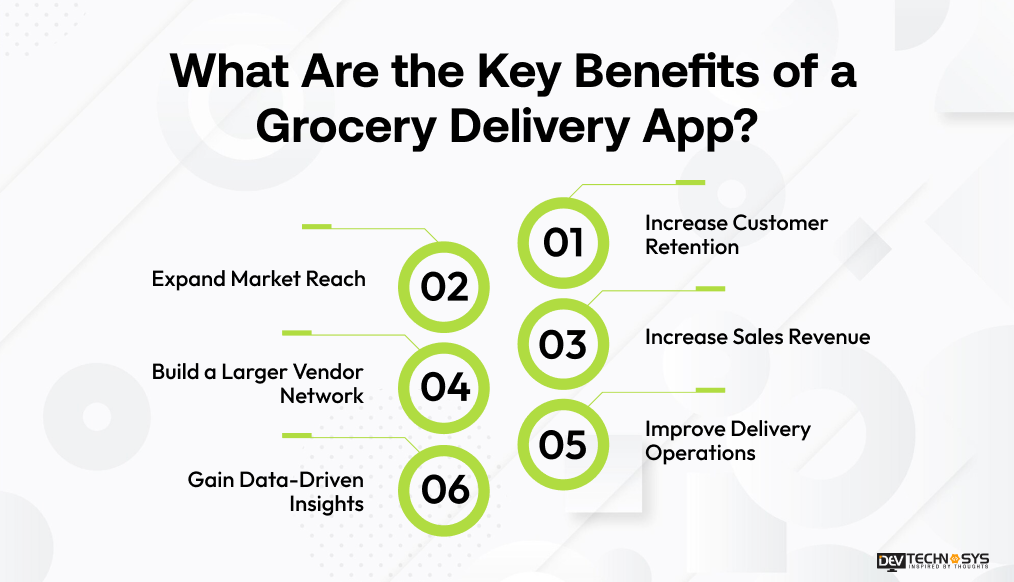
A grocery delivery app can help businesses expand their digital presence, improve customer retention, streamline order fulfillment, and create new revenue opportunities. Beyond influencing the overall grocery app development cost, these benefits can directly contribute to long-term business growth and operational efficiency.
1. Increase Customer Retention
A well-designed grocery delivery app makes repeat purchases easier through personalized recommendations, saved shopping lists, order history, one-click reordering, and push notifications. These features create a convenient shopping experience that encourages customers to return regularly. Loyalty programs and targeted offers can further improve retention and increase customer lifetime value.
2. Expand Market Reach
A grocery delivery app allows businesses to serve customers beyond their physical store locations. With location-based delivery, multiple service zones, and real-time order tracking, businesses can expand into new neighborhoods and cities without opening additional stores. This creates opportunities to reach a broader customer base while building a scalable digital grocery business.
3. Increase Sales Revenue
Mobile grocery apps provide multiple opportunities to increase order value and purchase frequency. For example, to build a grocery app like Bazaar, businesses can use personalized product recommendations, cross-selling, upselling, promotional offers, subscriptions, and flash deals to encourage customers to purchase more.
4. Build a Larger Vendor Network
A multi-vendor grocery delivery platform can connect supermarkets, local grocery stores, farmers, distributors, and specialty retailers within a single marketplace. Vendors gain access to a larger customer base, while the platform can generate revenue through commissions, listing fees, subscriptions, or delivery charges. This model also makes it easier to scale product variety.
5. Improve Delivery Operations
Grocery delivery apps can automate several operational processes, including order assignment, delivery scheduling, driver tracking, route optimization, inventory synchronization, and customer notifications. Real-time GPS tracking and automated status updates improve delivery visibility for customers while helping businesses reduce manual coordination and operational inefficiencies.
6. Gain Data-Driven Insights
A grocery delivery app generates valuable data about customer preferences, purchasing frequency, popular products, abandoned carts, peak ordering times, and delivery performance. However, AI in e commerce create personalized promotions, forecast demand, and improve pricing strategies. These insights can support better decision-making and improve overall profitability.
How To Monetize A Grocery Delivery App?
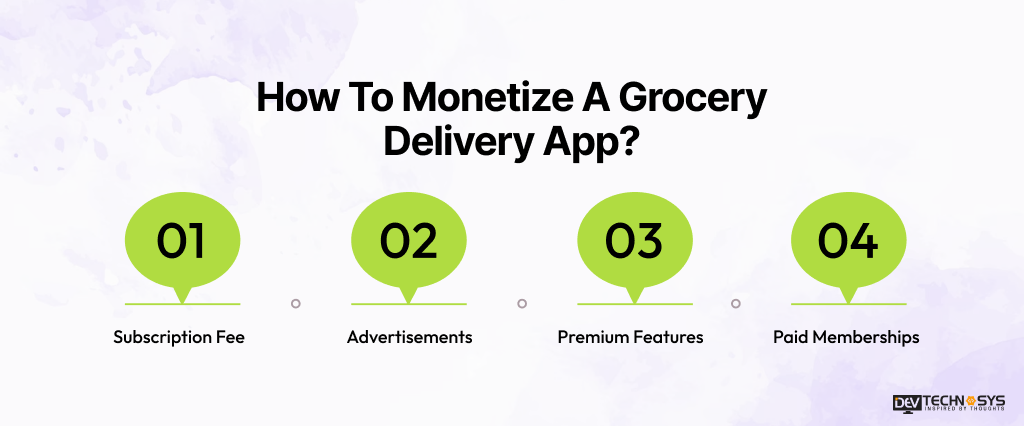
Businesses must know about monetization strategies to compensate for the grocery delivery app development cost. Below are a few money earning strategies:-
1. Subscription Fee
Users can pay a subscription for your grocery delivery app. This fee can be an annual fee, a single-time fee or a monthly subscription fee. So, you can build a grocery delivery app which can sustain this monetization model.
2. Advertisements
Advertising is a typical method of app monetization. Ads can be placed on your app to earn money depending on how many people view or click on them. Brands can advertise in your app through banners, videos, and other forms of advertising.
3. Premium Features
The addition of premium features, such as the option to create multiple listed items or to access advanced statistics is another way to generate revenue. Investment in business app development services allow these features to get purchased within the app.
4. Paid Memberships
You can charge a membership fee to users for paid features that you organize within your app. This money can be part of the entry fees or sponsored by brands. Additionally, you can hire an E-Commerce app development company to develop an app like Kibsons which has effective monetization model.
What Factors Affect Grocery Delivery App Development Cost?
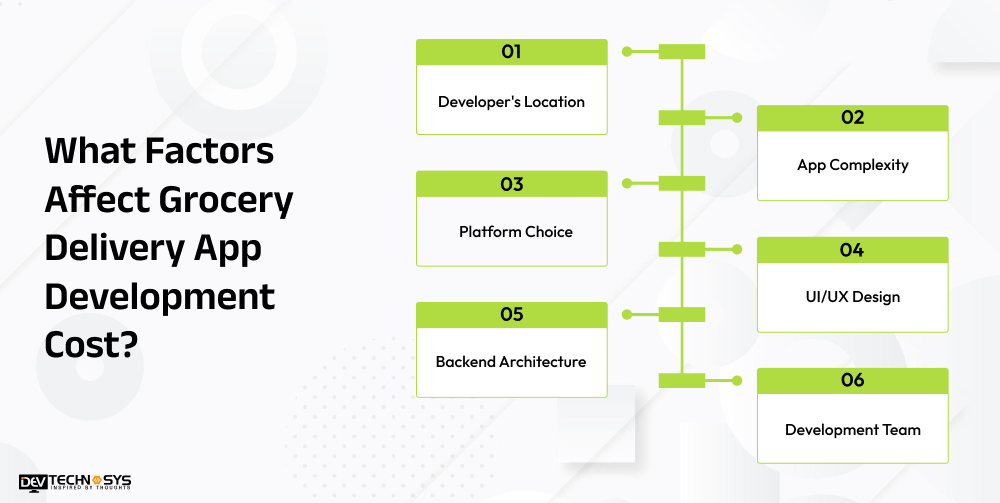
Business investors must recognize the grocery delivery app development cost before starting the app development process. Let us find major factors affecting the cost:-
1. Location
The location of a development company and available services is majorly responsible for accounting the cost to develop a mobile app. In the USA region this cost is much higher. But, in the Middle East and Asia the development price is quite low.
Location Factor |
Estimated Cost |
| USA | AED 365,000–AED 550,000 |
| Australia | AED 275,000–AED 450,000 |
| Asia | AED 110,000–AED 275,000 |
| European Union | AED 220,000–AED 440,000 |
| The Middle East | AED 110,000–AED 220,000 |
| Latin America | AED 150,000–AED 300,000 |
2. App Complexity
Grocery marketplace app can be simple, moderate, or enterprise-grade. Since AI is being adopted by businesses, costs might be affected.
App Structure |
Estimated Cost |
| Simple App | AED 110,000–AED 180,000 |
| Moderate App | AED 180,000–AED 400,000 |
| Complex App | AED 400,000–AED 550,000+ |
3. Platform
Businesses choosing cross-platform app development might incur lower costs than developing separate iOS and Android apps.
Platform Choice |
Estimated Cost |
| iOS Only | AED 120,000 |
| Android Only | AED 110,000 |
| iOS and Android | AED 150,000 |
4. UI/UX Design
In the UAE, quick commerce is getting priority among customers. Thus, the design elements should include a bilingual interface, maps, live order tracking, and other features as needed.
Design Structure |
Estimated Cost (AED) |
| Basic | AED 3,700 – AED 11,000 |
| Moderate | AED 11,000 – AED 22,000 |
| Advanced | AED 22,000 – AED 29,500 |
| Premium | AED 29,500+ |
5. Backend Connection
Using effective backend services to develop a grocery delivery app Like instashop is also a crucial factor that determines the development cost. Implementing sophisticated APIs and encryption algorithms sums up the cost with a much higher percentage.
Backend Phases |
Estimated Cost (AED) |
| Server Setup | AED 7,300 – AED 11,000 |
| Database Model | AED 3,700 – AED 7,300 |
| API Integration | AED 11,000 – AED 18,400 |
| Security and Encryption | AED 7,300 – AED 14,700 |
6. Development Team
Presence of a mobile app development team is of quite importance. This also affect the grocery delivery app development cost. So, you may hire mobile app developers that are able to offer premium app development services at reasonable cost.
Hiring Factor |
Estimated Cost (AED) |
| In-House Team | AED 7,300–AED 18,400 |
| Full-Time Freelancers | AED 5,500–AED 11,000 |
| Developer Outreach | AED 29,400–AED 55,000 |
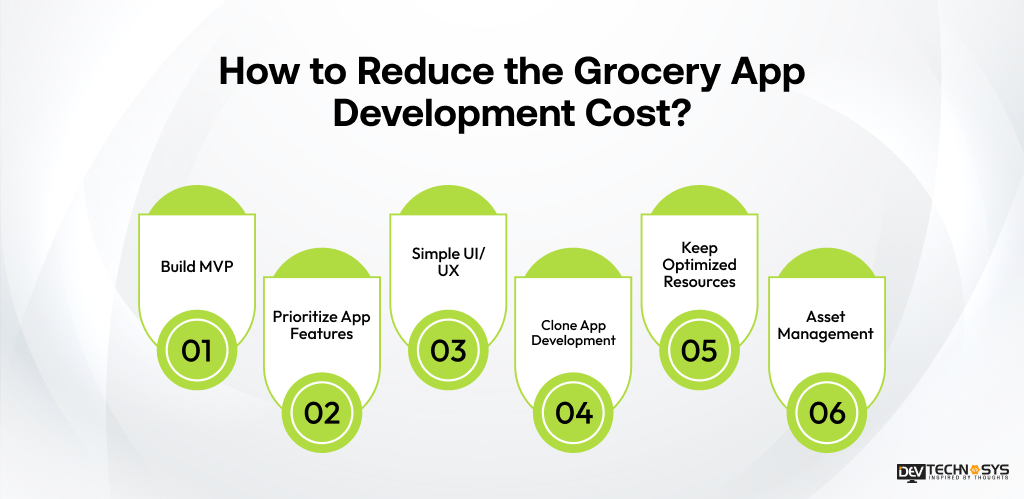
How to Reduce the Grocery App Development Cost?
Reducing the grocery delivery app development cost is very important for business investors. Let us review the major cost reduction factors:-
1. Build MVP
Instead of starting with a fully-featured application, you should start by creating a Minimum Viable product. You can raise money by creating an MVP application, without having to create a full grocery delivery app. You can also test the market by creating a basic app, and then adding features based on user feedback.
2. Prioritize App Features
Focus on the problems you want to solve at the beginning. Prioritize features essential to the app’s functionality and postpone the development of other features until the app is launched. You can reduce your grocery app development cost and market your app quicker.
3. Simple UI/UX
One of the best ways to lower the cost for grocery apps is by maintaining a simple UI/UX. Simple designs will make it easier for users to navigate your app, resulting in a better experience. Complicated designs can add unnecessary costs. You can add or modify the design once your app is running.
4. Clone App Development
Clone app development can be a great way to create a high-quality app at a reasonable price. If you are looking for an app that delivers food on demand, you can use the Uber Eats app clone. You can develop your app quickly at a low cost.
5. Keep Optimized Resources
If business investors want to reduce the mobile app development cost then resource optimization is a must. So, they can easily find out the temporary errors. Additionally, they can also update their business model for maintaining an economical balance.
6. Asset Management
Management of assets is quite valuable for industry professionals to record the flow of investment. This method is beneficial for business app development that is purely related to the financial aspect. So, businesses must involve in this to reduce the cost for developing a grocery app.
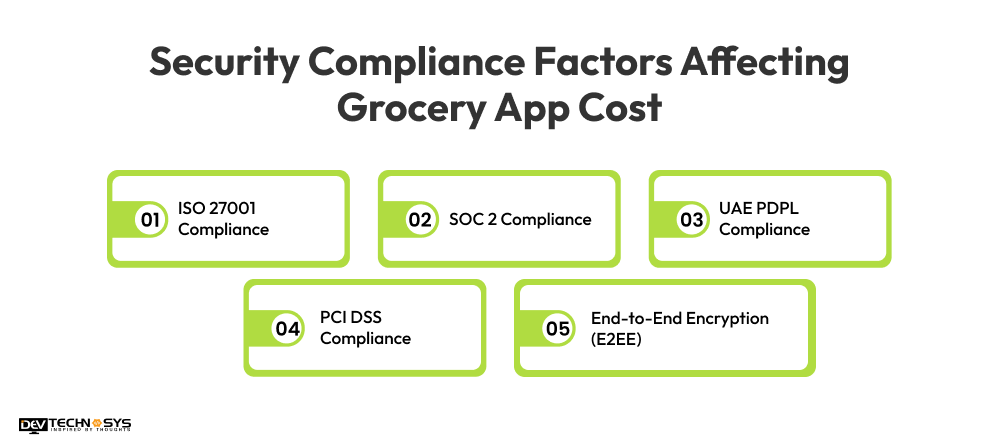
Security Compliance Factors Affecting Grocery App Cost
Security and compliance can significantly influence the overall grocery delivery app development, particularly when the platform handles customer profiles, delivery addresses, payment information, order histories, and business data. The implementation cost depends on the level of security controls, audits, infrastructure changes, documentation, and third-party assessments required. Key factors include:
ISO 27001 Compliance
ISO 27001 compliance requires a structured Information Security Management System (ISMS), including risk assessments, access controls, security policies, incident management, monitoring, and regular audits.
For a grocery app, implementing these controls can increase development costs because developers must build secure workflows, maintain audit trails, strengthen infrastructure, and prepare compliance documentation. ISO 27001 can add approximately AED 18,400–AED 73,400+ depending on the application’s size and certification requirements.
SOC 2 Compliance
SOC 2 compliance focuses on controls related to security, availability, confidentiality, processing integrity, and privacy. It can increase grocery app development costs by requiring stronger authentication, access management, logging, monitoring, vulnerability management, and continuous security controls.
Additional expenses may include compliance consulting and independent audits. Depending on the application’s complexity and whether SOC 2 Type I or Type II is pursued, compliance-related costs can add approximately AED 18,400–AED 73,400+ to the overall budget.
UAE PDPL Compliance
Businesses that are willing to build a grocery app like an Instashop must know that UAE Personal Data Protection Law (PDPL) must be included in the solution. This directly affects cost as developers have to use extensive knowledge and tools to create the app. These requirements can add approximately AED 18,400–AED 73,400++, depending on data volume, business operations, and compliance complexity.
PCI DSS Compliance
Costs can increase due to secure payment architecture, tokenization, encryption, vulnerability scanning, penetration testing, access controls, and compliance assessments. Using a PCI-compliant third-party payment gateway can reduce the application’s direct compliance burden compared with storing card data internally. PCI DSS implementation can add approximately AED 18,400–AED 91,800+ depending on the payment architecture and compliance level.
End-to-End Encryption (E2EE)
Implementing strong encryption for sensitive communications and data can increase development costs due to cryptographic implementation and secure key & certificate management. For a grocery app, E2EE can add approximately AED 11,000–AED 55,000+, depending on which data and communication channels require encryption. E2EE is an important part of grocery delivery app maintenance services that businesses should consider as post-launch support.
Pivot Your Business Success By A Grocery Delivery App!
Now, it is well understood that grocery delivery app development cost plays a major role in the development of a mobile app. Additionally, this can affect the business model. So, business investors must ensure proper functioning of development services.
Keep a record of investment in online grocery store app development services to maintain sustainability. There are a lot of different opportunities available for investors in the grocery delivery industry. So, you must immediately start the development before the price rise.
Frequently Asked Questions
Q1. How Much Does It Cost to Develop a Grocery Delivery App?
The grocery delivery app development cost typically ranges from AED 110,000–AED 550,000 for a standard solution. The final cost depends on app complexity, features, UI/UX design, backend infrastructure, integrations, security requirements, technology stack, and development team location.
Q2. What Features Increase Grocery Delivery App Development Cost?
Features that typically increase development costs include real-time GPS tracking, AI-powered recommendations, multi-vendor management, inventory synchronization, multiple payment gateways, delivery route optimization, push notifications, loyalty programs, subscription management, and advanced analytics.
Q3. What Technology Stack Is Used to Build a Grocery Delivery App?
A modern grocery delivery platform can use technologies such as React Native or Flutter for cross-platform mobile development, Node.js, Python, or Java for backend development, PostgreSQL or MongoDB for databases, AWS or Azure for cloud infrastructure, and REST or GraphQL APIs for integrations.
Q4. What Is the Best Business Model for a Grocery Delivery App?
Common grocery delivery app monetization models include vendor commissions, delivery fees, customer subscriptions, premium memberships, product promotions, advertising, and sponsored listings.
Q5. How Long Does It Take to Build a Grocery Delivery App?
A grocery delivery app can take approximately 3 to 6 months to develop, depending on its scope and complexity. A basic MVP with essential customer, vendor, delivery, and admin features can be launched faster, while a multi-vendor platform with AI might take up to 6+ months.