





At the time of COVID, people started preferring health and fitness apps for maintaining wellness even at home. This initiated an extensive digital transformation in the global fitness industry that continues through 2026 and seems to grow further.
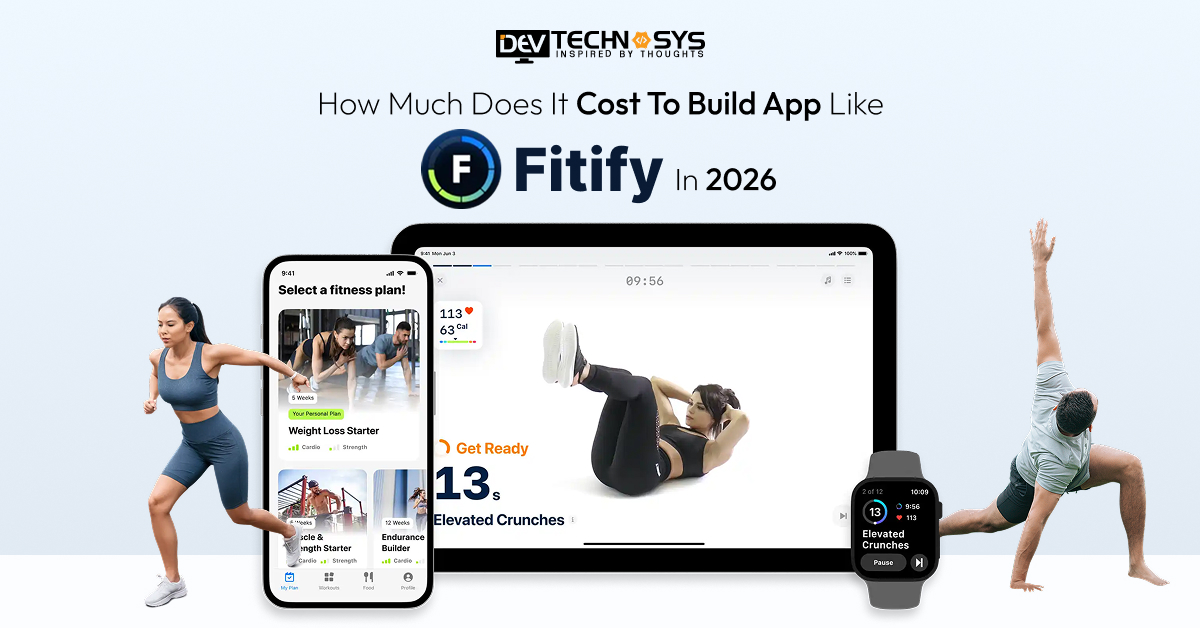
There is also an increase in health awareness, AI-driven personalization, and the rapid adoption of mobile fitness solutions. So, how could a workout and training app like Fitify, the best fitness app in UAE, stay behind? This also gives rise among entrepreneurs to build a Fitify clone app.
Building a similar app like Fitify combines planning, development, maintenance, and most importantly, cost. The most common question businesses ask before entering this market is: How much does it cost to build an app like Fitify in 2026?
So, this guide answers all your questions related to the cost to develop a fitness app like Fitify. It helps you plan a smart and future-ready fitness app investment.
What Are The Market Statistics For Fitness App Development?
The fitness application market is expanding swiftly, propelled by the adoption of digital health and global lifestyle transformations. We will understand the market predictions of the top fitness app in Middle East below:
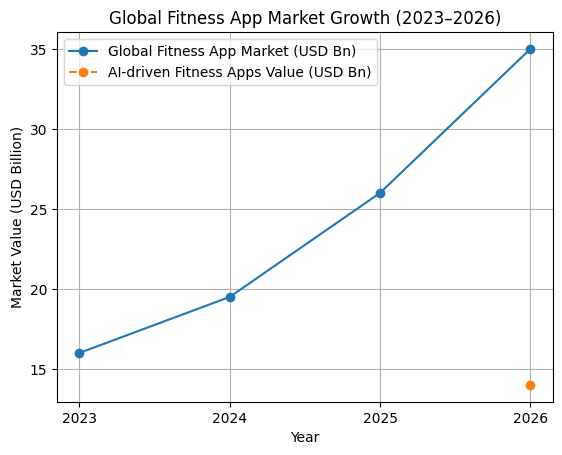
- The global fitness app market was valued at around USD 16 billion in 2023 and is projected to exceed USD 35 billion by 2026, with a compound annual growth rate (CAGR) above 20%.
- AI-driven fitness and customized training applications are anticipated to account for over 40% of the overall market value by 2026.
- The integration of wearable devices with fitness applications is projected to increase by around 25% each year, improving real-time health monitoring.
- Subscription-based fitness applications derive more than 60% of their revenue from premium memberships and customized coaching programs.
- Following the pandemic, at-home workout applications have had consistent user engagement, with retention rates surpassing 45% for leading platforms.
What is The Fitify App?
Fitify is an intelligent fitness program that provides customized training regimens, instructional workout videos, strength and cardiovascular routines, and progress monitoring. This evolution highlights the growing role of mobile apps in the healthcare industry, particularly in preventive fitness. These applications utilize AI-generated recommendations, user fitness metrics, and activity monitoring to create personalized workout regimens.
Advanced functionalities typically encompass offline workouts, auditory instruction, caloric monitoring, integration with wearable devices, and adaptable training regimens.
In 2026, applications similar to Fitify are anticipated to incorporate enhanced AI coaching, mobility tracking, recovery statistics, and comprehensive wellness features, resulting in more sophisticated and value-oriented development supported by advanced healthcare software solutions.
What Will Be The Cost To Build An App Like Fitify In 2026?
The cost to develop an app like Fitify in 2026 generally varies from $8,000 to $30,000, depending on complexity, functionality, and technology choices. This estimated cost to build an app like Fitify also reflects platform scalability and security requirements.
A fundamental fitness application featuring conventional training videos, user profiles, and progress monitoring is positioned at the lower spectrum. The mobile app development cost is considerably higher for an intermediate application featuring AI-driven training regimens, subscription models, wearable integration, and analytics.
High-end applications in the market, including Fitify, usually feature real-time AI coaching, motion analysis, cloud scalability, and enterprise-level security, which reflects the higher Fitify app development cost.
App Type |
Description |
Estimated Cost |
Basic Fitness App |
Includes essential workouts, user profiles, and progress tracking. | $8,000 – $12,000 |
Mid-Tier Fitify-Like App |
Adds AI plans, subscriptions, analytics, and wearable support. | $12,000 – $20,000 |
Advanced Fitness App |
Features real-time AI coaching, cloud scalability, and security. | $20,000 – $30,000 |
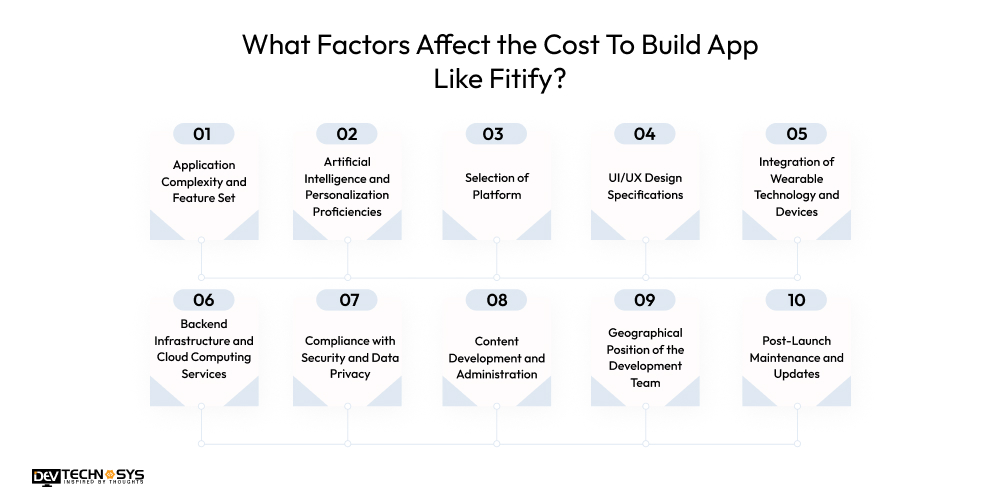
What Factors Affect the Cost To Build an App Like Fitify?
A variety of technical and strategic factors influence the total cost of fitness app development. Comprehending these elements allows businesses to accurately estimate the cost to develop app like Fitify. This helps in allocating budgets efficiently, especially when you partner with a mobile app development company.
1. Application Complexity and Feature Set
The quantity and complexity of features substantially influence the cost to create an app like Fitify. A basic workout application using pre-recorded programs is less expensive, whereas sophisticated AI-driven fitness applications necessitate intricate algorithms, machine learning models, and tailored data processing.
Level |
Description |
Cost Range |
| Basic | Includes limited features like workouts, profiles, and basic progress tracking only. | $2,000–$3,500 |
| Standard | Adds scheduling, workout libraries, user goals, and moderate tracking capabilities. | $3,500–$5,500 |
| Advanced | Supports AI logic, analytics dashboards, adaptive workouts, and complex feature workflows. | $5,500–$8,000 |
2. Artificial Intelligence and Personalization Proficiencies
AI-driven exercise recommendations and personalized training regimens enhance engagement but increase the cost to create an app like Fitify. These capabilities often require support from a custom fitness app development company with domain expertise.
Level |
Description |
Cost Range |
| Basic | Simple rule-based workout recommendations without deep personalization or learning algorithms. | $2,500–$4,500 |
| Standard | AI-driven personalized plans using user activity, goals, and performance history. | $4,500–$7,000 |
| Advanced | Machine learning models offering real-time adaptation, predictive insights, and smart coaching. | $7,000–$10,000 |
3. Selection of Platform
Choosing between Android, iOS, or both affects the cost to build an app like Fitify. Native builds using Android or iOS app development services cost more. In contrast, choosing cross-platform options helps reduce the development time and expense.
Platform Type |
Description |
Cost Range |
| Single Platform | App developed exclusively for either Android or iOS with native performance. | $8,000–$12,000 |
| Dual Native | Separate native apps built individually for the Android and iOS platforms. | $12,000–$20,000 |
| Cross-Platform | Single codebase supporting both platforms with optimized performance and scalability. | $20,000–$30,000 |
4. UI/UX Design Specifications
Fitness applications necessitate designs that are intuitive, motivational, and aesthetically pleasing. The incorporation of interactive dashboards, workout animations, and seamless navigation enhances design complexity. Superior UI/UX significantly influences user retention, although it also increases the cost to create a fitness app like Fitify.
Design Level |
Description |
Cost Range |
| Basic | Clean layouts with minimal animations and standard navigation elements. | $2,000–$4,000 |
| Standard | Interactive screens, custom visuals, engaging dashboards, and improved user flow. | $4,000–$7,000 |
| Premium | Highly polished visuals, animations, micro-interactions, and motivational fitness-focused design. | $7,000–$10,000 |
5. Integration of Wearable Technology and Devices
The integration of smartwatches, fitness bands, heart-rate monitors, and motion sensors increases the cost to make an app like Fitify and its technical complexity. These interfaces facilitate real-time monitoring and customized insights, yet necessitate further custom fitness app development services and testing.
Integration Level |
Description |
Cost Range |
| Basic | Connects limited wearable devices for step count and basic activity tracking. | $500–$1,500 |
| Standard | Supports heart rate, calories, and multiple wearable brands. | $1,500–$2,500 |
| Advanced | Real-time sync with advanced sensors, motion tracking, and health metrics. | $2,500–$3,500 |
6. Backend Infrastructure and Cloud Computing Services
Fitness applications manage substantial quantities of user data, exercise history, and analytical information. A scalable cloud backend guarantees performance, dependability, and data protection. Advanced backend design elevates custom fitness app development solution expenses but mitigates long-term operational hazards.
Backend Level |
Description |
Cost Range |
| Basic | Simple backend with limited scalability and basic data storage. | $3,000–$6,000 |
| Scalable | Cloud-based backend supporting moderate users, analytics, and data processing. | $6,000–$10,000 |
| Enterprise | Highly scalable infrastructure with advanced security, performance, and data handling. | $10,000–$15,000 |
7. Compliance with Security and Data Privacy
Fitness applications handle confidential health information. Implementing encryption, secure authentication, and adherence to global data protection regulations like GDPR enhances complexity and cost to make an app like Fitify, but it is crucial for user confidence and legal compliance.
Security Level |
Description |
Cost Range |
| Basic | Standard authentication and basic data protection practices implemented. | $1,000–$2,500 |
| Intermediate | Encrypted data storage, secure APIs, and regulated access controls. | $2,500–$4,500 |
| Advanced | Full compliance with global health data regulations and enterprise security frameworks. | $4,500–$6,000 |
8. Content Development and Administration
Workout videos, training regimens, and guided sessions are really essential for applications such as Fitify. Expenses may escalate based on whether the content is pre-recorded, professionally produced, or dynamically created by AI. For this, one can even contact a hybrid app development company.
Content Level |
Description |
Cost Range |
| Basic | Limited pre-recorded workout videos and static fitness programs. | $3,000–$5,000 |
| Standard | Professionally produced workouts, structured programs, and a content management system. | $5,000–$7,500 |
| Advanced | Extensive content library, AI-generated routines, and continuous content updates. | $7,500–$10,000 |
9. Post-Launch Maintenance and Updates
Post-launch, ongoing upgrades, bug rectifications, feature improvements, and performance optimizations are essential. Maintenance expenses typically represent 15–25% of the initial cost to build a fitness app like Fitify on an annual basis.
Maintenance Level |
Description |
Cost Range |
| Basic | Bug fixes, minor updates, and performance monitoring support. | $800–$1,800 |
| Standard | Feature enhancements, security updates, and compatibility improvements. | $1,800–$3,000 |
| Advanced | Major upgrades, redesigns, scalability optimization, and long-term support. | $3,000–$4,000 |

10. Geographical Position of the Development Team
When you hire on-demand app developers from various places, it influences expenses. Offshore or hybrid development teams typically offer economical solutions, whereas local teams may incur higher costs yet deliver superior market alignment and communication.
Team Type |
Description |
Cost Range |
| Offshore | Cost-effective remote team with flexible engagement and development timelines. | $8,000–$15,000 |
| Local | Region-based developers offering market familiarity and direct collaboration. | $15,000–$22,000 |
| Hybrid | A combination of local oversight and offshore development for balanced cost-quality. | $22,000–$30,000 |
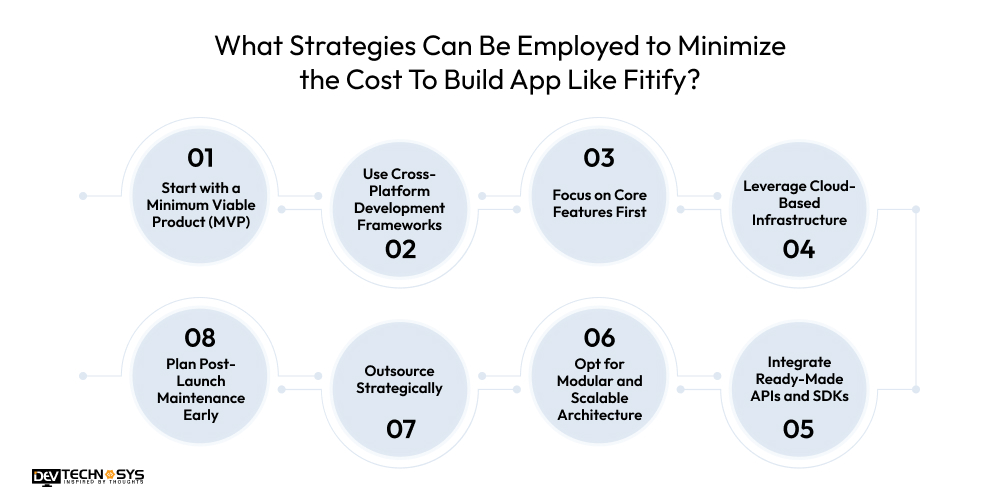
What Strategies Can Be Employed to Minimize the Cost To Build An App Like Fitify?
Startups and fitness brands can decrease development expenses by implementing strategic approaches. This is a guide on fitness app development cost in UAE to help you reduce the cost of Fitify app development.
1. Start with a Minimum Viable Product (MVP)
Launching an MVP limits development to essential features like basic workouts, user profiles, and progress tracking. This reduces initial costs, validates the idea early, gathers real user feedback, and prevents unnecessary spending on features that may not add immediate value. Focus on essential features only to validate demand while avoiding unnecessary upfront fitness app development cost.
2. Use Cross-Platform Development Frameworks
Cross-platform frameworks such as Flutter or React Native allow developers to use a single codebase for iOS and Android. This approach shortens development time, lowers engineering costs, simplifies maintenance, and ensures consistent functionality across multiple devices and platforms. It reduces time, effort, and overall engineering expenses to build a medical fitness app like DHA.
3. Focus on Core Features First
Prioritizing core fitness features helps control complexity and budget. By avoiding advanced AI and analytics initially, businesses can speed up development, reduce technical risks, and deliver a functional app that meets essential user expectations effectively. Deliver high-value fitness functionalities early to control complexity and optimize the initial budget.
4. Leverage Cloud-Based Infrastructure
Cloud-based solutions eliminate heavy upfront hardware costs and offer scalable pricing models. Pay-as-you-go infrastructure supports app growth, ensures reliability, and allows businesses to manage expenses efficiently while accommodating increasing users and data volumes. Adopt scalable cloud services to minimize the infrastructure costs of mobile app development solutions.
5. Integrate Ready-Made APIs and SDKs
Using pre-built APIs and SDKs for payments, analytics, authentication, and wearable integrations reduces custom development work. This saves time, lowers costs, minimizes bugs, and allows faster integration of advanced functionalities into the top fitness app in Dubai. Use existing tools for payments and analytics to reduce custom coding and cost to maintain an app.
6. Opt for Modular and Scalable Architecture
A modular, scalable architecture enables gradual feature expansion without system rework. Designing flexibility from the start prevents expensive redevelopment, improves performance, and supports long-term growth as new technologies and user demands evolve. Design flexible systems that support future upgrades without costly Android app development and redevelopment.
7. Outsource Strategically
Strategic outsourcing to experienced offshore or hybrid development teams reduces labor costs while maintaining quality. It provides access to skilled specialists, flexible resource scaling, and faster delivery without the burden of long-term in-house hiring. Partner with experienced offshore or hybrid teams to access expertise while lowering the Fitify app development cost.
8. Plan Post-Launch Maintenance Early
Early planning for maintenance ensures predictable expenses after launch. Budgeting for updates, bug fixes, security patches, and performance optimization prevents unexpected costs and keeps the fitness app stable, secure, and competitive long-term. Allocate maintenance budgets in advance to avoid unexpected expenses after app launch.
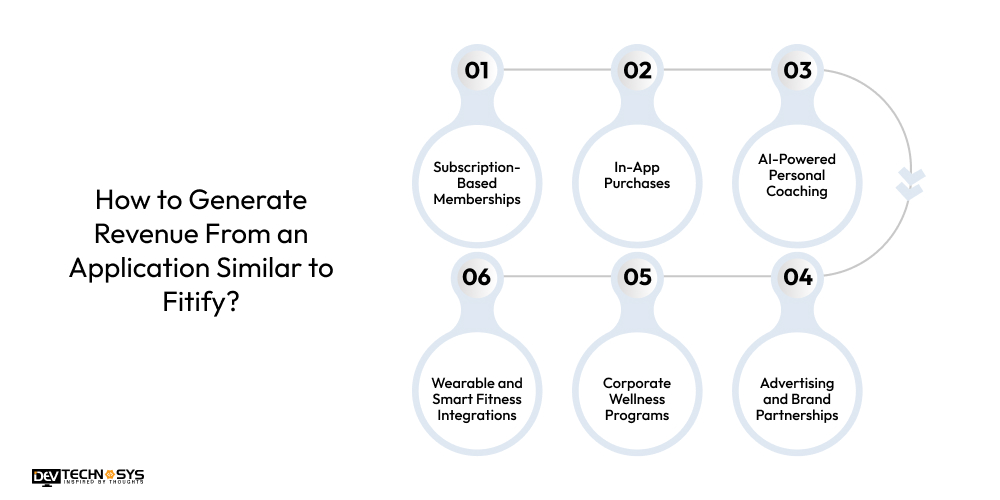
How to Generate Revenue From an Application Similar to Fitify?
Fitness applications have various monetization avenues to recoup development expenses and yield sustained revenue. Here, we will discuss some of the monetization models that help businesses generate a steady income.
1. Subscription-Based Memberships
Offer tiered subscription plans that unlock personalized workout programs, advanced analytics, offline access, and exclusive fitness content. This model ensures predictable recurring revenue while encouraging long-term user retention and consistent engagement across different fitness levels. Generate recurring income through premium plans offering advanced workouts and personalized features.
2. In-App Purchases
Monetize individual workout plans, nutrition guides, recovery programs, or fitness challenges. Users can pay for specific content without committing to subscriptions, increasing flexibility and generating incremental revenue from highly targeted fitness needs. Sell specialized fitness content individually to increase revenue without subscription dependency.
3. AI-Powered Personal Coaching
Provide virtual AI trainers that deliver real-time feedback, adaptive workout plans, and performance insights. Charging users for advanced coaching features enhances personalization while positioning the app as a premium, intelligent fitness solution. Charge users for intelligent, real-time virtual coaching and performance insights.
4. Advertising and Brand Partnerships
Collaborate with fitness brands, equipment manufacturers, and wellness companies to display targeted ads or sponsored workouts. These partnerships generate steady income while maintaining relevance through fitness-focused, non-intrusive advertising experiences. Earn revenue through fitness-focused ads and collaborations with wellness brands.
5. Corporate Wellness Programs
License the app to companies for employee fitness and wellness initiatives. Businesses pay per user or via enterprise subscriptions, creating scalable B2B revenue streams and improving workforce health, engagement, and productivity. Create scalable B2B income by offering fitness solutions to organizations and enterprises.
6. Wearable and Smart Fitness Integrations
Monetize advanced integrations with smartwatches, fitness bands, and health sensors by offering premium insights, real-time analytics, and performance reports, transforming raw device data into valuable, revenue-generating fitness intelligence. Monetize advanced device insights by transforming fitness data into premium features.
Final Remarks
The full-stack development services, such as Fitify in 2026, are a lucrative investment in the swiftly growing digital fitness landscape. Although development expenses fluctuate according to features, AI functionalities, and scalability, strategic planning enhances budget optimization and maximizes return on investment.
By comprehending cost drivers, industry trends, and monetization approaches, enterprises may develop future-ready fitness applications that satisfy changing user expectations. Utilizing an appropriate development strategy, a Fitify-like application can evolve into a robust platform for sustained growth, user engagement, and enduring profitability within the global fitness industry.
Frequently Asked Questions
1. What Is The Estimated Cost To Develop An App Like Fitify In 2026?
The cost to build an app like Fitify generally ranges from $8,000 to $30,000. It widely relies upon the factors including features, third-party integration, platform choice, tech stack, security, backend infrastructure, and others.
2. What Is The Duration Required To Develop An App Similar To Fitify?
The development of a similar app like Fitify typically requires a duration of 4 to 10 months. This development takes time because of its complexity and the technological stack. However, a simple app with basic MVP can be developed in 5-7 months.
3. Do fitness Applications necessarily Utilize Artificial Intelligence For Customization?
Artificial Intelligence (AI) is not compulsory for apps like Fitify, but it is strongly advised. It is preferred because it enhances user experience and retention through personalized workout routines and progress monitoring.
4. Can Applications Similar To Fitify Integrate With Wearable Devices?
Yes, modern fitness applications can synchronize with smartwatches, fitness bands, and health sensors for real-time data monitoring. This is one of the essential features people demand in a fitness app like Fitify.
5. Is Continuous Maintenance Required Post-Launch?
Yes, consistent upgrades, security improvements, content expansions, and performance increases are crucial for sustained success.