





Key takeaways:
-
- The cost to develop an Islamic app like WeMuslim typically ranges from $8,000 to $25,000, depending on features such as prayer time algorithms and Qibla direction.
- The global Islamic app market is projected to surpass $3.6 billion by 2027, driven by growing demand for faith-based digital tools and personalized religious experiences.
- Apps like Muslim Pro, Ummah, and IslamicFinder make practicing Islam modern, meaningful, and effortlessly integrated into daily life.
In today’s digital-first world, faith-based mobile applications like WeMuslim are transforming how Muslims engage with their religion.
They are offering tools for prayer times, Quran recitation, Qibla direction, and community connectivity, all in one place.
As we step into 2025, the demand for Islamic apps continues to grow, opening up exciting opportunities for entrepreneurs.
Building an Islamic app that is not only feature-rich but also spiritually resonant requires a thoughtful blend of technology, design, and cultural sensitivity.
Whether you’re a startup founder, a developer, or a product strategist, this guide will walk you through the essential steps to create a meaningful digital experience for Muslim users worldwide.
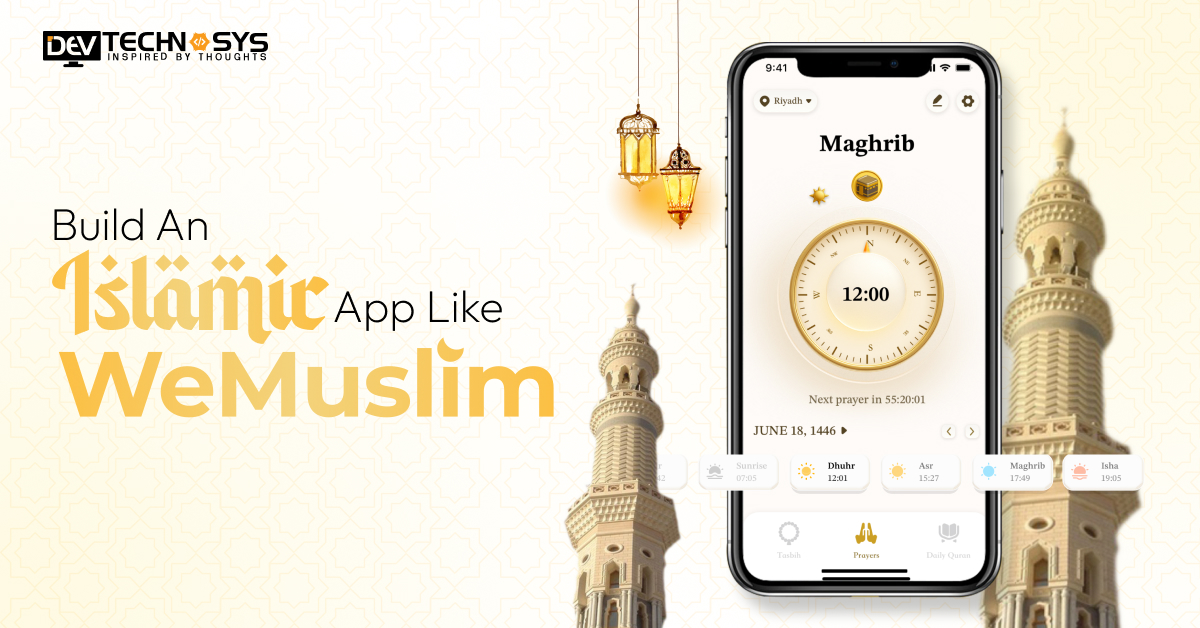
Let’s explore how to build an Islamic app like WeMuslim that inspires, informs, and elevates faith in the modern age.
Current Market Projections of Islamic Applications
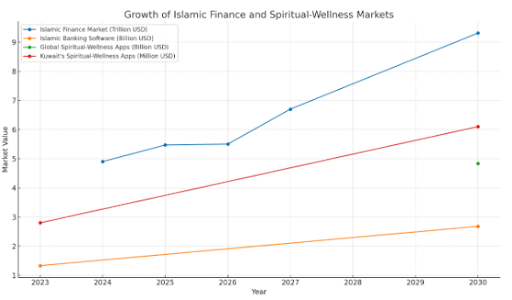
- In 2024, the global Islamic finance market reached $4.9 trillion, with expectations to grow to $5.5 trillion by 2026 and $6.7 trillion by 2027, reflecting a strong CAGR of around 10.2%.
- By 2025, Mordor Intelligence projects the Islamic finance market will stand at $5.47 trillion, expanding to $9.31 trillion by 2030, with a CAGR of 11.23%.
- Islamic banking software is valued at $1.33 billion in 2023, forecasted to hit $2.68 billion by 2030 at a 9.3% CAGR.
- Global spiritual‑wellness apps expected to reach $4.84 billion by 2030, growing at 14.6% CAGR from 2025.
- Kuwait’s spiritual‑wellness app revenue grew from $2.8 million (2023) to $6.1 million by 2030 (12.1% CAGR).
What is WeMuslim?
WeMuslim is an all-in-one spiritual companion platform for the Muslim community that can access advanced functionalities such as prayer times, the full Quran with audio, and translations. It has a simple user interface that enables users to quickly access features and services of the app with just one tap. Apps like Prayer Now and WeMuslim also include additional functionalities, such as Azkar, Hajj and Umrah guidance, a digital Tasbih counter, and a handy Qibla compass.
WeMuslim’s Success Story
- The WeMuslim app was launched in 2022 to spread spiritual tools and features for the Muslim community.
- Within a few months, the app gained 1 million user downloads because of its unique features and correct prayer times(azan).
- For the features and services enhancements, the WeMuslim app is raising funds of around $500,000 from angel investors.
- The WeMuslim app is awarded as the best Islamic app in 2023 by various Muslim tech companies or organizations and is listed in the global app store.
- It provides continuous feature and services updates, such as Hajj & Umrah guidance and social features, which can increase daily active users by around 300%.
Types of Islamic Applications
Islamic apps come in various forms, spiritual tools, educational platforms, and lifestyle solutions, empowering Muslims to practice faith, learn Islam, and connect with the Ummah in meaningful ways.
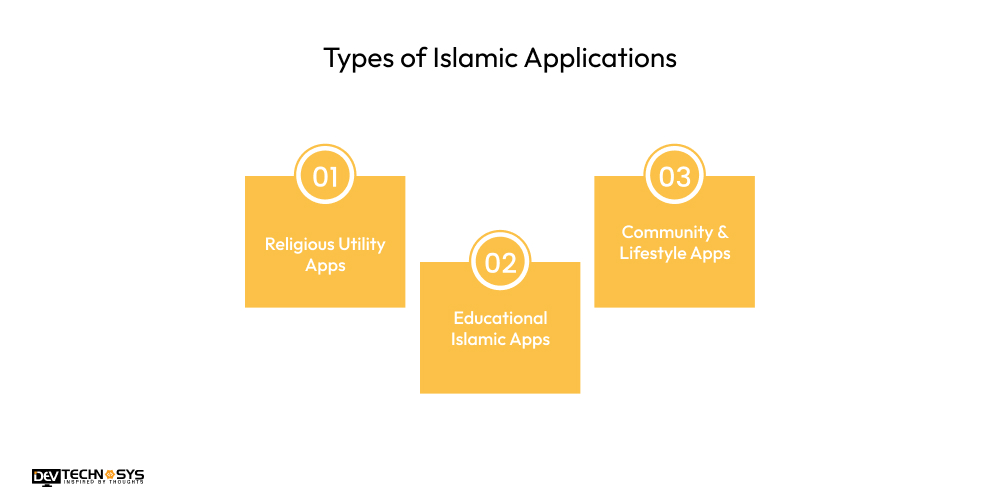
1. Religious Utility Apps
These apps provide essential tools like prayer times, Qibla direction, Quran recitation, Hijri calendar, and daily Duas. They support daily worship practices, offering reminders, Tasbih counters, and Islamic date tracking to help Muslims maintain their religious routines with convenience and accuracy.
2. Educational Islamic Apps
Focused on learning, these apps offer Quranic studies, Hadith collections, Tafsir, Islamic history, and courses for all ages. Interactive content, quizzes, and audio lessons help users deepen religious knowledge, making Islamic education more accessible, especially for children and new Muslims.
3. Community & Lifestyle Apps
These platforms connect Muslims globally through features like Islamic social networking, halal travel, marriage matching, and Zakat donation. They blend faith with lifestyle, helping users share experiences, seek guidance, attend virtual events, and live in accordance with Islamic values in modern society.
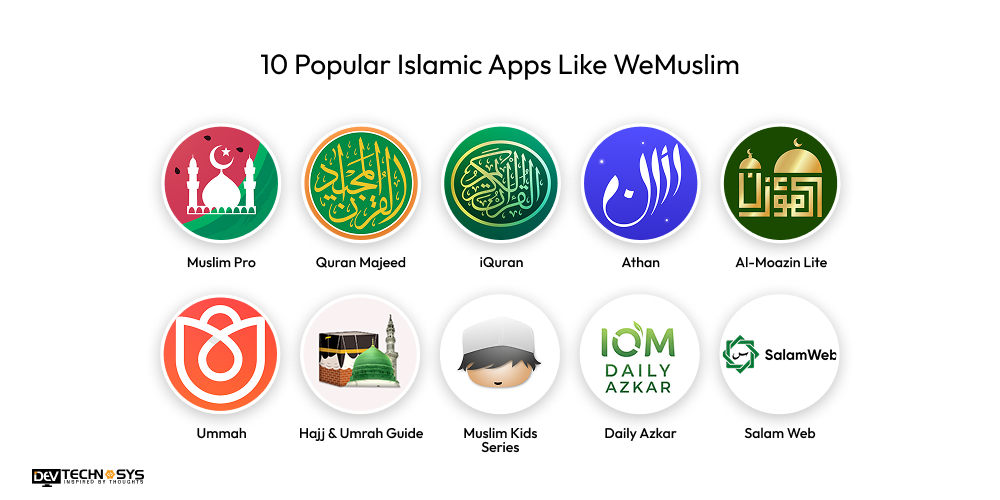
10 Popular Islamic Apps Like WeMuslim
Before starting to develop an Islamic app like WeMuslim, needs to consider the existing Islamic apps and understand their working criteria. So, let’s take a look at the best WeMuslim alternatives:
App Name |
Downloads |
Rating (Out of 5) |
Launch Year |
Platform Availability |
| Muslim Pro | 100M+ | 4.7 | 2010 | iOS, Android |
| Quran Majeed | 50M+ | 4.8 | 2013 | iOS, Android |
| iQuran | 10M+ | 4.5 | 2009 | iOS, Android |
| Athan | 10M+ | 4.6 | 2011 | iOS, Android |
| Al-Moazin Lite | 5M+ | 4.4 | 2012 | Android |
| Ummah | 1M+ | 4.2 | 2018 | iOS, Android |
| Hajj & Umrah Guide | 500K+ | 4.3 | 2017 | iOS, Android |
| Muslim Kids Series | 2M+ | 4.7 | 2014 | iOS, Android |
| Daily Azkar | 1M+ | 4.5 | 2015 | iOS, Android |
| Salam Web | 500K+ | 4.0 | 2019 | Android |
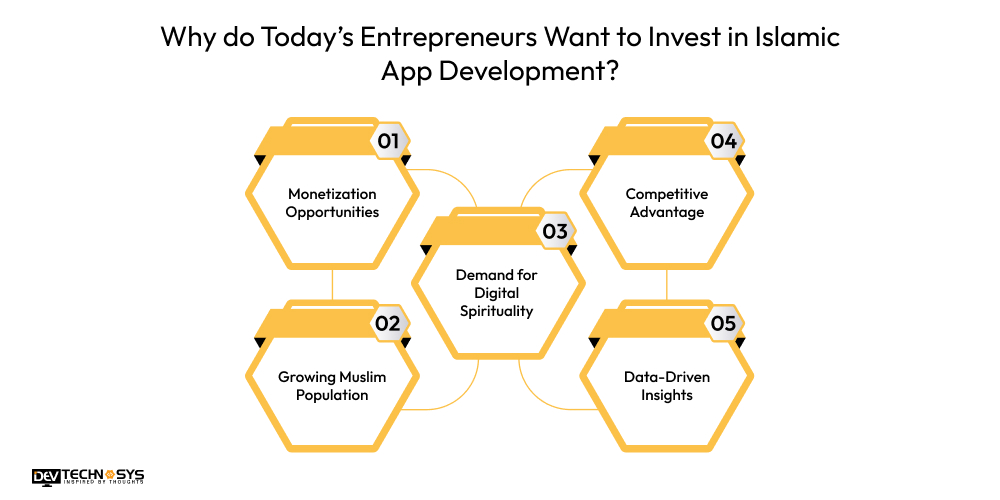
Why do Today’s Entrepreneurs Want to Invest in Islamic App Development?
As we discussed earlier in the above sections, this is how rapidly Islamic apps are growing and reaching worldwide users. Investing in Islamic app development Services is one of the most profitable opportunities for entrepreneurs. There are several benefits:
- Monetization Opportunities
- Growing Muslim Population
- Demand for Digital Spirituality
- Competitive Advantage
- Data-Driven Insights
1. Monetization Opportunities
Businesses invest in Islamic app development that can easily grab monetization opportunities and increase the overall valuation of the business. There are various money-making strategies, such as the freemium model, subscription plans, in-app purchases, advertisements, transaction fees, and many more.
2. Growing Muslim Population
The global Muslim population is rapidly increasing, creating a vast, underserved market eager for digital tools that support their religious and lifestyle needs. Making Islamic app development a promising investment opportunity to increase the overall business sales and reach a wider audience.
3. Demand for Digital Spirituality
Muslims increasingly seek accessible, tech-driven spiritual resources like prayer times, Quran apps, and religious guidance, driving demand for innovative Islamic apps with advanced features and user engagement. With the help of these applications, businesses can easily take their business to the next level.
4. Competitive Advantage
Islamic applications with unique features and service has the opportunity to gain a competitive advantage. Features include accurate prayer times, Hajj & Umrah guidance, Qibla, Quran with high-quality audio, and Azkar. These advanced features can also increase user engagement and reach global audiences.
5. Data-Driven Insights
Moving to the last benefit, if businesses build an Azan reminder app, it can observe the users’ important data, such as preferences, track their daily prayer time, habits, demographics, and more. With the help of data-driven insights, businesses can offer them personalized recommendations and suggest their favorite services.
How AI can Help Islamic Applications to Perform Their Operations?
- AI personalizes prayer reminders based on user habits, ensuring timely notifications tailored to individual routines and time zones.
- It enhances Quran search by enabling voice queries, translations, and contextual understanding for easier access to specific verses.
- AI chatbots offer instant Islamic guidance using verified sources, helping users with questions on prayer, fasting, and daily rulings.
- Machine learning analyzes user behavior to recommend relevant Duas, lectures, and Islamic content for continuous spiritual growth.
- AI improves Qibla direction accuracy using sensor data and environmental context, even in complex indoor or urban locations.
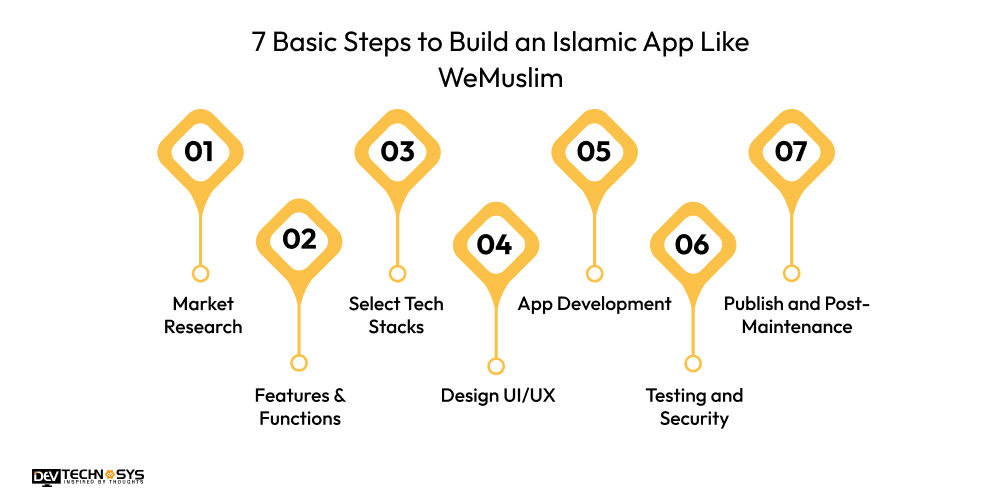
7 Basic Steps to Build an Islamic App Like WeMuslim
To develop an Islamic app like WeMuslim with specifc functionalities, just clearly follow the development steps. From requirements gathering to post-launch maintenance services, it clears all doubts and leads to a successful app development. Take a deep look at the development steps below:
- Market Research
- Features & Functions
- Select Tech Stacks
- Design UI/UX
- App Development
- Testing and Security
- Publish and Post- Maintenance
1. Market Research
Let’s begin the first step to develop an Islamic app like WeMuslim, and conduct market research about which Islamic applications can gain huge success rates and popularity. Hire app developers to identify your project requirements that must be included in your project. Make a proper sheet of requirements to reduce data redundancy.
2. Features & Functions
Moving to the second stage, to make an Islamic app like WeMuslim, identify basic and advanced features of the app that must be integrated into your application. It includes various features such as Qibla direction, Hijri calendar, Tasbih counter, prayer tracker, AI-powered Spiritual coach, live Majlis, and voice search for Dua. So, choose features as per your project requirements and personal preferences.
3. Select Tech Stacks
In the third stage, to create an Islamic app like WeMuslim. Hire developers from an Islamic app development company in UAE to choose the right tech stack is one of the most important steps for a reliable Islamic app development. There are various tech stacks, such as frontend development, backend development, cloud storage, database, security measures, DevOps, and many more.
4. Design UI/UX
Let’s move to the fourth step of WeMuslim app development: design a user-friendly interface that enables users to interact with all functionalities and services of the application easily. It includes premium themes, layouts, elements UI, templates, fonts, plugins, and many more. Use popular design tools such as Figma, Sketch, and Adobe XD to design a unique and attractive interface.
5. App Development
Let’s begin the real coding for building backend and frontend development services. Assemble an experienced development team from an artificial intelligence development company to implement the third-party tools and applications, such as a payment gateway, maps and navigation, and social media platforms. Integrate the database to store the users’ huge data, and also integrate cloud storage.
6. Testing and Security
Connecting to the sixth stage to build an Islamic app like WeMuslim, test the application under various techniques, such as functional, unit, integration, and security, before launch in the live phase. Make sure all bugs and errors are fixed as soon as possible. Implement strong security measures such as HIPAA, two-factor authentication, encryption techniques, and many more.
7. Publish and Post- Maintenance
You need to consult with an experienced mobile app development company in UAE to publish the app on the specific platforms such as iOS, Android, and cross-platforms. After release, start the maintenance services to measure the overall performance of the app and make sure features are working at their peak. It includes fixing security patches, regular updates, solving bugs, and upgrading OS versions.
What Benefits Do Islamic Applications Offer Users?
Islamic apps help users stay consistent in worship, access verified knowledge, and deepen their spiritual journey anytime, anywhere. They foster global Muslim connections, support family learning, and simplify religious obligations. All through convenient, faith-centered digital platforms.
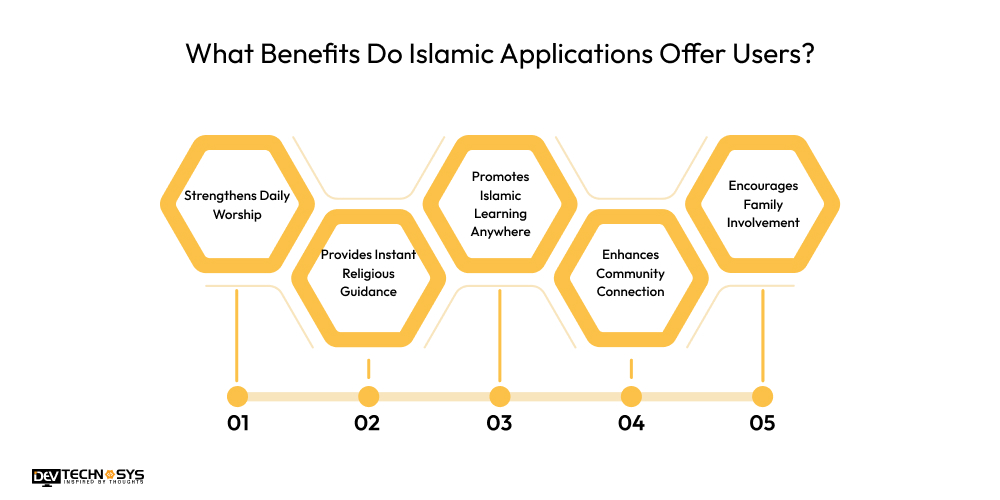
1. Strengthens Daily Worship
Islamic apps assist users in performing daily prayers, reciting the Quran, and engaging in Dhikr through reminders, schedules, and digital tools. This encourages consistency in worship and helps users develop a structured spiritual routine aligned with their faith and religious commitments.
2. Provides Instant Religious Guidance
With access to authentic Hadith, Tafsir, Fatwas, and Duas, users can instantly find answers to everyday Islamic questions. This helps Muslims make informed decisions, avoid confusion, and apply Islamic rulings correctly in various personal and social situations.
3. Promotes Islamic Learning Anywhere
These apps provide Islamic education through audio lectures, Quran translations, children’s stories, and interactive lessons. This enables users of all ages to deepen their understanding of Islam at their own pace, whether at home, work, or on the move.
4. Enhances Community Connection
Islamic apps often include features like prayer groups, local mosque locators, and community forums. These tools help users stay connected with fellow Muslims, fostering unity, social support, and opportunities for collaborative worship and learning, especially in non-Muslim regions.
5. Encourages Family Involvement
Many apps offer family-oriented features such as kid-friendly Quran stories, parental controls, and shared learning activities. This promotes Islamic upbringing in a safe digital environment, allowing families to engage in faith-based activities and learn together in an interactive way.
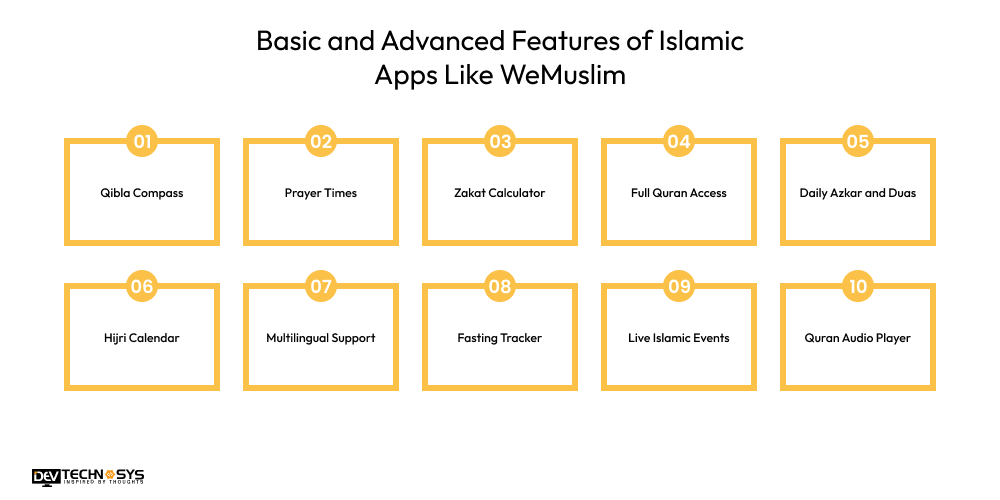
Basic and Advanced Features of Islamic Apps Like WeMuslim
Before developing an Islamic application, you must select the best features to gain huge popularity and increase user engagement. So, let’s explore the basic and advanced features of Islamic apps like WeMuslim:
-
Qibla Compass
The Islamic apps provide a digital Qibla compass to offer the right direction on prayer times(Azan) using the GPS and device sensors.
-
Prayer Times
The WeMuslim clone apps provide accurate prayer times, as well as location-based and customized Athan alert reminders for users.
-
Zakat Calculator
Apps like Muslim Pro and WeMuslim enable users to calculate their annual Zakat based on their wealth, assets, and liabilities, in accordance with Islamic guidelines.
-
Full Quran Access
The WeMuslim alternatives provide the entire Quran text in different translations and recitations, and users can read and listen to it according to their preferences.
-
Daily Azkar and Duas
Apps similar to WeMuslim offer morning, evening, and situational Duas and Azkar with high-quality audio playback and Arabic text.
-
Hijri Calendar
The WeMuslim clone apps provide the Hijri calendar, which includes important events, Islamic dates, and religious Muslim occasions such as Eid and Ramadan.
-
Multilingual Support
Prayer time app like WeMuslim supports multiple languages for all regions of users and switches languages according to their comfort and flexibility.
-
Fasting Tracker
WeMuslim alternatives help users track missed and completed fasts during Ramadan or voluntary fasting, staying organized and motivated.
-
Live Islamic Events
Other apps like WeMuslim allow users to stream live Islamic events such as Jummah Khutbahs, lectures, and community gatherings.
-
Quran Audio Player
Apps similar to WeMuslim enable users to stream or download recitations by popular Qaris, offering options to loop verses, adjust speed, and follow along with the text.
What is the Cost to Build an Islamic App Like WeMuslim?
The cost to develop an Islamic app like WeMuslim is around $8,000 to $25,000. The cost can change due to several factors, such as backend architecture, development team, features, complexity, project size, third-party tools, and more.
There are other factors that also highly impact the WeMuslim app development cost, such as security measurements, testing, deployment platforms, designing, and more. So, let’s get the detailed information about the overall Islamic app development cost:
Component |
Estimated Cost (USD) |
| UI/UX Design | $800 – $2,000 |
| Frontend Development | $2,000 – $6,000 |
| Backend Development | $2,000 – $5,000 |
| Core Islamic Features | $1,500 – $4,000 |
| Admin Panel | $800 – $2,000 |
| Testing & QA | $500 – $1,000 |
| Deployment & Launch | $400 – $1,000 |
Total Estimated Cost: $8,000 – $25,000+
What Are the Major Factors That Affect the Islamic App Development Cost?
It is one of the most critical sections when building an Islamic app within a fixed project budget, because there are many factors that highly impact the cost. We provide the major factors that can affect the entire project budget. So, let’s explore cost-affecting factors:
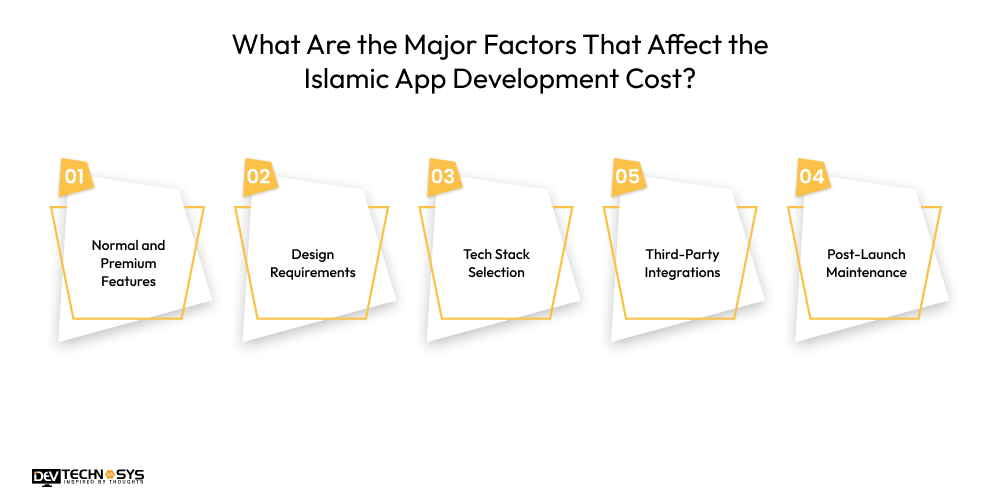
1. Normal and Premium Features
Let’s begin with the first cost-affecting factor, normal and premium features can easily affect the overall cost of develop a mobile app like WeMuslim. Normal features include accurate prayer times, Qibla compass, Hijri calendar, daily Duas & Azkar, and Mosque locator.
Premium functions involve Quran audio & Tafsir, an AI-powered prayer coach, offline access, and voice search. These premium features can increase the cost to develop an Islamic app like WeMuslim.
Feature Type |
Examples |
Estimated Cost (USD) |
| Basic Features | Prayer times, Qibla direction, daily Quran verses, Hijri calendar | $4,000 – $8,000 |
| User Registration/Login | Email, phone, or social login | $1,000 – $2,000 |
| Notifications | Push notifications for prayer times or Islamic events | $500 – $1,000 |
| Premium Features | Audio Quran recitation, Islamic courses, live classes, premium content | $5,000 – $15,000 |
| Multi-language Support | Arabic, English, Urdu, etc. | $1,500 – $4,000 |
| Offline Mode | Access Quran or prayer data offline | $2,000 – $4,000 |
2. Design Requirements
In the second factory, designing UI/UX can be another major cost-affecting factor; there are different types of design tools that are highly paid for. It includes rich themes, built-in plugins, templates, elements UI, fonts, and others. So, these high-quality designs can lead the way to a higher cost to build an Islamic app like WeMuslim.
Design Element |
Description |
Estimated Cost (USD) |
| UI/UX Design | Screens, navigation flow, layout | $2,000 – $6,000 |
| Custom Islamic Theme | Islamic art styles, Arabic typography, light/dark mode | $1,000 – $3,000 |
| Interactive Elements | Animated transitions, audio-visual feedback | $1,500 – $4,000 |
3. Tech Stack Selection
Moving to the third cost-affecting factor, choosing the best tech stacks is an essential part of the development process, but some technologies have a higher cost. Tech stacks include cloud storage, database, front-end languages or frameworks, security measures, testing, backend frameworks or languages, and many more.
At last, these tech stacks can raise the overall Islamic app development cost.
Tech Stack Area |
Options |
Estimated Cost Impact |
| Platform | iOS, Android, or both (cross-platform: Flutter/React Native) | +$5,000 – $15,000 |
| Backend | Node.js, Django, Laravel, Firebase | $4,000 – $10,000 |
| Database | MongoDB, PostgreSQL, Firebase DB | $1,000 – $3,000 |
| Hosting/Server Setup | AWS, Google Cloud, Azure | $500 – $2,000/year |
4. Third-Party Integrations
Move ahead to the last factor, third-party tools and applications can impact the WeMuslim app development cost. There are several third-party APIs that have higher licensing fees, which can influence the overall project budget. It includes social media platforms, payment gateways, and many more. So, select the integration as per the project cost and requirements.
Integration Type |
Examples |
Estimated Cost (USD) |
| Prayer Time API | AlAdhan API, Muslim Pro API | $500 – $1,500 |
| Quran API | Quran Cloud, Tanzil | $300 – $1,000 |
| Payment Gateway | Stripe, PayPal, Apple Pay, Google Pay | $1,000 – $3,000 |
| Analytics Tools | Firebase Analytics, Mixpanel, etc. | $500 – $1,000 |
| Social Sharing | WhatsApp, Facebook, Twitter | $500 – $1,000 |
5. Post-Launch Maintenance
The post-launch maintenance services can also affect the cost to develop an Islamic app like WeMuslim. It includes various services such as fixing bugs or errors, adding new enhancements, updating the outdated features, ongoing updates, performance optimization, and more. So, these post-launch maintenance services can increase the cost to maintain an app.
Maintenance Area |
Description |
Estimated Cost (USD) |
| Bug Fixes & Updates | Monthly updates, small enhancements | $500 – $1,500/month |
| Server/Hosting Costs | AWS, Firebase, etc. (based on traffic) | $100 – $500/month |
| Customer Support | Chatbot or human support team | $500 – $2,000/month |
| Feature Upgrades | Adding new features post-launch | $2,000 – $5,000/update |
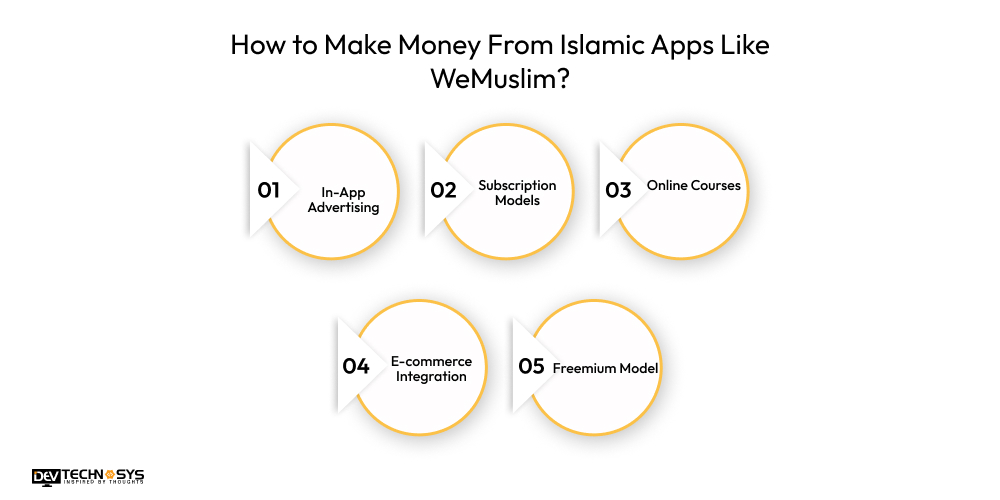
How to Make Money From Islamic Apps Like WeMuslim?
It’s awesome to make an Islamic app like WeMuslim, but how can businesses earn money from this? There are various types of monetization models that help businesses generate huge money. So, let’s figure out the best money-generating techniques:
- In-App Advertising
- Subscription Models
- Online Courses
- E-commerce Integration
- Freemium Model
1. In-App Advertising
In the first money-making technique, Islamic applications allow third-party or related businesses to display their product or services on your application as an advertisement. There are different types of ads that exist, such as banner, display, pop-up window, photo, native, and video. So, businesses can charge fees for advertising, this can be a new income source.
2. Subscription Models
Coming to the second money-making technique, the Islamic app like Quran Majeed, provides subscription models to access the premium features of the app. There are different types of subscription plans, such as free, premium, and enterprise. If users want to access the full potential of the app, then they need to purchase the paid subscription plans, like enterprise.
3. Online Courses
In the third monetization technique, these applications offer paid Islamic learning courses, Quran reading, Arabic language, or fiqh, with certification upon completion. Charge per course or offer bundles. This not only generates revenue but also adds serious educational value, increasing retention and engagement.
4. E-commerce Integration
Businesses can create an in-app store selling digital and physical Islamic products, such as e-books, prayer mats, tasbeehs, or learning kits. An app like Al Quran offers a direct monetization route while enhancing your users’ spiritual journey with curated, relevant merchandise.
5. Freemium Model
In the last money-making technique, these Islamic apps allow users to access core features for free. While locking advanced tools, such as tafsir explanations, prayer tracker analytics, or live Q&A, with a one-time or subscription-based payment. This model attracts a large user base while encouraging upgrades

How Dev Technosys Will Help You to Build an Islamic App Like WeMuslim?
Dev Technosys is a seasoned Islamic app development company that expertise in iOS and Android app development solution in Dubai. As we also discussed on the blog, how rapidly these Islamic applications are growing and expanding their business to the next level. It is a good decision to create an Islamic app like WeMuslim and also discuss its exact cost and the factors that affect it.
So, if you want to build an Islamic app like WeMuslim, then connect with a professional mobile app development company in UAE to receive high-quality solutions.
Frequently Asked Questions
1. How Much Does It Cost To Build an Islamic App Like WeMuslim in 2025?
The cost to build an Islamic app like WeMuslim ranges from $8,000 to $25,000, based on various factors such as features, complexity, development team, deployment platforms, infrastructure, and more.
2. How Long Does it Take to Create an Islamic App Like WeMuslim?
To create an Islamic app like WeMuslim, it takes around 4 to 9 weeks. The development time is mainly based on a few reasons, such as the developer’s working hours, project complexity, size, and premium features.
3. What Technologies Are Used to Make an Islamic App Like WeMuslim?
Here is the list of technologies:
- Java
- Python
- C++
- Swift
- Flutter
- Kotlin
4. What Core Features Should An Islamic App Like WeMuslim Include?
Let’s explore the various core features:
- Prayer times & Qibla direction
- Quran with audio/translation
- Community feed or social networking
- Islamic reminders & Duas
- Zakat Calculator
5. How Much Does it Cost to Hire Islamic App Developers?
The cost to hire Islamic app developers is around $15 to $25 per hour. The cost can be influenced due to various factors such as the developer’s experience level, rich skill set, project complexity, and the developer’s location.