





Key Takeaways:
- AI-powered taxi app development is transforming mobility with automation, improving efficiency, user experience, and business scalability across the Middle East region.
- Strong government initiatives, smart city projects, and high smartphone adoption are driving the rapid growth of an AI-powered taxi app significantly.
- Advanced features like route optimization, dynamic pricing, and predictive analytics enhance performance, reduce costs, and increase customer satisfaction effectively.
- Investing in intelligent ride-hailing app development offers profitable opportunities, with flexible monetization models and growing demand for intelligent ride-hailing solutions globally.
The taxi industry is undergoing a massive digital transformation, and Artificial Intelligence (AI) is at the center of this evolution. Traditional taxi services are rapidly being replaced by intelligent, app-based ride-hailing platforms that deliver speed, convenience, and efficiency.
A smart taxi booking app is more than just a ride-booking platform; it is a smart ecosystem. It uses data, algorithms, and automation to optimize routes, predict demand, improve safety, and enhance user experience.
In the Middle East, this transformation is accelerating due to strong government support, high smartphone adoption, and smart city initiatives. Cities like Dubai, Riyadh, and Doha are becoming global leaders in AI-based cab booking solutions.
Market Overview of the Taxi Industry
According to recent market analysis by Illuminati Inc., the Middle East ride-hailing industry is experiencing strong momentum. This growth is driven by rapid digital transformation, increasing urban mobility needs, and growing adoption of AI-powered transportation solutions.
- The global taxi market reached $236.36 billion in 2025 and is projected to grow $254.36 billion in 2026.
- The taxi booking industry is expected to grow steadily at a CAGR of 7.62% between 2026 and 2031.
- The global ride-hailing user base, including riders and drivers, may reach approximately 2.34 billion users by 2030.
- Major regions dominating the taxi market include North America, Asia-Pacific, Europe, the Middle East & Africa, and South America.
- The ride-hailing market is projected to reach $229.98 billion by 2030, growing at a CAGR of 5.08%.

Why Invest in AI Taxi Apps in the Middle East?
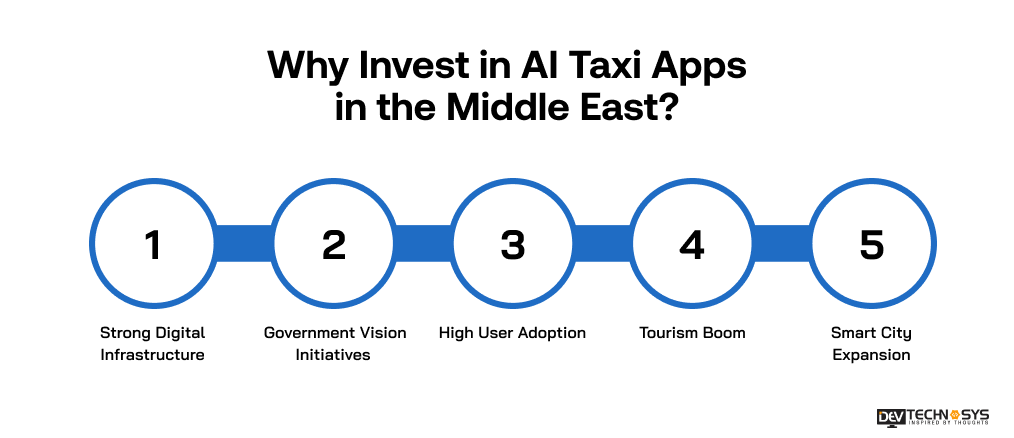
The Middle East has emerged as a highly lucrative market for AI-powered taxi app development. It is driven by rapid digital transformation and strong government support. The increasing demand for smart mobility solutions across urban populations and international travelers also ignites expansion.
1. Strong Digital Infrastructure
Countries like the UAE and Saudi Arabia have heavily invested in taxi booking app development services. They come with advanced technologies like 5G networks, cloud computing, and AI ecosystems. This robust infrastructure enables seamless app performance, real-time data processing, and scalable AI integration for taxi platforms.
2. Government Vision Initiatives
Strategic programs like Saudi Arabia’s Vision 2030 and Smart Dubai Initiative actively encourage AI adoption across industries. These initiatives promote innovation in transportation and support startups. It creates a favorable regulatory environment for a taxi app with artificial intelligence to thrive.
3. High User Adoption
The Middle East has a tech-savvy population with high smartphone penetration, leading to strong adoption of ride-hailing services. Around 70% of users prefer these platforms for enhanced safety. While 65% choose them for convenience, boosting demand for AI-driven taxi apps.
4. Tourism Boom
Cities like Dubai and Doha attract millions of international tourists annually. This growing influx significantly increases the demand for a reliable, efficient, and smart taxi booking app development solution. This makes AI taxi app development a highly profitable investment opportunity.
5. Smart City Expansion
The Gulf region is rapidly developing smart cities where AI-powered mobility plays a central role. Governments are integrating intelligent transportation systems, connected infrastructure, and data-driven solutions. It creates a strong demand for advanced taxi applications that align with future urban mobility goals.
How to Develop an AI Taxi App? A Step-by-Step Guide
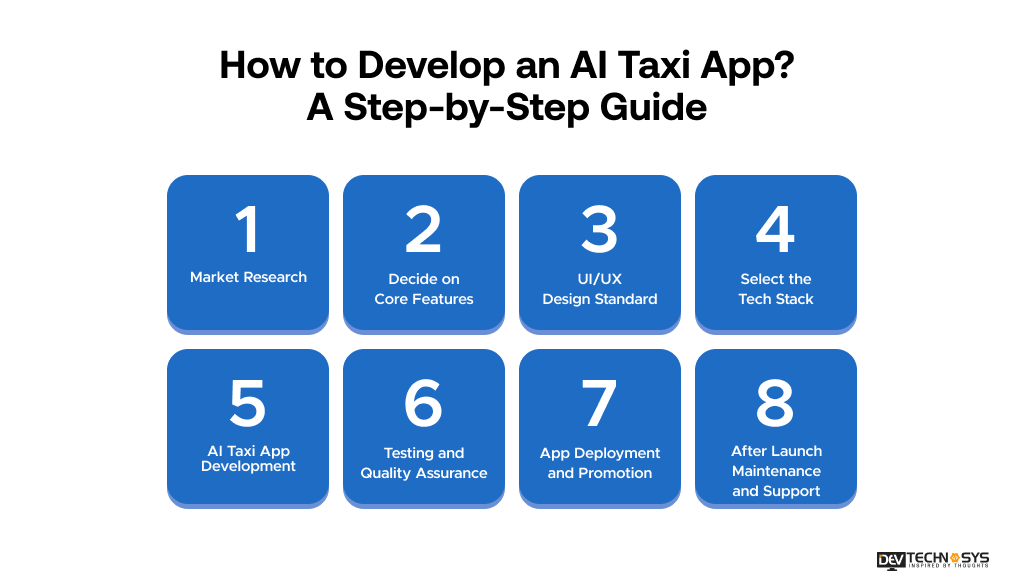
Developing an AI-enabled transportation app requires a strategic and well-structured approach to ensure scalability, performance, and user satisfaction. From initial market research to post-launch maintenance, every step to create a taxi app plays a crucial role. Have a look at these steps for building a successful, competitive, and future-ready taxi application.
Step 1: Market Research
Conduct thorough market research to understand target audience preferences, competitors, and regional transportation trends. Analyze user behavior, pricing strategies, and service gaps to identify unique opportunities for your taxi application. Study local regulations, licensing requirements, and compliance standards to ensure smooth business operations and legal approval. Evaluate market demand and emerging technologies to align your taxi app with future mobility trends effectively.
Step 2: Decide on Core Features
To build a taxi booking app like Blacklane, identify essential features required to ensure smooth platform functionality. Focus on AI-based functionalities like route optimization, dynamic pricing, and predictive demand analysis for efficiency. Prioritize features based on user needs, business goals, and market competition to maximize engagement and usability. Ensure the scalability of features so the app can adapt to future updates and advanced integrations seamlessly.
Step 3: UI/UX Design Standard
Design an intuitive and user-friendly interface that ensures seamless navigation across all app functionalities. Focus on minimalistic layouts, fast loading speeds, and responsive design for a better user experience. Incorporate localization elements such as language support and cultural preferences for regional user engagement. Ensure accessibility and consistency in design to maintain a smooth and visually appealing user journey.
Step 4: Select the Tech Stack
Choose the right combination of frontend, backend, and AI technologies to develop a taxi booking app like Bitaksi. Ensure the tech stack supports real-time processing, data handling, and seamless integration with third-party services. Consider cloud infrastructure and security tools to maintain performance, reliability, and data protection standards. Select technologies that allow flexibility for future upgrades and evolving business requirements efficiently.
Step 5: AI Taxi App Development
Develop the frontend and backend systems to create functional and scalable on-demand AI-powered taxi apps. Integrate APIs for maps, payments, and notifications to enable seamless communication and service delivery. Implement AI models for route optimization, pricing strategies, and demand forecasting to enhance app intelligence. Ensure proper coding standards and architecture to build an app like Tirhal while maintaining performance, security, and long-term scalability.
Step 6: Testing and Quality Assurance
Perform rigorous testing to identify bugs, errors, and performance issues across different devices and platforms. Ensure the application meets quality standards by conducting functional, usability, and security testing processes thoroughly. Validate AI models to ensure accurate predictions and consistent performance in real-world scenarios and conditions. Optimize app performance by resolving issues and improving speed, responsiveness, and reliability before launch.
Step 7: App Deployment and Promotion
Deploy the iOS or Android app development on app stores, ensuring compliance with platform guidelines and technical requirements. Implement marketing strategies such as SEO, social media campaigns, and paid advertising to attract users effectively. Monitor app performance and user feedback to make improvements and enhance the overall user experience continuously. Use analytics tools to track growth, engagement, and conversion rates for better business decision-making.
Step 8: After Launch Maintenance and Support
Provide continuous maintenance to fix bugs, update features, and ensure smooth app performance after you build an AI-powered taxi app. Monitor system performance and user behavior to identify areas for improvement and optimization regularly. Update AI models and technologies to keep the app aligned with evolving market trends and innovations. Offer customer support services to resolve user issues quickly and maintain high satisfaction levels consistently.

What are the Key Features of an AI-Based Taxi Booking App?
An AI-based taxi booking app includes multiple advanced features designed to enhance user experience, streamline driver operations, and improve business efficiency. A mobile app development company leverages these features to provide real-time insights, automation, and seamless ride management across all stakeholders.
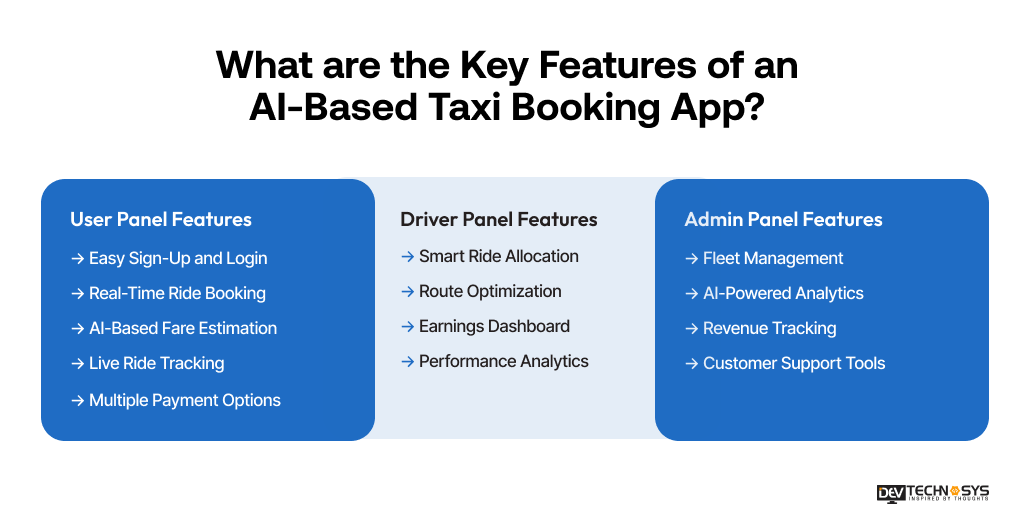
User Panel Features
1. Easy Sign-Up and Login
A simple registration process allows users to quickly create accounts using email, phone number, or social platforms securely. It ensures faster onboarding while maintaining authentication standards, enabling users to access taxi services without unnecessary delays or complications.
2. Real-Time Ride Booking
Users can instantly book rides by selecting pickup and drop locations with real-time driver availability displayed accurately. This feature enhances convenience by reducing waiting times and enabling quick confirmations, improving the overall user experience significantly.
3. AI-Based Fare Estimation
AI algorithms calculate fares based on distance, traffic conditions, demand, and route optimization for accurate pricing. It ensures transparency and builds user trust by providing upfront pricing, reducing disputes, and enhancing customer satisfaction effectively.
4. Live Ride Tracking
This feature allows users to track their ride in real time using GPS-based navigation systems integrated within the app. It improves safety and reliability by providing accurate location updates, estimated arrival times, and route visibility throughout the journey.
5. Multiple Payment Options
Users can choose from various payment methods, including credit cards, digital wallets, and cash, for flexibility. It enhances convenience and accessibility, allowing users from different regions and preferences to complete transactions securely and easily.
Driver Panel Features
1. Smart Ride Allocation
AI-based systems assign ride requests to drivers based on proximity, availability, and performance metrics efficiently. This reduces idle time, improves driver productivity, and ensures faster ride fulfillment, leading to better customer satisfaction overall.
2. Route Optimization
AI analyzes traffic patterns and suggests the fastest and most efficient routes for drivers during trips. It minimizes fuel consumption, reduces travel time, and enhances operational efficiency, benefiting both drivers and passengers significantly.
3. Earnings Dashboard
Drivers can view detailed insights into their daily, weekly, and monthly earnings through an interactive dashboard. It helps them track performance, manage income, and make informed decisions to maximize profitability and work efficiency.
4. Performance Analytics
This feature evaluates driver performance based on ratings, completed rides, and customer feedback continuously. It encourages better service quality, helps identify improvement areas, and ensures consistent service standards across the platform.
Admin Panel Features
1. Fleet Management
Admins can manage vehicles, drivers, and operations through a centralized system with real-time updates and controls. An iOS app development company adds this feature to improve operational efficiency by streamlining processes and reducing manual efforts.
2. AI-Powered Analytics
Advanced analytics provide insights into user behavior, ride patterns, and revenue trends using AI-driven data processing. It helps businesses make data-driven decisions, optimize operations, and identify growth opportunities within the competitive taxi market.
3. Revenue Tracking
Admins can monitor earnings, commissions, and overall financial performance through detailed reporting and dashboards. It ensures transparency in transactions and helps businesses track profitability while managing expenses and operational costs effectively.
4. Customer Support Tools
Integrated support tools enable admins to handle user queries, complaints, and issues efficiently in real time. It enhances user satisfaction by providing quick resolutions, improving trust, and maintaining a high-quality customer experience consistently.
Technology Stack for AI Taxi App Development
A strong technology stack ensures smooth performance, scalability, and real-time functionality in AI taxi apps. It combines modern frontend, backend, AI tools, and cloud services to deliver efficient operations and seamless user experiences.
| Layer | Technologies | Description |
| Frontend | React Native, Flutter, Swift | Builds user-friendly and responsive mobile app interfaces. |
| Backend | Node.js, Python, Django | Manages server logic, APIs, and data processing. |
| AI/ML | TensorFlow, PyTorch | Enables smart features like prediction and automation. |
| Database | MongoDB, PostgreSQL | Stores user data, rides, and transactions securely. |
| Cloud | AWS, Google Cloud, Azure | Provides scalable hosting and infrastructure support. |
| Maps API | Google Maps, Mapbox | Supports navigation, tracking, and route optimization. |
| Payments | Stripe, PayTabs | Ensures secure and flexible payment processing. |
| Security | Firebase Auth, OAuth | Protects user data and manages authentication. |
| DevOps | Docker, Kubernetes | Handles deployment, scaling, and system monitoring. |
How Much Does it Cost to Develop an AI Taxi App in the Middle East?
The cost of an AI-powered taxi app development in the Middle East typically ranges between $8,000 and $30,000, depending on features, design, and AI capabilities.
- A basic taxi app with essential functionalities like ride booking and tracking may cost around $8,000 to $12,000.
- An AI-integrated app with features like route optimization and dynamic pricing can range from $12,000 to $20,000.
- Advanced apps with automation, analytics, and scalability features may cost between $20,000 and $30,000.
The final cost to build an app like Hala Taxi depends on business requirements, development approach, and technology choices. We will understand this with a cost breakdown table.
| App Type | Features Included | Estimated Cost |
| Basic Taxi App | User registration, ride booking, driver matching, basic tracking, simple UI | $8,000 – $12,000 |
| AI-Integrated App | All basic features + route optimization, dynamic pricing, AI-based suggestions, improved UI/UX | $12,000 – $20,000 |
| Advanced AI App | All AI features + automation, analytics dashboard, scalability, enhanced security, and admin controls | $20,000 – $30,000 |
Many factors are responsible for varying the final development cost of a taxi mobile app with AI. These features include complexity, features, platform choice, UI/UX, backend infrastructure, security, maintenance, and more. Let’s discuss some of these factors with breakdown tables.
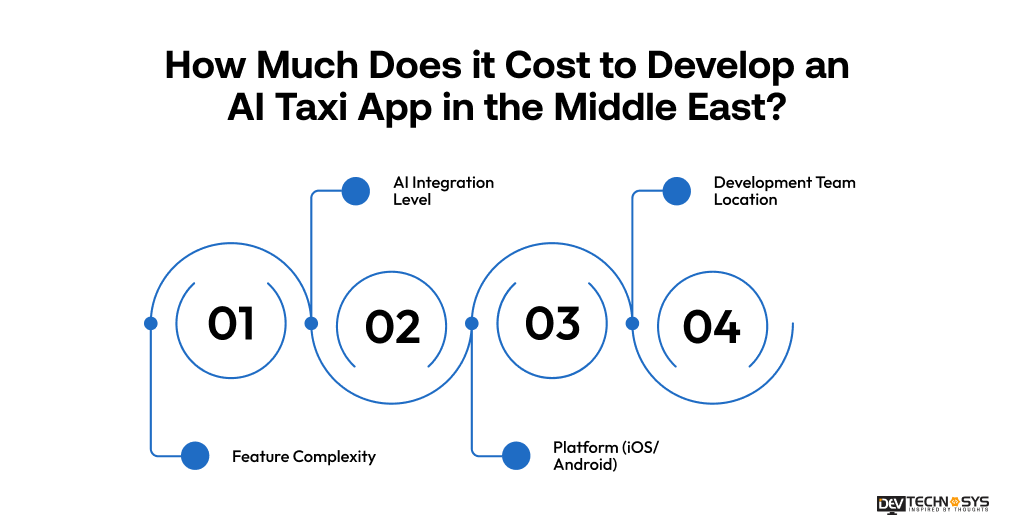
1. Feature Complexity
The number and complexity of features significantly impact development costs, as advanced functionalities require more time and expertise. Features like real-time tracking, multi-language support, and AI-based automation increase development efforts, testing requirements, and overall project cost considerably.
| Level | Description | Cost |
| Basic | Core features like booking and tracking | $2,000 – $3,500 |
| Medium | Adds payments, notifications, and real-time updates | $3,500 – $6,000 |
| Advanced | Includes analytics, multi-language, and advanced UI | $6,000 – $8,000 |
2. AI Integration Level
The level of artificial intelligence integration directly affects the overall development cost of the taxi application. Basic AI features are less expensive, while advanced capabilities like predictive analytics and automation require complex algorithms, increasing time and cost to develop a taxi booking app.
| Level | Description | Cost |
| Basic AI | Simple automation and fare estimation | $2,500 – $4,500 |
| Moderate AI | Route optimization and demand prediction | $4,500 – $7,500 |
| Advanced AI | Dynamic pricing and advanced analytics | $7,500 – $10,000 |

3. Platform (iOS/Android)
Choosing between single-platform and cross-platform development influences the overall timeline and cost of the multi-city taxi app solution. Building separate apps for iOS and Android increases expenses, while cross-platform frameworks help reduce the mobile app development cost but may impact performance in some cases.
| Type | Description | Cost |
| Single Platform | App for either Android or iOS | $8,000 – $15,000 |
| Cross-Platform | One app for both platforms | $12,000 – $22,000 |
| Native (Both) | Separate apps for iOS and Android | $20,000 – $30,000 |
4. Development Team Location
The geographical location of the taxi app developers plays a crucial role in determining the total project cost. A Taxi app developer in regions like North America charges higher rates. While teams in Asia offer cost-effective solutions without compromising quality and performance.
| Region | Description | Cost |
| Asia | Cost-effective with skilled developers | $1,500 – $3,000 |
| Eastern Europe | Balanced cost and quality | $3,000 – $4,500 |
| North America / Europe | Premium services with higher rates | $4,500 – $6,000 |
Popular Taxi Apps in the Middle East
The Middle East taxi app market is dominated by several global and regional players offering advanced features, seamless user experiences, and strong market presence. These apps have transformed urban mobility by leveraging AI, flexible payment systems, and localized hybrid app development services.
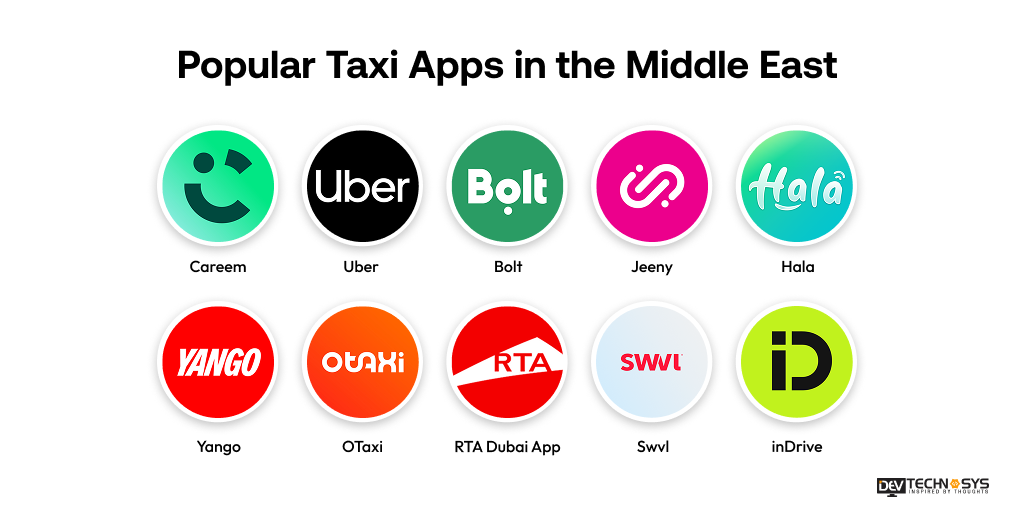
| App Name | Launch Year | Ratings | Downloads | Platform Availability |
| Careem | 2012 | 4.5 | 50M+ | Android, iOS |
| Uber | 2009 | 4.4 | 500M+ | Android, iOS |
| Bolt | 2013 | 4.3 | 100M+ | Android, iOS |
| Jeeny | 2016 | 4.1 | 10M+ | Android, iOS |
| Hala | 2019 | 4.2 | 5M+ | Android, iOS |
| Yango | 2018 | 4.3 | 50M+ | Android, iOS |
| OTaxi | 2017 | 4.0 | 1M+ | Android, iOS |
| RTA Dubai App | 2015 | 4.1 | 5M+ | Android, iOS |
| Swvl | 2017 | 4.2 | 10M+ | Android, iOS |
| inDrive | 2013 | 4.5 | 100M+ | Android, iOS |
The Middle East taxi app market is driven by a mix of global leaders and strong regional platforms, each offering unique features and localized services. The app insights highlight key players, their market presence, and how they are shaping smart mobility across the region.
1. Careem
Careem is a leading ride-hailing platform in the Middle East, offering services like taxi booking, food delivery, and payments. Founded in 2012, it provides localized solutions, Arabic support, and multiple payment options, making it highly popular across the UAE, Saudi Arabia, and nearby regions.
2. Jeeny
Jeeny is a regional ride-hailing app operating mainly in Saudi Arabia and Jordan, offering affordable and reliable transportation services. It focuses on budget-friendly rides, simple interface, and localized services, making it a preferred choice for cost-conscious users in the Middle East
3. Hala
Hala is a Dubai-based ride-hailing service launched through a partnership between Careem and the Roads and Transport Authority. It integrates traditional taxis with smart booking features, providing regulated fares, real-time tracking, and seamless ride experiences across the city.
4. OTaxi
OTaxi is an emerging ride-hailing platform in the Middle East, offering convenient and affordable taxi booking services. It focuses on user-friendly design, quick ride availability, and competitive pricing, aiming to expand its presence in growing urban transportation markets.
5. inDrive
inDrive is a global ride-hailing app that allows users to negotiate fares directly with drivers, offering flexibility and transparency. It is widely used in Middle Eastern cities due to its unique pricing model, affordability, and user-centric approach to ride booking.
Money-Making Models for Taxi Apps
Taxi apps generate revenue through multiple monetization strategies that ensure profitability while maintaining user affordability and driver engagement. Choosing the right business model helps companies maximize earnings, improve scalability, and create sustainable growth in the competitive Middle East ride-hailing market.
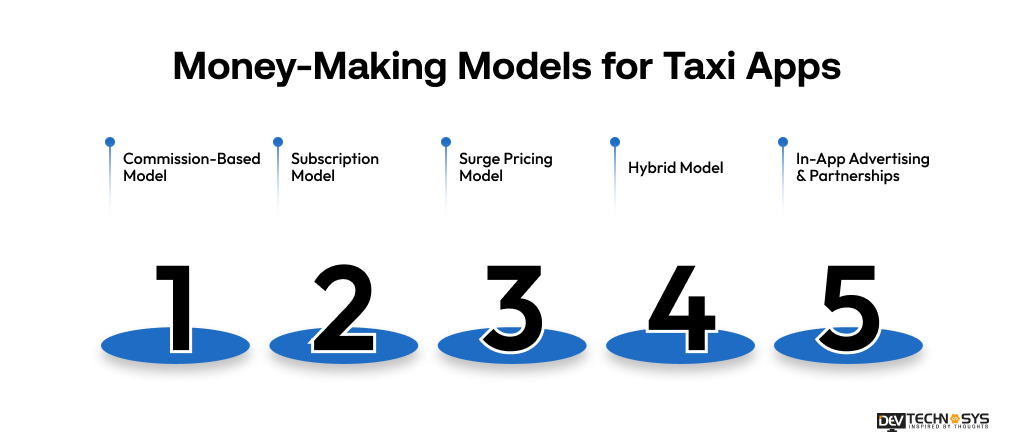
1. Commission-Based Model
In this model, the platform charges drivers a fixed percentage commission on every completed ride booked through the app. It ensures consistent revenue generation while allowing drivers to earn flexibly, making it one of the most widely adopted monetization strategies.
2. Subscription Model
Drivers pay a monthly or weekly subscription fee to access the platform and receive ride requests without commission deductions. This model provides predictable revenue for businesses while offering drivers higher earnings potential by eliminating per-ride commission charges.
3. Surge Pricing Model
This model increases ride fares automatically during peak hours, high-demand periods, or limited driver availability. It helps balance supply and demand while maximizing revenue and encouraging more drivers to become active during busy times.
4. Hybrid Model
The hybrid model combines multiple revenue streams, such as commissions, subscriptions, and surge pricing strategies, effectively. It offers flexibility to businesses by diversifying income sources while ensuring stability and scalability in different market conditions.
5. In-App Advertising & Partnerships
Taxi apps generate additional revenue by displaying targeted advertisements and collaborating with local businesses or brands. This model enhances monetization opportunities without directly impacting ride costs, creating a win-win situation for users and platform owners.
Role of AI in Transforming Taxi Apps
Artificial Intelligence plays a crucial role in modern GPS-based taxi apps by enabling automation, improving efficiency, and enhancing user experience. It helps businesses optimize operations, reduce costs, and deliver smarter, faster, and more reliable transportation services across highly competitive markets.
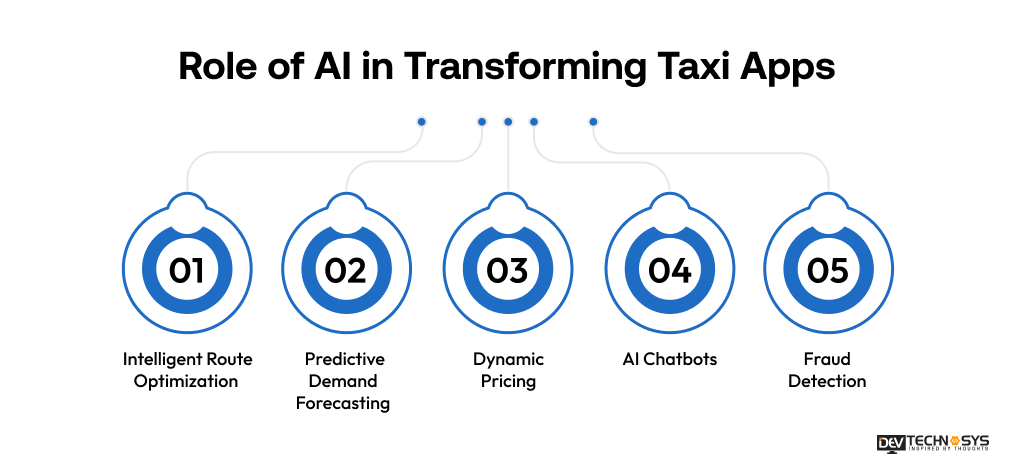
1. Intelligent Route Optimization
AI analyzes real-time traffic data, road conditions, and historical patterns to determine optimal routes. It reduces travel time, lowers fuel consumption, and improves driver efficiency while ensuring faster and smoother rides. This feature enhances customer satisfaction by minimizing delays and providing consistent, predictable travel experiences across urban routes.
2. Predictive Demand Forecasting
AI evaluates past ride data and user behavior to predict peak demand periods accurately. It helps allocate drivers efficiently, reduce wait times, and improve service availability in high-demand areas. This ensures better resource utilization and helps businesses prepare for demand fluctuations without compromising service quality.
3. Dynamic Pricing
AI adjusts fare prices automatically based on demand, traffic conditions, and ride availability. It maximizes revenue opportunities while maintaining fair pricing, ensuring a balance between driver earnings and user affordability. This strategy also helps manage peak-time demand effectively by encouraging more drivers to become available when needed.
4. AI Chatbots
AI-powered chatbots provide instant customer support by handling queries, bookings, and issue resolution. They operate 24/7, reduce human workload, and enhance user satisfaction through quick and consistent responses. This improves customer engagement while ensuring seamless communication, even during high traffic periods or peak service hours.
5. Fraud Detection
AI monitors user and driver activities to identify unusual patterns and suspicious behaviors in real time. It prevents fraud, enhances platform security, and ensures a safe and trustworthy experience for all users. This builds trust among users and drivers by maintaining platform integrity and reducing risks associated with digital transactions.

Future Trends in AI Taxi App Development
The future of AI taxi app development is driven by rapid technological advancements and evolving urban mobility needs. Innovations like automation, connectivity, and smart infrastructure are reshaping transportation. It enables more efficient, sustainable, and user-centric ride-hailing solutions across modern cities.
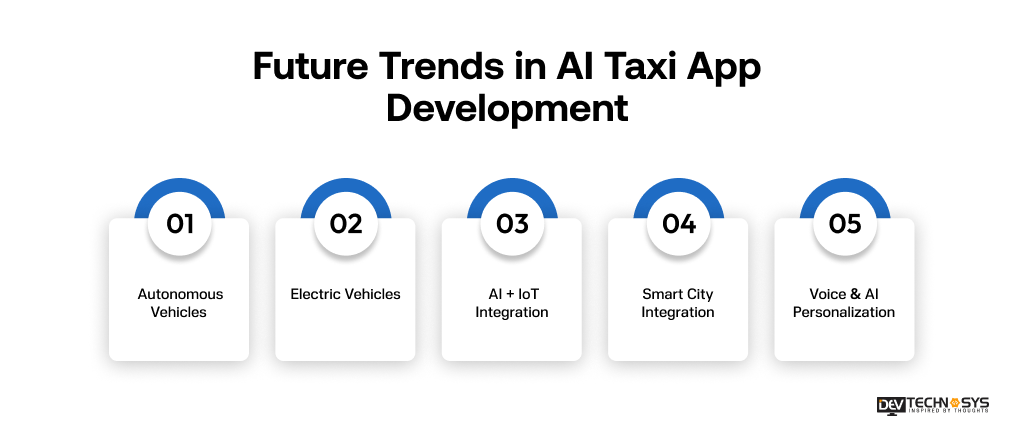
1. Autonomous Vehicles
Autonomous vehicles are transforming the taxi industry by enabling driverless ride experiences across smart cities. Robotaxis are already being tested and deployed in regions like the Middle East with promising results.
2. Electric Vehicles
Electric vehicles are becoming a key focus as governments push for sustainable and eco-friendly transportation solutions. Taxi companies are increasingly adopting EVs to reduce carbon emissions and operational fuel costs significantly.
3. AI + IoT Integration
AI combined with IoT enables real-time data exchange between vehicles, infrastructure, and traffic management systems. Smart sensors and connected devices help monitor traffic conditions, vehicle performance, and passenger safety continuously.
4. Smart City Integration
Taxi apps are increasingly integrating with smart city infrastructure to provide seamless and efficient transportation services. They connect with public transport systems, traffic signals, and urban planning technologies for better coordination.
5. Voice & AI Personalization
Voice-enabled booking and AI personalization are emerging trends improving user convenience and engagement significantly. Users can book rides using voice commands while receiving personalized recommendations based on travel behavior patterns.
Final Words
AI-powered taxi app development is transforming the transportation landscape across the Middle East by introducing smarter, faster, and more efficient mobility solutions. Strong government initiatives, rapid digital adoption, and increasing urbanization are accelerating the demand for intelligent ride-hailing platforms in the region.
Advanced technologies like predictive analytics, AI-driven automation, and autonomous vehicles are reshaping how users interact with transportation services. If you’re interested in building one, reach out to a taxi booking app development company.
For startups and enterprises, investing in AI taxi app development presents a significant opportunity to tap into a rapidly growing market. Companies that adopt innovative solutions early can gain a competitive advantage and establish a strong presence in the evolving smart mobility ecosystem.
FAQs
1. How Long Does It Take To Build an AI Taxi App?
Developing an AI taxi app typically takes four to nine months, depending on features and complexity. The timeline includes design, development, testing, and deployment phases to ensure a high-quality application. More advanced features like AI integration and automation may increase development time due to added complexity.
2. What Is The Cost In The Middle East?
The cost of developing an AI taxi app in the Middle East varies based on features and requirements. Basic applications cost less, while advanced AI-enabled platforms require higher investment due to complex development processes. On average, development costs range from fifty thousand to two hundred thousand dollars, depending on scope.
3. Which AI Features Are Essential?
Essential AI features in taxi apps include route optimization, dynamic pricing, and predictive demand forecasting capabilities. These features help improve efficiency, reduce costs, and enhance user experience through intelligent automation systems. AI-powered chatbots and fraud detection also play a crucial role in improving customer support and security.
4. Is The Middle East A Good Market?
The Middle East is a highly promising market for AI taxi apps due to rapid digital transformation growth. High smartphone penetration and strong government support further accelerate the adoption of smart mobility solutions significantly. Urbanization and tourism growth create continuous demand for reliable and efficient transportation services across major cities.
5. How Can Taxi Apps Generate Revenue Effectively?
Taxi apps generate revenue through multiple monetization models such as commissions, subscriptions, and surge pricing strategies. They also leverage in-app advertising, partnerships, and premium services to create additional income streams effectively. Diversifying revenue sources helps businesses maintain stability and maximize profitability in competitive market conditions.