





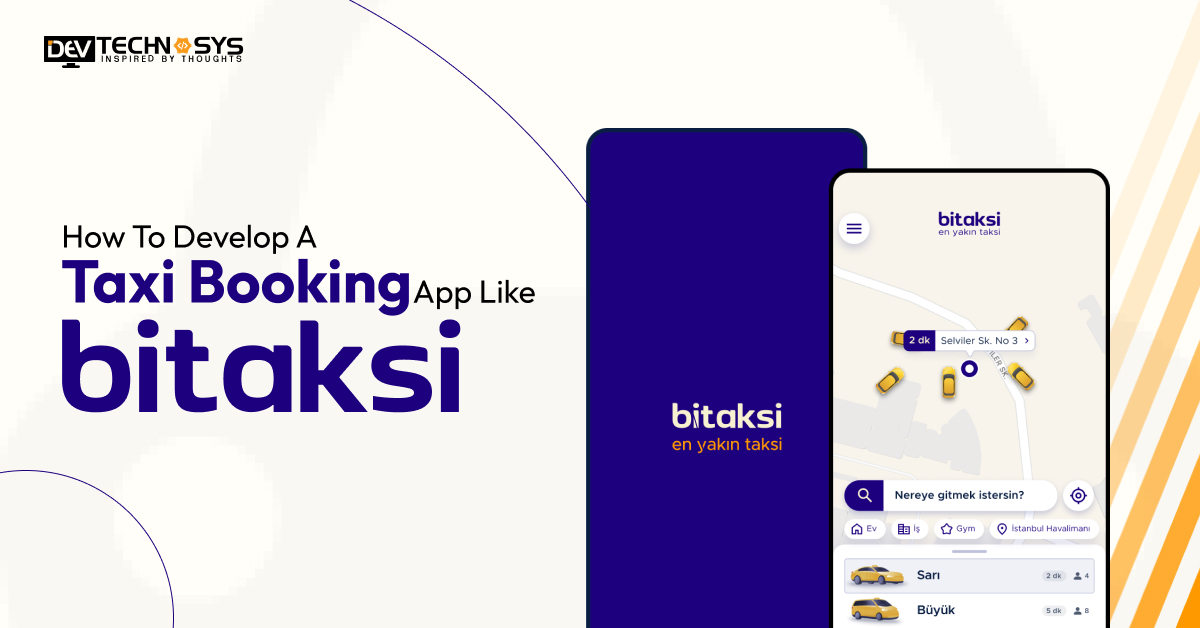
Developing a taxi booking app like Bitaksi requires a clear understanding of urban mobility challenges, user expectations, and real-time technology integration. As one of Turkey’s most successful ride-hailing platforms, BiTaksi sets a strong benchmark with its seamless booking flow, secure payments, live driver tracking, and reliable customer experience.
To build a similar app, businesses must combine intuitive UI/UX design with robust backend architecture, GPS and map integrations, scalable cloud infrastructure, and strict safety standards. From validating the business model and choosing the right technology stack to implementing core features such as ride matching, fare estimation, and in-app payments, each development stage plays a critical role in creating a competitive and user-friendly taxi booking solution. So, let’s dive in and discover how to develop a taxi booking app like Bitaksi in a simple way!
What is Bitaksi App?
Bitakshi is Turkey’s first and popular mobile taxi-hailing app, similar to Uber, connecting users with nearby licensed drivers for easy booking, tracking, and cashless payments through smartphones, offering options like large taxis, luxury rides, and pet-friendly travel, ensuring safety and convenience in cities like Istanbul.
What are the Business Benefits of Developing a Taxi Booking App Like Bitaksi?
Before diving into the taxi app development guide, let’s first discuss some business benefits. Businesses should invest to develop a taxi booking app like Bitaksi as it opens various lucrative opportunities for them. It delivers substantial business value by transforming traditional taxi services into a digital-first, on-demand ecosystem.
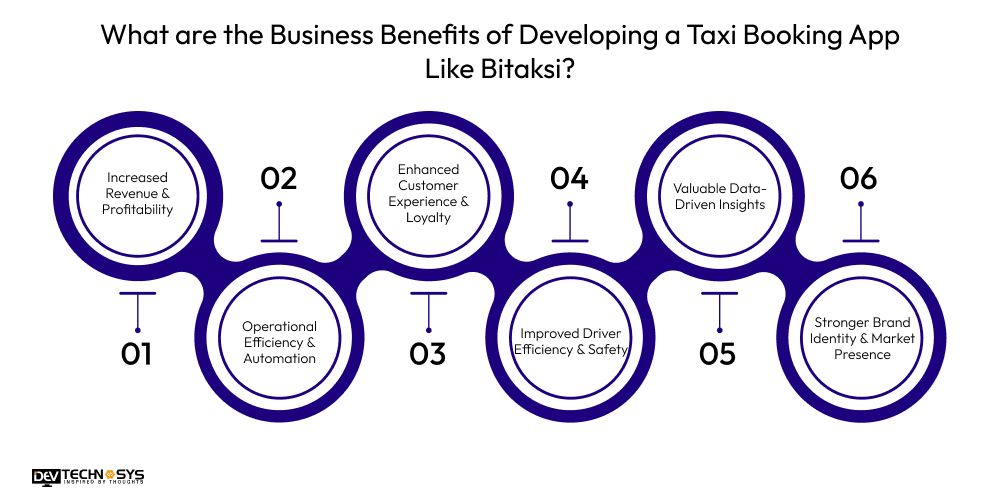
1. Increased Revenue & Profitability
A top taxi booking app in Dubai can drive a 30% to 40% increase in bookings by improving accessibility and convenience. Revenue is further enhanced through dynamic surge pricing during peak demand, in-app advertisements, commission-based rides, and value-added services, resulting in higher margins and consistent cash flow.
2. Operational Efficiency & Automation
Automated ride requests, intelligent driver dispatching, digital fare calculation, and cashless payments significantly reduce dependency on manual processes and call-based bookings. This minimizes human errors, lowers administrative overhead, and eliminates the need for large dispatcher teams.
3. Enhanced Customer Experience & Loyalty
With features like one-tap booking, real-time driver tracking, accurate ETAs, ride history, and multiple payment options, users enjoy a seamless and reliable experience. Businesses should develop a taxi booking app like Bitaksi to foster trust, improve retention rates, and reduce customer churn from generic ride-hailing platforms.
4. Improved Driver Efficiency & Safety
Drivers benefit from smart route navigation, reduced idle time, and optimized trip assignments, resulting in higher earnings and lower fuel costs. Develop a taxi booking app like Bolt with safety features such as live trip tracking, SOS alerts, driver verification, and rating systems to create a secure environment for both drivers and passengers.
5. Valuable Data-Driven Insights
Make a taxi booking app like Bitaksi that provides access to actionable data on peak hours, high-demand locations, ride frequency, and user behavior. These insights help businesses optimize pricing strategies, improve fleet management, and plan targeted marketing campaigns.
6. Stronger Brand Identity & Market Presence
Unlike aggregator platforms that dilute brand visibility, the best taxi booking app in Middle East with custom features promotes your own brand, logo, and service values. This strengthens brand recognition, builds customer trust, and positions your business as a reliable local mobility solution.
What are the Top 10 Taxi Booking Apps to Consider in 2026?
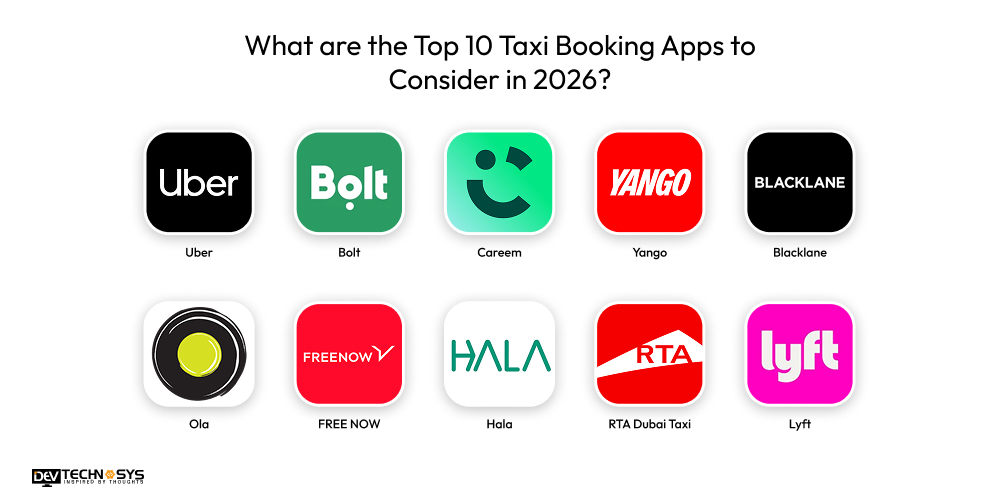
If you are looking for a top taxi booking app in UAE, then Bitaksi might be your first choice. But there re are other amazing taxi booking apps that you can explore. The list contains some of the most sought-after Bitaksi alternatives for you to check out.
App Name |
Launch Year |
Avg. Rating |
Platform Availability |
| Uber | 2009 | 4.5 | iOS, Android, Web |
| Bolt | 2013 | 4.4 | iOS, Android |
| Careem | 2012 | 4.4 | iOS, Android |
| Yango | 2018 | 4.5 | iOS, Android |
| Blacklane | 2014 | 4.7 | iOS, Android, Web |
| Ola | 2011 | 4.0 | iOS, Android |
| FREE NOW | 2009 | 4.2 | iOS, Android |
| Hala | 2019 | 4.0 | iOS, Android |
| RTA Dubai Taxi | 2020 | 4.1 | iOS, Android |
| Lyft | 2012 | 4.3 | iOS, Android |
What are the Steps to Develop a Taxi Booking App Like Bitaksi?
Developing a taxi app like BiTaksi involves focusing on core functionalities like real-time tracking, secure payments, and easy booking for a successful on-demand service. Here are the easy steps to create a taxi booking app like bitaksi.
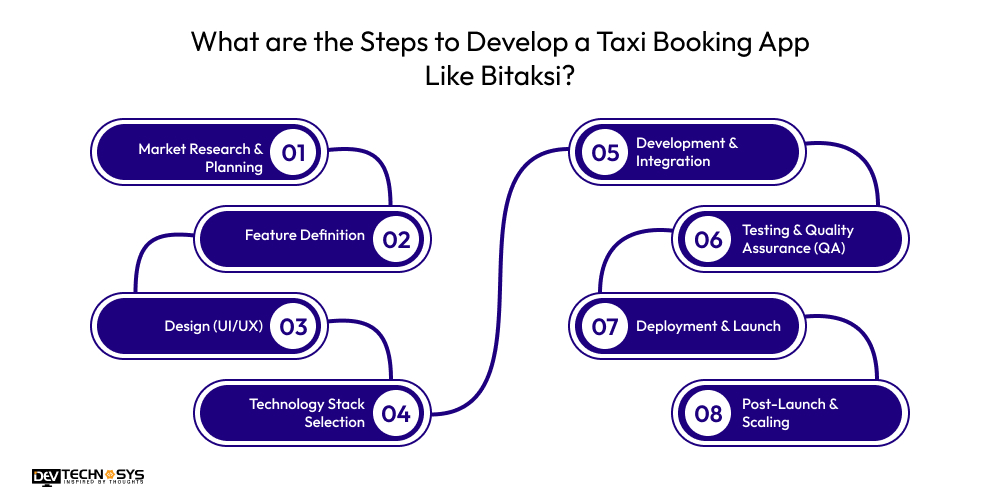
1. Market Research & Planning
Before you develop a taxi booking app like Bitaksi, conducting thorough market research is essential. Analyze your target audience, including commuters, tourists, and frequent travelers, to understand their preferences, pain points, and expectations.
To build a taxi booking app like Bitaksi, study competitors to identify gaps in features, pricing models, or service quality. Evaluate regional transportation regulations, licensing requirements, and safety standards to ensure compliance. Based on this research, define your business strategy, revenue model, and long-term goals to ensure your app addresses real market needs effectively.
2. Feature Definition
Clearly defining features of the Bitaksi clone app ensures your product meets user expectations. Start with core functionalities such as ride booking, real-time GPS tracking, fare estimation, secure payments, ride history, and driver ratings.
Consider advanced features for competitive advantage, including in-app chat, voice support, AI-based route optimization, scheduled rides, and multi-language support. Prioritize features for your MVP (Minimum Viable Product) to launch faster while reducing development costs, then plan for phased updates to gradually add more functionalities.
3. Design (UI/UX)
User experience is crucial for adoption and retention, especially if you want to create a taxi booking app like Bitaksi. Design intuitive interfaces for riders, drivers, and admin panels. Ensure simple navigation, minimal clicks, and easy access to key functions, such as booking a ride or making a payment.
Real-time tracking should be visually clear, and notifications must be non-intrusive yet informative. Prototyping your designs and collecting feedback from potential users before developing Bitaksi alternatives can prevent usability issues. Additionally, consider accessibility features for visually or hearing-impaired users to make your app inclusive.
4. Technology Stack Selection
Hire dedicated developer in the UAE to select the right technology stack to ensure app scalability, performance, and security. Choosing a modern, flexible stack allows easy future integration of AI, machine learning, or predictive analytics to improve routing and ride experience. Popular tech choices to build a taxi booking app like Bitaksi include:
- Frontend: React Native or Flutter for cross-platform apps, offering faster development and native-like performance.
- Backend:js, Django, or Ruby on Rails for robust server-side logic.
- Database: PostgreSQL or MongoDB to handle ride data, user information, and payment transactions efficiently.
- Maps & GPS: Google Maps, Mapbox, or OpenStreetMap for real-time tracking and route optimization.
- Payment Gateways: Stripe, PayPal, or local providers for secure and seamless digital payments.
- Cloud Infrastructure: AWS, Google Cloud, or Azure for scalability and uptime reliability.
5. Development & Integration
The process to develop a taxi booking app like Bitaksi begins with building the rider app, driver app, and admin panel. Integrate real-time GPS tracking, notifications, in-app chat, and secure payment systems. Experts who provide Android app development services ensure the app supports dynamic pricing and surge pricing during peak hours.
Implement robust authentication, data encryption, and driver verification to enhance security. Agile methodology is recommended to create a taxi booking app like Bitaksi because it allows iterative development, rapid testing, and the incorporation of user feedback, ensuring the final product aligns with business and user expectations.

6. Testing & Quality Assurance (QA)
Thorough testing is critical to launch a reliable taxi app. Conduct functional testing to ensure all features work correctly, performance testing for app speed under load, security testing to prevent breaches, and compatibility testing across devices and operating systems.
Usability testing with real users helps identify friction points in booking, payment, or navigation. Regular QA ensures a smooth ride experience, accurate fare calculation, and reliable real-time driver tracking.
7. Deployment & Launch
Once the app is tested, deploy it on Google Play Store, Apple App Store, and optionally web platforms. If you want to launch a taxi booking app in Israel, prepare a launch strategy that includes marketing campaigns, app store optimization (ASO), social media promotion, and press coverage to attract early users.
Set up customer support channels, FAQs, and onboarding tutorials to help users navigate the app easily. Monitor initial user engagement and performance metrics to identify issues that need immediate attention.
8. Post-Launch & Scaling
After launch, continuous monitoring and updates are essential for growth. Collect user feedback to improve features, fix bugs, and enhance app performance. Scale your infrastructure to handle growing user numbers and expand services to new cities or regions.
Consider integrating new technologies like AI-based predictive routing, multi-modal transport options, or in-app ride sharing. Partnerships with local businesses, payment providers, or fleet operators can further strengthen market presence and enhance the overall user experience.
What Are the Key Features of a Taxi Booking App Like Bitaksi?
A taxi booking app like Bitaksi is designed to deliver a fast, reliable, and secure ride-hailing experience for both passengers and drivers. Its success depends on a balanced set of user-centric features, real-time technology, and operational tools that ensure smooth urban mobility.
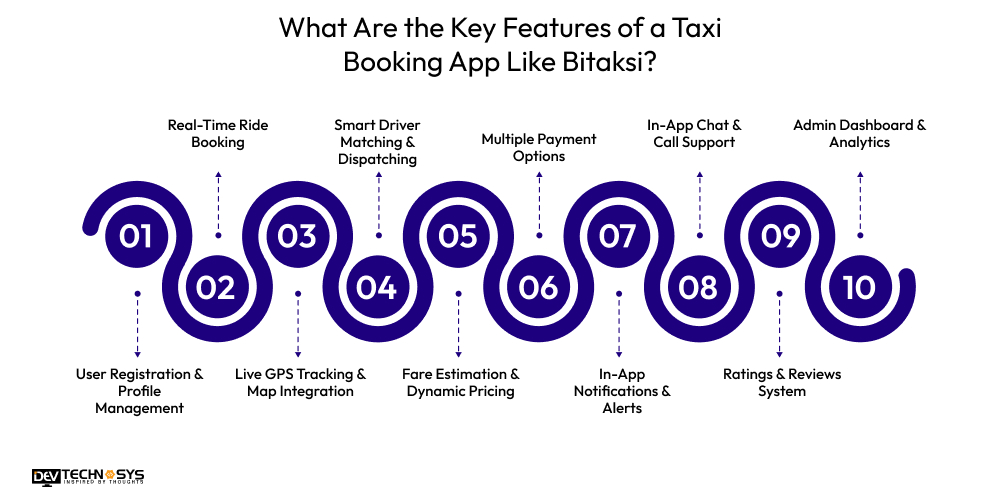
1. User Registration & Profile Management
This feature allows riders and drivers to register using phone numbers, email addresses, or social media accounts. Users can manage personal details, upload documents, save favorite locations, manage payment methods, and access their complete ride history while ensuring data privacy and security.
2. Real-Time Ride Booking
To build an app like Tirhal, adding features like real-time tracking is essential. Real-time ride booking enables users to request a taxi instantly by selecting pickup and drop-off locations. The system displays nearby available drivers, estimated arrival time, vehicle details, and allows users to confirm bookings quickly with minimal user effort.
3. Live GPS Tracking & Map Integration
Integrated GPS and mapping services provide real-time driver tracking, route visualization, and accurate ETAs. This feature improves transparency, reduces uncertainty, and helps users monitor trip progress from pickup to final destination.
4. Smart Driver Matching & Dispatching
The app automatically assigns the nearest available driver based on real-time location, traffic conditions, driver availability, and performance ratings. This intelligent dispatch system minimizes waiting time and optimizes fleet utilization.
5. Fare Estimation & Dynamic Pricing
Users receive a clear fare estimate before confirming the ride, calculated using distance, time, and demand. Dynamic pricing adjusts fares during peak hours or high-demand periods, ensuring fair pricing and balanced driver availability.

6. Multiple Payment Options
The app supports multiple payment methods, including cash, credit and debit cards, UPI, digital wallets, and in-app payments. Secure payment gateways ensure encrypted transactions, refunds, and automated invoice generation for transparency.
7. In-App Notifications & Alerts
Push notifications and SMS alerts keep users informed about booking confirmations, driver arrival, trip updates, payment receipts, and promotional offers. Timely notifications enhance communication and improve the overall user experience.
8. In-App Chat & Call Support
Secure in-app messaging and calling features in taxi booking app development allow riders and drivers to communicate without sharing personal phone numbers. It is an important feature that improves coordination during pickup and enhances user privacy and safety.
9. Ratings & Reviews System
After each ride, users can rate drivers and provide feedback on service quality. This system helps maintain high service standards, identifies top-performing drivers, and builds trust and accountability within the platform.
10. Admin Dashboard & Analytics
Custom taxi booking app development incorporates adding a centralized admin dashboard. It enables operators to manage drivers, users, rides, pricing, commissions, and payouts. Advanced analytics provide insights into peak hours, revenue trends, and user behavior, supporting data-driven business decisions.
What is the Cost to Develop a Taxi Booking App Like Bitakshi?
Cost to develop an app similar to Bitaksi in 2026 typically ranges between $8,000 and $25,000+, depending on the scope, features, and scalability requirements. A basic Minimum Viable Product (MVP) with essential functionalities, such as GPS-based ride booking, user and driver profiles, real-time tracking, and basic payment integration, typically costs between $8,000 and $15,000.
As the app grows in complexity, the Bitaksi app development cost increases based on factors like multi-platform support (iOS, Android, web), advanced UI/UX design, cloud infrastructure, security compliance, and third-party integrations.
The location and expertise of the development team also play a major role in deciding the taxi booking app development cost.
Additionally, integrating AI-driven features such as dynamic surge pricing, predictive demand analysis, smart driver allocation, and personalized user experiences can further increase the taxi booking app development cost.
These advanced capabilities, however, significantly enhance scalability, performance, and long-term profitability, making them a strategic investment rather than an expense. Here’s the table showcasing the cost to develop an app like Bitaksi with a development timeline.
App Type |
Development Timeline |
Estimated Cost |
| Basic MVP Taxi App | 8–10 weeks | $8,000 – $12,000 |
| Standard Taxi Booking App | 10–14 weeks | $12,000 – $18,000 |
| Advanced Taxi App | 14–18 weeks | $18,000 – $22,000 |
| Enterprise-Grade Taxi App | 16–20 weeks | $22,000 – $25,000+ |
What are the Factors That Affacts The Cost to Build a Taxi Booking App Like Bitaksi?
The cost to build an app like Bitaksi is influenced by multiple technical, business, and operational factors rather than a fixed price. Understanding these cost-driving factors helps businesses plan realistically, prioritize essential features, and build a scalable, future-ready taxi booking solution without overspending.
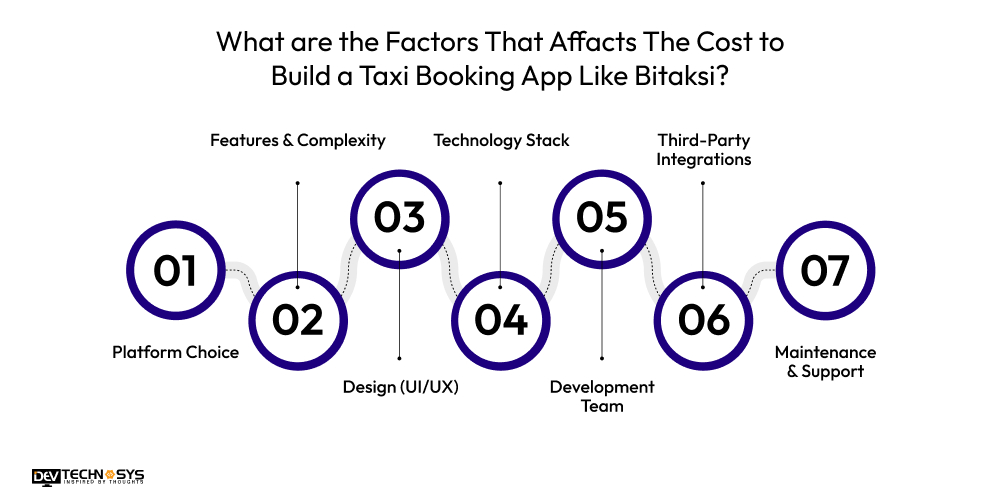
1. Platform Choice
Platform selection directly determines the scalability, performance, and cost to develop an app like bitaksi. Building for a single platform (Android or iOS) is more economical and faster to launch, making it suitable for MVPs or region-specific rollouts. The taxi app development cost analysis conducted by experts shows that cross-platform frameworks like Flutter or React Native reduce costs compared to building two native apps.
Platform Type |
Development Timeline |
Estimated Cost |
| Single Platform (Android or iOS) | 6–8 weeks | $3,000 – $6,000 |
| Cross-Platform (Flutter / React Native) | 8–10 weeks | $5,000 – $9,000 |
| Multi-Platform (iOS, Android, Web) | 10–14 weeks | $8,000 – $12,000 |
2. Features & Complexity
The depth and number of features are the biggest reasons why the cost to develop an app like Bitaksi is increasing. Basic features such as user registration, ride booking, fare calculation, GPS tracking, and cashless payments keep the Bitaksi app development cost manageable.
Advanced features, such as dynamic surge pricing, AI-based driver allocation, predictive ETAs, multi-language support, scheduled rides, loyalty programs, and fraud detection, require more development time, backend logic, and data processing, significantly increasing overall cost to build an app like Bitaksi.
Feature Level |
Development Timeline |
Estimated Cost |
| Basic (MVP) | 4–6 weeks | $2,000 – $4,000 |
| Medium | 6–8 weeks | $4,000 – $7,000 |
| Advanced | 8–10 weeks | $7,000 – $10,000 |
3. Design (UI/UX)
UI/UX design impacts both user adoption and development cost. A basic design using standard components is budget-friendly but may lack brand differentiation. Custom UI/UX involves user research, wireframing, prototyping, usability testing, and brand-specific visual elements. Advanced design elements such as micro-interactions, smooth animations, dark mode, and accessibility compliance improve retention but add design and frontend development hours.
Design Level |
Timeline |
Estimated Cost |
| Basic UI | 1–2 weeks | $800 – $1,500 |
| Custom UI/UX | 2–3 weeks | $1,500 – $3,000 |
| Advanced UX | 3–4 weeks | $3,000 – $4,500 |
4. Technology Stack
The technology stack affects performance, scalability, and long-term expenses. A standard stack is sufficient for MVPs, but a scalable stack using cloud infrastructure, microservices architecture, real-time databases, and secure APIs costs more upfront.
Integrating AI/ML models for route optimization, demand forecasting, or pricing automation further increases development complexity but enhances efficiency and profitability in the long run.
Tech Stack Type |
Timeline |
Estimated Cost |
| Standard Stack | 6–8 weeks | $3,000 – $5,000 |
| Scalable Stack | 8–10 weeks | $5,000 – $8,000 |
| AI-Enabled Stack | 10–12 weeks | $7,000 – $10,000 |
5. Development Team
Development cost varies widely based on team location, experience level, and engagement model. Freelancers may offer lower hourly rates but can pose risks related to timelines and consistency. Hiring an offshore artificial intelligence development company can balance cost and quality, while onshore agencies provide enterprise-grade delivery, compliance, and faster communication at a premium price. A full team typically includes project managers, UI/UX designers, frontend and backend developers, QA engineers, and DevOps specialists, all contributing to the total cost.
Team Location |
Timeline Impact |
Estimated Cost |
| Freelancers | Medium | $8,000 – $12,000 |
| Offshore Agency | Fast | $12,000 – $18,000 |
| Onshore Agency | Fastest | $18,000 – $25,000+ |
6. Third-Party Integrations
Taxi apps rely heavily on third-party services. Integrations such as Google Maps or Mapbox, payment gateways, SMS/OTP services, push notifications, analytics tools, and customer support platforms increase the cost to create an app like Bitaksi, as well as recurring subscription costs.
Advanced integrations like identity verification, fraud prevention, insurance APIs, and AI analytics further increase expenses but improve trust and operational reliability.
Integration Type |
Timeline |
Estimated Cost |
| Maps & GPS | 1–2 weeks | $800 – $1,500 |
| Payments | 1–2 weeks | $1,000 – $2,000 |
| Notifications | 1 week | $500 – $1,000 |
| Advanced APIs | 2–3 weeks | $2,000 – $4,000 |
7. Maintenance & Support
The cost to create an app like Bitaksi is also influenced by post-launch maintenance services. It is an ongoing investment that includes server hosting, database management, security patches, OS updates, performance optimization, and feature enhancements.
As user traffic grows, infrastructure scaling and continuous monitoring become necessary. Businesses that plan regular updates, new feature rollouts, and regional expansion should budget for long-term maintenance to ensure stability and competitive performance.
Support Level |
Duration |
Estimated Cost |
| Basic Maintenance | Monthly | $300 – $600 |
| Standard Support | Monthly | $600 – $1,200 |
| Advanced Support | Monthly | $1,200 – $2,000 |
How to Monetize a Taxi Booking App Like Bitaksi?
Now that we have learnt the cost to create an app like Bitaksi, let’s talk about monetization next. A successful taxi booking app like BiTaksi relies on multiple revenue streams to ensure profitability, scalability, and long-term sustainability.
Instead of depending on a single income source, combining rider-focused and driver-focused monetization strategies helps balance platform growth while maintaining fair pricing and service quality.
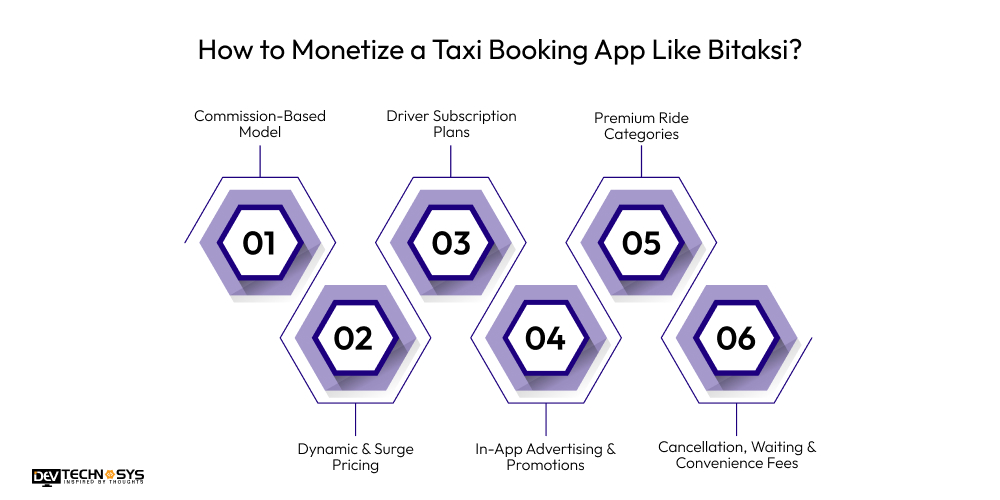
1. Commission-Based Model
The commission-based model remains the backbone of AI-Powered Taxi App Development. The platform charges drivers a fixed percentage or flat fee per completed ride, typically varying by city or ride type. As ride frequency increases and the app expands into new regions, this model naturally scales, providing consistent and predictable revenue without increasing operational complexity.
2. Dynamic & Surge Pricing
Dynamic pricing adjusts ride fares in real time based on demand, traffic conditions, weather, or special events. Surge pricing not only increases platform margins during peak periods but also incentivizes more drivers to go online, balancing supply and demand. When implemented transparently, it improves service availability while maintaining user trust.
3. Driver Subscription Plans
Subscription plans allow drivers to pay weekly or monthly fees in exchange for reduced commissions, priority ride assignments, early cashouts, or exclusive incentives. This model ensures recurring revenue for the platform while improving driver loyalty, engagement, and earnings stability, especially beneficial for high-frequency drivers.
4. In-App Advertising & Promotions
With high daily user engagement, taxi booking apps offer valuable advertising real estate. Local businesses, restaurants, shopping centers, and event organizers can promote their services through in-app banners, sponsored routes, or push notifications. According to a leading iOS app development company, this creates a non-intrusive revenue stream that does not impact ride pricing or user experience.
5. Premium Ride Categories
Premium services such as luxury sedans, executive rides, airport transfers, corporate travel, and hourly rentals cater to high-income users and business travelers. These categories command higher fares and margins, significantly increasing average revenue per ride while enhancing the platform’s brand perception.
6. Cancellation, Waiting & Convenience Fees
Small fees for late cancellations, extended waiting time, or priority bookings help offset operational losses and discourage misuse of the platform. These charges contribute incremental revenue while improving efficiency and encouraging responsible rider behavior.
Conclusion
Developing a taxi booking app like Bitaksi in 2026 is a strategic move for businesses looking to tap into the rapidly growing on-demand mobility market. Success depends on thorough market research, a well-defined feature set, intuitive UI/UX design, the right technology stack, and a scalable backend architecture.
If you are a business looking for a top taxi booking app development company to build a successful Birtaksi taxi app alternative, then contact the experts at Dev Technosys. Stay tuned for more informative insights.
FAQs
Q1. How Long Does it Take to Develop a Taxi Booking App Like BiTaksi?
On average, development takes 8 to 16 weeks, depending on feature complexity, platform selection, and integrations. A basic MVP can be launched faster, while advanced, multi-platform apps may take longer.
Q2. How Much Does it Cost to Build a Taxi Booking App Like BiTaksi?
The cost typically ranges from $8,000 to $25,000+. A basic MVP starts around $8,000t to $15,000, while advanced features, AI integrations, and enterprise-grade scalability increase the overall budget.
Q3. What Core Features are Required for a BiTaksi-like App?
Essential features include user and driver registration, ride booking, real-time GPS tracking, fare estimation, in-app payments, ratings and reviews, notifications, and an admin dashboard for monitoring operations.
Q4. Which Platforms Should the App Support?
Most taxi apps support Android and iOS, often using cross-platform frameworks like Flutter or React Native. Web-based admin panels are also essential for managing drivers, rides, and analytics.
Q5. How Can a Taxi Booking App be Monetized?
Common monetization methods include commission per ride, surge pricing, driver subscription plans, premium ride categories, in-app advertising, cancellation fees, and corporate partnerships.