



Key Takeaways
The cost to develop a mobile app typically range from $8,000 to $25,000+ for simple MVPs, $8,000 to $12,000 for mid-level apps, and can exceed $20,000+ for complex, feature-rich, or enterprise-grade platforms. Costs are influenced by app type, platform choice, development complexity, team experience, and region.
Cost Breakdown by Development Complexity
-
- Basic/MVP ($8,000 – $12,000+): Includes essential features like user registration, basic dashboards, simple payment integration, and core functionality. Ideal for testing ideas and early market entry.
- Medium Apps($12,000 – $18,000+): Adds features like advanced UI/UX, real-time notifications, third-party integrations, and moderate backend complexity. Suitable for apps targeting a broader audience with higher engagement.
- Complex Apps ($18,000 – $25,000+): Incorporates AI, real-time tracking, video streaming, multi-service modules, or large-scale cloud infrastructure. Costs increase significantly due to higher server demands and specialized features.
Key Cost Drivers
-
- App Type: Social media, food delivery, ride-hailing, and fintech apps have different development needs. Advanced AI, real-time updates, or multi-service features increase costs.
- Platform: Native iOS/Android apps are more expensive than cross-platform frameworks like Flutter or React Native.
- Team & Location: Rates vary widely; experienced teams in North America cost $30–$90/hr, Europe $10 to $50/hr, and India/Southeast Asia $15–$25/hr.
- Features & Complexity: Features such as real-time messaging, AI recommendations, video streaming, or cloud scalability increase development time and costs.
- Maintenance & Updates: Post-launch maintenance typically adds 15-20% of initial development cost per year for updates, bug fixes, and server management.
App Development Cost Based on Countries
-
- United States: $18 – $50 per hour
- United Kingdom & Western Europe: $20 – $50per hour
- Eastern Europe: $20 – $45 per hour
- Southeast Asia: $15 – $24 per hour
- Australia: $22 – $48 per hour
Have a game-changing app idea, but unsure what it’ll cost to turn it into reality? You’re not alone. Mobile app development costs range from a few thousand dollars for a simple MVP to well over six figures for complex platforms.
Whether you’re a startup validating an idea or an enterprise building a scalable digital product, understanding the factors that drive the mobile apps development cost in UAE helps you budget wisely, avoid surprises, and invest confidently in building a successful mobile app in Middle East.
Today, we will dive into the world of mobile app development and explore the financial aspects of development, including the cost to develop a mobile app, factors that affect development costs, ways to reduce costs, monetization strategies, and more. So, buckle up and get ready for an informative dive!
What is the Average Cost to Develop a Mobile App?
The cost to develop a mobile app generally ranges from $8,000 to $25,000. The simple app development with basic features like user registration/login, profile management, a simple dashboard, push notifications, and minimal third-party integrations typically costs between $8,000 and $12,000.
However, the mobile app development cost in Dubai with advanced features and functionalities may reach $25,000+. However, the final mobile app development cost depends on factors like app complexity, design quality, platform choice (iOS, Android, or both), development team location, and advanced features such as AI or real-time integrations.
App Complexity | Estimated Cost | Timeline |
| Basic / MVP App | $8,000 – $12,000 | 2 – 3 months |
| Moderate App | $12,000 – $18,000 | 3 – 5 months |
| Advanced App | $18,000 – $25,000 | 5 – 7 months |
What are the Top 10 Mobile Apps Making Waves in the Middle East?
The Middle East has seen explosive growth in mobile app usage, driven by high smartphone penetration and digital-first lifestyles. From ride-hailing to social media, certain apps dominate daily activities and entertainment. Here’s a look at the top 10 mobile apps making waves in the region in 2026.
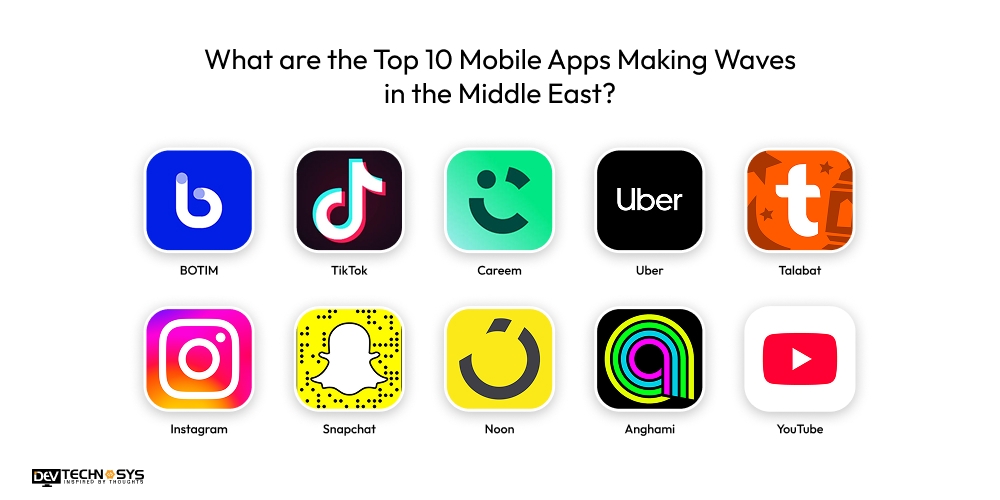
App | Launch Year | Rating | Platform |
| BOTIM | 2016 | 4.4 | iOS, Android |
| TikTok | 2017 | 4.4 | iOS, Android |
| Careem | 2012 | 4.3 | iOS, Android |
| Uber | 2010 | 4.7 | iOS, Android |
| Talabat | 2004 | 4.2 | iOS, Android |
| 2010 | 4.4 | iOS, Android | |
| Snapchat | 2011 | 4.1 | iOS, Android |
| Noon | 2017 | 4.6 | iOS, Android |
| Anghami | 2012 | 4.6 | iOS, Android |
| YouTube | 2005 | 4.5 | iOS, Android |
1. TikTok‑Style App (Social Video Platform)
A simplified social video app includes basic video uploads, feeds, likes, and comments without advanced AI or streaming infrastructure. The cost to build a mobile app like TikTok can range from $8,000 to $23,000 for a minimal MVP focused on essential social engagement features.
Industry Insights: According to Business of Apps, TikTok reached 1.6-1.9 billion monthly active users globally in late 2025/early 2026.
Feature | Description | Estimated Cost (USD) |
| Video Upload | Basic video posting & playback | $2,500 – $6,000 |
| Feeds | Simple chronological feed of posts | $1,500 – $3,500 |
| Likes & Comments | Basic engagement features | $1,000 – $2,500 |
| User Authentication | Signup/login, profile setup | $1,000 – $2,500 |
| Backend & Storage | Basic server & database | $2,000 – $8,500 |
2. Careem‑Style App (Multiservice Ride & Delivery App)
The cost to build a mobile app with simple GPS tracking, booking requests, and payment integration can be built within $10,500 to $24,500. Advanced multi-service modules are excluded, keeping the app lightweight while allowing future upgrades.
Feature | Description | Estimated Cost (USD) |
| GPS Tracking | Basic location tracking | $3,000 – $6,500 |
| Booking Requests | Simple ride booking module | $2,500 – $5,500 |
| Payment Integration | Single payment gateway | $2,500 – $6,000 |
| User & Driver Profiles | Signup, login, basic dashboards | $2,500 – $6,500 |

3. Uber‑Style App (Taxi Booking App)
A minimal taxi booking app with driver and user modules, basic route tracking, and payment integration can be developed for $11,000 to $24,500. Real-time pricing, surge management, or large-scale backend support would require a higher budget.
Industry Insights: Market Reports World states that Over 60% to 87% of all taxi rides were booked via mobile apps in 2024-2025.
Feature | Description | Estimated Cost (USD) |
| Driver & User Modules | Signup, profile, dashboards | $3,500 – $7,000 |
| Route Tracking | Basic navigation & geolocation | $2,500 – $5,500 |
| Payment Integration | Standard payment gateway | $3,000 – $6,500 |
| Booking Management | Ride requests & confirmations | $2,000 – $5,500 |
4. Talabat‑Style App (Food Delivery / Marketplace)
The cost to build a mobile app for food ordering with menu display, order placement, basic tracking, and payment functionality can range from $8,000 to $23,000. Features like AI recommendations, loyalty programs, or multi-restaurant support are left for future versions.
Feature | Description | Estimated Cost (USD) |
| Menu Display | Restaurant menu listings | $2,000 – $5,000 |
| Order Placement | Basic ordering functionality | $2,000 – $5,000 |
| Tracking | Order status updates | $1,500 – $3,500 |
| Payment Integration | Single gateway for payments | $2,500 – $5,500 |
5. Instagram‑Style App (Photo & Media Sharing App)
A lightweight photo-sharing app with basic feeds, likes, comments, and simple media upload can be developed within $10,000 to $25,000+. To keep the cost to create a mobile app within budget, avoid real-time messaging, advanced filters, and recommendation algorithms.
Feature | Description | Estimated Cost (USD) |
| Feeds | Simple chronological media feed | $2,500 – $6,000 |
| Likes & Comments | Basic user interactions | $1,500 – $3,500 |
| Media Upload | Photo & basic video upload | $3,000 – $7,000 |
| User Authentication | Signup/login, profile setup | $1,500 – $4,500 |
| Backend & Storage | Database & server setup | $1,500 – $4,000 |
What Factors Can Affect the Cost to Develop a Mobile App?
Building a mobile app does not have a fixed price. The total cost to create a mobile app depends on factors such as features, design, platform, and development team. Understanding these factors helps you plan your budget and avoid unexpected expenses.
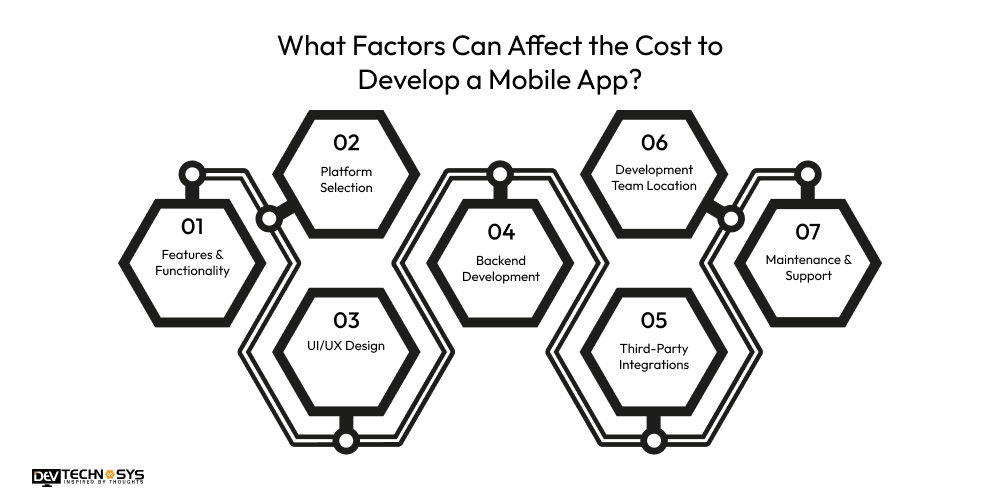
1. Features & Functionality
Every additional feature increases the cost to create a mobile app. Basic features like login and profiles are affordable, while advanced options like live chat, payment gateways, push notifications, dashboards, and GPS tracking require more coding, integrations, and backend support, directly impacting the total development expense. Here’s the table showing the app development cost breakdown by feature type.
Feature Type | Estimated Additional Cost |
| User Login & Profile | $800 – $1,500 |
| Push Notifications | $500 – $1,500 |
| Payment Gateway | $1,000 – $2,500 |
| Live Chat | $1,500 – $2,500 |
| GPS Tracking | $2,500 – $3,800 |
| Admin Panel | $3,800 – $5,800 |
2. Platform Selection
Developing an app for a single platform like Android or iOS is more budget-friendly. However, building for both platforms separately doubles the effort of your hybrid app development company. Cross-platform frameworks such as Flutter or React Native can reduce costs while maintaining performance across multiple devices.
Platform Type | Estimated Cost |
| Single Platform (iOS or Android) | $8,000 – $12,000 |
| Both Platforms (Separate Native Apps) | $15,000 – $21,000 |
| Cross-Platform (Flutter/React Native) | $12,000 – $18,000 |
3. UI/UX Design
User interface and experience design influence both engagement and cost. A clean, template-based design is affordable, while custom animations, interactive elements, branding, and advanced user journeys require skilled designers and additional development time, increasing the overall enterprise mobile app development cost in Dubai.
Design Level | Estimated Cost |
| Basic Template Design | $800 – $1,500 |
| Custom UI Design | $1,500 – $3,000 |
| Advanced UI with Animations | $3,000 – $5,000 |
Read more: Mobile App Development Cost in Israel
4. Backend Development
Apps that store user data, manage accounts, or offer real-time updates require backend infrastructure. This includes databases, servers, APIs, and cloud integration. Strong backend systems improve scalability and performance, but add to the overall cost to build a mobile application.
Backend Type | Estimated Cost |
| Basic Backend (Database + APIs) | $2,000 – $5,000 |
| Cloud Backend with Real-time Sync | $5,000 – $8,000 |
| Scalable Enterprise Backend | $8,000 – $12,000 |
5. Third-Party Integrations
Hire on-demand app developers to integrate services like payment gateways, social logins, maps, analytics, or messaging tools. These integrations surely increase functionality but also add complexity. Some integrations require licensing fees and additional configuration, which can raise both the initial app development cost in Dubai and long-term maintenance expenses.
Integration Type | Estimated Cost |
| Social Media Login | $500 – $1,000 |
| Payment Integration | $1,000 – $2,500 |
| Maps & Location Services | $800 – $1,500 |
| Analytics Tools | $500 – $1,000 |
| SMS/Email Services | $500 – $1,200 |
6. Development Team Location
The cost of hiring developers varies by region. Teams in Asia generally offer lower hourly rates than those in North America or Europe. The team’s expertise level, communication process, and project management structure also influence the final iOS and Android app development cost.
Region | Average Hourly Rate |
| Asia | $15 – $25/hour |
| Eastern Europe | $40 – $75/hour |
| North America | $50 – $90/hour |
7. Maintenance & Support
Mobile app maintenance cost also impacts the budget. After launch, apps require regular updates, bug fixes, security patches, and feature improvements. Ongoing cost to maintain an app is 15-20% of the original development budget annually, ensuring the app remains secure, compatible, and competitive in the market.
Service Type | Estimated Annual Cost |
| Basic Maintenance | $1,000 – $3,000 |
| Regular Updates & Improvements | $5,000 – $7,000 |
| Full Support & Scaling | $8,000 – $10,000 |

How App Type Affects The Cost to Develop a Mobile App?
The type of mobile app you want to build has a direct impact on development cost. Different app categories require varying levels of complexity, features, and technology integration. Understanding how app type influences cost helps plan your budget and avoid overspending while meeting user expectations.

1. Gaming Apps
Gaming apps range from simple puzzle games like Candy Crush Saga to advanced multiplayer games like PUBG: Battlegrounds. Casual games require basic design and logic, keeping costs lower. However, 3D graphics, multiplayer features, animations, and game engines significantly increase development time, technical complexity, and overall budget.
Game Type | Estimated Development Cost |
| Casual 2D Game (Puzzle, Arcade) | $10,000 – $15,000 |
| Mid-Level Game (Multiplayer, Advanced UI) | $15,000 – $20,000 |
| High-Performance 3D Game | $20,000 – $25,000+ |
2. E-commerce / Retail Apps
E-commerce apps such as Amazon or eBay require product catalogs, secure payment gateways, user accounts, order tracking, and admin dashboards. These features demand strong backend systems and third-party integrations, which increase development costs depending on scalability, customization, and security requirements.
App Level | Estimated Development Cost |
| Basic Store (Product Listing + Cart) | $8,000 – $13,000 |
| Medium Store (Payments + Tracking + Admin Panel) | $13,000 – $18,000 |
| Advanced Marketplace (Multi-Vendor + AI Features) | $18,000 – $22,000+ |
3. Lifestyle Apps
Lifestyle apps focus on fitness, travel, dating, or wellness services. They usually include user profiles, tracking tools, notifications, and personalized recommendations. Custom mobile app development costs depend on data storage, wearable integrations, and real-time tracking features. Simple versions are affordable, while highly personalized apps require more advanced development resources.
App Level | Estimated Development Cost |
| Basic Lifestyle App | $8,000 – $15,000 |
| Medium App (Tracking + Notifications) | $15,000 – $20,000 |
| Advanced Personalized App | $18,000 – $24,000 |
4. Social Media Apps
Social media platforms like Instagram and TikTok require real-time messaging, media uploads, feeds, comments, and scalable servers. Due to heavy user traffic and data processing requirements, these apps require advanced backend architecture, significantly increasing development complexity and costs.
App Level | Estimated Development Cost |
| Basic Social App (Profile + Posts) | $9,000 – $13,000 |
| Medium App (Chat + Media Sharing) | $13,000 – $17,000 |
| Advanced Platform (Live Streaming + AI Feed) | $17,000 – $22,000+ |
5. Utility Apps
Utility apps perform simple tasks such as calculations, scanning, or flashlight functions. Since they focus on one core feature and require minimal backend support, they are among the most affordable app types. According to developers who provide full stack development services, the development costs remain lower due to simple design, limited features, and minimal integrations.
App Level | Estimated Development Cost |
| Basic Social App (Profile + Posts) | $10,000 – $15,000 |
| Medium App (Chat + Media Sharing) | $13,000 – $18,000 |
| Advanced Platform (Live Streaming + AI Feed) | $19,000 – $25,000+ |
6. Super Apps
Super apps like WeChat and Grab combine messaging, payments, shopping, and transport services in one platform. Their large-scale architecture, multiple integrations, and high security requirements make them expensive and technically demanding to develop. Their scalability, performance optimization, and compliance requirements make them among the most complex and expensive mobile applications to develop.
App Level | Estimated Development Cost |
| Basic Multi-Service App | $10,000 to $13,000 |
| Scalable Super App | $13,000 to $17,000 |
| Enterprise-Grade Super App | $17,000 to $21,000+ |
How To Reduce the Cost to Develop a Mobile App?
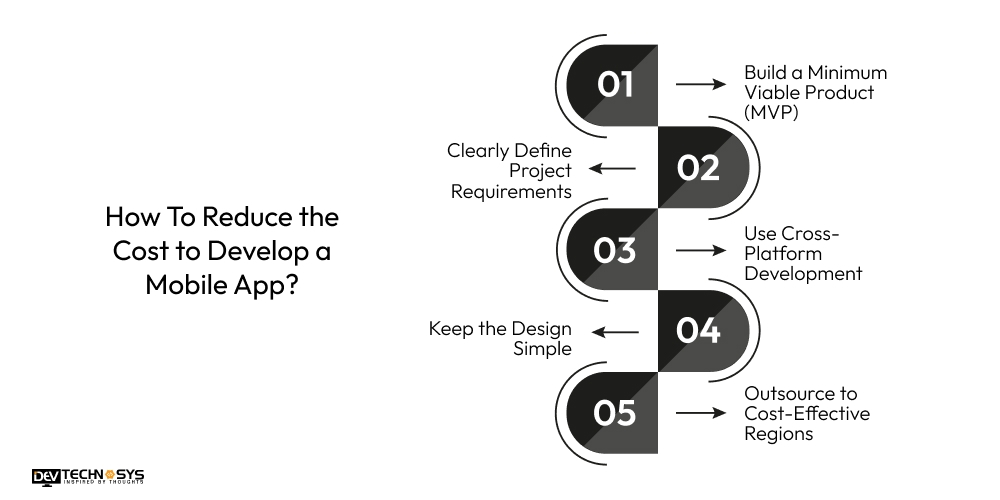
Developing a mobile app can be expensive, but smart planning can significantly reduce costs without compromising quality. By making strategic decisions early, you can control your budget and avoid unnecessary expenses. Here’s how to develop efficiently while keeping costs manageable.
1. Build a Minimum Viable Product (MVP)
Start with only the core features that solve the main user problem. Avoid adding advanced functionalities in the first version. Launch quickly, test the market response, and improve gradually. This approach reduces initial development cost, minimizes risk, and prevents unnecessary spending on unvalidated features.
2. Clearly Define Project Requirements
Prepare detailed documentation, wireframes, and user flows before development begins. Clear requirements prevent confusion, reduce change requests, and avoid costly rework. When developers understand the exact scope from the start, timelines stay controlled, and the overall development budget remains stable.
3. Use Cross-Platform Development
Frameworks like Flutter or React Native allow developers to build one app that works on both Android and iOS. Instead of creating two separate apps, you maintain a single codebase. This significantly reduces development time, resource requirements, and overall cross-platform app development cost.
4. Keep the Design Simple
Complex animations, heavy graphics, and custom UI elements increase frontend development time and cost. Start with a clean, user-friendly design using standard components. You can enhance the interface later once your app gains users and begins generating revenue.
5. Outsource to Cost-Effective Regions
Hiring on-demand app development providers from countries with lower hourly rates can significantly reduce expenses without compromising quality. Compare portfolios, client reviews, and technical expertise before selecting a team. A skilled offshore development company often delivers high-quality solutions at a more affordable price.
What Are the Ways to Monetize a Mobile Application?
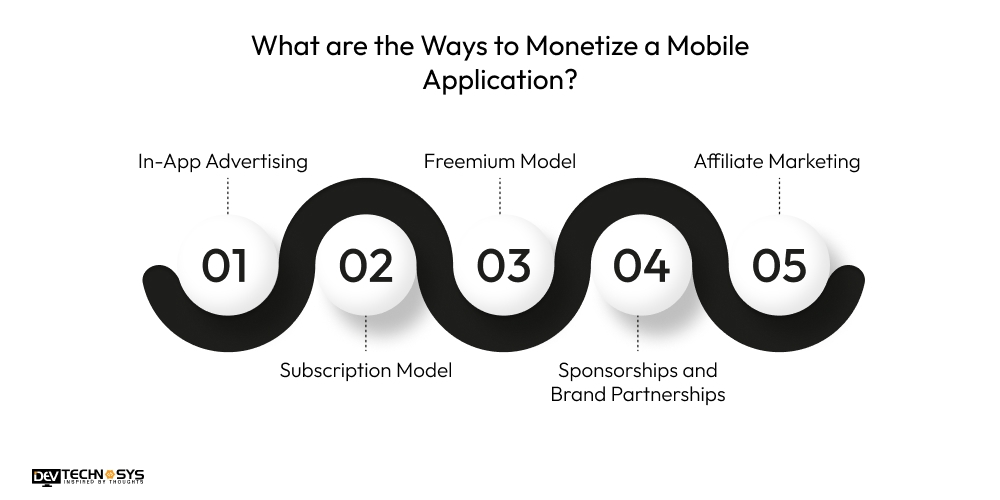
Monetizing a mobile application is essential for turning your idea into a sustainable business. The right revenue model depends on your app type, your audience’s behavior, and your long-term goals. By choosing a strategic monetization approach, you can generate consistent income while maintaining a strong user experience.
1. In-App Advertising
In-app advertising allows you to earn revenue by displaying ads within your application. Common formats include banner ads, interstitial ads, native ads, and rewarded video ads. Revenue is generated through impressions or clicks. This model works best for free apps with high traffic and strong daily user engagement.
2. Subscription Model
The subscription model charges users a recurring monthly or yearly fee for premium access to content or features. It ensures stable, predictable revenue over time. Expats who provide iOS app development services use this strategy for fitness, entertainment, education, and SaaS apps, especially when combined with free trials to attract new users.
3. Freemium Model
The freemium model offers basic features for free while charging users for advanced tools or exclusive functionality. It encourages downloads and builds trust before asking for payment. Once users experience value, they are more likely to upgrade, making this model effective for long-term revenue growth.
4. Sponsorships and Brand Partnerships
Sponsorships involve collaborating with brands that align with your app’s target audience. You can feature branded content, exclusive offers, or sponsored sections within the app. When integrated naturally, this strategy generates additional revenue while maintaining user trust and enhancing overall experience.
5. Affiliate Marketing
Affiliate marketing allows you to promote third-party products or services within your app. You earn a commission whenever users make a purchase through your referral links. This method works particularly well for travel, eCommerce, finance, and content-based apps targeting purchase-ready audiences.
What Common Mistakes Can Lead to Increased App Development Costs?
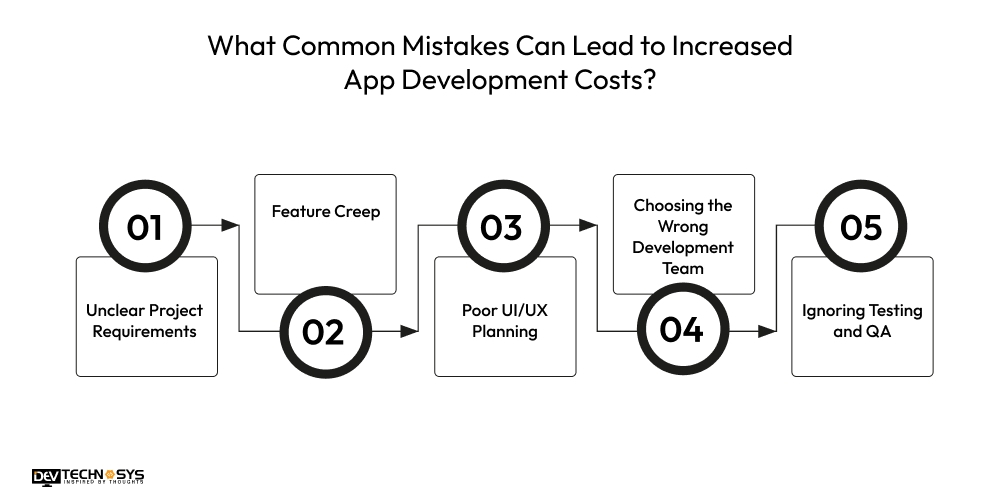
Developing a mobile app can be costly, especially when common mistakes go unnoticed. Here are the common mistakes that can increase mobile app development costs. Take a look:
1. Unclear Project Requirements
Starting development without a detailed plan or feature specification often leads to frequent changes mid-project. Every adjustment increases development time, testing, and rework, causing your budget to balloon. Clear documentation, wireframes, and defined goals help prevent these unnecessary expenses.
2. Feature Creep
Adding too many “nice-to-have” features during development delays timelines and increases costs. Constant changes or additions require extra coding, testing, and design work. Sticking to essential features first and planning upgrades for later phases prevents overspending.
3. Poor UI/UX Planning
Complex or unclear app designs can require multiple redesigns, increasing design and frontend costs. Neglecting user experience early can lead to low engagement and more costly post-launch fixes, which are far more expensive than planning upfront.
4. Choosing the Wrong Development Team
Hiring inexperienced developers or the cheapest option without checking skills can result in poor-quality code. This often requires rework, bug fixes, or even a complete rebuild, significantly inflating offshore app development costs. Choosing a skilled, reliable team saves money in the long run.
5. Ignoring Testing and QA
Skipping or delaying testing can cause bugs and crashes after launch. Fixing issues post-launch is 5 to 10 times more expensive than addressing them during development. Continuous QA and beta testing reduce long-term maintenance costs.

Conclusion
Mobile app development costs are highly flexible and depend on the app’s purpose, complexity, and chosen platforms. Strategic planning, phased development, and clear requirements help balance quality and cost, ensuring a successful launch without overspending.
If you are a business wanting to develop a successful mobile app within your desired budget range, contact a reliable mobile app development company, such as Dev Technosys. With 180+ skilled app developers, they turn your mobile app vision into reality.
FAQs
1. What Factors Influence Mobile App Development Cost?
App development costs depend on platform choice, app complexity, number of features, UI/UX design, backend infrastructure, third-party integrations, testing, and the development team’s experience and location, all of which significantly impact overall budget and timeline.
2. How Much Does A Simple App Cost?
A basic MVP app with essential features, simple design, and minimal backend functionality typically costs between $8,000 and $25,000, depending on platform, region, and development team, making it suitable for startups or testing new ideas quickly.
3. Why Do Complex Apps Cost More?
Complex apps include advanced features like AI recommendations, video streaming, real-time tracking, or multi-service modules. These require longer development hours, robust infrastructure, extensive testing, and expert developers, which substantially increases the total cost compared to simpler apps.
4. Can Outsourcing Reduce App Development Costs?
Outsourcing app development to skilled teams in cost-effective regions can significantly reduce expenses. Offshore or hybrid teams provide quality solutions at lower rates while maintaining expertise, making it an efficient strategy for startups and companies with limited budgets.
5. How Can I Reduce Mobile App Development Costs?
To reduce costs, focus on building an MVP first, prioritize essential features, use cross-platform frameworks, leverage reliable third-party tools, and define requirements clearly. Avoid feature creep and rework to keep development efficient and within budget.