





Key Takeaways:
-
- Building an app like Namshi requires careful planning, designing a simple UI/UX, choosing tech stacks, frontend and backend development, testing, publishing, and maintenance.
- Add unique features such as personalized recommendations, inventory management, secure payment options, loyalty program, push notifications, and more.
- Generate higher revenue streams from apps like Namshi by various techniques such as subscription plans, freemium model, and advertising.
Creating an online shopping app like Namshi is more than just selling clothes online. It’s about designing a vibrant, interactive shopping experience that keeps users engaged. Imagine an app where fashion meets convenience, and personalized recommendations appear exactly when users need them.
Flash sales trigger the excitement of grabbing the perfect outfit before anyone else. Today’s shoppers demand sleek designs and intuitive navigation. They also expect seamless checkout options and visually captivating interfaces. Building a fashion e-commerce app blends smart technology with creativity.
Whether aiming to rival big fashion retailers or target a niche audience, a top shopping app in Dubai, like Namshi, transforms online shopping into a fun, personalized experience. This blog will serve as a guide to develop an app like Namshi and introduce you to all the crucial aspects and factors required to create a successful Namshi clone app.
What is Namshi App?
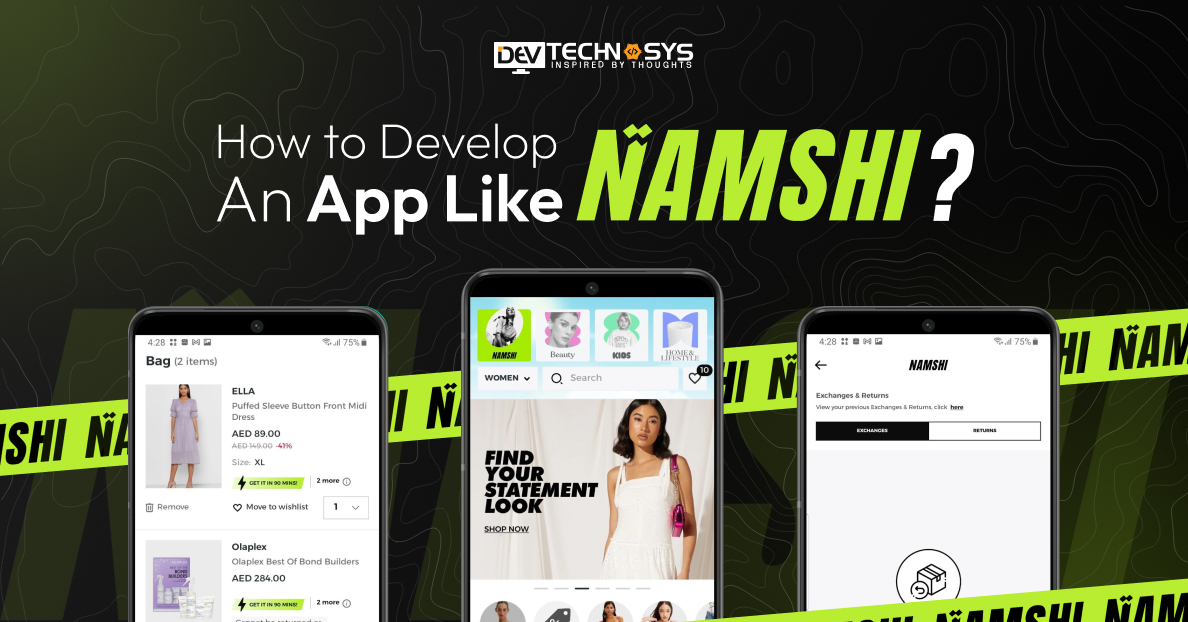
Namshi is a leading Middle Eastern online fashion and lifestyle shopping app offering over 200,000 products from 2,000+ brands, including Adidas, Nike, and Mango. It serves the GCC, offering clothing, beauty products, footwear, and home items with fast delivery in the UAE, Saudi Arabia, and other neighboring countries. The app allows users to virtually try on eyewear before purchasing. Users can access exclusive discounts, daily deals, and promotions directly through the app.
E-commerce App Market Stats
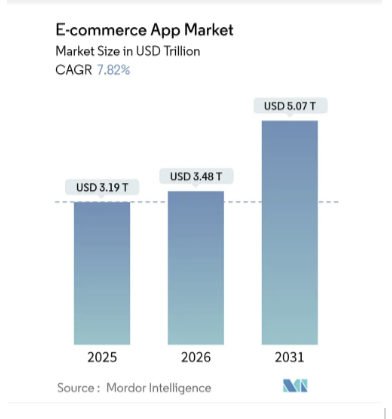
- The e-commerce app market size is projected to be USD 3.19 trillion in 2025, USD 3.48 trillion in 2026, and reach USD 5.07 trillion by 2031, growing at a CAGR of 7.82% from 2026 to 2031.
- By platform, Android held 72.67% of the e-commerce app market share in 2025, whereas super-app mini-programs post the highest projected CAGR at 8.24% through 2031.
- By business model, business-to-consumer marketplaces accounted for 55.71% of the e-commerce app market in 2025, and peer-to-peer resale is advancing at an 8.41% CAGR through 2031.
- By product category, fashion and apparel commanded a 28.66% share in 2025, while grocery and FMCG are set to grow at a 9.11% CAGR through 2031.
- By geography, Asia-Pacific accounted for 42.48% of 2025 revenue, and Africa is the fastest-growing region, with an 8.89% CAGR to 2031.
How Do E-commerce Apps Like Namshi Work?
E-commerce apps like Namshi are designed to make online shopping seamless, fast, and personalized. They work through a combination of front-end, back-end, and cloud technologies that connect users to products in real time. Here’s how it works:
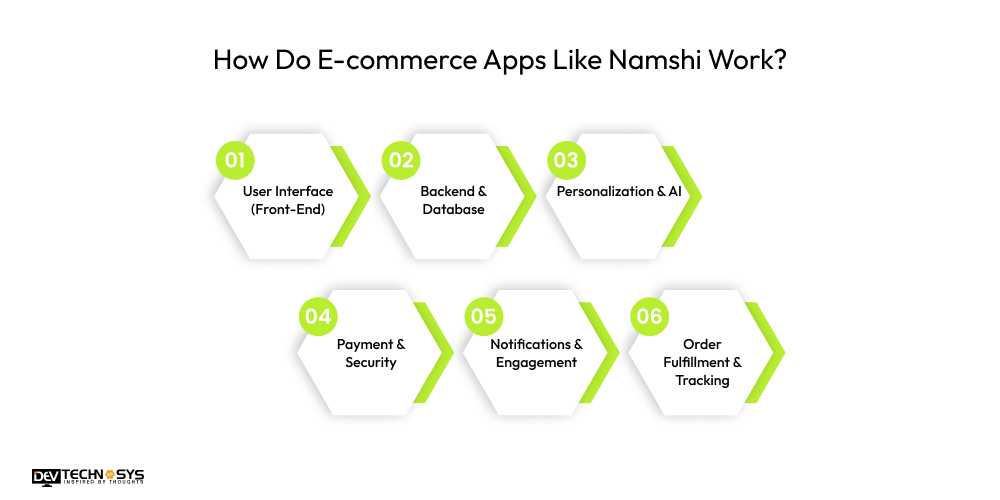
1. User Interface (Front-End)
- Smooth app design for browsing products.
- Filters, search, and categories for easy navigation.
- Add-to-cart, wishlist, and product details features.
2. Backend & Database
- Handles inventory and product catalog management, order processing, and user data.
- The best shopping app in UAE stores product information, pricing, and user history.
- Ensures smooth app performance and scalability.
3. Personalization & AI
- Namshi alternatives use AI-powered recommendations based on user behavior.
- Suggests trending items or personalized offers.
- Enhances user engagement and increases sales.
4. Payment & Security
- Secure payment gateways (Stripe, PayPal, Razorpay).
- SSL/TLS encryption, OAuth authentication, and fraud protection.
- Namshi alternatives use multiple payment options like cards, wallets, and UPI.
5. Notifications & Engagement
- Push notifications and emails for offers and updates.
- Personalized alerts on discounts or restocked items.
- The best shopping app in the UAE encourages repeat visits and user retention.
6. Order Fulfillment & Tracking
- Real-time inventory updates and order confirmation.
- Integration with delivery/logistics partners.
- Namshi alternatives let users track their orders until delivery.
What are the Top 10 Namshi App Alternatives to Consider in 2026?
The demand for fashion eCommerce apps in the Middle East is rapidly growing, driven by mobile-first shopping behavior and personalized user experiences. As a result, several strong alternatives to Namshi have emerged in 2026, offering diverse product ranges, competitive pricing, and seamless delivery services.
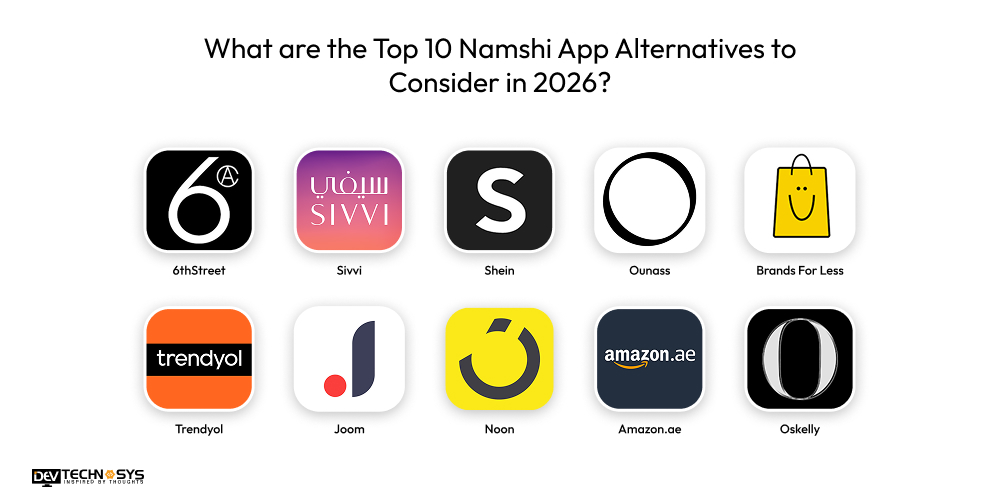
| App Name | Launch Year | Ratings (Approx.) | Platform Availability |
| 6thStreet | 2016 | 4.5 | Android, iOS |
| Sivvi | 2014 | 4.5 | Android, iOS |
| Shein | 2008 | 4.5 | Android, iOS, Web |
| Ounass | 2016 | 4.8 | Android, iOS, Web |
| Brands For Less | 2010 | 4.4 | Android, iOS |
| Trendyol | 2010 | 4.6 | Android, iOS, Web |
| Joom | 2016 | 4.4 | Android, iOS |
| Noon | 2017 | 4.7 | Android, iOS, Web |
| Amazon.ae | 2019 | 4.5 | Android, iOS, Web |
| Oskelly | 2011 | 4.2 | Android, iOS, Web |
1. Shein
Shein is a global fast-fashion platform known for ultra-affordable, trend-driven apparel. It uses data-driven production to launch thousands of new styles daily. Key features include AI-based recommendations, flash sales, influencer integrations, and seamless mobile shopping. Its direct-to-consumer model ensures competitive pricing and rapid global delivery.
Industry Insights: Backlinko states that in Q1 2025, Shein reportedly generated a revenue of nearly $10 billion.
2. Noon
Noon is a leading Middle East e-commerce platform offering fashion, electronics, groceries, and more. It offers cash on delivery, buy now, pay later, and ultra-fast delivery (Noon Daily). The platform emphasizes localization, Arabic support, and regional brands, making it a strong competitor to global marketplaces.
3. Joom
Joom is a cross-border marketplace offering low-cost products across fashion, electronics, and lifestyle categories. It connects global sellers with international buyers. Key features include localized pricing, AI-driven product discovery, and secure logistics integration. It focuses on affordability and accessibility for emerging markets.
Industry Insights: Apple states that Joom is a rapidly growing cross-border e-commerce marketplace with over 250 million users and 25 million monthly active users.
4. Trendyol
Trendyol is a leading Turkish e-commerce platform offering fashion, beauty, and lifestyle products. It combines marketplace and private-label models with strong logistics (Trendyol Express). Features include AI-driven personalization, influencer campaigns, and regional expansion into GCC markets, making it a fast-growing Namshi alternative.
5. Ounass
Ounass is a premium luxury fashion platform catering to GCC markets. It offers curated designer collections, same-day delivery, and exclusive regional edits. Features include personal styling, premium packaging, and localized luxury experiences. It focuses heavily on high-end customer service and fast fulfillment for affluent shoppers.
Industry Insights: According to ECDB, Ounass’s annual sales amounted to US$46m in 2025. This represents a 5-10% change from the previous year.
What Are the Steps to Develop an App Like Namshi?
Building a shopping app development solution like Namshi means creating a seamless, fun, and personalized online shopping experience. Users expect intuitive navigation, AI-powered recommendations, and smooth checkout options at their fingertips. With the right design, features, and technology, your fashion e-commerce app can turn browsing into an addictive, satisfying shopping journey.
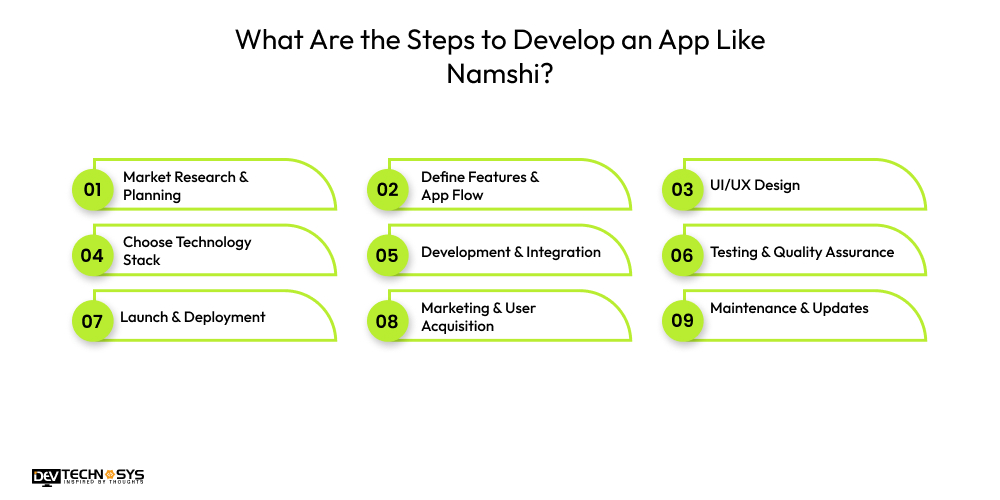
1. Market Research & Planning
Before building your fashion e-commerce app, conduct in-depth market research. For ecommerce app development, you need to analyze competitors like Namshi and other fashion apps to understand trends, pricing, and features. Identify your target audience, their shopping habits, and preferences. Planning also includes defining your app’s purpose, revenue model, and deciding whether it will be Android, iOS, or cross-platform.
2. Define Features & App Flow
List all essential features for your app, including product catalogs, search, filters, shopping cart, wishlist, and checkout. Plan user engagement features like AI-based recommendations, push notifications, and social sharing. Map the app flow from browsing to payment to delivery tracking. It ensures a seamless, intuitive experience that keeps users engaged and encourages repeat purchases.
3. UI/UX Design
Design the interface of your top shopping app in Dubai by focusing on user-friendly navigation and visually appealing layouts. Develop an app like Namshi with wireframes and interactive prototypes to visualize screens and app flow. Prioritize smooth transitions, minimal clicks, and responsive design for all devices. Good UI/UX improves retention, reduces cart abandonment, and builds trust, ensuring users enjoy browsing, selecting, and purchasing products effortlessly.
4. Choose Technology Stack
Experts who provide shopping app development services in Middle East will select the right technologies for development. Frontend options include Flutter, React Native, Swift, or Kotlin. Backend frameworks can be Node.js, Django, Laravel, or Ruby on Rails. Use databases like MySQL, MongoDB, or Firebase. Cloud services such as AWS, Google Cloud, or Azure ensure scalability and reliability. Choosing the correct stack ensures faster development, security, and smooth performance.
5. Development & Integration
Build an AI shopping app in Saudi Arabia with a robust front-end and back-end simultaneously. Integrate APIs for payment gateways, notifications, and analytics. Implement AI-based recommendation engines and personalized shopping cart & wishlist modules. Include secure login, cart management, and product filtering. To develop an App like Namshi, focus on modular, scalable coding to allow future updates. Continuous collaboration between designers, developers, and QA ensures features work seamlessly together.
6. Testing & Quality Assurance
Perform rigorous testing to ensure flawless app performance. Conduct functional, usability, performance, and security tests. Test across multiple devices and platforms to check responsiveness, speed, and reliability. Identify and fix bugs before launch. Continuous QA ensures users experience a stable, secure, and smooth app, which is critical for trust, retention, and overall brand reputation.
7. Launch & Deployment
Your mobile app development company in Middle East will deploy your app on App Store and Google Play after thorough testing. Set up backend servers, cloud hosting, and database configurations. Monitor initial downloads, user activity, and server performance. Optimize server load and database queries to handle traffic. A well-planned launch ensures smooth onboarding for users and creates a strong first impression of your fashion e-commerce platform.
8. Marketing & User Acquisition
On-demand app development experts will promote your app through digital marketing, social media campaigns, influencer partnerships, and email newsletters. Offer referral programs, app-exclusive discounts, and flash sales to attract new users. Track user acquisition metrics and engagement rates to refine campaigns. Effective marketing increases downloads, builds brand awareness, and encourages users to explore your app frequently.
9. Maintenance & Updates
Regularly update the app with new features, seasonal collections, or improved functionalities. Monitor user feedback, analytics, and performance metrics. Fix bugs promptly, enhance security protocols, and optimize speed. Maintenance ensures smooth operations, keeps users satisfied, and adapts the app to changing market trends. Continuous updates maintain engagement and strengthen long-term loyalty.
What Features Do You Need to Integrate in an App like Namshi?
According to a top hybrid app development company in UAE, building an app like Namshi requires more than basic shopping functions. Advanced features like AI recommendations, AR try-ons, and real-time analytics elevate user experience, boost engagement, and drive sales. These innovations make online shopping smarter, faster, and more personalized.
| User Panel | Moderator Panel | Admin Panel |
| Registration & Login | Product Approval | User Management |
| Product Browsing & Search | Content Moderation | Product & Inventory Management |
| Wishlist & Favorites | Complaint & Feedback Management | Order & Delivery Management |
| Shopping Cart & Checkout | Promotions & Discounts | Analytics & Reports |
| Order Tracking | Vendor Management | Payment Management |
| Push Notifications & Offers | Review Moderation | Role Management |
| Reviews & Ratings | Campaign Management | Security & Compliance |
| Personalized Recommendations | Report Generation | App Settings & Configuration |
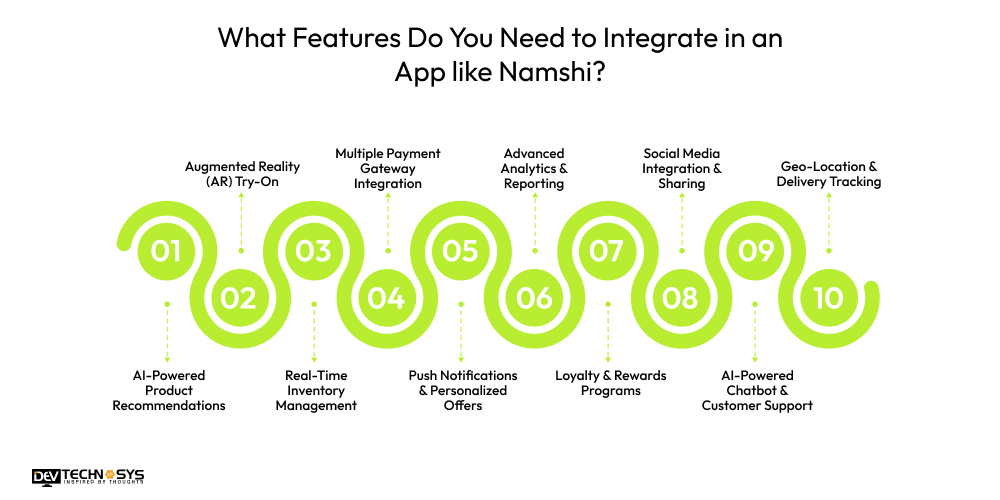
1. AI-Powered Product Recommendations
Suggest products based on user behavior, browsing history, and purchase patterns. The top shopping app in Middle East uses AI algorithms to personalize the shopping experience, increasing engagement, boosting conversions, and making it easier for users to discover items they are most likely to buy.
2. Augmented Reality (AR) Try-On
Allows users to virtually “try on” clothes, shoes, or accessories using their device camera. AR enhances confidence in purchases, reduces return rates, and delivers an immersive, interactive shopping experience that bridges online and in-store experiences.
3. Real-Time Inventory Management
Automatically updates stock levels across products and categories in real time. Prevents overselling, keeps users informed about availability, and ensures seamless order fulfillment while maintaining accurate data for both users and admins.
4. Multiple Payment Gateway Integration
Supports a variety of payment methods, including credit/debit cards, digital wallets, UPI, and net banking. Integrating multiple gateways ensures convenience, faster checkout, and higher transaction success rates, enhancing overall user satisfaction.
5. Push Notifications & Personalized Offers
Build a shopping app like REDTAG that sends timely alerts for flash sales, discounts, restocks, and personalized deals. Targeted notifications improve user engagement, retention, and drive repeat purchases by keeping users informed about relevant products and offers.
6. Advanced Analytics & Reporting
Tracks user behavior, sales trends, product performance, and revenue metrics. Analytics help businesses make data-driven decisions, optimize marketing strategies, identify popular products, and improve overall app performance and profitability.

7. Loyalty & Rewards Programs
Encourages repeat purchases with points, discounts, or exclusive offers. A loyalty system incentivizes users to engage more frequently, increases customer retention, and builds long-term brand loyalty within the competitive fashion e-commerce market.
8. Social Media Integration & Sharing
Develop Egyptian shopping app like Kenzz that allows users to share products or wishlists directly to social platforms. This increases organic reach, boosts brand visibility, and encourages social engagement while making it easy for users to showcase favorite items to friends and followers.
9. AI-Powered Chatbot & Customer Support
Provides instant assistance for queries, order tracking, or complaints using AI chatbots. Reduces response time, improves customer satisfaction, and ensures support is available 24/7 without overburdening human agents.
10. Geo-Location & Delivery Tracking
Develop a shopping app like Joom that uses geo-location to track users’ locations to provide accurate delivery estimates and local offers. Real-time tracking of shipments enhances transparency, reduces customer anxiety, and improves the overall post-purchase experience by keeping users informed at every step.
Why Businesses Should Invest in Namshi Clone App Development?
Investing in a Namshi clone app lets businesses tap into the booming online fashion market with minimal risk. With advanced features, personalized experiences, and faster time-to-market, these apps help brands boost engagement, sales, and customer loyalty efficiently.
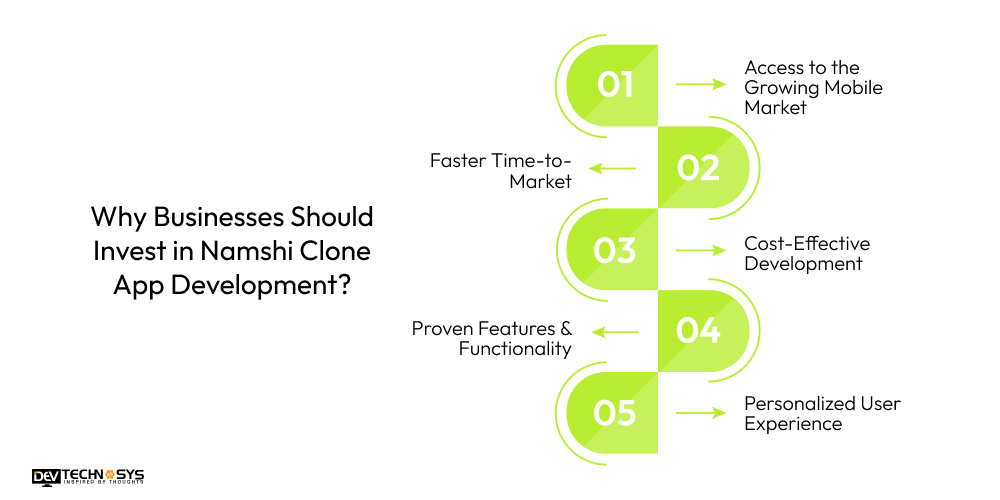
1. Access to the Growing Mobile Market
As more consumers shop on smartphones, a Namshi clone app helps businesses reach a larger audience. Mobile accessibility ensures convenience, boosts engagement, and allows brands to tap into the rapidly expanding online fashion retail sector.
2. Faster Time-to-Market
Using a clone app reduces development time significantly. Develop a shopping app like Danube Home with prebuilt features, proven workflows, and tested functionalities, enabling businesses to launch their fashion e-commerce platform quickly, capturing market opportunities before competitors and generating revenue sooner.
3. Cost-Effective Development
Developing a clone app is far more economical than building a custom platform from scratch. Businesses save on design, coding, and testing efforts while still delivering a high-quality, feature-rich shopping experience to users.
4. Proven Features & Functionality
Namshi clone apps include essential e-commerce features like AI recommendations, secure payments, real-time inventory updates, push notifications, and smooth checkout. These proven functionalities ensure a seamless shopping experience that drives user satisfaction and conversions.
5. Personalized User Experience
Advanced algorithms, recommendations, and personalized notifications tailor the app to individual users. By offering relevant suggestions and deals, businesses can increase engagement, loyalty, and repeat purchases, creating a stronger connection with their customers.
What is the Cost to Develop an App Like Namshi?
The cost to develop an app like Namshi is around $8,000 to $30,000+, depending on various factors. A basic app with essential features like product listings, a cart, and secure checkout, with minimal custom UI, may cost between $8,000 and $12,000.
The cost to develop an online shopping app like Namshi with mid-level complexity will be around $12,000 to $18,000, with a more polished UI/UX, support for multiple platforms (iOS & Android), and integrations such as notifications and payment gateways.
The cost to develop an app like Namshi with advanced features such as AI & Personalization, machine learning, and AR/VR will be around $18,000 to $24,000+, including recommendation engines, analytics dashboards, and third‑party services.
The shopping app development cost for an enterprise-grade/full-scale app may exceed $24,000 to $30,000+ for features such as multi‑language support, logistics integrations, dynamic pricing, loyalty programs, and massive scalability.
| App Type | Estimated Namshi App Development Cost
(USD) |
Development Time |
| Basic MVP App | $8,000 – $12,000 | 1.5 – 3 months |
| Standard App | $12,000 – $18,000 | 2 – 4 months |
| Advanced App | $18,000 – $24,000 | 3 – 5 months |
| Enterprise-Lite App | $24,000 – $30,000+ | 4 – 6 months |
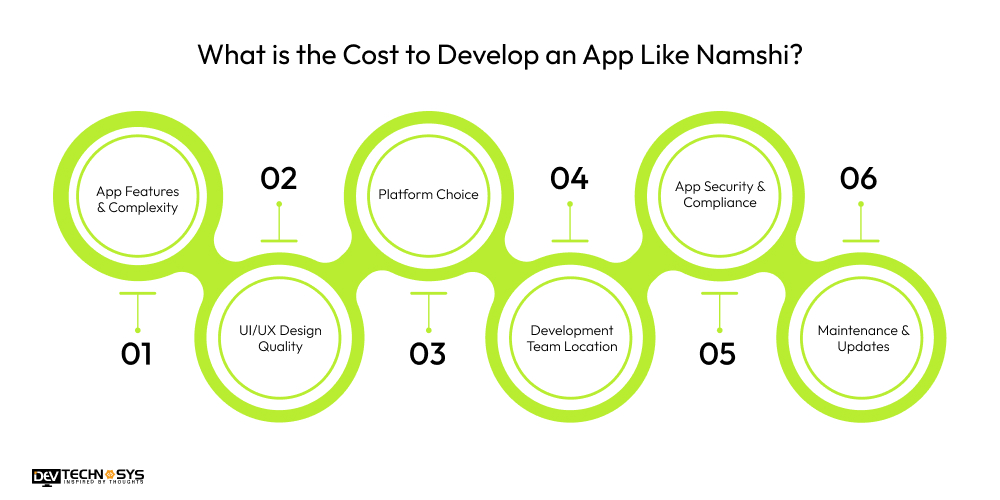
So, as we saw in the table, the Namshi app development cost differs due to various factors. And what are these factors? The multiple factors impacting the shopping app development cost includes features, design, technology, and development approach. Let’s learn about these factors in more detail:
1. App Features & Complexity
The number and complexity of features significantly impact the cost to build an app like Namshi. Basic features like login and product listings cost less, while advanced functionalities such as AI recommendations, an Inventory and order management system (OMS), AR try-ons, and real-time analytics require more time, expertise, and a higher total mobile app development cost.
| Complexity Level | Estimated Cost (USD) | Scope |
| Basic Features | $3,000 – $5,000 | Login, product listing, cart, checkout |
| Moderate Features | $6,000 – $8,000 | Wishlist, notifications, tracking |
| Advanced Features | $9,000 – $11,000 | AI recommendations, analytics |
2. UI/UX Design Quality
A simple design is cost-effective, but a highly interactive, visually appealing, and user-friendly interface increases the total cost to build an app like Namshi. Custom animations, smooth navigation, and responsive layouts require skilled designers, which adds to the overall time and cost to build an app like Namshi.
| Design Level | Estimated Cost (USD) | Scope |
| Basic Design | $8,000 – $10,700 | Simple layouts, minimal customization |
| Custom UI/UX | $10,000 – $12,500 | Interactive design, responsive layouts |
| Premium Design | $12,000 – $15,800 | Animations, high-end visuals, branding |
3. Platform Choice
Developing for a single platform like Android or iOS costs less compared to building for both. Cross-platform development can reduce the cost to create an app like Namshi, but native apps may require separate codebases, increasing development time, effort, and budget.
| Platform Type | Estimated Cost (USD) | Scope |
| Single Platform | $8,000 – $12,000 | Android or iOS only |
| Cross-Platform | $13,000 – $18,000 | Shared codebase (Flutter/React Native) |
| Dual Native Apps | $18,000 – $22,000 | Separate Android & iOS development |
4. Development Team Location
The Namshi app development cost varies depending on the development team’s geographic location. If you hire on-demand app developers from regions like North America or Europe, the development cost will be higher than in Asia, where skilled developers offer more cost-effective services.
| Team Region | Estimated Cost (USD) | Scope |
| Cost-Effective Regions | $8,000 – $15,000 | Asia-based developers |
| Mid-Range Regions | $15,000 – $22,000 | Eastern Europe, Middle East |
| High-Cost Regions | $22,000 – $30,000 | USA, UK, Western Europe |
5. App Security & Compliance
Experts who provide full stack development services will implement strong security measures, such as data encryption, secure authentication, and compliance standards, which increases the cost to create an app like Namshi. However, SSL/TLS encryption, OAuth 2.0, JWT authentication, and PCI DSS compliance are essential to protect user data, ensure safe transactions, and build trust in a fashion e-commerce platform.
| Security Level | Estimated Cost (USD) | Scope |
| Basic Security | $5,000 – $8,000 | SSL, basic authentication |
| Standard Security | $8,000 – $12,000 | Secure payments, data protection |
| Advanced Security | $12,000 – $16,000 | Encryption, compliance protocols |
6. Maintenance & Updates
Post-launch maintenance, bug fixes, performance optimization, and feature updates add ongoing costs. Regular updates are necessary to keep the app secure, compatible with new devices, and aligned with changing user expectations and market trends. The cost to maintain an app will be around 12% to 18% of the total budget.
| Maintenance Level | Estimated Cost (USD) | Scope |
| Basic Maintenance | $3,000 – $6,000 | Bug fixes, minor updates |
| Regular Maintenance | $6,000 – $8,000 | Performance optimization |
| Ongoing Support | $8,000 – $10,000 | Feature upgrades, scaling |
How to Monetize a Shopping App Like Namshi?
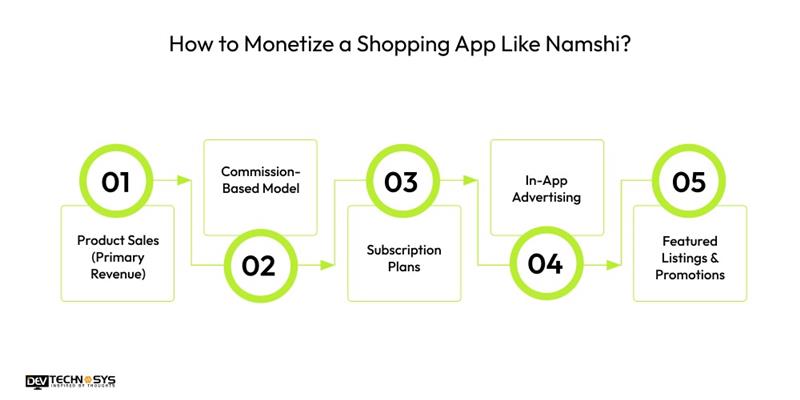
Monetizing an app like Namshi requires a smart mix of revenue strategies that go beyond just product sales. By combining subscriptions, ads, commissions, and premium features, businesses can maximize profits while enhancing user experience and long-term engagement.
1. Product Sales (Primary Revenue)
The main revenue stream comes from selling fashion products directly through the app. Businesses can set profit margins on each item or partner with brands to sell their collections. Higher product variety and competitive pricing attract more users, increasing overall sales volume and consistent revenue growth.
2. Commission-Based Model
Allow third-party vendors and sellers to list their products on the platform. Charge a fixed percentage or commission on every successful transaction. This model scales easily as more vendors join, helping businesses expand inventory without managing stock while earning consistent revenue from each order.
3. Subscription Plans
Create an app like Namshi that offers premium memberships with exclusive benefits, such as free shipping, early access to sales, priority delivery, and special discounts. Subscription models generate recurring revenue, improve customer loyalty, and encourage users to shop more frequently, thereby maximizing the value of their membership benefits.
4. In-App Advertising
Generate revenue by displaying ads from fashion brands or promoting sponsored products within the app. Businesses can charge for banner ads, homepage placements, or targeted promotions. This strategy helps monetize high user traffic while also providing brands with increased visibility and marketing opportunities.
5. Featured Listings & Promotions
Charge sellers to highlight their products in featured sections, top search results, or homepage banners. It improves product visibility and increases the chances of sales for vendors. In return, the platform earns additional revenue while maintaining a dynamic and engaging shopping experience.

What E-commerce App Trends Businesses Can Leverage to Generate Maximum ROI?
The e-commerce landscape is evolving rapidly, driven by emerging technologies and changing consumer behavior. Businesses that leverage the latest app trends can enhance user experience, boost conversions, and maximize ROI. Staying ahead of these trends is key to building a competitive and future-ready platform.
1. AI-Powered Personalization
AI-driven personalization delivers tailored product recommendations, dynamic content, and customized shopping journeys. Businesses using personalization can see up to 15–25% higher conversions and significantly improved customer retention. It enhances user satisfaction, increases average order value, and drives long-term revenue growth.
2. AI Chatbots & Conversational Commerce
AI chatbots provide instant support, guide users through purchases, and handle queries 24/7. They reduce operational costs while improving customer satisfaction. Businesses adopting conversational commerce benefit from faster response times, reduced cart abandonment, and higher conversions through real-time interaction.
3. Headless Commerce Architecture
Headless commerce separates front-end and back-end systems, allowing businesses to deliver faster, highly customized user experiences. It improves flexibility, scalability, and performance. Companies adopting headless architecture can quickly adapt to new trends and channels, resulting in better user engagement and higher ROI.
Final Thoughts
Developing an app like Namshi goes far beyond replicating features; it demands a deep understanding of user behavior, evolving fashion trends, and scalable technology. To stay competitive, businesses must prioritize seamless navigation, hyper-personalized experiences, and high-performance infrastructure that can handle growing user demands. Ultimately, a well-executed strategy can transform a Namshi-like app into a sustainable, high-growth digital commerce platform. To develop a Namshi-like app, contact a top shopping app development company in Dubai. Stay tuned for more updates.
FAQs
Q1. What Is the Cost to Develop a Shopping App Like Namshi?
The cost to develop a shopping app like Namshi typically ranges between $8,000 and $30,000 for MVP to mid-level apps. It depends on features, design complexity, and technology stack. Advanced functionalities like AI and analytics can increase the overall budget to build a shopping app like Namshi.
Q2. How Long Does It Take to Develop a Namshi-Like App?
The time taken to develop a shopping app like Namshi usually takes around 2 to 6 months, depending on app complexity and features. A basic MVP can be built faster, while advanced apps with custom features, integrations, and testing require more time for proper development and deployment.
Q3. What Are the Must-Have Features in a Fashion E-commerce App?
Essential features to build a shopping app like Namshi include a product catalog, search and filters, a shopping cart, secure payment integration, order tracking, and user profiles. Advanced features like AI recommendations, push notifications, and loyalty programs further enhance user engagement and overall shopping experience.
Q4. Which Technology Stack Is Best for Developing Such Apps?
Popular technologies required to build a shopping app like Namshi include Flutter or React Native for the frontend, Node.js or Django for the backend, and MySQL or MongoDB for the databases. Cloud platforms like AWS or Google Cloud ensure scalability, security, and smooth performance for e-commerce applications.
Q5. How Can an App Like Namshi Generate Revenue?
Namshi clone apps can generate revenue through product sales, vendor commissions, subscriptions, in-app advertising, and delivery charges. Combining multiple monetization strategies helps maximize profits and ensures long-term sustainability of the platform.