





Costs depend on the type of blockchain used (public, private, or hybrid). Feature complexity and advanced smart contract logic impact development time. Security requirements, compliance standards, and system integrations. Developer expertise and geographic location also influence hourly rates." } }, { "@type": "Question", "name": "Is Developing A Private Blockchain More Expensive?", "acceptedAnswer": { "@type": "Answer", "text": "Private blockchain solutions require additional security and infrastructure.
They require higher customization and restricted access controls. Enterprise-grade encryption and compliance measures increase complexity. Integration with internal systems adds to the development effort. As a result, private blockchain solutions usually cost more than public ones." } }, { "@type": "Question", "name": "Can I Reduce the Cost to Build a Blockchain App?", "acceptedAnswer": { "@type": "Answer", "text": "Yes, strategic planning can help minimize overall expenses.
Start with a Minimum Viable Product (MVP) to test your idea. Focus only on essential features during the initial phase. Use open-source tools or pre-built blockchain frameworks. Hire experienced yet cost-effective development teams." } } ] }
Key Takeaways:
-
- Blockchain project budget estimation can range from $8,000 to $15,000 for simple apps to $20,000 to $30,000+ for feature-rich or enterprise solutions.
- Features such as smart contracts, multi-chain support, DeFi capabilities, and custom logic significantly increase blockchain development cost.
- Team expertise and regional rates (e.g., Asia vs. North America) play a major role in total cost.
- Smart contract verification and penetration testing are essential and often costly components of blockchain projects.
Blockchain technology is transforming industries, from finance and supply chain to healthcare and entertainment, none remains unexplored. As more businesses adopt decentralized solutions, demand for blockchain apps is skyrocketing. But one of the first questions on every entrepreneur’s mind is: how much does blockchain app development cost?
The answer to this question is not that simple. The cost to develop a blockchain app varies depending on the type of blockchain, the complexity of smart contracts, security measures, network integration, and the features you want to implement.
Understanding these factors is crucial for planning your plan your budget effectively. This blog will guide you through the key cost drivers and strategies to optimize investment. So, let’s get started!
Blockchain App Market Forecast
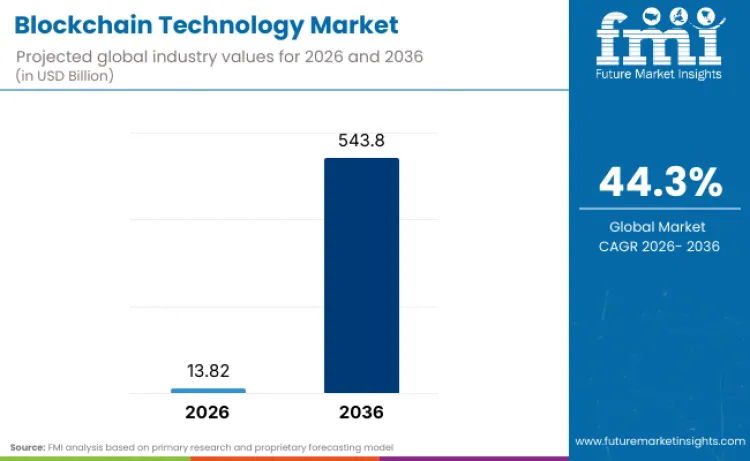
- The blockchain technology market is valued at USD82 billion in 2026 and is projected to reach USD 543.8 billion by 2036.
- Market revenues are projected to grow at a 3% CAGR from 2026 to 2036.
- Blockchain platforms account for approximately 8% of total solution-level revenue as enterprises prioritize core ledger infrastructure over standalone point applications.
- Payments and money flows account for around6% of blockchain demand, driven by direct efficiency gains in settlement speed, reconciliation accuracy, and cross-border liquidity flows.
- The United States records 2% growth, reflecting expanding use of regulated blockchain rails across financial services, payments, and asset servicing in a mature digital economy.
How Much Does Blockchain App Development Cost in the Middle East?
In the Middle East, especially in countries like the UAE and Saudi Arabia, the cost for blockchain app development services ranges from $8,000 to $30,000+. The cost range widely depends on project complexity, security requirements, and the features you want to implement.
Simple blockchain applications typically cost between $8,000 and $12,000, while complex enterprise-level platforms, decentralized finance (DeFi) solutions, or multi-feature apps can exceed $30,000. OTC crypto exchange development rates in the region typically range from $15 to $80+ per hour, influenced by the development team’s expertise, the technology stack, and compliance with local regulations.
Blockchain App Type |
Estimated Cost ($) |
Hourly Rate ($/hr) |
| Basic App | $8,000 – $12,000 | 10 – 25 |
| Standard App | $12,000 – $20,000 | 25 – 40 |
| Complex/Enterprise App | $20,000 – $30,000+ | 45 – 80+ |
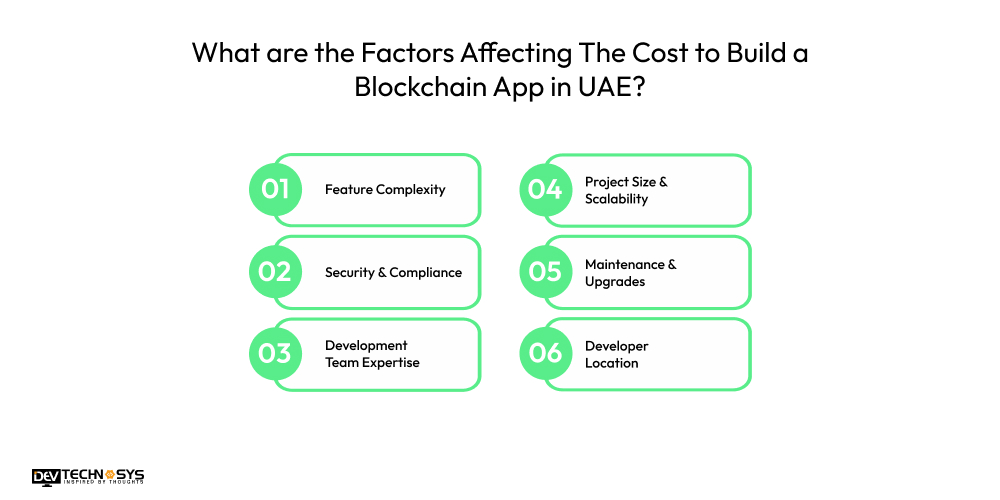
What are the Factors Affecting The Cost to Build a Blockchain App in UAE?
The cost to create a blockchain app in UAE depends on multiple key factors that influence development time, complexity, and overall investment. Understanding these elements helps businesses plan budgets effectively and make informed decisions for a secure, scalable, and feature-rich blockchain application.
1. Feature Complexity
Adding advanced features like multi-currency wallets, smart contracts, DeFi functionality, NFTs, and real-time analytics increases costs. The more interactive and automated the app, the higher the development effort.
Complex transaction processing, trading mechanisms, and additional modules also contribute to higher expenses for robust blockchain solutions. Here’s the table displaying the blockchain app development cost per feature.
Feature Level |
Estimated Cost ($) |
| Basic | $3,000 – $5,000 |
| Standard | $6,000 – $8,000 |
| Advanced/Enterprise | $8,000 – $10,000+ |
2. Security & Compliance
The cost to build a blockchain app in Sharjah increases due to the need to integrate robust security protocols, encryption, KYC/AML systems, and fraud prevention measures. Ensuring compliance with local regulations in the Middle East, including the UAE and Saudi Arabia, also increases investment.
High-security standards are critical for user trust and regulatory approval, influencing both development and operational expenses.
Security Level |
Estimated Cost ($) |
| Basic | $6,000 –$ 8,000 |
| Moderate | $8,000 – $12,000 |
| High/Enterprise | $12,000 – $15,000+ |

3. Development Team Expertise
Hiring a skilled blockchain app developer ksa, architects, and auditors affects the budget. Experienced teams command higher hourly rates, especially for complex projects requiring smart contracts, DeFi mechanisms, or high transaction throughput. Location, reputation, and domain expertise further impact the cost to hire blockchain developers, making the choice of development team a crucial factor.
Team Level |
Estimated Cost ($) |
| Junior/Small Team | $8,000 – $12,000 |
| Mid-Level | $12,000 – $20,000 |
| Senior/Expert Team | $20,000 – $30,000+ |
4. Project Size & Scalability
Larger projects with high user volume, complex workflows, or enterprise requirements demand more infrastructure, testing, and development effort. Scalable architecture ensures long-term performance, but increases the initial cost to develop a blockchain app. Project size affects the number of developers, QA resources, and servers needed, directly impacting overall investment.
Project Type |
Estimated Cost ($) |
| Small | $10,000 – $15,000 |
| Medium | $15,000 – $19,000 |
| Large/Enterprise | $20,000 – $25,000+ |
5. Maintenance & Upgrades
Blockchain apps require ongoing maintenance, security patches, and feature updates. Regular monitoring, server management, and compliance updates add to the cost to develop a blockchain app in Dubai in the long term. The complexity of smart contracts, transaction handling, and user activity levels influences the frequency and cost of maintenance, making it a critical consideration for budgeting.
Maintenance Level |
Estimated Cost ($) |
| Basic | 3,000 – 5,000 |
| Standard | 5,000 – 7,000 |
| High/Enterprise | 7,000 – 10,000+ |
6. Developer Location
The region where your development team is based significantly impacts costs. Developers in North America or Western Europe charge higher rates ($50–$150/hr) compared to Asia or the Middle East ($10–$80/hr). Choosing the right location balances cost, expertise, and project quality, influencing overall budget and timelines.
Industry Insights: According to a Grand View Research report, the U.S. blockchain technology marketis expected to grow at a significant CAGR from 2025 to 2030.
Region |
Estimated Cost ($) |
| Asia / Middle East | 8,000 – 18,000 |
| Eastern Europe / Latin America | 15,000 – 25,000 |
| North America / Western Europe | 22,000 – 30,000+ |
What are the Types of Blockchain App Development Costs?
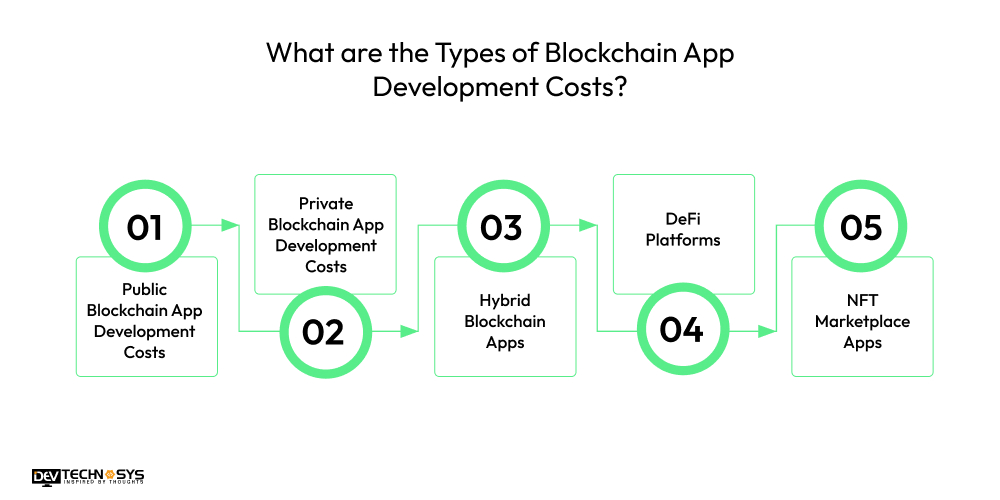
If you want to Invest In blockchain app development, then you must pay attention to types. Blockchain app development costs vary based on type, features, and complexity. Understanding the different types helps plan budgets and allocate resources effectively.
1. Public Blockchain App Development Costs:
Public blockchain apps run on fully decentralized networks, accessible to anyone. They are relatively simple to build, requiring minimal infrastructure and fewer customizations. Ideal for startups or small projects, their development costs typically range from $8,000 to $12,000, making them the most cost-effective blockchain solution.
Feature |
Description |
Estimated Cost ($) |
| Network Type | Fully decentralized, open to all users | 11,000 – 18,000 |
| Infrastructure | Minimal setup, simple architecture | 18,000 – 22,000 |
| Ideal Use Case | Startups, basic blockchain apps | 23,000 – 27,000 |
Read also: How Much Does It Cost to Build an NFT Marketplace?
2. Private Blockchain App Development Costs:
Private blockchain apps are designed for enterprises with restricted access, offering higher security and controlled environments. They require significant customization, advanced encryption, and integration with internal systems. Development for private blockchains is more complex, with typical costs ranging from $15,000 to $25,000, depending on the features and scale.
Feature |
Description |
Estimated Cost ($) |
| Network Type | Controlled, restricted to authorized users | 15,000 – 20,000 |
| Security | Advanced encryption, enterprise compliance | 21,000 – 25,000 |
| Ideal Use Case | Enterprises requiring secure, internal systems | 23,000 – 28,000 |
3. Hybrid Blockchain Apps:
Hybrid blockchain apps combine public and private networks, offering both accessibility and enterprise-level control. They are suitable for applications requiring scalability, flexibility, and security for diverse users. Due to dual infrastructure requirements, hybrid crypto exchange development costs for hybrid blockchain apps usually range from $20,000 to $30,000+.
Industry Insights: According to Fortune Business Insights, the hybrid blockchain is anticipated to grow at a robust CAGR of 45.34% over the forecast period, driven by rising demand for interoperability in cross-chain communication.
Feature |
Description |
Estimated Cost ($) |
| Network Type | Combines public and private blockchain | 10,000 – 13,500+ |
| Flexibility | Scalable for both public and enterprise users | 15,000 – 20,000+ |
| Ideal Use Case | Large-scale apps need both control and access | 20,000 – 36,000+ |
4. DeFi Platforms:
Decentralized finance (DeFi) apps allow lending, staking, trading, and other financial services using smart contracts. They require complex transaction logic, automated workflows, and rigorous security audits. The high complexity of DeFi apps drives the costs of blockchain development solution, typically starting at $25,000 and rising depending on features.
Feature |
Description |
Estimated Cost ($) |
| Functionality | Lending, staking, trading via smart contracts | 10,000 – 15,000 |
| Security | Smart contract audits, high-level encryption | 15,000 – 19,000 |
| Complexity | Advanced logic, automation, and workflow | 20,000 – 25,000 |
5. NFT Marketplace Apps:
NFT marketplaces enable users to create, buy, and sell digital assets on a blockchain. Key components include wallets, smart contracts, and verification systems. Due to their feature-rich nature and security needs, developing an NFT marketplace generally costs between $20,000 and $30,000+, depending on scale and integrations.
Industry Insights: Statista reports that Users who are whitelisted and flip their newly minted NFTs can profit 75.7% of the time.
Feature |
Description |
Estimated Cost ($) |
| Functionality | Create, buy, and sell NFTs | 12,000 – 16,000+ |
| Wallet Integration | Digital wallets and smart contract integration | 15,000 – 21,000+ |
| User Verification | Authentication and security for transactions | 22,000 – 30,000+ |
What Factors Can Help Reduce Blockchain App Development Cost?
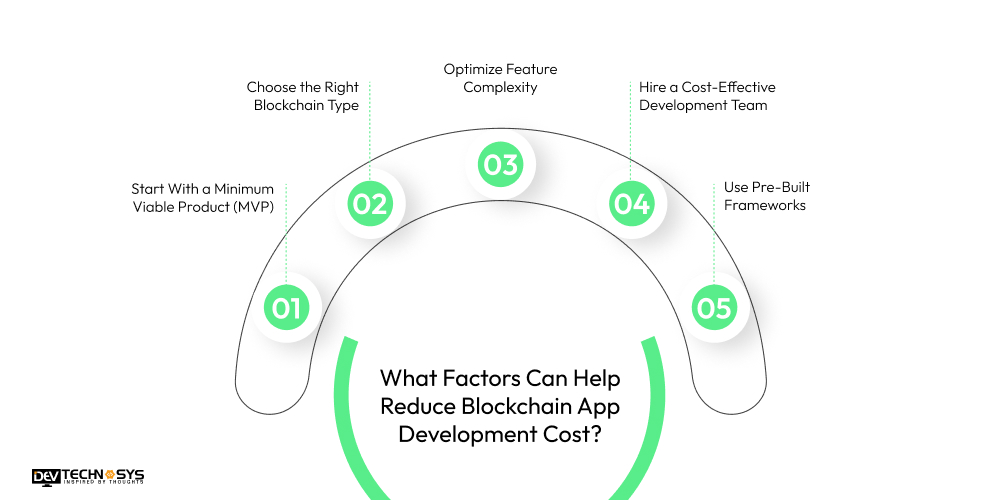
Building a blockchain app can be expensive, but careful planning and smart decisions can significantly lower costs. Identifying key factors that influence development expenses helps you create a high-quality, secure, and scalable app while staying within budget.
1. Start With a Minimum Viable Product (MVP)
Launching an MVP with only the essential features allows you to test your concept in the market without investing heavily in full-scale development. This approach reduces initial costs, provides valuable user feedback, and helps prioritize features for future updates, ensuring investment is directed wisely.
2. Choose the Right Blockchain Type
Selecting a simpler blockchain type, such as a public blockchain, can save infrastructure, maintenance, and integration costs. Private or hybrid blockchains are more secure and scalable but require higher investment, so choose based on your project’s specific needs to avoid unnecessary expenses.

3. Optimize Feature Complexity
Focusing on core functionalities and avoiding unnecessary features at the early stage helps save development time and costs. Advanced smart contracts, complex transaction workflows, or multi-module integrations can be added later, allowing a phased approach to minimize initial expenditure.
4. Hire a Cost-Effective Development Team
Working with experienced developers from regions with lower hourly rates, such as Asia, the Middle East, or Eastern Europe, can significantly reduce costs. Ensure the team has proven blockchain expertise to maintain quality while optimizing your development budget.
5. Use Pre-Built Frameworks or White-Label Solutions
Leveraging pre-built blockchain frameworks or white-label solutions can save considerable time and cost. Much of the backend, wallet management, and transaction systems are already developed, allowing faster deployment and reducing the need for building everything from scratch.
How to Monetize Blockchain Apps?
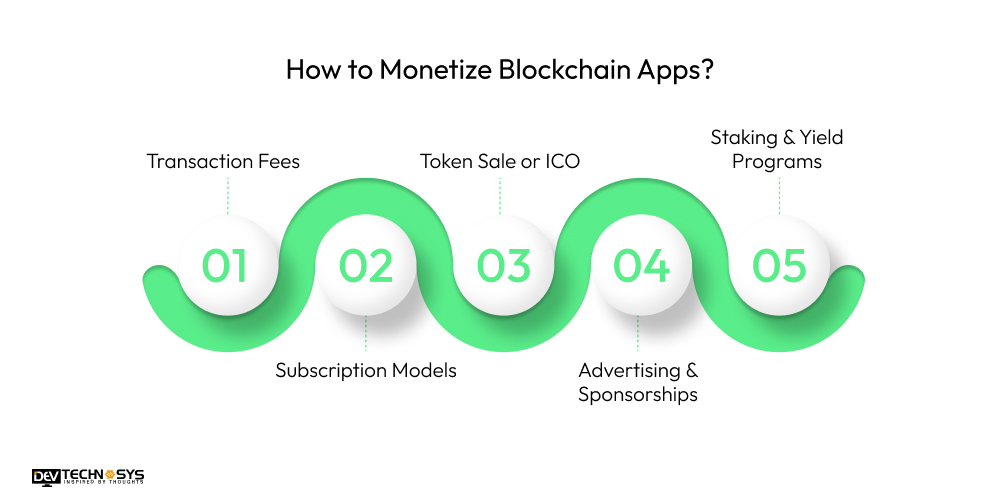
Blockchain apps offer multiple ways to earn revenue. Choosing the right monetization strategy helps maximize profits while keeping users engaged. Let’s take a closer look at these effective money-making strategies:
1. Transaction Fees
Blockchain apps can charge users a small fee for every transaction conducted on the platform. This is common in cryptocurrency exchanges, DeFi apps, and NFT marketplaces, where each trade, transfer, or contract execution generates consistent revenue. Over time, transaction fees can become a stable, recurring income source as the user base grows.
2. Subscription Models
Apps can offer premium services or advanced features through subscription plans. Users pay monthly or annually to access benefits like enhanced analytics, higher transaction limits, or exclusive digital assets. Subscription models ensure predictable revenue, allow developers to continuously improve the platform, offer better software development solutions, and incentivize loyal user engagement.
3. Token Sale or ICO
Blockchain apps often launch their native tokens through Initial Coin Offerings (ICOs) or token sales. Revenue comes from investors or users purchasing tokens, which can also drive platform adoption. Successful token launches can fund future app features, marketing campaigns, and ecosystem growth.
4. Advertising & Sponsorships
Platforms with large user bases can integrate ads or sponsored content into their app ecosystems. Companies may pay to promote their services or tokens, offering an additional revenue source without charging users directly. This method also benefits users by connecting them with relevant products and services within the blockchain ecosystem.
5. Staking & Yield Programs
Blockchain apps can offer staking options or yield-generating programs that let users lock their tokens to earn rewards. The app takes a small percentage of the rewards as a fee. This incentivizes long-term participation, increases token liquidity, and encourages users to remain engaged within the platform’s ecosystem.
What Development Approach Experts Recommend Based on the Budget?
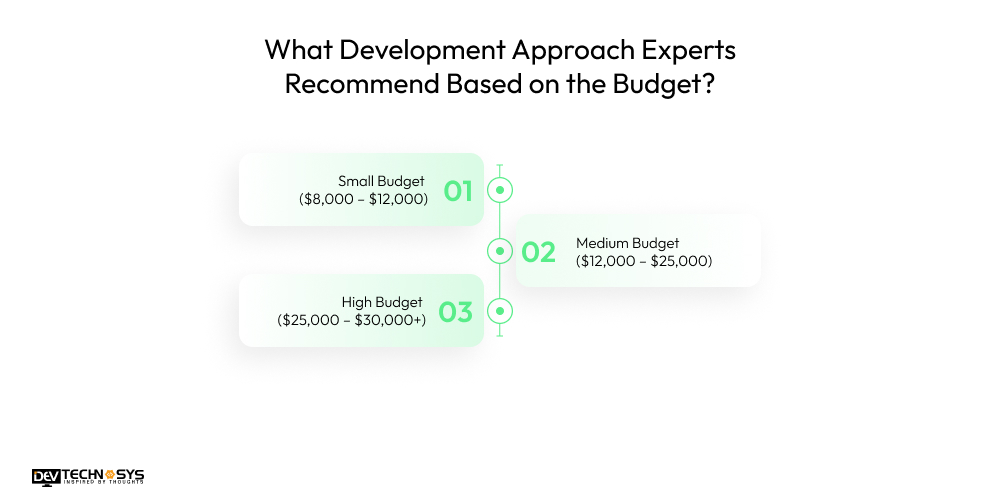
Choosing the right blockchain app type depends on your budget and project goals. Selecting the right approach ensures cost-efficiency, scalability, and faster time-to-market.
1. Small Budget ($8,000 – $12,000):
Opt for a public blockchain app or a P2P blockchain solution. These are easy to develop, require minimal infrastructure, and let you enter the market quickly. Experts who provide blockchain development services consider it Ideal for startups or small projects testing their concept.
2. Medium Budget ($12,000 – $25,000):
Consider private blockchain apps or DeFi platforms. These provide advanced features, better security, and enterprise-level functionality. They balance blockchain security implementation cost and performance, enabling broader user engagement while keeping development expenses reasonable.
3. High Budget ($25,000 – $30,000+):
Invest in hybrid blockchain apps, NFT marketplaces, or enterprise-grade solutions. These are fully scalable, feature-rich, and highly secure, suitable for large businesses aiming for long-term growth and high user engagement. The hybrid crypto exchange development for enterprises may exceed $30,000.

Conclusion
Blockchain app development is a strategic investment. Costs typically range from $8,000 to $30,000+, depending on various factors. The key to managing your budget is clarity. With the right development partner and a well-planned roadmap, you can build a secure, scalable blockchain app that delivers long-term growth, competitive advantage, and strong ROI.
If you want to develop a blockchain app for your business, then turn to Dev Technosys, a leading blockchain development company in Middle East.
Frequently Asked Questions
1. How Much Does It Cost To Develop A Basic Blockchain App?
A basic blockchain app with essential features and simple functionality typically costs between $8,000 and $12,000. The cost of blockchain app development may increase if additional security, integrations, or customization are required. Contact a skilled developer for this task.
2. Why Do Blockchain App Development Costs Vary?
Several technical and business factors influence the overall development budget.
- Costs depend on the type of blockchain used (public, private, or hybrid).
- Feature complexity and advanced smart contract logic impact development time.
- Security requirements, compliance standards, and system integrations.
- Developer expertise and geographic location also influence hourly rates.
3. Is Developing A Private Blockchain More Expensive?
Private blockchain solutions require additional security and infrastructure.
- They require higher customization and restricted access controls.
- Enterprise-grade encryption and compliance measures increase complexity.
- Integration with internal systems adds to the development effort.
- As a result, private blockchain solutions usually cost more than public ones.
4. Can I Reduce the Cost to Build a Blockchain App?
Yes, strategic planning can help minimize overall expenses.
- Start with a Minimum Viable Product (MVP) to test your idea.
- Focus only on essential features during the initial phase.
- Use open-source tools or pre-built blockchain frameworks.
- Hire experienced yet cost-effective development teams.