





Key Takeaways
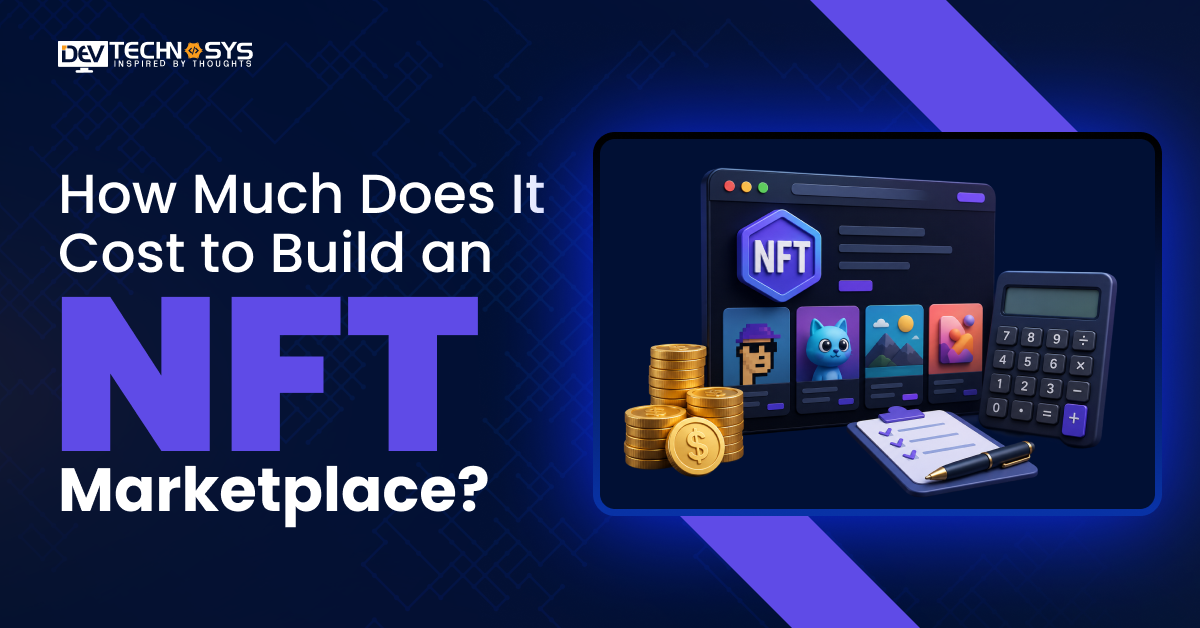
The cost to build an NFT marketplace in 2026 typically ranges from $30,000 to $150,000+, depending on the platform’s complexity, blockchain network, smart contract functionality, security requirements, and scalability goals. An MVP NFT marketplace generally starts from $30,000–$50,000, mid-level platforms range between $50,000–$90,000, while enterprise-grade NFT marketplaces can cost $90,000–$150,000+.
Cost Breakdown by Development Complexity
- Basic / MVP Marketplace ($30,000 – $50,000): Includes user registration, wallet integration, NFT minting, marketplace listings, basic smart contracts, and essential admin functionality for market validation.
- Mid-Level Marketplace ($50,000 – $90,000): Includes advanced search filters, auctions, bidding systems, payment gateway integration, enhanced security, analytics, and improved user experience.
- Enterprise NFT Marketplace ($90,000 – $150,000+): Includes multi-chain support, advanced smart contracts, AI-powered recommendations, enterprise security, scalability infrastructure, and custom marketplace features.
Key Factors That Affect the Cost
- Blockchain Selection: Ethereum, Polygon, Solana, and BNB Chain impact development complexity and long-term operating expenses.
- Feature Requirements: NFT minting, auctions, bidding systems, royalty management, and wallet integrations increase development costs.
- Smart Contract Complexity: Advanced ownership, trading, and royalty logic require additional development and auditing.
- Security & Compliance: Smart contract audits, fraud prevention, encryption, and compliance measures add to project investment.
- Scalability Requirements: High-traffic marketplaces require robust cloud infrastructure, storage, and performance optimization.
Development Timeline
- Basic MVP Marketplace: 8–12 Weeks
- Mid-Level Marketplace: 12–18 Weeks
- Enterprise Marketplace: 22–30+ Weeks
Hidden Costs
-
- Platform Maintenance: Ongoing updates, bug fixes, and feature enhancements.
- Cloud Infrastructure: Hosting, storage, and server costs increase as the platform grows.
- Smart Contract Audits: Regular security reviews help protect digital assets and transactions.
- Marketing & User Acquisition: Community building, promotions, and customer acquisition campaigns require continuous investment.
- Third-Party Services: Wallet providers, payment gateways, analytics tools, and API subscriptions create recurring operational expenses.
The NFT market is evolving far beyond digital art collections. Today, businesses are building NFT-powered ecosystems for loyalty programs, gaming, memberships, real-world asset tokenization, and digital commerce. As adoption grows, NFT marketplaces are emerging as valuable revenue-generating platforms that help brands create, manage, and monetize digital assets.
However, launching an NFT marketplace is not a one-size-fits-all investment. Development expenses can vary widely depending on factors such as marketplace type, blockchain infrastructure, security expectations, scalability goals, and the overall user experience businesses want to deliver.
In this guide, you’ll discover the average investment required to launch an NFT marketplace, key cost-driving factors, development timelines, hidden expenses, monetization opportunities, and practical ways to optimize your budget. Whether you’re a startup founder, investor, or enterprise decision-maker, understanding the cost to build an NFT marketplace is essential before making a strategic investment decision.
What Is an NFT Marketplace and How Does It Work?
NFT marketplaces have become a crucial part of the digital asset economy, enabling businesses, creators, and investors to trade tokenized assets efficiently. Before evaluating development costs, it’s important to understand what an NFT marketplace does, how transactions occur, and the key components that power the platform.
What Is an NFT Marketplace?
An NFT marketplace is a digital platform that enables users to create, buy, sell, trade, and auction non-fungible tokens (NFTs). These tokens can represent a wide range of digital and real-world assets, including digital art, music, gaming items, virtual land, memberships, and tokenized physical assets.
For businesses, an NFT marketplace serves as a dedicated ecosystem where creators, collectors, and buyers interact while facilitating secure ownership and transactions. As blockchain adoption expands across industries, many organizations choose to build an NFT marketplace to unlock new revenue opportunities and strengthen digital engagement.
How Does an NFT Marketplace Work?
An NFT marketplace follows a straightforward process that allows creators and buyers to interact securely:
Step 1: Account Creation
Users register on the platform and create their marketplace profiles.
Step 2: Wallet Connection
The user connects a compatible crypto wallet to manage digital assets and transactions.
Step 3: NFT Creation or Minting
Creators upload digital content and convert it into an NFT on the blockchain.
Step 4: Ownership Verification
Smart contracts record ownership details and define transaction rules automatically.
Step 5: NFT Listing
The NFT is published on the marketplace and made available for purchase, bidding, or auction.
Step 6: Purchase Transaction
A buyer selects the NFT and completes the transaction through the platform.
Step 7: Ownership Transfer
Once the payment is confirmed, ownership is transferred automatically to the buyer and recorded securely on the blockchain.
Businesses looking to develop an NFT marketplace often focus on simplifying this journey to improve user adoption and transaction volume.
Core Components of an NFT Marketplace
A successful NFT marketplace typically includes a user panel, wallet integration, smart contracts, an NFT listing engine, a payment processing system, and an admin dashboard. These components work together to manage users, facilitate transactions, and ensure smooth marketplace operations.
Once you understand how these platforms operate, the next step is determining the actual investment required to launch one in 2026.
Cost to Build an NFT Marketplace: Average Development Cost in 2026
The cost to build an NFT marketplace in 2026 typically ranges from $30,000 to $150,000+, depending on the platform’s complexity, feature set, scalability requirements, and business objectives. A basic marketplace with essential functionality requires a lower investment, while enterprise-grade platforms demand advanced capabilities, stronger security, and custom integrations.
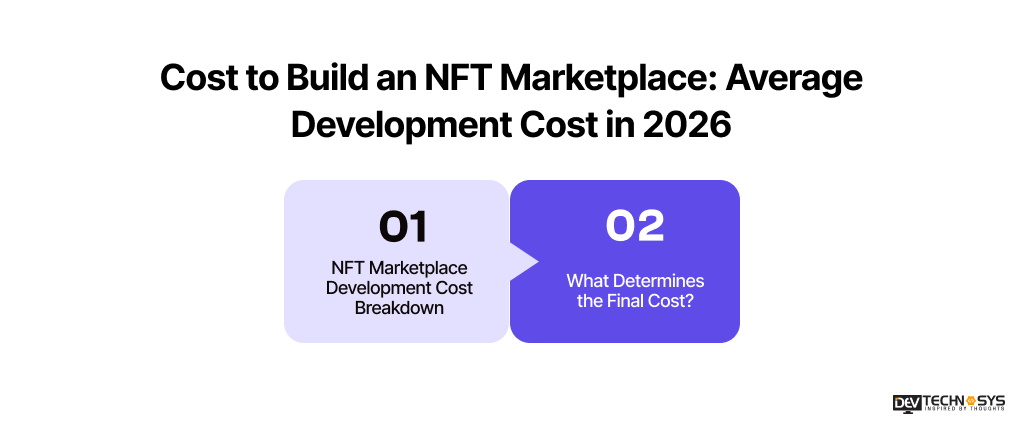
1. NFT Marketplace Development Cost Breakdown
The following table provides a general NFT marketplace development estimate based on common project scopes:
Marketplace Type |
Estimated Cost |
Key Features |
| MVP NFT Marketplace | $30,000–$50,000 | User registration, wallet integration, NFT minting, NFT listings, basic search, admin panel |
| Mid-Level NFT Marketplace | $50,000–$90,000 | Advanced search & filters, auctions, bidding system, royalty management, analytics dashboard, multiple wallet support |
| Enterprise NFT Marketplace | $90,000–$150,000+ | Multi-chain support, advanced security, custom smart contracts, scalability architecture, enterprise integrations, advanced analytics, role-based administration |
The final NFT marketplace app development cost may vary depending on customization requirements, technology choices, and platform scalability expectations.
2. What Determines the Final Cost?
Several factors influence the overall NFT marketplace development cost. Core elements include smart contract implementation, wallet integration, blockchain infrastructure, security mechanisms, and third-party service integrations. Custom marketplace features, advanced search capabilities, royalty management, analytics dashboards, and multi-chain support can further increase development efforts.
Scalability requirements also play a significant role, especially for platforms expecting high transaction volumes and large user bases. The more customized and future-ready the platform becomes, the greater the investment required. Businesses evaluating NFT marketplace development services should first define their platform vision, target audience, and growth strategy before finalizing a budget.
NFT Marketplace Development Cost Breakdown by Feature
Every feature included in an NFT marketplace contributes to the overall development budget. Basic platforms require only essential functionality, while advanced marketplaces demand sophisticated trading, security, and management capabilities. As a result, feature selection is one of the most important factors influencing the cost to create an NFT marketplace and determining the platform’s long-term success.
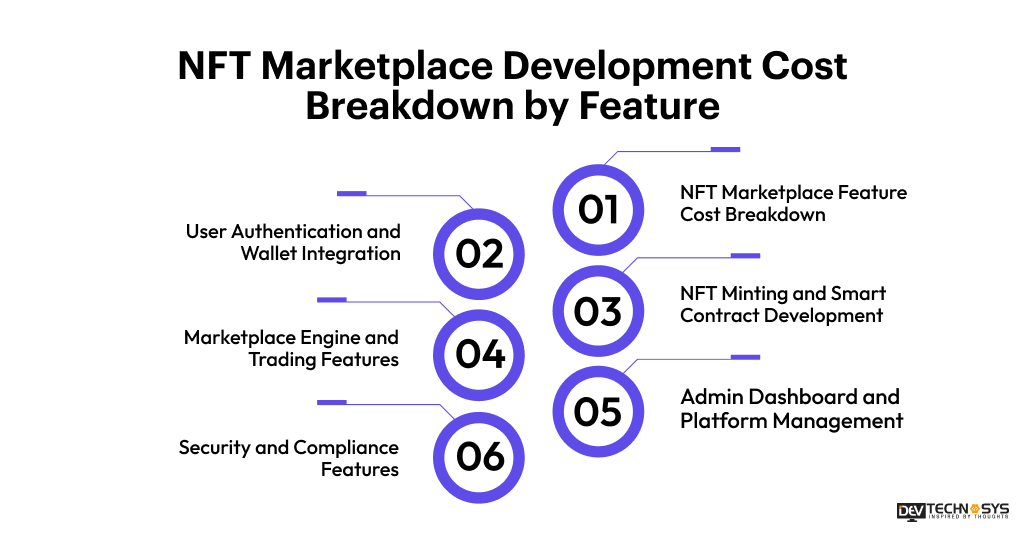
NFT Marketplace Feature Cost Breakdown
Feature |
Estimated Cost |
| User Registration & Authentication | $2,000–$5,000 |
| Wallet Integration | $3,000–$8,000 |
| NFT Minting Functionality | $5,000–$12,000 |
| Smart Contract Development | $8,000–$20,000 |
| NFT Listing & Marketplace Engine | $5,000–$15,000 |
| Search & Filters | $2,000–$5,000 |
| Auction & Bidding System | $5,000–$12,000 |
| Payment Gateway Integration | $3,000–$8,000 |
| User Profiles & Dashboards | $3,000–$7,000 |
| Admin Panel | $4,000–$10,000 |
| Security Features | $5,000–$15,000 |
The actual investment may vary depending on customization requirements, blockchain infrastructure, third-party integrations, and platform complexity.
User Authentication and Wallet Integration
User onboarding begins with account registration and authentication systems that enable secure access to the platform. Modern marketplaces often support email registration, social login options, and multi-factor authentication to improve convenience and security. In addition to user accounts, wallet integration is essential because NFT transactions rely on blockchain-based asset ownership.
NFT Minting and Smart Contract Development
NFT minting functionality enables creators to transform digital assets into tradable tokens. Behind the scenes, smart contracts manage ownership records, royalty distribution, transaction execution, and asset transfers. This area is often one of the most complex aspects of NFT marketplace software development because smart contracts must operate accurately and securely under all conditions.
Marketplace Engine and Trading Features
The marketplace engine serves as the core trading infrastructure of the platform. It manages NFT listings, category organization, search functionality, asset discovery, and transaction workflows. Additional capabilities such as auctions, bidding systems, fixed-price sales, and advanced filtering options further enhance the user experience.
Admin Dashboard and Platform Management
An effective admin dashboard gives marketplace owners complete visibility and control over platform operations. Administrators can manage users, moderate content, monitor transactions, review reported activities, analyze performance metrics, and track revenue generation. A comprehensive NFT marketplace development solution typically includes robust administrative capabilities that support scalability, operational efficiency, and long-term business growth.
Security and Compliance Features
Security is one of the most critical investments in any NFT marketplace project. Platforms must protect user accounts, digital assets, transaction data, and financial activities from potential threats. Common security measures include smart contract audits, fraud detection systems, encrypted data storage, secure payment processing, and multi-factor authentication.
Key Factors Affecting NFT Marketplace Development Cost
While platform features contribute significantly to the budget, the final cost to build an NFT marketplace depends on several technical, business, and infrastructure decisions. Factors such as blockchain selection, security requirements, scalability goals, and development resources can substantially increase or reduce overall project expenses.
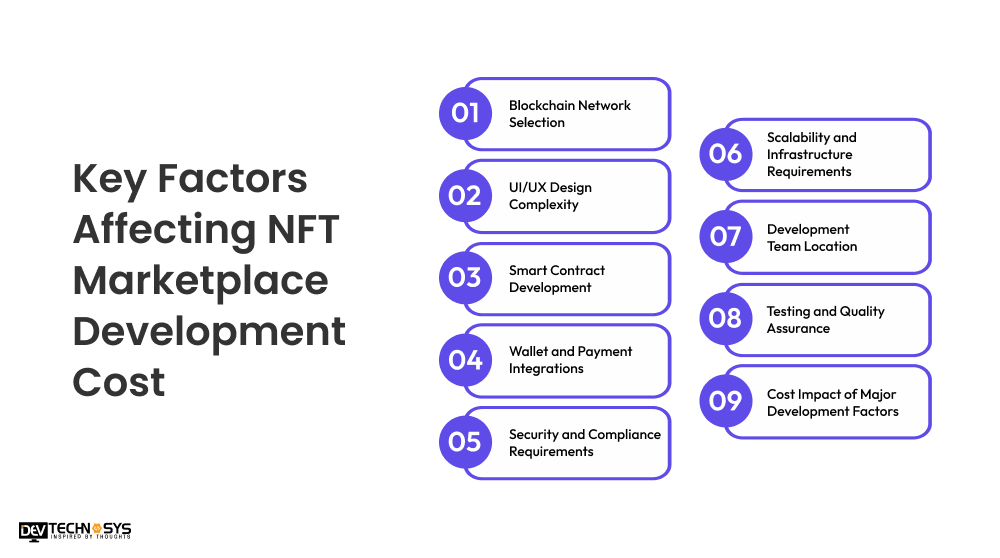
1. Blockchain Network Selection
The blockchain network plays a major role in determining development complexity and operational efficiency. Popular options such as Ethereum, Polygon, Solana, and BNB Chain offer different capabilities, ecosystems, and integration requirements. Many businesses compare NFT projects with broader blockchain app development cost estimates before selecting the most suitable blockchain infrastructure for their platform.
2. UI/UX Design Complexity
A well-designed user experience is essential for attracting and retaining marketplace users. Costs increase when businesses require custom branding, advanced user journeys, mobile-responsive interfaces, interactive dashboards, and personalized experiences. The more unique and polished the design requirements become, the greater the design and front-end development effort involved.
3. Smart Contract Development
Smart contracts automate NFT minting, royalty payments, ownership transfers, and marketplace transactions. While basic contracts can be implemented relatively quickly, advanced trading logic and custom functionality require extensive development, testing, and auditing. This makes smart contract engineering one of the most influential factors affecting project budgets.
4. Wallet and Payment Integrations
NFT marketplaces rely on wallet connectivity to facilitate asset ownership and transactions. Integrations with MetaMask, WalletConnect, Coinbase Wallet, and payment gateways require additional development and testing. Supporting multiple payment methods and wallet providers can improve accessibility but also increases implementation complexity and maintenance requirements.
5. Security and Compliance Requirements
Security investments directly affect the cost to build an NFT marketplace. Platforms must incorporate smart contract audits, multi-factor authentication, fraud prevention systems, secure payment processing, and data protection measures. Depending on the target market, compliance requirements may introduce additional development work to ensure regulatory readiness and user trust.
6. Scalability and Infrastructure Requirements
As user activity grows, marketplaces need infrastructure capable of handling increasing traffic and transaction volumes. Cloud deployment, load balancing, database optimization, distributed storage, and performance monitoring all contribute to the overall NFT platform scalability cost. Scalability planning is particularly important for businesses targeting long-term growth and high user adoption.
7. Development Team Location
Development rates vary significantly by region. Teams in North America and Western Europe typically command higher rates than providers in Asia and some parts of the Middle East. Businesses operating in markets such as the UAE often evaluate global talent options to balance quality, expertise, communication, and project budget requirements.
8. Testing and Quality Assurance
Comprehensive testing helps identify issues before launch and reduces the risk of costly post-deployment fixes. Quality assurance activities include functional testing, security assessments, smart contract validation, usability testing, and performance evaluations. Thorough QA processes improve platform reliability while protecting both user experience and business reputation.
9. Cost Impact of Major Development Factors
Cost Factor |
Cost Impact |
| Blockchain Selection | High |
| UI/UX Design Complexity | Medium-High |
| Smart Contract Development | High |
| Wallet Integration | Medium |
| Marketplace Features | High |
| Third-Party Integrations | Medium |
| Security Requirements | High |
| Scalability Requirements | High |
| Development Team Location | Medium-High |
| Regulatory Compliance | Medium |
| Testing & QA | Medium |
| Maintenance Planning | Medium |
Understanding these cost drivers provides greater budget clarity and helps businesses make informed investment decisions before starting NFT marketplace development.
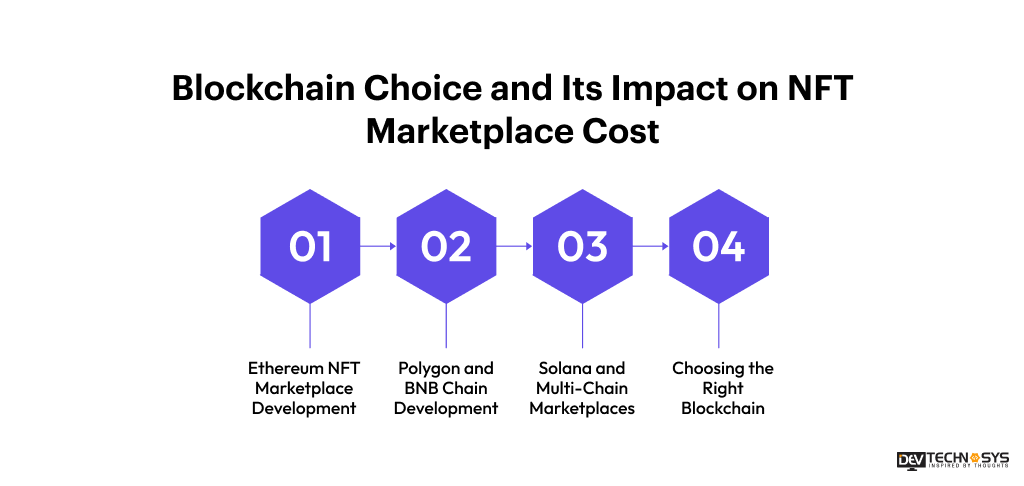
Blockchain Choice and Its Impact on NFT Marketplace Cost
Blockchain selection is one of the most influential factors affecting NFT marketplace development budgets. Different blockchain networks require unique development approaches, integrations, and infrastructure considerations. As a result, the chosen ecosystem impacts both the initial investment and the long-term operational expenses associated with running and scaling the platform.
Blockchain |
Development Cost Impact |
Best For |
| Ethereum | High | Premium NFT marketplaces |
| Polygon | Medium | Cost-efficient NFT platforms |
| Solana | Medium | High-speed NFT ecosystems |
| BNB Chain | Medium | Scalable commercial marketplaces |
| Multi-Chain | Very High | Enterprise NFT platforms |
1. Ethereum NFT Marketplace Development
Ethereum remains the most established blockchain ecosystem for NFT projects. Its mature infrastructure, extensive developer community, and powerful smart contract capabilities make it a preferred choice for premium marketplaces. However, the complexity of development and advanced implementation requirements generally contribute to a higher NFT platform development cost compared to many alternative blockchain networks.
2. Polygon and BNB Chain Development
Polygon and BNB Chain are popular options for businesses seeking a balance between functionality and cost efficiency. Both networks support NFT marketplace development while offering faster transaction processing and more economical scaling opportunities. Startups and growing businesses frequently choose these ecosystems to reduce operational overhead and maintain greater budget flexibility during platform expansion.
3. Solana and Multi-Chain Marketplaces
Solana is known for supporting high-speed NFT ecosystems and delivering efficient transaction processing. However, it requires specialized development expertise due to its distinct environment. Multi-chain marketplaces add another layer of complexity by enabling users to interact across multiple blockchain networks. While this approach increases development effort, it provides enterprises with broader market reach and greater flexibility for future growth.
4. Choosing the Right Blockchain
The ideal blockchain depends on several business considerations, including target users, expected transaction volume, scalability goals, and available budget. Businesses evaluating the cost to create an NFT marketplace should align blockchain selection with their long-term strategy rather than focusing solely on short-term savings. Many organizations also compare public vs private blockchain models before determining the most suitable architecture for their marketplace requirements.
NFT Marketplace Development Process and Timeline
The NFT development timeline varies based on platform complexity, feature set, and blockchain selection. While MVP marketplaces can be launched relatively quickly, enterprise-level platforms require extended development cycles due to advanced smart contracts, integrations, and testing requirements. Overall, businesses that plan to develop an NFT marketplace should account for structured phases that ensure stability, performance, and scalability.
1. NFT Marketplace Development Timeline by Phase
Development Phase |
Duration |
| Discovery & Planning | 1–2 Weeks |
| UI/UX Design | 2–3 Weeks |
| Smart Contract Development | 2–4 Weeks |
| Backend Development | 3–6 Weeks |
| Frontend Development | 3–5 Weeks |
| Wallet Integration | 1–3 Weeks |
| Testing & QA | 2–4 Weeks |
| Deployment & Launch | 1 Week |
2. NFT Marketplace Timeline by Project Size
| Marketplace Type | Estimated Timeline |
| MVP Marketplace | 8–12 Weeks |
| Mid-Level Marketplace | 12–18 Weeks |
| Enterprise Marketplace | 22–30+ Weeks |
The NFT development timeline helps businesses understand how different phases overlap and influence overall delivery speed. Smaller platforms focus on essential functionality, while larger ecosystems require additional time for scalability, security validation, and performance optimization.
NFT Marketplace Development Cost Based on Business Model
Not all NFT platforms are built with the same purpose or complexity. The NFT platform development cost varies significantly depending on the industry, user behavior, and transaction structure. A marketplace designed for digital art will have very different requirements compared to gaming, real estate, or luxury asset platforms, directly impacting the overall cost to develop an NFT marketplace.
Art-focused platforms are generally easier to launch due to simpler workflows and fewer integration requirements. In contrast, gaming and sports marketplaces demand more dynamic interactions, real-time asset handling, and higher scalability.
1. NFT Marketplace Cost by Industry
| Marketplace Type | Estimated Cost Range |
| Art NFT Marketplace | $30,000–$60,000 |
| Gaming NFT Marketplace | $50,000–$100,000 |
| Music NFT Marketplace | $40,000–$80,000 |
| Sports NFT Marketplace | $50,000–$90,000 |
| Real Estate NFT Marketplace | $80,000–$150,000+ |
| Luxury Asset NFT Marketplace | $70,000–$140,000+ |
2. Key Cost Drivers by Marketplace Type
| Marketplace Type | Key Cost Driver |
| Art | Minting & Auctions |
| Gaming | In-game Asset Management |
| Music | Royalty Automation |
| Sports | High Transaction Volume |
| Real Estate | Compliance & Asset Verification |
| Luxury Assets | Security & Ownership Tracking |
Hidden Costs of NFT Marketplace Development Most Businesses Ignore
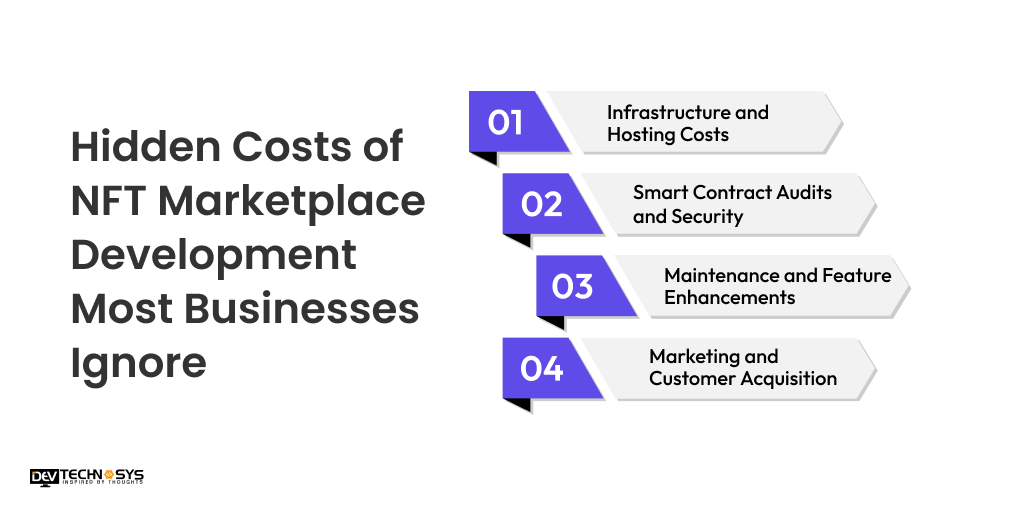
Many businesses focus only on the initial build phase when estimating an NFT platform. However, launching a marketplace involves several ongoing and indirect expenses that significantly impact the overall NFT marketplace development budget. If these are not planned in advance, they can lead to unexpected financial pressure after launch.
1. Infrastructure and Hosting Costs
Infrastructure costs include cloud servers, storage systems, network bandwidth, and performance optimization tools required to keep the platform stable. As user traffic and transaction volume increase, these expenses scale accordingly. A well-architected system is essential to maintain speed, uptime, and reliability, especially during high-demand trading periods.
2. Smart Contract Audits and Security
Security remains an ongoing investment rather than a one-time expense. Smart contract audits, vulnerability assessments, and continuous fraud monitoring are necessary to protect digital assets and user funds. These measures help prevent critical exploits that could damage trust and platform credibility.
3. Maintenance and Feature Enhancements
Ongoing maintenance ensures that the platform remains compatible with evolving blockchain standards, wallet updates, and user expectations. Regular bug fixes, performance improvements, and new feature rollouts are essential for long-term stability. Many businesses rely on long-term software development solutions to keep their NFT marketplace secure, scalable, and competitive in a rapidly changing environment.
4. Marketing and Customer Acquisition
Even a well-built marketplace requires strong marketing to attract users and creators. Expenses such as user acquisition campaigns, influencer collaborations, community building, and brand awareness initiatives play a major role in platform success. These costs often continue long after launch and should be factored into long-term planning.
Why Budget Planning Is Critical Before Developing an NFT Marketplace?
Proper budget planning plays a decisive role in the success of any NFT platform. Without a clear financial roadmap, projects often face scope creep, inefficient resource allocation, and unexpected expenses that can disrupt development progress. A well-defined NFT marketplace development estimate helps businesses prioritize essential features, align technical decisions with business goals, and maintain control over overall execution.
A structured NFT marketplace development budget improves decision-making throughout the project lifecycle by setting realistic expectations for investment, timeline, and ROI. It reduces financial risks, supports sustainable scaling, and ensures that resources are allocated to the most impactful areas of development.
Cost Reduction Strategies for NFT Marketplace Development
NFT development costs can be optimized significantly with the right planning and execution approach. The goal is not to minimize quality but to maximize value while keeping the cost to build an NFT marketplace under control through smarter technical and business decisions.
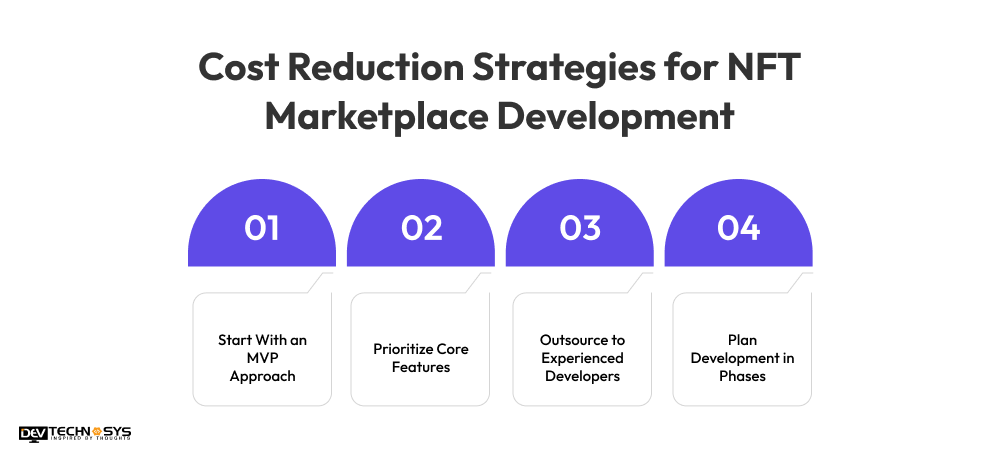
1. Start With an MVP Approach
Launching a minimum viable product allows businesses to enter the market with essential features only. This reduces upfront investment and helps validate demand before scaling. It also minimizes early-stage NFT marketplace software development costs by avoiding unnecessary engineering effort.
2. Prioritize Core Features
Focusing only on essential features like wallet integration, NFT minting, and marketplace functionality ensures development resources are used efficiently. This prevents over-engineering and helps control initial development expenses while improving time-to-market.
3. Outsource to Experienced Developers
Working with an experienced blockchain development company reduces costly mistakes, rework, and delays. Skilled teams bring proven frameworks and optimized workflows that improve efficiency and help lower overall development costs without compromising quality.
4. Plan Development in Phases
Phased development allows businesses to control spending and scale gradually. Instead of building everything at once, features are released step by step based on feedback and demand, helping reduce upfront investment and manage long-term costs effectively.
| Strategy | Cost-Saving Impact |
| Start With an MVP | High |
| Prioritize Core Features | High |
| Choose Cost-Efficient Blockchain Networks | Medium-High |
| Outsource to Experienced Developers | High |
| Plan Future Features in Phases | Medium |
| Reduce Unnecessary Integrations | Medium |
Monetization Models for NFT Marketplaces
NFT marketplaces generate revenue through multiple streams that scale with user activity and platform adoption. A well-planned monetization strategy helps businesses recover the NFT marketplace development cost faster while building a sustainable long-term revenue model.
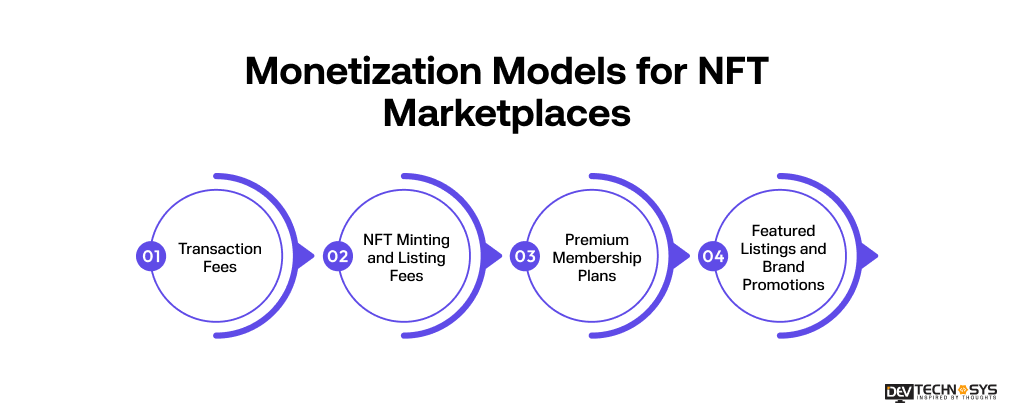
1. Transaction Fees
Transaction fees are the most common revenue model used by NFT marketplaces. The platform earns a percentage from every NFT sale or transfer. As trading activity increases, this model becomes highly scalable and provides consistent income tied directly to marketplace usage.
2. NFT Minting and Listing Fees
Many platforms charge users for minting NFTs or listing digital assets on the marketplace. These fees generate revenue even before transactions take place, creating an additional income stream that supports early-stage monetization and helps offset initial platform expenses.
3. Premium Membership Plans
Subscription-based models allow users to access advanced features such as analytics, priority support, and enhanced visibility for their NFTs. This creates recurring revenue and provides a stable financial base beyond transactional earnings.
4. Featured Listings and Brand Promotions
NFT creators and brands often pay for featured placements, promotional banners, and sponsored visibility within the marketplace. These advertising opportunities significantly boost platform earnings. Businesses expanding their Web3 ecosystem often combine NFT platforms with a broader crypto exchange app development solution to unlock additional promotional and ecosystem-driven revenue channels.

Why Invest in NFT Marketplace Development in 2026?
NFTs are rapidly evolving beyond digital collectibles into broader applications such as digital ownership, creator monetization, brand engagement, and tokenized ecosystems. This shift is opening new revenue channels for businesses across industries. Companies that aim to build an NFT marketplace can position themselves early in the Web3 economy while strengthening user engagement and long-term digital presence.
NFT marketplaces generate consistent income through transaction commissions, subscriptions, and enterprise adoption across sectors like gaming, real estate, sports, and luxury assets. Businesses exploring ways to build crypto asset management software can leverage these models to expand their digital infrastructure. As a result, the cost to develop an NFT marketplace becomes a strategic investment when aligned with scalable business goals and long-term growth opportunities.
Conclusion
The overall cost to build an NFT marketplace depends on several factors, including feature complexity, blockchain selection, security requirements, scalability needs, and business objectives. In most cases, the NFT marketplace development cost ranges between $30,000 and $150,000+, depending on the scope and technical depth of the project. Proper planning, structured budgeting, and a clear monetization strategy are essential to maximize ROI and ensure long-term success in the Web3 space.
Understanding the cost to build an NFT marketplace allows businesses to make informed investment decisions and avoid unexpected financial challenges during development. Partnering with an experienced NFT marketplace development company can further streamline the process and accelerate time-to-market.
With over 15+ years of software development experience, Dev Technosys helps startups, enterprises, and Web3 businesses build secure, scalable, and future-ready NFT marketplace platforms tailored to their goals.
FAQs
Q1. How Much Does It Cost to Develop an NFT Marketplace Like OpenSea?
The cost to develop an NFT marketplace like OpenSea typically ranges from $80,000 to $150,000+, depending on the platform’s complexity, blockchain integrations, security requirements, and scalability goals. Advanced features such as auctions, multi-wallet support, and analytics can further increase the overall investment.
Q2. What Is the Most Expensive Part of NFT Marketplace Development?
Smart contract development, security audits, and custom trading functionality are usually the most expensive components of the cost to create an NFT marketplace. These elements require specialized expertise to ensure secure transactions, automated royalties, and long-term platform reliability.
Q3. Can I Build an NFT Marketplace With an MVP First?
Yes, businesses can build an NFT marketplace with an MVP starting from approximately $30,000 to $50,000. An MVP includes essential features required to launch the platform, validate market demand, and collect user feedback before investing in advanced functionality.
Q4. Which Blockchain Is the Most Cost-Effective for NFT Marketplace Development?
For startups and growing businesses, Polygon and BNB Chain are often considered cost-effective options due to their lower transaction costs and efficient scalability. However, the ideal blockchain depends on your budget, business goals, and expected transaction volume.
Q5. How Long Does It Take to Build an NFT Marketplace?
The development timeline typically ranges from 8 to 30+ weeks, depending on project complexity. An MVP NFT marketplace can usually be launched within 8–12 weeks, while enterprise-grade platforms with advanced features, security layers, and integrations require significantly longer development cycles.