





Key takeaways:
-
- With the fast-evolving competitive edge in today’s technological world, custom software development in the UAE is also advancing.
- The market size of custom software is expected to grow from USD 43 billion in 2025 to USD 146 billion by 2030
- The final custom software development cost in UAE depends on the project’s complexity, security levels, backend infrastructure, third-party APIs, and other factors.
- By building an MVP, selecting the right tech stack, implementing agile methodology, and opting for cross-platform development, one can reduce the custom software development pricing UAE.
In the digital economy of the United Arab Emirates (UAE), custom software solutions have rapidly evolved from being a competitive advantage to a strategic necessity. The UAE, known for its forward-looking vision and rapid technology adoption, is experiencing growing demand for customized digital systems.
Whether to streamline internal operations, improve customer engagement, or enable new business models, custom softwares are in demand. Be it the healthcare or the fintech sector, the biggest question for this digital transformation is the cost of software development in Dubai, Sharjah, or other emirates.
Understanding this requires a deeper look not just at prices, but at market trends, influencing factors, cost optimization strategies, and monetization opportunities.
In this article, we have provided a detailed and professional exploration of custom software development costs in the UAE.
What Is The Present And Future Market Prediction Of Custom Softwares?
The demand for custom software is rapidly increasing as businesses seek tailored digital solutions. Understanding current market trends and future predictions helps organizations plan technology investments, anticipate growth opportunities, and stay competitive in an evolving digital economy.
- The global custom software market is projected to grow from USD 43 billion in 2025 to USD 146 billion by 2030.
- Custom software development is expected to register a 22–23% CAGR between 2025 and 2030 due to rising enterprise adoption.
- The UAE custom software market is forecast to expand from USD 973 million to USD 3.25 billion by 2030.
- The MEA custom software market is projected to exceed USD 10 billion by 2030, growing at nearly 21% CAGR.
- Enterprise custom software remains the largest and fastest-growing segment globally through 2030.
What Is Custom Software Development?
Custom software development refers to the process of designing, building, deploying, and maintaining software solutions. These solutions are tailored to the specific needs of a business or organization, unlike off-the-shelf packages that cater to generic needs.
Custom software can include:
- Mobile apps
- Web platforms
- Enterprise systems (ERP, CRM)
- Bespoke dashboards, analytics tools
- Cloud-native SaaS products
- Automation & integration tools
What distinguishes it from generic solutions is fit-for-purpose functionality, scalability, and usually richer integration with existing workflows.
For example, a retail chain in the UAE might build a custom POS and inventory system with Arabic language support and real-time logistics integration, something not fully attainable with standard packaged solutions. For a similar app, you can reach out to a custom web development company.
What Is The Average Cost Of Custom Software Development In UAE?
The average software development cost in UAE for small to mid-level projects typically ranges between $8,000 and $30,000. It depends on features, complexity, and development approach. At the lower end, you can expect basic web applications or simple mobile apps with minimal integrations and straightforward functionality.
Mid-range projects often include additional features such as user authentication, backend dashboards, and basic third-party integrations. The enterprise software development cost UAE is higher as it covers applications with custom UI/UX design, multi-platform support, enhanced security, and whatnot.
Factors such as the choice of local versus offshore developers, technology stack, testing needs, and ongoing support also influence the final software development cost in UAE. This range offers a practical baseline for most SMEs and startups planning custom development in the UAE.
You must be wondering what is a detailed cost breakdown for custom software projects in the UAE? Have a look at the breakdown table for a clearer concept of the cost:
Type of Project |
What’s Included |
Cost Range |
| Basic | Simple web or mobile app with essential features, static pages, basic navigation, and mobile responsiveness | $8,000 – $12,000 |
| Intermediate | Moderate complexity software with dynamic content, user login, custom forms, and basic automation | $12,000 – $20,000 |
| Advanced | Enterprise-level or feature-rich application with custom dashboards, advanced workflows, integrations, and high performance | $20,000 – $30,000 |
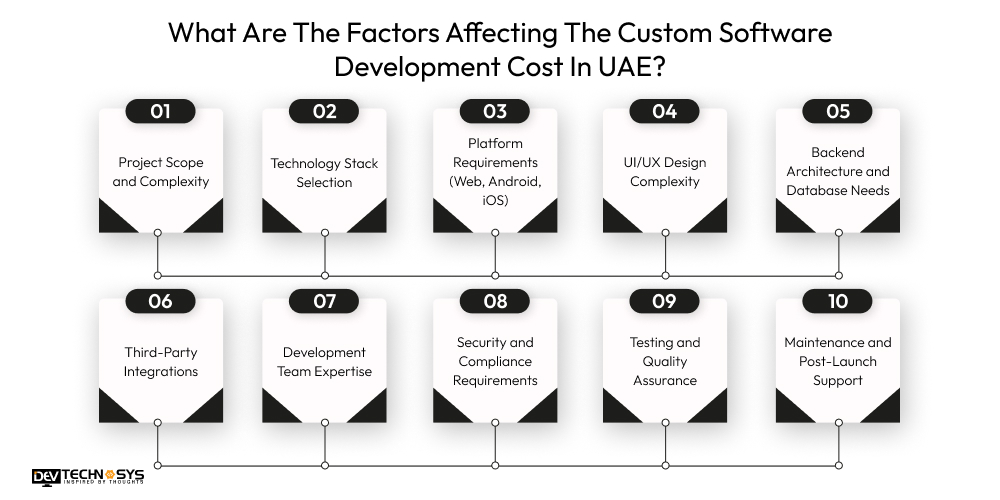
What Are The Factors Affecting The Custom Software Development Cost In UAE?
Custom software development costs vary widely based on multiple technical and business elements. Identifying the key cost-influencing factors enables companies to estimate budgets accurately, prioritize requirements effectively, and avoid unexpected expenses during development.
1. Project Scope and Complexity
The overall scope defines how many features, workflows, and user roles the software includes. Simple applications cost less, while complex systems with advanced logic, automation, or real-time processing require more development time, skilled resources, and testing, increasing overall costs. As requirements expand during development, additional time, resources, and revisions are needed, directly increasing the overall timeline and custom software development cost Dubai or other emirates.
Feature Level |
What’s Included |
Cost Range |
| Basic Features | Limited functionality, simple workflows, few screens | $1,500 – $3,000 |
| Advanced Features | Multiple modules, moderate complexity, basic integrations | $3,000 – $5,500 |
| Premium Features | Complex workflows, custom functionalities, advanced logic | $5,500 – $8,000 |
2. Technology Stack Selection
The choice of programming languages, frameworks, databases, and cloud platforms directly impacts custom software development cost Abu Dhabi or other emirates. Advanced technologies such as AI, blockchain, or IoT require specialized expertise and longer development cycles, whereas commonly used stacks reduce development time and expenses. Using modern or niche technologies often demands specialized developers and tools, which raises both hourly rates and long-term maintenance expenses.
Feature Level |
What’s Included |
Cost Range |
| Basic Features | Standard programming languages and widely used frameworks | $2,000 – $4,000 |
| Advanced Features | Advanced frameworks and libraries require specialized skills | $4,000 – $7,000 |
| Premium Features | Cutting-edge technologies like AI, IoT, or blockchain | $7,000 – $10,000 |
3. Platform Requirements (Web, Android, iOS)
Developing software for multiple platforms increases custom software development cost Sharjah, or the entire UAE, due to additional coding, testing, and optimization. Native apps are usually more expensive than cross-platform solutions, while web-only applications are generally more cost-effective for businesses with limited budgets. Supporting multiple platforms requires parallel development efforts, platform-specific optimizations, and extended testing cycles, increasing total development investment.
Tier |
What’s Included |
Cost Range |
| Single Platform | Either web, iOS, or Android with basic features | $8,000 – $15,000 |
| Dual Platform | Two platforms using cross-platform development tools | $15,000 – $22,000 |
| Multi-Platform | Native apps on web, iOS, and Android with optimized performance | $22,000 – $30,000 |
4. UI/UX Design Complexity
A web design company in Dubai, or other emirates, focuses on user experience, branding, and accessibility, which adds to the development cost. Simple layouts are cheaper, while interactive designs, animations, custom dashboards, and usability testing require more design effort and iterations, increasing the total budget. Highly customized interfaces demand multiple design iterations, usability testing, and user feedback cycles, which add to both time and design costs.
Tier |
What’s Included |
Cost Range |
| Basic | Simple layout, static screens, and standard navigation | $3,000 – $5,000 |
| Advanced | Interactive design, custom forms, and improved user experience | $5,000 – $7,500 |
| Premium | Custom dashboards, animations, branding, and highly responsive UI | $7,500 – $10,000 |
5. Backend Architecture and Database Needs
Complex backend systems handling large datasets, real-time data processing, or multiple integrations require a robust architecture. Advanced databases, APIs, and server-side logic increase development time and infrastructure costs compared to basic backend requirements. Scalable and high-performance backend systems require advanced planning, server optimization, and database management, increasing infrastructure and development effort.
Tier |
What’s Included |
Cost Range |
| Basic | Simple database with limited backend logic | $4,000 – $7,000 |
| Advanced | Complex backend workflows, APIs, and multi-user support | $7,000 – $11,000 |
| Premium | High-performance architecture with scalable database and advanced data management | $11,000 – $15,000 |

6. Third-Party Integrations
Integrating payment gateways, CRM systems, ERP tools, analytics platforms, or external APIs adds complexity. Each integration requires configuration, testing, and security validation, increasing both development effort and the maintenance UAE offshore software development cost. Each external service dependency introduces additional configuration, compatibility checks, and update management, contributing to higher implementation and maintenance costs.
Tier |
What’s Included |
Cost Range |
| Basic | Single integration, likea payment gateway or social login | $500 – $1,200 |
| Advanced | Multiple integrations with third-party APIs and services | $1,200 – $2,500 |
| Premium | Complex integrations with custom APIs, analytics, or enterprise systems | $2,500 – $3,500 |
7. Development Team Expertise
When you hire dedicated software developer that are highly qualified, they charge higher rates but deliver better quality and efficiency. Junior or less experienced teams may cost less initially, but can increase expenses due to rework, delays, and maintenance issues. Experienced teams reduce risk and improve efficiency, but typically charge higher fees due to proven technical knowledge and industry exposure.
Tier |
What’s Included |
Cost Range |
| Basic | Junior developers handling standard coding tasks | $8,000 – $12,000 |
| Advanced | Mid-level developers with experience in complex solutions | $12,000 – $20,000 |
| Premium | Senior developers and architects for enterprise-grade software | $20,000 – $30,000 |
8. Security and Compliance Requirements
Software handling sensitive data requires encryption, authentication, access controls, and compliance with regional regulations. Implementing strong security measures and compliance standards increases development time, but it is essential to avoid risks and legal issues. Advanced security frameworks require continuous monitoring, audits, and updates, increasing both initial development and ongoing software development services in UAE cost.
Tier |
What’s Included |
Cost Range |
| Basic | Standard security measures and basic compliance checks | $1,500 – $2,500 |
| Advanced | Encryption, authentication, and moderate regulatory compliance | $2,500 – $4,500 |
| Premium | Advanced security protocols, audits, and full regulatory compliance | $4,500 – $6,000 |
9. Testing and Quality Assurance
Comprehensive testing across devices, platforms, and user scenarios ensures software reliability. Automated testing, performance testing, and security testing add to cost but reduce post-launch bugs, downtime, and long-term maintenance expenses. Extensive testing across real-world scenarios helps ensure stability but increases development timelines and Custom Software Development Cost in UAE.
Tier |
What’s Included |
Cost Range |
| Basic | Manual testing on core functionalities | $1,000 – $2,000 |
| Advanced | Automated testing and multi-platform QA | $2,000 – $3,500 |
| Premium | Comprehensive testing, including performance, security, and regression tests | $3,500 – $5,000 |
10. Maintenance and Post-Launch Support
Ongoing maintenance includes bug fixes, updates, performance optimization, and feature enhancements. Long-term support contracts and regular updates increase total ownership cost but are crucial for keeping the software secure, scalable, and up to date. Regular updates, performance monitoring, and evolving feature requirements contribute to recurring expenses throughout the software lifecycle.
Tier |
What’s Included |
Cost Range |
| Basic | Bug fixes and minor updates | $500 – $1,500 |
| Advanced | Regular updates, performance monitoring, and technical support | $1,500 – $3,000 |
| Premium | Full-scale maintenance, feature enhancements, and 24/7 support | $3,000 – $4,000 |
How To Decrease The Custom Software Development Cost In UAE?
Reducing custom software development costs in the UAE requires strategic planning and smart decision-making. By optimizing project scope, selecting the right technologies, and adopting efficient development approaches, businesses can achieve high-quality solutions within controlled budgets.
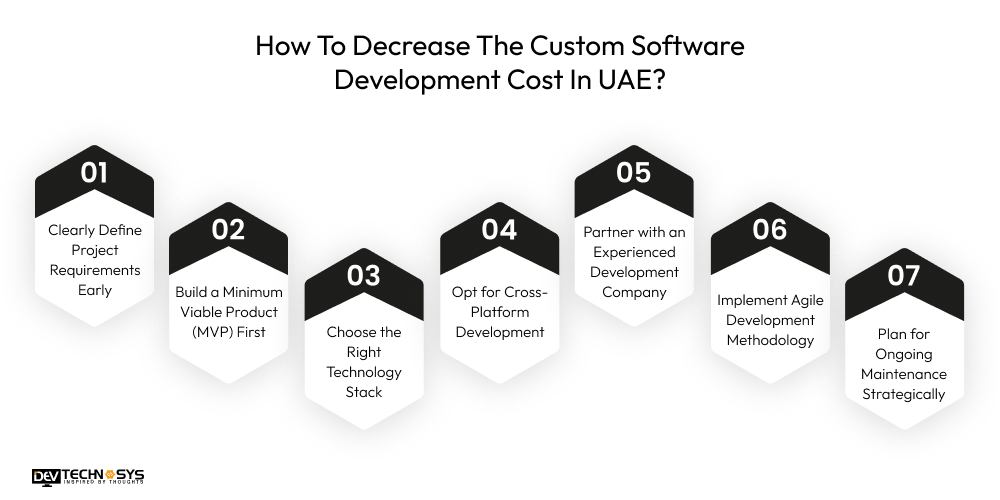
1. Clearly Define Project Requirements Early
Investing time in detailed requirement analysis helps avoid scope creep, rework, and last-minute changes. Well-documented features, workflows, and objectives enable developers to estimate accurately, streamline development, and prevent unnecessary custom software development cost in UAE throughout the project lifecycle.
2. Build a Minimum Viable Product (MVP) First
An MVP development company focuses on core features needed for launch, reducing initial development time and budget. Additional features can be added later based on real user feedback, minimizing wasted effort and ensuring resources are spent only on validated functionality.
3. Choose the Right Technology Stack
Selecting widely supported and scalable technologies reduces development complexity and future maintenance costs. Avoiding overly complex or experimental tools helps ensure faster development, easier hiring of developers, and lower long-term operational custom software development cost in UAE.
4. Opt for Cross-Platform Development
Using cross-platform frameworks allows one codebase to support multiple platforms like Android and iOS. This significantly reduces development time, testing effort, and costs compared to building separate native applications for each platform.
5. Partner with an Experienced Development Company
In a custom software development company Dubai, experienced development teams follow proven workflows, reduce errors, and deliver faster results. Although their rates may seem higher, they help avoid costly mistakes, rework, and delays, ultimately lowering the total project cost.
6. Implement Agile Development Methodology
Agile development breaks projects into smaller sprints with continuous feedback. This approach allows early issue detection, better prioritization of features, controlled spending, and flexibility to adapt to changes without significantly increasing costs.
7. Plan for Ongoing Maintenance Strategically
Proactively planning maintenance, updates, and scalability during development reduces expensive post-launch fixes. Well-structured code and automated processes lower long-term support costs and prevent unexpected expenses in the future.

Which Monetization Models Can Be Implemented In Custom Software Development?
Selecting the right monetization model is crucial for turning custom software into a profitable digital asset for which you can hire dedicated developers. Different revenue models help businesses generate consistent income while aligning software functionality with user expectations and market demand.
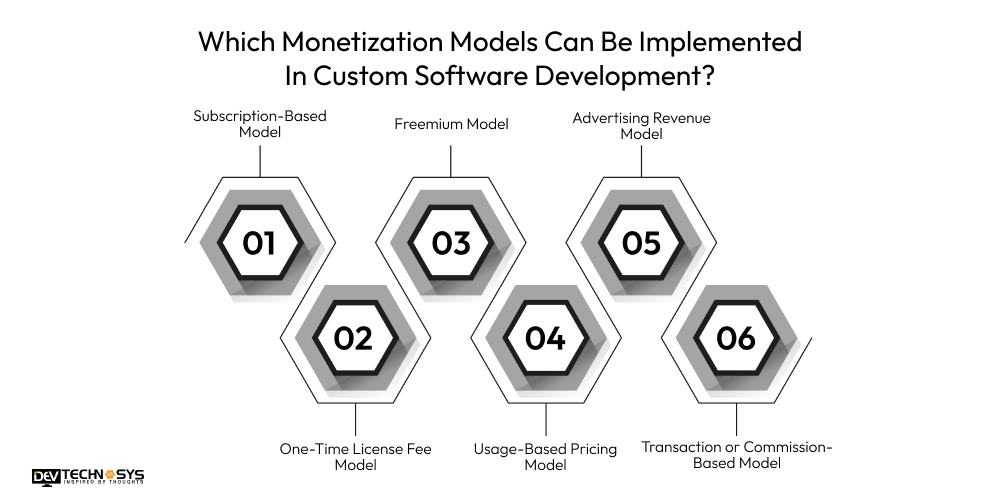
1. Subscription-Based Model
Users pay recurring monthly or annual fees to access the software. This model ensures predictable revenue, supports continuous updates, and is ideal for SaaS platforms, enterprise tools, and cloud-based custom software solutions. It supports long-term customer relationships by encouraging continuous engagement through regular feature enhancements and service improvements.
2. One-Time License Fee Model
Customers pay a single upfront cost for lifetime access to the software. This approach works well for specialized business tools and internal systems, but generates limited recurring revenue without additional paid upgrades or support services. This model is often preferred by organizations seeking full ownership without ongoing payment obligations.
3. Freemium Model
Basic features are offered free to attract users, while advanced functionality requires payment. This model encourages user adoption, builds trust, and converts active users into paying customers over time. Carefully limiting free features helps motivate users to upgrade without affecting overall user experience.
4. Usage-Based Pricing Model
Pricing is based on actual software usage, such as transactions, storage, or API calls. This flexible model aligns cost with value delivered and appeals to businesses seeking scalable, pay-as-you-grow solutions. It is especially effective for cloud-based software where demand fluctuates based on user activity.
5. Advertising Revenue Model
Revenue is generated by displaying third-party ads within the software. This model suits applications with large user bases, allowing businesses to monetize traffic without charging users directly. Higher user engagement directly increases ad impressions and overall revenue potential.
6. Transaction or Commission-Based Model
The software earns revenue by charging a percentage or a fixed fee per transaction. Commonly used in marketplaces and payment platforms, this model scales revenue as user activity and transactions increase. Revenue naturally grows as platform usage and transaction volume increase over time.
Final Words
Custom software development in UAE has become a strategic investment for businesses aiming to achieve digital efficiency, scalability, and competitive advantage. While development costs vary based on project scope, technology, and team expertise, smart planning and the right development approach can keep expenses within an optimal range.
By prioritizing essential features, selecting suitable technologies, and adopting cost-effective strategies, businesses can maximize return on investment without compromising quality. Additionally, choosing the right monetization model helps transform custom software into a sustainable revenue-generating asset.
As digital transformation continues to accelerate across industries in the UAE, investing in well-designed custom software is no longer optional; it is a long-term growth enabler that supports innovation, operational excellence, and future-ready business expansion.
People Mostly Ask!
Q1. How Much Does It Cost To Build Custom Software In Dubai?
The cost to build custom software in Dubai typically ranges between $8,000 and $30,000 for small to mid-sized projects. Pricing depends on features, design complexity, technology stack, development approach, and post-launch support requirements.
Q2. Is Custom Software Development In The UAE Cost-Effective For Startups?
Yes, custom software can be cost-effective for startups when built strategically. By starting with an MVP, focusing on core features, and choosing scalable technologies, startups can control costs while gaining a solution tailored to their business model and growth plans.
Q3. How Does Team Size Influence Custom Software Development Cost In The UAE?
Larger development teams increase costs due to higher labor expenses, but can reduce project timelines. Smaller teams cost less but may extend development duration. The right team size depends on project complexity, deadlines, and the balance between speed and budget.
Q4. How Long Does It Take To Develop Custom Software In The UAE?
Development timelines usually range from 5 to 7 months for basic applications and 8 to 12 months or more for complex systems. The final duration depends on project scope, integrations, testing requirements, and stakeholder feedback cycles.
Q5. Can Custom Software Be Scaled As A Business Grows In The UAE?
Yes, custom software is built with scalability in mind. It allows businesses to add new features, users, and integrations over time without major redesigns, supporting long-term growth, performance optimization, and evolving market demands.