





Quick Summary:
Web development costs in UAE in 2026 typically range from $30,000 to $150,000 (approximately AED 110,000–AED 551,000), depending on website complexity, features, UI/UX design, technology stack, integrations, security, and development approach.
Cost Breakdown Based on Complexity:
-
- Basic Website:$30,000–$50,000 | AED 110,000–AED 184,000
- Medium-Level Website:$50,000–$95,000 | AED 184,000–AED 349,000
- Advanced Web Application:$95,000–$150,000+ | AED 349,000–AED 551,000+
Key Cost Drivers
-
- Website Features: Advanced dashboards, booking, automation, user accounts, and real-time functionality increase development costs.
- UI/UX Design: Custom interfaces, responsive layouts, animations, and user journeys require additional design effort.
- Frontend & Backend: Complex databases, APIs, business logic, and server-side functionality increase engineering costs.
- Technology Stack: Frameworks, databases, cloud services, and development tools influence project complexity.
- Third-Party Integrations: CRM, ERP, payment gateways, maps, analytics, and external APIs add development and testing costs.
- Security & Compliance: Encryption, authentication, security testing, monitoring, and regulatory requirements increase the budget.
- Arabic & English Support: RTL layouts, multilingual CMS functionality, and localization require additional development work.
Cost Based on Development Approach
-
- Freelancer: $30,000–$60,000 | AED 110,000–AED 220,000+
- UAE Web Development Company: $50,000–$150,000+ | AED 184,000–AED 551,000+
- Outsourcing: $30,000–$120,000+ | AED 110,000–AED 441,000+
- In-House Team: $100,000–$200,000+ | AED 367,000–AED 734,000+ Annually
Development Timeline
-
- Basic Website: 2–4 months
- Medium-Level Website: 4–7 months
- Advanced Web Application: 7–12+ months
Additional Costs
-
- Web Hosting & Cloud Infrastructure
- SSL Certificates
- Third-Party API Usage
- Payment Gateway Fees
- Website Maintenance
- Security Monitoring
- Content Creation
- Domain & Software Licenses
Are you looking to develop a website in the United Arab Emirates but are unsure about your budget? You need not worry, as custom website development cost UAE usually range from $30,000 to $150,000 (which is approx. AED 110,175 to AED 550,875+).
Of course, the amount of your investment would depend on a number of factors, including the complexity of the project, the features needed, the tech stack, as well as integrations, security needs, and the development team.
While a simple website could take less investment, web platforms for enterprises with sophisticated features would necessitate bigger budgets. Also, companies should keep in mind the costs of such processes as UI/UX design, testing, web hosting, maintenance, cybersecurity, and legal processes.
Below you will find a detailed overview of web development cost in UAE, the main factors affecting them, and other important points to take into account in planning your budget.
What is Website Development?
Website development is the process of designing, building, testing, and maintaining a website or web application so it can function effectively across browsers and devices. It includes front-end development for the user interface and back-end development for servers, databases, APIs, authentication, and business logic.
How Much Does Web Development Cost in UAE in 2026?
The cost to build a website in UAE is around $30,000 to $1,50,000, depending on features, platform choice, UI/UX design, third-party integration, and development team location. The responsive website development cost UAE with basic features and functionality lies between $30,000 and $60,000. The cost to build a website in UAE with advanced features and functionalities like CRM integration and multilingual support can exceed $1.50,000. In the following table, we have shown the website development cost UAE by complexity of project.
Web Development Type |
Estimated Cost (USD) |
Estimated Cost (AED) |
Typical Timeline |
| Mid-Level Website | $30,000–$60,000 | AED 110,175–220,350 | 2–4 Months |
| Advanced Website | $60,000–$90,000 | AED 220,350–330,525 | 3–5 Months |
| E-commerce Website | $80,000–$120,000 | AED 293,800–440,700 | 4–6 Months |
| Custom Web Application | $100,000–$150,000 | AED 367,250–550,875 | 5–8 Months |
| Enterprise Web Platform | $120,000–$150,000+ | AED 440,700–550,875+ | 6–12+ Months |
Industry Insights
“According to DataReportal, With 99% internet penetration and 23 million mobile connections, businesses should prioritize responsive layouts, mobile usability, fast loading speeds, and optimized user journeys.”
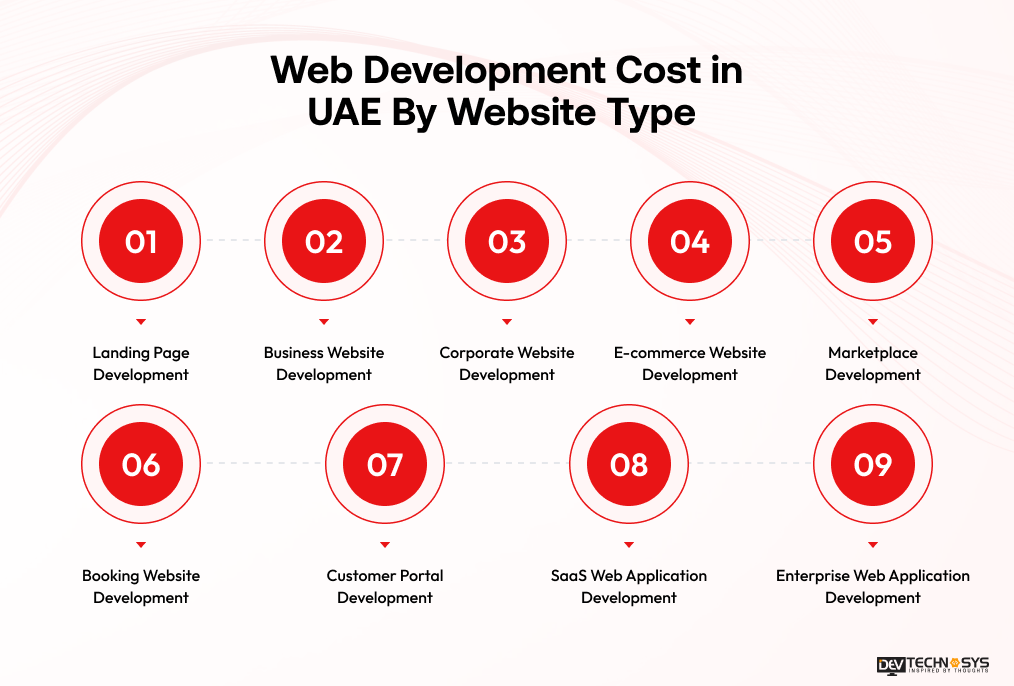
Web Development Cost in UAE By Website Type
The type of website your web design company in Dubai creates has direct impact on eCommerce website development cost because each project requires a different level of functionality, integrations, security, and scalability. Below is a breakdown of the major website types, their website price estimate UAE, and what each typically includes.
Website Type |
Estimated Cost (USD) |
Estimated Cost (AED) |
Typical Timeline |
| Landing Page Development | $30,000–$40,000 | AED 110,175–146,900 | 1–2 Months |
| Business Website Development | $30,000–$50,000 | AED 110,175–183,625 | 2–3 Months |
| Corporate Website Development | $40,000–$60,000 | AED 146,900–220,350 | 2–4 Months |
| E-commerce Website Development | $50,000–$80,000 | AED 183,625–293,800 | 3–5 Months |
| Marketplace Development | $70,000–$100,000 | AED 257,075–367,250 | 4–6 Months |
| Booking Website Development | $50,000–$80,000 | AED 183,625–293,800 | 3–5 Months |
| Customer Portal Development | $60,000–$90,000 | AED 220,350–330,525 | 3–5 Months |
| SaaS Web Application Development | $80,000–$120,000 | AED 293,800–440,700 | 5–8 Months |
| Enterprise Web Application Development | $100,000–$150,000 | AED 367,250–550,875 | 6–12+ Months |

1. Landing Page Development
A landing page is a targeted online experience created with a particular objective in mind, like increasing registrations, marketing a product, or creating leads. High-converting UI/UX, responsive design, forms, analytics, SEO, and third-party interfaces are often prioritized in development.
2. Business Website Development
A company’s online presence is established by its website, which also offers details about its goods and services. Custom web development company Middle East creates websites involving CMS features, service pages, contact forms, blogs, lead management, SEO features, and analytics are frequently included.
3. Corporate Website Development
Compared to regular business websites, corporate websites are bigger and more advanced. Multiple departments, locations, languages, user roles, extensive content management, API connectivity, and more robust security measures might all be supported.
4. E-commerce Website Development
Businesses can sell goods and services online with the help of an e-commerce website. Product catalogs, shopping carts, checkout, payment gateways, inventory control, order tracking, customer accounts, coupons, and reporting are some examples of its development.
5. Marketplace Development
Through a single platform, a marketplace links clients with several vendors or service providers. Vendor registration, seller dashboards, product or service listings, commissions, reviews, payments, order management, and administrative controls are all common requirements for development.
6. Booking Website Development
Customers can check availability on booking websites and make reservations for rooms, cars, services, appointments, and other resources. Real-time availability, calendars, scheduling, booking administration, payment processing, cancellations, and automated alerts are examples of key features.
7. Customer Portal Development
Customized information and services are accessible to authenticated users through a customer portal. Secure accounts, dashboards, invoices, documents, service requests, transaction history, messaging, and alerts are a few examples of features.
8. SaaS Web Application Development
Software is delivered online using a SaaS platform, typically through a subscription-based business model. User onboarding, subscription management, multi-tenant design, role-based access, dashboards, APIs, analytics, billing, and cloud infrastructure are frequently necessary for these applications.
9. Enterprise Web Application Development
Businesses with complicated workflows, sizable user bases, and demanding integration needs are the target market for enterprise web apps. ERP/CRM integrations, automation, sophisticated analytics, unique processes, high-level security, role management, scalability, and vast APIs are a few examples of these.
What Factors Affect Web Development Cost in UAE?
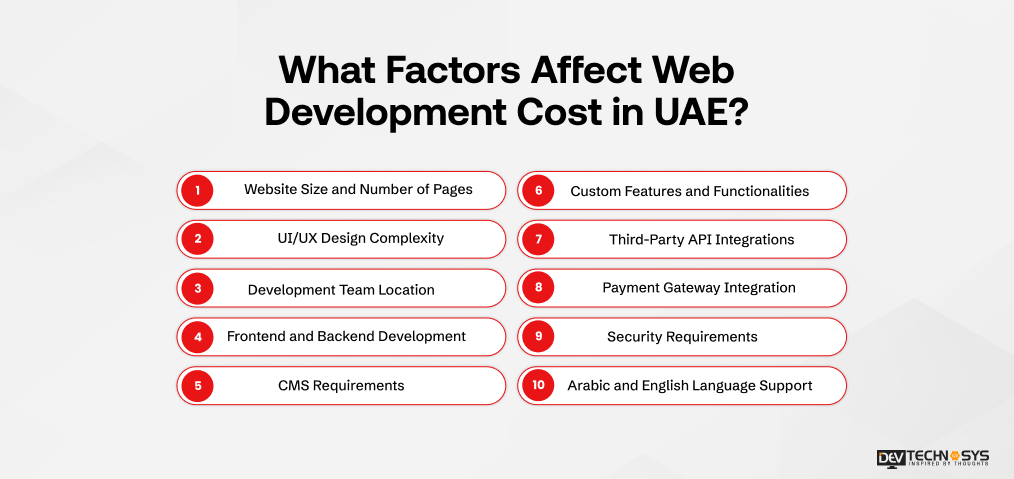
Several factors influence web development cost in UAE, and the final budget goes far beyond the number of pages. Design complexity, development expertise, custom functionality, integrations, security, database architecture, and multilingual support can all affect the investment.
Cost Factor |
Budget Impact |
Cost Impact in Percentage |
How It Impacts |
| Website Size & Pages | $3K–$15K | 10–15% | More pages require more development. |
| UI/UX Complexity | $3K–$18K | 10–18% | Custom designs increase design hours. |
| Team Location | $3K–$15K | 10–15% | Rates vary by expertise and location. |
| Frontend & Backend | $9K–$45K | 30–35% | Complex functionality increases coding effort. |
| CMS Requirements | $1.5K–$9K | 5–10% | Custom CMS features add development work. |
| Custom Features | $4.5K–$22.5K | 15–20% | Advanced features require more resources. |
| API Integrations | $1.5K–$9K | 5–10% | Multiple integrations increase testing and coding. |
| Payment Gateway | $1.5K–$6K | 5–8% | Multiple payment options add complexity. |
| Security Requirements | $3K–$15K | 10–15% | Testing and security controls increase costs. |
| Arabic & English Support | $1.5K–$7.5K | 5–8% | RTL and multilingual functionality require extra work. |
1. Website Size and Number of Pages
The number of pages directly affects planning, design, development, content integration, and testing efforts. A simple website with limited pages costs less, while larger platforms requiring dynamic pages, multiple sections, dashboards, and complex navigation demand additional development resources and time.
2.UI/UX Design Complexity
A highly customized interface requires more research, wireframing, prototyping, visual design, and usability testing. Advanced animations, personalized user journeys, interactive elements, and mobile-specific experiences can increases the design and progressive web app development cost compared with standard templates or pre-built components.
3. Development Team Location
Development rates vary based on where your development team is located, their expertise, and experience level. Best web development company in UAE may have different hourly rates than offshore teams. However, technical expertise, communication, project management, and proven delivery experience should also influence your selection.
4. Frontend and Backend Development
Frontend development handles the website’s user-facing experience, while backend development powers databases, business logic, APIs, authentication, and server operations. Projects requiring complex workflows, serverless architecture, real-time functionality, scalable infrastructure, or sophisticated backend architecture generally require more development hours and investment.
5. CMS Requirements
A basic content management system may require limited customization, whereas a customized CMS demands additional development, permissions, workflows, integrations, and administration features. Choosing platforms such as WordPress, Drupal, or a headless CMS can also influence development complexity, flexibility, and long-term costs.
6. Custom Features and Functionalities
Custom functionality increases enterprise web portal development effort because features must be designed, coded, integrated, tested, and optimized specifically for business requirements. Advanced dashboards, automation, recommendation engines, real-time tracking, role management, or custom workflows can significantly increase the overall web development cost in Abu Dhabi.
7. Third-Party API Integrations
Integrating external services such as CRM systems, ERP platforms, maps, analytics tools, communication services, or social platforms requires additional development and testing. API integrations cost depend on API complexity, documentation, authentication requirements, data synchronization, usage limits, and the number of integrations involved.
8. Payment Gateway Integration
Payment integration requires secure connections with selected gateways, transaction workflows, payment confirmation, refunds, recurring billing, and error handling. Supporting multiple payment methods or regional gateways can increase development and testing requirements, particularly for e-commerce platforms handling high transaction volumes.
9. Security Requirements
Websites handling sensitive customer or financial information require stronger security measures, including encryption, authentication, access controls, secure APIs, vulnerability testing, monitoring, and backups. Compliance requirements can add further development and testing work, increasing costs for security-sensitive or regulated web applications.
10. Arabic and English Language Support
Developing bilingual websites requires more than translating content. Arabic support may require RTL interfaces, localized layouts, language switching, multilingual CMS configuration, and testing across devices. Supporting both Arabic and English can therefore increase design, development, content management, and quality assurance efforts.
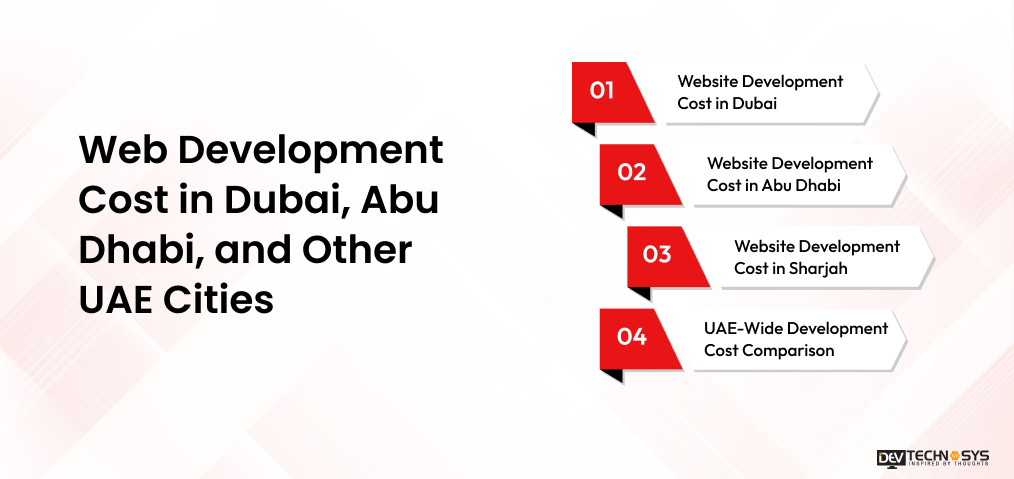
Web Development Cost in Dubai, Abu Dhabi, and Other UAE Cities
Web development pricing can vary across UAE locations due to differences in developer rates, business demand, project complexity, and the availability of specialized technical talent. However, the technology, features, microservices architecture, integrations, and scope of a project generally have a greater impact on the final cost than location alone.
UAE Location |
Estimated Web Development Cost |
Typical Timeline |
Cost Consideration |
| Dubai | $30,000–$150,000 | 2–12+ Months | Higher agency demand |
| Abu Dhabi | $30,000–$150,000 | 2–12+ Months | Enterprise requirements |
| Sharjah | $30,000–$130,000 | 2–10 Months | Competitive rates |
| Other UAE Locations | $30,000–$120,000+ | 2–10 Months | Varies by expertise |
| UAE-Wide | $30,000–$150,000+ | 2–12+ Months | Scope drives cost |
1. Website Development Cost in Dubai
According to CMS web development services providers in Middle East, Dubai has a highly competitive digital market, with businesses ranging from startups and SMEs to multinational enterprises. As a result, web development costs in Dubai can range from $30,000 to $150,000+, particularly when projects involve custom designs, e-commerce functionality, AI features, APIs, payment systems, or enterprise integrations.
2. Website Development Cost in Abu Dhabi
Abu Dhabi has strong demand for secure and scalable digital platforms across sectors such as finance, government, healthcare, energy, and professional services. Projects with strict security, compliance, integration, and performance requirements can push web development cost in Sharjah toward the higher end of the $30,000–$150,000 range.
3. Website Development Cost in Sharjah
Sharjah offers opportunities for businesses looking for professional web development across education, commerce, manufacturing, tourism, and other sectors. Professional web developers cost UAE can vary significantly depending on whether the project requires a standard business website, e-commerce functionality, custom portals, or a sophisticated web application.
4. UAE-Wide Development Cost Comparison
Across the UAE, a realistic custom web development budget can fall between $30,000 and $150,000+. The location of the development company matters, but factors such as project complexity, feature requirements, technology stack, integrations, security, UI/UX, and development team expertise typically have a stronger influence on the final quote.

5. Why Development Quotes Differ Across UAE Locations
Different agencies may quote significantly different prices for seemingly similar projects because their development methodologies, team composition, technology expertise, design quality, security practices, and support packages vary.
Web Development Cost by Development Approach
The approach you choose can significantly influence your web development cost in UAE. While freelancers may offer flexibility, development companies and outsourcing teams provide broader expertise and resources. An in-house team offers greater control but involves ongoing salaries, recruitment, infrastructure, and operational expenses.
Factor |
Hiring a Freelancer |
UAE Web Development Company |
Outsourcing Web Development |
Building an In-House Team |
| Typical Cost | $30K–$60K | $50K–$150K | $30K–$120K | $100K–$200K+ annually |
| Advantages | Flexible, affordable, direct communication | Full-service team, technical expertise, structured delivery | Global talent, flexible scaling, competitive pricing | Complete control and direct collaboration |
| Limitations | Limited resources and scalability | Higher upfront investment | Time-zone and communication challenges | High recruitment and operating costs |
| Best For | Small to mid-sized projects | Complex, custom, and enterprise projects | Startups and growing businesses | Long-term products and continuous development |
| Team Access | Usually one specialist | Developers, designers, QA, and PM | Dedicated or flexible development team | Internally hired specialists |
| Project Management | Usually limited | Dedicated project manager | Generally included | Managed internally |
| QA & Testing | May be limited | Dedicated QA team | Usually available | Requires dedicated QA resources |
| Scalability | Low–Medium | High | High | Medium–High |
| Long-Term ROI | Moderate | High for complex projects | High | High for continuous development |
1. Hiring a Freelancer
Freelancers can be a practical option for smaller websites or projects with clearly defined requirements. They generally have lower overhead website development cost Ajman/Ras Al Khaimah, but complex projects may become challenging when you need multiple specialists, ongoing support, or rapid scaling.
2. Hiring a UAE Web Development Company
A professional UAE development company provides access to a complete team of developers, designers, QA engineers, and project managers. Although the initial investment can be higher, this approach is suitable for complex websites requiring reliable delivery, security, integrations, and long-term support.
3. Outsourcing Web Development
Outsourcing allows businesses to access developers from global technology markets without maintaining a permanent internal team. It can provide competitive pricing and flexible scaling, making it particularly useful for startups and businesses that need specialized expertise without long-term hiring commitments.
4. Building an In-House Development Team
An in-house team gives businesses direct control over development, communication, and product decisions. However, the actual investment includes developer salaries, UI/UX designers, QA engineers, project managers, recruitment, software licenses, infrastructure, benefits, and ongoing training, making it more expensive for one-time or short-term projects.
5. In-House Development Cost Breakdown
Cost Component |
Typical Budget Share |
Impact |
| Developer Salaries | 35–45% | Largest recurring expense |
| UI/UX Designer Costs | 10–15% | Covers design and user experience |
| QA & Testing Costs | 10–15% | Ensures quality and reliability |
| Project Management | 10–15% | Covers planning and coordination |
| Infrastructure & Software | 5–10% | Tools, hosting, licenses, and services |
| Recruitment & Benefits | 10–15% | Hiring, benefits, and employee costs |
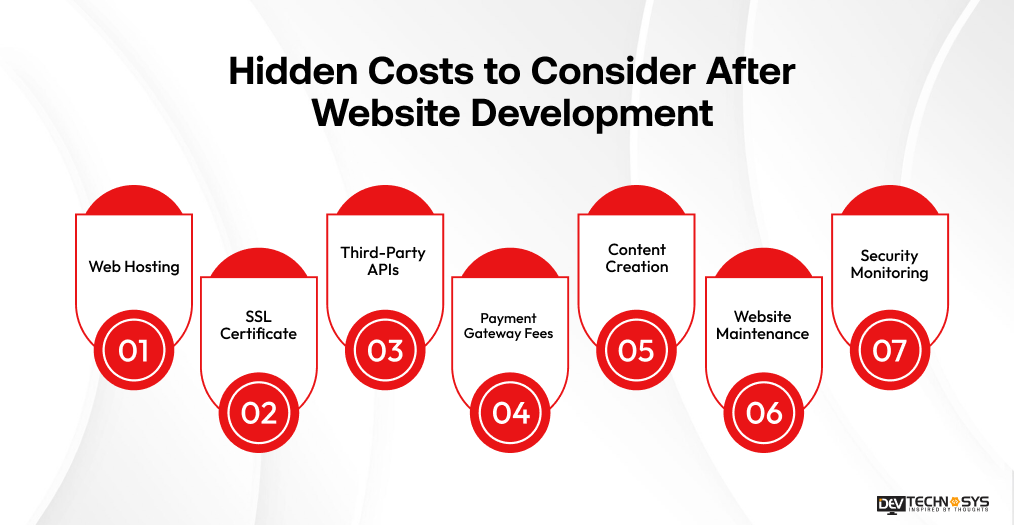
Hidden Costs to Consider After Website Development
The initial development budget may not include ongoing operational expenses. cloud hosting and scalability, security, APIs, content, maintenance, and payment processing can add recurring costs after your website goes live.
1. Web Hosting
Web hosting provides the infrastructure required to store and serve your website. Costs depend on traffic, storage, server resources, cloud architecture, performance requirements, and scalability needs as your business grows.
2. SSL Certificate
An SSL certificates and data encryption feature encrypts communication between users and your website, protecting sensitive information. Basic certificates may be inexpensive or free, while advanced certificates and managed security services can increase annual costs.
3. Third-Party APIs
External APIs connect your website with services such as maps, CRM platforms, analytics, communication tools, and automation systems. Providers may charge based on usage, requests, features, subscriptions, or transaction volume.
4. Payment Gateway Fees
Payment gateways enable customers to complete online transactions securely. Beyond integration costs, businesses may pay transaction, processing, settlement, or subscription fees depending on the selected provider and payment methods supported.
5. Content Creation
Professional website content may include copywriting, product descriptions, blogs, images, videos, graphics, and localized content. Costs increase when businesses require ongoing publishing, specialized expertise, SEO optimization, or Arabic-English content.
6. Website Maintenance
Regular maintenance keeps your website secure, functional, and compatible with updated technologies. Website maintenance cost UAE covers bug fixes, software updates, performance optimization, content changes, feature enhancements, backups, and technical support.
7. Security Monitoring
Security monitoring continuously checks websites for suspicious activity, vulnerabilities, unauthorized access, and potential threats. Depending on requirements, businesses may invest in monitoring tools, vulnerability scanning, security audits, incident response, and managed security services.
Hidden Cost |
Typical Cost Impact |
% Impact on Development Budget |
| Web Hosting | $500–$5,000+/year | 1–5% |
| SSL Certificate | $0–$500+/year | 0–2% |
| Third-Party APIs | $500–$10,000+/year | 2–8% |
| Payment Gateway Fees | Variable | 1–5%+ |
| Content Creation | $1,000–$10,000+ | 3–10% |
| Website Maintenance | $3,000–$15,000+/year | 5–15% |
| Security Monitoring | $1,000–$10,000+/year | 2–10% |
Market Insights
“According to Mordor Intelligence, Cloud deployments accounted for 63.12% of UAE cybersecurity market share in 2026, highlighting the growing role of cloud infrastructure in modern digital platforms.”
Custom Web Development vs Website Builders: Which Is More Cost-Effective?
Website builders can reduce the initial investment and help businesses launch quickly, while custom web development requires a larger upfront budget but provides greater flexibility, scalability, and ownership. We suggest businesses to hire dedicated web developers UAE after taking note of business goals, functionality, expected traffic, and long-term growth plans.
Platform / Approach |
Initial Cost |
Scalability |
Customization |
Best For |
| WordPress | $2K–$15K+ | Medium–High | High | Business websites and content platforms |
| Shopify | $3K–$20K+ | High | Medium–High | E-commerce businesses |
| Wix | $500–$8K+ | Medium | Medium | Small businesses and simple websites |
| Webflow | $1K–$12K+ | Medium–High | High | Design-focused business websites |
| Custom Development | $30K–$150K+ | Very High | Very High | SaaS, marketplaces, portals, and enterprise platforms |
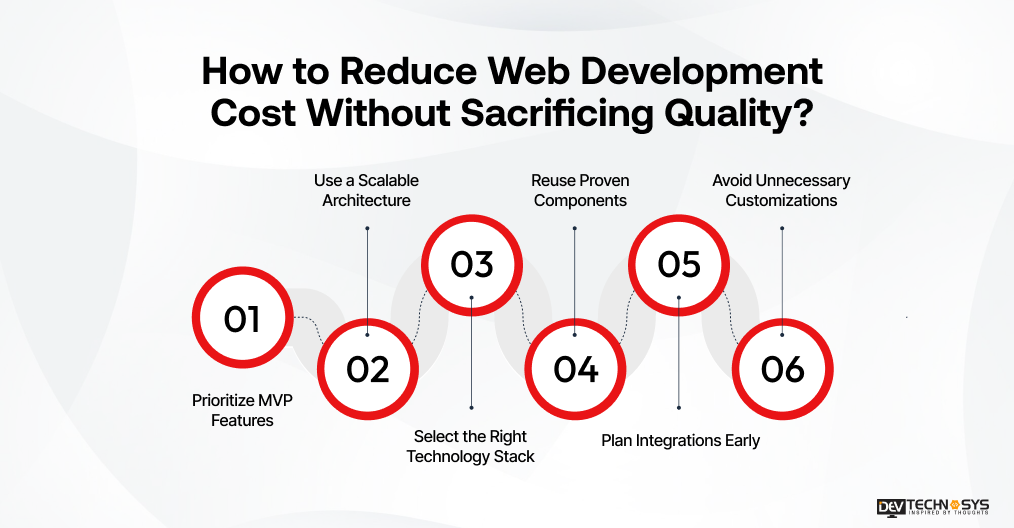
How to Reduce Web Development Cost Without Sacrificing Quality?
You can manage web development budget without compromising quality by focusing on essential functionality, choosing suitable technologies, and planning the project carefully from the beginning.
1. Prioritize MVP Features
Start with the features users need most and leave advanced functionality for later releases. This reduces initial development hours, speeds up launch, and allows you to validate the product before making larger investments.
2. Use a Scalable Architecture
Make sure website development company in Dubai build the technical foundation to support future users, features, and integrations. A scalable architecture may require more planning initially but helps prevent expensive redevelopment when your website grows.
3. Select the Right Technology Stack
Choose programming languages, frameworks, databases, and cloud services according to your project’s requirements. Avoiding unnecessary or overly complex technologies can reduce time and cost of multilingual website development UAE (Arabic support), maintenance expenses, and future technical debt.
4. Reuse Proven Components
Use reliable frameworks, libraries, APIs, templates, and reusable UI components wherever appropriate. Reusing proven solutions reduces coding and testing time while allowing developers to focus their efforts on unique business functionality.
5. Plan Integrations Early
Identify payment gateways, CRM systems, ERP platforms, APIs, analytics tools, and other integrations during the planning stage. Early planning reduces compatibility problems, redesigns, and unexpected development costs later.
6. Avoid Unnecessary Customizations
Not every website element needs to be built from scratch. Use standard or configurable solutions for non-critical features and reserve custom development for functionality that provides genuine business value or competitive differentiation.
Strategy |
How It Reduces Cost |
Quality Benefit |
| Prioritize MVP Features | Build essential features first and postpone non-critical functionality. | Faster launch with a focused user experience. |
| Use a Scalable Architecture | Plan the architecture for future growth instead of rebuilding later. | Supports performance, security, and expansion. |
| Select the Right Technology Stack | Choose technologies based on project needs rather than trends. | Improves stability and long-term maintainability. |
| Reuse Proven Components | Use tested libraries, frameworks, APIs, and reusable UI components. | Reduces development time while maintaining reliability. |
| Plan Integrations Early | Identify APIs, payment gateways, CRM, and other integrations during planning. | Prevents costly redesigns and integration issues. |
| Avoid Unnecessary Customizations | Customize only where it creates real business value. | Keeps the product focused and easier to maintain. |
Cost of Building a Website With Essential Features
For a custom web development project, essential features form the core of the website. The cost increases when these features require advanced functionality, third-party integrations, automation, or custom workflows.
Essential Feature |
Estimated Cost |
Integration Cost |
Purpose |
| User Registration & Login | $2,000–$5,000 | $500–$1,500 | Account creation, login, password recovery, and authentication |
| Admin Dashboard | $4,000–$10,000 | $1,000–$3,000 | Manages users, content, settings, and website operations |
| Search & Filtering | $2,000–$6,000 | $500–$2,000 | Helps users quickly find relevant content or products |
| Content Management System | $3,000–$8,000 | $1,000–$3,000 | Enables administrators to manage website content |
| Payment Gateway | $2,000–$5,000 | $1,000–$3,000 | Enables secure online payments and transactions |
| Third-Party API Integration | $2,000–$6,000 | $1,000–$5,000 | Connects CRM, ERP, maps, analytics, or other services |
| Notifications | $1,500–$4,000 | $500–$2,000 | Sends email, SMS, or push notifications |
| Security & Authentication | $3,000–$8,000 | $500–$2,000 | Protects accounts, data, APIs, and sensitive information |
| Analytics & Reporting | $1,500–$4,000 | $500–$2,000 | Tracks traffic, user behavior, and business performance |
| Multilingual Support | $2,000–$6,000 | $500–$2,000 | Supports Arabic, English, and other languages |
Security Requirements for Web Development
Strong security is essential for protecting UAE websites against data breaches, unauthorized access, payment fraud, and cyberattacks. The right security measures also improve user trust and support reliable, scalable web applications.
Security Requirement |
What It Involves |
Why It Matters |
Cost Impact |
| SSL/TLS Encryption | Securing data transmitted between the user’s browser and web server | Prevents sensitive information from being intercepted | Low |
| Multi-Factor Authentication | Adding verification beyond usernames and passwords | Reduces unauthorized account access | Medium |
| Role-Based Access Control | Assigning permissions according to user roles | Restricts access to sensitive features and data | Medium |
| Data Encryption | Encrypting sensitive information during transmission and storage | Protects personal, financial, and business data | Medium |
| API Security | Authentication, authorization, validation, and rate limiting | Secures communication with external systems | Medium |
| Secure Coding | Applying OWASP-aligned secure development practices | Reduces common web vulnerabilities | Medium |
| Payment Security | Using secure payment gateways and appropriate PCI DSS controls | Protects payment transactions and cardholder data | Medium–High |
| Vulnerability Testing | Security scans, penetration testing, code reviews, and dependency checks | Identifies weaknesses before exploitation | Medium–High |
| Backup & Disaster Recovery | Secure backups and tested recovery procedures | Minimizes data loss and service disruption | Medium |
| Security Monitoring | Logs, alerts, threat detection, and ongoing monitoring | Enables faster detection and response to threats | Medium–High |
Regulatory Compliance Requirements for Web Development in UAE
UAE websites must consider applicable privacy, payment, e-commerce, and industry-specific regulations based on the data and services they handle. Addressing compliance requirements early can reduce legal risks, avoid costly changes, and support responsible data management.
Regulation / Requirement |
What Web Development Should Address |
Applicable To |
Cost Impact |
| UAE Personal Data Protection Law (PDPL) | Personal-data collection, processing, storage, protection, and applicable user rights | Websites processing personal data | Medium–High |
| Privacy & User Consent | Privacy notices, consent mechanisms, and transparent data-use disclosures | Websites collecting personal information | Low–Medium |
| Cross-Border Data Transfers | Appropriate safeguards for international personal-data transfers | Businesses using overseas cloud or third-party services | Medium |
| Data Subject Rights | Processes for handling applicable requests concerning personal information | Websites storing user data | Medium |
| PCI DSS | Appropriate controls for payment-card information and secure payment processing | E-commerce and payment-enabled websites | Medium–High |
| E-Commerce Requirements | Appropriate online transaction and consumer protection practices | E-commerce and digital businesses | Medium |
| Cookie & Tracking Controls | Appropriate disclosures and controls for cookies, analytics, and tracking | Websites using tracking technologies | Low–Medium |
| Industry-Specific Compliance | Additional controls based on the business sector and data handled | Healthcare, fintech, education, government, etc. | High |
| Privacy Policy & Terms | Documentation covering data practices, website usage, and applicable terms | Commercial websites | Low–Medium |
| Data Retention & Deletion | Processes for retaining, archiving, and securely deleting personal information | Websites storing customer data | Medium |
What are the Monitization Strategies for Websites?
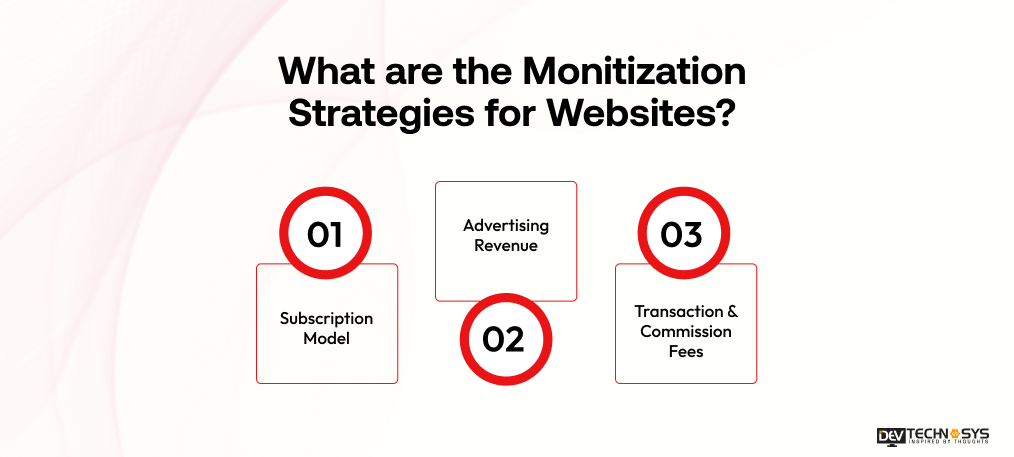
Website monetization allows businesses to turn traffic, users, and digital services into sustainable revenue. The right strategy depends on your website type, target audience, business model, and value proposition. Common approaches include subscriptions, advertising, and transaction or commission fees, with each offering different revenue potential and scalability.
1. Subscription Model
Charge users recurring monthly or annual fees to access premium content, tools, features, or services. This model provides predictable revenue and works well for SaaS platforms, membership websites, educational portals, and professional services.
2. Advertising Revenue
Generate income by displaying advertisements through direct partnerships, ad networks, sponsored content, or promoted listings. Revenue typically depends on website traffic, audience engagement, ad placement, and advertiser demand.
3. Transaction & Commission Fees
Earn revenue by charging a percentage or fixed fee on transactions completed through the platform. This works particularly well for marketplaces, booking platforms, e-commerce websites, and service-based web applications.
Conclusion
The web development cost in UAE ranges from $30,000 to $150,000, depending on features, design, integrations, security, technology, and development approach. Businesses cam partner with top web development company in UAE such as Dev Technosys, budget for maintenance, hosting, APIs, and also take note of security. Prioritizing essential features and choosing the right development partner can help control costs while building a scalable, secure, and high-performing website.
FAQs
How Much Does It Cost to Build a Website in Dubai?
The cost to build a website in Dubai can vary significantly based on its type, features, design, integrations, and complexity. For your custom development scope, the estimated budget is $30,000–$150,000.
What Is the Cost to Build an E-commerce Website in UAE?
An e-commerce website can range from a relatively simple store to a highly customized commerce platform. Costs depend on product volume, payment gateways, shipping APIs, Arabic support, inventory, and custom functionality.
What Are Web Development Pricing Packages in UAE?
Web development pricing packages generally vary according to website type, features, design complexity, integrations, and support requirements. Businesses may choose basic, professional, or custom enterprise packages depending on their goals and budget.
How Are Web Development Costs Calculated in UAE?
Web development costs are typically calculated based on website complexity, development hours, number of features, UI/UX requirements, technology stack, integrations, security, testing, and post-launch support. More complex functionality generally requires a larger development team and longer timeline.
How Can I Find an Affordable Web Development Company in UAE?
Compare companies based on portfolio quality, technical expertise, development methodology, security practices, pricing transparency, client reviews, and post-launch support rather than choosing solely on the lowest quote. A clear project scope also helps avoid unexpected costs.
Is There a Website Development Cost Calculator in UAE?
Yes, a website development cost calculator can provide an initial budget estimate based on factors such as website type, features, integrations, design complexity, and development approach. However, a detailed project assessment is generally needed for an accurate quote.