





Secure user registration Profile management Real-time order tracking In-app communication Multiple payment options Delivery partner onboarding GPS navigation" } }, { "@type": "Question", "name": "What Tech Stack Is Best To Make An App Like Mr. Mandoob?", "acceptedAnswer": { "@type": "Answer", "text": "A recommended tech stack includes React Native or Flutter for frontend, Node.js or Laravel for backend, MySQL or MongoDB for databases, AWS or Google Cloud hosting, Google Maps for GPS, Stripe or PayTabs for payments, Firebase for notifications, and Google Analytics or Mixpanel for performance tracking." } }, { "@type": "Question", "name": "How Much Does It Cost To Build An App Like Mr. Mandoob?", "acceptedAnswer": { "@type": "Answer", "text": "The development cost typically ranges between $8,000 and $30,000, depending on features, platform choice, design complexity, backend infrastructure, and developer expertise. Starting with a minimum viable product (MVP) helps control costs while allowing phased enhancements based on user feedback and market growth." } } ] }
Key takeaways:
-
- The popularity of on-demand delivery apps is rising because people are asking for convenience, leading to the creation of the Mr. Mandoob clone app.
- By 2030, the on-demand delivery services market is forecast to reach $420–$470 billion, with robust growth driven by e-commerce expansion.
- The market demand, revenue opportunities, business model, strong business partnership, and more are the reasons entrepreneurs are investing in apps like Mr. Mandoob.
The on-demand delivery ecosystem has evolved rapidly over the last decade, reshaping how individuals and businesses move goods within cities. From urgent document delivery to groceries, medicines, and same-day parcels, consumers now expect speed, transparency, and convenience at their fingertips.
In the Middle East, this shift to create an App like Mr. Mandoob is prominent due to high smartphone usage. A similar app like Mr. Mandoob has successfully capitalized on this demand by offering localized, reliable, and flexible delivery solutions.
Entrepreneurs are increasingly viewing on-demand delivery app in Dubai and other Middle Eastern regions as scalable digital businesses. These platforms reduce operational friction, connect users with delivery partners in real time, and create repeat usage through seamless experiences.
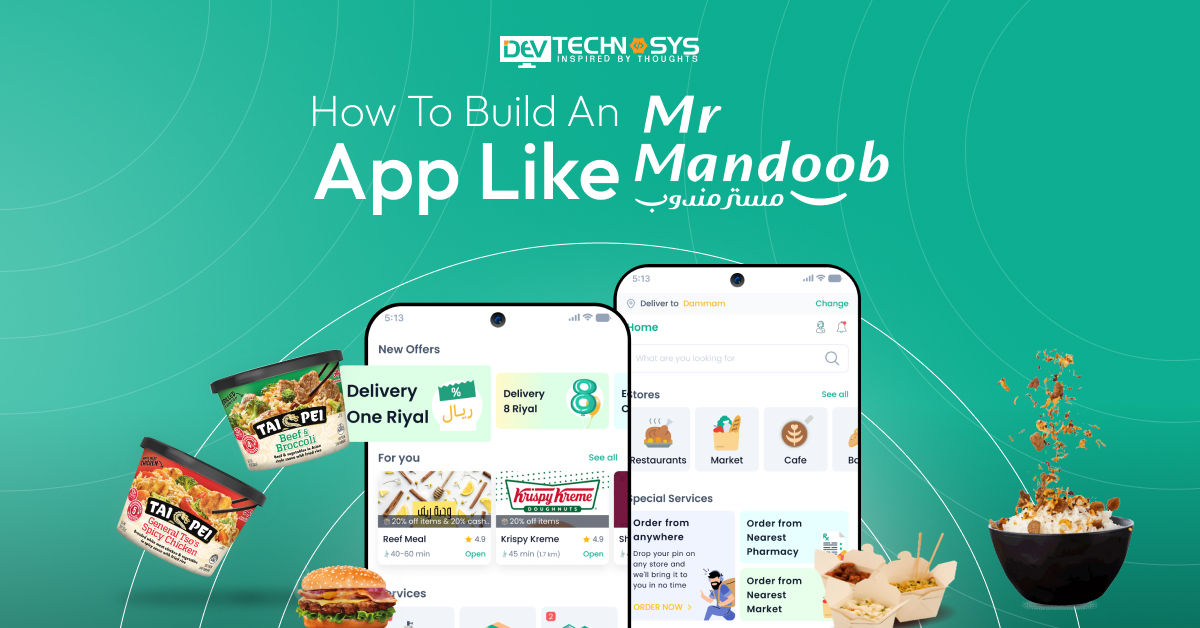
This guide provides a detailed, step-by-step explanation of how to build an app like Mr. Mandoob.
What Are The Market Stats Of On-Demand Delivery Service App?
The on-demand mobile app development solutions market is growing rapidly worldwide, driven by rising smartphone usage, urbanization, and consumer preference for fast, convenient, and technology-enabled delivery solutions across multiple industries.
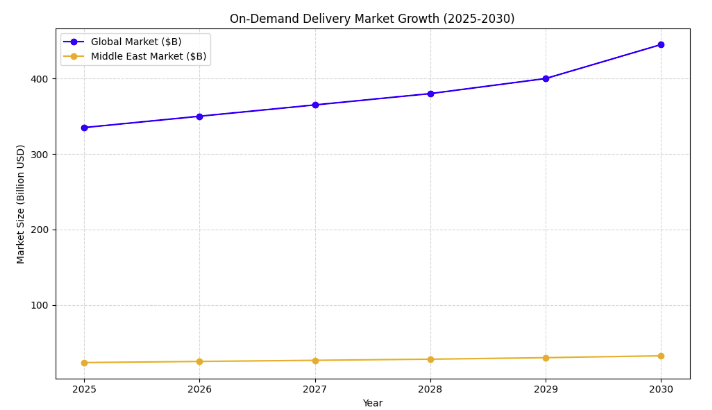
- The overall on-demand delivery and logistics industry reached an estimated $320–$350 billion worldwide in 2025, reflecting continued consumer reliance on the best on-demand delivery apps for food, groceries, packages, and errands.
- The on-demand delivery market in the Middle East was valued at around $22–$25 billion, led by high usage in GCC countries like the UAE and Saudi Arabia.
- By 2030, the on-demand delivery services market is forecast to reach $420–$470 billion, with robust growth driven by e-commerce expansion, quick commerce services, and same-day delivery expectations.
- The five-year compound annual growth rate (CAGR) from 2025 to 2030 is projected at approximately 9–12%, reflecting sustained consumer demand and logistics innovation.
- The regional on-demand delivery market in the Middle East is expected to grow to $30–$35 billion by 2030 as smartphone penetration and digital payments continue rising.
What Is Mr. Mandoob App?
Mr. Mandoob is an on-demand delivery and errand service application designed to handle quick, local deliveries within cities. Such a pickup and delivery app development solution enables users to request delivery of documents, parcels, groceries, medicines, and other everyday items. It connects customers with nearby delivery agents, known as “mandoobs,” who accept tasks and complete them efficiently.
The app focuses on real-time operations, allowing users to place orders, track delivery progress live, and communicate directly with delivery partners. Secure in-app payments and transparent pricing further enhance user trust. Mr. Mandoob is particularly successful due to its localized approach, offering region-specific language support, payment methods, and logistics workflows.
Why Entrepreneurs Are Investing In An App Like Mr. Mandoob?
Entrepreneurs are investing to build an on-demand delivery app like Mrsool due to high market demand, multiple revenue streams, and other reasons. To create a delivery app like Mr. Mandoob in the logistics and delivery sector can be a great option for entrepreneurs.
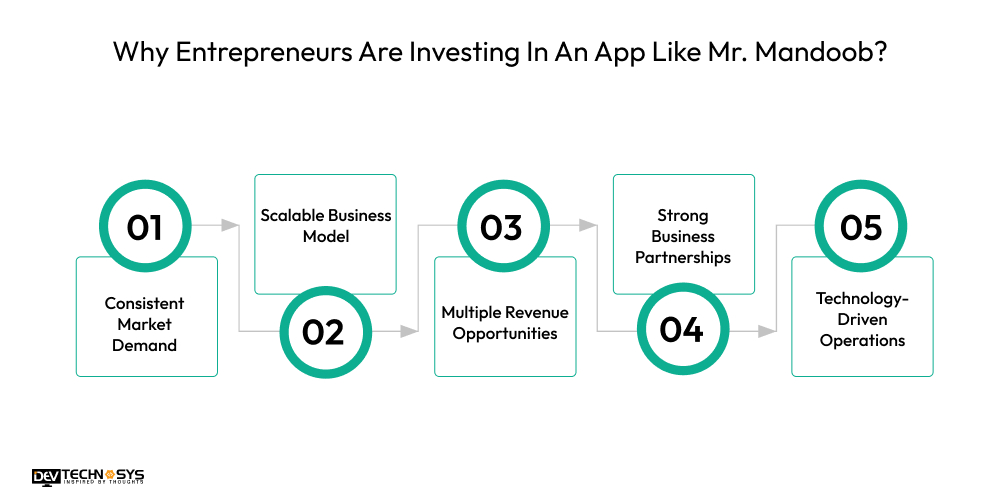
1. Consistent Market Demand:
Delivery and errand services are required daily by individuals and businesses, ensuring recurring usage and stable demand. Urban lifestyles and time constraints increase reliance on instant delivery solutions. Businesses depend on fast logistics for documents, supplies, and last-mile fulfillment.
2. Scalable Business Model:
The Mr. Mandoob app development can expand city by city without heavy physical infrastructure, making regional and international scaling easier. New cities can be onboarded using the same technology framework. Local delivery partners can be added quickly without owning vehicles, even in the top meat delivery apps in Middle East.
3. Multiple Revenue Opportunities:
Entrepreneurs build a delivery App like Mr. Mandoob to earn through commissions, subscriptions, advertisements, and partnerships. Premium delivery options can generate higher per-order income. When you make an App like Mr. Mandoob, corporate accounts provide predictable, recurring revenue streams.
4. Strong Business Partnerships:
When entrepreneurs develop a delivery App like Mr. Mandoob, they can collaborate with local stores, pharmacies, and enterprises for long-term contracts. Local merchants gain extended reach through app-based delivery. Enterprise clients benefit from dedicated delivery solutions.
5. Technology-Driven Operations:
Automation in pickup and delivery app development services reduces manual processes, operational costs, and human errors. Real-time tracking improves transparency and customer trust. Smart algorithms optimize routes and reduce delivery time. Centralized dashboards simplify monitoring and performance management.
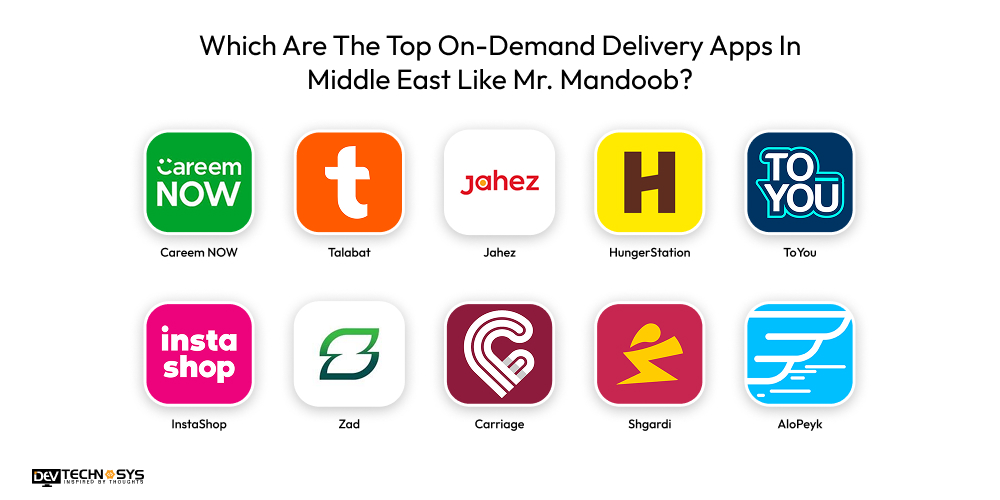
Which Are The Top On-Demand Delivery Apps In Middle East Like Mr. Mandoob?
A successful Pickup and Delivery App Development company in the Middle East hosts numerous successful on-demand delivery apps that provide food, grocery, and parcel services. These Mr. Mandoob alternatives are offering insights into features, user engagement, and competitive strategies in the regional delivery market.
| App Name | Launch Year | Downloads | Ratings | Platform Availability |
| Careem NOW | 2018 | 10M+ | 4.5 | Android, iOS |
| Talabat | 2012 | 50M+ | 4.6 | Android, iOS |
| Jahez | 2016 | 5M+ | 4.3 | Android, iOS |
| HungerStation | 2012 | 10M+ | 4.2 | Android, iOS |
| ToYou | 2019 | 1M+ | 4.1 | Android, iOS |
| InstaShop | 2018 | 5M+ | 4.4 | Android, iOS |
| Zad | 2018 | 500K+* | 4.0 | Android, iOS |
| Carriage | 2017 | 1M+ | 4.1 | Android, iOS |
| Shgardi | 2019 | 1M+ | 4.3 | Android, iOS |
| AloPeyk | 2016 | 1M+ | 4.0 | Android, iOS |
How To Build An App Like Mr. Mandoob?
To develop an app like Mr. Mandoob, you require strategic planning, market research, defining core features, selecting the right tech stack, and implementing development, testing, launch, and ongoing support processes efficiently.
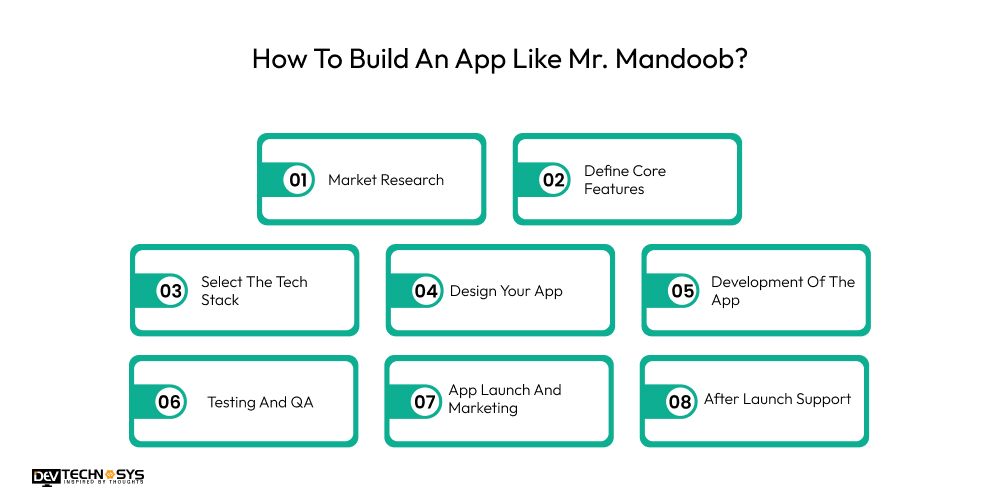
1. Market Research
To develop a food delivery app like Keeta, thorough research and analysis of the market is the foundation. This step involves analyzing your target audience, their delivery needs, preferred pricing models, and common pain points. Study competitors like Mr. Mandoob, Mrsool, and Careem NOW to understand their strengths and gaps. Research also includes understanding local regulations, delivery constraints, and cultural expectations.
2. Define Core Features
After research, clearly define the core features for users, delivery partners, and administrators. Focus on essential functionalities such as order creation, real-time tracking, secure payments, and notifications. Avoid overloading the app initially; instead, prioritize features that directly impact usability and service quality. A well-defined feature list ensures smoother development and controlled cost to build a pickup and delivery app.
3. Select The Tech Stack
Choosing the right technology stack determines your app’s performance, scalability, and security. Decide whether to use native or cross-platform frameworks based on your budget and timeline. Backend technologies should support real-time data processing and integrations. A scalable tech stack ensures your app can handle increasing users and orders.
4. Design Your App
Design simple, intuitive interfaces that allow users to place orders quickly. In the Grocery Delivery App Development Company in Dubai or other Middle Eastern regions, UI/UX design plays a critical role in user retention. Create wireframes and prototypes to visualize user journeys and identify usability issues early. A clean and responsive design builds trust and encourages repeat usage. User-focused design reduces learning time and improves navigation, helping first-time users complete tasks quickly without confusion or friction.
5. Development Of The App
Development involves coding the frontend, backend, and admin panel. Integrate third-party services such as maps, payment gateways, and notification systems. An iOS and Android app development should follow an agile approach, allowing continuous improvements and feature validation. Proper documentation ensures smoother future updates.
6. Testing And QA
In an on-demand delivery app development, testing ensures your app works flawlessly under real-world conditions. Conduct functional testing, performance testing, security testing, and device compatibility checks. Fixing bugs at this stage prevents poor user experiences and negative reviews after launch. Comprehensive testing helps identify edge-case issues that may occur under high traffic, poor network conditions, or device limitations.
7. App Launch And Marketing
Launch the app on Google Play Store and Apple App Store with optimized descriptions and visuals. Marketing strategies such as social media promotions, referral programs, and partnerships help attract users and delivery partners. Early traction is crucial for growth. You can hire on-demand app developers for a well-planned launch strategy for early credibility and app visibility among target users and delivery partners.
8. After Launch Support
Post-launch support includes monitoring performance, fixing issues, and releasing updates. User feedback should guide feature improvements. Ongoing maintenance ensures long-term stability and competitiveness. Continuous monitoring helps detect performance bottlenecks and technical issues before they negatively impact user experience.
What Are Essential Features An App Like Mr. Mandoob Should Have?
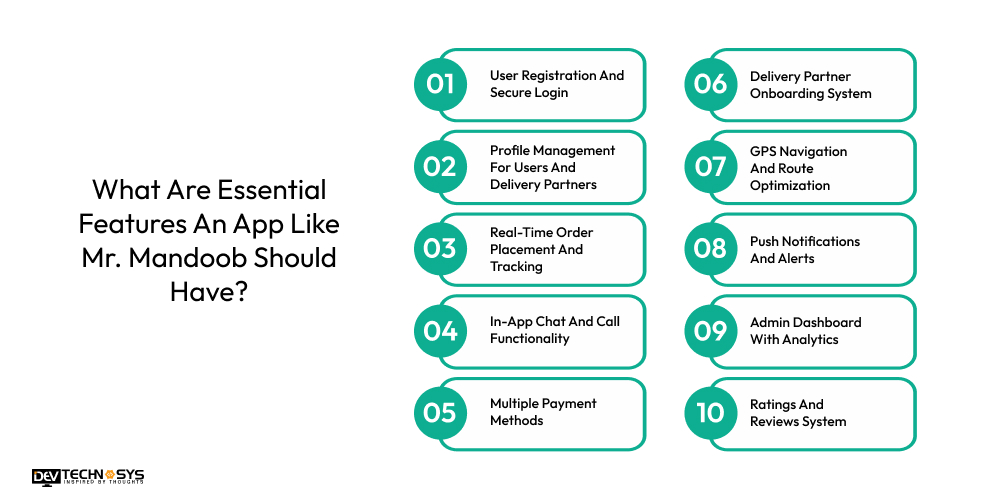
An app like Mr. Mandoob must include user-friendly, secure, and functional features. These features include real-time tracking, communication, payments, analytics, navigation, and delivery partner management to ensure smooth operations.
1. User Registration And Secure Login
User registration and secure login are features that allow users and delivery partners to sign up and log in securely. They can access the app using email, phone numbers, or social accounts. It makes sure the data protection, account safety, and personalized access to app services.
2. Profile Management For Users And Delivery Partners
Profile management enables users and delivery partners to update personal details, contact information, delivery preferences, vehicle details, and documents, ensuring accurate order handling and smoother communication within the platform.
3. Real-Time Order Placement And Tracking
Users can place delivery requests instantly and track their orders live on the map, providing transparency, estimated arrival times, and confidence throughout the entire delivery process from pickup to drop-off.
4. In-App Chat And Call Functionality
In-app chat and call feature allows direct communication between users and delivery partners through secure in-app messaging or calling, helping resolve delivery instructions, location clarifications, and order-related issues quickly without sharing personal numbers.
5. Multiple Payment Methods
The Android and iOS app development services for an app like Mr Mandoob support multiple payment options. It includes cards, digital wallets, and cash ensures convenience for users, increasing transaction success rates, and catering to regional payment preferences across different customer segments.
6. Delivery Partner Onboarding System
This system helps delivery agents register, upload documents, verify identity, and manage availability, ensuring only approved and qualified partners handle deliveries while maintaining service quality and platform trust.
7. GPS Navigation And Route Optimization
GPS navigation and route optimization enable accurate location tracking, efficient route planning, and real-time navigation for delivery partners, reducing delivery times, fuel costs, and delays caused by traffic or incorrect routes.
8. Push Notifications And Alerts
Push notifications keep users and delivery partners informed about order updates, delivery status, payment confirmations, and promotions, ensuring real-time communication and improving overall engagement and user experience.
9. Admin Dashboard With Analytics
The admin dashboard provides complete control over users, orders, payments, and delivery partners, along with analytics insights to monitor performance, identify issues, and make data-driven business decisions.
10. Ratings And Reviews System
The rating and review feature allows users to rate delivery partners and services, helping maintain quality standards, build trust, encourage accountability, and provide valuable feedback for continuous platform improvement.
What Is The Cost To Build An App Like Mr. Mandoob?
The cost to build an app like Mr. Mandoob typically ranges between $8,000 and $30,000. A basic app with essential features such as user registration, order management, and payment integration can be developed within the lower range.
As features like real-time tracking, multi-language support, advanced admin panels, and security layers are added, will increase the Mr. Mandoob app development cost. Development approach, design complexity, and integrations also influence the budget.
Businesses often start with a minimum viable product (MVP) and gradually invest in enhancements based on growth and user feedback. Here, we will explain the cost to maintain an app through a breakdown table:
| Development Type | Description | Estimated Cost (USD) |
| Basic MVP | Minimal features for early launch, including order placement, tracking, and payments. | $8,000 – $12,000 |
| Standard App | Includes essential features, UI/UX improvements, and a basic admin dashboard for smoother operations. | $12,000 – $20,000 |
| Advanced App | Full-featured app with custom UI/UX, analytics, multi-payment options, and delivery partner management. | $20,000 – $30,000 |
Which Factors Influence The Cost To Develop An App Like Mr. Mandoob?
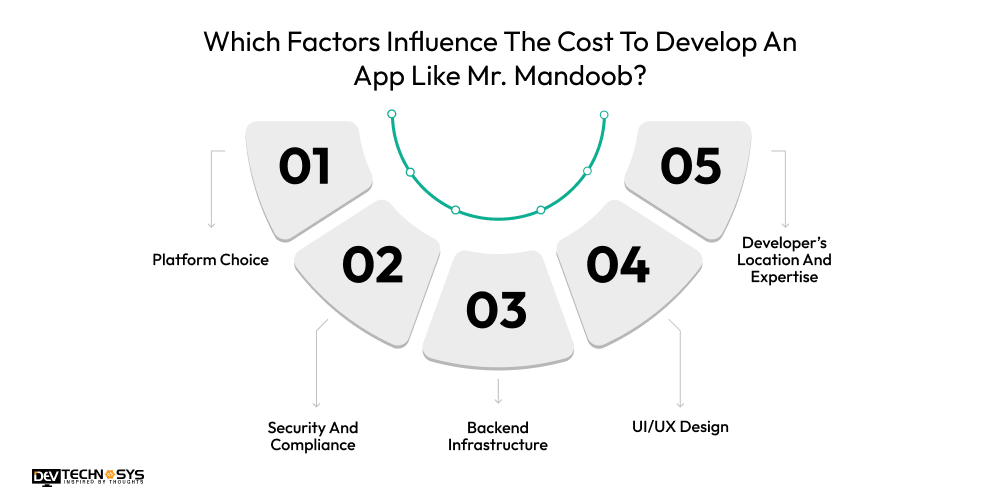
Several factors affect app development costs, including platform selection, security requirements, backend infrastructure, UI/UX design complexity, and the location and expertise level of the development team.
1. Platform Choice:
Choosing Android, iOS, or both directly impacts development time, resource allocation, and mobile app development cost. Building for multiple platforms requires additional testing, optimization, and maintenance, while cross-platform development can reduce expenses but may limit advanced native functionality.
| Platform Option | Description | Estimated Cost |
| Android Only | Develop an app exclusively for Android users, suitable for regions with high Android penetration. | $8,000–$12,000 |
| iOS Only | Build an app solely for iOS devices, preferred for premium user markets. | $12,000–$19,000 |
| Android + iOS | Full cross-platform development to cover both major mobile ecosystems. | $19,000–$30,000 |
2. Security And Compliance:
Implementing strong security measures such as encrypted data storage, secure payment gateways, and compliance with regional data protection laws increases development complexity. These requirements demand additional development effort, regular audits, ongoing maintenance, and the on-demand delivery app development cost.
| Security Feature | Description | Estimated Cost |
| Data Encryption | Protects sensitive user and payment information using strong encryption methods. | $1,000–$2,000 |
| Secure Payment Gateway | Integration of reliable, compliant payment solutions like Stripe or PayTabs. | $2,500–$4,000 |
| Regulatory Compliance | Ensuring the app meets GDPR, PCI DSS, or local and regional regulations for security. | $4,500–$6,000 |
3. Backend Infrastructure:
A robust backend infrastructure is essential for handling real-time orders, user data, and delivery tracking when you build an app like Rabbit. Scalable servers, efficient databases, and API integrations increase initial development costs but ensure long-term stability, high performance, and the ability to support growing user and order volumes.
| Backend Component | Description | Estimated Cost |
| Cloud Server Setup | Setting up AWS or Google Cloud hosting and servers for scalable operations. | $3,000–$6,000 |
| Database Management | Designing and implementing MySQL or MongoDB for order and user data. | $5,000–$10,000 |
| API Integration | Integrating third-party services such as maps, payments, and notifications. | $10,000–$15,000 |
4. UI/UX Design:
Custom UI/UX design focuses on usability, branding, and seamless user journeys. Creating intuitive layouts, interactive elements, and responsive designs requires skilled designers and multiple iterations, increasing development time and cost but significantly improving user satisfaction and long-term retention rates.
| Design Component | Description | Estimated Cost |
| Basic Design | Simple layouts, minimal screens, and a standard user interface. | $2,000–$4,000 |
| Intermediate Design | Custom icons, interactive elements, and user-friendly navigation. | $5,000–$7,500 |
| Advanced Design | Fully customized UI/UX with animations, branding, and multi-platform consistency. | $8,000–$10,000 |
5. Developer’s Location And Expertise:
The cost to create a food delivery app like Talabat varies based on the geographic location and experience level of developers. Teams in regions with higher living costs charge more, while experienced professionals deliver higher-quality, scalable solutions that reduce future maintenance costs and technical issues.
| Developer Type | Description | Estimated Cost |
| Junior Developer (Offshore) | Less experienced developers, usually from regions with lower rates. | $8,000–$12,000 |
| Mid-Level Developer | Developers with 2–5 years of experience, capable of handling most features independently. | $12,000–$20,000 |
| Senior/Expert Developer | Highly experienced professionals delivering scalable, high-quality solutions with minimal supervision. | $20,000–$30,000 |

What Money-Making Models Can Be Implemented In An App Like Mr. Mandoob?
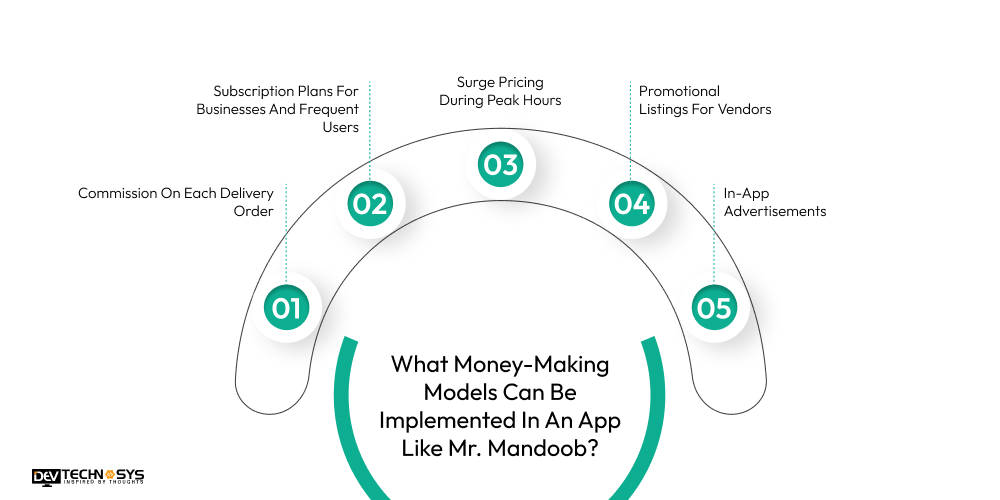
App owners can implement revenue models like commissions, subscriptions, listings, and in-app advertisements. These models, in full-stack development services, can generate steady, scalable, and diversified income streams.
1. Commission On Each Delivery Order
The platform earns a fixed or percentage-based commission from every completed delivery order. This model scales naturally with order volume, ensuring steady revenue growth as user demand increases while keeping costs predictable and aligned with platform usage.
2. Subscription Plans For Businesses And Frequent Users
Subscription plans allow businesses and high-frequency users to pay monthly or yearly fees for benefits like discounted deliveries, priority service, or unlimited orders. This model ensures predictable recurring revenue and strengthens long-term customer loyalty and platform engagement.
3. Surge Pricing During Peak Hours
Surge pricing applies higher delivery charges during peak demand periods, such as weekends or busy hours. This model balances supply and demand, encourages delivery partner availability, and increases revenue while maintaining service reliability during high-traffic times.
4. Promotional Listings For Vendors
In the best on-demand delivery app in UAE, vendors can pay to feature their services or stores at the top of search results within the app. According to the mobile app development company, this visibility increases vendor sales while providing the platform with an additional revenue stream without impacting the core delivery experience.
5. In-App Advertisements
In-app advertisements allow brands and local businesses to promote products or services within the platform. Displaying relevant, targeted ads generates extra income while maintaining user engagement when ads are carefully placed and aligned with user interests.
Final Words
When you create an app like Mr. Mandoob, it becomes a great way for businesses to get into the on-demand delivery market, which is growing very quickly. With increasing urbanization, smartphone penetration, and consumer preference for instant services, such platforms address real-world problems efficiently while offering scalable and sustainable revenue potential.
Success depends on careful planning, including comprehensive market research, strategic feature selection, and the right technology stack. Additionally, focusing on user experience, reliable delivery networks, secure payment systems, and continuous improvements ensures long-term competitiveness.
Ultimately, a well-executed delivery app meets evolving customer needs and establishes a trusted, high-performing brand that can expand regionally and globally over time. Therefore, you can reach out to a Food Delivery App Development Company that helps you provide similar solutions.
People Commonly Ask!
Q1. What Is Mr. Mandoob And How Does Its Delivery App Model Work?
Mr. Mandoob is an on-demand delivery platform connecting users with local delivery partners for parcels, groceries, and documents. The app allows real-time order placement, live tracking, secure payments, and instant notifications, enabling fast, reliable deliveries while ensuring transparency and efficiency for both users and delivery agents.
Q2. Which Problems Does An App Like Mr. Mandoob Solve For Users And Businesses?
The app addresses challenges like slow deliveries, lack of real-time tracking, and limited service coverage. Users benefit from convenience and timely deliveries, while businesses gain reliable last-mile logistics, scalable operations, and improved customer satisfaction through fast, organized, and technology-driven delivery solutions.
Q3. What Are The Must-Have Features Of An App Like Mr. Mandoob?
The features an app like Mr. Mandoob must have include:
- Secure user registration
- Profile management
- Real-time order tracking
- In-app communication
- Multiple payment options
- Delivery partner onboarding
- GPS navigation
Q4. What Tech Stack Is Best To Make An App Like Mr. Mandoob?
A recommended tech stack includes React Native or Flutter for frontend, Node.js or Laravel for backend, MySQL or MongoDB for databases, AWS or Google Cloud hosting, Google Maps for GPS, Stripe or PayTabs for payments, Firebase for notifications, and Google Analytics or Mixpanel for performance tracking.
Q5. How Much Does It Cost To Build An App Like Mr. Mandoob?
The development cost typically ranges between $8,000 and $30,000, depending on features, platform choice, design complexity, backend infrastructure, and developer expertise. Starting with a minimum viable product (MVP) helps control costs while allowing phased enhancements based on user feedback and market growth.