






Nana, a popular grocery delivery service, must be strategically developed to match new consumer demands. Nana’s app revolutionizes grocery shopping by providing convenience, speed, and reliability. Nana has transformed grocery shopping by effortlessly linking consumers with local merchants and delivering fresh produce and household goods on time.
Understanding Nana’s appealing UI/UX, comprehensive logistics management, secure payment methods, and real-time order tracking is crucial for a similar project. Building a successful grocery delivery app that improves customer satisfaction and operational efficiency in the competitive retail business starts with this introduction.
Quick Summary: This blog will teach you how to develop an app like Nana and other similar grocery apps. It will also explore the stages and features of the grocery app development.
What is an App Like Nana?
With an app like Nana, customers can order goods from nearby retailers online and have them delivered right to their door. With an intuitive design, it provides a wide range of fresh produce, pantry needs, and home necessities. Secure payment methods, customized shopping journeys, real-time purchase tracking, and prompt delivery are some of the key advantages.
Apps such as Nana ease grocery shopping, save time and offer convenience in both urban and suburban locations by bridging the gap between customers and local shops.
Top 7 Grocery Delivery Apps Like Nana
These are the best seven Nana-like grocery delivery apps that offer quick and easy shopping experiences:
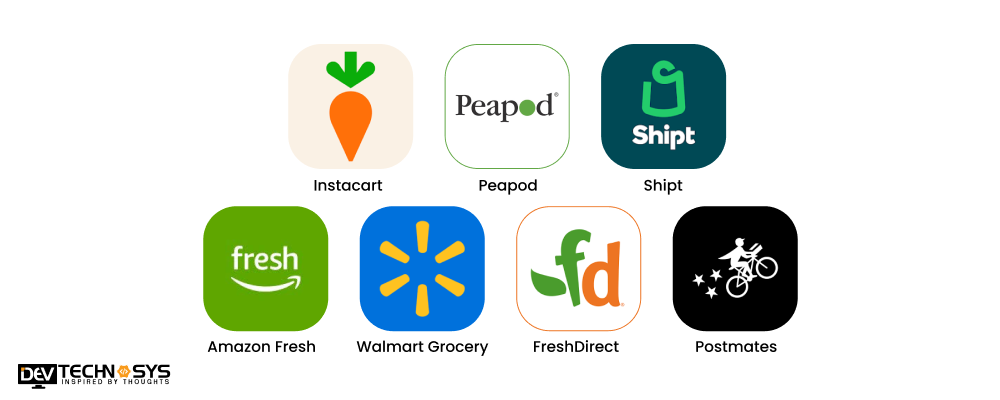
1. Instacart
With Instacart, customers can order goods from nearby supermarkets and have them delivered by personal shoppers. A grocery app like an Instacart provides a large assortment of goods with same-day delivery choices, such as fresh produce, pantry staples, and household necessities.
2. Shipt
Grocery delivery apps like Shipt deliver services from nearby grocery stores and national chains like Target. Through the app, users may choose what they want, and Shipt shoppers will deliver their shopping right to their door. A monthly or yearly membership fee is required, however it offers unlimited free delivery.
3. Peapod
It is the best grocery mobile app, it provides grocery delivery and online shopping in several US locations. Customers can plan delivery windows, make shopping lists, and select from various products. Meal kits and fresh produce are Peapod’s specialties.
4. Amazon Fresh
It is one of the most popular grocery delivery apps in Istanbul Amazon Fresh provides many groceries, including household goods, essentials for the pantry, and perishables. Customers can shop on the Amazon website or app, and delivery is sent fast—often on the same day. So, it is the best grocery app in the UAE, providing users with many benefits.

5. Walmart Grocery
Customers can order groceries online with Walmart Grocery and have them delivered to their homes or picked up at a nearby Walmart store. It is the best grocery app that offers a huge assortment of groceries, such as meats, fresh produce, and necessities for the home. It is a great grocery app Kuwait, that provides many benefits to Kuwait users.
6. FreshDirect
Customers in a few U.S. Northeastern cities can order fresh groceries, meal kits, and specialized products from FreshDirect. It is one of the best apps like the Nana, provides a large selection of goods, including locally and organically sourced options, and offers flexible delivery options to accommodate users’ busy schedules.
7. Postmates
It is the most famous app for grocery stores in Qatar and provides on-demand groceries and delivery from nearby eateries and shops. Customers may rapidly order groceries from many merchants and have them delivered by Postmates messengers. It mainly focused on the grocery ordering app from anywhere or on any device.
5 Benefits For Businesses To Develop An App Like Nana
Creating an app similar to the well-known grocery delivery service Nana has many benefits for companies aiming to innovate in the e-commerce and retail industries:
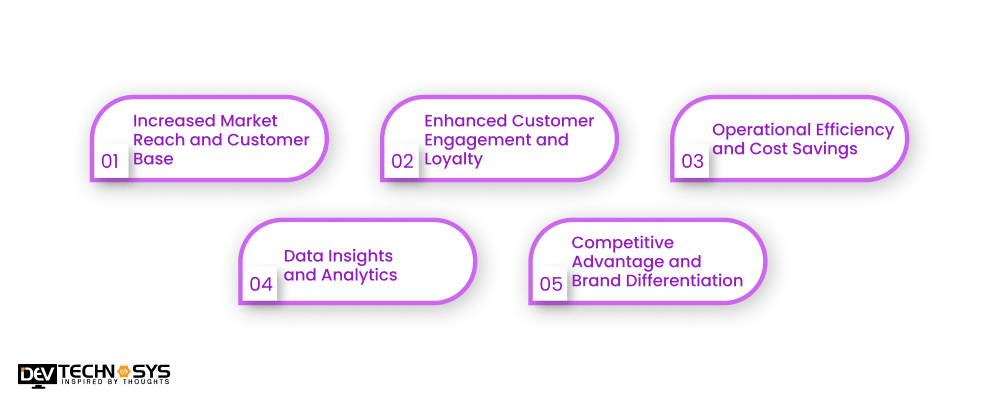
1. Increased Market Reach and Customer Base
Businesses can reach a wider audience than only customers who visit their physical store by introducing an app like Nana, which delivers groceries. They have the ability to draw in a wider range of clients, such as working adults, senior citizens, and families looking for convenient grocery shopping.
2. Enhanced Customer Engagement and Loyalty
With features like order history tracking, customized promotions, and personalized shopping experiences, a specialized app encourages direct communication with customers. By fulfilling changing consumer expectations and offering convenience, customer engagement and loyalty are improved.
3. Operational Efficiency and Cost Savings
Using an app to automate the ordering and delivery procedures increases operational efficiency. Companies may streamline logistics for quicker and more precise delivery, minimize overhead expenses related to traditional store setups, and improve inventory management.
4. Data Insights and Analytics
An app for grocery delivery provides useful information about its users’ tastes, behavior, and buying habits. Companies may increase overall performance and profitability by using analytics to optimize product offers, marketing plans, and operational choices. If you want to start grocery delivery startups, then consult a grocery app development company.
5. Competitive Advantage and Brand Differentiation
In a cutthroat industry, businesses can differentiate themselves by releasing dependable and intuitive software like Nana. It improves the brand’s awareness, legitimacy, and standing as a cutting-edge pioneer in supermarket retail. Distinctive features like quick delivery, high-quality goods, and first-rate customer support can help set the business apart from rivals.
7 Key Steps To Develop An App Like Nana
To guarantee an app’s functioning, usability, and market readiness, it takes several crucial steps to develop it in the same way as the popular grocery delivery platform Nana. Here are seven crucial actions to think about:
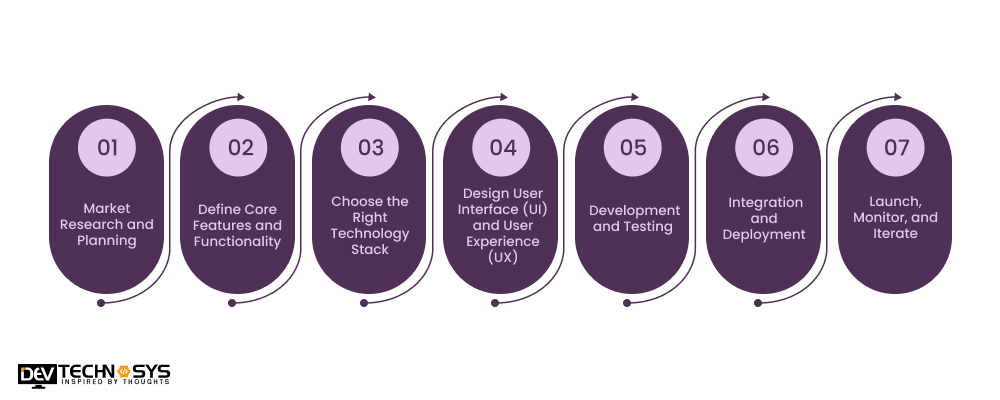
1. Market Research and Planning
To understand consumer preferences, market trends, and competitor offerings in the grocery delivery industry, start with comprehensive market research. Determine the target market, the regions where the app will be initially released, and the salient characteristics that will set it apart from competitors.
2. Define Core Features and Functionality
Describe the key functionalities that your app will provide, such as the ability for users to save delivery addresses, modify preferences, and create accounts. Include a thorough catalog with categories, a search engine, and thorough product descriptions. Allow consumers to choose delivery times, explore products, add items to a cart, and securely pay.
3. Choose the Right Technology Stack
Hire dedicated developers to choose the best tech stacks, such as scalable, secure, and platform-compatible technologies and frameworks should be used. Cross-platform development with React Native or Swift (iOS) and Kotlin (Android). For server-side logic, use Node.js or Python with Express.js or Django. Store user data, orders, and product information in PostgreSQL or MongoDB. Use AWS or GCP for hosting, storage, and scaling.
4. Design User Interface (UI) and User Experience (UX)
To make an app like the Nana, design a user-friendly interface with easy navigation, attractive design, and smooth user flows. Usability testing and feedback can improve the UI/UX design to match user expectations and boost satisfaction.
5. Development and Testing
Start developing the app iteratively by building and testing features with agile approaches. To find and fix any problems before launch, carry out comprehensive testing phases, including as functional, performance, and security testing.
6. Integration and Deployment
For features like SMS notifications, geolocation services, and payment processing, integrate third-party APIs. As you follow the requirements and rules for app submission and approval, get your app ready for release on the appropriate app stores (App Store for Apple, Play Store for Google Play).
7. Launch, Monitor, and Iterate
It’s time to launch an app like Nana. Create a thorough marketing plan to announce the app’s release, draw in testers, and get input. Track app performance, examine indicators related to user engagement, and iteratively enhance functionality in response to user input and changes in the market. To improve user experience and stay competitive, keep the app updated with new features, security fixes, and optimizations.
Features Of Grocery Delivery Apps Like Nana
To build an app like Nana, include a number of features aimed at making shopping easier and guaranteeing user convenience. Typical important features of these apps are as follows:
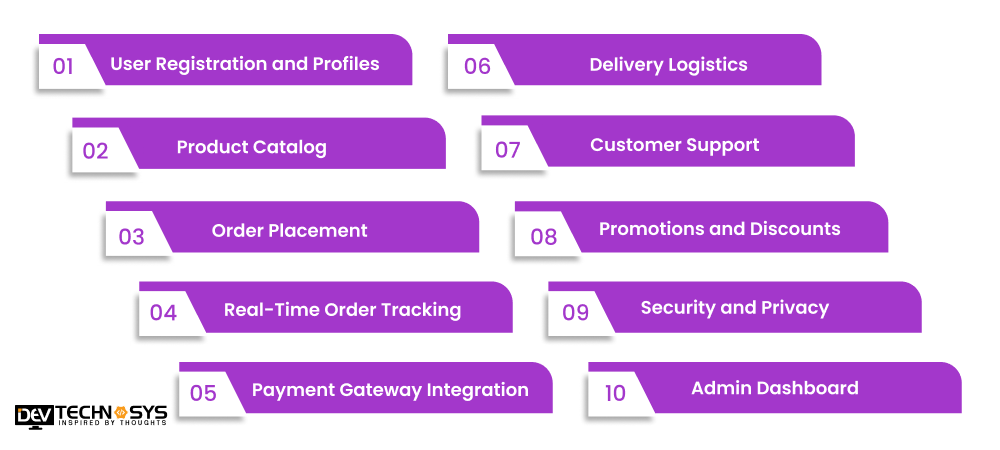
1. User Registration and Profiles
Permit users to maintain their profiles, create accounts, and log in safely. For a speedy checkout, this includes storing payment details, delivery addresses, preferences, and previous orders.
2. Product Catalog
Offer a thorough inventory of grocery products with prices, descriptions, and photographs that are arranged sensibly into categories such as fresh produce, dairy, and pantry staples. Permit customers to peruse, look up, and filter products according to their preferences.
3. Order Placement
Permit consumers to change amounts, add items to their carts, and choose delivery options (such as time and date). Provide choices for setting up recurrent delivery schedules and making shopping lists for convenient reordering.

4. Real-Time Order Tracking
Provide users with real-time tracking so they are aware of the progress of their orders. Users should receive notifications on order confirmation, dispatch, preparation, and projected delivery timings. With the help of an Android app development company, you can install a real-time order-tracking feature.
5. Payment Gateway Integration
Process payments safely with integrated payment gateways that accept a variety of payment options, including digital wallets (like Apple Pay and Google Pay), credit/debit cards, and in-app wallets.
6. Delivery Logistics
To ensure effective and timely deliveries, optimize delivery logistics with features like real-time GPS tracking, driver route optimization, and geolocation services for address verification.
7. Customer Support
Give users the option to contact customer service by phone, email, or in-app chat for questions, concerns about orders, and comments. Provide a feedback/rating mechanism where people can remark and rate the deliveries.
8. Promotions and Discounts
To encourage sales and keep customers, provide coupons, loyalty programs, and special discounts. Users can receive push notifications or in-app messages informing them of active specials.
9. Security and Privacy
Put strong security measures in place to safeguard user data, such as SSL encryption for transactions, safe personal data storage, and adherence to data protection laws (such as the CCPA and GDPR).
10. Admin Dashboard
Give administrators access to a backend dashboard where they may control user accounts, orders, inventory, and delivery processes. According to mobile app development services provider, it can provide information about consumer behavior, sales patterns, and operational effectiveness.
The Cost To Develop An App Like Nana
The cost to develop a mobile app depends on several variables, including features, complexity, the location of the development team, and platform (iOS, Android). More sophisticated versions with extra features like real-time tracking, customized suggestions, and substantial backend infrastructure can cost anywhere from $10,000 to $30,000 or more.
Basic versions typically start at $8,000 to $30,000. The cost to build a grocery app like Nana also includes updates, scalability issues, and ongoing maintenance. Budgeting for development, testing, deployment, and post-launch support is essential to ensuring that a grocery delivery app like Nana is competitive and successful.
Cost To Develop An App Like Nana
|
Grocery Delivery App Development |
Estimated Cost |
Time Frame |
|
Simple App Development |
$8000 – $15000 | 3 to 5 Months |
|
Medium-Complex App Development |
$15000 – $25000 | 5 to 8 Months |
|
High-Complex App Development |
$30000+ | 10+ Months |
The cost to maintain an app like Nana depends on its features and complexity. The maintenance of grocery app development costs 15% to 20% of the overall development.
Tech Stack To Develop An App Like Nana
To develop an app like Nana, a robust tech stack typically includes:
1. Frontend: For cross-platform development, use React Native; for native app development, use native languages like Swift for iOS and Kotlin for Android.
2. Backend: For server-side logic, use Node.js or Python; for RESTful APIs and backend services, use frameworks like Express.js or Django.
3. Database: Scalability and data integrity are guaranteed by using PostgreSQL or MongoDB for data management and storage.
4. Cloud Services: For hosting, storage, and scalability, use AWS or Google Cloud Platform. This includes services like Amazon S3 for file storage and Firebase for real-time database functionality.
5. Payment Integration: For safe and easy payment processing, use PayPal or Stripe to guarantee smooth app transactions.
Monetization Techniques To Develop An App Like Nana
Apps like Nana must be monetized strategically, balancing income generation with improving user experience. These are five strategies for successful monetization:
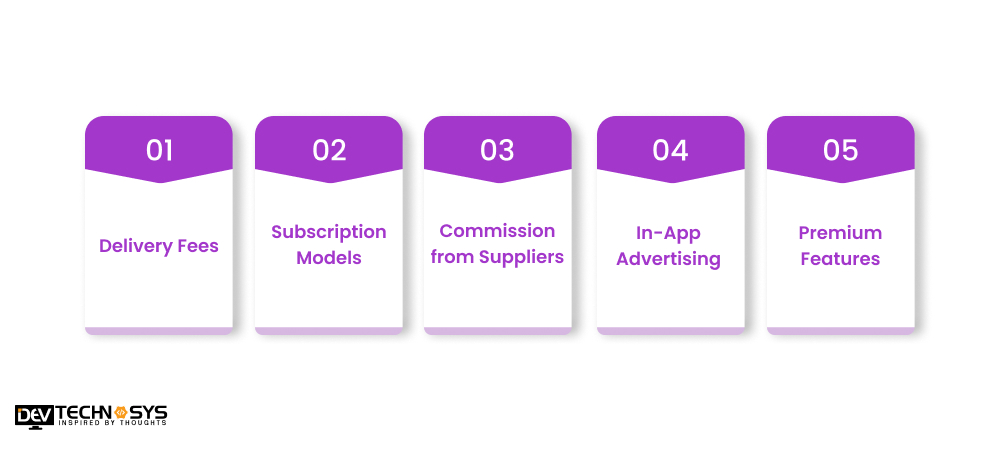
1. Delivery Fees
Establish a charge schedule for every grocery delivery. Provide flexibility by setting different price tiers according to order quantity, delivery speed, or delivery distance (e.g., standard vs. express). If you want to start grocery delivery startups, consult with a grocery ordering app development company.
2. Subscription Models
Offer membership programs with benefits including priority scheduling, unlimited free deliveries, exclusive discounts, and access to premium features. A monthly or annual subscription might provide steady income streams.
3. Commission from Suppliers
Demand a commission from suppliers and supermarkets for every transaction made via the app. This strategy guarantees a wide variety of offerings for users and incentivizes suppliers to sell their products on the site.
4. In-App Advertising
Show relevant third-party services, supermarket brands, and local businesses’ targeted adverts. To increase revenue, use non-intrusive ad forms such as sponsored content or native ads.

5. Premium Features
Give users who are willing to pay more optional access to premium features. Advanced order customization possibilities, special access to specialized products, tailored suggestions, or improved customer support services are a few examples.
Conclusion
Creating an app similar to Nana means accepting innovation in grocery delivery, improving convenience, and satisfying the demands of today’s customers. Businesses may provide a seamless shopping experience by incorporating user-friendly interfaces, effective logistics, safe payment systems, and personalized services.
Monetization techniques like partnerships, subscriptions, and delivery costs further ensure sustainability. So, are you looking to create an app like Nana? Contact Dev Technosys, a custom grocery app development company, taking your business to the next level.
Frequently Asked Questions
1. How Much Does It Cost to Develop An App Like Nana?
Creating a Nana app might cost anywhere from $8,000 to $30,000 or more, depending on the features, complexity, and other aspects of the project.
2. What are the Essential Features of a Grocery Delivery App Like Nana?
A grocery delivery app like Nana requires a product catalog, user accounts, order placement, real-time tracking, payment integration, and customer service.
3. How Long Does it Take to Develop An App Like Nana?
The online grocery store app development usually takes six to twelve months. It also depends on the features, complexity, size of the development team, and project scope.
4. What are the Challenges in Developing a Grocery Delivery App Like Nana?
Developing a grocery delivery app like Nana presents several challenges:
- Streamlining logistics
- Managing deliveries in real-time
- Guaranteeing product freshness
- Expanding operations
- Upholding consumer confidence and contentment.