





Ensuring robust security Regulatory compliance issues Integration with banks User experience design Handling high traffic" } }, { "@type": "Question", "name": "What Market Problems Does du Pay Solve Compared To Traditional Banking Apps?", "acceptedAnswer": { "@type": "Answer", "text": "Du Pay fixes problems with traditional banking by providing faster transactions, simpler bill payments, smooth peer-to-peer transfers, better usability, less paperwork, and an easy-to-use digital experience. This makes it easier and more convenient to pay for things." } }, { "@type": "Question", "name": "What Tech Stack Is Best For Building An Ewallet App Like du Pay For Android, iOS, and Web?", "acceptedAnswer": { "@type": "Answer", "text": "There are various types of tech stacks used to make an app like du Pay:
Java Python C++ C# PHP Flutter" } } ] }
People are able to send, receive, and manage money digitally, and e-wallet apps, such as Du Pay, are at the forefront of this trend. Customers enjoy the app’s instant transactions, ease of use, and their strong security features.
People who are planning to build an app like du Pay are not simply designing a payment tool. Users will look for a complete financial ecosystem.
Every feature and design element will affect the system’s reputation for speed, safety, and reliability. Some of the design features will include an easy-to-use onboarding and secure KYC process, instant transaction features, and a modular design.
In this detailed guide, we will provide you with detailed information about how to build an app like du Pay and what functionalities must be integrated.
Let’s Go!
Present and Future Statistics of Global E-wallet Applications
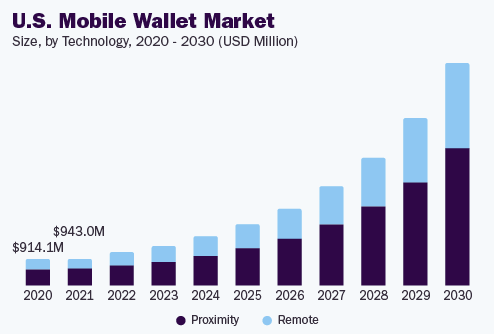
- In 2022, the worldwide mobile wallet market was valued at USD 42 billion, and by 2030, it is expected to grow to USD 51.53 billion.
- The market for mobile wallets is anticipated to expand at a compound annual growth rate of 3% between 2023 and 2030.
- With a3% market share in 2022, Asia Pacific led the mobile wallet industry, and it is anticipated to expand at the quickest CAGR of 28.9% over the course of the forecast period.
- With a 6% revenue share in 2022, the proximity category led the technology market.
- According to the application, the retail and e-commerce sector had the highest revenue share in 2022 (0%), and it is anticipated to hold this position throughout the projected period.
What is du Pay?
DuPay is an online payment service that enables customers to transfer, receive, and manage money. It usually works with both cryptocurrency and normal payments. Users can keep money, buy things, send money to other people, and occasionally utilize cards or apps to spend.
E-wallet app like Phonepe and DuPay wants to make payments quicker, simpler, and available in more countries by employing safe technology and easy tools for routine financial chores all across the world.
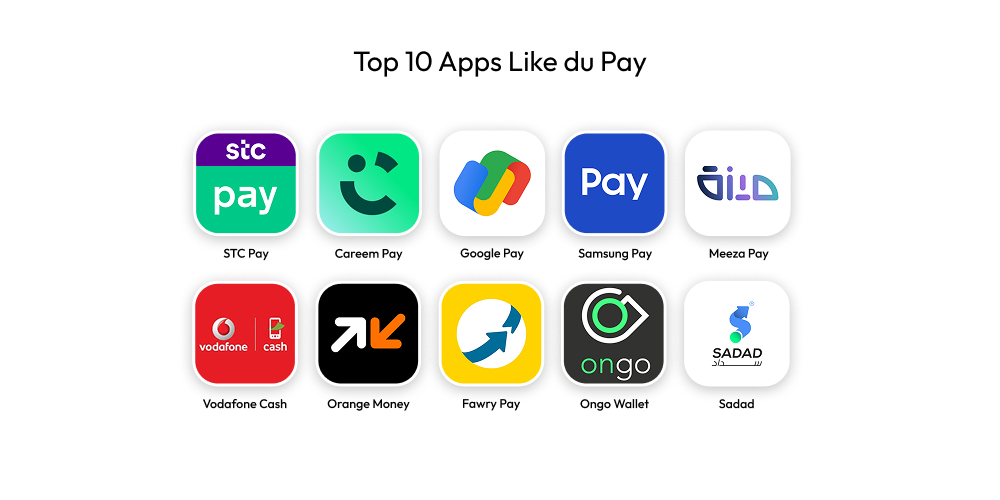
Top 10 Apps Like du Pay
Find the best 10 applications like DuPay that let you make safe digital payments, send money easily, support cryptocurrencies, and provide you with smart financial tools for quick, easy, and worldwide transactions.
| App Name | Estimated Downloads | Rating (Avg) | Launch Year | Platform Availability |
| STC Pay | 10M+ | 4.6 | 2018 | Android, iOS |
| Careem Pay | 10M+ | 4.5 | 2020 | Android, iOS |
| Google Pay | 100M+ | 4.5 | 2011 | Android, iOS |
| Samsung Pay | 50M+ | 4.5 | 2015 | Android |
| eFinance / Meeza Pay | 5M+ | 4.3 | 2019 | Android, iOS |
| Vodafone Cash | 10M+ | 4.4 | 2013 | Android, iOS |
| Orange Money | 5M+ | 4.2 | 2014 | Android, iOS |
| Fawry Pay | 10M+ | 4.5 | 2008 | Android, iOS |
| Ongo Wallet | 1M+ | 4.2 | 2019 | Android, iOS |
| Sadad | 5M+ | 4.4 | 2004 | Android, iOS, Web |
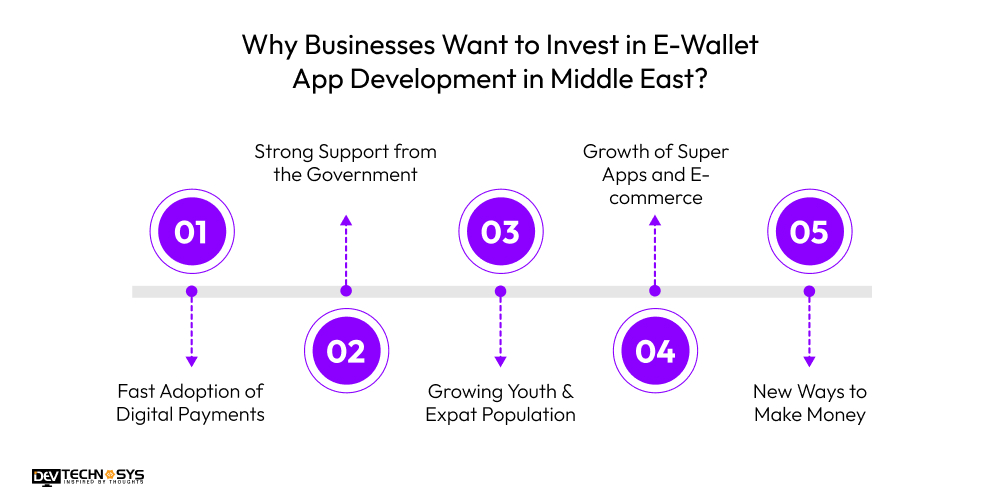
Why Businesses Want to Invest in E-Wallet App Development in Middle East?
Due to the Middle East’s fast acceptance of digital payments, robust government backing, tech-savvy consumers, rising demand for e-commerce, and high return on investment in a burgeoning cashless economy, businesses invest in the creation of e-wallet apps.
1. Fast Adoption of Digital Payments
People in the Middle East are swiftly switching from cash to digital wallets. People are using ewallet app development solutions more and more because they are easy to use, the government is backing cashless initiatives, and people are trusting fintech more and more.
This makes businesses want to invest early and get a long-term edge over their competitors.
2. Strong Support from the Government
Regulations, licensing, and smart city projects in the UAE, Saudi Arabia, and other Gulf nations all help fintech innovation. This makes the atmosphere stable and open to new ideas, which means that firms may invest in making e-wallet apps with less fear of breaking the law.
3. Growing Youth & Expat Population
There are a lot of young people and expats in the Middle East who want quick, mobile-first financial solutions. Fintech apps like STC Pay and du Pay are great for businesses that want to reach a wide range of tech-savvy people since they help them make rapid payments, pay bills, and send money.
4. Growth of Super Apps and E-commerce
In the area, e-commerce, ride-hailing, food delivery, and super applications are all growing quickly. These systems work well with e-wallets, which makes payments and loyalty programs easy to use. Businesses spend money to build ecosystems that keep customers coming back and doing business with them more often.
5. New Ways to Make Money
E-wallet apps like Taptap Send and du Pay make money by charging fees for transactions, working with other businesses, offering merchant services, and adding value through features like BNPL and incentives.
Businesses anticipate a good return on investment in Middle Eastern markets since digital transactions are on the rise and the market isn’t as saturated as it is in the West.
What are the Steps to Build An App Like du Pay?
To develop an app like du Pay, you will need to follow various steps, such as market analysis, identifying requirements, tech stacks, designing UI/UX, development, testing, and deployment. So, let’s explore the e-wallet mobile app development process:
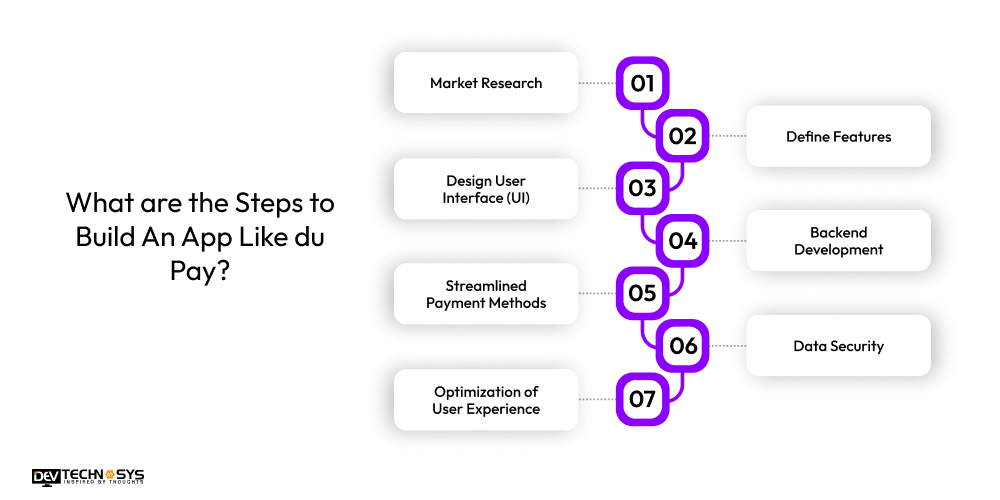
1. Market Research
Conduct comprehensive market research to get to know your target audience and their demands, preferences, and obstacles. Analyze competitors in the market, detect and fill gaps in the market, and provide information on the available payment systems.
This research will assist in defining the unique selling proposition (USP) of your app and in making sure it meets the user’s needs.
2. Define Features
Identify and prioritize important features like user validation, digital wallets, transaction records, P2P (peer-to-peer) payment systems, and secure payment gateways.
Hire dedicated developers to make sure that the application facilitates smooth fund transfers, bill payments, and mobile recharges, and provides features for financial planning. Make sure that the application is capable of managing increasing demands and is designed for easy use.
3. Design User Interface (UI)
Your application must be comprehensive and user-friendly, which terminates offers. It must prioritize efficiency, approachability, and ease for the high-level system.
Use smooth pathways for navigation, simple and clear buttons, and make the design visually pleasant and polished to capture the audience market on payment systems.
4. Backend Development
Hire backend programmers from a banking app development company to create software for transactions, user management, and secure databases.
Back-end systems must be built and implemented on reliable technologies such as Node.js, Ruby on Rails, or Django. Product and software secondary systems, like secured payments and real-time notifications, must be developed.
5. Streamlined Payment Methods
Set up a PCI-compliant payment gateway (e.g., Stripe, PayPal, Razorpay) capable of supporting users’ payment either via credit or debit cards, e-wallets, and bank transfers, and/or e-wallets. Test the payment gateway efficiently to bolster users’ trust and confidence in their payment transactions.
6. Data Security
Move to the second last stage of the ewallet app development services process. Diligently institute security protocol to safeguard users’ data with: SSL encryption; 2-step verification; and/or payment anti-fraud. Assuming data security diligence, perform security protocol updates regularly to counter potential security breaches.
7. Optimization of User Experience
Utilize beta testers to enhance the technical optimization and functionalities of the application. Postulating beta testers’ feedback, apply final touch-ups, and officially release the application on Google Play and the App Store. Post-release, target digital marketing to the anticipated user population.
What Are The Must-Have Features Required To Build An App Like Du Pay?
Explore the essential functionalities of similar apps like du Pay, including safe transactions, peer-to-peer transfers, bill payments, multi-currency capabilities, incentives, and enhanced security for efficient, rapid, and user-friendly digital exchanges.
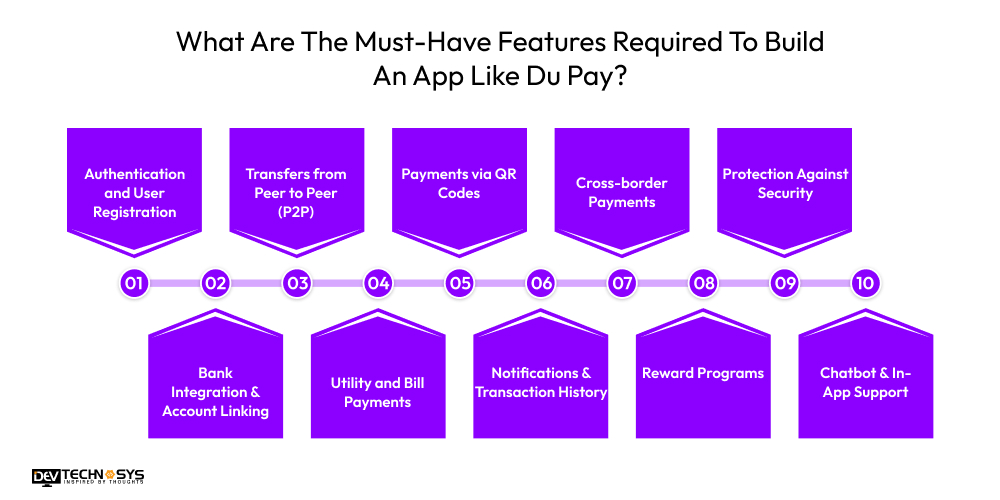
1. Authentication and User Registration
The du Pay alternatives provide strong authentication and secure sign-up by phone, email, or social media accounts, which are necessary to safeguard user accounts and private information.
2. Bank Integration & Account Linking
For easy money transfers and payments, let users connect many bank accounts, credit/debit cards, and digital wallets.
3. Transfers from Peer to Peer (P2P)
An e-wallet app like Mashreq facilitates quick and easy money transfers between users via cellphone numbers, QR codes, or unique IDs.
4. Utility and Bill Payments
Give users the ability to safely pay their utility bills. such as those for power, water, and internet, directly through the app.
5. Payments via QR Codes
du Pay alternatives permit QR code generation or scanning for quick, contactless transactions between users or at shops.
6. Notifications & Transaction History
For transparency and monitoring purposes, keep an accurate record of every transaction with real-time notifications.
7. Cross-border and multi-currency payments
To draw in foreigners, tourists, and cross-border commercial customers, support numerous currencies and international transactions.
8. Reward Programs
The du Pay clone apps offer discounts, cashback, and loyalty points to encourage frequent usage and user retention.
9. Protection Against Fraud
To safeguard money and data, use encryption, two-factor authentication, biometric login, and AI-based fraud detection.
10. Chatbot & In-App Support
An e-wallet app like Mobily Pay provides round-the-clock customer service using chatbots or live agents to provide immediate user help and problem-solving.
What is the Cost to Build An App Like du Pay?
The cost to develop an app like du Pay varies greatly depending on its features, design, platform (Android/iOS), and level of technical difficulty.
A simple e-wallet app may cost between $8,000 and $15,000, while a fully functional app with an admin dashboard, security, multi-currency, and connectors may cost $15,000 to $25,000. Updating servers, security, compliance, and maintenance are examples of ongoing expenses that raise the overall investment each year.
| Feature/Component | Estimated Cost (USD) | Description |
| UI/UX Design | $1,500 – $3,000 | Designing an intuitive, user-friendly interface for smooth app navigation. |
| Core App Development | $3,000 – $10,000 | Building the main app functionalities like wallet management, transfers, and payments. |
| Payment Gateway Integration | $1,000 – $3,000 | Connecting secure payment systems for transactions and fund transfers. |
| Security & Authentication | $1,000 – $4,000 | Implementing encryption, login security, and fraud protection measures. |
| Testing & Deployment | $1,500 – $5,000 | Quality checks, bug fixes, and launching the app on app stores. |
What Factors Affect the E-wallet App Development Cost in Middle East?
Learn what affects the cost to develop a mobile app like du Pay in Middle East. It includes app features, security, platform choice, design, and connections with banks or payment systems to create a safe and easy-to-use digital wallet.
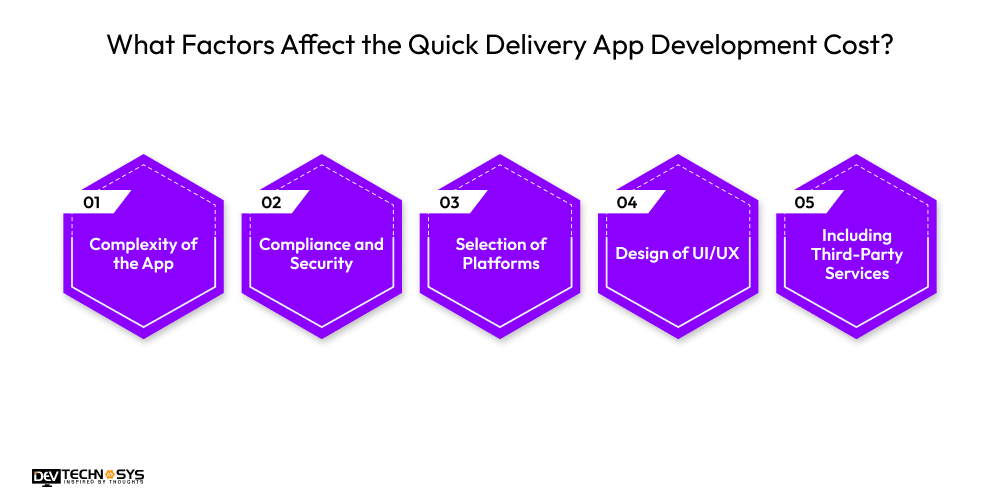
1. Complexity of the App
Development expenses are greatly impacted by an e-wallet app’s complexity. More technical know-how and development time are needed for features like bill payments, peer-to-peer transfers, multi-currency support, and advanced analytics.
More complicated features need more time and resources, which directly affects the total e-wallet app development cost.
| Feature/Complexity Level | Description | Cost Impact (USD) |
| Basic App | Simple wallet with balance check, P2P transfer | $2,000 – $5,000 |
| Moderate App | Adds bill payments, transaction history | $5,000 – $8,000 |
| Advanced App | Multi-currency, analytics, and rewards system | $8,000 – $12,000 |
2. Compliance and Security
In the Middle East, maintaining strict security and adherence to regulations is essential. Development complexity is increased by implementing fraud detection, two-factor authentication, encryption, and compliance with regional banking rules.
Although robust security measures shield consumers, they also raise the cost to develop a banking app in UAE.
| Security Level | Description | Cost Impact (USD) |
| Basic Security | Standard login, PIN verification | $500 – $1,500 |
| Medium Security | Two-factor authentication, encryption | $1,500 – $3,000 |
| High Security & Compliance | Fraud detection, regulatory compliance | $3,000 – $5,000 |
3. Selection of Platforms
The du Pay app development cost depends on whether the e-wallet app is made for iOS, Android, or both. Cross-platform solutions are more affordable but may have performance issues, whereas native apps need to be developed separately for each platform, raising costs. The target audience and financial constraints determine the decision.
| Platform Type | Description | Cost Impact (USD) |
| Single Platform | Either iOS or Android | $1,000 – $3,000 |
| Cross-Platform | Both iOS & Android with shared code | $3,000 – $5,000 |
| Native Dual Platforms | Separate full development for iOS & Android | $5,000 – $8,000 |
4. Design of UI/UX
App adoption is significantly influenced by the design of the user interface and experience. Research, prototyping, and iterations are necessary to produce an intuitive, responsive, and aesthetically pleasing design.
Although it raises Android and iOS app development costs, investing in high-quality UI/UX improves customer satisfaction.
| Design Level | Description | Cost Impact (USD) |
| Basic UI/UX | Simple, functional interface | $500 – $1,500 |
| Standard UI/UX | Interactive and user-friendly design | $1,500 – $3,000 |
| Premium UI/UX | Custom animations, advanced usability | $3,000 – $5,000 |
5. Including Third-Party Services
A working e-wallet app must be integrated with banks, payment gateways, loyalty programs, and government services. Every integration necessitates testing, development work, and occasionally license fees, all of which raise the du Pay app development cost in the Middle Eastern market.
| Integration Level | Description | Cost Impact (USD) |
| Basic Integration | Simple payment gateway | $500 – $1,500 |
| Moderate Integration | Banks, wallets, and API connections | $1,500 – $3,000 |
| Advanced Integration | Multiple banks, loyalty programs, APIs | $3,000 – $5,000 |
What Revenue Models Work Best For Apps Like Du Pay?
Discover five strategies to monetize e-wallet apps, such as du Pay: collecting transaction fees, profiting from merchants, providing premium services, generating interest on wallet balances, and running in-app advertisements or promotions.
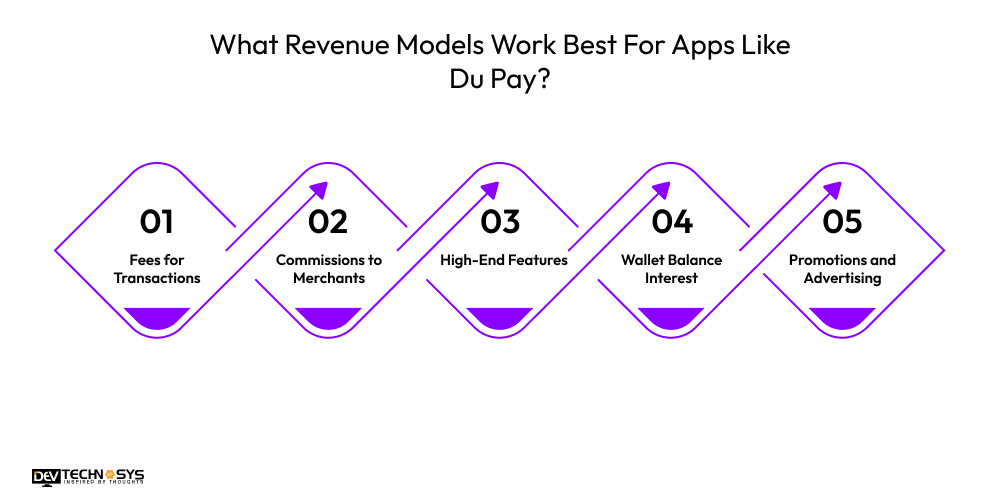
1. Fees for Transactions
E-Wallet application in Morocco and UAE makes money by levying a nominal charge on transactions like merchant payments, bill payments, and money transfers. As the number of users and transactions increases, even small fees per transaction can result in significant revenue, making this a reliable and expandable source of income.
2. Commissions to Merchants
The safest e-wallet app in UAE can generate commissions on payments made using the app by partnering with merchants. The software increases merchant adoption and consumer engagement while generating a mutually advantageous revenue model by providing companies with a simple payment solution and earning a share of each sale.
3. High-End Features
An e-wallet app like du Pay can make money directly from users by charging for premium services like speedier transfers, bigger transaction limits, or special rewards. According to the mobile app development company, profitability is increased by attracting regular customers looking for convenience, security, and more perks through premium subscriptions or one-time upgrades.

4. Wallet Balance Interest
Interest on the funds kept in users’ wallets can be earned by e-wallet providers. The best e-wallet app in Middle East creates passive income by combining these funds and putting them in secure financial instruments, converting user balances into a steady source of income while preserving transaction fluidity.
5. Promotions and Advertising
Cashback programs, sponsored deals, and in-app advertising are ways that e-wallet apps like Payit might make money. Companies pay to advertise goods, sales, or loyalty plans to app users. In addition to making money, this strategy promotes regular app usage and user engagement.
Conclusion
To build an app like du Pay, you need to plan carefully, make sure it is secure, design the UI/UX so that it works well, and connect it to payment systems. If you work with a trustworthy ewallet app development company in Middle East, you can be confident that your app is safe, easy to use, and ready to grow. A professional development team can help with every step of the way, from picking the correct features to following the rules. They can help you make a digital wallet that consumers trust, make transactions easy, and make money in today’s competitive market.
Frequently Asked Questions
Q 1. How Much Does it Cost to Build an App Like du Pay?
The cost to develop an app like du Pay depends on features, security, platform choice, UI/UX design, and third-party integrations, typically ranging between $8,000 and $25,000 for a fully functional app.
Q 2. How Long Does it Take to Create an App Like du Pay?
It usually takes 4 to 6 months to create an app like du Pay, but this depends on how complicated it is, what features it needs, how secure it needs to be, the platform chosen, the UI/UX design, and any third-party links.
Q 3. What Challenges Faced During the E-Wallet App Development in UAE?
Here is the list of challenges that were faced during the e-wallet app development process:
- Ensuring robust security
- Regulatory compliance issues
- Integration with banks
- User experience design
- Handling high traffic
Q 4. What Market Problems Does du Pay Solve Compared To Traditional Banking Apps?
Du Pay fixes problems with traditional banking by providing faster transactions, simpler bill payments, smooth peer-to-peer transfers, better usability, less paperwork, and an easy-to-use digital experience. This makes it easier and more convenient to pay for things.
Q 5. What Tech Stack Is Best For Building An Ewallet App Like du Pay For Android, iOS, and Web?
There are various types of tech stacks used to make an app like du Pay:
- Java
- Python
- C++
- C#
- PHP
- Flutter