





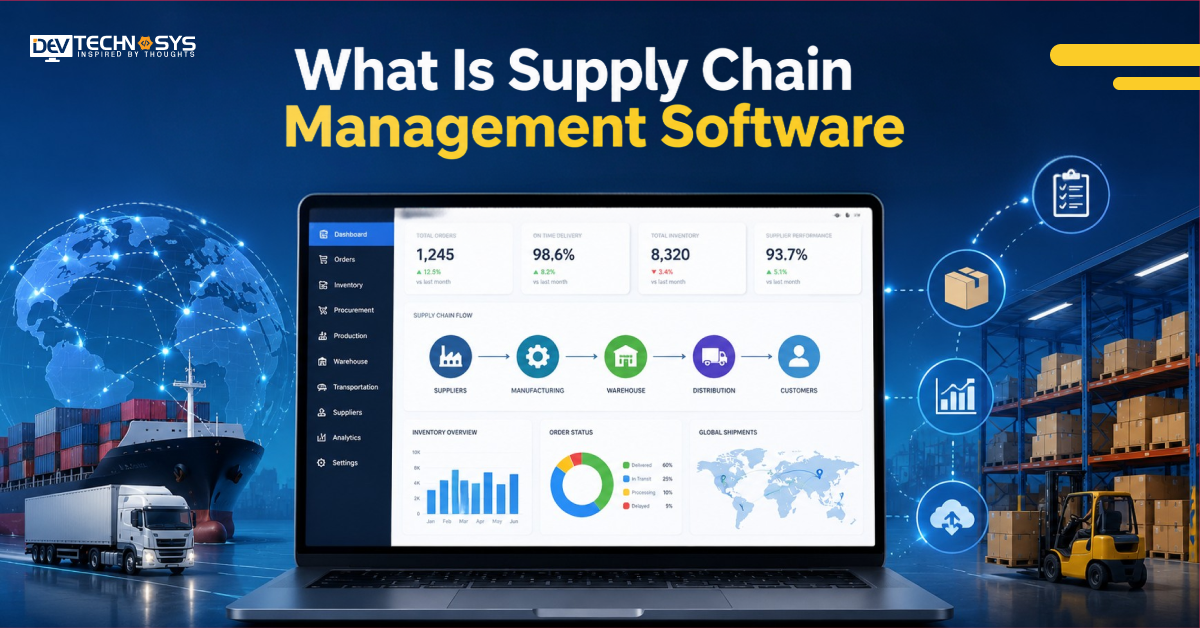
Supply chain management software is considered a technology tool that enables organizations to manage the flow of their goods, data, and services in an effective way. This software is particularly useful for various processes such as procurement, planning, logistics, and vendor management.
Instead of controlling autonomous spreadsheets and uninformed activities by applying the use of continuous data and automation, businesses can achieve high levels of transparency and reduce the risk of mistakes in operations.
A well-chosen tool will also help businesses to identify bottlenecks, identify cost-control ways, and improve relations with vendors.
In this article, we will describe what supply chain management software entails, its essential components, advantages, and aspects that should be taken into account when an organization considers digital transformation.
What Is Supply Chain Management Software?
A centralized digital system called supply chain management (SCM) software aids companies in the planning, monitoring, and inventory optimization of supply chain activities. From the standpoint of software implementation, it uses integrated workflows and real-time data to link suppliers, inventories, warehouses, transportation, orders, and customers.
Businesses may automate purchasing, stock tracking, shipment visibility, and order processing in place of spreadsheets, phone calls, and disjointed systems. SCM software, for instance, can help a UAE retailer reduce delays and human error by coordinating suppliers, warehouse stock, delivery, and customer orders from a single platform.

How Does Supply Chain Management Software Work?
Using a centralized digital platform, supply chain management software connects each step of the supply chain. Demand forecasting, procurement, suppliers, inventory, warehouses, orders, transportation, and analytics are all managed by it, allowing companies to automate processes, monitor operations in real time, lower errors, and make quicker, data-driven choices.
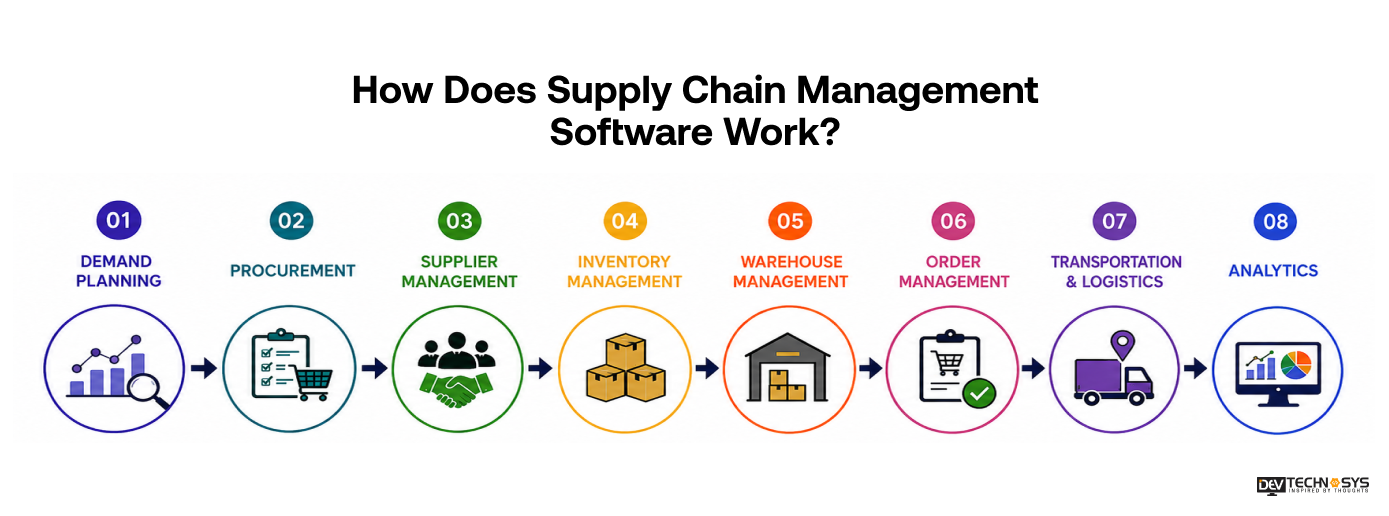
1. Demand Planning
Helps companies maintain ideal inventory levels and prevent shortages by forecasting demand using previous sales data, industry trends, and seasonal patterns.
2. Procurement
Creates an organized system that enhances purchasing accuracy and control by automating purchase requisitions, approvals, purchase orders, and supplier relationships.
3. Supplier Management
Helps companies assess dependability and improve supplier relationships by centralizing supplier profiles, contracts, performance indicators, communication, and compliance records.
4. Inventory Management
Reduces overstocking, stockouts, and needless inventory holding expenses by offering real-time visibility over stock levels, locations, movements, and reorder points.
5. Warehouse Management
Improves worker productivity, order fulfillment speed, and warehouse accuracy while coordinating picking, packaging, dispatch, putaway, and receiving activities.
6. Order Management
Orders from customers are recorded, inventory availability is confirmed, processing steps are managed, and real-time status updates are given from confirmation to final fulfillment.
7. Transportation & Logistics
Enhances logistical visibility and assists companies in identifying delays and optimizing deliveries by tracking shipments, routes, carriers, delivery schedules, and transportation costs.
8. Analytics
Helps managers find operational bottlenecks, gauge performance, and make wise decisions by combining supply chain data into dashboards and reports.
What are the Key Components of Supply Chain Management Software?
Supply Chain Management Software integrates various interrelated modules that oversee procurement, suppliers, inventories, warehouses, orders, logistics, analytics, and reporting. These elements establish centralized oversight, automate operational functions, enhance collaboration, and facilitate expedited, data-informed supply chain choices.
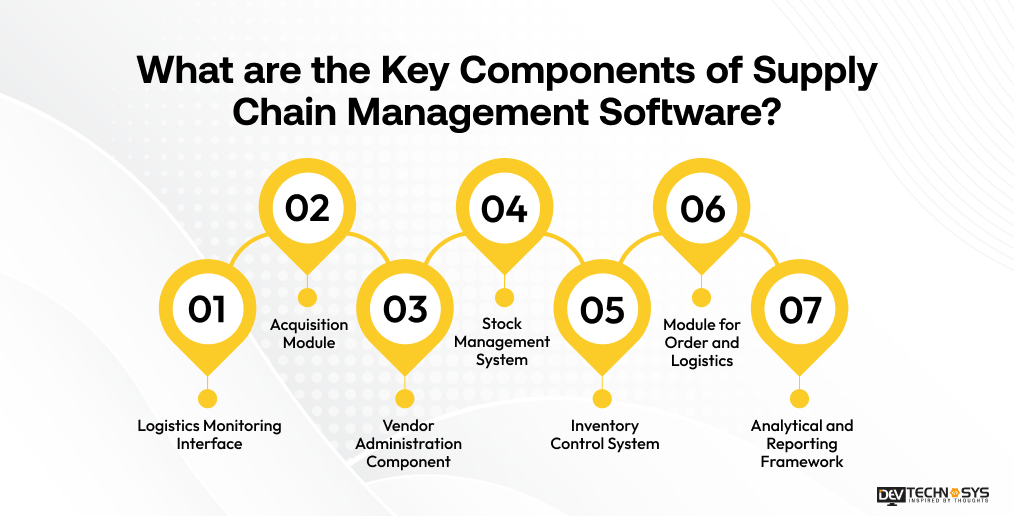
1. Logistics Monitoring Interface
Delivers a consolidated perspective on inventories, orders, suppliers, shipments, and critical performance metrics, enabling managers to oversee the overall supply chain status without toggling between various platforms.
2. Acquisition Module
Manages procurement requests, authorizations, buy orders, bids, purchasing documentation, and vendor transactions, enhancing organizational oversight of procurement operations, expenditures, and purchasing processes.
3. Vendor Administration Component
Maintains supplier profiles, agreements, price structures, certifications, communication logs, and performance indicators, enabling enterprises to assess vendors, oversee relationships, and efficiently manage supplier data.
4. Stock Management System
Provides instantaneous insight into stock levels, product transfers, warehouse positions, reorder thresholds, and inventory accessibility, assisting enterprises in sustaining precise and equitable stock across various sites.
5. Inventory Control System
Facilitates warehouse functions via inventory management, receiving, storage, picking, packing, barcode scanning, and shipping capabilities, enhancing operational precision, productivity, and fulfillment efficacy.
6. Module for Order and Logistics
Links consumer orders to fulfillment and transportation processes, including order monitoring, shipment transparency, carrier oversight, delivery updates, and logistics management via a unified system.
7. Analytical and Reporting Framework
Converts supply chain data into tailored dashboards, key performance indicators, reports, forecasts, and actionable insights, allowing managers to detect inefficiencies, assess performance, and execute educated operational choices.

5 Key Benefits of Supply Chain Management Software
Supply Chain Management Software assists enterprises in optimizing interrelated processes, enhancing transparency, and minimizing human labor. It facilitates enhanced coordination, expedited decision-making, reduced operating expenses, superior order fulfillment, and strengthened supply chain efficacy via consolidated, real-time information.
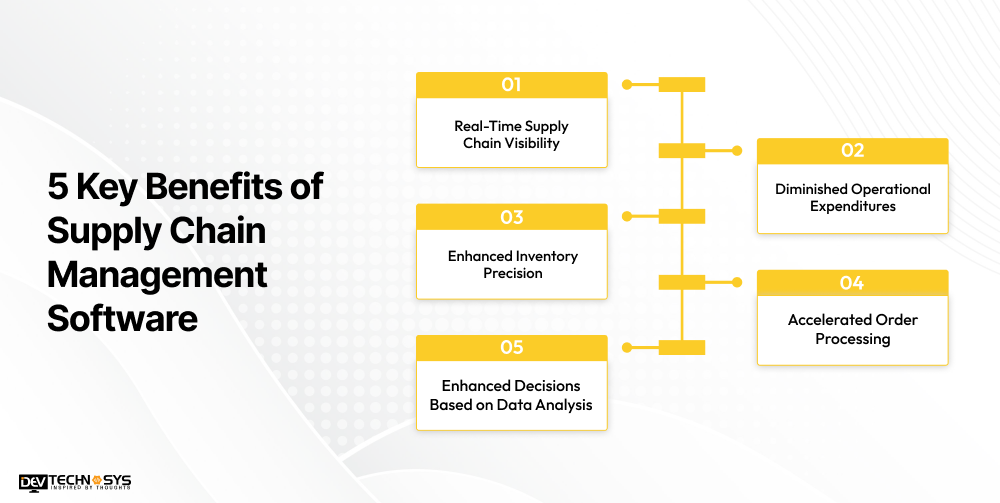
1. Real-Time Supply Chain Visibility
SCM software offers consolidated oversight of suppliers, inventories, warehouses, orders, and shipping. Enterprises may oversee operations with real-time data rather than depending on spreadsheets or fragmented systems.
This clarity assists managers in recognizing delays, inventory inconsistencies, and obstructions sooner, facilitating swifter reactions and improved collaboration throughout supply chain operations.
2. Diminished Operational Expenditures
Streamlining repeated procurement, inventory, warehouse, and logistics operations minimizes manual labor and administrative burden. Organizations can likewise detect superfluous acquisitions, surplus stock, inefficient pathways, and preventable holdups via consolidated information. Enhanced resource allocation and process management enable firms to reduce operational costs while ensuring consistent supply chain efficiency.
3. Enhanced Inventory Precision
Supply chain software continuously monitors inventory transfers among warehouses, retail outlets, and various sites. Real-time stock data assists enterprises in sustaining optimal inventory levels, detecting inconsistencies, automating reorder notifications, and minimizing stock shortages or excess. This enhances inventory precision while facilitating superior procurement choices, warehouse organization, and order supply chain execution.
4. Accelerated Order Processing
The integration of order, inventory, warehouse, and transportation modules establishes a cohesive fulfillment procedure. Teams can swiftly confirm product availability, execute orders, manage warehouse operations, and track delivery from a single platform. This minimizes processing lags, enhances delivery synchronization, and assists enterprises in offering clients more precise order status updates.
5. Enhanced Decisions Based on Data Analysis
SCM software transforms operational data into dashboards, reports, key performance indicators, and actionable insights. Managers can evaluate supplier efficacy, inventory patterns, procurement expenditures, delivery effectiveness, and operational constraints using consolidated data. These insights facilitate astute planning, expedited problem resolution, enhanced forecasting, and strategic choices that bolster overall supply chain efficacy.
What are the Different Types of Supply Chain Management Software in UAE?
In the UAE, logistics software development solutions are available in a variety of formats, each of which caters to particular operational requirements. Companies can handle intricate supply networks by using planning, procurement, inventory, warehouse, and transportation systems.
The size of the company, the complexity of the supply chain, industry demands, third-party integration security requirements, and expansion goals all play a role in selecting the best software.
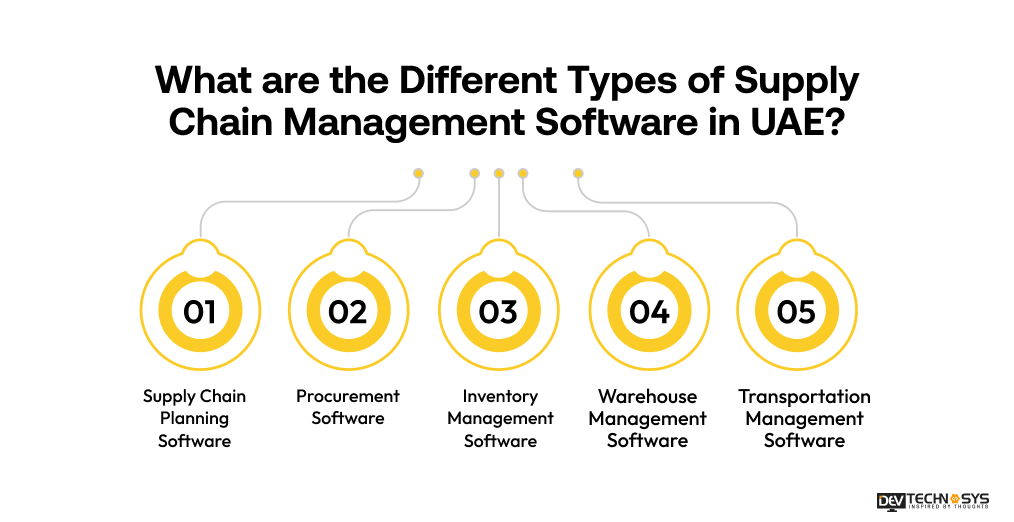
1. Supply Chain Planning Software
Businesses can use software to manage production schedules, forecast demand, plan inventory needs, and balance supply with anticipated demand. To assist with precise planning, it makes use of market trends, historical data, and predictive analytics.
Supply chain management software development solutions can spot possible shortages, cut back on surplus inventory, and adjust production, distribution, and procurement to meet shifting consumer demands.
2. Procurement Software
Supplier search, quotation management, buy requisitions, approvals, purchase orders, and invoice tracking are all digitized by procurement software. It maintains purchasing data and supplier information while establishing an organized procurement workflow. Companies may ensure buying decisions are in line with operational requirements, decrease manual administration, limit spending, and increase purchasing visibility.
3. Inventory Management Software
Stock levels, product movements, warehouse locations, reorder points, and inventory availability are all tracked in real time using inventory management software. It lessens stockouts, overstocking, and inventory discrepancies while assisting companies in keeping correct stock records across several locations. Accurate fulfillment and inventory control are further enhanced by integration with barcode, RFID, ERP, and order systems.
4. Warehouse Management Software
Essential warehouse operations like receiving, putaway, storage, picking, packing, cycle counting, and dispatch are all managed by warehouse management software. In addition to providing barcode scanning and automated workflows, it offers visibility into stock locations and warehouse operations. Companies can boost worker productivity, expedite order fulfillment, optimize storage space, and improve inventory accuracy.
5. Transportation Management Software
Businesses may plan, carry out, and keep an eye on transportation-related operations throughout their supply chain with the use of transportation management software. Carrier management, route planning, freight coordination, delivery scheduling, shipment tracking, and transportation cost analysis are all supported. Businesses can detect delivery delays, optimize routes, enhance carrier performance, and sustain dependable logistics operations with real-time visibility.
Technologies Used in Supply Chain Management Software Development
Cloud computing, AI, IoT, blockchain, APIs, predictive analytics, and supply chain automation are all used in modern custom software development to link supply chain activities.
For effective, responsive SCM software, these technologies provide real-time tracking, intelligent forecasting, secure data transmission, automated processes, system integration, and scalable infrastructure.
Technology Category |
Technologies |
Short Description |
| Frontend | React.js, Angular, Vue.js | Builds responsive user interfaces and dashboards. |
| Backend | Node.js, Python, .NET, Java | Powers business logic and APIs. |
| Database | PostgreSQL, MySQL, MongoDB | Stores supply chain data securely. |
| Cloud | AWS, Microsoft Azure, Google Cloud | Provides scalable cloud infrastructure. |
| AI/ML | Demand forecasting, predictive analytics | Supports forecasting and intelligent decisions. |
| Tracking | GPS, RFID, IoT | Enables real-time tracking and visibility. |
| Integration | REST APIs, GraphQL, Webhooks | Connects external systems and platforms. |
Seamless Data Management & System Integration
Information about the supply chain is shared between departments, platforms, and business processes through data exception management and system integration. Centralized data, real-time synchronization, and ERP integrations with SAP, Oracle, and Microsoft Dynamics make it easier to see what’s going on, get rid of information silos, cut down on manual work, and help supply chain processes run more smoothly.
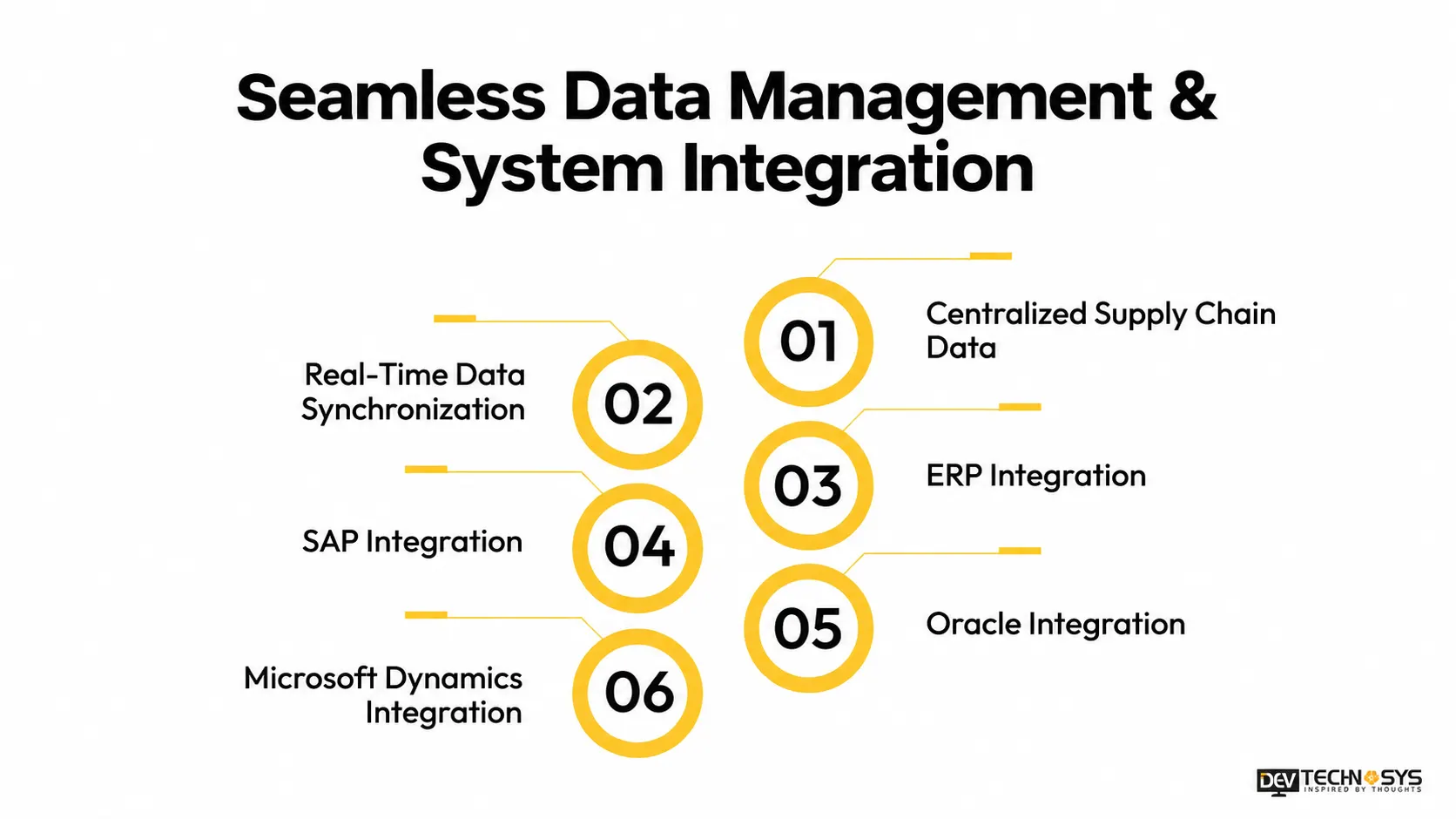
1. Centralized Supply Chain Data
Combines information about suppliers, inventory, warehouses, orders, shipments, and customers into a single platform. This gives teams consistent access to data, better visibility, and better coordination across all supply chain activities.
2. Real-Time Data Synchronization
Syncs information in real time between all connected systems and departments, making sure that inventory, order, procurement, and shipment data is always up to date and cutting down on errors, delays, and manual data entry.
3. ERP Integration
Syncs procurement, inventory, finance, orders, and operational data across ERP software development and supply chain software to create connected workflows and close information gaps between business departments.
4. SAP Integration
Exchanges procurement, inventory, warehouse, financial, and logistics data between SCM software and SAP. This helps businesses keep information consistent and speeds up enterprise supply chain processes.
5. Oracle Integration
Syncs purchasing, inventory, orders, financial, and operational data between supply chain applications and Oracle systems. This allows for accurate data exchange and effective supply chain management at the business level.
6. Microsoft Dynamics Integration
Syncs inventory, purchasing, orders, finance, and customer information across SCM platforms and Microsoft Dynamics. This allows for connected workflows, centralized insight, and smoother business operations.
Supply Chain Software Security and PDPL Compliance in the UAE
Strong encryption, access controls, authentication, private APIs, activity logging, backups, and privacy protections should all be built into supply chain software in the UAE to keep operational and personal data safe.
Businesses can improve supply chain data security, handle privacy issues, and lower risks across linked supply chain systems by making sure that their data processing is in line with UAE PDPL rules.
Security & Compliance Area |
Implementation in SCM Software |
| Data Encryption | Protects sensitive supply chain and personal data during storage and transmission. |
| Identity & Access Management | Uses role-based access and least-privilege permissions to control sensitive system resources. |
| Multi-Factor Authentication | Adds additional verification to secure administrator, employee, supplier, and partner accounts. |
| API & Network Security | Secures APIs, integrations, and network communication through authentication, encryption, and role-based access controls. |
| Audit Logging & Monitoring | Records user activities, system changes, transactions, and security events for accountability and monitoring. |
| UAE PDPL Compliance | Supports appropriate personal-data processing, data privacy controls, security measures, and data-subject rights under UAE Federal Decree-Law No. 45 of 2021. |
| Cross-Border Data Transfers | Evaluates applicable requirements and safeguards when personal data is transferred or processed outside the UAE. |
| Backup & Disaster Recovery | Maintains protected backups and recovery procedures to support business continuity during failures or security incidents. |
Future of Supply Chain Management Software
Intelligent automation, predictive decision-making, real-time visibility, and connected operations will be the primary focus of Supply Chain Management Software in the future.
Businesses will be able to anticipate disruptions, optimize resources, improve resilience, and respond more quickly to changing consumer demand and market conditions with the assistance of AI, IoT, predictive analytics, autonomous workflows, and digital twins.
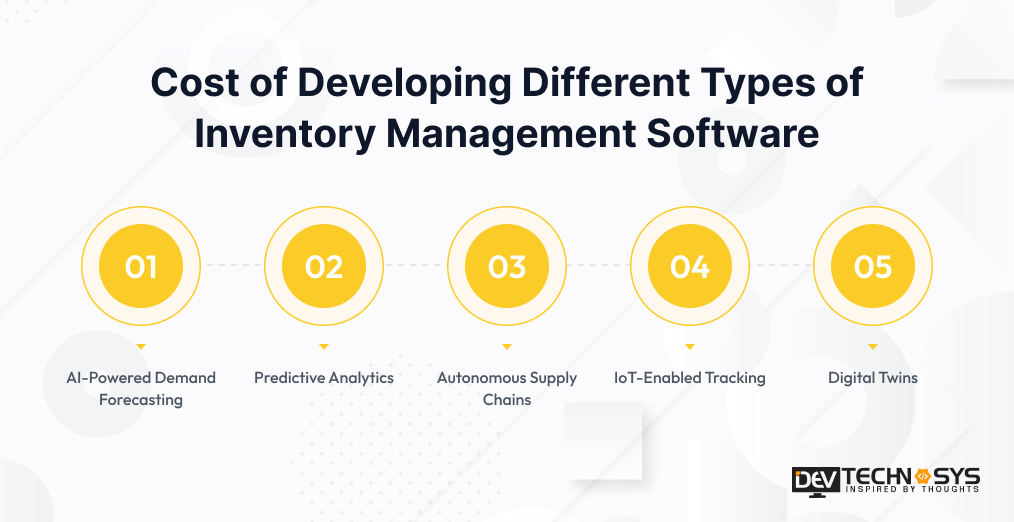
1. AI-Powered Demand Forecasting
AI-powered demand forecasting will enable supply chain platforms to anticipate future requirements by analyzing historical sales, market conditions, seasonal patterns, and customer behavior.
Businesses can respond more quickly to changing market demand by dynamically adjusting inventory and procurement strategies, thereby reducing stockouts, excess inventory, and planning errors.
2. Predictive Analytics
Supply chain management will transition from reactive decision-making to proactive planning as a result of predictive analytics. Operational data can be analyzed by software to detect potential delays, supplier risks, inventory shortages, transportation disruptions, and cost increases. This enables managers to resolve issues earlier and enhance the resilience and performance of the supply chain.
3. Autonomous Supply Chains
Automated, intelligent workflows, robotics, and AI will be increasingly employed by autonomous supply chains to make routine operational decisions with minimal human intervention.
Systems have the ability to optimize efficiency, responsiveness, and operational continuity by automatically adjusting purchasing, inventory replenishment, warehouse activities, and transportation planning in response to real-time conditions.
4. IoT-Enabled Tracking
Supply chain platforms will be linked to products, vehicles, warehouses, equipment, and sensors through IoT-enabled tracking. Visibility into location, temperature, condition, movement, and utilization can be achieved through the use of real-time data. Faster issue detection, enhanced asset monitoring, improved logistics coordination, and more dependable delivery management will be facilitated by this technology.
5. Digital twins
Virtual representations of supply chain networks, warehouses, inventory flows, and transportation operations will be generated by digital twins. Businesses can evaluate potential disruptions, test capacity strategies, optimize resources, and identify bottlenecks by simulating various scenarios prior to implementing changes, all without affecting real-world operations.
Conclusion
The technology of supply chain management software links together procurement, warehouse management, logistics, as well as suppliers and customers at a single converging point.
A supply chain software development company provides companies with better visibility, cuts down the costs of some operations, minimizes mistakes, and increases the speed of making decisions. The technology of supply chain management covers all the steps within the supply chain and deals with such processes as demand prediction and shipment tracking.
Frequently Asked Questions
1. What is Supply Chain Management Software?
A computerized platform called supply chain management software aids companies in managing orders, delivery, suppliers, inventory, warehousing, logistics, and procurement. It facilitates quicker, data-driven business decisions, centralizes operational data, automates tedious tasks, and enhances end-to-end supply chain visibility.
2. How Does Supply Chain Management Software Work?
Data is gathered by SCM software from transportation, sales channels, inventory systems, suppliers, and warehouses. It uses automation technologies, analytics, dashboards, and integrated workflows to process this data. Companies are able to estimate demand, monitor operations, spot delays, maximize resources, and plan supply chain activities.
3. What Are The Core Functions Of SCM Software?
Procurement management, inventory monitoring, warehouse management, demand forecasting, order processing, transportation management, supplier management, shipment tracking, analytics, and reporting are all essential SCM software features. These features enhance efficiency, accuracy, visibility, and control while assisting companies in coordinating supply chain operations.
4. What are the Benefits of Supply Chain Management Software?
Supply chain management software increases operational visibility, lowers manual error rates, manages inventory costs, expedites procurement, and improves supplier collaboration. Additionally, it facilitates precise forecasting, quicker order fulfillment, real-time tracking, improved resource planning, and well-informed decision-making throughout intricate supply chain activities.
5. What Types of Supply Chain Management Software Are Available?
Procurement management, inventory management, warehouse management, transportation management, order management, supplier relationship management, demand planning, logistics management, and supply chain analytics solutions are examples of common SCM software types. Depending on their operational needs, businesses can choose integrated platforms or standalone solutions.
6. Can SCM Software Integrate With SAP, Oracle, or Microsoft Dynamics?
Indeed, SAP, Oracle, and Microsoft Dynamics can be integrated with SCM software via connectors, middleware, APIs, or custom interfaces. These linkages reduce redundant data entry and create a connected technology ecosystem by synchronizing inventory, procurement, orders, financial, supplier, and logistical data.