





In 2025, technology is changing everything around us, even how we play the lottery!
One of the coolest and smartest technologies making a big difference is Artificial Intelligence (AI).
AI helps lottery apps become faster, smarter, and safer for users.
It can analyze huge amounts of data, detect cheating or fraud, and even help predict winning trends.
That means more fun and fair chances for everyone!
With AI, lottery apps can give users real-time updates, personalized game suggestions, and secure payment options.
I find it amazing how AI can learn patterns and make lottery games more exciting and trustworthy.
In this blog, we’ll explore role of AI in lottery app development and making the experience better for both developers and players.
Let’s dive into the world of smart gaming!
Market Statistics of AI in Lottery Applications

- The global online lottery market reached about USD 120.5 billion in 2024, and is expected to undergo a strong digital transformation driven by AI through 2030.
- Between 2025 and 2030, the overall lottery market is projected to grow at a CAGR of approximately 5.3–5.84%, boosted by AI and mobile tech.
- Cloud‑based AI and blockchain integrations are key drivers in modern lottery software, reducing fraud and improving operational transparency.
- In the first quarter of 2025, APAC lottery sales went up by about 17%, and systems that use AI outperformed standard growth by 2.3%.
- About 38% of the growth in the APAC lottery market in 2025 will come from AI-driven prediction analytics.
Role of AI in Lottery App Development
Artificial intelligence (AI) is changing the way lottery apps are made by making them safer, better for users, and offering better prediction tools. AI makes operations smarter and more engaging by doing things like finding scams and suggesting games based on your preferences.
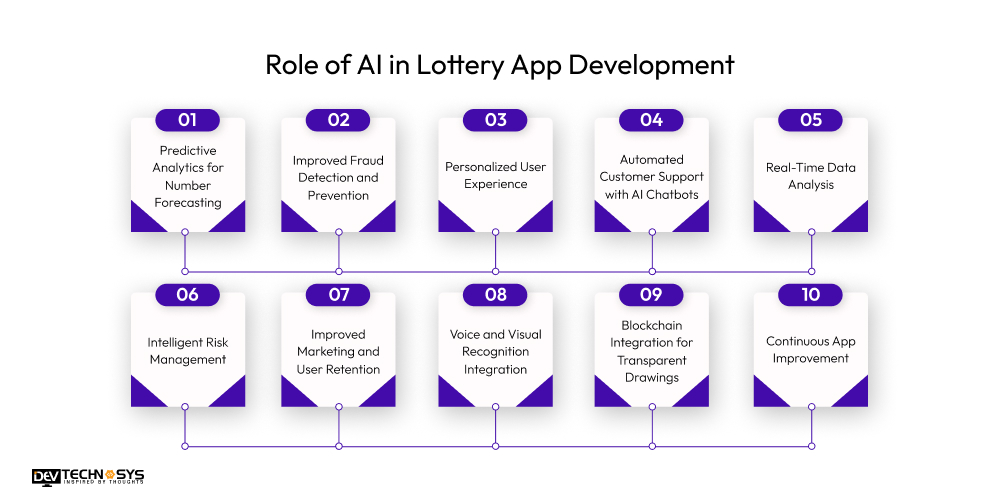
1. Predictive Analytics for Number Forecasting
AI allows for advanced number prediction utilizing historical data and machine learning techniques. Invest in lottery app development to provide more accurate predictions by examining drawing patterns, user activity, and statistical trends. This increases user engagement, provides a feeling of strategy, and improves the entire game experience while maintaining fair and impartial results using transparent and data-driven methodologies.
2. Improved Fraud Detection and Prevention
AI tracks transactions and user activity to detect suspicious conduct in real time. It helps to avoid fraudulent actions such as ticket duplication, identity theft, and system manipulation. By learning from patterns, AI systems can detect abnormalities and ensure fair games. This improves platform security, builds user confidence, and lowers the risks connected with online lottery operations.
3. Personalized User Experience
AI lottery solutions Middle East adapt content, gaming ideas, and notifications according on individual interests. AI provides tailored dashboards, reminders, and rewards based on user behavior, play history, and engagement patterns. This level of customisation improves user happiness and retention by making the platform feel more relevant and entertaining to each individual player.
4. Automated Customer Support with AI Chatbots
AI-powered chatbots deliver 24-hour customer service, answering basic questions promptly. These bots cut wait times and operating expenses by answering often asked questions, helping customers through transactions, and fixing difficulties. AI improves the quality of engagement by learning from prior discussions, increasing customer happiness, and making help more effective and responsive.
5. Real-Time Data Analysis
AI allows for real-time tracking and analysis of lottery activities. It rapidly processes enormous datasets, providing insights into ticket sales, user behavior, and system performance. Developers and operators may utilize this information to enhance app performance, identify peak periods, and apply changes to ensure the app functions smoothly and fulfills user expectations.
6. Intelligent Risk Management
Artificial intelligence development services analyze player activity to detect danger indicators like gambling addiction or unusual spending habits. These data enable developers to integrate ethical gaming features like as spending limitations and self-exclusion tools. AI-driven risk management promotes a healthy gaming environment and ensures that lottery applications meet ethical and regulatory compliance criteria.
7. Improved Marketing and User Retention
AI assists in the creation of tailored marketing campaigns by assessing consumer preferences and interactions. It detects which promotions are most effective and predicts when consumers will respond. Personalized offers, push alerts, and re-engagement methods powered by AI boost user acquisition and retention, increasing marketing ROI.
8. Voice and Visual Recognition Integration
Modern AI systems support voice commands and facial recognition for user logins and transactions. These features improve user ease and security, particularly for mobile devices. AI-powered biometric authentication enables secure access while offering a cutting-edge, hands-free user experience that distinguishes lottery applications from traditional platforms.
9. Blockchain Integration for Transparent Drawings
AI paired with blockchain ensures that lottery drawings are transparent and tamper-proof. Each transaction is verified and validated by AI, and it is recorded immutably on the blockchain. This combination fosters user trust, reduces the chance of manipulation, and provides demonstrably fair outcomes, all of which are critical in the highly regulated and sensitive lottery sector.
10. Continuous App Improvement
AI allows lottery apps to grow over time as they learn from user interactions. Machine learning algorithms adjust the app’s performance, UI features, and gameplay based on user feedback and behavior. This results in continual improvement without manual involvement, ensuring that the app remains current, user-friendly, and ahead of market trends.
7 Real-World Examples: AI in Lottery Apps
Discover how artificial intelligence is transforming the custom lottery app Saudi Arabia, from fraud detection and smart number prediction to personalized recommendations and responsible gaming. These seven real-world examples show how AI is reshaping the way we play, engage, and win in digital lotteries.
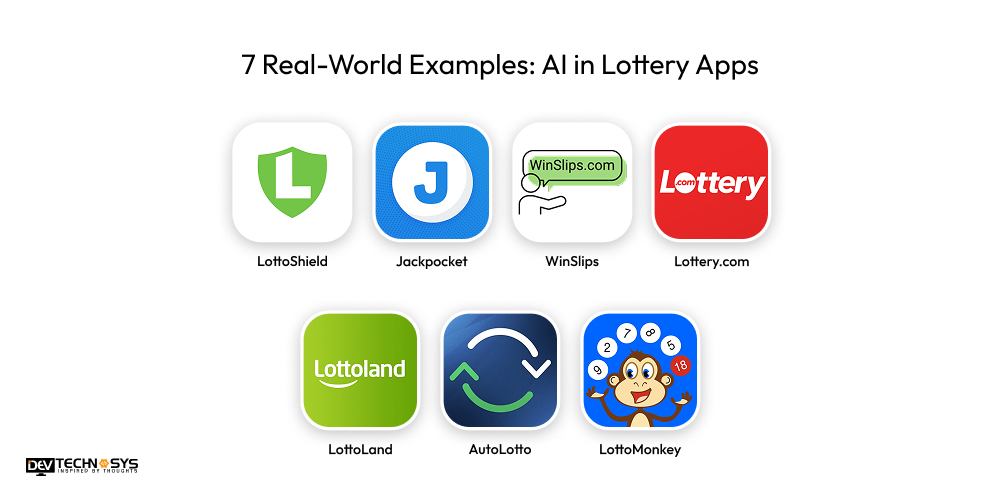
1. LottoShield
LottoShield analyzes ticket entries and identifies suspicious behavior using AI fraud detection technology. It detects abnormalities in real time by recognizing patterns associated with fraudulent activities. This assists lottery operators in maintaining system fairness and confidence by lowering the danger of duplicate tickets, location spoofing, and illegal entries, as well as safeguarding both players and organizers from possible fraud.
2. Jackpocket
Jackpocket uses AI to provide a personalized lottery experience. It analyzes user preferences, purchasing history, and behavior to recommend appropriate games and promotions. The software use predictive modeling to anticipate user preferences, hence enhancing engagement and client retention. AI guarantees that players have a more relevant and engaging experience without having to sift through thousands of game settings.
3. WinSlips
WinSlips employs artificial intelligence to anticipate “optimized” lottery number combinations. The app analyzes historical draw data to identify statistically implausible trends. It uses machine learning to propose combinations with improved chances based on previous patterns. While it does not ensure victory, the strategic approach appeals to players who prefer rational techniques over depending only on random chance.
4. Lottery.com
Lottery.com uses AI chatbots to help customers with questions, purchases, and results. These bots employ natural language processing (NLP) to interpret inquiries and respond instantly, increasing consumer happiness. AI also helps to simplify ticket purchase and notification services. According to the lottery app development company Dubai, This automated assistance system provides a seamless and efficient user experience without the need for human customer care.
5. LottoLand
Lottoland employs artificial intelligence to encourage ethical gambling by studying player behavior. The technology detects indicators of harmful gambling behaviors, such as frequency and spending patterns. When high-risk conduct is recognized, it might result in warnings, self-exclusion recommendations, or resource allocation. This AI-powered monitoring helps players avoid addiction while also assuring compliance with gaming legislation.
6. AutoLotto
AutoLotto uses AI-driven OCR (Optical Character Recognition) to scan actual lotto tickets using a smartphone camera. The program processes and verifies tickets automatically, comparing numbers to draw outcomes. This avoids human mistake and saves time for users by providing fast validation and result updates. It also increases accessibility for consumers who prefer paper tickets to digital ones.
7. LottoMonkey
LottoMonkey uses artificial intelligence to evaluate prior draw data and provide number predictions. Using statistical modeling and trend analysis, the software detects repeating trends and recommends smart options with increased probabilities. It appeals to people who value data-driven judgments. While it does not forecast outcomes, AI provides a logical layer to number selection.
Benefits of AI in Lottery App Development in UAE
Artificial Intelligence is revolutionizing lottery app development by bringing smarter, safer, and more engaging user experiences. From fraud prevention and predictive analytics to personalized recommendations and responsible gaming features, AI enhances every aspect of lottery apps.
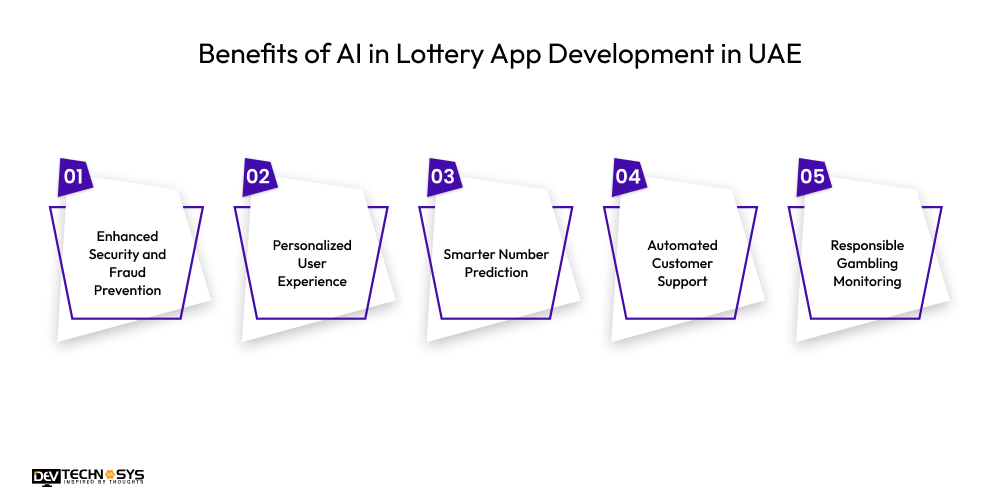
1. Enhanced Security and Fraud Prevention
Artificial intelligence systems detect fraudulent activities by studying user behavior and recognizing suspect trends in ticket submissions. This guarantees that only genuine entries are accepted, safeguarding both players and operators. Real-time monitoring prevents duplicate entries, bots, and location spoofing, ensuring the lottery system’s integrity and fairness.
2. Personalized User Experience
AI MVP development solutions personalize the lottery experience by assessing user preferences, previous purchases, and interaction patterns. It suggests appropriate games, unique notifications, and promotions to each user. This customisation boosts user engagement, pleasure, and retention, offering gamers a more fun and intuitive experience without the need to manually browse through unnecessary alternatives.
3. Smarter Number Prediction
Machine learning techniques examine past draw data to find trends and make optimal number suggestions. While not certain to win, these AI-based forecasts appeal to strategic gamers who prefer educated decisions over random ones. This feature increases user engagement and makes the app appear more sophisticated and data-driven.
4. Automated Customer Support
AI-powered chatbots employ natural language processing to answer typical user questions, give game information, and assist users in purchasing or claiming tickets. This minimizes wait times and ensures 24-hour help, increasing user happiness while lowering operational costs for lottery operators by eliminating the need for live customer care representatives.
5. Responsible Gambling Monitoring
AI promotes safe gaming by monitoring user activity and detecting harmful conduct such as excessive spending or frequent play. When discovered, the system can issue alarms, recommend breaks, or provide self-exclusion options. This promotes player safety, trust, and helps applications comply with gaming rules and ethical standards.
5 Challenges and Solutions for Using AI in Lottery App Development
Implementing AI in lottery app development offers big rewards, but it also brings challenges like data security, bias, and compliance. Explore key obstacles and practical solutions to build lottery app with AI UAE.
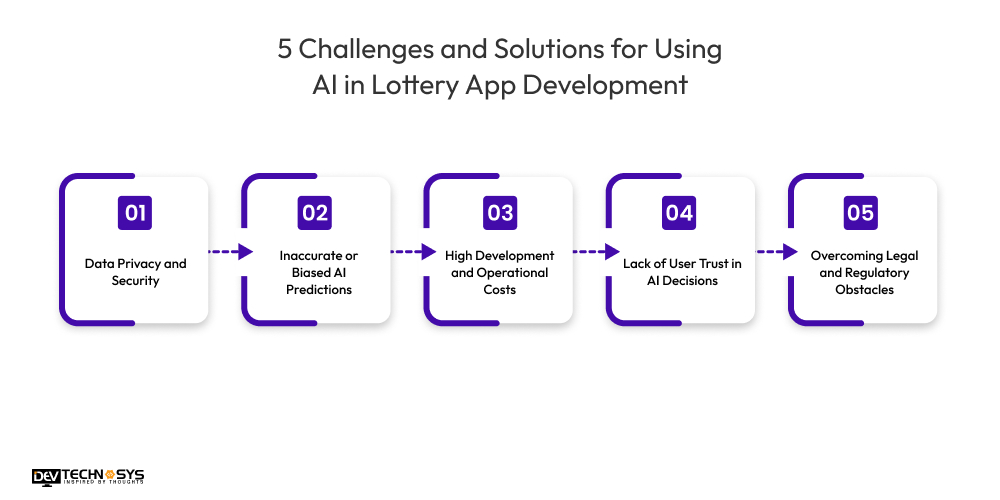
1. Challenge: Data Privacy and Security
AI systems rely on gathering user data to function properly, which raises worries about privacy violations and data exploitation.
Solution:
Set up end-to-end encryption, safe data storage, and rigorous access limits. Ensure compliance with worldwide data protection requirements, such as GDPR. Clearly notify consumers about data usage and acquire explicit consent to foster confidence and safeguard both the business and its users.
2. Challenge: Inaccurate or Biased AI Predictions
AI models trained on incomplete or skewed data may give incorrect or biased results, causing user displeasure or fairness issues.
Solution:
Use a variety of representative datasets and conduct frequent audits to detect and correct bias. Retrain and test models on a continuous basis using updated data. Use human oversight and explainability elements to guarantee that forecasts are balanced, fair, and transparent to users.
3. Challenge: High Development and Operational Costs
AI feature development and maintenance incur considerable expenses, ranging from employing trained individuals to investing in robust infrastructure and continual upgrades.
Solution:
To reduce the cost to develop an app, use scalable cloud-based AI services such as Amazon Web Services, Azure, or Google Cloud. Use open-source AI frameworks and pre-trained models to save development time. Prioritize MVP (Minimum Viable Product) AI features to stay within budget while providing value.
4. Challenge: Lack of User Trust in AI Decisions
Users may be dubious of AI-generated ideas due to concerns about manipulation, loss of control, or a lack of transparency in decision-making.
Solution:
Consider explainability and openness while designing AI features. Clearly convey how the system operates and how judgments are made. Allow consumers to opt in or alter AI settings, giving them power and increasing confidence via transparency and education.
5. Challenge: Overcoming Legal and Regulatory Obstacles
The on-demand lottery app Bahrain that utilizes AI must conform to stringent gaming laws and regional restrictions, which can be complex and vary significantly.
Solution:
Consult with legal professionals during development to guarantee complete compliance with gaming, AI, and data protection regulations. Hire AI lottery app developers UAE from a mobile app development company to design your app with modular functionality that may be enabled or disabled depending on local requirements. Implement automatic compliance tests and keep detailed documentation for audits.
10 Best Use Cases of AI in Lottery App Development
Explore the best AI use cases in lottery app development, from ticket scanning and real-time results to voice integration and behavior analytics. Discover how AI enhances convenience, engagement, and efficiency, creating smarter, more interactive, and user-friendly lottery experiences.
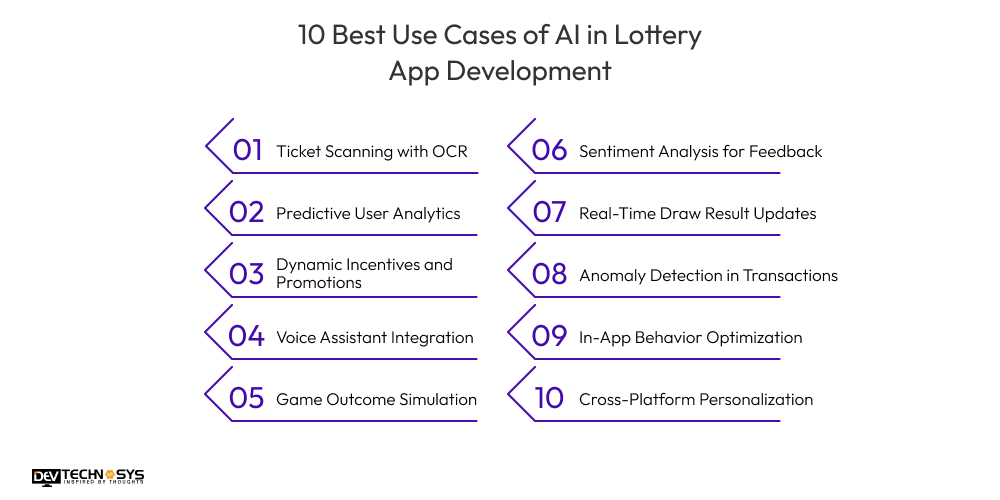
1. Ticket Scanning with OCR
Using AI-powered Optical Character Recognition (OCR), customers may scan actual lottery tickets with their smartphone camera. The algorithm examines the ticket numbers, checks for mistakes, and instantaneously matches them to the winning outcomes. This improves user comfort by eliminating manual input, making the app more efficient and user-friendly, particularly for on-the-go or non-digital native gamers.
2. Predictive User Analytics
AI examines user activity to predict future behaviors, such as when they are likely to purchase tickets or which games they favor. These analytics allow us to design push alerts, email campaigns, and in-app suggestions, enhancing engagement and retention through timely, relevant interactions that seem natural and personalized.
3. Dynamic Incentives and Promotions
AI algorithms analyze real-time user activity and segmentation to provide tailored promotions, discounts, and bonuses. For example, the system may provide a first-time user bonus or a flash discount depending on inactivity. This dynamic engagement technique boosts conversion rates and income without resorting to generic or bulk promotions.
4. Voice Assistant Integration
A scalable lottery app UAE may utilize artificial intelligence to interface with voice assistants like Alexa, Siri, and Google Assistant. Users may use easy voice queries to check results, get jackpot updates, and purchase tickets. This hands-free feature enhances accessibility and convenience, particularly for multitasking users and those with impairments.
5. Game Outcome Simulation
AI can simulate prospective outcomes based on historical patterns or statistics entered by the user, delivering visual insights or hypothetical “what if” scenarios. While these simulations are merely for fun or engagement, they stimulate participation and make the app more engaging without deceiving users about expected outcomes.
6. Sentiment Analysis for Feedback
Natural language processing (NLP) enables artificial intelligence to identify sentiment by analyzing user reviews, comments, and support communications. Hire on-demand app developers who may prioritize upgrades, handle complaints proactively, and enhance the overall user experience by measuring overall happiness and finding pain areas based on genuine user emotions and patterns.

7. Real-Time Draw Result Updates
AI-powered systems can collect real-time data from different sources and offer lottery results to customers. These solutions ensure that upgrades are completed quickly and accurately without the need for manual involvement. Push notifications and real-time alerts improve app dependability and engage users as soon as findings are available.
8. Anomaly Detection in Transactions
AI can monitor financial and behavioral transactions for odd patterns that, although not necessarily indicating fraud, do reveal anomalous usage. For example, a rapid increase in high-value purchases or unusual betting behavior may result in automatic warnings or manual inspection, assisting in the maintenance of platform stability and trustworthiness.
9. In-App Behavior Optimization
AI monitors how users engage with the app, including where they tap, how long they stay, and which features they utilize. It then suggests UI/UX improvements to smart lottery app developers KSA or alters layouts dynamically for users. As we discussed earlier with the mean stack development company, this provides a more seamless, intuitive experience and avoids drop-off or misunderstanding in complicated user processes.
10. Cross-Platform Personalization
When users use the app from many platforms (mobile, tablet, and desktop), AI synchronizes and adapts their experience effortlessly. It monitors cross-platform activity and provides consistent suggestions, reminders, and remembered preferences. This continuity increases satisfaction and keeps consumers interested regardless of where or how they play.
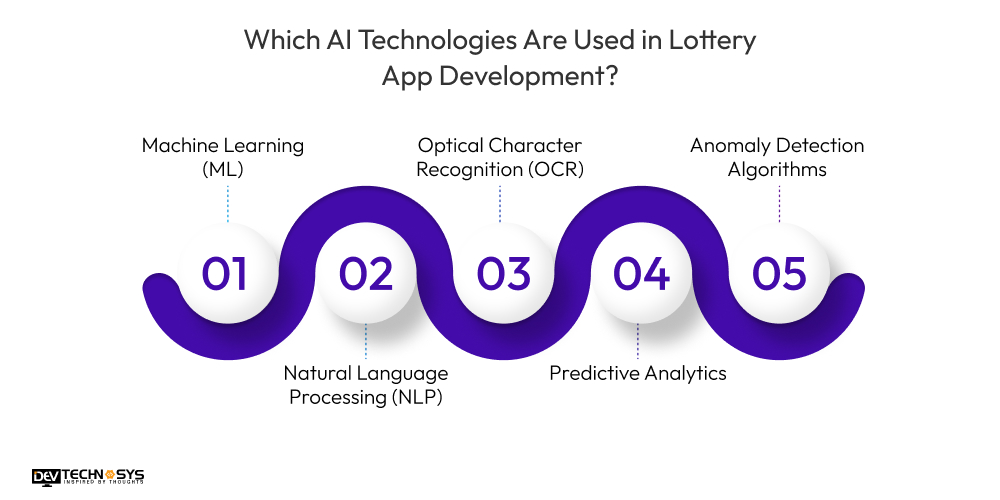
Which AI Technologies Are Used in Lottery App Development?
Discover the top AI technologies transforming lottery app development services in Saudi Arabia, including machine learning, natural language processing, OCR, predictive analytics, and anomaly detection. These powerful tools enhance user experience, security, and personalization, making lottery apps smarter, safer, and more engaging than ever before.
1. Machine Learning (ML)
AI lottery software Qatar employs machine learning to evaluate massive quantities of historical data and user activity in order to find trends, refine number forecasts, and customize game suggestions. By constantly learning from fresh data, machine learning models increase accuracy and user engagement, making the app smarter and more responsive to individual preferences and trends.
2. Natural Language Processing (NLP)
NLP underpins chatbots and virtual assistants in lottery apps, allowing consumers to communicate in natural language. This system recognizes and reacts to user inquiries, facilitates ticket transactions, and explains game rules in a conversational manner. NLP increases customer support availability and user experience by providing immediate, intuitive assistance around the clock.
3. Optical Character Recognition (OCR)
Lottery applications use OCR technology to scan and analyze physical lottery tickets by identifying printed numbers and barcodes using smartphone cameras. This automates ticket validation, resulting in faster and more accurate results. OCR improves user comfort, particularly for people who prefer physical tickets but want smooth digital results checks.
4. Predictive Analytics
Predictive analytics use AI algorithms to estimate future user behavior, prospective prizes, and lottery trends. It aids in the customization of marketing plans, the optimization of promotions, and the enhancement of game design by examining previous data and current patterns. This technology enables wiser decisions for both operators and gamers.
5. Anomaly Detection Algorithms
Anomaly detection looks for odd patterns in user activity, transactions, or system performance that might suggest fraud, abuse, or technical concerns. These AI algorithms contribute to the integrity and security of lottery applications by identifying suspicious activity in real time, assuring fair play and regulatory compliance.
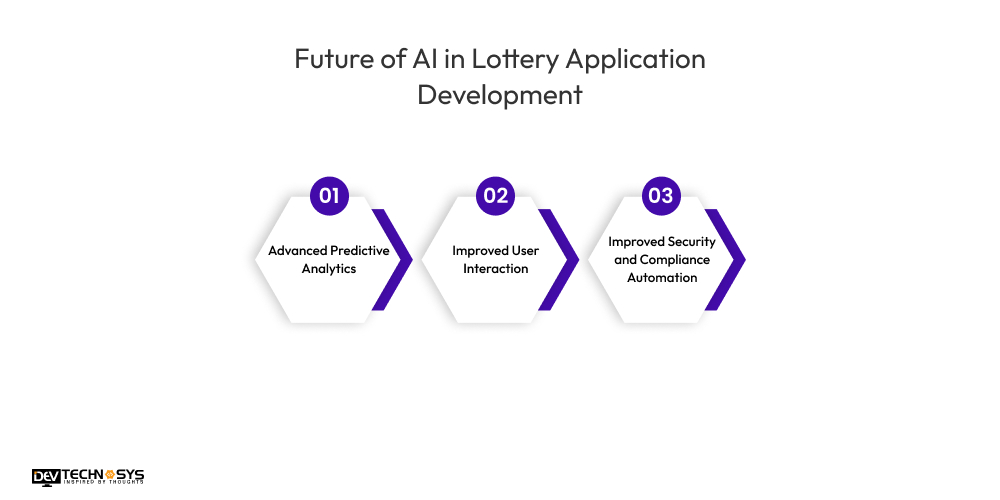
Future of AI in Lottery Application Development
The future of AI in lottery apps promises smarter predictions, seamless user interactions through AI assistants, and enhanced security with automated fraud detection and compliance. These innovations will create safer, more engaging, and highly personalized lottery experiences for users worldwide.
1. Advanced Predictive Analytics
Future AI will use more advanced machine learning models and massive datasets to deliver ever more detailed number forecasts and individualized gaming strategies. Enhanced predictive analytics will offer sharper gaming insights, allowing consumers to make more informed decisions while ensuring fairness and transparency in lottery draws.
2. Improved User Interaction
Powered by AI, virtual assistants will be more intuitive, allowing for natural chats, voice commands, and proactive notifications. These assistants will lead players through every stage of the lottery experience, from game selection to prize redemption, making it smoother, engaging, and accessible to a wider audience.
3. Improved Security and Compliance Automation
AI will play an important role in automating regulatory compliance and fraud detection through real-time data analytics. Future lottery Android app development solutions will use artificial intelligence to identify suspicious activity quickly, enforce responsible gambling policies, and adapt to changing legislative requirements, resulting in safer, more trustworthy platforms throughout the world.

Conclusion
By 2025, AI will play a more important role than ever in lottery app development, fostering user engagement, security, and innovation. AI is revolutionizing how lottery players engage with platforms, from more intelligent number forecasts and tailored experiences to strong fraud detection. Lottery apps may efficiently and morally utilize cutting-edge AI technology by collaborating with a reputable artificial intelligence development company. The future of digital gaming will be shaped by this partnership, which enables lottery app experts Middle East to produce safe, clever, and intuitive lottery apps that satisfy changing consumer needs and legal requirements.
Frequently Asked Questions
1. What Is The Role Of AI in Lottery App Development?
The role of AI in lottery app development can enhance lottery apps by providing personalized experiences, improving security, optimizing number predictions, automating customer support, and promoting responsible gambling.
2. How Do AI Algorithms Learn And Improve In Lottery Apps?
AI algorithms in lottery apps learn by analyzing large datasets of past draws and user behavior, continuously updating their models to identify patterns and improve predictions, personalization, and fraud detection over time for better performance.
3. What Challenges Exist When Implementing AI in Lottery Apps?
Challenges include ensuring data privacy, avoiding biased algorithms, managing high development costs, complying with regulations, and building user trust while maintaining transparency and fairness in AI-powered lottery applications.
4. How Is User Trust Maintained With AI Features?
User trust is maintained by ensuring transparency, providing clear explanations, allowing opt-in controls, safeguarding data privacy, and delivering consistent, fair, and ethical AI-driven experiences.
5. Will AI Replace Human Operators In Lottery Management?
AI will not fully replace human operators in lottery management. Instead, it automates routine tasks, enhances decision-making, and supports operations, while humans handle oversight, ethics, compliance, and strategic planning.