





Key Takeaways:
-
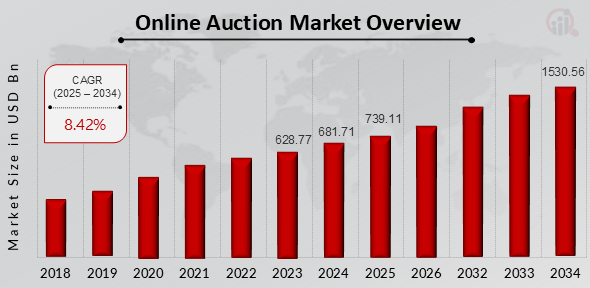
- The online auction market is expected to reach USD 1530.11 billion by 2034, up from USD 739.11 billion in 2025.
- The cost to develop an auction app lies between $8,000 and $25,000 or depending on unique project requirements.
- Apps like eBay and Whatnot make auction shopping exciting, fast, and easily accessible right from your phone.
In 2025, building an auction app will be easier than before.
An auction app is a place where people can buy and sell things by placing bids. For example, someone puts an item for sale, and others offer higher and higher prices until the time runs out. The person with the highest bid wins.
In this blog, we will show you how to make your own auction app step by step. You will learn how to plan your app, choose what features it should have, and make sure it works well on phones.
We will also talk about new ideas like smart bidding using AI and keeping the app safe. You don’t need to be an expert, just curious and ready to learn.
Let’s get started and build something cool together!
Market Statistics of Global Auction Applications
- In 2024, the Online Auction Market was worth USD 71 billion worth of goods.
- According to forecasts, the online auction market will grow from USD 739.11 billion in 2025 to USD 1530.56 billion in 2034.
- North America is likely to have the biggest part of the online auction market. Europe and the Asia-Pacific will come in second and third, respectively.
- eBay, Amazon, Alibaba, and Sotheby’s are some of the biggest names in the online sale market.
- As per the ground-level report, the auction market is projected to increase with a CAGR of42% during the forecast period from 2025 to 2034.
What is an Auction Application?
The auction application is an online platform where online auction bidding exists, buyers put their bid on items, and sellers can manage their auction items. It offers advanced features like real-time bidding, user management, online payment processing, proxy bidding, communication, and reporting and analysis.
An auction app like Emirates Auction enables sellers to list their auction items and schedule the auction as per their demands and preferences.
Success Story: Emirates Auction
- The Emirates Auction was founded in 2004, and Abdulla Al Mannaei is the CEO and holds the Four Seasons Resort Dubai at Jumeirah.
- It operates the largest auction platform in the Middle East and manages assets for government agencies, banks, and other entities.
- The Emirates Auction platform conducts online auctions of 300 vehicles per day, operating five days a week.
- Expand its portfolio by selling license plates, machinery, heritage items, real estate, jewelry, manufacturing equipment, and vehicles.
- In 2020, achieved over AED 2 billion in auction sales, and it boosted huge commercial sales.
- Featured standout sales: 2022 Land Rover Defender fetched AED 340,000, and the Toyota Highlander sold for AED 110,000.
Different Types of Auction Applications
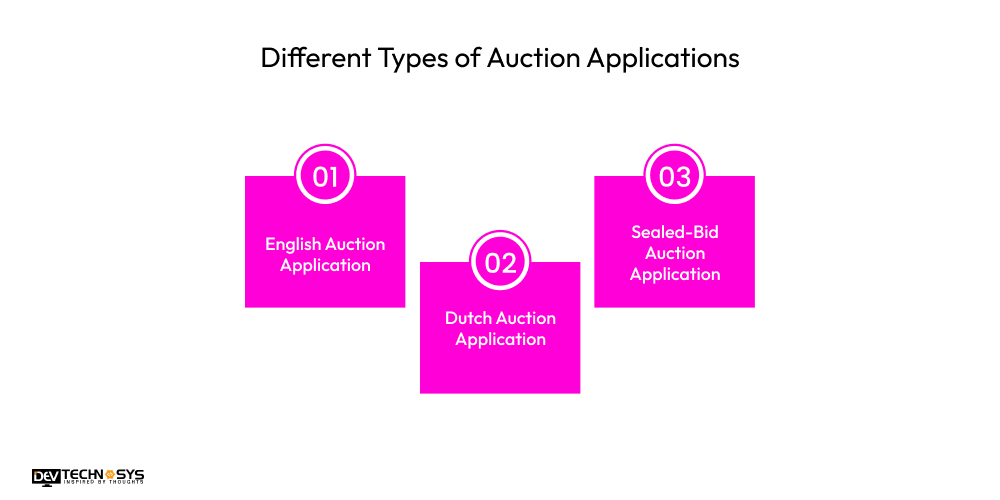
Discover easy-to-use auction apps for live bidding, quick sales, and confidential offers. Whether English, Dutch, or sealed-bid auctions, find the perfect platform to buy or sell with confidence today!
1. English Auction Application
A live bidding platform where participants openly place higher bids. The price rises progressively until no higher bids are made. The highest bidder wins the item. Commonly used for art, antiques, and collectibles, fostering competitive bidding and real-time interaction among users.
2. Dutch Auction Application
This app starts with a high asking price that gradually decreases until a bidder accepts the current price. It’s efficient for selling multiple identical items quickly. Often used for flowers or commodities, it encourages buyers to balance risk and timing to secure favorable deals.
3. Sealed-Bid Auction Application
Users submit confidential bids without knowing others’ offers. After the deadline, the highest bid wins, promoting honest valuation without competitive pressure during bidding. Ideal for government contracts or real estate, it ensures fairness and reduces manipulation or bidding wars among participants.
10 Popular Auction Apps
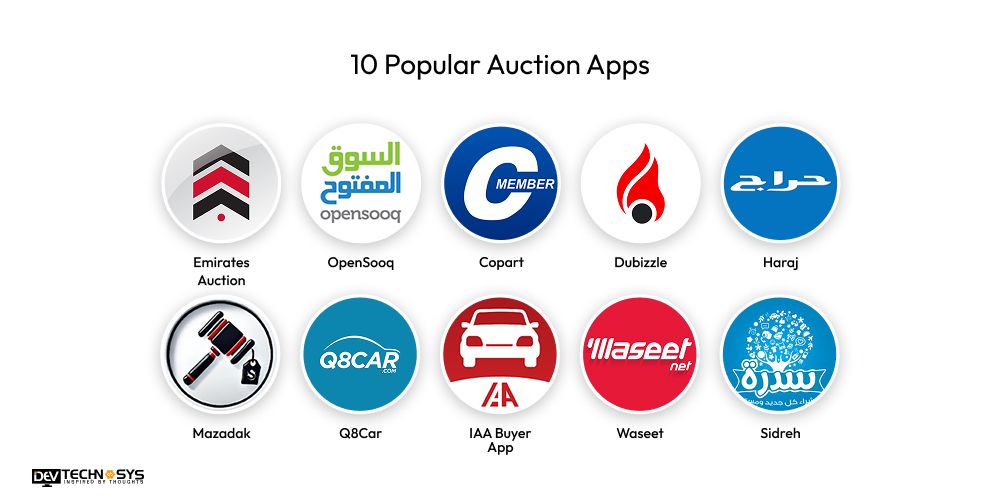
Let’s consider the top auction apps in Middle East that have already gained a higher success rate and popularity. So, let’s take a look at the table below:
App Name |
Launch Year |
Downloads (Est.) |
Rating (Est.) |
Platforms |
| Emirates Auction | 2015 | 1M+ | 3.2 | Android, iOS |
| OpenSooq | 2013 | 45M+ | 4.5 | Android, iOS, Web |
| Copart | 2012 (UAE) | 10M+ | 4.2 | Android, iOS, Web |
| Dubizzle | 2008 | 10M+ | 4.4 | Android, iOS, Web |
| Haraj | 2012 | 10M+ | 4.5 | Android, iOS |
| Mazadak | 2018 | 500K+ | 4.1 | Android, iOS |
| Q8Car | 2007 | 1M+ | 4.2 | Android, iOS |
| IAA Buyer App | 2015 | 500K+ | 4.0 | Android, iOS |
| Waseet | 2010 | 1M+ | 4.5 | Android |
| Sidreh | 2018 | 50K+ | 4.1 | Android |
Why Do Entrepreneurs Want to Invest in Auction App Development?
Investing in online auction app development is one of the finest opportunities for businesses because it offers various useful benefits. It includes competitive advantage, brand reputation, customer engagement, data-driven insights, and many more. So, let’s explore the benefits for businesses:
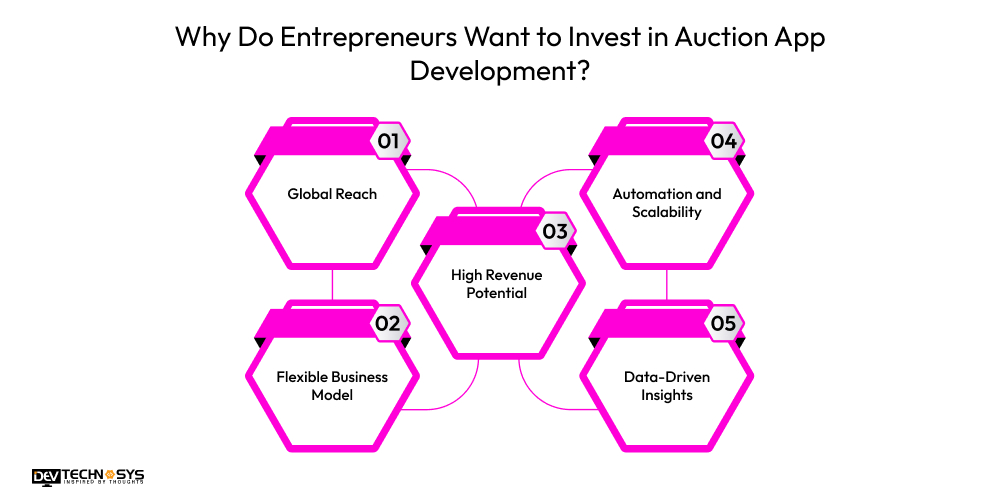
1. Global Reach
Let’s talk about the first benefit. With the advanced features, these auction applications can easily reach global users, and they can increase user engagement. It involves real-time bidding, proxy bidding, analytics, payment processing, and many more. So, international users can also participate in the auction, and this can increase the online visibility and credibility.
2. Flexible Business Model
In the second benefit, businesses have the option to choose the best business model according to their requirements and preferences, such as B2B, B2C, and C2C. These models help businesses select their business type according to market or audience demand. So, entrepreneurs can run their auction platform based on the showing of the higher success rates.
3. High Revenue Potential
Moving to the third benefit, the online auction platforms offer higher revenue streams that help businesses earn huge amounts of money and expand their business worldwide. It includes various types of revenue streams such as membership plans, listing fees, licensing fees, bidding charges, commissions, and an extra charge for premium features.
4. Automation and Scalability
Let’s move ahead to the fourth benefit, automation and scalability are another best benefit for businesses. With the use of automation, businesses can streamline their auction operations, such as bidding, payment processing, listings, and account management, which can reduce manual efforts. Scalability ensures that the platform can handle increasing traffic and payment transactions without any issues.
5. Data-Driven Insights
In the last benefit, the auction iOS app development solutions can observe or analyze the users’ data. It includes useful data such as habits, purchasing patterns, preferences, behaviour, demographics, and daily activities. With the help of these data-driven insights, businesses can find new areas for improvement and offer personalized recommendations to users.
The Role of Artificial Intelligence in Auction Applications
- AI has the ability to adjust item prices as per the market demand, historical trends, customers’ interests, and more.
- AI uses image recognition to analyze the items’ photos for listing their category and verifying authenticity.
- AI in auction app development monitors bidding patterns to find or detect abnormal behavior or habits to identify fraud attempts.
- Artificial intelligence considers the best time to send alert messages or notifications to users, which can increase the overall user engagement.
- AI-powered chatbots and virtual assistants handle or manage users’ queries and respond to them instantly.
- Artificial intelligence provides personalized recommendations to users based on their purchasing patterns, habits, preferences, and bidding history.
7 Robust Steps to Develop an Auction App
To create an auction application, need to observe these development steps and understand each process in depth for successful or reliable app development. We provide services from initial stage of development to post-launch maintenance services. So, let’s take a look at the online auction app development process:
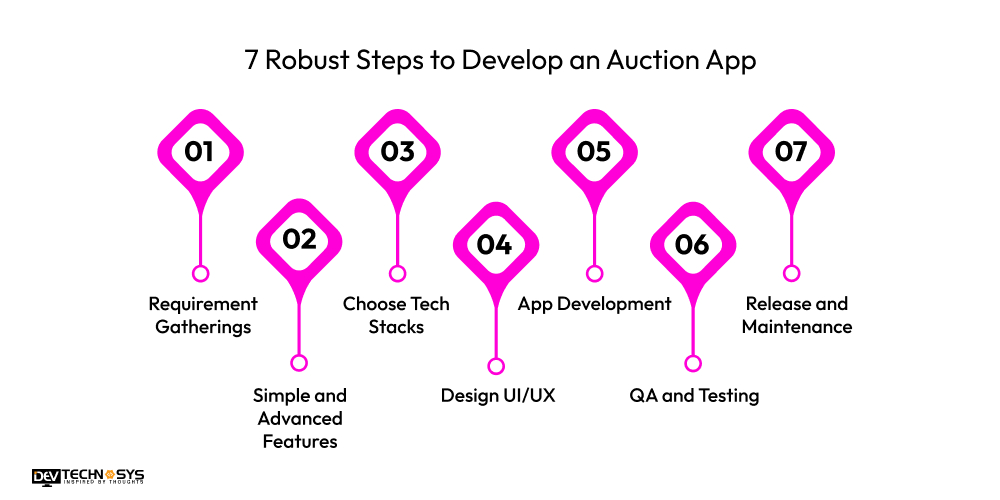
1. Requirement Gatherings
In the first step to make an auction app, collect the required needs of your project and make a proper list of requirements. After that, analyze market trends and audience demands to determine what type of auction application they want and what functionalities should be integrated. Identify the primary and secondary users of the app and prepare a competitor’s plan on how to compete with their applications.
2. Simple and Advanced Features
Moving to the second stage to create an auction app. Hire professional auction app developers from a mobile app development company in UAE to identify the basic and premium features that must be added to your project. There is a wide variety of features, such as real-time bidding, user management, secure payment options, browsing, featured listings, and auction management.
3. Choose Tech Stacks
Let’s move forward to the third step to develop live auction app, select the best technologies that help developers and businesses develop a successful or reliable mobile application. There are many types of tech stacks available, such as designing tools, security measures, frontend and backend frameworks, testing, APIs, cloud storage, databases, and many more.
4. Design UI/UX
Connecting to the fourth stage to build an auction app. Hire developers for auction app from an AI development company to design a normal user interface with premium layouts and fonts. There are various types of design tools that are used by developers, such as Sketch, Marvel, InVision, Adobe XD, Figma, and more.
It consists of various design areas such as templates, themes, fonts, styles, built-in plugins, and more.
5. App Development
In the fifth stage, to build live bidding software or application, assemble a highly-talented development team to start the coding and integrate backend and frontend services. Implement the third-party tools and applications such as payment gateways, mapping services, real-time communication, fraud detection, customer support, and user authentication.
6. QA and Testing
Let’s come to the sixth stage of auction app development for Android and iOS platforms. Consult with an iOS and Android app development services provider to test the application under various conditions, such as unit, security, integration, and functional testing.
If bugs and errors are found, then fix them with immediate effect. After that, make sure all features and services of the app are working at their peak performance and no issue is raised during running time.
7. Release and Maintenance
Finally, it’s the right time to release the affordable auction app solutions on the selected platforms such as Android, iOS, and cross-platforms. After being successfully published, conduct maintenance services such as regular updates, monitor performance, fix errors or bugs, upgrade new OS versions, add new enhancements, resolve security issues, and more.
What Are the Benefits for Users of Auction Applications?
Experience convenient, transparent, and exciting auctions online. Enjoy competitive pricing, a wide variety of items, and easy access anytime, anywhere. Auction apps make buying and selling faster, fairer, and more fun for everyone!
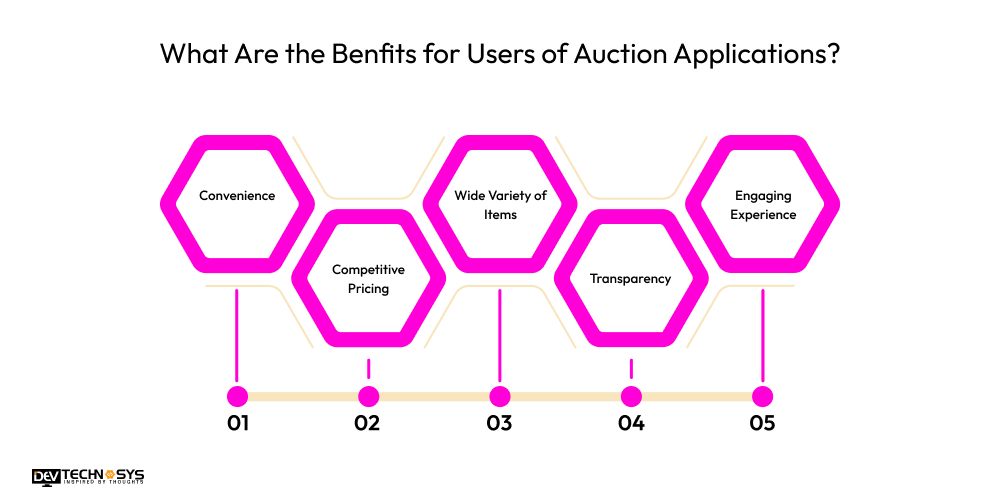
1. Convenience
Auction apps allow users to participate anytime, anywhere, eliminating the need for physical presence. This flexibility saves time and effort, making buying and selling easier and accessible for everyone, regardless of location or schedule constraints.
2. Competitive Pricing
Users can often secure items at better prices due to competitive bidding. Auctions encourage fair market value through open or sealed bids, helping buyers find deals and sellers receive the true worth of their products.
3. Wide Variety of Items
Auction platforms offer diverse categories, from antiques and art to electronics and real estate. This variety gives users access to unique and rare items that may not be available through traditional retail channels.
4. Transparency
Most auction apps provide real-time bidding updates and clear rules, fostering trust among users. Transparency in the process ensures fairness, reduces fraud risks, and helps bidders make informed decisions with confidence.
5. Engaging Experience
Participating in auctions is exciting and interactive. Users enjoy the thrill of competitive bidding, strategic decision-making, and instant results, making the buying or selling process enjoyable and dynamic rather than routine or dull.
10 Must-Have Integrated Features of Auction Applications
This section is important in the development stage. By reading this section, you get an idea of what features should be integrated into your auction application. So, let’s explore the must-have features of auction applications:
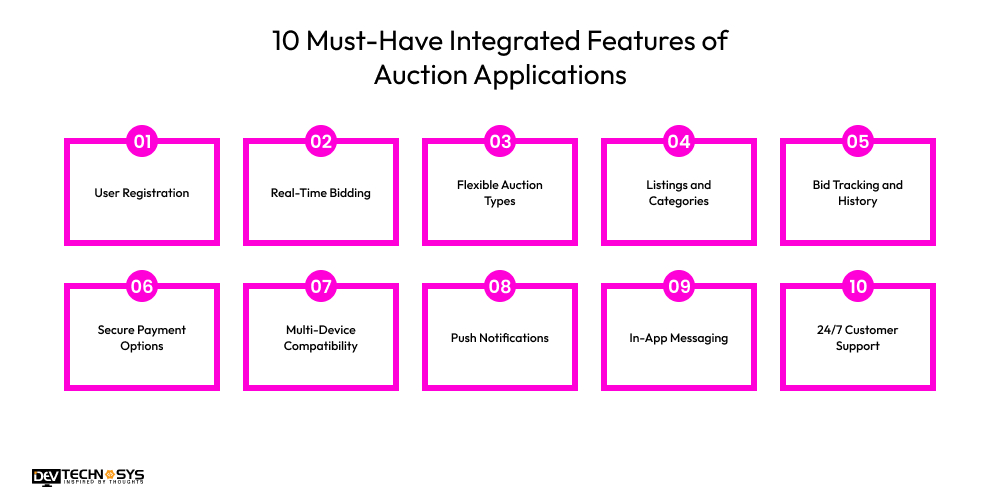
1. User Registration
Users can register their own account using social media logins, phone numbers, or email addresses, and can also log in as a guest with limited accessibility.
2. Real-Time Bidding
Online auction applications provide real-time bidding, allowing users to view the bidding and place their bids without delay, which can foster transparent auctions.
3. Flexible Auction Types
These auction platforms support various types of auctions such as Dutch, English, sealed-bid, and more.
4. Listings and Categories
It offers organized listings and categories of auction items, so users can quickly and easily find their specific item.
5. Bid Tracking and History
The auction marketplace app allows users to track their bidding in real-time and also view their bid history, including all participants.
6. Secure Payment Options
There are various secure payment options available, such as bank transfer, digital wallets, debit or credit cards, and net banking.
7. Multi-Device Compatibility
The online bidding platform has a responsive design that supports multiple devices such as laptops, tablets, smartphones, and more.
8. Push Notifications
The live bidding app sends push notifications to users to give updates about upcoming bids, winning alerts, and outbids, to keep users engaged.
9. In-App Messaging
With the help of communication tools, buyers and sellers can easily communicate and improve transparency and interaction within the auction.
10. 24/7 Customer Support
Availability of 24/7 customer support services to manage the users’ queries and concerns, and solve them as soon as possible.
What is the Cost to Build an Auction App?
The cost to develop an auction app ranges from $8,000 to $25,000, based on project requirements. There are essential factors that can affect the auction app development cost, such as features, size, complexity, functions, design, testing, deployment platforms, and infrastructure.
There are some additional factors that can also impact the cost, like development team, maintenance, APIs, security measurements, and networking. Let’s take a look at the detailed cost table:
Component |
Estimated Hours |
Cost Range (USD) |
| 1. UI/UX Design | 40 – 60 hrs | $1,600 – $3,600 |
| 2. User Accounts & Auth | 30 – 50 hrs | $1,200 – $3,000 |
| 3. Auction Listings | 40 – 60 hrs | $1,600 – $3,600 |
| 4. Bidding System (Basic) | 50 – 70 hrs | $2,000 – $4,900 |
| 5. Payment Integration | 30 – 50 hrs | $1,200 – $3,000 |
| 6. Notifications | 20 – 30 hrs | $800 – $2,100 |
| 7. Admin Panel (Basic) | 30 – 40 hrs | $1,200 – $2,800 |
Total Estimated Cost: $8,000 – $25,000+

What Are the Factors That Impact the Auction App Development Cost in Middle East?
Do you want to develop an auction app within a fixed budget? Then you should observe these factors to maintain the overall project budget. It consists of various types of factors such as app complexity, project size, development team, features, and many more. So, explore the crucial factors that affect the cost:
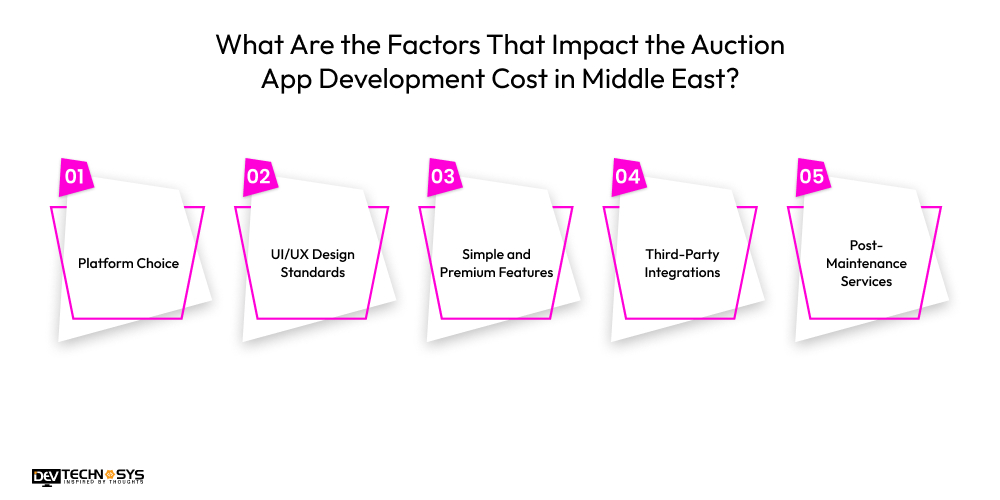
1. Platform Choice
In the first factor, businesses need to build a separate auction application for various platforms such as Android and iOS, which can affect the project’s overall budget. To maintain the budget, utilize cross-platform frameworks such as Flutter and React Native, and develop an auction app compatible with multiple platforms. Choosing the right platform depends on the market and the targeted audience’s demands.
Option |
Impact on Cost |
Estimated Cost (USD) |
| Single Platform (iOS/Android) | Lower development scope | $4,000 – $8,000 |
| Cross-Platform (Flutter/React Native) | Efficient, medium cost | $6,000 – $12,000 |
| Native for Both iOS & Android | Doubles the effort and cost | $10,000 – $18,000 |
| Web + Mobile | Adds an extra layer | $12,000 – $20,000 |
2. UI/UX Design Standards
Coming to the second factor, UI/UX design standards are the most common cost-affecting factor. Simply, if the design is unique and premium, then the cost is automatically raised; if the design is basic, then maintain the project budget. There are various types of design tools that are highly paid, such as Figma, Adobe XD, and Marvel. So, select the user-interface design as per the cost to build an auction app.
Design Level |
Impact on Cost |
Estimated Cost (USD) |
| Basic Template-Based | Minimal cost, fast delivery | $800 – $1,500 |
| Custom Design (Standard) | Balanced cost/branding | $1,500 – $3,500 |
| High-End Arabic/RTL UI | Specialized skills needed | $3,000 – $6,000 |
3. Simple and Premium Features
Moving to the third cost-affecting factor, simple and premium features can be another crucial factor that can affect the cost to develop an app. It involves premium features such as real-time bidding, user management, payment processing, multi-currency bidding, auction scheduling, real-time chat support, auto-bid with smart limits, and advanced analytics.
So, these features can easily influence the overall auction app development cost.
Feature Set |
Impact on Cost |
Estimated Cost (USD) |
| Basic Auction Features | Core functions only | $3,000 – $5,000 |
| Includes Premium Features | Adds bidding logic, automation | $5,000 – $8,000 |
| Fully Loaded + Custom | Extensive user tools | $10,000 – $15,000 |
4. Third-Party Integrations
Let’s move on to the fourth factor: there are many third-party tools and applications that must be integrated to increase accessibility and flexibility. But these third-party integrations can increase the auction app development cost due to high licensing fees and more. It includes payment gateways, CRM integration, social media logins, analytics, real-time communication, and currency & exchange rates.
Integration Type |
Impact on Cost |
Estimated Cost (USD) |
| Basic (1–2 APIs) | Minimal effort | $800 – $1,500 |
| Standard (3–5 APIs) | Mid-level integration | $1,500 – $3,500 |
| Complex (6+ APIs, custom) | Higher cost and testing | $3,500 – $6,000+ |
5. Post-Maintenance Services
The last cost-affecting factor is post-maintenance services, which include upgrading OS versions, adding new enhancements, fixing bugs and errors, providing regular updates, optimizing performance, and resolving security issues.
These maintenance services can increase the cost to maintain an app and also influence the overall project budget. At last, choose only those maintenance services that are required and do not need to add extra functions.
Service Level |
Impact on Cost |
Estimated Cost (USD/year) |
| Bug Fixes Only | Basic support | $500 – $1,000 |
| Regular Updates | Monthly patching | $1,000 – $3,000 |
| Full Support & Scaling | Dedicated team involvement | $3,000 – $6,000+ |
How to Earn Money From Auction Applications?
Every business or entrepreneur is waiting for this section. Because this is the section where everyone makes an application for this, it means earning huge money from auction apps. Let’s explore the best money-making techniques:

1. Membership Plans
Let’s talk about the first money-generating technique: auction platforms offer paid membership plans, such as basic, premium, and enterprise. With the help of membership plans, users can access the unlimited features and functions of the app. Users need to buy plans as per their requirements and demands, so it can increase the business valuation.
2. Featured Item Listing
In the second cost-affecting factor. Businesses charge fees from sellers that want to list their items in the featured list, which means they are shown in the deals of the day and top searches. In the featured item listing, chances of early or faster selling, so sellers are ready to pay extra fees for their item listing.
3. Transaction Fees
Moving to the third money-making technique, transaction fees are one of the most common profit-earning strategies. If a user purchases any item or subscription plan, they need to pay transaction fees for each transaction, ranging from 3% to 7%. So, at last, it can be one of the transparent revenue-generating techniques.
4. Advertisements
Come to the second last monetization model, sell the ad space in your application for third-party businesses or agencies to show their products as advertisements. You can charge ad fees of around 8% to 10%, which can be another income source. There are different types of advertisements, such as banner, native, display, pop-up window, video, and photo ads.
5. Bid Entry Fees
In the last profit-generating technique, businesses charge a bid entry fee on limited or premium live auctions. Users must pay bid entry fees to place a bid, which typically range from 3% to 5%. So, it is one of the simplest revenue streams, and businesses can easily increase their valuation and expand to other regions.

How Dev Technosys Will Help You?
It’s time to say goodbye. We hope that you have cleared all your doubts about how to develop an auction app and what functionalities must be integrated. After that, we think that you have one more last question: which agency or company is best to create an auction application?
So, just consult with Dev Technosys, a global-ranking auction app development company in UAE that has the ability to create applications at a lower cost with customized functionality.
Frequently Asked Questions
1. How Much Does it Cost to Develop an Auction App in 2026?
The cost to build an auction app lies between $8,000 and $25,000. The cost can fluctuate due to several factors such as project complexity, infrastructure, development team, security measurements, design, and deployment platforms.
2. How Long Does it Take to Make an Auction App in 2026?
Creating an auction app basically consists around 4 to 10 weeks. The timeline can be changed for a few reasons, like more custom features, higher project complexity, developers’ working hours, and application size.
3. What Are the Challenges Faced During Auction App Development?
Here, we provide the list of challenges:
- Ensuring data security
- Preventing bid sniping
- Implementing real-time bidding
- Integrating secure payments
- Handling high traffic
4. What Technologies Are Used to Make an Auction App in 2026?
Let’s explore the various types of technologies:
- Java
- Python
- PHP
- Flutter
- React Native
- C++
5. Which Payment Gateways Are Suitable in the Middle East?
There are different types of payment gateways that are accessible in the Middle East:
- PayTabs
- HyperPay
- MyFatoorah
- Tap Payments
- Stripe
- CASHU