





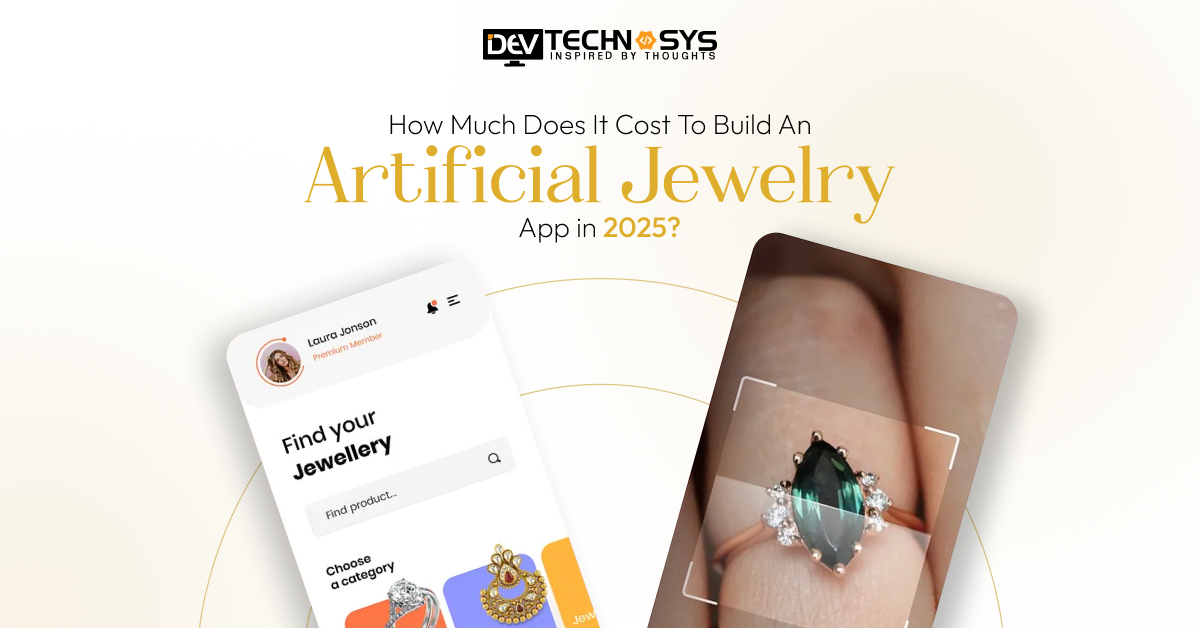
Buying real gold, silver, or diamond jewelry every time can empty our pockets. That’s when the artificial jewelry makes a heroic entry in the lives of jewelry lovers.
But moving shop to shop for your iconic piece can be hectic. And this has increased the popularity and revenue of artificial jewelry apps.
You are not looking for an app, but are interested in creating your own digital jewelry store in 2025.
Before turning this dream into reality, one question arises: what is the cost to build an artificial jewelry app?
Launching a platform where users can browse, try pieces virtually, and place orders instantly for jewelry is a unique idea. It is like establishing your strength in this dazzling industry.
So, in this guide, we will explain everything related to the artificial jewelry app development cost.
Market Stats Of The Artificial Jewelry
According to Market Reports World, the market predictions for artificial or imitation jewelry state that:
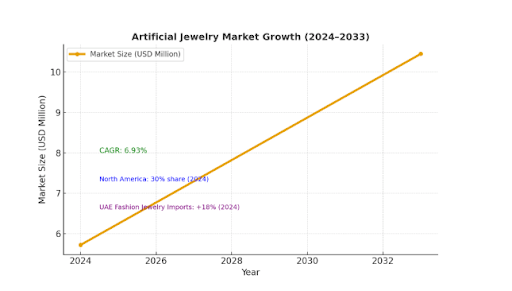
- In 2024, the market size of artificial jewelry was valued at USD 5.72 million globally.
- These numbers are expected to grow with a CAGR of 6.93% from 2025 to 2034 and reach USD 10.45 million by 2033.
- With more than 30% of the overall market share, North America has led the artificial jewelry market in 2024.
- Approximately 18% of growth in fashion jewelry imports is experienced by the UAE in 2024.
What Is The Artificial Jewelry App?
An artificial jewelry app is an online platform where users can explore, try on, and shop for imitation jewelry pieces. On these apps, one can find options such as virtual try-on, product personalization, secure payments, and immediate stock updates.
When every person is looking for convenience in shopping, there is no chance jewelry shopping will lag behind.
Artificial jewelry apps have made shopping more fascinating for jewelry lovers. Getting your favorite piece at your doorsteps has become as easy as tapping on your smartphone.
As you are also interested in creating an artificial jewelry app, you must consult an expert e-commerce app development company.
What Is The Cost To Build An Artificial Jewelry App?
Usually, the cost to develop an artificial jewelry app will be approximately $8,000-$30,000. This cost entirely depends on factors such as feature complexity, platform choice, and the developer’s location.
However, design, third-party integration, and backend development are some other factors that influence the final artificial jewelry app development cost. These factors offer your app performance, scalability, and user experience.
On average, a simple app with MVP features is relatively less expensive than a customized modern app. Invest in shopping app development in a way that it attracts customers, boosts online sales, and establishes a strong digital presence.
App Type |
Key Features |
Estimated Cost |
| Basic App | Product catalog, user login, shopping cart, basic admin panel | $8,000 – $12,000 |
| Standard App | Product filters, payment gateway, reviews, and basic analytics | $12,000 – $18,000 |
| Advanced App | Virtual try-on (AR), wishlist, push notifications, and advanced admin dashboard | $18,000 – $25,000 |
| Custom Feature-Rich App | AI-based recommendations, 3D product view, multi-language & multi-currency support | $25,000 – $30,000 |
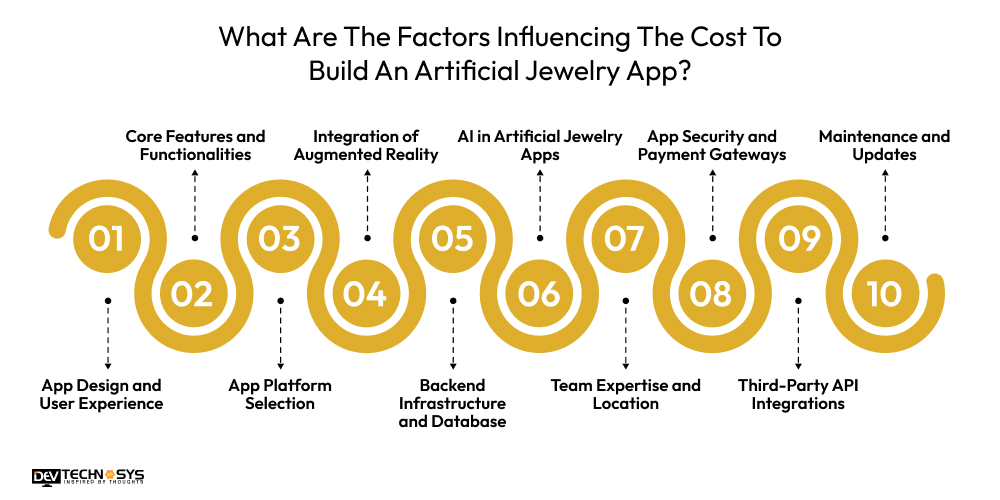
What Are The Factors Influencing The Cost To Build An Artificial Jewelry App?
We will understand the factors that affect the jewelry app development pricing. When these factors are considered, it will result in supreme e-commerce app development.
1. App Design and User Experience
An app with stunning visuals and seamless navigation attracts more customers to shop for jewelry. Therefore, the cost to make an artificial jewelry app also increases due to the elegant and user-friendly design of the app.
Level |
Description |
Estimated Cost (USD) |
| Basic Design | Simple UI/UX layout with minimal customization | $8,000 – $10,000 |
| Standard Design | Intuitive flow with jewelry-focused visuals | $10,000 – $14,000 |
| Premium Design | Custom themes, icons, and a responsive layout | $14,000 – $18,000 |
| Advanced Design | High-end interactive animations and AR transitions | $18,000 – $25,000 |
2. Core Features and Functionalities
The cost to build an artificial jewelry app depends on its features, complexity, and integration level. Adding advanced features like virtual try-on, secure payments, and product catalog affects the overall artificial jewelry app development cost.
Level |
Description |
Estimated Cost (USD) |
| Basic Features | Product listing, search, and filter options | $2,500 – $4,000 |
| Standard Features | User profiles, wishlist, and ratings | $4,000 – $5,000 |
| Premium Features | Virtual try-on and jewelry recommendations | $5,000 – $7,000 |
| Advanced Features | Real-time AR preview and multi-currency support | $8,000 – $15,000 |
3. App Platform Selection
The selection of a platform, either Android or iOS, to launch your app directly influences the cost to create an artificial jewelry app. An iOS or Android app development individually costs more, as it requires wider device compatibility and testing.
Level |
Description |
Estimated Cost (USD) |
| Single Platform | Either Android or iOS app development | $8,000 – $12,000 |
| Dual Platform | Android and iOS native apps | $15,000 – $22,000 |
| Cross-Platform | Flutter or React Native app | $18,000 – $25,000 |
| Web Version | PWA or web-based version of the app | $12,000 – $16,000 |
4. Integration of Augmented Reality
AR enhances the shopping experience of the users by allowing them to try jewelry on themselves virtually. This feature is really essential when we talk about the cost of mobile app development.
Level |
Description |
Estimated Cost (USD) |
| Basic AR | Simple jewelry try-on with static overlays | $10,000 – $12,000 |
| Enhanced AR | Real-time product fitting and movement tracking | $12,000 – $14,000 |
| Premium AR | High-quality 3D jewelry modeling and rendering | $14,000 – $16,000 |
| Advanced AR | Multi-angle product visualization with filters | $16,000 – $19,000 |
5. Backend Infrastructure and Database
The seamless performance and scalability of an app require a strong backend architecture, including cloud storage, APIs, and server setup. All these services contribute to the final artificial app development cost.
Level |
Description |
Estimated Cost (USD) |
| Basic Setup | Simple server and database configuration | $8,000 – $12,000 |
| Standard Setup | User, product, and order management APIs | $12,000 – $18,000 |
| Premium Setup | Admin panel with analytics dashboard | $18,000 – $25,000 |
| Advanced Setup | Scalable architecture with load balancing | $25,000 – $30,000 |
6. AI in Artificial Jewelry Apps
The role of AI in artificial jewelry apps is to elevate user experience by enabling personalized recommendations, visual search, and chatbots. AI helps in boosting user engagement and also the development cost of the artificial jewelry app.
Level |
Description |
Estimated Cost (USD) |
| Basic AI | Simple chatbot and image tagging | $8,000 – $12,000 |
| Standard AI | Product recommendation engine | $12,000 – $18,000 |
| Premium AI | Visual recognition for jewelry styles | $18,000 – $24,000 |
| Advanced AI | Predictive analytics and trend detection | $24,000 – $30,000 |
7. Team Expertise and Location
The cost to hire jewelry app developer can impact the development price of an artificial jewelry app. You can hire dedicated developers from various regions according to their skill level. The Middle East and Asia offer affordable yet qualified developers.
Level |
Description |
Estimated Cost (USD) |
| Freelancers | Individual developers and designers | $8,000 – $12,000 |
| Offshore Team | Mid-level professionals from Asia | $12,000 – $18,000 |
| In-House Team | Experienced in-house developers | $20,000 – $26,000 |
| Enterprise Team | Top-tier experts and project managers | $26,000 – $30,000 |
8. App Security and Payment Gateways
One thing a user needs in any app is the security of payment. Integrating data encryption, secure payment, and user privacy protection features is necessary for user trust. However, these features raise the average cost to make a jewelry app.
Level |
Description |
Estimated Cost (USD) |
| Basic Security | SSL encryption and secure login | $2,000 – $3,000 |
| Standard Security | Payment gateway integration | $3,000 – $4,000 |
| Premium Security | Multi-factor authentication and tokenization | $4,000 – $5,000 |
| Advanced Security | Fraud detection and GDPR compliance | $5,000 – $8,000 |
9. Third-Party API Integrations
Creating an app from zero will take more time, so it is better to incorporate ready-made third-party APIs. APIs for delivery tracking, authentication, or marketing automation will enhance the app’s complexity and budget to develop an artificial jewelry app.
Level |
Description |
Estimated Cost (USD) |
| Basic APIs | Social login (Google, Facebook) | $1,000 – $1,500 |
| Standard APIs | Shipping and location tracking | $1,500 – $1,800 |
| Premium APIs | CRM and analytics integrations | $2,000 – $2,400 |
| Advanced APIs | Inventory sync and marketplace integration | $2,500 – $3,000 |
10. Maintenance and Updates
Regular maintenance, bug fixes, and feature updates of an app determine the cost to maintain an app. It ensures that the app stays secure, functioning, and aligned with the market trends, and is in competition at all times.
Level |
Description |
Estimated Cost (USD) |
| Basic Maintenance | Regular bug fixes and monitoring | $1500 – $2,000 |
| Standard Maintenance | Monthly updates and backups | $2,500 – $3,000 |
| Premium Maintenance | Feature enhancements and optimization | $3,000 – $3,500 |
| Advanced Maintenance | Security audits and version upgrades | $3,500 – $4,000 |
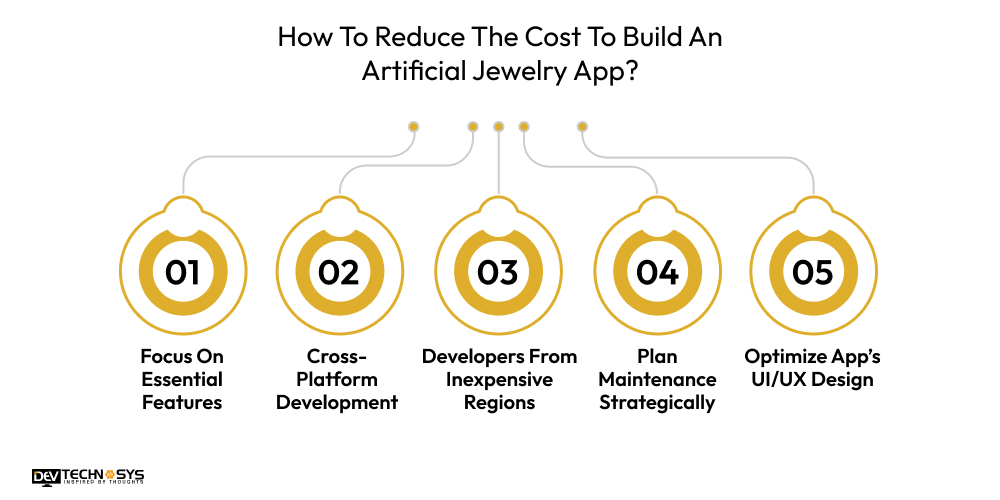
How To Reduce The Cost To Build An Artificial Jewelry App?
Now it’s time to discuss the measures that will help in reducing the cost to develop a mobile app for artificial jewelry.
1. Focus On Essential Features
Initially, keep the app simple with a Minimum Viable Product (MVP) and integrate only core features in the app. With this, app owners can reduce the artificial jewelry ecommerce app cost at the beginning and gradually scale app features later.
Level |
Description |
Reduced Cost (USD) |
| Basic Features | User login, product listings, and checkout | $3,000 – $4,500 |
| Standard Features | Wishlist, reviews, and order tracking | $4,500 – $6,000 |
| Limited AR Try-On | Simple AR overlay for jewelry | $6,000 – $8,000 |
| Streamlined Payments | One secure payment gateway | $8,000 – $9,500 |
2. Cross-Platform Development
Instead of offering Android or iOS app development services individually, build a cross-platform app for both Android and iOS. This will not only help in reducing the artificial jewelry app development cost but also widen the app’s reach.
Level |
Description |
Reduced Cost (USD) |
| Hybrid Framework | Developed with Flutter or React Native | $4,000 – $6,000 |
| Shared Codebase | One backend for iOS + Android | $5,000 – $7,000 |
| Unified UI Design | Same UI for both platforms | $6,000 – $8,500 |
| Optimized Deployment | Simultaneous app store releases | $7,000 – $9,000 |
3. Developers From Inexpensive Regions
Outsourcing skilled developers from regions like Asia, Eastern Europe, or Latin America can be an inexpensive option. Hiring economical developers doesn’t mean that the quality of work will be compromised, but they work while maintaining quality.
Level |
Description |
Reduced Cost (USD) |
| Freelance Developers | Independent experts from Asia | $3,000 – $5,000 |
| Small Outsourcing Team | 3–4 mid-level professionals | $5,000 – $7,000 |
| Offshore Agency | Experienced firm from India or Ukraine | $7,000 – $9,000 |
| Hybrid Model | Mix of local PM + offshore devs | $9,000 – $11,000 |
4. Plan Maintenance Strategically
Plan the maintenance of your app strategically by regular updates, performance monitoring, and preventive maintenance. It helps in controlling and reducing long-term on-demand jewelry app development cost and ensures the stability and user satisfaction.
Level |
Description |
Reduced Cost (USD) |
| Basic Support | Monthly monitoring and quick fixes | $3,000 – $4,000 |
| Standard Maintenance | Bug fixes + minor updates | $4,000 – $6,000 |
| Scheduled Updates | Quarterly performance checks | $6,000 – $8,000 |
| Annual Upgrade | Major update + security patches | $8,000 – $10,000 |
5. Optimize App’s UI/UX Design
Use simple, clean, and user-friendly UI/UX to lower your cost to make an artificial jewelry app instead of custom graphics. This measure helps you manage the development cost efficiently without making it look basic.
Level |
Description |
Reduced Cost (USD) |
| Basic UI | Clean minimal layout | $3,000 – $4,000 |
| Standard UI/UX | Intuitive flow + basic visuals | $4,000 – $6,000 |
| Responsive Layout | Device-friendly adaptive design | $6,000 – $8,000 |
| Refined Experience | Lightweight animation + fast performance | $8,000 – $10,000 |
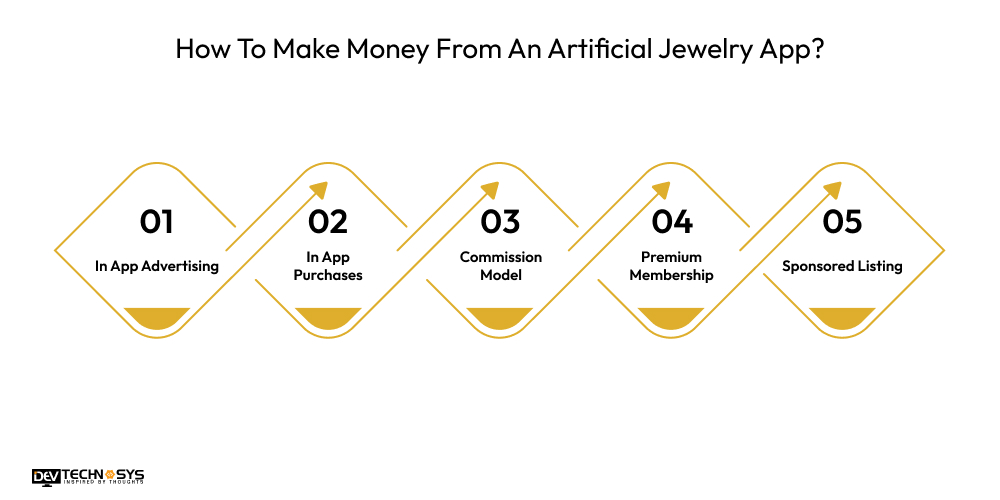
How To Make Money From An Artificial Jewelry App?
There are multiple monetization models available that you can implement on your app. These models help you make a steady income from an artificial app. Let’s discuss some of them:
-
In App Advertising
On your app, you can display targeted ads for beauty products, fashion retailers, or other jewelry brands. With this, you can earn money per click or impression, making it an amazing recurring revenue option.
-
In App Purchases
Allow users to shop for premium services, like virtual try-on filters, exclusive jewelry collections, or gift packaging options within your app. This monetization model will not only boost user engagement but also encourage in-app revenue.
-
Commission Model
The top artificial jewelry apps in Middle East make revenue by asking for a small percentage for every sale made on the app. This measure works really well for such platforms where buyers meet sellers directly.
-
Premium Membership
Provide users with benefits like exclusive discounts, priority delivery, and personalized styling suggestions through a membership subscription. This enhances customer loyalty and engagement, along with income from subscriptions.
-
Sponsored Listing
Many jewelry brands or sellers will be ready to pay an amount to get a premium placement in search results. This helps them to get featured on top and gain their brand visibility. This model can help generate consistent income for app owners.

Conclusion
We hope that this guide will help you transform your passion for jewelry into a booming digital business. With a motive to make your artificial jewelry app reach worldwide customers, we mentioned every detail related to the development cost.
Nowadays, making an artificial jewelry app is not just about blending beauty with technology. But it is about creating an experience for convenience with innovation. When the right mobile app development company is by your side, the cost to build an artificial jewelry app will be no issue.
So, from design to delivery, start your journey today with Dev Technosys, a trusted mobile and web development company.
FAQs
1. What Are The Factors That Determine The Artificial Jewelry App Development Cost?
Some of the factors that help determine the final development cost of an artificial jewelry app are:
- Choice of Platform
- Third-Party Integration
- Mentainence and Updates
- Backend Infrastructure
- Complexity and Features
2. How Much Does It Cost To Develop An Artificial Jewelry App?
The cost to develop an artificial jewelry shopping app will range between $8,000 and $30,000. A simple app with basic features will be less costly than the advanced one.
3. How To Make Your Own Artificial Jewelry App In 2025?
By researching the market, knowing the features you want, choosing the best tech stack, designing your app, testing, and getting a quality check, you can make your own artificial jewelry app.
4. What Are The Latest Trends In Artificial Jewelry App Development In 2025?
The latest trends that are being used in 2025 for an artificial jewelry app development are:
- Artificial Intelligence
- Augmented Reality
- Machine Learning
- Blockchain Technology
- Voice and Conversational Interfaces
5. How Much Time Will It Take To Create An Artificial Jewelry App?
A simple artificial jewelry app with core features will be created in 5-8 months. In contrast, an advanced app with high-tech features will take 8-12 months.