



 Tarun Nagar
 Key Takeaways
The cost to build an app like Shahid in 2026 typically ranges from $10,000 to $30,000+, depending on features, streaming infrastructure, and scalability requirements. A basic MVP starts around $10,000, mid-level OTT platforms range between $15,000–$22,000, while advanced, enterprise-grade apps can exceed $30,000 with AI features and live streaming capabilities.
Cost Breakdown by Development Complexity
- Basic / MVP ($10,000 – $15,000): Core features like user login, content browsing, basic video playback, and simple UI for quick market validation.
- Mid-Level ($15,000 – $22,000): Includes subscription models, payment gateways, multi-device support, notifications, and improved UI/UX.
- Advanced ($22,000 – $30,000+): AI-based recommendations, live streaming, analytics dashboard, high-end security, and scalable cloud infrastructure.
Key Factors That Affect the Cost
- App Complexity: Advanced features like AI recommendations and live streaming increase development effort.
- Streaming Infrastructure: CDN, cloud hosting, and bandwidth significantly impact pricing.
- UI/UX Design: High-quality design improves engagement but increases cost.
- Third-Party Integrations: DRM, payment gateways, and analytics APIs add to expenses.
- Security & Compliance: Encryption and content protection raise overall investment.
Development Timeline
- Basic MVP: 1–2 months
- Mid-Level App: 3–4 months
- Advanced Platform: 4–6 months
Hidden Costs
-
- Maintenance: Around 15%–20% annually for updates, bug fixes, and scaling.
- Cloud Infrastructure: Costs increase with user traffic and streaming demand.
- Content Licensing: Premium content rights can exceed development costs.
- API & Integration Fees: Ongoing charges for third-party services and tools.
The OTT industry is exploding, with platforms such as Shahid leading the digital entertainment revolution in the MENA region. From premium originals and blockbuster movies to live TV and on-demand content, these platforms are changing the way users consume media on their devices. This rapid digital transformation has led startups, media organizations, and enterprises to carefully evaluate the cost to build an app like Shahid and to tap into the rapidly growing streaming economy.
But the expense to design an app like Shahid is much more than just the basic app development. This comprises complex components such as cloud architecture, content delivery networks (CDNs), license agreements and smooth playback performance. Moreover, knowing the cost to create an app like Shahid can help companies strategically plan for scalability, revenue, and long-term user retention in an increasingly competitive and innovation-driven OTT landscape.
What is an App Like Shahid?
An app like Shahid is a digital platform that delivers video content over the internet using OTT (Over-the-Top) technology. It allows users to stream movies, TV shows, and live channels without relying on traditional cable services. A typical Shahid clone app includes features such as user registration, personalized recommendations, multi-device streaming, and secure payment systems.
These platforms are built using a subscription-based app development model, where users pay monthly or yearly fees for premium content access. With the rise of video-on-demand app development, businesses can offer flexible viewing experiences, making OTT apps highly scalable, user-centric, and profitable in today’s digital ecosystem.
What is the Average Cost to Build an App Like Shahid in 2026?
The cost to build an app like Shahid depends heavily on feature depth, streaming infrastructure, and scalability requirements. On average, the Shahid app development cost ranges between $10,000 to $30,000+, depending on whether you’re building a basic MVP or a full-scale OTT platform.
For startups, starting with an MVP helps validate the idea with lower investment, while enterprises often invest in advanced features like AI recommendations, multi-device streaming, and high-performance CDN integration.
The mobile app development cost also varies based on platform (Android, iOS, Web), UI/UX complexity, and backend architecture. Understanding the video streaming app development cost in different stages helps businesses plan budgets effectively and scale gradually in the competitive OTT market.
| App Complexity | Features Included | Estimated Cost |
| Basic MVP | User registration, content listing, basic streaming player, limited content library, simple UI | $10,000 – $15,000 |
| Mid-Level App | MVP features + subscription model, multi-device support, payment gateway, notifications, enhanced UI/UX | $15,000 – $22,000 |
| Full-Featured App | Advanced streaming engine, AI-based recommendations, live TV, analytics dashboard, admin panel, high-end security | $22,000 – $30,000+ |
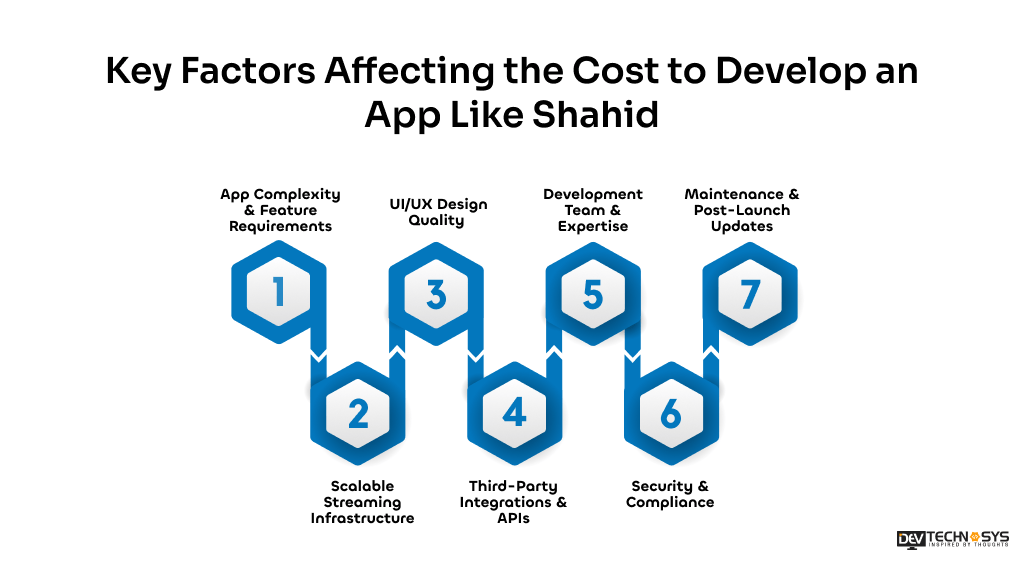
Key Factors Affecting the Cost to Develop an App Like Shahid
The cost to develop an app like Shahid varies based on multiple technical and business factors. Each component influences development effort, scalability, and long-term performance. Understanding these variables helps businesses estimate the cost to build an app like Shahid more accurately and plan budgets efficiently.
1. App Complexity & Feature Requirements
Feature complexity is one of the biggest cost drivers. A basic OTT app includes streaming and login, while advanced platforms offer AI recommendations, downloads, and multi-user profiles. As features increase, development time, backend logic, and testing efforts grow significantly, raising the overall project cost.
| Feature Type | Features | Cost Contribution |
| Basic MVP | User login, content listing, basic video playback, minimal UI for quick launch | $1,000 – $2,000 |
| Core Features | Advanced search, subscriptions, watchlist, personalized recommendations, improved UI/UX | $2,000 – $3,000 |
| Advanced Features | AI-based suggestions, offline downloads, multi-user profiles, smart analytics dashboard | $3,000 – $4,000 |
2. Scalable Streaming Infrastructure
A strong scalable streaming app architecture ensures uninterrupted playback even during high traffic. Investing in cloud servers, CDNs, and load balancing increases upfront costs but prevents buffering issues and downtime. This infrastructure is essential for delivering high-quality video experiences across regions.
| Infrastructure Level | Components | Cost Contribution |
| Basic | Shared hosting, limited bandwidth, suitable for small user base and testing environments | $500 – $1,000 |
| Mid-Level | Cloud hosting, CDN integration, improved bandwidth handling for moderate traffic loads | $1,000 – $1,700 |
| Advanced | Auto-scaling cloud servers, global CDN, load balancing for handling millions of concurrent users | $1,700 – $2,500 |
3. UI/UX Design Quality
An intuitive streaming app UI/UX design directly impacts user retention and engagement. Designing smooth navigation, personalized dashboards, and responsive layouts requires skilled designers and multiple iterations. High-end UI/UX improves user experience but increases design, testing, and implementation costs.
| Design Level | Features | Cost Contribution |
| Basic | Simple layout, limited animations, standard navigation for quick deployment | $1,500 – $2,000 |
| Standard | Interactive UI, responsive design, better content discovery and user engagement features | $2,000 – $2,800 |
| Premium | Personalized UI, motion design, advanced user journeys, high-end visual experience | $2,800 – $4,000 |
4. Third-Party Integrations & APIs
Modern OTT apps rely heavily on API integration for payments, analytics, and DRM systems. Each integration adds development complexity and licensing costs. The more external tools involved, the higher the implementation and maintenance effort required for seamless functionality.
Additionally, managing multiple APIs requires ongoing updates, compatibility checks, and monitoring, which further increases long-term operational costs.
| Integration Type | Tools | Cost Contribution |
| Basic | Payment APIs | $1,000 – $2,500 |
| Advanced | DRM, analytics | $2,500 – $4,000 |
5. Development Team & Expertise
Hiring an experienced team or a media streaming app development company ensures better performance and scalability. However, skilled developers, designers, and architects increase development costs depending on their expertise and geographical location.
Additionally, experienced teams follow best practices in architecture, security, and optimization, which helps reduce long-term maintenance costs and ensures a more reliable OTT platform.
| Team Type | Location | Cost Contribution |
| Freelancers | Offshore developers with limited scalability and project management capabilities | $30 – $35 |
| Mid-Level Agency | Structured teams in India/MENA offering balanced cost and quality | $15 – $25 |
| Enterprise Agency | Premium agencies in US/Europe with high expertise, scalability, and enterprise-grade solutions | $30 – $50 |
6. Security & Compliance
Security features such as DRM, encryption, and secure authentication are essential for protecting content and user data. Implementing advanced security layers increases development complexity and cost but ensures compliance and builds user trust in the platform.
Additionally, regular security audits and updates are required to prevent vulnerabilities, adding to ongoing maintenance and operational expenses.
| Security Level | Features | Cost Contribution |
| Basic | SSL encryption, user authentication, basic data protection measures | $2,000 – $3,000 |
| Advanced | DRM protection, end-to-end encryption, secure payment processing, compliance standards | $3,000 – $5,000 |
7. Maintenance & Post-Launch Updates
After launch, apps require continuous updates, bug fixes, and performance monitoring. Businesses must plan ongoing costs alongside the initial cost to build a streaming app, as regular maintenance ensures scalability, security, and long-term user engagement.
| Maintenance Level | Services | Annual Cost |
| Basic | Bug fixes, minor updates, performance monitoring for stable app functioning | $2,000 – $4,000 |
| Advanced | Feature upgrades, scalability improvements, security patches, continuous optimization | $5,000 – $6,000 |
Industry Insight
According to Fortune Business Insights 2026, the global OTT services market is projected to grow significantly, fueled by rising internet penetration, smart device usage, and increasing demand for personalized video streaming experiences across regions.
Why Should You Invest in OTT App Development?
The rapid growth of OTT platforms has transformed how users consume digital content, making it a lucrative space for businesses. Investing in OTT apps allows companies to generate recurring revenue through subscription-based app development models while expanding their global reach. As user demand for on-demand and live streaming rises, the video streaming app development cost becomes a strategic investment rather than an expense.
Businesses can leverage this trend by partnering with a video streaming app development company to build scalable platforms and maximize ROI in the competitive digital entertainment landscape.
Why Budgeting for Your Streaming App is Crucial?
Proper budgeting plays a critical role in controlling the overall OTT app development cost and ensuring your project stays financially viable from start to finish. Without a well-defined budget, expenses related to infrastructure, licensing, third-party tools, and scaling can quickly exceed expectations. Businesses that clearly understand the cost to make an app like Shahid can prioritize essential features, adopt a phased development approach, and avoid unnecessary spending.
Additionally, budgeting helps in forecasting long-term operational costs, including updates, server scaling, and performance optimization. Planning for the cost to maintain an app ensures your platform remains competitive, secure, and user-friendly over time while maximizing return on investment.
Cost to Build Popular OTT Apps (Shahid Competitors Comparison)
Understanding the cost to build a streaming app becomes more practical when analyzing real-world OTT platforms. Each app differs in features, scalability, and regional focus, which directly impacts the entertainment app development cost. For businesses planning a Shahid clone app, these comparisons provide clarity on budget allocation, feature prioritization, and infrastructure requirements needed to compete in today’s OTT market.
1. Netflix
Netflix is a global OTT leader known for its AI-driven recommendations, massive content library, and advanced streaming infrastructure. Its platform requires high investment in content delivery networks, analytics, and personalization engines, making it one of the most expensive OTT platforms to develop and maintain.
| Feature Type | Features | Estimated Cost |
| Core Platform | Multi-device streaming, global CDN, user profiles | $18,000 – $22,000 |
| Advanced Features | AI recommendations, offline viewing, 4K streaming | $22,000 – $30,000+ |
2. Amazon Prime Video
Amazon Prime Video combines video streaming with subscription bundles and cloud-based scalability. Its integration with a larger ecosystem increases complexity, requiring strong backend systems and seamless user experience across regions and devices. Additionally, features like offline downloads, multi-language support, and personalized recommendations further increase development and infrastructure requirements.
| Feature Type | Features | Estimated Cost |
| Core Platform | Subscription model, multi-language content, HD streaming | $15,000 – $20,000 |
| Advanced Features | Cloud integration, offline downloads, smart recommendations | $20,000 – $28,000+ |
3. OSN+
OSN+ is a regional OTT platform focused on Arabic content and localized user experience. Businesses evaluating the cost to build a video streaming app like OSN+ can expect moderate investment due to region-specific features and content licensing. Moreover, regional compliance requirements and localized UI/UX design also contribute to the overall development effort.
| Feature Type | Features | Estimated Cost |
| Core Platform | Arabic UI, subscription model, HD streaming | $12,000 – $18,000 |
| Advanced Features | Regional content licensing, multi-device support | $18,000 – $25,000 |
4. JioCinema
JioCinema focuses on affordability and scalability, offering both free and premium content. Companies planning to build a video streaming app like Jio Cinema must invest in scalable infrastructure to handle high traffic, especially during live sports streaming. Additionally, managing peak-time concurrency and real-time streaming performance requires advanced backend optimization.
| Feature Type | Features | Estimated Cost |
| Core Platform | Free + premium model, content library, mobile-first UI | $10,000 – $16,000 |
| Advanced Features | Live streaming, high concurrency handling, and analytics | $16,000 – $22,000 |
5. Aha
Aha is a regional OTT app focusing on language-specific content and targeted audiences. Businesses aiming to build a video streaming app like Aha can build a cost-efficient platform with localized features and a focused content strategy. Furthermore, curated content libraries and regional marketing strategies play a key role in user acquisition and retention.
| Feature Type | Features | Estimated Cost |
| Core Platform | Regional content, subscription model, simple UI | $8,000 – $14,000 |
| Advanced Features | Personalized recommendations, content categorization | $14,000 – $20,000 |
Hidden Costs in OTT App Development You Must Know
While estimating the Shahid app development cost, most businesses focus only on initial development. However, several hidden expenses can significantly impact the total budget over time. These costs are often overlooked during planning but play a crucial role in scalability, performance, and long-term sustainability. Understanding these factors helps you better evaluate the OTT app development cost and avoid financial surprises after launch.
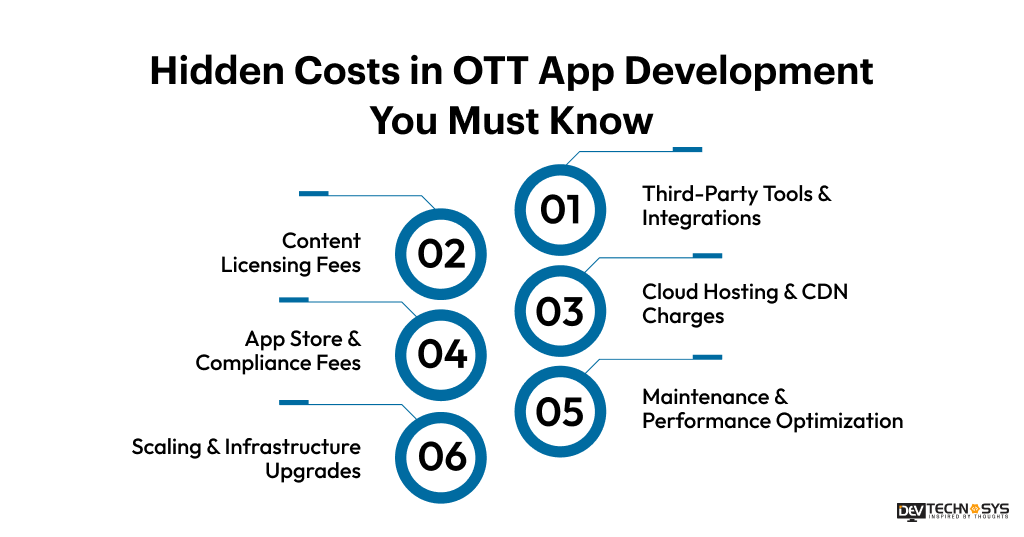
1. Third-Party Tools & Integrations
Integrating payment gateways, analytics tools, and DRM solutions requires licensing and maintenance fees. These integrations improve functionality but add hidden costs, especially when scaling. Businesses often refer to a guide on live video streaming app development to plan these expenses efficiently.
2. Content Licensing Fees
Content is the backbone of any OTT platform, and licensing premium movies, TV shows, or live events can be extremely expensive. These costs vary by region and exclusivity rights, often exceeding development expenses and directly influencing the overall video streaming app development cost.
3. Cloud Hosting & CDN Charges
OTT apps rely heavily on cloud infrastructure and CDNs to deliver seamless streaming. As your user base grows, bandwidth usage and server costs increase. These ongoing expenses are critical when calculating the cost to build a streaming app at scale.
4. App Store & Compliance Fees
Publishing apps on platforms like Android app development and iOS app development involves registration fees and compliance requirements. Adhering to policies, data protection laws, and regional regulations can add legal and operational costs beyond initial development. Additionally, frequent policy updates and app review processes may require continuous adjustments, increasing ongoing compliance efforts.
5. Maintenance & Performance Optimization
Post-launch maintenance includes updates, bug fixes, and performance tuning. Ignoring these costs can affect user experience. Planning for the cost to maintain an app ensures long-term stability and helps avoid unexpected expenses. Moreover, continuous monitoring and optimization are necessary to maintain app speed, reduce downtime, and enhance user satisfaction.
6. Scaling & Infrastructure Upgrades
As your platform grows, you’ll need to upgrade servers, improve load balancing, and enhance performance. These upgrades are essential for handling increased traffic but can significantly impact your long-term budget and scalability planning. Furthermore, scaling infrastructure to support global users and peak traffic demands requires ongoing investment in advanced cloud solutions.
How Long Does it Take to Build an App Like Shahid?
The timeline to build an OTT platform depends on feature complexity, platform selection, and scalability requirements. Typically, the cost to develop an app like Shahid is closely tied to development time, as more advanced features require longer cycles.
Businesses planning the full-stack development services should consider phased development, starting with an MVP and gradually scaling to a full-featured platform. Additionally, factors like live streaming capabilities, integrations, and testing directly impact both time and the overall live streaming app development cost.
| App Complexity | Development Time | Description |
| Basic MVP | 1 to 2 months | Includes core features like user login, content browsing, and basic video playback with limited scalability |
| Mid-Level App | 3 to 4 months | Adds subscription models, multi-device support, improved UI/UX, and essential integrations |
| Advanced App | 4 to 6+ months | Full-scale OTT platform with AI recommendations, live streaming, analytics dashboard, and scalable infrastructure |
Industry Insight
According to Applicaster OTT Trends Report 2026, streaming platforms are shifting focus from user acquisition to engagement and retention, with hybrid monetization (ads + subscriptions) becoming the dominant revenue strategy in the OTT industry.
Cost Reduction Strategies for OTT App Development
Reducing the cost to build an app like Shahid requires a strategic approach that balances performance, scalability, and budget. Instead of overinvesting upfront, businesses can optimize resources by prioritizing essential features, choosing the right technologies, and leveraging existing solutions. A well-planned strategy not only lowers the cost to develop a video streaming app but also ensures faster time-to-market and long-term sustainability.
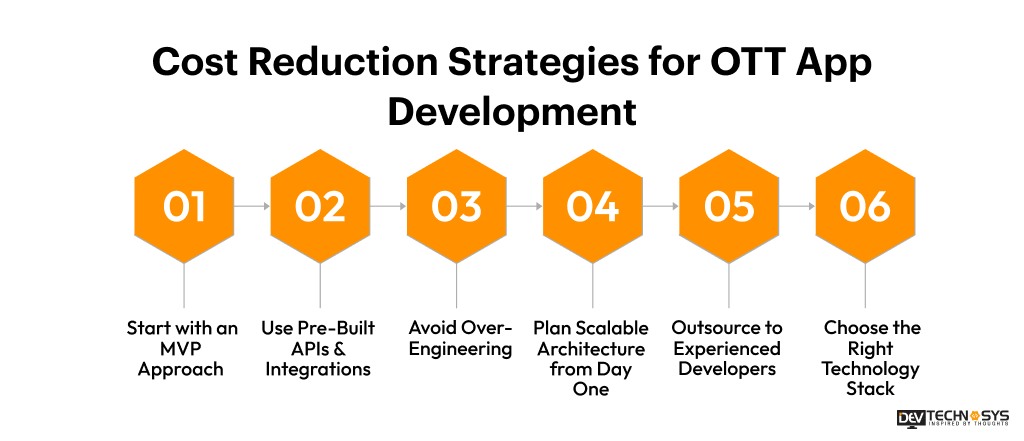
1. Start with an MVP Approach
Launching with a Minimum Viable Product helps validate your idea with minimal investment. Instead of building a full-scale platform, focus on core features like streaming and login. Many startups refer to a video streaming app development solution to build scalable MVPs and reduce initial costs.
2. Use Pre-Built APIs & Integrations
Instead of building everything from scratch, using ready-made APIs for payments, analytics, and streaming significantly cuts development effort. This approach minimizes coding complexity and helps control the overall cost to build an app like Shahid. Additionally, it speeds up development timelines and reduces the need for large engineering teams during early-stage product building.
3. Avoid Over-Engineering
Instead of building everything from scratch, using ready-made APIs for payments, analytics, and streaming significantly cuts development effort. This approach minimizes coding complexity and helps control the overall cost to build an app like Shahid. Additionally, it speeds up development timelines and reduces the need for large engineering teams during early-stage product building.
4. Plan Scalable Architecture from Day One
Building a flexible backend prevents expensive redesigns later. A well-structured system supports future growth without major rework, reducing long-term development costs and improving overall efficiency. Moreover, a scalable architecture ensures smooth handling of increasing traffic, especially during high-demand streaming events.
5. Outsource to Experienced Developers
Outsourcing to regions like India or MENA can reduce costs without compromising quality. Companies that hire on-demand app developers gain access to skilled professionals at lower rates, making development more cost-efficient. It also allows businesses to scale teams quickly based on project requirements without long-term hiring commitments.
6. Choose the Right Technology Stack
Selecting an efficient tech stack reduces development time and maintenance costs. Modern frameworks and cloud-based solutions improve scalability while minimizing infrastructure expenses. Businesses offering OTT platform development services often recommend optimized stacks to balance cost and performance.
Monetization Models for OTT Apps Like Shahid
Choosing the right monetization strategy is crucial to recover the OTT app development cost and ensure long-term profitability. OTT platforms generate revenue through multiple models depending on their audience, content strategy, and market positioning. Selecting the right model not only impacts revenue streams but also influences the overall entertainment app development cost and user acquisition strategy.
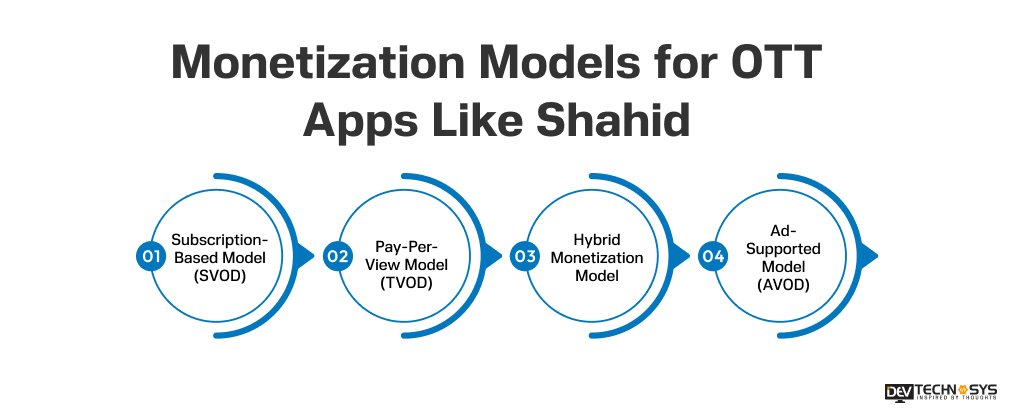
1. Subscription-Based Model (SVOD)
This is the most popular model, where users pay a recurring fee for unlimited content access. Platforms like Netflix use this strategy to generate consistent revenue. It aligns perfectly with subscription-based app development, offering predictable income and long-term user retention.
2. Pay-Per-View Model (TVOD)
Users pay only for specific content such as movies, events, or exclusive releases. This model works well for premium content and reduces entry barriers for users. It is a flexible approach that helps recover the cost to make an app like Shahid without requiring long-term subscriptions.
3. Hybrid Monetization Model
A hybrid model combines subscriptions, ads, and pay-per-view strategies to maximize revenue streams. It allows businesses to cater to different user segments while optimizing earnings. Many OTT platforms adopt this approach to balance user experience and profitability effectively.
4. Ad-Supported Model (AVOD)
In this model, users access content for free while revenue is generated through advertisements. It is ideal for reaching a larger audience base. Businesses often combine this with insights from the role of AI in video streaming apps to deliver personalized ads and maximize revenue.
Conclusion
Building a successful OTT platform is not an easy task. It requires meticulous planning, the correct technological stack and a thorough grasp of the cost to build an app like Shahid. Thus, all the factors ranging from development, infrastructure, hidden costs, and monetization aspects add up to the overall Shahid app development cost. Such companies who calculate the cost to develop an app like Shahid wisely can establish scalable and competitive platforms in the rising digital entertainment business.
With over 15+ years of experience, Dev Technosys UAE has helped startups and enterprises turn ideas into high-performing OTT platforms. By leveraging expert guidance and reliable mobile app development company, businesses can reduce risks, optimize costs, and accelerate time-to-market for long-term success.
FAQs
Q1. What is the exact cost to build an app like Shahid in 2026?
The cost to build an app like Shahid typically ranges from $10,000 to $30,000+, depending on features, scalability, and platform selection. A basic MVP costs less, while advanced OTT platforms with AI, live streaming, and multi-device support require higher investment.
Q2. How does the Shahid app development cost vary by region?
The Shahid app development cost differs based on the developer’s location. Development in India or MENA is more cost-effective compared to the US or Europe. However, pricing also depends on expertise, project complexity, and the level of customization required.
Q3. Is it cheaper to create an MVP before a full OTT platform?
Yes, starting with an MVP significantly reduces the cost to create an app like Shahid. It allows businesses to test the market, gather user feedback, and gradually scale features, minimizing risks and avoiding unnecessary upfront expenses.
Q4. What factors increase the cost to make an app like Shahid?
Several factors impact the cost to make an app like Shahid, including feature complexity, streaming quality, cloud infrastructure, content licensing, and integrations. Advanced features like live streaming, AI recommendations, and security layers can significantly increase overall development costs.
Q5. How long does it take to develop a Shahid-like OTT app?
The cost to create an app like Shahid is closely tied to development time. A basic app may take 1–2 months, while mid-level platforms require 3–4 months. Fully advanced OTT apps with scalable infrastructure and live streaming features can take 4–6+ months to complete.