





Quick Summary
Taxi booking app development costs typically range from $8,000 to $25,000+, with simple on-demand MVP apps starting at $8,000 to $12,000, mid-level apps costing $12,000 to $18,000, and advanced multi-service, EV, or aggregator apps reaching $25,000+. Costs depend on app complexity, platform choice, features, and regional requirements.
Cost Breakdown by Development Complexity
-
- Basic/MVP ($8,000 – $12,000): Includes essential features such as ride booking, GPS tracking, payments, driver/passenger login, and basic ratings.
- Medium ($12,000 – $18,000): Adds features like in-app chat, loyalty programs, surge pricing, and moderate UI/UX customization.
- Advanced ($18,000 – $25,000+): Incorporates multi-service modules, EV tracking, regulatory compliance tools, complex admin dashboards, and scalable backend systems.
Key Cost Drivers
-
- App Type: On-demand apps are cheaper, while multi-service, aggregator, or EV-focused apps require more resources, increasing cost.
- Platform: Developing for both iOS and Android is more expensive than developing for a single platform or using cross-platform solutions.
- Features: Advanced functionalities such as dynamic pricing, subscriptions, or fleet management add a high cost.
- Development Team & Location: Rates vary depending on local talent, outsourcing options, and team experience.
Cost Based on Countries
-
- United States: $18 – $50 per hour
- United Kingdom & Western Europe: $20 – $50per hour
- Eastern Europe: $20 – $45 per hour
- Southeast Asia: $15 – $24 per hour
- Australia: $22 – $48 per hour
Development Timeline
-
- MVP: 2 to 3 months
- Medium App: 4 to 6 months
- Advanced App: 6 to 9+ months
Additional Costs
-
- Maintenance & Updates: 10% to 15% of initial development cost annually
- Regulatory Compliance: Licensing, reporting, and local legal requirements may add extra expenses
Taxi booking apps have changed the way we move around. Hailing a ride is now just a tap away! If you’re a business dreaming to launch a ride-hailing app in Middle East, like Uber or Careem, knowing the cost to develop a taxi booking app is the first step. The cost to build a ride-hailing app generally depends on factors such as the platforms you choose (iOS, Android, or both), app features, design, and special tools like GPS tracking, in-app payments, ride scheduling, and driver dashboards.
Every extra feature adds a bit to the custom taxi app development cost, but it also makes your app more useful and fun for users. This blog will help you understand the cost to build a taxi booking app in Middle East and the key factors that affect the budget. Understanding the financial aspects will help you plan effectively, choose the right development partner, and build a smooth, engaging taxi app that riders and drivers love.
What is a Taxi Booking App?
A taxi booking app is a mobile or web application that lets users book rides instantly from their smartphones or devices. It connects passengers with nearby drivers in real time, allowing easy ride requests, fare estimates, GPS tracking, and cashless or digital payments. These apps also let drivers manage rides, track earnings, and navigate efficiently.
Essentially, a taxi booking app makes transportation faster, more convenient, and hassle-free for both riders and drivers. Popular examples include Uber, Careem, and Lyft, which have transformed the way people travel in cities worldwide.
Taxi Booking App Market Stats
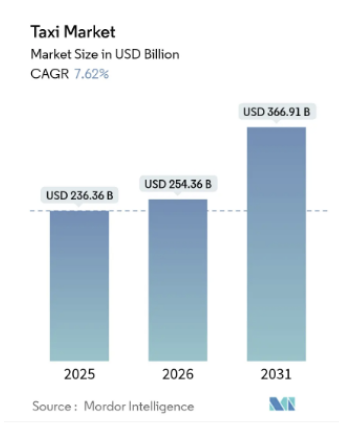
- The Taxi App Market was valued at USD 236.36 billion in 2025 and estimated to grow from USD 254.36 billion in 2026 to reach USD 366.91 billion by 2031.
- By booking type, online channels captured 63.78% of taxi market share in 2025 and are forecast to grow at an 7.92% CAGR through 2031.
- By service type, ride-hailing secured a 74.85% share of the taxi market in 2025; pooled ride-sharing is advancing at a 7.78% CAGR through 2031.
- By geography, Asia-Pacific led with 37.42% taxi market share in 2025; the Middle East and Africa are poised to record a 7.88% CAGR through 2031.
What is the Average Cost to Develop a Taxi Booking App?
The cost to develop a taxi booking app can range from $8,000 to $25,000, depending on features, app type, design type, and the developer’s location. The basic app with minimal features and less complex functionalities may cost between $8,000 to $12,000.
The taxi mobile app development cost, including advanced features such as AI route optimization, real-time ETA, and dynamic pricing, may exceed $25,000. If you are a business wondering about the cost of custom taxi booking app development, take a look at the table below.
| App Type | Estimated Cost (USD) | Development Timeline |
| Basic Taxi App | $8,000 – $12,000 | 6 to 8 weeks |
| Moderate / Standard App | $12,000 – $18,000 | 8 to 12 weeks |
| Advanced / Premium App | $18,000 – $25,000 | 12 to 16 weeks |
| Enterprise / Multi-City App | $25,000+ | 16+ weeks |
How Much Does It Cost to Build Different Types of Taxi Booking Apps?
Building a taxi booking app depends on the type, features, and platform. The cost to create a taxi booking app varies widely, from basic on-demand apps to advanced multi-service or eco-friendly solutions. Understanding each app type helps with the taxi app development cost breakdown and choosing the right features for your budget.
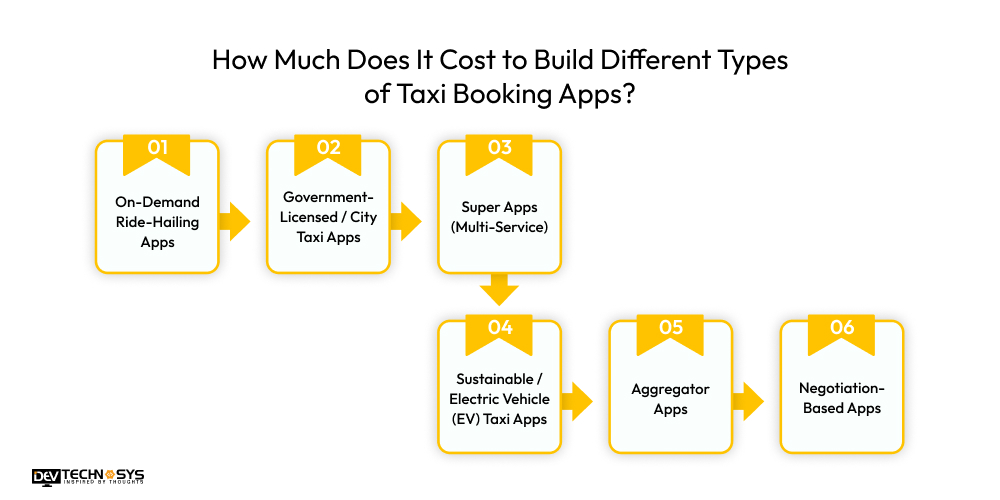
1. On-Demand Ride-Hailing Apps
These apps let passengers request rides instantly, and drivers respond in real-time. Core features include location tracking, digital payments, and basic reviews. Ideal for startups testing the market, they offer quick deployment and simple functionality. Custom taxi booking app development typically ranges from $8,000 to $25,000, balancing cost and efficiency for single-city or small-scale operations.
Industry Insights: The global on-demand ride-hailing app market is experiencing significant growth, with revenues expected to reach approximately USD 188.6 billion in 2026.
| Feature / Module | Estimated Cost (USD) |
| User & Driver Apps | $900 – $1,000 |
| GPS & Navigation | $1,700 – $2,800 |
| Payment Integration | $3,000 – $4,000 |
| Ratings & Reviews | $4,500 – $6,000 |
| Admin Panel | $6,000 – $8,000 |
| Total | $8,000 – $25,000 |
2. Government-Licensed / City Taxi Apps
Designed for regulated fleets, these apps ensure compliance with city rules. They include fare monitoring, mandatory reporting, route allocation, and fleet supervision tools. Ideal for official taxi services, they maintain operational transparency and legal adherence. The custom taxi booking app development will cost between $10,000 and $20,000, reflecting the added complexity of administrative and regulatory requirements.
| Feature / Module | Estimated Cost (USD) |
| Fleet Management | $2,000 – $5,000 |
| Regulatory Compliance | $1,000 – $3,000 |
| Booking & Dispatch | $1,500 – $3,500 |
| Admin Panel | $1,500 – $4,000 |
| User & Driver Apps | $2,000 – $5,000 |
| Total | $10,000 – $20,000 |

3. Super Apps (Multi-Service)
Super apps integrate taxi services with additional features like food delivery, e-wallets, and messaging. Users can perform multiple tasks within a single platform, while admins manage various modules efficiently. The cost to create a taxi booking app with complex, multifunctional apps typically lies between $15,000 to $25,000. These apps cater to enterprises seeking scalable solutions that engage users across multiple services simultaneously.
Industry Insights: According to Persistence Market Research, the global super apps market is projected to reach US$ 155.2 billion in 2026 and is estimated to reach US$ 838.3 billion by 2033.
| Feature / Module | Estimated Cost (USD) |
| Multi-Service Modules | $3,000 – $6,000 |
| Wallet / Fintech Integration | $1,500 – $3,500 |
| Modular Backend | $2,500 – $5,500 |
| Push Notifications | $400 – $800 |
| Admin Dashboard | $2,000 – $5,000 |
| Total | $15,000 – $25,000 |
4. Sustainable / Electric Vehicle (EV) Taxi Apps
EV taxi apps are tailored for eco-conscious transportation. The experts who offer taxi booking app development services should monitor battery levels, guide drivers to charging stations, and maintain standard ride-booking features. These specialized apps, costing $12,000 to $22,000, appeal to operators promoting sustainability, combining environmental awareness with conventional taxi functionality to enhance user trust and brand value.
| Feature / Module | Estimated Cost (USD) |
| EV Monitoring | $950 – $1,000 |
| Charging Station Routing | $1,800 – $3,500 |
| Eco Metrics | $4,000 – $5,000 |
| User & Driver Apps | $5,000 – $8,000 |
| Admin Panel | $8,000 – $11,000 |
| Total | $12,000 – $22,000 |
5. Aggregator Apps
Aggregator apps connect multiple taxi operators into a single marketplace, offering users fare comparisons, unified booking, and real-time updates. Providers retain independence while users benefit from choice and convenience. Development costs generally range from $8,000 to $18,000, depending on API integrations, platform complexity, and the number of providers aggregated.
Industry Insights: The taxi aggregator app market is expected to reach USD 880.2 billion by 2034, driven by the inter-city and leisure segments (59.4% share)—source: Business of Apps.
| Feature / Module | Estimated Cost (USD) |
| Multi-Provider Integration | $2,000 – $4,500 |
| Price Comparison | $800 – $1,500 |
| Unified Booking Flow | $1,500 – $3,500 |
| Real-Time Tracking | $1.600 – $3,800 |
| Admin Panel | $6,000 – $8,000 |
| Total | $8,000 – $18,000 |
6. Negotiation-Based Apps
These apps introduce a flexible fare model where riders and drivers negotiate prices. Features include bid submission, in-app chat, smart matching, and reputation tracking. They provide a dynamic, interactive experience and attract cost-conscious customers. The cost to build a taxi app like Lyft usually falls between $8,000 to $15,000, offering an innovative approach while maintaining essential booking and tracking functions.
| Feature / Module | Estimated Cost (USD) |
| Bid / Offer System | $1,500 – $3,500 |
| In-App Chat | $600 – $1,500 |
| Ride Matching | $1,500 – $3,500 |
| Rating & Review | $400 – $800 |
| Admin Dashboard | $2,000 – $5,000 |
| Total | $8,000 – $15,000 |
What Factors Can Affect the Cost to Develop a Taxi Booking App in Middle East?
The cost to develop a taxi booking app like Bitaksi in the Middle East depends on multiple factors, including app complexity, design, backend infrastructure, and regional requirements. Let’s discuss these cost factors in detail.
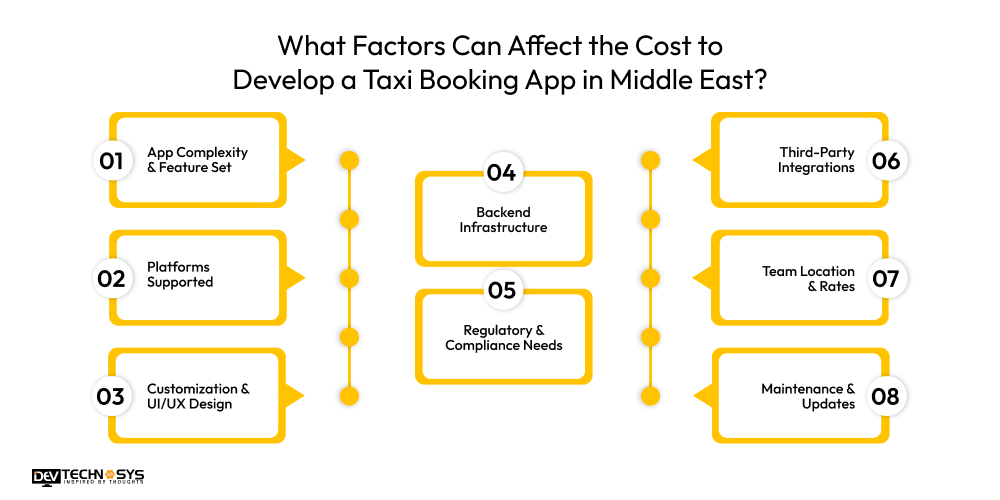
1. App Complexity & Feature Set
The number and sophistication of features directly impact the cost to create a taxi booking app. Real-time GPS tracking, in-app chat, ride scheduling, dynamic pricing, and loyalty programs require more coding and testing. A simple on-demand app costs less, while a feature-rich platform with advanced functionalities can significantly increase both development time and overall budget.
| Feature / Module | Estimated Cost (USD) |
| Basic Features | $3,000 – $5,000 |
| Moderate Features | $5,000 – $7,000 |
| Advanced Features | $8,000 – $10,000 |
2. Platforms Supported
Whether the app is built for iOS, Android, or both affects cost. Developing two separate native apps is more expensive than using cross-platform frameworks like Flutter or React Native. According to the top mobile app development company in Middle East, the multi-platform support ensures a wider audience. Still, it requires more resources, testing, and maintenance, thereby raising the total development budget.
Industry Insights: According to Taxi App Market, the Android platform dominates the taxi app market with a 65% share in 2023.
| Platform | Estimated Cost (USD) |
| Single Platform | $10000 – $12,500 |
| Cross-Platform | $12,000 – $15,000 |
| Multi-Platform + Web | $15,000 – $18,000 |
3. Customization & UI/UX Design
Highly customized, interactive, and culturally adapted designs cost more than standard templates. Investing in user-friendly interfaces, attractive visuals, and smooth navigation enhances engagement but increases development time. Localized UI/UX that aligns with Middle Eastern preferences often requires expert designers, contributing significantly to the overall project cost.
Industry Insights: According to Fortune Business Insights, the surge in digital transformation projects, the demand for personalized user experiences (UX), and the integration of Generative AI (GenAI) into design workflows are major growth drivers.
| Design Level | Estimated Cost (USD) |
| Basic Template | $7,000 – $11,000 |
| Moderate Customization | $12,000 – $16,000 |
| Premium Design | $16,000 – $19,000 |

4. Backend Infrastructure
A robust backend is essential for handling high traffic, multi-city operations, and secure payments. Advanced cloud-based servers, scalable databases, and APIs add development complexity. Lightweight backends are cheaper but less reliable, while enterprise-level infrastructure ensures performance, security, and scalability, which increases both development and hosting costs.
| Backend Type | Estimated Cost (USD) |
| Lightweight Backend | $9,000 – $12,000 |
| Standard Backend | $13,000 – $17,000 |
| Advanced Backend | $16,000 – $20,000 |
Read also: How To Build A Taxi Booking App Like Taxif?
5. Regulatory & Compliance Needs
Middle Eastern countries often have strict transportation regulations and licensing requirements. Apps may need fare reporting, driver verification, or integrations with city authorities. Meeting legal and compliance standards increases development time, requires additional features, and can involve consulting fees, contributing to higher overall project costs.
| Integration Level | Estimated Cost (USD) |
| Basic | $4,000 – $7,000 |
| Moderate | $8,000 – $10,000 |
| Advanced | $11,000 – $14,000 |
6. Third-Party Integrations
The integration of services such as navigation APIs, SMS gateways, payment processors, analytics tools, or loyalty systems affects costs. Each integration requires testing, maintenance, and, in some cases, licensing fees. More complex third-party services increase development complexity and total project expenditure, especially when tailored for regional Middle Eastern requirements.
| Integration Level | Estimated Cost (USD) |
| Basic | $6,000 – $8,000 |
| Moderate | $9,000 – $13,000 |
| Advanced | $14,000 – $17,000 |
7. Team Location & Rates
Hiring developers locally in the Middle East is generally more expensive than outsourcing to countries with lower hourly rates. The cost to hire taxi app developers also varies depending on team type: freelancers, small agencies, or established firms. Team composition, experience, and regional wage differences directly influence the app development budget. Here’s a table showing the cost to hire on-demand app developers by team type.
| Team Type | Estimated Cost (USD) |
| Offshore Freelancers | $8,000 – $12,000 |
| Small Agency | $11,000 – $15,800 |
| Local Middle East Agency | $15,000 – $21,000 |
8. Maintenance & Updates
Post-launch maintenance, bug fixes, server hosting, and feature updates are ongoing expenses. Failing to account for maintenance in budgeting may lead to higher long-term costs. Frequent updates, security patches, and feature enhancements require dedicated resources, especially for apps aiming to maintain reliability and scalability in the Middle Eastern market. Here’s the table displaying the cost to maintain an app based on complexity.
| Maintenance Level | Estimated Cost (USD) |
| Basic | $3,000 – $5,000 |
| Standard | $5,000 – $8,000 |
| Advanced | $8,000 – $10,000 |
How to Reduce The Cost to Develop a Taxi Booking App?
Reducing taxi app development costs requires careful planning and prioritization. Start with a minimum viable product (MVP) that focuses on core features, use cross-platform frameworks like Flutter or React Native, outsource to cost-effective developers, and avoid unnecessary customizations. Let’s discuss these cost-reducing factors in detail:
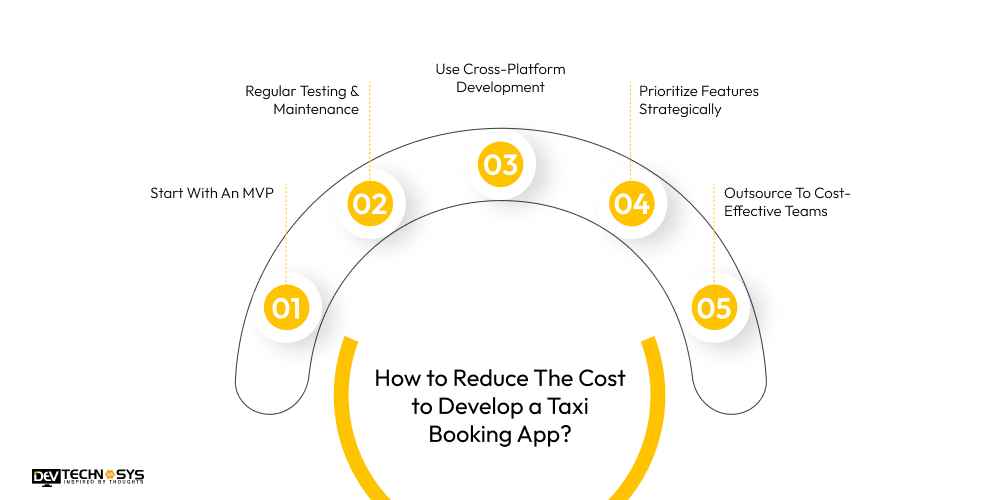
1. Start With An MVP
If you want to build a taxi booking app like Jeeny, you should focus on essential features like ride booking, GPS tracking, payments, and ratings. Launching a minimal viable product allows testing the market and gathering feedback before adding advanced features, keeping initial development costs lower.
2. Regular Testing & Maintenance
Invest in thorough testing during development to catch issues early. Preventing bugs, performance problems, or compliance errors reduces expensive fixes post-launch, saving both time and money while ensuring a smooth user experience.
3. Use Cross-Platform Development
The AI-powered taxi app development uses frameworks like Flutter or React Native to support both iOS and Android. This approach reduces development time, coding effort, and cost compared to creating separate native apps for each platform.
4. Prioritize Features Strategically
Avoid adding all advanced features at once. Focus on core functionalities first and plan additional features in phases. This phased approach reduces initial expenses and ensures you invest in features that truly add value.
5. Outsource To Cost-Effective Teams
Consider hiring experienced freelancers or agencies in regions with lower development rates. Outsourcing developers from a top hybrid app development company in Dubai can reduce costs without compromising quality, but ensure proper communication, project management, and technical expertise to avoid delays or rework.
What are the Smart Monetization Strategies For Taxi Booking Apps?
Monetization is crucial to the long-term success of any taxi booking app. Choosing the right revenue strategies ensures steady income while maintaining a positive user experience. Smart monetization balances profitability, driver satisfaction, and customer retention for sustainable business growth.
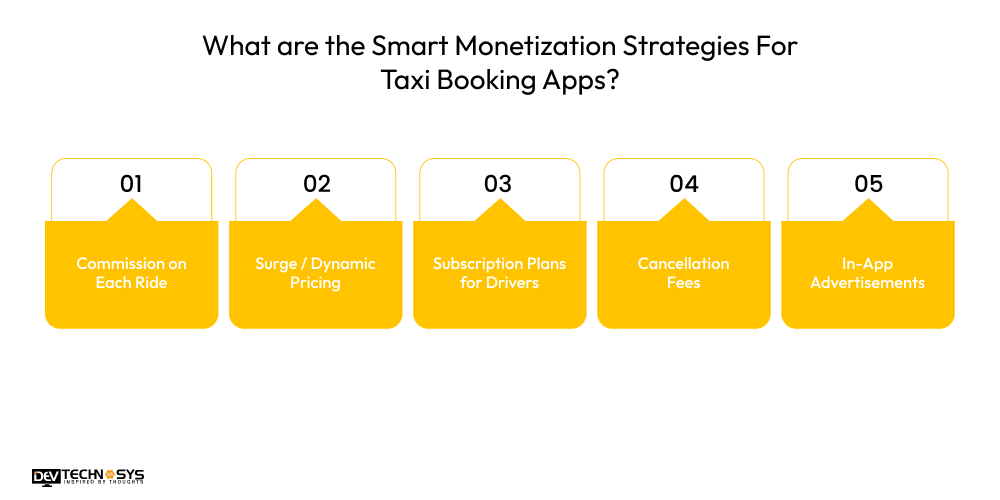
1. Commission on Each Ride
This is the most widely used monetization model for taxi apps. The platform deducts a fixed percentage from every completed ride, usually between 10% and 30%. As ride bookings grow, revenue increases automatically, making it a scalable, predictable, and sustainable primary income source.
2. Surge / Dynamic Pricing
Dynamic pricing increases fares during peak hours, high-demand periods, or limited driver availability. This strategy helps balance supply and demand while boosting platform revenue. When implemented transparently, it encourages more drivers to accept rides and improves service availability during busy times.
3. Subscription Plans for Drivers
Instead of charging commission per ride, platforms can offer weekly or monthly subscription plans for drivers. Drivers pay a fixed fee and retain full earnings from trips. This approach creates consistent recurring revenue while attracting professional, high-frequency drivers seeking better profit margins.
4. Cancellation Fees
Charging riders a small fee for late cancellations compensates drivers for the time and effort they put into the ride. It also discourages unnecessary booking disruptions and improves operational efficiency. A well-structured cancellation policy helps maintain fairness while contributing an additional stream of revenue.
5. In-App Advertisements
Taxi apps can generate additional income by displaying targeted ads within their app interfaces. Local businesses, restaurants, and retail brands can promote their services to users on booking or trip-completion screens, generating passive revenue without disrupting the ride experience. This monetization method helps platforms diversify revenue streams while maintaining a smooth, user-friendly interface and overall customer satisfaction.

How Silly Mistakes Can Increase Taxi App Development Budget in UAE?
Even seemingly minor mistakes during taxi app development can dramatically inflate the overall budget. Overlooking proper planning, underestimating backend complexity, ignoring platform-specific requirements, or failing to account for third-party integrations often results in costly rework.
Additionally, poor UI/UX design, insufficient testing, and noncompliance with regulations can cause delays, user dissatisfaction, or legal issues. Careful project management, thorough research, and strategic attention to every detail are essential to avoid unexpected expenses and keep development on track. Here are the mistakes businesses make that can affect the cost and future of taxi app development in Dubai.
| Mistake | Cost Impact |
| Poor Requirement Planning | 15% to 25% increase |
| Ignoring UI/UX Design | 10% to 20% increase |
| Choosing Wrong Tech Stack | 20% to 30% increase |
| No Scalability Planning | 15% to 25% increase |
| Weak Testing Strategy | 10% to 18% increase |
| Poor Communication | 8% to 15% increase |
Conclusion
The cost of developing a taxi booking app varies depending on the app type, features, platform, and regional requirements. Basic on-demand apps typically cost $8,000 to $12,000, while advanced multi-service, EV, or aggregator apps may exceed the final budget. Careful planning, prioritizing features, and choosing the right development team help maintain quality within budget. If you are a business looking for a cost-effective taxi app solution, partnering with an experienced taxi booking app development company like Dev Technosys will be a smart move.
FAQs
Q1. How Much Does it Cost to Build a Taxi Booking App?
The cost to develop a taxi booking app in Middle East with basic features such as GPS tracking, payment integration, and reviews typically ranges from $8,000 to $12,000. It is ideal for startups looking to test the market while keeping initial development expenses low.
Q2. Does Adding Multiple Platforms Increase Taxi Booking App Development Cost?
Yes. Developing an app for both iOS and Android, or including a web platform, increases the cost to develop a taxi booking app. Using cross-platform frameworks like Flutter or React Native can reduce expenses while maintaining functionality across platforms.
Q3. How Do Features Affect the Taxi Clone App Development Cost?
Advanced features such as surge pricing, loyalty programs, subscriptions, or EV monitoring increase complexity. Each additional feature adds to the cost to build a taxi booking app, so careful selection and prioritization are essential for managing the project budget effectively.
Q4. Can Regulatory Compliance Affect The Budget?
Absolutely. Meeting local transport regulations, licensing, and fare reporting requirements in the Middle East adds to development complexity and costs. Still, it ensures the taxi app’s legal operation, trustworthiness, and long-term sustainability.
Q5. What’s The Most Cost-Effective Strategy For Startups?
Launching a minimal viable product (MVP) with essential ride-hailing features helps startups control costs. Additional functionalities and advanced features can be implemented later based on user feedback and market demand, optimizing budget and growth.