





Key Takeaways:
-
- The global secondhand apparel market is projected to reach $367 billion by 2029, making fashion resale a high-growth business opportunity.
- Building an app like Poshmark typically costs $30,000 to $150,000+, depending on features, app complexity, and technology requirements.
- Essential features such as AI recommendations, secure payments, real-time chat, and seller verification improve user experience and platform trust.
- A successful fashion marketplace can generate revenue through sales commissions, premium subscriptions, featured listings, and in-app advertising.
- Choosing a scalable technology stack and an experienced development partner helps you launch faster, reduce long-term costs, and support future business growth.
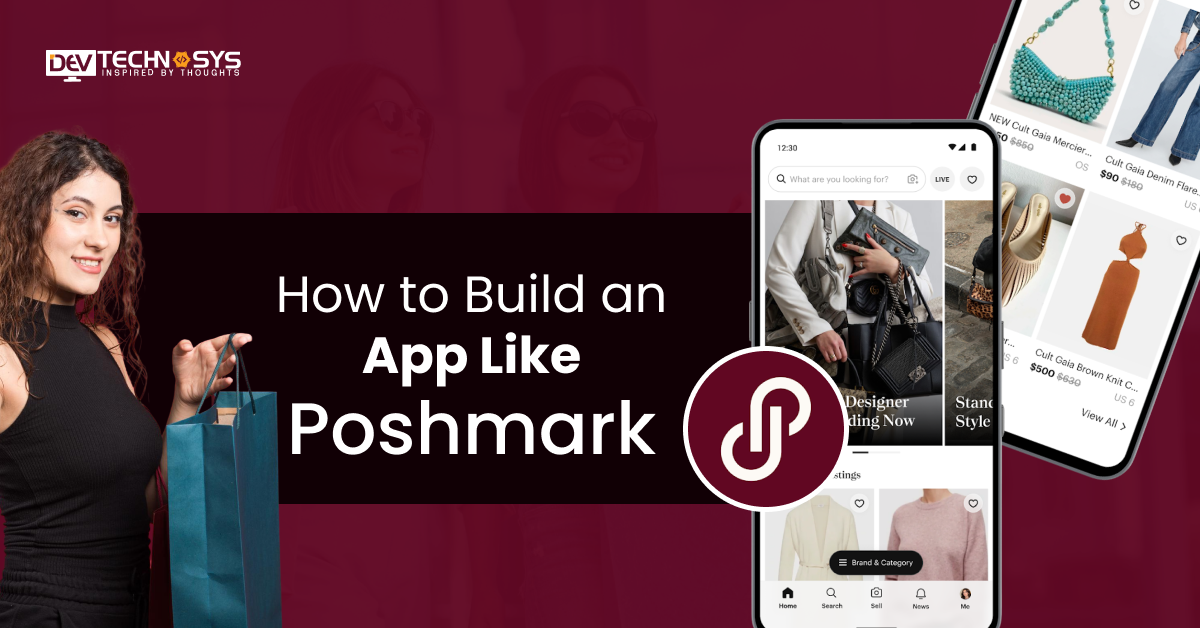
The resale fashion market is expanding rapidly as consumers embrace sustainable shopping and peer-to-peer commerce. If you’re planning to build an app like Poshmark, this is the perfect time to enter this growing industry. An app like Poshmark allows users to buy and sell pre-owned fashion items while creating an engaging social shopping experience. With features such as AI-powered recommendations, secure payments, and seamless communication, an online fashion marketplace can attract loyal users and generate multiple revenue streams.
However, building a successful platform requires careful planning, the right technology stack, and a scalable business model. This guide covers everything you need to know, including essential features, the development process, technology stack, estimated costs, monetization strategies, and industry best practices to help you launch a competitive fashion marketplace app.
What Is Poshmark?
Poshmark is a leading fashion resale platform that enables users to buy and sell new or pre-owned clothing, footwear, accessories, beauty products, and home decor through a social marketplace. Founded in 2011, the platform combines eCommerce with social networking by allowing users to follow sellers, share product listings, and interact within the community.
This unique approach has made it one of the most recognized names in the resale industry. For entrepreneurs planning to create an app like Poshmark, understanding its user-centric marketplace model, trust-building features, and community-driven engagement is the first step toward developing a successful and scalable marketplace application.
Why Build an App Like Poshmark in 2026?
The global resale fashion market is experiencing remarkable growth as consumers increasingly prefer affordable, sustainable, and second-hand shopping options. This shift in buying behavior has created a strong opportunity for businesses looking to build an app like Poshmark and establish a profitable digital marketplace. As demand for circular fashion continues to rise across regions such as the UAE, North America, and Europe, investing in fashion marketplace app development can deliver long-term business value.
Unlike traditional eCommerce platforms, a fashion resale platform encourages user-generated listings, repeat engagement, and community interactions, reducing inventory costs while creating multiple revenue streams. Features like AI-powered recommendations, secure payments, seller verification, and personalized shopping experiences further improve customer retention. Businesses can also monetize through commissions, premium memberships, featured listings, and advertising, making the model highly scalable.
If you’re planning to enter the social commerce space, partnering with a shopping app development company can help you build a secure, feature-rich marketplace that meets evolving user expectations and supports future growth.
Industry Insight
According to ThredUp’s 2025 Resale Report, the global secondhand apparel market is expected to reach $367 billion by 2029, growing faster than the overall retail clothing market.
Types of Fashion Marketplace Apps You Can Build in 2026
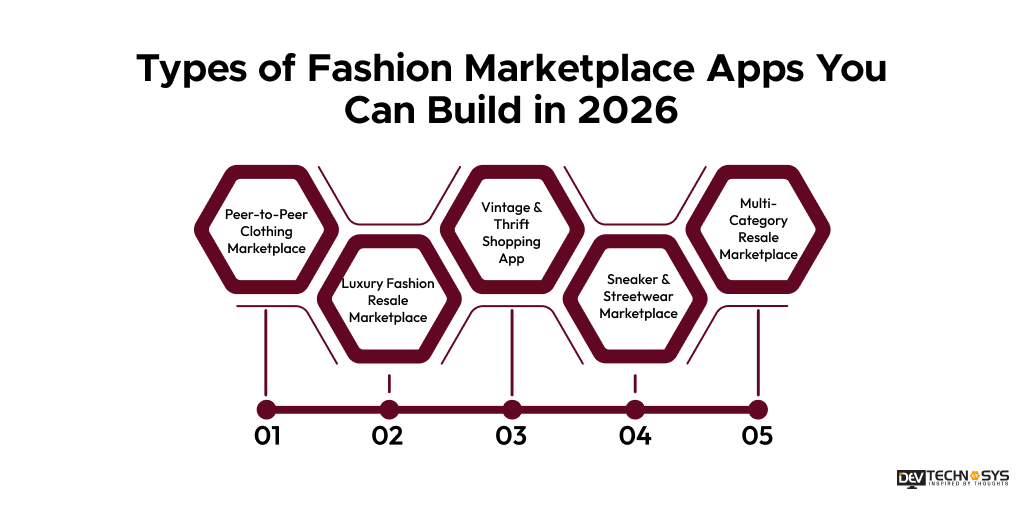
The success of Poshmark has inspired businesses to launch niche marketplaces that cater to different audiences and shopping preferences. Before you start building your platform, it’s important to identify the right marketplace model based on your target users, products, and revenue strategy. Whether you’re planning a resale marketplace app or a specialized fashion platform, selecting the right niche will influence your features, monetization, and long-term growth.
If you’re looking for a tailored shopping app development solution, understanding these marketplace models can help you choose the best approach for your business.
1. Peer-to-Peer Clothing Marketplace
A peer-to-peer marketplace app allows individuals to buy and sell clothing directly with each other. Users can create listings, negotiate prices, communicate through in-app chat, and complete secure transactions. This model offers low operational costs while encouraging strong community engagement and repeat purchases.
2. Luxury Fashion Resale Marketplace
Luxury resale platforms specialize in premium brands, designer handbags, watches, and exclusive fashion accessories. These marketplaces require authentication services, seller verification, secure payment gateways, and fraud prevention tools to build trust among high-value buyers and sellers.
3. Vintage & Thrift Shopping App
A second-hand shopping app focused on vintage and thrift fashion attracts users searching for unique, affordable, and sustainable clothing. Features like curated collections, personalized recommendations, and category-based browsing enhance the shopping experience and increase user engagement.
4. Sneaker & Streetwear Marketplace
Sneaker and streetwear marketplaces serve collectors and enthusiasts looking for limited-edition footwear and apparel. To maintain credibility, these platforms often include product authentication, bidding systems, price history, and inventory tracking for high-demand items.
5. Multi-Category Resale Marketplace
A multi-category marketplace expands beyond fashion by allowing users to trade accessories, beauty products, home décor, electronics, and lifestyle items. This model offers greater revenue potential while attracting a broader customer base. It is ideal for businesses planning to scale their marketplace beyond clothing and build a comprehensive resale ecosystem.
Essential Features to Build an App Like Poshmark
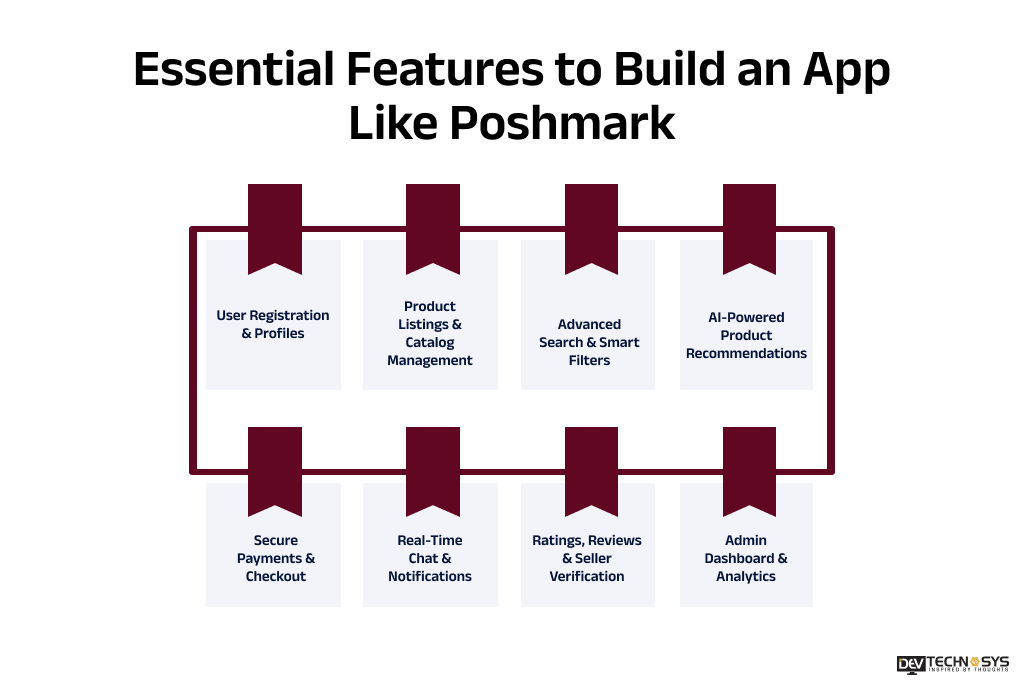
A successful marketplace depends on delivering a seamless experience for buyers, sellers, and administrators. When you build an app like Poshmark, your platform should simplify product discovery, secure transactions, and community engagement while ensuring scalability. The following features form the foundation of a modern buy and sell app like Poshmark and help create a reliable clothing resale app that keeps users engaged.
You can accelerate development by partnering with an ecommerce app development company that has experience building scalable marketplace applications with advanced security and user-centric features.
1. User Registration & Profiles
Allow users to sign up using email, phone numbers, or social media accounts. A personalized profile should display purchase history, seller ratings, followers, saved items, and account settings. Verified profiles help establish trust and encourage secure transactions between buyers and sellers.
2. Product Listings & Catalog Management
Enable sellers to upload high-quality images, write detailed product descriptions, set pricing, choose categories, and manage inventory. Bulk uploads, product editing, and listing management tools make it easier for sellers to keep their stores updated.
3. Advanced Search & Smart Filters
Help buyers find products quickly with keyword search, category filters, brand selection, size, color, condition, price range, and location-based filtering. An intelligent search system improves product discovery and enhances the overall shopping experience.
4. AI-Powered Product Recommendations
An AI-powered marketplace app analyzes browsing behavior, purchase history, wishlists, and user preferences to recommend relevant products. Personalized suggestions increase engagement, improve conversion rates, and encourage repeat purchases.
5. Secure Payments & Checkout
Integrate multiple payment methods, including credit cards, digital wallets, and local payment gateways. Secure checkout, payment encryption, refunds, and escrow services protect both buyers and sellers while reducing transaction risks.
6. Real-Time Chat & Notifications
Built-in messaging allows buyers and sellers to negotiate prices, ask questions, and share updates instantly. Push notifications keep users informed about new offers, order status, promotions, messages, and wishlist activity.
7. Ratings, Reviews & Seller Verification
Ratings and reviews build marketplace credibility by helping users make informed decisions. Seller verification, identity checks, and product reporting features reduce fraudulent activities and create a safer shopping environment.
8. Admin Dashboard & Analytics
The admin panel should provide complete control over users, product listings, transactions, commissions, disputes, reports, and platform performance. Real-time analytics help administrators monitor marketplace growth, user behavior, and business metrics, enabling data-driven decisions for continuous improvement.
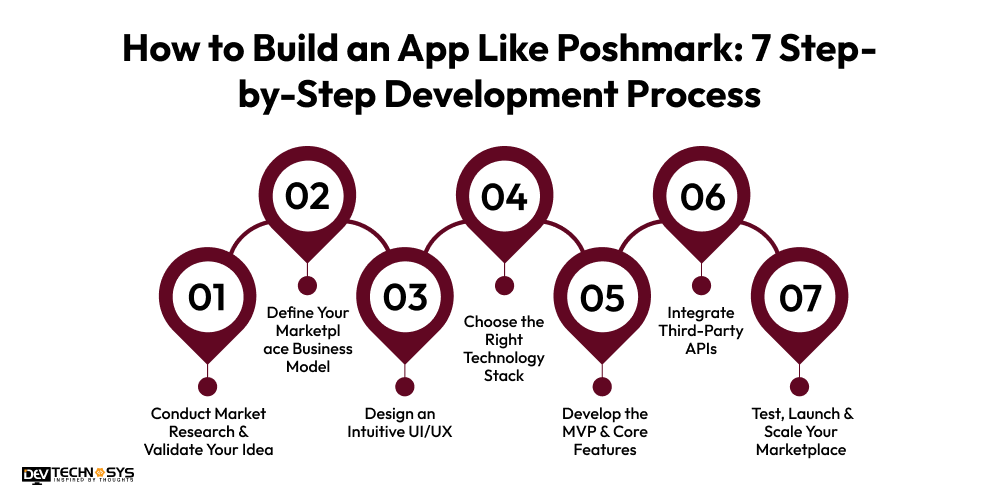
How to Build an App Like Poshmark: 7 Step-by-Step Development Process
Building a successful marketplace requires careful planning, the right technology, and a user-focused approach. If you want to develop an app like Poshmark, following a structured development process helps reduce risks, optimize costs, and accelerate time to market. From validating your idea to launching the final product, every stage contributes to creating a scalable and competitive marketplace.
If you’re planning a complex marketplace project, it’s beneficial to hire a dedicated developer with expertise in marketplace architecture, API integrations, and scalable mobile applications.
1. Conduct Market Research & Validate Your Idea
Start by analyzing competitors, identifying your target audience, and understanding current market trends. Evaluate existing platforms to identify feature gaps, pricing strategies, and customer pain points. This research helps you define a unique value proposition and validate the demand for your marketplace before investing in development.
2. Define Your Marketplace Business Model
Choose how your platform will generate revenue through commission fees, subscription plans, featured listings, advertisements, or premium seller services. Decide whether your marketplace will focus on fashion, luxury products, vintage clothing, or multiple product categories. A well-defined business model provides a clear roadmap for future growth.
3. Design an Intuitive UI/UX
An engaging interface improves user satisfaction and retention. Design simple navigation, attractive product pages, quick checkout flows, and responsive layouts that work seamlessly across Android, iOS, and web platforms. Prioritize accessibility and minimize the number of steps required to complete a purchase or list a product.

4. Choose the Right Technology Stack
The technology stack determines your application’s performance, security, and scalability. Select reliable frontend and backend frameworks, cloud infrastructure, databases, payment gateways, and third-party services based on your project requirements. Planning for API integration at this stage ensures smooth connectivity with payment systems, shipping providers, authentication services, analytics tools, and notifications.
5. Develop the MVP & Core Features
Begin with a Minimum Viable Product (MVP) that includes essential features such as user registration, product listings, search, secure payments, messaging, and order management. An MVP allows you to create an app like Poshmark with a faster launch cycle while collecting valuable user feedback for future enhancements.
6. Integrate Third-Party APIs
Third-party services improve functionality without increasing development complexity. Integrate APIs for payment processing, logistics, cloud storage, maps, email services, SMS verification, push notifications, and customer support. Well-planned integrations improve reliability and deliver a better user experience.
7. Test, Launch & Scale Your Marketplace
Before deployment, perform functional, security, performance, usability, and compatibility testing to eliminate bugs and ensure a smooth user experience. After launch, monitor user behavior, collect feedback, and release regular updates with new features, performance improvements, and security enhancements. Continuous optimization is essential to develop an app like Poshmark that remains competitive as your user base grows.
Advanced Technologies Powering Modern Fashion Marketplace Apps
Modern marketplace platforms rely on intelligent technologies to improve user experience, strengthen security, and support business growth. These innovations are becoming essential for social commerce app development and delivering a seamless shopping experience. Explore the latest trending IT solutions to understand how emerging technologies can help future-proof your marketplace application.
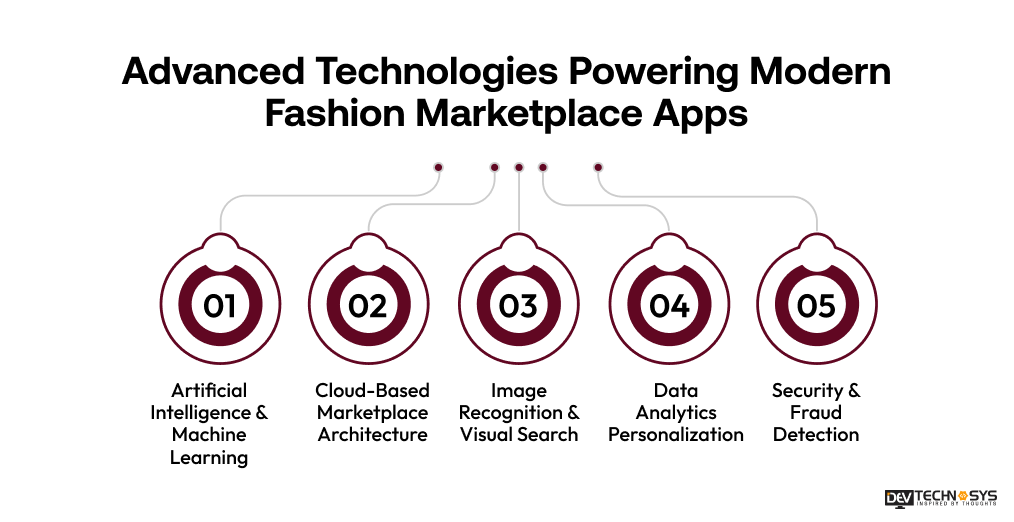
1. Artificial Intelligence & Machine Learning
Artificial intelligence helps personalize the shopping journey by analyzing user behavior, purchase history, and browsing patterns. An AI-powered marketplace app can recommend products, predict customer preferences, automate customer support with chatbots, and identify fraudulent activities in real time. Machine learning models become more accurate as user data grows, leading to higher engagement and conversion rates.
2. Cloud-Based Marketplace Architecture
A cloud-based marketplace provides the flexibility to handle increasing traffic, store large volumes of product data, and maintain high application availability. Combined with a scalable marketplace architecture, cloud infrastructure enables businesses to expand into new markets without compromising performance or user experience.
3. Image Recognition & Visual Search
Visual search allows users to upload an image and find similar fashion products within the marketplace. Image recognition technology can also automate product categorization, detect duplicate listings, and improve inventory management. These capabilities simplify product discovery and make shopping faster and more intuitive.
4. Data Analytics & Personalization
Advanced analytics help businesses understand customer behavior, monitor marketplace performance, and identify popular products. Insights from user interactions enable personalized offers, targeted promotions, and smarter inventory decisions, helping businesses improve customer retention and maximize revenue.
5. Security & Fraud Detection
Marketplace platforms handle sensitive user data and financial transactions, making security a top priority. Technologies such as AI-based fraud detection, encrypted payment processing, multi-factor authentication, automated content moderation, and real-time risk monitoring protect users while maintaining trust across the platform.
Technology Stack Required for Poshmark App Development
Choosing the right technology stack plays a critical role in the success of your marketplace. A well-planned stack ensures high performance, seamless scalability, faster development, and robust security.
During Poshmark app development, businesses should select technologies that support growing user traffic, secure transactions, real-time communication, and efficient API integration with third-party services. The table below highlights the most commonly used technologies for building a scalable fashion marketplace.
| Technology Layer | Recommended Technologies | Purpose |
| Frontend | Flutter, React Native, Swift, Kotlin | Develop responsive Android and iOS applications |
| Backend | Node.js, Django, Laravel, Spring Boot | Handle business logic and server-side operations |
| Database | PostgreSQL, MongoDB, MySQL | Store user, product, and transaction data |
| Cloud Platform | AWS, Microsoft Azure, Google Cloud | Host applications and scale infrastructure |
| Payment Gateway | Stripe, PayPal, Razorpay, Adyen | Enable secure online payments |
| Authentication | Firebase Auth, OAuth 2.0, Auth0 | Secure user login and identity verification |
| Search Engine | Elasticsearch, Algolia | Deliver fast product search and filtering |
| Storage | Amazon S3, Cloudinary | Store product images and media files |
| Push Notifications | Firebase Cloud Messaging, OneSignal | Send order updates and promotional alerts |
| Analytics | Google Analytics, Mixpanel, Firebase Analytics | Track user behavior and business performance |
| DevOps | Docker, Kubernetes, GitHub Actions | Automate deployment and infrastructure management |
The final technology stack should align with your business goals, expected user base, and future expansion plans. Choosing modern frameworks and cloud-native solutions allows your marketplace to remain secure, scalable, and easy to maintain as your platform grows.
Tech Insight
According to Google Cloud, AI-powered personalization can improve customer engagement by delivering relevant product recommendations based on user behavior and preferences.
How Much Does It Cost to Build an App Like Poshmark?
The cost to build an app like Poshmark typically ranges from $30,000 to $150,000+, depending on the application’s complexity, feature set, technology stack, platform selection, UI/UX design, cloud infrastructure, and third-party integrations.
Whether you’re planning a Poshmark clone app or a fully customized fashion marketplace app development project, your budget should also account for AI capabilities, security, scalability, and post-launch maintenance. Working with an experienced mobile app development company ensures your investment delivers a secure, high-performing, and future-ready marketplace.
| App Complexity | Estimated Cost | Development Timeline | Best For |
| Basic MVP Marketplace | $30,000 – $50,000 | 3-4 Months | Startups validating an idea |
| Mid-Level Marketplace | $50,000 – $100,000 | 4-6 Months | Growing businesses |
| Enterprise Marketplace | $100,000 – $150,000+ | 6+ Months | Large enterprises with advanced features |
Factors Affecting the Poshmark App Development Cost
Several technical and business factors determine the mobile app development cost.
1. App Complexity
Adding features such as live chat, AI recommendations, visual search, seller verification, inventory synchronization, and multi-vendor management requires more development hours and increases infrastructure requirements.
2. Platform Selection
Developing separate native apps for Android and iOS generally costs more than cross-platform development. The choice depends on your target audience, performance requirements, and long-term business goals.
3. UI/UX Design
A clean interface with intuitive navigation, personalized user journeys, responsive layouts, and conversion-focused design improves engagement but requires additional design and usability testing.
4. Technology Stack
Modern technologies such as Flutter, React Native, Node.js, Kubernetes, Redis caching, GraphQL, and cloud-native architecture improve scalability, performance, and maintainability while influencing development costs.
5. Third-Party Integrations
Integrating payment gateways, shipping providers, CRM platforms, analytics tools, cloud storage, authentication services, and notification systems requires reliable API integration, adding to the project scope.
6. AI Features
Features like recommendation engines, computer vision, fraud detection, automated moderation, and predictive analytics enhance the shopping experience but require additional AI model development and cloud computing resources.
7. Security & Compliance
Implementing SSL/TLS encryption, OAuth 2.0 authentication, PCI DSS compliance, role-based access control (RBAC), and secure payment processing protects user data and builds trust across the marketplace.
8. Development Team Location
Hourly development rates vary significantly across regions. Businesses looking to optimize budgets often compare offshore, nearshore, and local development teams before choosing a technology partner.
9. Maintenance & Updates
Regular maintenance includes performance optimization, bug fixes, feature enhancements, server monitoring, dependency updates, and operating system compatibility. Understanding the mobile app maintenance cost helps businesses plan sustainable long-term operations.
| Cost Factor | Impact on Development Cost | Estimated Contribution |
| App Complexity (MVP, Mid-Level, Enterprise) | Determines overall development effort, architecture, and features | 25-30% |
| Feature Set & Functionality | AI recommendations, chat, wishlists, seller tools, and admin panel | 20-25% |
| UI/UX Design | Custom interfaces, user flows, prototyping, and responsive layouts | 10-12% |
| Technology Stack | Frontend, backend, databases, cloud infrastructure, DevOps | 10-15% |
| Third-Party API Integration | Payment gateways, shipping APIs, analytics, and authentication | 8-10% |
| AI & Advanced Features | Recommendation engine, computer vision, fraud detection | 8-12% |
| Security & Compliance | PCI DSS, OAuth 2.0, SSL/TLS, RBAC, data encryption | 5-8% |
| Testing & Quality Assurance | Functional, performance, security, and device testing | 5-7% |
| Post-Launch Maintenance & Updates | Bug fixes, feature upgrades, OS compatibility, and monitoring | 5-10% |
10. Estimated Annual Maintenance Cost
After launch, the mobile app maintenance costs typically costs 15% to 20% of the initial development budget each year. This investment covers server monitoring, security patches, performance optimization, cloud infrastructure, bug fixes, API updates, feature enhancements, and compatibility with the latest Android and iOS releases, ensuring your marketplace remains secure, scalable, and competitive.
Monetization Strategies for a Buy and Sell App Like Poshmark
Building a successful marketplace is not only about attracting buyers and sellers but also about creating sustainable revenue streams. If you plan to make an app like Poshmark, choosing the right monetization model is essential for long-term profitability. A modern online fashion marketplace can generate recurring income through commissions, subscriptions, advertising, and value-added services.
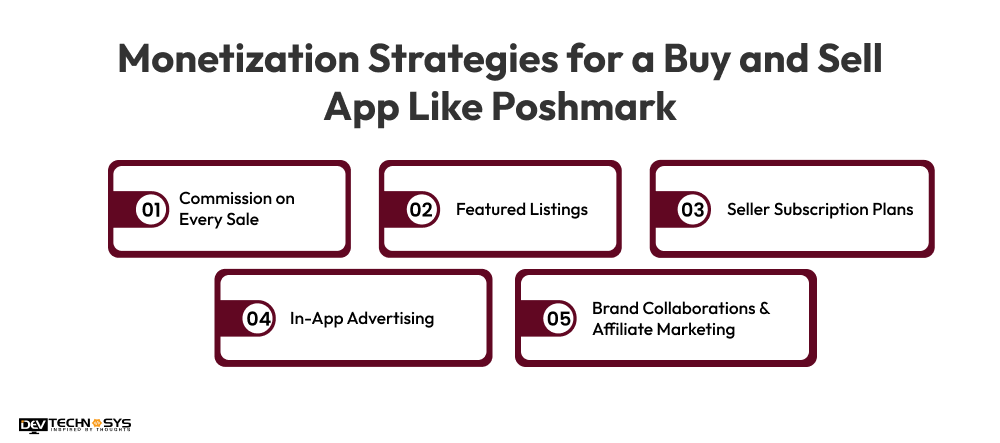
1. Commission on Every Sale
The commission-based model is the primary revenue source for most marketplace platforms. Every time a transaction is completed, the platform deducts a fixed percentage or flat fee from the seller’s earnings. This approach allows your fashion resale platform to generate consistent revenue while encouraging more sellers to join and list products.
2. Featured Listings
Allow sellers to pay for premium visibility by promoting their products at the top of search results, category pages, or homepage banners. Featured listings improve product exposure, increase conversion rates, and create an additional revenue stream without affecting the overall shopping experience.
3. Seller Subscription Plans
Offer monthly or annual subscription packages with premium benefits such as lower commission fees, advanced analytics, unlimited product listings, priority customer support, and marketing tools. Subscription plans generate predictable recurring revenue while encouraging long-term seller retention.
4. In-App Advertising
Brands, fashion retailers, and influencers can advertise products through sponsored banners, promoted collections, and personalized campaigns. Advertising becomes increasingly profitable as your buy and sell fashion app attracts more active users and higher daily traffic.
5. Brand Collaborations & Affiliate Marketing
Collaborate with fashion brands, logistics providers, authentication services, and payment partners to create additional revenue opportunities. Affiliate partnerships, sponsored campaigns, exclusive product launches, and co-branded promotions help diversify income while increasing user engagement and marketplace credibility.
Insight
According to McKinsey & Company, consumers are increasingly choosing resale shopping because it offers better value, sustainability, and access to premium fashion brands.
Common Challenges in Fashion Marketplace App Development and Their Solutions
Developing a successful marketplace involves more than building features. Businesses must overcome technical, operational, and user experience challenges to create a secure, scalable, and engaging platform. Whether you’re planning to develop an app like Poshmark or launch a resale marketplace app, addressing these challenges early helps reduce risks, improve user satisfaction, and support long-term growth.
| Challenge | Impact | Solution |
| Building User Trust | Fake sellers and counterfeit products can reduce customer confidence. | Implement seller verification, identity checks, product authentication, ratings, reviews, and AI-powered fraud detection. |
| Marketplace Liquidity | Fewer buyers or sellers can slow marketplace growth. | Launch with a focused niche, offer referral programs, promotional campaigns, and incentives to attract both user groups. |
| Secure Payment Processing | Payment failures and fraud affect user experience and platform credibility. | Integrate trusted payment gateways, SSL/TLS encryption, PCI DSS compliance, and escrow payment services. |
| Scalability & Performance | Growing traffic can lead to slow loading times and downtime. | Use cloud-native infrastructure, load balancing, CDN, caching, and microservices architecture for seamless scaling. |
| Logistics & Order Management | Shipping delays and poor order tracking reduce customer satisfaction. | Integrate reliable shipping APIs, real-time order tracking, automated notifications, and inventory synchronization. |
| Data Security & Privacy | Sensitive customer data is vulnerable to cyber threats. | Apply OAuth 2.0 authentication, role-based access control (RBAC), end-to-end encryption, and regular security audits. |
| Customer Retention | Low engagement impacts repeat purchases and revenue. | Introduce loyalty programs, personalized recommendations, wishlists, push notifications, and targeted marketing campaigns. |
By addressing these challenges during the planning and development stages, businesses can create a reliable peer-to-peer marketplace app that delivers a seamless shopping experience while supporting sustainable growth. For businesses targeting multiple platforms, hybrid app development services can also reduce development time and simplify maintenance without compromising performance.
Top Apps Like Poshmark to Take Inspiration From
Before you create an app like Poshmark, it’s worth analyzing other successful resale platforms to understand their strengths, business models, and unique features. Studying every Poshmark alternative helps you identify market opportunities, improve your product strategy, and build a marketplace that offers a better user experience. The following platforms have set industry benchmarks in the second-hand shopping app and social commerce space.
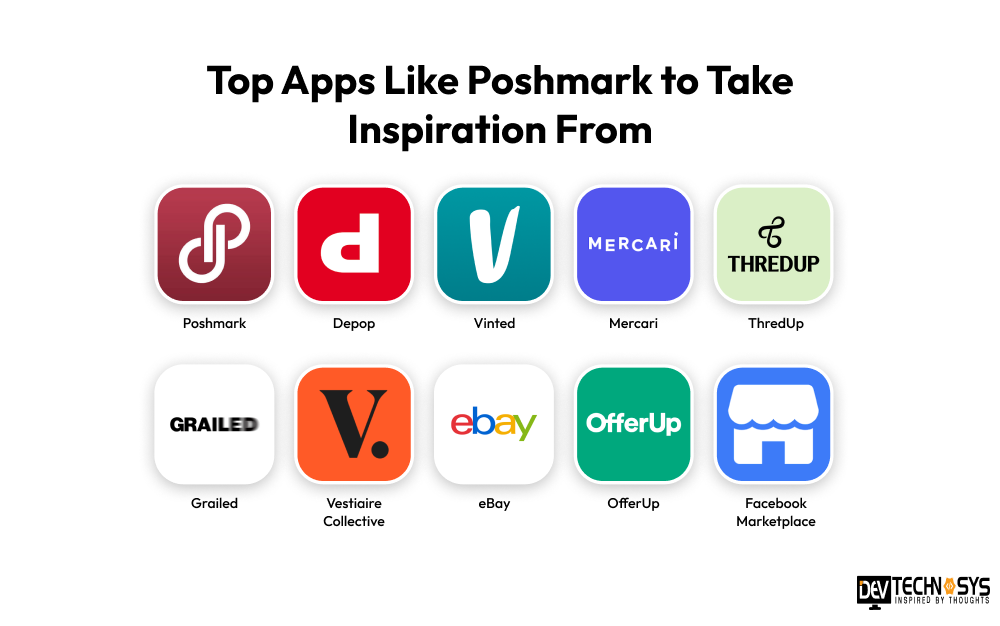
| App | Primary Category | Key Features | Revenue Model |
| Poshmark | Fashion Resale | Social selling, live shopping, seller closets, secure payments | Sales commission |
| Depop | Fashion & Streetwear | Social feed, direct messaging, seller profiles | Sales commission |
| Vinted | Second-Hand Fashion | No seller fees, buyer protection, and shipping integration | Buyer protection fees |
| Mercari | General Marketplace | Product listings, in-app messaging, nationwide shipping | Transaction fees |
| ThredUp | Consignment Marketplace | Quality inspection, managed inventory, brand partnerships | Commission & service fees |
| Grailed | Luxury & Streetwear | Authentication, curated collections, premium listings | Sales commission |
| Vestiaire Collective | Luxury Fashion | Product authentication, global marketplace, secure checkout | Commission & authentication fees |
| eBay | Multi-Category Marketplace | Auctions, fixed-price listings, seller ratings | Listing & transaction fees |
| OfferUp | Local Marketplace | Local buying, messaging, secure payments | Advertising & premium listings |
| Facebook Marketplace | Community Marketplace | Local listings, social integration, direct communication | Advertising |
Each platform serves a different audience, but they share common characteristics such as secure payments, user-friendly interfaces, seller verification, personalized recommendations, and scalable marketplace infrastructure. When you make an app like Poshmark, focus on solving specific customer pain points instead of replicating existing platforms.

Development Timeline to Create an App Like Poshmark
The time required to create an app like Poshmark depends on the project scope, feature complexity, technology stack, and development methodology. A basic MVP can be launched within a few months, while an enterprise-grade marketplace with AI capabilities, real-time messaging, advanced analytics, and cloud-native infrastructure requires a longer development cycle.
| Development Phase | Key Activities | Estimated Timeline |
| Discovery & Planning | Requirement gathering, market research, business analysis | 2-3 Weeks |
| UI/UX Design | Wireframes, prototypes, user journey mapping, and design approval | 3-4 Weeks |
| Frontend Development | Buyer and seller interfaces, responsive UI development | 4-6 Weeks |
| Backend Development | APIs, database design, authentication, business logic | 5-7 Weeks |
| Third-Party Integrations | Payment gateways, shipping APIs, notifications, analytics | 2-3 Weeks |
| Testing & Quality Assurance | Functional, security, performance, and usability testing | 2-3 Weeks |
| Deployment & Launch | App Store, Google Play deployment, production setup | 1 Week |
| Post-Launch Support | Bug fixes, performance optimization, feature enhancements | Ongoing |
In most cases, businesses can launch a feature-rich marketplace within 3 to 12 months, depending on the project’s complexity and customization requirements. Choosing experienced developers, modern frameworks, and a scalable architecture ensures faster development, easier maintenance, and long-term business growth.
If your goal is to launch on both Android and iOS with a single codebase, Android app development expertise combined with iOS app development company capabilities can help deliver a consistent cross-platform experience.
Conclusion
As sustainable buying and peer-to-peer trading become more popular among consumers, the demand for fashion resale platforms continues to rise. To build an app like Poshmark, you need to choose the correct business model, integrate user-centric features, embrace a scalable technological stack, and create numerous streams of revenue. Every choice you make, whether it’s calculating development expenses or choosing the correct monetization approach, has a long-term impact on the growth and profitability of your platform.
Whether you’re launching a startup MVP or an enterprise-grade marketplace, partnering with experienced professionals can simplify the development journey. Our team specializes in Poshmark app development and delivers secure, scalable, and feature-rich marketplace solutions tailored to your business goals. If you’re looking to expand your business in the GCC region, you can also hire mobile app developers in Dubai to turn your marketplace idea into a successful digital platform.
Frequently Asked Questions
Q1. How Much Does It Cost to Build an App Like Poshmark?
The cost to build an app like Poshmark ranges between $30,000-$150,000+ based on app complexity, features, UI/UX design, technological stack, cloud infrastructure, third-party integrations, and AI capabilities. The cost of an MVP is lower than that of a full-featured, enterprise-level marketplace.
Q2. How Long Does It Take to Develop a Poshmark-like Marketplace App?
The development timeframe typically spans from 3 to 12 months. The MVP can be launched in 3-5 months; the fully customized marketplace with AI-powered suggestions, real-time chat, comprehensive analytics, and scalable cloud architecture might take up to 12 months.
Q3. Which Technologies Are Best for Fashion Marketplace App Development?
You could create a modern marketplace using Flutter or React Native on the front-end, Node.js or Django on the back-end, and PostgreSQL or MongoDB for the database, and host it on AWS or Google Cloud. Technologies such as Redis, Docker, Kubernetes, and RESTful APIs further enhance scalability and performance.
Q4. How Does a Poshmark Clone App Generate Revenue?
A Poshmark clone app can make money via sales commissions, seller subscription plans, featured listings, in-app advertising, affiliate partnerships, authentication services and premium business tools. You may build consistent and scalable revenue streams by combining several monetization tactics.
Q5. What Features Are Essential for a Successful Clothing Resale App?
A successful clothing resale app should include secure user authentication, product listings, advanced search and filters, AI-powered recommendations, real-time messaging, secure payment gateways, ratings and reviews, seller verification, order tracking, and an admin dashboard for marketplace management.