





Key Takeaways
The ERP software development cost in 2026 typically ranges from $30,000 to $150,000+, depending on ERP project complexity, number of modules, deployment model, integrations, customization requirements, and long-term scalability goals.
Cost Based on ERP Type
- Small Business ERP Software ($30,000 – $50,000): Includes essential modules such as accounting, inventory management, customer management, reporting, and basic workflow automation.
- Mid-Market ERP Systems ($50,000 – $80,000): Includes HR management, procurement, advanced reporting, project management, and multi-department functionality.
- Custom ERP Software ($70,000 – $100,000): Includes tailored workflows, custom dashboards, role-based access controls, third-party integrations, and business-specific features.
- Enterprise ERP Platforms ($120,000 – $150,000+): Includes advanced automation, multi-location management, enterprise security, compliance tools, analytics, and high scalability.
Cost Based on Industry Type
- Manufacturing ERP ($70,000 – $150,000+): Includes production planning, inventory control, quality management, supply chain operations, and equipment tracking.
- Healthcare ERP ($80,000 – $150,000+): Includes patient management, billing systems, compliance controls, secure data storage, and resource planning.
- Retail ERP ($50,000 – $120,000): Includes inventory tracking, order management, CRM, payment integrations, and omnichannel operations.
- Logistics ERP ($70,000 – $140,000): Includes fleet management, warehouse operations, shipment tracking, route optimization, and supply chain visibility.
- Construction ERP ($60,000 – $130,000): Includes project management, contractor tracking, procurement management, budgeting, and resource allocation.
Enterprise Resource Planning (ERP) software has become the backbone of modern businesses, helping organizations streamline operations, manage resources, automate workflows, and improve decision-making. As companies increasingly adopt digital transformation strategies, understanding the ERP software development cost has become essential before starting a project.
The cost to build ERP software in 2026 can range from $30,000 for a basic solution to over $150,000 for a large-scale enterprise platform. Several factors influence ERP development cost, including project complexity, number of modules, deployment model, integrations, customization requirements, and development team location.
Whether you are a startup, mid-sized business, or large enterprise, investing in the right ERP system can deliver significant long-term value. This guide breaks down ERP system development cost, key pricing factors, timelines, hidden expenses, and cost-saving strategies to help you plan your budget effectively.
What is ERP Software Development?
ERP software development is the process of designing, building, and deploying a centralized business management system that connects various departments through a single platform. An ERP solution enables organizations to manage operations, finances, inventory, human resources, customer relationships, and reporting from one integrated system.
Unlike off-the-shelf platforms, custom ERP software is tailored to specific business requirements, workflows, and industry regulations. Many businesses invest in professional ERP Software development to create scalable solutions that support future growth, improve productivity, and provide better visibility across departments.
Core Components of an ERP System
A modern ERP platform consists of multiple interconnected modules that share data in real time. Common components include finance and accounting, human resources, inventory management, procurement, sales, customer relationship management, reporting, and analytics. These modules work together to eliminate data silos and improve operational efficiency.
How Modern ERP Platforms Work in 2026?
Modern ERP systems rely on cloud infrastructure, automation, artificial intelligence, and advanced analytics to streamline business processes. Employees can access data through web and mobile applications, while managers gain real-time insights for faster decision-making. Many ERP platforms also integrate with third-party tools such as payment gateways, CRM systems, and accounting software.
Key Modules Included in ERP Software
The modules included in an ERP system depend on business requirements and industry needs. Most organizations prioritize finance, inventory, procurement, HR, and customer management modules during the initial phase. As the business grows, additional features such as business intelligence, workflow automation, project management, and predictive analytics can be added to enhance system capabilities.
ERP Software Development Cost in 2026: Complete Overview
The ERP software development cost in 2026 typically ranges from $30,000 to $150,000+, depending on business requirements, customization needs, integrations, deployment model, and project complexity. Small businesses often require basic ERP systems, while enterprises invest in advanced platforms with multiple modules, automation features, and third-party integrations. Understanding ERP software pricing helps organizations estimate budgets and avoid unexpected expenses during development.
ERP Software Development Cost Breakdown
| ERP Software Type | Estimated Cost |
| Basic ERP Software | $30,000 – $50,000 |
| Mid-Level ERP System | $50,000 – $80,000 |
| Custom ERP Software | $70,000 – $100,000 |
| Industry-Specific ERP Solution | $90,000 – $120,000 |
| Enterprise ERP Platform | $120,000 – $150,000 |
Businesses planning a custom ERP project should evaluate both development and long-term operational expenses. A clear understanding of ERP application development cost, ERP deployment cost, and ERP integration cost allows organizations to choose the right solution while staying within budget. For companies seeking end-to-end ERP Software development services, defining project scope early can significantly improve cost accuracy and project success.
Answer a few quick questions and our experts will share a tailored project estimate.
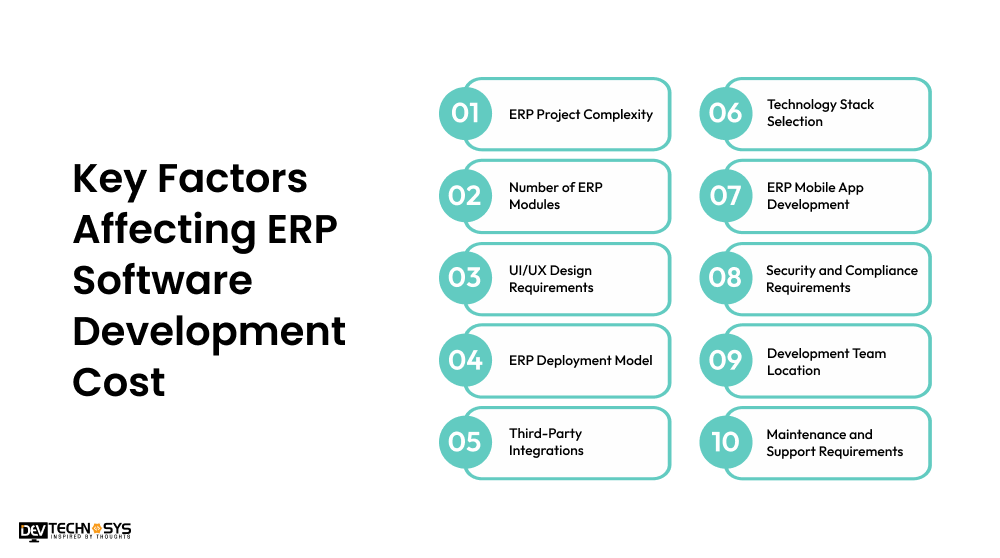
Key Factors Affecting ERP Software Development Cost
Several technical and business factors influence the ERP software development cost. From the number of modules to deployment methods and integration requirements, each decision impacts development effort, resources, and timelines. Understanding these factors helps businesses estimate budgets more accurately and avoid unexpected expenses during the project lifecycle.
1. ERP Project Complexity
The complexity of an ERP project directly affects development costs. A system with advanced workflows, automation, role-based permissions, real-time analytics, and custom business processes requires more planning, development hours, testing, and quality assurance than a basic ERP platform.
2. Number of ERP Modules
ERP solutions are built using modules such as finance, inventory, procurement, HR, CRM, and reporting. The more modules included, the more development work is required. Additional modules also increase database complexity, user management requirements, and integration efforts.
3. UI/UX Design Requirements
A custom user interface designed for multiple departments, user roles, and devices requires additional design and development resources. Businesses that prioritize intuitive navigation, dashboards, and personalized experiences often invest more in UI/UX design to improve user adoption.
4. ERP Deployment Model
The deployment approach significantly impacts ERP deployment cost. Cloud-based ERP systems require hosting configuration, security setup, and infrastructure management, while on-premise deployments may involve server architecture, hardware planning, and additional implementation efforts.
5. Third-Party Integrations
Many ERP platforms integrate with accounting software, CRM systems, payment gateways, inventory tools, communication platforms, and analytics services. Each integration requires API development, testing, maintenance, and security validation, which increases the overall ERP integration cost.
6. Technology Stack Selection
The choice of programming languages, frameworks, databases, cloud platforms, and development tools influences project costs. Modern technologies can improve scalability and performance, but may require experienced developers, resulting in higher development expenses.

7. ERP Mobile App Development
Businesses increasingly require mobile access to ERP systems for remote teams and field employees. Developing dedicated Android and iOS applications alongside the web platform adds design, development, testing, and maintenance efforts, increasing the total project budget.
8. Security and Compliance Requirements
ERP systems manage sensitive business and customer information. Implementing advanced security measures such as data encryption, multi-factor authentication, role-based access control, and compliance standards requires additional development and testing resources.
9. Development Team Location
Development rates vary significantly across regions. Hiring ERP developers in North America generally costs more than outsourcing to experienced teams in Asia or Eastern Europe. Team structure, expertise, and project management capabilities also influence overall costs.
Read also: AI in ERP Implementation
10. Maintenance and Support Requirements
ERP software requires ongoing updates, bug fixes, performance optimization, security patches, and feature enhancements. Long-term support services contribute to ERP software maintenance costs and should be included in the project budget from the beginning.
ERP Cost Factors Summary
| Cost Factor | Cost Impact | Why It Increases Cost |
| ERP Project Complexity | High | Requires advanced features and custom workflows |
| Number of Modules | High | Increases development and testing efforts |
| UI/UX Design | Medium to High | Demands custom interfaces and user experiences |
| Deployment Model | Medium | Requires cloud or on-premise infrastructure setup |
| Third-Party Integrations | High | Needs API development and maintenance |
| Technology Stack | Medium to High | Specialized technologies require experienced developers |
| ERP Mobile App Development | Medium to High | Adds separate mobile development efforts |
| Security & Compliance | High | Requires additional protection and regulatory measures |
| Development Team Location | High | Developer rates vary by region |
| Maintenance & Support | Medium | Includes updates, monitoring, and improvements |
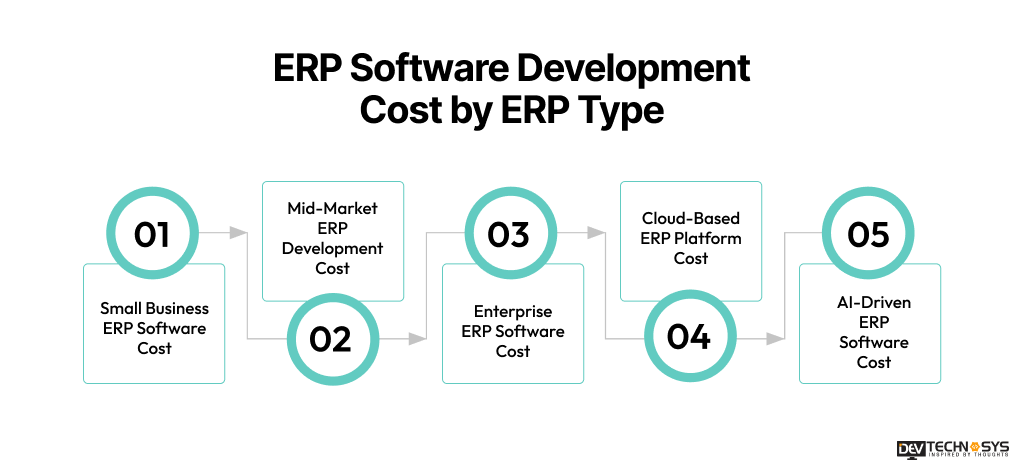
ERP Software Development Cost by ERP Type
The ERP development cost varies significantly based on the type of system a business chooses. Factors such as user capacity, functionality, customization level, deployment method, and integration requirements influence the final budget. Below is a breakdown of ERP software pricing by ERP type.
1. Small Business ERP Software Cost
Small business ERP solutions focus on essential functions such as accounting, inventory management, customer management, and reporting. These systems require fewer modules and integrations, making them the most affordable option for startups and growing companies.
2. Mid-Market ERP Development Cost
Mid-market ERP systems support larger teams and more complex workflows. They typically include HR management, procurement, project tracking, advanced reporting, and multi-department functionality to improve operational efficiency across the organization.
Read also: What is ERP Integration? A Complete Guide for Businesses
3. Enterprise ERP Software Cost
Enterprise ERP platforms are designed for large organizations managing multiple departments, locations, and business processes. They often include advanced automation, role-based access controls, compliance management, and extensive customization capabilities.
4. Cloud-Based ERP Platform Cost
Cloud ERP systems provide flexibility, scalability, and remote accessibility through cloud infrastructure. Development costs may be lower than on-premise systems, but businesses should also consider recurring hosting, security, and infrastructure expenses.
5. AI-Driven ERP Software Cost
AI-powered ERP platforms leverage machine learning, predictive analytics, intelligent reporting, workflow automation, and business forecasting tools. These advanced capabilities increase development complexity and require specialized expertise.
ERP Type Cost Comparison
| ERP Type | Best For | Estimated Cost |
| Small Business ERP | Startups & Small Businesses | $30,000 – $50,000 |
| Mid-Market ERP | Growing Organizations | $50,000 – $80,000 |
| Cloud-Based ERP | Remote & Scalable Operations | $40,000 – $100,000 |
| Enterprise ERP | Large Enterprises | $90,000 – $150,000+ |
| AI-Driven ERP | Data-Driven Enterprises | $100,000 – $150,000+ |
Why Businesses Should Invest in ERP Software Development in 2026?
As businesses face increasing competition, rising operational costs, and growing customer expectations, investing in ERP software has become a strategic necessity. A well-designed ERP system improves efficiency, centralizes data, and supports long-term business growth while delivering measurable returns on investment.
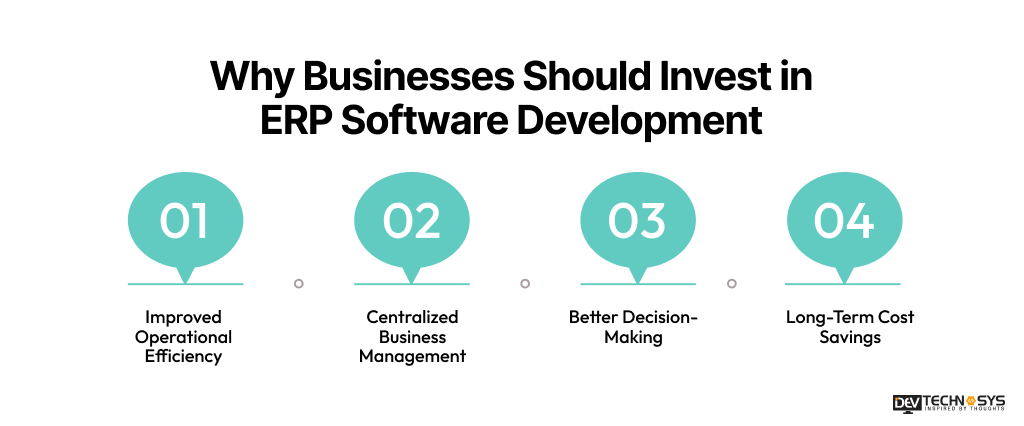
1. Improved Operational Efficiency
ERP software automates repetitive tasks and connects departments through a centralized platform. This reduces manual work, minimizes errors, and enables employees to complete tasks faster, resulting in higher productivity across the organization.
2. Centralized Business Management
Managing multiple business functions through separate systems often creates data silos. ERP platforms bring finance, HR, inventory, sales, and procurement operations into one system, making information more accessible and easier to manage.
3. Better Decision-Making
Modern ERP solutions provide real-time reports, dashboards, and analytics that help decision-makers monitor performance and identify opportunities. Access to accurate data allows businesses to make informed decisions and respond quickly to market changes.
4. Long-Term Cost Savings
Although the initial ERP development cost may seem significant, businesses often achieve substantial savings through automation, improved resource utilization, reduced operational inefficiencies, and streamlined workflows over time.
Organizations looking to gain a competitive advantage often partner with an experienced ERP Software development company to build scalable solutions that support future growth and evolving business requirements.
Why is Budgeting for ERP Development Crucial Before Starting the Project?
A well-planned budget is one of the most important factors in ERP project success. Proper financial planning helps businesses control costs, allocate resources effectively, and ensure the project remains aligned with business goals from development to deployment.
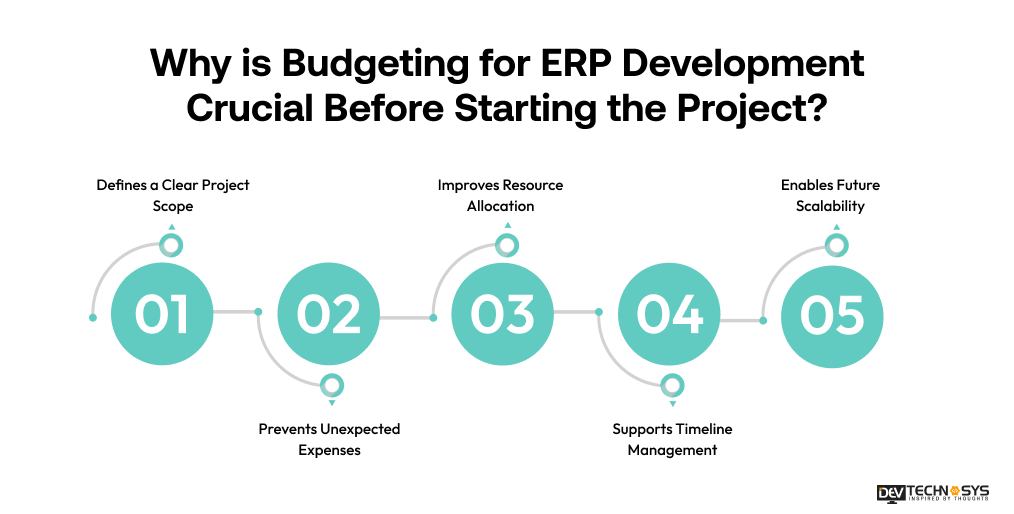
1. Defines a Clear Project Scope
Budget planning helps identify essential features, modules, integrations, and technical requirements before development begins. A clearly defined scope reduces confusion, prevents unnecessary changes, and keeps the ERP project on track.
2. Prevents Unexpected Expenses
ERP projects often involve additional costs such as integrations, testing, training, cloud infrastructure, and maintenance. Establishing a realistic budget early helps businesses prepare for these expenses and avoid financial surprises later.
3. Improves Resource Allocation
A structured budget allows organizations to allocate funds efficiently across design, development, testing, deployment, and support activities. This ensures every stage of the project receives the resources needed for successful execution.

4. Supports Timeline Management
Projects with defined budgets are easier to manage because development teams can prioritize tasks and milestones effectively. Better financial planning often leads to fewer delays and more predictable project delivery schedules.
5. Enables Future Scalability
Businesses rarely stop at the initial ERP release. Budgeting for future upgrades, additional modules, security improvements, and system enhancements ensures the platform can scale as business requirements evolve over time.
ERP Software Development Cost by Industry
ERP requirements vary across industries because every sector has unique workflows, compliance requirements, operational processes, and reporting needs. As a result, the ERP system development cost can differ significantly depending on the industry and level of customization required.
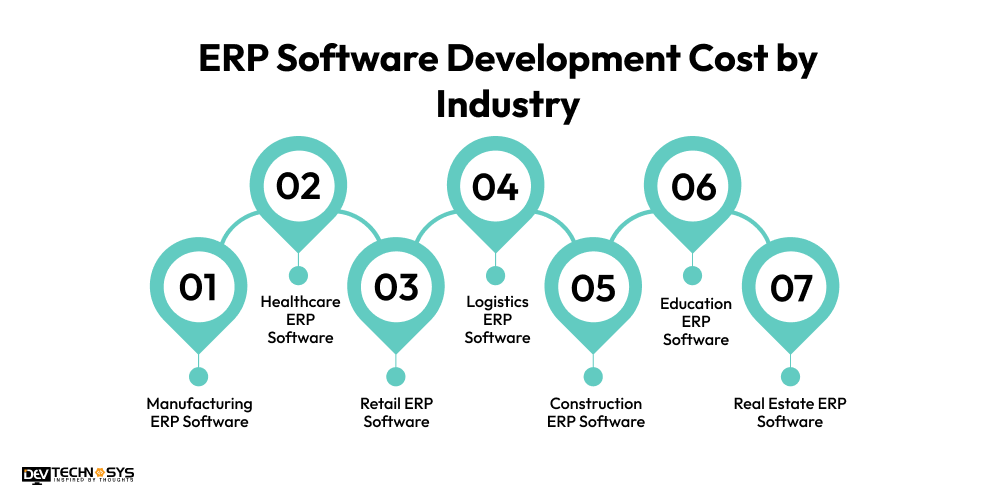
1. Manufacturing ERP Software
Manufacturing ERP systems often include production planning, inventory control, supply chain management, quality assurance, and equipment tracking. These advanced features increase development complexity and overall project costs.
Estimated Cost: $70,000 – $150,000+
2. Healthcare ERP Software
Healthcare ERP platforms require patient management, billing systems, compliance controls, resource planning, and secure data handling. Regulatory requirements and security standards make development more expensive than in many other industries.
Estimated Cost: $80,000 – $150,000+
3. Retail ERP Software
Retail ERP solutions focus on inventory management, sales tracking, customer management, order processing, and omnichannel operations. Integration with eCommerce platforms and payment systems significantly impacts development costs.
Estimated Cost: $50,000 – $120,000
4. Logistics ERP Software
Logistics ERP systems manage fleet operations, warehouse management, shipment tracking, route optimization, and supply chain processes. Real-time tracking and third-party integrations contribute to higher development expenses.
Estimated Cost: $70,000 – $140,000
5. Construction ERP Software
Construction ERP platforms help manage projects, contractors, equipment, procurement, budgets, and resource allocation. Businesses already using construction management software often invest in ERP solutions to centralize operations and improve project visibility.
Estimated Cost: $60,000 – $130,000
6. Education ERP Software
Education ERP solutions typically include student information management, admissions, attendance tracking, finance management, and communication portals. Development costs depend on user volume and feature requirements.
Estimated Cost: $40,000 – $100,000
7. Real Estate ERP Software
Real estate ERP systems support property management, lease administration, customer relationship management, accounting, and reporting functions. Custom workflows and integration requirements play a major role in project pricing.
Estimated Cost: $50,000 – $120,000
The final ERP solution development cost depends on industry-specific requirements, integrations, compliance needs, and customization levels. Businesses should evaluate both current operational needs and future scalability goals before selecting an ERP platform.
Popular ERP Software and Their Estimated Development Costs
Many businesses use established ERP platforms as benchmarks when planning a custom ERP project. While developing an exact replica is rarely necessary, understanding the cost and functionality of leading ERP systems provides a realistic estimate for ERP application development cost and feature planning.
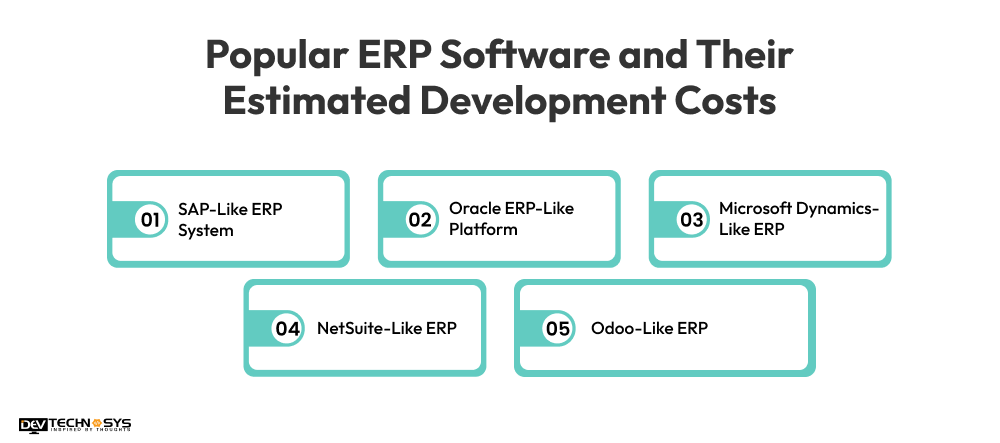
1. SAP-Like ERP System
A SAP-inspired ERP platform includes advanced finance management, supply chain operations, manufacturing planning, procurement, and enterprise reporting. These solutions are designed for large organizations with complex operational requirements.
Estimated Cost: $120,000 – $150,000+
2. Oracle ERP-Like Platform
Oracle-style ERP systems focus on financial management, project planning, procurement, risk management, and business intelligence. Their extensive functionality requires significant development effort and enterprise-grade architecture.
Estimated Cost: $110,000 – $150,000+
3. Microsoft Dynamics-Like ERP
A Dynamics-inspired ERP combines CRM, finance, sales, operations, inventory management, and reporting tools into a unified platform. It is commonly adopted by mid-sized and enterprise businesses.
Estimated Cost: $90,000 – $140,000
4. NetSuite-Like ERP
NetSuite-style ERP solutions offer cloud-based business management with accounting, inventory tracking, order management, customer management, and analytics capabilities for growing organizations.
Estimated Cost: $80,000 – $130,000
5. Odoo-Like ERP
Odoo-inspired ERP platforms provide modular functionality, allowing businesses to start with core features and add modules as needed. This approach makes them more affordable and scalable.
Estimated Cost: $50,000 – $100,000
Popular ERP Software Cost and Feature Comparison
| ERP Platform | Key Features | Estimated Development Cost |
| SAP-Like ERP | Finance Management, Supply Chain, Manufacturing, Procurement, Business Analytics, Multi-Location Management | $120,000 – $150,000+ |
| Oracle ERP-Like | Financial Planning, Procurement, Risk Management, Project Management, Reporting Dashboards | $110,000 – $150,000+ |
| Microsoft Dynamics-Like | CRM, Inventory Management, Sales Automation, Accounting, Operations Management | $90,000 – $140,000 |
| NetSuite-Like ERP | Cloud ERP, Order Management, Inventory Control, Accounting, Customer Management | $80,000 – $130,000 |
| Odoo-Like ERP | Modular Architecture, HR Management, CRM, Inventory Tracking, Accounting, Project Management | $50,000 – $100,000 |
Rather than copying an existing platform, many organizations prefer building a tailored ERP solution that includes only the features they need. Partnering with an experienced on-demand app development company can help businesses develop scalable ERP platforms while controlling unnecessary development costs.
Hidden Costs of ERP Software Development Businesses Often Ignore
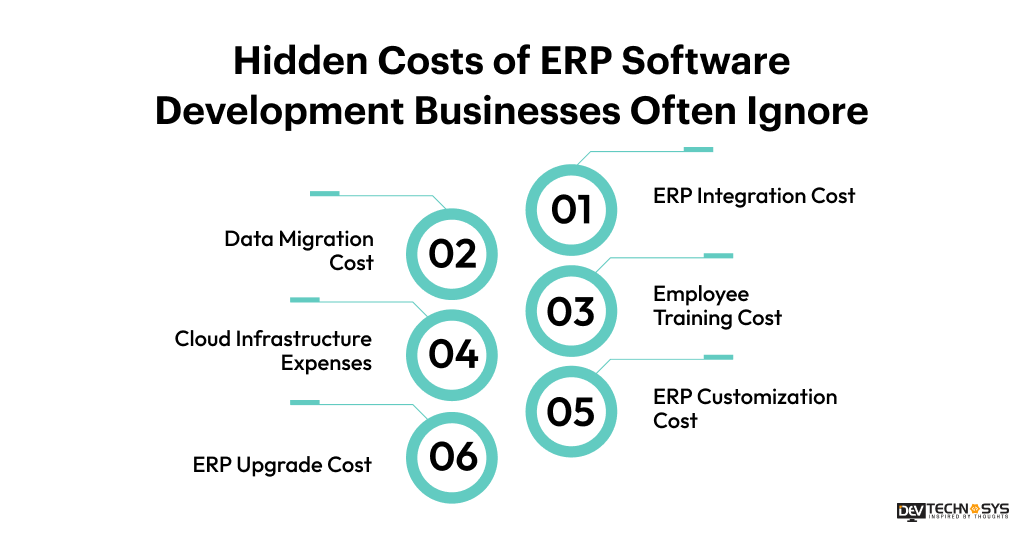
Many businesses focus only on initial development expenses when estimating ERP implementation costs. However, several post-development and operational costs can significantly impact the total investment. Identifying these hidden expenses early helps organizations plan more accurately and avoid budget overruns.
1. ERP Integration Cost
Most ERP systems must connect with accounting software, CRM platforms, payment gateways, HR tools, and other business applications. Integration development, testing, and ongoing maintenance can add substantial costs beyond the initial ERP build.
2. Data Migration Cost
Migrating historical data from spreadsheets, legacy systems, or outdated software requires careful planning and validation. Data cleansing, formatting, and migration processes often require additional development resources and technical expertise.
3. Employee Training Cost
Even the most advanced ERP platform cannot deliver results if employees do not know how to use it effectively. Training sessions, documentation, onboarding materials, and workshops should be included in the overall project budget.
4. Cloud Infrastructure Expenses
Cloud-based ERP systems require hosting, storage, backups, monitoring, and security services. These recurring expenses continue after deployment and should be considered when calculating long-term ERP deployment costs.
5. ERP Customization Cost
As businesses grow, they often request new workflows, reports, dashboards, and modules. Ongoing customization efforts can increase project expenses and should be factored into future budget planning.
6. ERP Upgrade Cost
Technology standards, security requirements, and business needs evolve over time. Regular ERP upgrades help maintain performance, compatibility, and security, but require ongoing investment throughout the software lifecycle.
ERP Development Timeline: How Long Does It Take to Build ERP Software?
The ERP development timeline depends on project scope, number of modules, customization requirements, integrations, and deployment complexity. A basic ERP solution can be completed within a few months, while a fully customized enterprise platform may require significantly more time.
Understanding the development timeline helps businesses plan budgets, resources, and launch schedules more effectively.
| Development Stage | Duration | Key Deliverables |
| Requirement Analysis & Project Planning | 2-3 Weeks | Business requirement gathering, workflow analysis, feature prioritization, project roadmap, and technical specifications |
| UI/UX Design | 2-4 Weeks | Wireframes, user journeys, dashboard layouts, responsive designs, design prototypes |
| System Architecture & Database Design | 1-3 Weeks | ERP architecture planning, database schema creation, security framework, scalability planning |
| Frontend Development | 3-6 Weeks | User dashboards, module interfaces, forms, reports, and web application screens |
| Backend Development | 4-8 Weeks | Business logic, APIs, database development, user management, workflow automation |
| ERP Module Development | 4-12 Weeks | Finance, HR, CRM, inventory, procurement, project management, and reporting modules |
| Third-Party Integrations | 2-6 Weeks | Payment gateways, CRM systems, accounting software, communication tools, cloud services |
| Testing & Quality Assurance | 2-5 Weeks | Functional testing, security testing, performance testing, bug fixing, and user acceptance testing |
| Deployment & Launch | 1-2 Weeks | Server setup, production deployment, data migration, and go-live support |
| Employee Training & Onboarding | 1-3 Weeks | User training sessions, documentation, onboarding support, system walkthroughs |
How to Reduce ERP Software Development Cost Without Sacrificing Quality?
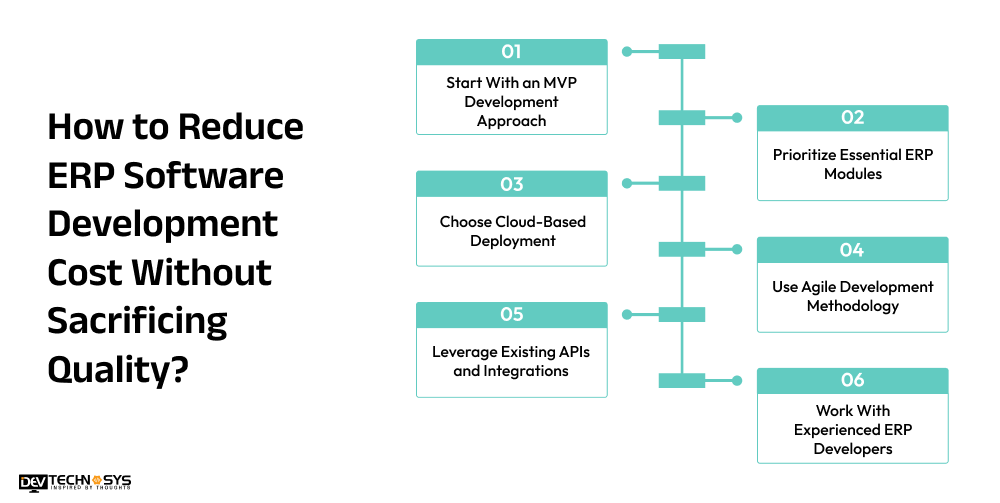
Reducing ERP development expenses requires smart planning rather than cutting essential features or quality standards. By adopting the right development strategy, businesses can optimize budgets, accelerate deployment, and build a scalable ERP solution that delivers long-term value.
1. Start With an MVP Development Approach
Developing a Minimum Viable Product (MVP) allows businesses to launch with only the most important ERP modules. This approach reduces initial development costs, shortens the timeline, and provides valuable user feedback before investing in additional features.
2. Prioritize Essential ERP Modules
Instead of building every module at once, businesses should focus on core functions such as finance, inventory, HR, and procurement. A phased development strategy helps control expenses while ensuring critical business operations are supported.
3. Choose Cloud-Based Deployment
Cloud deployment eliminates the need for costly on-premise infrastructure and hardware investments. It also reduces maintenance responsibilities while providing better scalability, flexibility, and accessibility for growing organizations.
4. Use Agile Development Methodology
Agile development divides the project into manageable phases, allowing continuous testing and improvements throughout the development cycle. This approach minimizes costly revisions, reduces project risks, and improves overall development efficiency.
5. Leverage Existing APIs and Integrations
Using pre-built APIs and third-party services can significantly reduce development effort. Instead of creating every feature from scratch, businesses can integrate proven solutions for payments, communication, analytics, and customer management.
6. Work With Experienced ERP Developers
An experienced development team can identify potential challenges early, streamline workflows, and reduce costly mistakes. Many organizations choose to hire dedicated developers to improve project quality while maintaining better control over development budgets.

ERP Monetization Models and Revenue Opportunities
For businesses planning to launch a commercial ERP product, selecting the right monetization strategy is essential for generating sustainable revenue. The ideal model depends on target customers, deployment method, feature offerings, and long-term business goals.
| Monetization Model | How It Works | Revenue Potential | Best For |
| SaaS Subscription Model | Users pay monthly or annual subscription fees to access the ERP platform. | High Recurring Revenue | Cloud-based ERP providers |
| Per-User Licensing | Businesses are charged based on the number of active users. | High | Mid-sized and enterprise organizations |
| Module-Based Pricing | Customers pay only for the modules they need, such as HR, CRM, or Finance. | Medium to High | Modular ERP solutions |
| Freemium ERP Model | Basic features are offered for free, while premium features require payment. | Medium | Startups and SMB-focused ERP platforms |
| Enterprise Licensing | Large organizations purchase custom licenses with advanced functionality and support. | Very High | Enterprise ERP vendors |
| White-Label ERP Solutions | The ERP platform is licensed to third parties who rebrand and sell it as their own product. | High | Software companies and agencies |
A successful ERP platform often combines multiple revenue streams. For example, businesses may offer subscription plans alongside premium modules, implementation services, training packages, and ongoing support. Choosing the right monetization strategy can maximize profitability while ensuring long-term customer retention and business growth.
Conclusion
The ERP software development cost in 2026 typically ranges between $30,000 and $150,000+, depending on project complexity, customization requirements, deployment model, integrations, and industry-specific needs. While development costs vary from one business to another, investing in a well-designed ERP solution can improve operational efficiency, streamline workflows, and support long-term growth.
Businesses should carefully evaluate development expenses, hidden costs, timelines, and future scalability requirements before starting a project. Working with an experienced development team and understanding the custom web development cost involved in enterprise software projects can help organizations make informed decisions and maximize the return on their ERP investment.
Frequently Asked Questions
Q1. How Much Does Custom ERP Software Development Cost in 2026?
The cost of custom ERP software in 2026 typically ranges from $30,000 to $150,000+, depending on the number of modules, customization requirements, integrations, deployment method, and overall project complexity. Enterprise-grade ERP platforms generally require a larger investment than small business solutions.
Q2. What Factors Have the Biggest Impact on ERP Software Pricing?
The most significant factors include ERP project complexity, number of modules, third-party integrations, deployment model, security requirements, mobile app functionality, and development team location. These elements directly affect development time, resource allocation, and overall project expenses.
Q3. How Long Does It Take to Develop an ERP System?
ERP development timelines typically range from 3 to 15 months. The duration depends on project scope, customization level, integrations, testing requirements, and the number of modules being developed. Enterprise ERP systems generally take longer than basic or mid-level solutions.
Q4. What Is the Annual ERP Software Maintenance Cost?
Most businesses spend approximately 15% to 25% of the original development cost annually on ERP maintenance. This budget covers security updates, bug fixes, performance optimization, technical support, infrastructure management, and feature enhancements.
Q5. Is Cloud-Based ERP More Cost-Effective Than On-Premise ERP?
In many cases, cloud ERP solutions are more cost-effective because they eliminate large upfront hardware investments and reduce infrastructure management responsibilities. They also offer better scalability, automatic updates, and remote accessibility, making them a preferred choice for modern businesses.