





Key Takeaways:
-
- Frameworks like Flutter, React Native, and Kotlin Multiplatform allow developers to target Android and iOS with a single codebase.
- Native frameworks like SwiftUI deliver superior performance for iOS apps, while Tauri provides lightweight, efficient solutions for low-resource applications.
- Speed and time-to-market are critical. Tools like Expo and Ionic enable rapid MVP development and quick deployment.
- Frameworks such as .NET MAUI and Kotlin Multiplatform support complex, large-scale applications with robust architecture and integration capabilities.
In 2026, mobile app development is evolving faster than ever, driven by AI integration, cross-platform efficiency, and user-centric design. Businesses now demand frameworks that deliver high performance, faster time-to-market, and seamless user experiences across devices.
Whether you’re building a startup MVP or a scalable enterprise solution, choosing the right framework can significantly impact development cost, speed, and long-term success. From hybrid to native and low-code solutions, modern frameworks empower developers to create powerful apps with reduced complexity. Here are the top 10 mobile app development frameworks dominating the landscape in 2026.
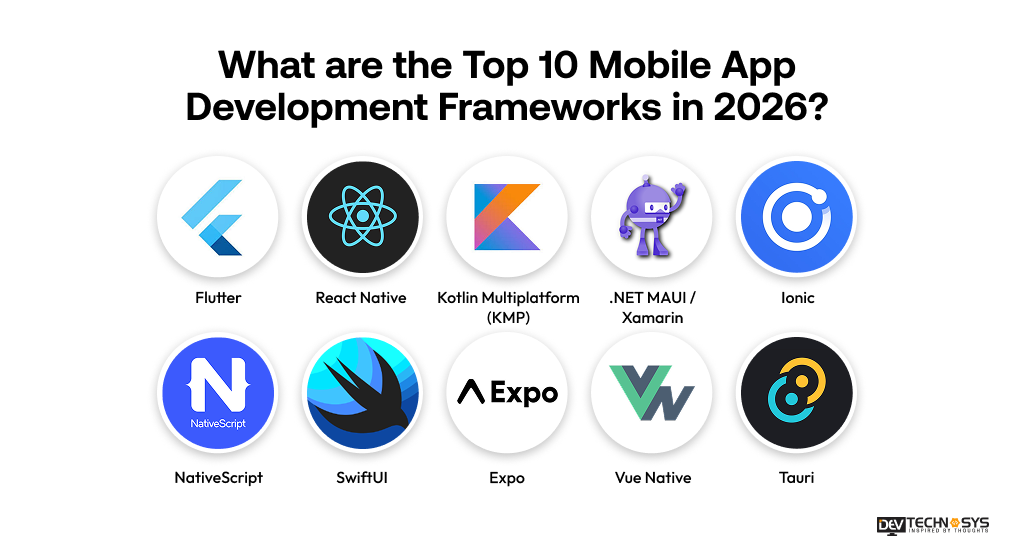
What are the Top 10 Mobile App Development Frameworks in 2026?
Mobile app development in 2026 is driven by cross-platform efficiency, AI integration, and high-performance frameworks. Choosing the right framework helps businesses build scalable, cost-effective, and user-friendly applications across multiple platforms with a faster mobile app development lifecycle.
| Framework | Type | Key Language(s) | Best For |
| Flutter | Cross-platform | Dart | MVPs, fintech, UI-rich apps |
| React Native | Cross-platform | JavaScript | Social apps, startups |
| Kotlin Multiplatform (KMP) | Cross-platform | Kotlin | Enterprise, fintech |
| .NET MAUI / Xamarin | Cross-platform | C# | Enterprise apps |
| Ionic | Hybrid | HTML, JavaScript | PWAs, simple apps |
| NativeScript | Cross-platform | JavaScript, TypeScript | Feature-rich apps |
| SwiftUI | Native (iOS) | Swift | Apple ecosystem apps |
| Expo | Cross-platform | JavaScript | MVPs, prototypes |
| Vue Native | Cross-platform | JavaScript (Vue) | Small apps, MVPs |
| Tauri | Hybrid | Rust, HTML, JS | Lightweight apps |
1. Flutter
Flutter, developed by Google, is among the scalable app frameworks that enables cross-platform app development using a single codebase. Its hot reload feature speeds up development, while rich pre-built widgets ensure stunning UI design. Mobile app development frameworks such as flutter delivers near-native performance, strong community support, and seamless integration with backend services, making it ideal for scalable, high-performance applications.
Key Uses:
- Cross-platform startup MVPs
- High-performance fintech apps
- E-commerce apps with rich UI
- On-demand service apps (food, taxi)
- Apps requiring custom animations and smooth UX
2. React Native
Backed by Meta Platforms, React Native allows developers to build mobile apps using JavaScript and React. It ensures faster development with reusable components and live reloading. The framework provides near-native performance, extensive third-party plugin support, and strong community backing, making it a preferred choice for startups and enterprises with creative mobile app development ideas.
Key Uses:
- Social media and community apps
- Real-time chat and messaging apps
- E-learning and content platforms
- Enterprise dashboards
- Apps requiring frequent updates and scalability
3. Kotlin Multiplatform (KMP)
Created by JetBrains, Kotlin Multiplatform enables code sharing across Android, iOS, and web while maintaining native UI. As one of the best frameworks for mobile app development, it reduces development time without compromising performance. UI/UX mobile frameworks like KMP offer flexibility, seamless integration with existing codebases, and strong support for modern architectures, making it ideal for businesses seeking efficient cross-platform development.
Industry Insights: Kotlin Multiplatform adoption has grown rapidly, rising from around 7% in 2024 to about 18% in 2025 among developers according to Codenote.
Key Uses:
- Apps with shared business logic across platforms
- Banking and fintech solutions
- Healthcare and telemedicine apps
- Enterprise-grade applications
- Apps requiring native UI with shared backend logic

4. .NET MAUI / Xamarin
Powered by Microsoft, .NET MAUI (formerly Xamarin) is one of the best mobile app development frameworks, enabling cross-platform app development with C#. app development tools and frameworks like .NET MAUI provide a unified project structure, native performance, and deep integration with Microsoft tools. Developers benefit from code reusability, robust security, and strong enterprise support, making it suitable for large-scale business applications.
Key Uses:
- Enterprise business applications
- Internal corporate tools and dashboards
- ERP and CRM mobile solutions
- Apps integrated with the Microsoft ecosystem
- Large-scale cross-platform solutions with C#
5. Ionic
Ionic is one of the popular hybrid mobile app development frameworks for building mobile apps using HTML, CSS, and JavaScript. It integrates well with Angular, React, and Vue. Key benefits include rapid development, cost-effectiveness, and a rich library of UI components. It’s ideal for businesses looking to develop lightweight apps with a consistent user experience.
Key Uses:
- Progressive Web Apps (PWAs)
- Lightweight business apps
- Content-based apps (news, blogs)
- Rapid prototyping projects
- Budget-friendly hybrid mobile apps
6. NativeScript
NativeScript is among the most useful mobile app development frameworks that allows developers to build truly native apps using JavaScript, TypeScript, or Angular. It provides direct access to native APIs without plugins, ensuring high performance. Its flexible architecture and strong UI capabilities make it suitable for creating feature-rich applications while maintaining a native-like user experience across platforms.
Key Uses:
- Native-like performance apps
- Apps needing direct API access
- IoT-based mobile applications
- Enterprise-grade solutions
- Feature-rich apps with complex UI interactions
7. SwiftUI
Developed by Apple, SwiftUI is among the modern mobile app architecture frameworks for building iOS apps using declarative syntax. It simplifies UI development, ensures seamless performance, and integrates deeply with Apple’s ecosystem. Developers benefit from faster development cycles, real-time previews, and enhanced user experience for Apple device users.
Key Uses:
- iOS-exclusive applications
- Apple ecosystem apps (iPhone, iPad, Watch)
- High-performance consumer apps
- AR/VR and graphics-heavy apps
- Apps requiring seamless Apple UI/UX experience
Industry Insights: TelemetryDeck states that SwiftUI’s uptake aligns with high iOS platform usage (iOS 26 adoption nearing 78–80% of devices in early 2026), making it a default for many native iOS apps.
8. Expo
Expo is a powerful toolchain built around React Native that simplifies app development and deployment. Enterprise mobile app frameworks like this eliminates complex configurations, enabling faster prototyping. With built-in APIs, easy testing, and OTA updates, Expo is ideal for startups and developers seeking rapid development without dealing with heavy native setup.
Key Uses:
- Rapid MVP development
- Startup apps with tight deadlines
- Prototyping and testing ideas
- Apps with minimal native dependencies
- Over-the-air update-based apps
9. Vue Native
Vue Native combines the simplicity of Vue.js with mobile app development capabilities. It enables developers to create cross-platform apps with a familiar syntax. Key benefits include ease of learning, rapid development, and reusable components. It is suitable for developers already experienced with Vue looking to expand into mobile apps.
Key Uses:
- Simple cross-platform mobile apps
- Apps for Vue.js developers
- Small to mid-scale business apps
- MVPs and prototypes
- Content-driven mobile applications

10. Tauri
Tauri is a lightweight framework for building secure and fast applications using web technologies and Rust. It offers smaller app sizes, improved performance, and enhanced security compared to traditional frameworks. Tauri is among the best debugging tools for mobile apps, helping businesses stay focused on building efficient, low-resource applications with modern UIs and strong system-level capabilities.
Key Uses:
- Lightweight mobile and desktop apps
- Security-focused applications
- System-level utility apps
- Low-resource apps for older devices
- Apps requiring a small bundle size and efficiency
What are the Key Factors to Consider When Choosing a Mobile App Development Framework?
Choosing the right mobile app development framework is a critical decision that directly impacts your app’s performance, scalability, and development cost. With numerous options available, businesses must evaluate key factors to ensure long-term success and efficiency.
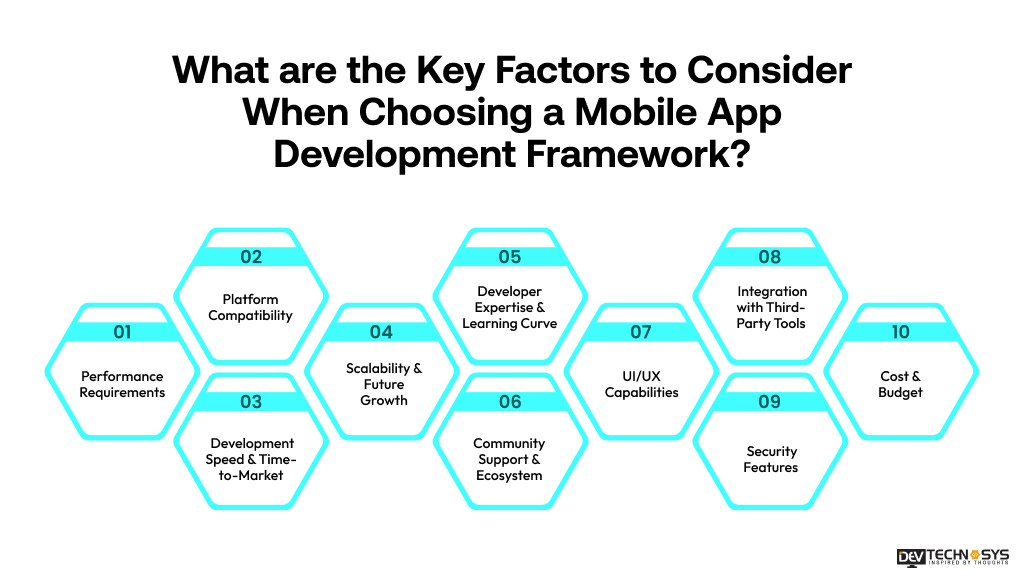
1. Performance Requirements
Evaluate how much performance your app demands. Resource-intensive apps like gaming or fintech require near-native speed, while simpler apps can use hybrid frameworks like Flutter to balance performance with faster development and lower costs.
2. Platform Compatibility
Determine whether you need a cross-platform or platform-specific app. Frameworks such as React Native and Kotlin Multiplatform enable developers to build apps for both Android and iOS using a shared codebase.
3. Development Speed & Time-to-Market
Faster development helps businesses launch quickly and gain a competitive edge. Tools like Expo and Ionic streamline development with pre-built components, reducing coding effort and enabling rapid prototyping and deployment cycles.
4. Scalability & Future Growth
Choose a framework that supports long-term scalability as your app grows. Enterprise-ready frameworks like .NET MAUI offer robust architecture, allowing apps to handle increasing users, features, and data without compromising performance or stability.
5. Developer Expertise & Learning Curve
Select mobile app development frameworks that alignes with your team’s expertise improves productivity. JavaScript developers often prefer React Native, while iOS-focused teams benefit from SwiftUI, reducing the learning curve and accelerating development timelines significantly.
6. Community Support & Ecosystem
A strong developer community ensures better documentation, plugins, and troubleshooting support. Popular frameworks like Flutter and React Native have extensive ecosystems, making development smoother and reducing implementation risks.
7. UI/UX Capabilities
User experience plays a critical role in app success. Frameworks like Flutter and NativeScript provide advanced UI components and customization options, enabling developers to create visually appealing, responsive, and engaging mobile applications.
8. Integration with Third-Party Tools
Modern apps rely heavily on third-party services like payment gateways, analytics, and cloud platforms. Frameworks such as React Native and Ionic support seamless integration, enhancing app functionality and improving overall user experience.
9. Security Features
Security is essential, especially for apps handling sensitive data. Mobile app testing frameworks like Tauri focus on secure architecture, minimizing vulnerabilities, and ensuring better protection against cyber threats, making them suitable for fintech, healthcare, and enterprise applications.
10. Cost & Budget
Budget considerations influence framework selection significantly. Cross-platform solutions like Flutter and React Native reduce development and maintenance costs by allowing a single codebase for multiple platforms, saving both time and resources.

Conclusion
Choosing the right mobile app development framework in 2026 depends on your project goals, budget, and scalability needs. Modern frameworks like Flutter, React Native, and Kotlin Multiplatform are empowering businesses to build high-performance, cross-platform apps efficiently while saving on the mobile app development cost.
By carefully evaluating factors like performance, community support, and integration capabilities, businesses can select a framework that aligns with their technical and business objectives. If you are a business interested in knowing more about the mobile app frameworks for your next project, contact Dev Technosys, a leading mobile app development company.
FAQs
Q1. Which Is The Best Mobile App Development Framework In 2026?
There is no single “best” framework, as the choice depends on your project needs. Flutter and React Native are widely preferred for cross-platform apps, while SwiftUI excels in delivering high-performance iOS-specific applications.
Q2. Which Framework Is Best For Startups?
Startups typically choose frameworks that enable faster development and lower costs. Expo and Flutter are ideal, as they support rapid MVP development, single codebase deployment, and quicker time-to-market with minimal technical complexity.
Q3. Are Cross-Platform Frameworks Better Than Native Frameworks?
Cross-platform frameworks like React Native reduce development time and cost by using a shared codebase. However, native frameworks such as SwiftUI offer superior performance and deeper device integration, making them better for complex, performance-intensive applications.
Q4. Which Framework Is Best For Enterprise Applications?
Enterprise applications require scalability, security, and long-term maintainability. Frameworks like .NET MAUI and Kotlin Multiplatform are ideal, as they support robust architecture, seamless integrations, and efficient handling of complex business logic across platforms.
Q5. Is Flutter Still Relevant In 2026?
Yes, Flutter remains highly relevant due to its strong community, consistent updates, and ability to deliver visually rich, high-performance applications. It continues to be a top choice for businesses building scalable cross-platform mobile apps efficiently.
Q6. Which Framework Is Best For Lightweight Apps?
For lightweight and efficient applications, Tauri is a strong choice. It offers smaller bundle sizes, enhanced security, and better resource management, making it suitable for apps that need to perform well on low-end devices.