





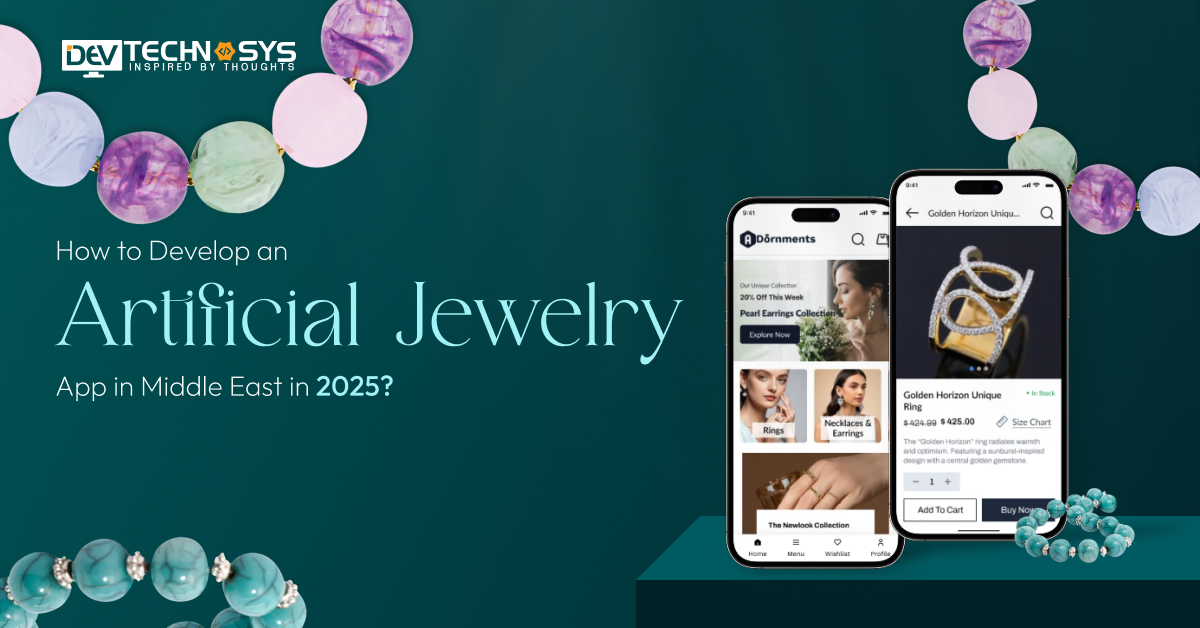
Want to start a business of selling artificial jewelry online? To achieve this, you need a high-performing, secure, and scalable jewelry app. The Middle East’s online jewelry shopping market is booming at a rapid rate.
The Middle East & Africa jewelry market size is projected to grow from $9.75 billion in 2025 to $11.75 billion by 2032. It is a perfect opportunity for businesses to enter the competitive online jewelry-selling market with their own Jewelry shopping app.
But what does it take to develop an artificial jewelry app? That’s exactly what we will discuss in this blog. From Steps to develop an artificial jewelry app to features to cost, we will cover everything you need to build an artificial jewelry app that helps users try on, browse, and purchase virtual jewelry, all from the comfort of your couch.
Middle East Online Jewelry Market Stats
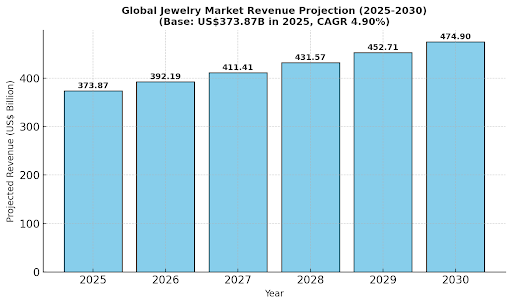
- In 2025, the global online jewelry market revenue is projected to reach a staggering US$373.87 billion.
- This market is expected to experience an annual growth rate of 4.90%, according to the compound annual growth rate (CAGR) for the period 2025–2030.
- The Middle East & Africa jewelry market size is projected to grow from USD 9.75 billion in 2025 to USD 11.75 billion by 2032, exhibiting a CAGR of 2.71% during the forecast period.
- Looking ahead, it is projected that 75% of sales in the Jewelry market by 2025 will be attributed to Non-Luxury.
- This indicates a dominance of affordable and accessible jewelry products in the market.
- Overall, the Jewelry market is thriving and lucrative worldwide, with significant revenue potential and a strong presence in countries like China.
What is an Artificial Jewelry App?
An artificial jewelry app is a mobile application used for shopping and managing artificial, imitation, or fashion jewelry. Online jewelry shopping apps enable users to search and purchase a wide range of jewelry, including necklaces, earrings, and bracelets, often offering access to exclusive deals and new collections.
Some apps also utilize AI to assist with design or to simulate how jewelry looks on a model. If you want a custom jewelry app developed, contact a top mobile app development company.
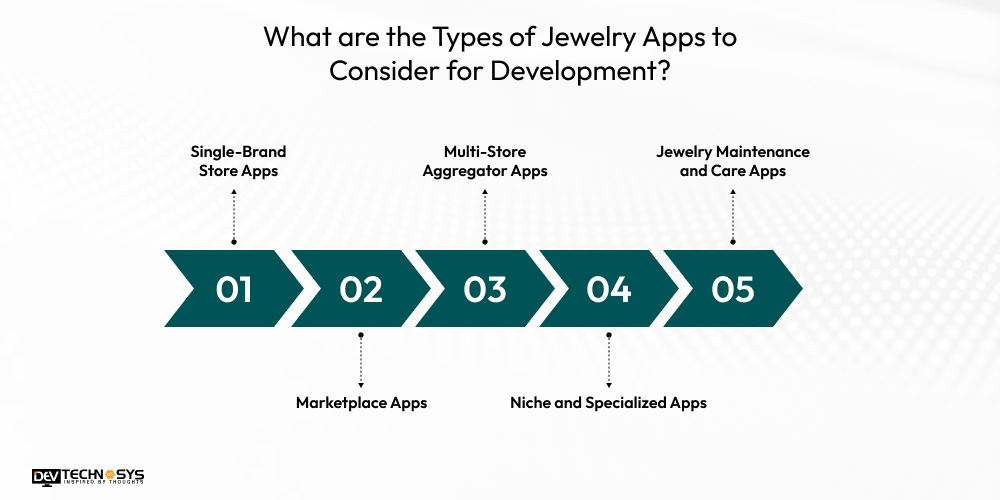
What are the Types of Jewelry Apps to Consider for Development?
Before diving into Artificial jewelry app development, let’s take a step back and learn about the types of jewelry apps you can consider as a business choice:
-
Single-Brand Store Apps
Single-brand store apps cater to a particular brand, allowing users to browse and purchase that brand’s products directly within the app. Examples include: Street Style Store and the Google Store.
-
Marketplace Apps
Marketplace apps connect various buyers and sellers in a single platform, streamlining the flow of goods or service transactions. Examples include Amazon (global) and Etsy (horizontal).
-
Multi-Store Aggregator Apps
Multi-store aggregator apps are digital platforms used to gather, organize, and deliver products or services from various third-party providers with a single brand identity. Examples include CaratLane and Candere.
-
Niche and Specialized Apps
Niche and specialized apps are programs designed to meet the specific expectations of a narrow audience, unlike mass-market apps. Examples include architectural design software and veterinary practice management software.
-
Jewelry Maintenance and Care Apps
Jewelry maintenance and care apps generally fall into two categories: dedicated jewelry care guides for personal use and more comprehensive jewelry store management software that includes repair tracking features.
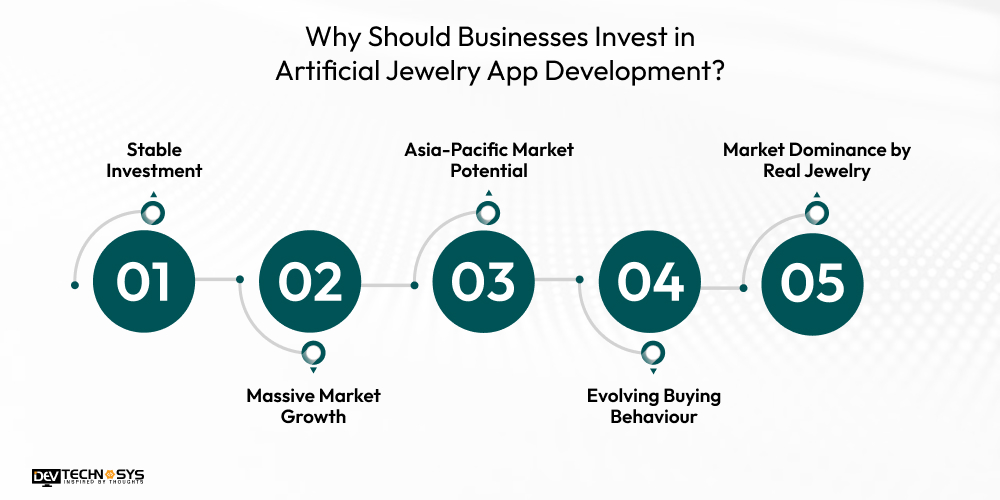
Why Should Businesses Invest in Artificial Jewelry App Development?
The jewelry market’s impressive growth, coupled with changing consumer behavior and regional trends, presents a significant opportunity for investment in online platforms and apps.
-
Stable Investment
Businesses should develop an artificial jewelry app because it offers a stable investment opportunity. Shopping app development is skyrocketing with the user demand. It’s a stable investment for businesses, ensuring a steady return on investment with minimal risk.
-
Massive Market Growth
The global jewelry market is growing rapidly, projected to reach US$373.87 billion by 2025, making now the ideal time for businesses to develop a jewelry app like GIVA and improve their presence and tap into the booming eCommerce segment.
-
Asia-Pacific Market Potential
The online jewelry market, especially in the Asia Pacific region, is gaining momentum due to its cultural significance and rising disposable income. It presents immense growth opportunities for online jewelry businesses.
-
Evolving Buying Behaviour
Consumers are increasingly shifting toward online shopping for convenience, wider product ranges, and secure payments, making jewelry apps a smart way to meet these modern preferences. There’s a big role of AI in artificial jewelry apps.
-
Market Dominance by Real Jewelry
The artificial jewelry market is gaining popularity among young consumers who prefer affordable, trendy, and sustainable options. This market boom opens a lucrative door for both the developers who build an artificial jewelry app and the retailers.
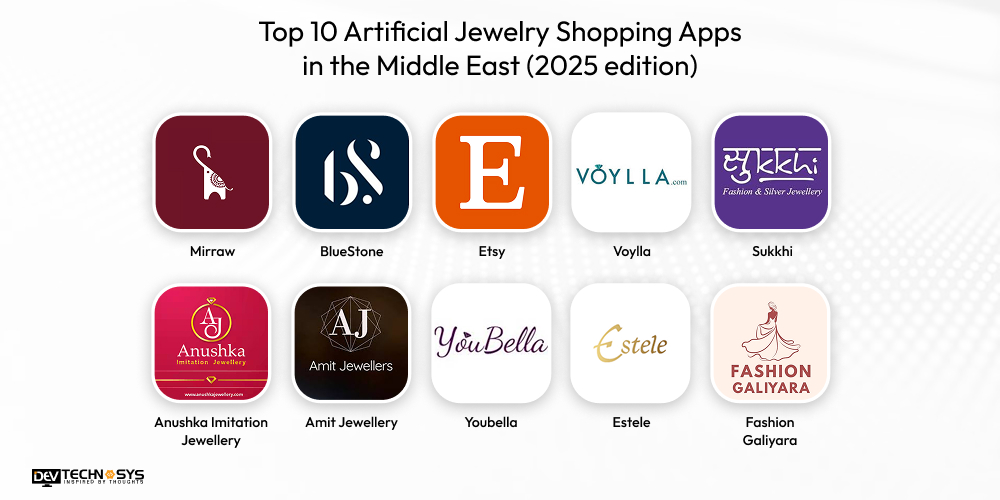
Top 10 Artificial Jewelry Shopping Apps in the Middle East (2025 edition)
Here are the top artificial jewelry apps in Middle East that you can consider in 2025. All these apps mentioned in the list offer a wide range of artificial jewelry products like necklaces, rings, jewels, and more.
App Name |
Launch Year |
Rating |
Downloads |
Platform Availability |
| Mirraw | 2015 | 4.3★ | 10M+ | Android, iOS |
| BlueStone | 2016 | 4.4★ | 2M+ | Android, iOS |
| Etsy | 2005 | 4.7★ | 50M+ | Android, iOS |
| Voylla | 2013 | 4.2★ | 1M+ | Android, iOS |
| Sukkhi | 2012 | 4.0★ | 500K+ | Android, iOS |
| Anushka Imitation Jewellery | 2018 | 4.1★ | 100K+ | Android |
| Amit Jewellery | 2017 | 4.0★ | 100K+ | Android |
| Youbella | 2016 | 4.2★ | 1M+ | Android, iOS |
| Estele | 2014 | 4.3★ | 500K+ | Android, iOS |
| Fashion Galiyara | 2019 | 4.1★ | 100K+ | Android |
What are the Steps to Develop an Artificial Jewelry App in Middle East?
Finally, time to address the main topic! Here are the steps to develop an artificial jewelry app. Follow these steps to make a user-friendly and high-performing artificial jewelry app for your business.
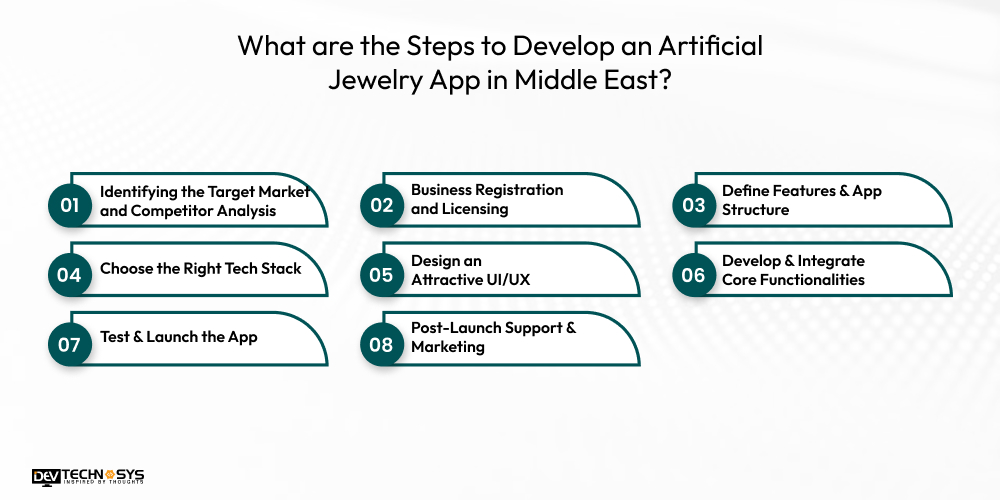
Step 1. Identifying the Target Market and Competitor Analysis
If you are thinking of online jewelry shopping Android app development, then start by researching the Middle Eastern jewelry market to understand the likes and dislikes of people over there.
Thorough market research before Artificial jewelry app development helps you get introduced to help cultural trends and buyer behavior. Analyzing existing market competition will help you plan more smartly.
Step 2. Business Registration and Licensing
The next step to build an artificial jewelry app is about getting crucial trade licenses and business support for legal operations in Middle Eastern countries, like the UAE or Saudi Arabia.
Experts who offer iOS app development services will ensure your app stays compliant with guidelines for regional eCommerce and data protection before launch.
Step3. Define Features & App Structure
In this step to create an artificial jewelry app, add essential features like product search, AR try-on, secure checkout, and multilingual support (Arabic & English). For a seamless experience, you need to include features like real-time order tracking, seller dashboards, and AI recommendations.
Step4. Choose the Right Tech Stack
To develop an artificial jewelry app, select trustworthy technologies such as React Native or Flutter for cross-platform apps, Node.js for backend, and MongoDB or Firebase for data storage. Also, you can add ARKit/ARCore for virtual jewelry try-ons.
Step5. Design an Attractive UI/UX
Create an Artificial Jewelry App wth a visually appealing and culturally relevant design. Hire Dedicated Developers from a reputable company who will reflect Middle Eastern jewelry aesthetics to gain the interest of people over there.
Ensure smooth navigation, high-quality visuals, and responsiveness across devices to enhance user engagement.
Step6. Develop & Integrate Core Functionalities
Build an artificial jewelry app with core modules like product listings, filters, shopping cart, payment gateways, and social media login. After that, add AI-driven recommendations for secure user-verification, it will enhance app’s performance and user experience.
Step7. Test & Launch the App
According to experts who build an artificial jewelry app, conducting thorough testing is essential to ensure the smooth and error-free performance, security, and localization of the app. After quality assurance, launch your app on Google Play and App Store.
Step 8. Post-Launch Support & Marketing
After deployment, the maintenance, feature updates, and marketing campaigns. The E-commerce app development experts leverage social media influencers, SEO, and targeted ads to attract Middle Eastern jewelry buyers.
What are the Essential Features to Add in an Artificial Jewelry App?
Features are the most crucial part of an app, they make or break your app. Here are the essential features that an artificial jewelry app must incorporate.
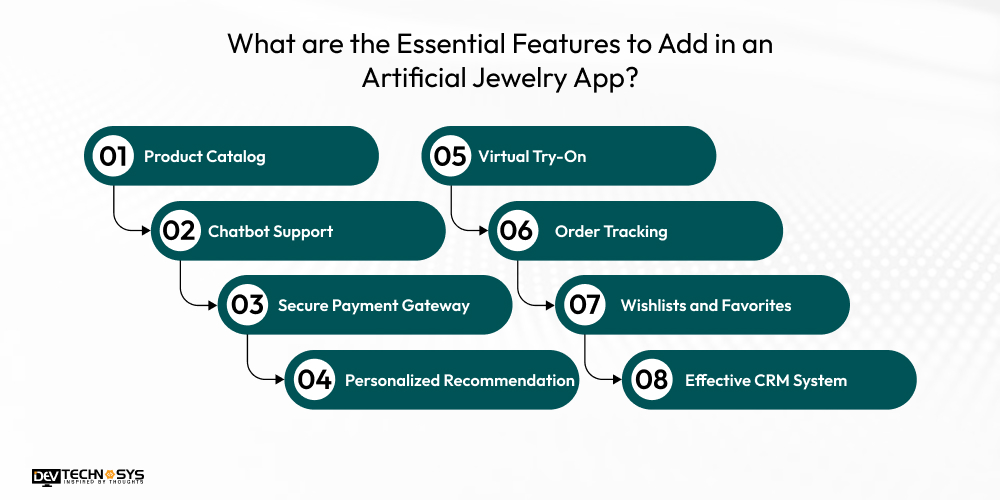
1. Product Catalog
Display a well-organized catalog with categories, filters, and high-quality images. Include details like material, price, occasion, and availability to help users browse easily and make informed purchase decisions.
2. Chatbot Support
Integrate AI-powered chatbots to offer 24/7 customer assistance, answer product queries, suggest styles, and help with orders, improving engagement and customer satisfaction.
3. Secure Payment Gateway
Enable multiple payment options like credit/debit cards, PayPal, PayTabs, and Apple Pay. Ensure encrypted transactions and compliance with regional security standards to build user trust.
4. Personalized Recommendation
Use AI algorithms to recommend jewelry based on browsing history, preferences, and purchase patterns, offering a personalized and delightful shopping experience.
5. Virtual Try-On
Incorporate AR technology to let users virtually try on earrings, necklaces, and rings in real time, enhancing confidence and reducing product returns.
6. Order Tracking
Allow users to monitor their order status in real time, from dispatch to delivery, with notifications for shipment updates and estimated arrival times.
7. Wishlists and Favorites
Enable users to save their favorite jewelry items or create wishlists for future purchases, making shopping more convenient and user-friendly.
8. Effective CRM System
Integrate a Customer Relationship Management (CRM) system to manage user data, analyze buying behavior, and improve marketing campaigns for better customer retention and engagement.
What are the Attributes of a Successful Online Jewelry App?
A successful online jewelry app needs the following attributes:
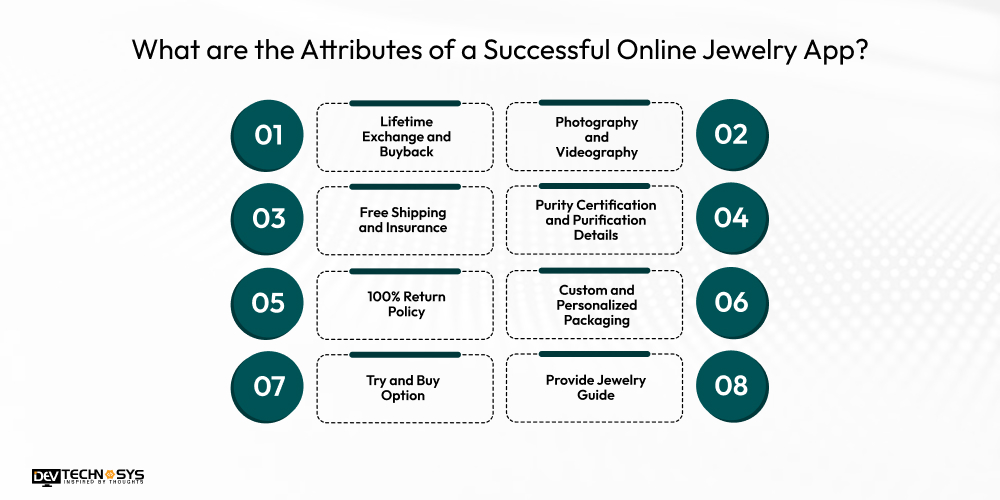
- Lifetime Exchange and Buyback: Build customer trust by offering secure exchange and buyback options for long-term value.
- Photography and Videography: Use HD images and 360° videos to give users a realistic jewelry viewing experience.
- Free Shipping and Insurance: Offer insured and free delivery to ensure safe and hassle-free purchases.
- Purity Certification and Purification Details: Provide certified authenticity and metal purity details to boost credibility.
- 100% Return Policy: Allow easy returns for damaged or unsatisfactory products to enhance customer satisfaction.
- Custom and Personalized Packaging: Deliver a premium feel with unique, branded, and personalized packaging options.
- Try and Buy Option: Let users try jewelry before buying to increase conversion rates and trust.
- Provide Jewelry Guide: Include buying guides, size charts, and style tips to help users make informed decisions.
What is the Cost to Develop an Artificial Jewelry App?
The cost to develop an artificial jewelry app ranges from $8000 for a basic app to $25,000 for a complex artificial jewelry app with advanced features, design, and development platform.
Factors that influence the cost to build an artificial jewelry app include the complexity of features, the number of platforms (iOS, Android), custom UI design, and ongoing maintenance. Here’s the table showcasing the cost to develop an artificial jewelry app according to app type:
App Type |
Estimated Development Cost (USD) |
Development Timeline |
| Basic Jewelry App | $8,000 – $12,000 | 2 – 3 Months |
| Mid-Level Jewelry App | $12,000 – $18,000 | 3 – 5 Months |
| Advanced Jewelry App (AR & AI Features) | $18,000 – $25,000 | 5 – 7 Months |
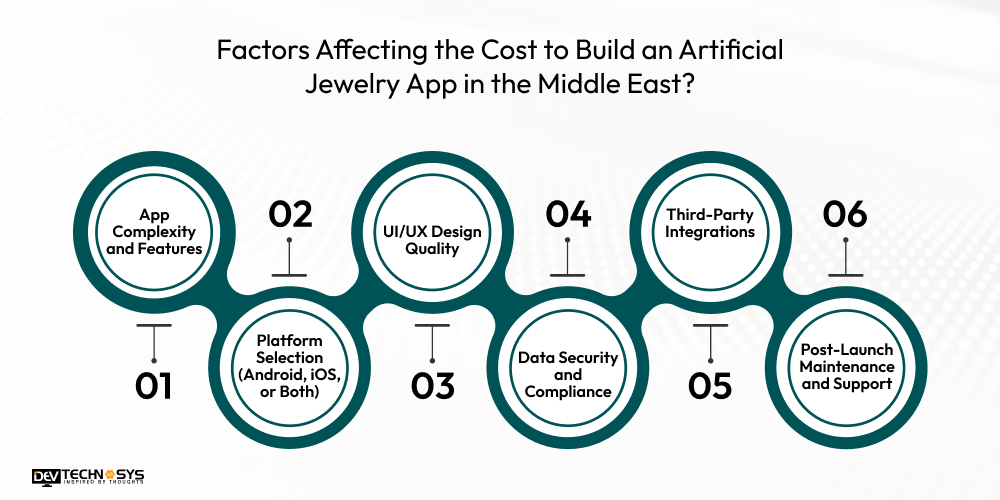
Factors Affecting the Cost to Build an Artificial Jewelry App in the Middle East?
There are various factors that can affect the cost to make an artificial jewelry app in the Middle East, some of which are given below:
1. App Complexity and Features
The complexity and number of features are the reasons for an increase in cost to create an artificial jewelry app. Advanced features like AR try-on, AI-driven recommendations, multi-language support, and real-time tracking take more time, specialized tools, and technical expertise. It ultimately raises the total artificial jewelry app development cost.
Complexity Level |
Estimated Cost (USD) |
Development Timeline |
| Basic | $8,000 – $10,000 | 6 – 8 weeks |
| Medium | $11,000 – $18,000 | 9 – 12 weeks |
| Advanced | $19,000 – $25,000 | 14 – 18 weeks |
2. Platform Selection (Android, iOS, or Both)
Developing an app for Android, iOS, or both directly impacts the artificial jewelry app development cost. Choose your app platform wisely. The cost to develop a mobile app for a single-platform app is more affordable, while dual-platform or cross-platform apps using Flutter or React Native offer wider reach but demand higher initial investment and testing efforts.
Platform Type |
Estimated Cost (USD) |
Development Timeline |
| Single Platform | $8,000 – $12,000 | 6 – 8 weeks |
| Dual Platform | $13,000 – $20,000 | 10 – 12 weeks |
| Cross-Platform | $15,000 – $25,000 | 12 – 14 weeks |
3. UI/UX Design Quality
The cost to create an artificial jewelry app also varies depending on the UI design. Creating a visually stunning, culturally inspired UI/UX that resonates with Middle Eastern jewelry preferences adds to the artificial jewelry app development cost.
Custom illustrations, appealing visuals, smooth navigation, and responsive layout need more professional design expertise to enhance user engagement and retention.
Design Type |
Estimated Cost (USD) |
Development Timeline |
| Basic Design | $2,000 – $4,000 | 2 – 3 weeks |
| Custom Design | $5,000 – $7,000 | 3 – 4 weeks |
| Premium Design | $8,000 – $10,000 | 5 – 6 weeks |
4. Data Security and Compliance
Implementing strong data encryption, secure money transactions, and compliance with regional data laws like UAE PDPL or Saudi eCommerce regulations hikes up the cost to build an artificial jewelry app.
These features protect user data and enhance credibility, which is vital for financial transactions in jewelry apps.
Security Level |
Estimated Cost (USD) |
Development Timeline |
| Basic | $1,000 – $2,000 | 1 – 2 weeks |
| Standard | $3,000 – $5,000 | 2 – 3 weeks |
| Advanced | $6,000 – $8,000 | 3 – 4 weeks |
5. Third-Party Integrations
Implementing strong data encryption, secure money transactions, and compliance with regional data laws like UAE PDPL or Saudi eCommerce regulations hikes up the cost to build an artificial jewelry app.
These features protect user data and enhance credibility, which is vital for financial transactions in jewelry apps.
Integration Type |
Estimated Cost (USD) |
Development Timeline |
| Basic | $1,000 – $3,000 | 2 – 3 weeks |
| Moderate | $4,000 – $6,000 | 3 – 5 weeks |
| Advanced | $7,000 – $9,000 | 5 – 7 weeks |
6. Post-Launch Maintenance and Support
The cost to maintain an app expands the final budget, significantly hiking it up a bit. Maintenance services, such as regular system updates, bug fixes, and new feature rollouts, contribute to post-launch expenses.
Regular maintenance ensures security, performance optimization, and compatibility with evolving devices and OS versions, making it a vital long-term factor that affects the cost to make an artificial jewelry app.
Maintenance Level |
Estimated Cost (USD) |
Duration |
| Basic | $1,000 – $2,000 | Monthly |
| Standard | $3,000 – $5,000 | Quarterly |
| Premium | $6,000 – $8,000 | Ongoing |
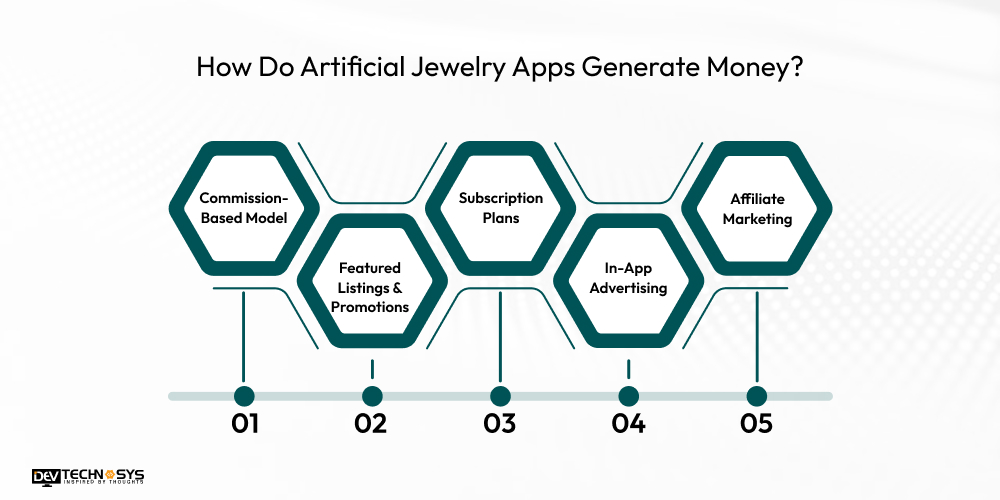
How Do Artificial Jewelry Apps Generate Money?
Here are some of the widely used monetization strategies for artificial jewelry applications. Take a look:
1. Commission-Based Model
The app earns a fixed commission from each jewelry sale, providing a consistent and scalable revenue source, especially for marketplace-based artificial jewelry apps.
2. Featured Listings & Promotions
Vendors pay for premium listings, homepage highlights, or promotional banners to boost product visibility, helping the app generate additional advertising-based income.
3. Subscription Plans
Jewelry sellers or users subscribe to premium plans offering added features like analytics, AR try-on tools, and unlimited listings for a recurring revenue stream.
4. In-App Advertising
The app displays personalized ads from jewelry and fashion brands, earning through impressions or clicks using CPC or CPM ad revenue models.
5. Affiliate Marketing
By partnering with eCommerce or jewelry care brands, the app earns commissions whenever users make purchases through integrated affiliate links.

Conclusion
Developing an artificial jewelry app in the Middle East in 2025 offers immense potential due to the region’s growing eCommerce adoption, fashion awareness, and digital transformation.
To succeed, focus on cultural relevance, bilingual support (Arabic & English), and robust marketing strategies. With the right development partner and a customer-centric approach, your jewelry app can shine as a profitable digital brand in the Middle Eastern market.
If you want to build an artificial jewelry app, contact an E-commerce app development company, and stay tuned for more updates.
FAQs
1. How Much Does It Cost to Develop an Artificial Jewelry App in the Middle East?
The cost to develop an artificial jewelry app ranges from $8,000 to $25,000, depending on features, complexity, platform (Android/iOS), and integrations like AR try-on or AI recommendations.
2. How Long Does It Take to Build an Artificial Jewelry App?
On average, development takes 3 to 6 months, encompassing design, development, testing, and deployment, depending on the app’s scope and functionality.
3. What Features Should an Artificial Jewelry App Include?
Essential features include virtual try-on, secure payment options, AI-driven recommendations, multilingual support, order tracking, and chatbot assistance, all designed to enhance the shopping experience.
4. Which Technologies Are Best for Developing a Jewelry Shopping App?
Popular technologies include React Native or Flutter for app development, Node.js for backend, MongoDB/Firebase for databases, and ARKit/ARCore for virtual jewelry try-ons.
5. How Can Artificial Jewelry Apps Generate Revenue?
These apps earn through commissions, subscriptions, ads, featured listings, and in-app purchases like premium AR try-ons or customization options.